MicroStrategy(MSTR)

Search documents
Wall Street giants including BlackRock dump MicroStrategy shares
Yahoo Finance· 2025-11-24 17:46
Group 1 - The world's largest corporate holder of Bitcoin, Strategy (formerly MicroStrategy), is facing significant challenges due to the ongoing crypto market crash, impacting both institutional and retail investors [1] - Short-seller Jim Chanos has closed his short positions on MSTR, citing a decline in the multiple-to-net-asset-value (mNAV) from 2.5x in December 2024 to 1.16x currently, with expectations that it may eventually reach 1.0x [2][3] - JPMorgan has warned that leading equity indices, including the MSCI USA Index, may delist Strategy due to its digital asset treasury model, which could affect its eligibility for traditional stock indexes [4] Group 2 - Michael Saylor, co-founder and executive chairman of MicroStrategy, maintains that index classification does not affect the company's operations or self-perception, despite Wall Street's negative view [5] - Institutional trust in Strategy as a Bitcoin proxy has been declining, with major asset managers trimming their holdings by $5.38 billion in Q3 2025 [6][7] - Institutional holdings in MSTR decreased from $36.32 billion at the end of Q2 to $30.94 billion at the close of Q3, representing a drop of approximately 15% [7]

不是比特币崩了,是储币模式被清算
Sou Hu Cai Jing· 2025-11-24 16:25
Core Viewpoint - The recent decline in Bitcoin prices, from approximately $125,000 to around $84,000, is attributed to a complex interplay of factors beyond just a typical market correction, including macroeconomic conditions and significant changes in the cryptocurrency ecosystem driven by companies like Strategy Inc. [2][4] Group 1: Bitcoin Price Movement - Bitcoin reached a historical high of approximately $125,000 on October 6, 2025, before experiencing a decline to about $84,000 by late November, marking a maximum drawdown of nearly 30% [2][4] - The decline is characterized as a typical "high position correction," influenced by cooling interest rate expectations, overall risk asset declines, and a shift from net inflows to net outflows in ETF investments [4][30] Group 2: Strategy Inc. and Its Bitcoin Holdings - Strategy Inc., formerly known as MicroStrategy, has transformed from a software company into a significant holder of Bitcoin, with a total of 649,870 Bitcoins acquired at a total cost of approximately $48.37 billion, averaging $74,433 per Bitcoin [5][8] - The current estimated market value of Strategy's Bitcoin holdings is between $54 billion and $56 billion, representing about 3% of the global Bitcoin supply [8] - Bitcoin constitutes approximately 75% to 80% of Strategy's total assets, indicating a shift towards being a Bitcoin treasury rather than a software company [8][12] Group 3: MSCI's Impact on Strategy Inc. - MSCI has initiated a consultation regarding how to classify companies with significant digital asset holdings, suggesting that companies with over 50% of their total assets in digital assets should be treated as investment funds rather than operating companies [16][22] - The consultation period ends on December 31, 2025, with a decision expected to take effect on January 15, 2026, potentially leading to the exclusion of such companies from mainstream stock indices [17][20] - If Strategy is removed from major indices, passive funds tracking MSCI could be forced to sell approximately $2.8 billion worth of Strategy stock, with total potential sell pressure reaching around $8.8 billion if other index providers follow suit [23][24] Group 4: Market Reactions and Valuation Changes - Following MSCI's announcement, the market has begun to react, with Strategy's market-to-net-asset-value (mNAV) ratio dropping from a peak of 2.5 to approximately 1.1, indicating a significant reduction in the premium investors are willing to pay [29][30] - The decline in mNAV suggests that the previous cycle of using high premiums to issue new shares for Bitcoin purchases has been disrupted, leading to a more traditional and costly approach to financing [29][30]


X @Wu Blockchain
Wu Blockchain· 2025-11-24 16:00
Tom Lee: Insufficient Crypto Liquidity Forces Institutional Hedging Flows Into StrategyIn a CNBC interview on November 21, the host highlighted Strategy's 50% decline over the past three months and its 65% drop from the July peak, questioning how closely its selloff is tied to Bitcoin's downturn. Bitmine Chairman Tom Lee explained that institutions holding multi-billion-dollar Bitcoin long positions are unable to effectively hedge through crypto derivatives or CME futures. As a result, Strategy's highly liq ...
JP Morgan Accused of Manufacturing Oct 10 Crash Using 42-Day-Old Document
Yahoo Finance· 2025-11-24 13:53
Analysts at Bitcoin For Corporations have accused JP Morgan Chase of causing the October 10 crypto market crash, citing a 42-day-old document that preceded the $19 billion liquidation cascade. Adrian, an analyst at Bitcoin For Corporations, said the Oct 10 crash feels manufactured. He pointed to a JPMorgan investor note warning that MicroStrategy (now Strategy) risked being dropped from the MSCI USA and Nasdaq 100 indexes, estimating $2.8 billion in outflows for the largest Bitcoin corporate holder. “Th ...

“跌疯了”的币圈“阴谋论满天飞”:美国政府“抢钱”,华尔街“做空”,甚至是“摩根大通大战特朗普”
美股IPO· 2025-11-24 13:42
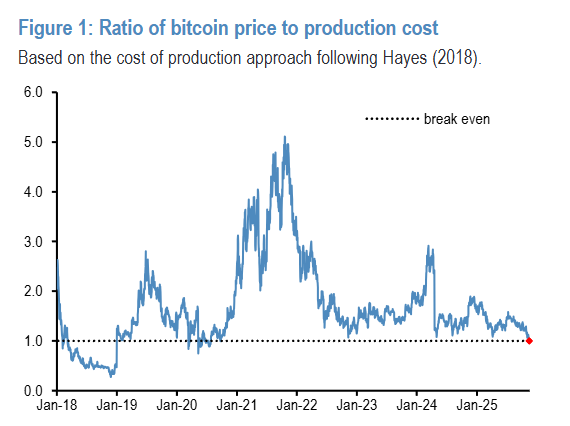
Core Viewpoint - Morgan Stanley's report warns that MicroStrategy may be removed from the MSCI index due to its significant Bitcoin holdings, potentially leading to a capital outflow of up to $8.8 billion, igniting outrage in the cryptocurrency community and conspiracy theories about a power struggle between traditional finance and the new Bitcoin system [1][3][5]. Group 1: Morgan Stanley's Report and Its Implications - Morgan Stanley's report indicates that MSCI is considering removing companies with over 50% of their balance sheet in cryptocurrencies from its index, with the new policy expected to take effect in January 2026 [7]. - MicroStrategy, holding a market value of approximately $59 billion, could face a passive capital outflow of $2.8 billion if removed from the MSCI index, and up to $8.8 billion if other index providers follow suit [8]. - The report's warning comes amid Bitcoin's price drop below its production cost of $94,000, exacerbating market panic and leading to interpretations of a "deliberate attack" on MicroStrategy [3][8]. Group 2: Community Reaction and Conspiracy Theories - The cryptocurrency community reacted strongly, initiating a "Boycott Morgan Stanley" movement, accusing the bank of short-selling MicroStrategy and calling for a "GameStop-style" short squeeze [12][16]. - Conspiracy theories emerged, suggesting that the U.S. government orchestrated the recent market crash to buy Bitcoin and MicroStrategy at lower prices, framing it as a battle between the "old financial order" represented by Morgan Stanley and the "new digital framework" supported by the Trump administration [5][20][23]. - Some advocates claim that the U.S. government aims to acquire MicroStrategy and Coinbase, with the recent Bitcoin sell-off being part of this strategy to lower MicroStrategy's market-to-book ratio [19][20]. Group 3: Broader Financial Narrative - The narrative has evolved into a dramatic confrontation between the "old monetary order" led by Morgan Stanley and the "new political forces" represented by the Trump administration, which seeks to support Bitcoin and MicroStrategy while undermining traditional banks [23][24]. - Speculation suggests that Morgan Stanley, as a defender of the traditional dollar settlement system, views Bitcoin as a threat and is attempting to maintain its dominance by short-selling MicroStrategy, which connects traditional capital with Bitcoin [24][25]. - Supporters argue that the current monetary power struggle is part of a larger strategy for Trump to gain control over the Federal Reserve before Jerome Powell's term ends [25].

不是比特币崩了,是储币模式被清算
美股研究社· 2025-11-24 13:22
Core Viewpoint - The recent decline in Bitcoin prices from approximately $125,000 to around $84,000 is attributed to a combination of macroeconomic factors and significant changes in the regulatory landscape, particularly concerning companies heavily invested in Bitcoin, such as Strategy Inc. [5][7][42] Group 1: Bitcoin Price Movement - Bitcoin reached a historical high of approximately $125,000 on October 6, 2025, before experiencing a decline to about $84,000 by late November, marking a maximum drawdown of nearly 30% [5][13]. - The decline is characterized as a typical "high position correction," influenced by cooling interest rate expectations, overall risk asset declines, and a shift from net inflows to net outflows in ETF investments [7][8]. Group 2: Strategy Inc. Overview - Strategy Inc., formerly known as MicroStrategy, has transformed from a software company into a Bitcoin fund, holding 649,870 Bitcoins with a total purchase cost of approximately $48.37 billion and an average purchase price of about $74,433 per Bitcoin [9][13]. - The market value of these holdings is estimated to be between $54 billion and $56 billion, representing about 3% of the total global Bitcoin supply [14]. Group 3: Financial Strategy and Market Dynamics - Since August 2020, Strategy has engaged in a "reflexive cycle" by using cash to purchase Bitcoin, which subsequently increased its net asset value and stock price, allowing for further stock issuance to buy more Bitcoin [17][18]. - This cycle has been successful, with Bitcoin holdings increasing from over 20,000 to over 640,000, and the company's market capitalization peaking near $60 billion [22]. Group 4: MSCI's Regulatory Impact - MSCI has initiated a consultation regarding how to classify companies like Strategy that hold a significant amount of digital assets, suggesting that if digital assets exceed 50% of total assets, these companies should be treated as investment funds rather than operating companies [25][27]. - The consultation period ends on December 31, 2025, with a decision expected to take effect on January 15, 2026, potentially leading to the exclusion of such companies from major stock indices [28][32]. Group 5: Market Reactions and Future Implications - If MSCI decides to exclude Strategy from its indices, passive funds tracking MSCI could be forced to sell approximately $2.8 billion worth of Strategy stock, with total potential sell pressure reaching around $8.8 billion if other index providers follow suit [34][35]. - The market has already begun to react, with the market-to-net asset value (mNAV) ratio for Strategy dropping from a peak of 2.5 to around 1.1, indicating a significant reduction in the premium investors are willing to pay for the stock [39][41].

摩根大通在三季报中披露其 MSTR 持仓为 2,375,683 股
Xin Lang Cai Jing· 2025-11-24 12:52
来源:市场资讯 (来源:吴说) 吴说获悉,摩根大通在三季报中披露其 Strategy(MSTR)持仓为 2,375,683 股,较上一季度减少 772,453 股。按当季价格区间推算,对应市值变动约在 1 亿至 2.5 亿美元区间。 ...
Strategy MSTR 微策略的底層邏輯!融資工具最完整解析!比特幣暴跌!會被清算?市場極度恐慌!Jeff Walton【邦妮區塊鏈】
邦妮區塊鏈 Bonnie Blockchain· 2025-11-24 12:31
Bitcoin Treasury Strategy & Market Dynamics - Strategy 的最坏情况是比特币本身出现问题,但这种情况发生的概率极低 [1][10] - 许多公司都在模仿 Strategy 的比特币国库策略,这些公司都有机会继续增长并通过现金流或资本市场机会永久性地购买更多比特币 [5] - 拥有比特币在资产负债表上对于未来至关重要,尤其是在 AI 颠覆的时代,公司可以通过比特币进行杠杆收购或其他操作 [6] - 市场存在对 Strategy 股票的投机行为,一些人通过做空该股票获利,这可能是 Strategy 改变策略的原因之一 [4] - 长期来看,最重要的指标是每股比特币数量,用美元等法币来衡量该工具的回报会带有法币的视角 [4] Perpetual Preferred Stock & Capital Markets - Strategy 使用永久优先股,因为它没有到期日,如果资产负债表以 50% 的复合年增长率增长,并且以 9% 的利率借出资本,那么资产的复合年增长率和未来支付的负债之间存在巨大的套利机会 [1] - STRF 产品的独特之处在于,进入这些工具的任何资金都会立即购买比特币,从而增加比特币在资产负债表上的持有量 [2] - Strategy 持有价值 700 亿到 750 亿美元的比特币,每年的股息负债为 6 亿美元 [2] - Strategy 暂停发行可转换债券是因为他们希望进入不同的资本池,并接触不同的持有者,可转换债券的卖方并不关心股票,他们是波动率爱好者 [4] - Strategy 正在尝试从 300 万亿美元的固定收益市场中吸引资本,需要提供一种他们可以接受的产品,这种产品看起来与他们投资组合中的其他产品相似 [2] Strive's Bitcoin Strategy - Strive 的目标是购买比特币,并利用比特币购买更多的比特币,Strive 旨在通过降低波动性的工具向资本提供者出售比特币 [10] - Strive 计划利用其在 True North 团队中建立的背景,将相同的消息传递到更广泛的资本市场,类似于在再保险领域所做的那样 [10] - Strive 旨在成为比特币国库领域的兰博基尼,在资本结构上更加灵活,行动更加迅速 [11]

比特幣四季理論關鍵轉折!「加密貨幣教父」:國家主權基金也買比特幣?
邦妮區塊鏈 Bonnie Blockchain· 2025-11-24 11:00
Bitcoin Mining & Supply - The initial Bitcoin cycle mined 7,200 Bitcoins daily [1] - After subsequent halvings, daily Bitcoin mining decreased to 3,600, then 1,800, then 900, and currently stands at 450 [2] - Current Bitcoin mining produces 450 Bitcoins per day [2] Institutional Adoption - MicroStrategy purchases more than 450 Bitcoins daily, absorbing all of the newly mined Bitcoin [2] - Companies are emulating MicroStrategy's Bitcoin treasury model [3] - Institutions and ETFs are increasingly investing in Bitcoin [3] - BlackRock holds more Bitcoin than MicroStrategy, achieving this in approximately one year compared to MicroStrategy's five years [3]

“跌疯了”的币圈“阴谋论满天飞”:美国政府“抢钱”,华尔街“做空”,甚至是“摩根大通大战特朗普”
Hua Er Jie Jian Wen· 2025-11-24 10:56
Core Viewpoint - A report from JPMorgan has ignited anger within the cryptocurrency community, leading to conspiracy theories about Wall Street's manipulation and government involvement in the recent Bitcoin crash [1][3]. Group 1: JPMorgan's Report and Its Implications - JPMorgan warned that MSCI is considering removing companies with significant Bitcoin holdings from its index, which could lead to a potential outflow of up to $8.8 billion from MicroStrategy [1][4][5]. - The report indicated that if MicroStrategy were removed from the MSCI index, it could trigger a passive sell-off of $2.8 billion, with total outflows potentially reaching $8.8 billion if other index providers follow suit [5]. - MicroStrategy's stock has underperformed Bitcoin, with its valuation premium significantly narrowing, reflecting market concerns over the index removal risk [5]. Group 2: Market Reactions and Conspiracy Theories - The cryptocurrency community reacted with outrage, launching a "Boycott JPMorgan" movement and accusing the bank of short-selling MicroStrategy [1][8]. - Some investors are calling for a repeat of the "GameStop" event, suggesting that retail investors could unite to drive up MicroStrategy's stock price against JPMorgan's alleged short positions [15][21]. - Conspiracy theories have emerged, suggesting that the U.S. government orchestrated the market crash to acquire Bitcoin and MicroStrategy at lower prices, with claims that the government aims to achieve a price-to-book ratio of 1.0 for MicroStrategy [17][18][20]. Group 3: Broader Financial Narrative - The situation has been framed as a battle between the "old monetary order," represented by JPMorgan and the Federal Reserve, and a "new digital framework" led by the Trump administration and Bitcoin [3][21]. - Speculation suggests that the U.S. government may strategically invest in MicroStrategy to gain control over its assets, with the ongoing monetary power struggle being a critical component of this narrative [22].