Nokia(NOK)

Search documents
Nokia, EBB Team Up to Upgrade AI Data Centers Across Malaysia
ZACKS· 2025-09-02 15:45
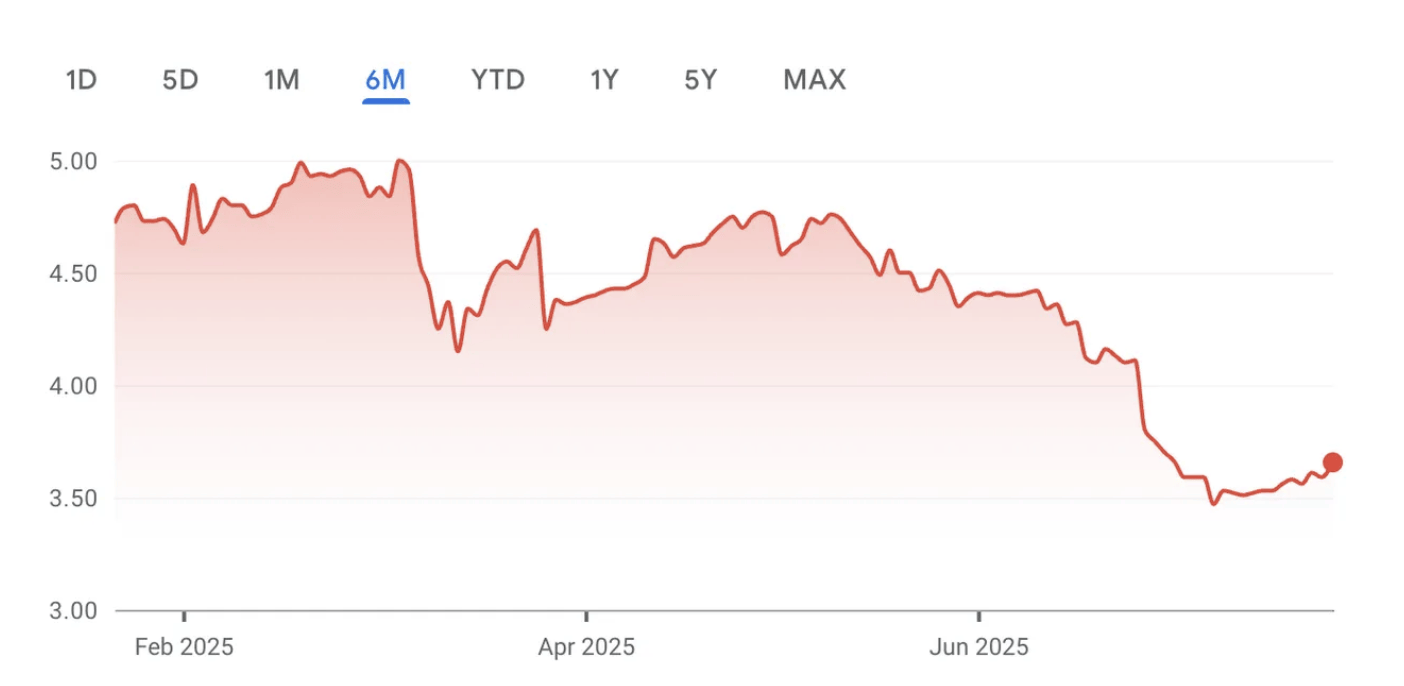
Core Insights - Nokia has secured a contract with Extreme Broadband (EBB) and its subsidiary Open DC to enhance AI data centers in Malaysia, aligning with the National Cloud Computing Policy and catering to the banking and financial services sector [1] - The initiative will interconnect six Open DC facilities across Malaysia, providing a reliable and secure network to support EBB's vision of "Innovating Connectivity" [2] - A Memorandum of Understanding (MoU) has been signed between Nokia and EBB to collaborate on data center solutions and quantum-safe networks, focusing on AI and data center connectivity [3] Group 1: Contract and Collaboration - The contract aims to improve performance and security of Open DC's AI data centers, reinforcing EBB and Open DC's positions in Malaysia's digital infrastructure [1] - The deployment will utilize Nokia's advanced IP network solutions to connect six facilities, ensuring high reliability and security [2] - The MoU includes joint strategies for enterprise connectivity, multi-cloud integration, and DDoS protection, along with testing Nokia's Data Center Gateway and security solutions [3] Group 2: Technology and Infrastructure - Nokia's modernization efforts will leverage its Data Center Fabric, Data Center Gateway, and quantum-safe networking technologies, ensuring scalability and sustainability for Open DC [4] - The collaboration is expected to enhance Nokia's role in Malaysia's growing data center industry, providing unmatched reliability and efficiency [5] - Nokia's recent projects, such as upgrading Vortex Group's network in India, demonstrate its commitment to improving broadband speeds and connectivity [6] Group 3: Market Outlook - Nokia anticipates strong sales growth in the Network Infrastructure, Cloud, and Network Services segments by 2025, while expecting stable sales from Mobile Networks [8] - The company faces challenges from the cyclical nature of the telecommunications industry and competition in the wireless equipment market [8] - Currently, Nokia holds a Zacks Rank 4 (Sell), with its stock down 1.8% over the past year compared to a 27.9% growth in the Wireless Equipment industry [9]




阔别七年之后德意志银行重新加入欧元区斯托克50指数
Xin Lang Cai Jing· 2025-09-02 11:03
Group 1 - Deutsche Bank has regained a position in the Eurozone's Stoxx 50 index after being excluded for seven years, alongside Siemens Energy and Argenx SE [1] - The inclusion comes after Deutsche Bank's market value has more than doubled in the past 12 months, reflecting a rebound in European bank stocks [1] - Siemens Energy's stock has increased over twofold since September last year, benefiting from a surge in global electricity demand [1] Group 2 - The index company also announced adjustments to the broader Stoxx Europe 600 index, including the addition of French biotech company Abivax SA and Fraport AG, while removing Gerresheimer AG [2] - All changes to the index will take effect after the European market opens on September 22 [2]


Nokia partners with Extreme Broadband to improve security and future-proof data centers in Malaysia
Globenewswire· 2025-09-02 02:00
Core Insights - Nokia has partnered with Extreme Broadband (EBB) to enhance security and performance of AI data centers in Malaysia, aligning with the National Cloud Computing Policy and addressing the needs of the banking and financial services sector [1][4][5] Group 1: Partnership Details - The contract involves Nokia's IP network solution to interconnect six AI data centers across various locations in Malaysia, ensuring a reliable and secure network [2][6] - A Memorandum of Understanding has been established for collaboration on data center solutions and quantum-safe networks, focusing on a joint go-to-market strategy [3][6] Group 2: Technological Advancements - Nokia's Data Center Fabric, Data Center Gateway, and quantum-safe network solutions will modernize Open DC's data centers, enhancing scalability and security [6][7] - The deployment of Nokia's 7250 and 7220 Interconnect Routers will contribute to energy efficiency in the network [6] Group 3: Strategic Impact - This collaboration aims to support Malaysia's economic growth under the MYDIGITAL policy, fostering AI-driven innovation and new revenue opportunities for enterprises [4][5] - EBB is positioned as a key player in Malaysia's digital economy, providing high-performance network solutions to various sectors [10]

Nokia Chosen by Vortex to Upgrade IP Edge & Transport for Broadband
ZACKS· 2025-09-01 14:26
Core Insights - Nokia has been selected by Vortex Group to upgrade its IP edge and transport network in Maharashtra, Goa, and Gujarat, aiming to enhance broadband speeds and extend connectivity to underserved areas [1][10] - The upgrade will allow over 150 smaller ISPs connected to Vortex's backbone to access high-speed, reliable services, improving internet experiences for customers [1] Group 1: Network Transformation - The transformation will utilize Nokia's advanced Broadband Network Gateway (BNG) solution, consolidating multiple smaller BNGs into a single scalable platform that supports over 200,000 subscribers [2][10] - Vortex's network will shift from Layer 2 (L2) to Layer 3 (L3) IP/MPLS architecture, significantly enhancing capacity and operational efficiency [4][10] - Nokia will provide its 7250 IXR series routers and 7750 SR-1 BNG, replacing legacy equipment with high-capacity, future-ready solutions [4][10] Group 2: Strategic Investment and Growth - This strategic investment enables the launch of faster broadband plans and supports rapid expansion and stronger backbone for future growth and wholesale partnerships [3] - The upgrade will help Vortex reduce capital and operational costs while improving performance and reliability [2][5] - Nokia's IP edge and transport platforms, powered by proprietary silicon, offer the necessary flexibility and scalability for sustainable service delivery [3] Group 3: Market Position and Future Outlook - Nokia is experiencing solid momentum in software and enterprise sectors, which is beneficial for its licensing business [7] - The company is well-positioned to capitalize on copper and fiber rollouts in passive optical networking and is the only global supplier offering O-RAN with commercial 5G Cloud-RAN networks [7] - Nokia's expansion into the data center market and partnerships with major companies like Apple indicate a strong growth trajectory [8]

Nokia upgrades Vortex's IP edge and transport network to enhance broadband services across Maharashtra, Goa and Gujarat
GlobeNewswire News Room· 2025-09-01 04:30
Core Insights - Nokia has been selected by Vortex Group to modernize its IP edge and transport network across Maharashtra, Goa, and Gujarat, enhancing broadband services and expanding access to underserved areas [1][4] - The upgrade will transition Vortex's network from Layer 2 to Layer 3 IP/MPLS architecture, improving operational efficiency and capacity [3][8] - Vortex will consolidate multiple lower-capacity Broadband Network Gateways (BNGs) into a single scalable system, supporting over 200,000 subscribers and reducing CAPEX and OPEX [2][5] Company Overview - Vortex Group is a next-generation connectivity solutions provider focused on broadband and digital infrastructure, operating primarily in Maharashtra, Goa, and Gujarat [10][11] - The company aims to bridge the digital divide by expanding high-speed internet access to both urban centers and underserved communities [10][11] - Vortex Netsol, the ISP arm of Vortex Group, delivers high-speed fiber broadband and enterprise-grade connectivity [10] Strategic Implications - The partnership with Nokia positions Vortex to introduce higher-speed broadband plans and scale rapidly into Tier 3 and Tier 4 cities [2][4] - The upgrade is expected to enhance customer experience by providing greater reliability, capacity, and speed [4][8] - Nokia's proprietary silicon technology will support the flexibility and scalability needed for sustainable broadband service delivery [2][5]

Nokia upgrades Vortex’s IP edge and transport network to enhance broadband services across Maharashtra, Goa and Gujarat
Globenewswire· 2025-09-01 04:30
Core Insights - Nokia has been selected by Vortex Group to modernize its IP edge and transport network across Maharashtra, Goa, and Gujarat, enhancing broadband services and expanding access to underserved areas [1][4]. Group 1: Network Upgrade and Infrastructure - The upgrade involves transitioning Vortex's network from Layer 2 (L2) to Layer 3 (L3) IP/MPLS architecture, which will improve operational efficiency and increase overall capacity [3][8]. - Nokia's advanced Broadband Network Gateway (BNG) solution will consolidate multiple lower-capacity BNGs into a single system capable of supporting over 200,000 subscribers, reducing CAPEX and OPEX while improving reliability [2][5]. Group 2: Strategic Growth and Market Expansion - The collaboration positions Vortex to introduce higher-speed broadband plans and scale rapidly across the three states, particularly targeting Tier 3 and Tier 4 cities [2][4]. - Vortex aims to bridge the digital divide and unlock new growth opportunities by enhancing internet access for households and businesses [4][11]. Group 3: Technology and Performance - Nokia's IP edge and transport platforms, powered by proprietary silicon technology, provide the necessary flexibility and scalability for sustainable broadband service delivery [2][5]. - The deployment will include Nokia's 7250 IXR series routers and 7750 SR-1 BNG, replacing legacy systems with high-capacity, scalable solutions [3][8].
诺基亚财报疲软,新任CEO面临业绩与资本双重挑战
Sou Hu Cai Jing· 2025-08-30 17:21
Core Insights - Nokia's recent financial performance has been weak, with a significant decline in comparable net profit and challenges in its mobile networks business [2][3] Financial Performance - In Q2, Nokia's comparable net profit fell by 28% year-on-year to €236 million, while revenue saw a slight increase of 2% to €4.47 billion, but a 1% decline when adjusted for currency effects [2] - The company's comparable operating profit margin decreased to 6.6%, down 2.9 percentage points from the previous year [2] - The patent licensing business contributed €255 million, which helped mitigate overall profitability concerns [2] Business Challenges - The mobile networks segment is facing significant issues, with U.S. operators reducing their reliance on Nokia; Verizon has shifted to Samsung, and AT&T has chosen Ericsson, leaving T-Mobile as the primary customer [2] - Revenue from the mobile networks division dropped from €10.4 billion in 2020, accounting for nearly half of total revenue, to €7.7 billion in 2024, now representing 40% of total revenue [2] - The profitability of this segment has deteriorated, with a loss of €75 million in the first half of this year, resulting in a profit margin of -2.2%, compared to a 9.5% profit margin in the same period last year [2] Strategic Focus - CEO Justin Hotard emphasized the company's commitment to investing in artificial intelligence, anticipating an "AI supercycle" that will drive demand for stronger network infrastructure [3] - Despite short-term profit pressures, the company continues to invest heavily in research and development to support future growth [3] Shareholder Sentiment - Shareholders are growing impatient, with some questioning the emphasis on "comparable profit" as a means to obscure the true financial situation [3] - Calls for deep reforms include divesting from more profitable segments and potentially relocating the headquarters to the U.S. to attract more investment [3]
诺基亚第二季度净利润下跌 28%,移动网络部门亏损 7500 万欧元
Sou Hu Cai Jing· 2025-08-29 07:03
Group 1 - Nokia's comparable net profit declined by 28% year-on-year in Q2, amounting to €236 million (approximately ¥1.963 billion), despite a 2% revenue increase to €4.47 billion, which translates to a 1% decline when adjusted for constant currency [2] - The company's comparable operating profit margin fell to 6.6%, down 2.9 percentage points from the same period last year, indicating significant profitability challenges [2] - The mobile networks division is facing severe difficulties, with major U.S. carriers like Verizon switching to Samsung and AT&T opting for Ericsson, leaving T-Mobile as its primary customer [2] Group 2 - In 2020, Nokia's mobile networks division generated €10.4 billion (approximately ¥86.514 billion) in revenue, accounting for nearly half of the company's total revenue, but this dropped to €7.7 billion (approximately ¥64.054 billion) in 2024, representing only 40% of total revenue [2] - The profitability of the mobile networks division has deteriorated significantly, with a profit margin of 9.5% in the first half of 2022 turning into a loss of €75 million (approximately ¥624 million) in the same period this year, resulting in a profit margin of -2.2% [2] - Nokia is focusing on AI development, with CEO Justin Hotard emphasizing the upcoming "AI supercycle" that is expected to drive stronger network demand, although this may pressure short-term profits [3] Group 3 - Shareholders are growing increasingly impatient, with some criticizing Nokia for overemphasizing "comparable profits" to mask weak official data, while others are calling for significant restructuring, including divesting more profitable business units and potentially relocating the headquarters to the U.S. to attract more institutional investors [3]
Nokia unveils commercial 5G solution for next-gen digital railway operations supporting FRMCS
Globenewswire· 2025-08-27 07:00
Core Insights - Nokia has launched a new commercial 5G radio solution aimed at enhancing digital railway operations and supporting the Future Railway Mobile Communication System (FRMCS) [1][2][4] - The 5G solution is designed to provide high-capacity, high-performance, and resilient real-time communications for rail operators globally, facilitating greater digitalization and automation in the railway sector [1][4][6] Industry Impact - The FRMCS will replace the current 2G GSM-R system, becoming the next-generation global standard for railways, with built-in security and high reliability [2][3] - Nokia's extensive experience in GSM-R deployments across over 20 countries positions the company as a leader in railway communications and FRMCS development [3][4] Technological Advancements - The new 5G radio operates on the 1900 MHz band and is part of Nokia's AirScale portfolio, which is optimized for railway applications [5][6] - The solution includes a cloud-native 5G standalone core that supports the full suite of FRMCS functionalities, allowing for seamless migration from legacy systems [4][6] Benefits for Rail Operators and Passengers - The 5G solution enables automated train operations, real-time passenger information systems, mission-critical voice communication, and smart rail maintenance, all aimed at improving safety, efficiency, and passenger experience [7][8] - Enhanced capabilities align with the operational needs of modern railways, particularly in cross-border scenarios, promoting sustainable transport and improved services [5][6]
帝国的兴衰:世界500强里的通信设备商
Hu Xiu· 2025-08-26 23:27
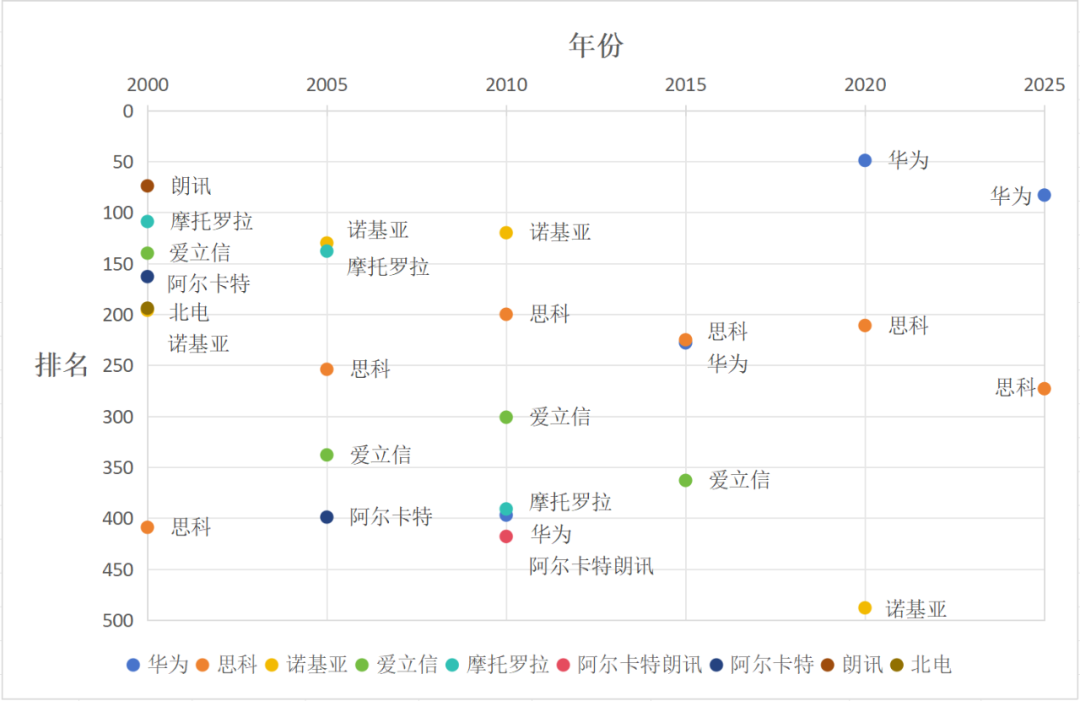
Group 1 - The article discusses the evolution of the telecommunications equipment industry, highlighting the rise and fall of various companies over the past two decades, particularly focusing on the changes in the Fortune Global 500 rankings [2][54]. - In 2000, seven telecommunications equipment manufacturers made it to the Fortune Global 500, including Lucent and Nortel, which have since disappeared from the list, while Huawei and ZTE were still emerging players [5][9]. - By 2015, only three companies remained in the rankings: Cisco, Huawei, and Ericsson, indicating a significant consolidation in the industry [23][25]. Group 2 - Huawei's revenue skyrocketed to $124.3 billion in 2020, marking a 166% increase and a significant rise in its global ranking, showcasing its rapid growth in the telecommunications sector [26][27]. - The article notes that the global telecommunications market is fixed in size, meaning Huawei's growth has come at the expense of other manufacturers, leading to a decline in their market presence [28][31]. - The geopolitical tensions, particularly the U.S. actions against Huawei, have disrupted the established global supply chain and forced a reevaluation of industry dynamics [32][33]. Group 3 - By 2025, only Huawei and Cisco remained in the Fortune Global 500, with Huawei ranking 83rd and Cisco at 273rd, reflecting the ongoing challenges faced by traditional Western manufacturers like Ericsson and Nokia [37][54]. - The article highlights that the telecommunications industry is cyclical, with both Ericsson and Nokia experiencing revenue declines post-peak 5G investments, indicating a potential downturn in the market [38][41]. - The competitive landscape has shifted, with Huawei's unique management and compensation strategies contributing to its sustained growth, while traditional companies struggle to adapt to changing market conditions [61][62].