Novo Nordisk(NVO)

Search documents
Healthy Returns: 2026 will be the year of obesity pills from Novo Nordisk, Eli Lilly
CNBC· 2025-12-16 19:29
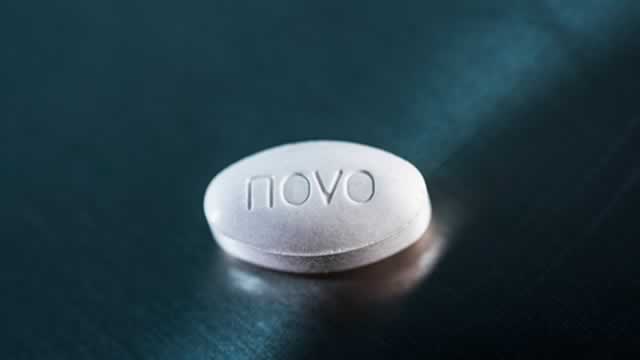
Core Insights - GLP-1 pills for obesity are expected to be available in the U.S. by 2026, providing a more convenient and potentially cheaper alternative to current injection treatments [1][2] - Drugmakers Novo Nordisk and Eli Lilly are developing daily pills aimed at expanding the patient base, particularly for those averse to needles or who do not perceive their condition as severe enough to warrant injections [2] - While the new pills may not be more effective than existing weekly injections, the introduction of these options is seen as a significant benefit for patients, especially following recent supply shortages of injections [3] Market Potential - Goldman Sachs analysts project that the new pills could capture a 24% market share, equating to approximately $22 billion, of the anticipated $95 billion global weight loss drug market by 2030 [4]


X @The Economist
The Economist· 2025-12-16 18:30
Novo Nordisk’s investors are rattled. The Danish drugmaker’s market value is down by two-thirds from its peak. Even so, Novo’s new chief executive is confident that it can recover https://t.co/yuDUuudB6Y https://t.co/A2bW1STvAf ...
摩根大通:诺和诺德与白宫的定价协议将推动销量
Xin Lang Cai Jing· 2025-12-16 12:29
Core Viewpoint - Investors in Novo Nordisk should consider that the White House's drug pricing agreement will have a low single-digit percentage drag on the group's growth [1] Group 1: Drug Pricing Agreement Impact - The agreement regarding Medicare pricing is expected to promote sales growth, which should start to manifest by mid-2026, potentially offsetting the impact of price reductions [1] - There may be a lag between the price reductions and subsequent sales growth [1] Group 2: Market Challenges - The presence of Novo Nordisk's generic drugs in multiple markets poses a potential downside risk to the group's growth [1] - Despite signs of a slowdown in the growth of compounded drugs, some patients using these drugs may still be unable to afford approved medications [1]
Novo Nordisk Loses Momentum As Eli Lilly Pulls Ahead In Weight-Loss Wars
Benzinga· 2025-12-16 11:48
Core Viewpoint - Novo Nordisk's stock has experienced a significant decline of approximately 41% year to date, primarily due to disappointing results from the REDEFINE 2 phase 3 trial for its CagriSema product [1]. Financial Performance - In May and July, Novo Nordisk revised its 2025 sales growth guidance downward, with the latest estimate set at 8-11% at constant exchange rates (CER) [2]. - Analyst estimates suggest a potential sales decline in 2026, contrasting sharply with the 25%-30% growth seen during the company's peak years [9]. Competitive Landscape - Eli Lilly's stock has risen about 38% while Novo Nordisk's shares have declined, indicating a competitive shift in the market [4]. - Novo Nordisk's product pipeline is primarily focused on insulin, heart disease medications, and weight loss drugs, whereas Eli Lilly has a more diverse pipeline that includes treatments for cancer, Alzheimer's, and other conditions [5]. Product Performance - Wegovy, Novo Nordisk's obesity treatment, has generated $46 billion in net profit since its U.S. approval in mid-2021, but it is facing competition from Eli Lilly's Zepbound, which has surpassed Wegovy in new weekly prescriptions this year [7]. - A planned head-to-head trial in 2026 between Novo's CagriSema and Lilly's Zepbound is anticipated to attract investor attention [7]. Clinical Data - In a real-world study, Wegovy demonstrated a 57% greater risk reduction for heart attack, stroke, and cardiovascular-related death compared to Eli Lilly's tirzepatide, indicating its effectiveness in treating patients with obesity and cardiovascular disease [8].
X @The Economist
The Economist· 2025-12-15 22:25
To recover its lead in obesity drugs, Novo Nordisk is transforming itself https://t.co/FocqDYoQDG ...
Eli Lilly’s Obesity Drug Dominance Still Underpriced By Market, Bank of America Says - Eli Lilly (NYSE:LLY)
Benzinga· 2025-12-15 17:05
Core Viewpoint - Eli Lilly & Co. is positioned strongly in the obesity therapeutics market, with Bank of America highlighting significant growth potential that the market may be underestimating [1][10] Company Performance and Stock Outlook - Bank of America analyst Jason Gerberry maintains a Buy rating on Eli Lilly, slightly adjusting the price target from $1,286 to $1,268, while the stock was trading around $1,055 [1][2] - There is perceived "room for stock upside" as Lilly executes key obesity launches and mitigates risks associated with new therapies [2] Product Launch and Market Readiness - Orfoglipron, Lilly's oral GLP-1 weight-loss pill, is expected to launch in the second half of 2026, following an expedited regulatory review [3] - The oral formulation of Orfoglipron eliminates refrigeration and injection barriers, making it more appealing to patients [3] Revenue Projections - Bank of America forecasts $3 billion in Orfoglipron revenue for 2026, significantly higher than consensus estimates of around $1 billion [4] - For context, Lilly's Zepbound generated approximately $5 billion in U.S. sales in its first full year despite early supply constraints [5] Access and Pricing Strategy - A recent U.S. government agreement allows Medicare and Medicaid beneficiaries to access obesity medications at a fixed net price of $245, translating to about $50 per month for patients [6] - This agreement is viewed as a strategic trade-off that may pressure headline pricing but is expected to drive higher patient volumes [6][7] Long-Term Growth Potential - Lilly's long-term growth story remains intact, with several upcoming data readouts from Phase 3 trials for retatrutide expected to influence future growth [8] - There is particular opportunity in treating "super-obese" patients, which could support high-single-digit billion peak sales [9] Competitive Landscape - Bank of America anticipates that Novo Nordisk's upcoming head-to-head obesity study will show non-inferiority, but it is not expected to significantly impact Zepbound's market position [9] Overall Market Position - Bank of America asserts that Lilly's sales growth trajectory over the next five to seven years supports a premium valuation, driven by leadership in obesity, upcoming oral GLP-1 launches, and expanding access channels [10]
CHMP Backs Higher-Dose Wegovy as Novo Nordisk Seeks 2026 EU Approval
ZACKS· 2025-12-15 16:36
Core Insights - Novo Nordisk (NVO) received a positive opinion from the European Medicines Agency's (EMA) Committee for Medicinal Products for Human Use (CHMP) for the EU approval of a higher dose of its obesity injection, Wegovy (semaglutide), with a final decision expected in early 2026 [1][6] - The regulatory filing seeks approval for a 7.2 mg dose, which is claimed to offer greater weight loss potential compared to existing doses [2][3] - The STEP UP study demonstrated that patients receiving the 7.2 mg dose achieved an average weight loss of 20.7%, significantly higher than the 2.4 mg dose (17.5%) and placebo (2.4%) [3][4] Efficacy and Safety - In the STEP UP study, 33.2% of patients on the 7.2 mg dose achieved at least 25% weight loss at 72 weeks, compared to 16.7% in the 2.4 mg group [4][6] - The safety profile of the higher dose was consistent with the approved 2.4 mg dose, indicating no new safety concerns [5] Regulatory Developments - Novo Nordisk has also applied for a single-dose delivery device for the 7.2 mg Wegovy and submitted a regulatory filing in the U.S. for the same dose, seeking an expedited review through the FDA's CNPV pilot program [7][8] - The CNPV program aims to fast-track the review process for drugs addressing serious medical needs, reducing the standard review period significantly [8] Competitive Landscape - The obesity treatment market is becoming increasingly competitive, with Novo Nordisk and Eli Lilly (LLY) as the primary players [9] - Both companies are racing to introduce oral weight-loss medications, with Novo Nordisk already seeking approval for an oral version of Wegovy [11] - Eli Lilly is also developing a range of next-generation drugs, including orforglipron and retatrutide, with regulatory filings expected soon [12] Emerging Competitors - Smaller biotech firms like Viking Therapeutics and Structure Therapeutics are advancing their own GLP-1-based therapies, potentially challenging the market dominance of Novo Nordisk and Eli Lilly [13][14] - Viking Therapeutics is conducting late-stage studies for its VK2735 candidate, while Structure Therapeutics is preparing for late-stage studies of aleniglipron [13][14] Market Performance - Over the past year, Novo Nordisk's shares have declined by 53.6%, contrasting with the industry's growth of 12.2% [5]
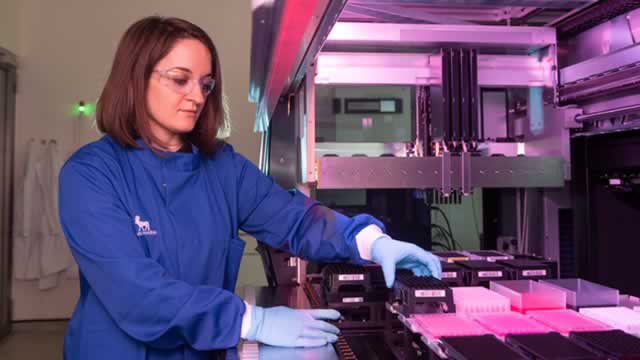
减重效果再突破:诺和诺德已向FDA提交7.2mg司美格鲁肽上市申请
GLP1减重宝典· 2025-12-15 10:43
Core Viewpoint - Novo Nordisk has submitted a supplemental new drug application (sNDA) to the FDA for a higher dose of semaglutide injection (7.2 mg) aimed at long-term weight management in adults with obesity, which is part of a fast-track approval process [3][4]. Group 1: Clinical Trial Results - The sNDA includes results from the STEP UP trial, a 72-week randomized, double-blind, placebo-controlled study involving 1,407 adults with obesity (BMI ≥ 30 kg/m²) [4]. - Patients receiving 7.2 mg of semaglutide lost an average of 20.7% of their body weight after 72 weeks, compared to 17.5% for those on 2.4 mg and 2.4% for the placebo group [4]. - Among patients who adhered to the treatment, 33.2% in the 7.2 mg group achieved a weight loss of 25% or more, compared to 16.7% in the 2.4 mg group and 0.0% in the placebo group [4]. Group 2: Weight Loss Metrics - In the 7.2 mg group, 90.7% of participants lost at least 5% of their body weight, while the figures were 89.9% for the 2.4 mg group and 36.8% for the placebo group [5]. - After 72 weeks, 31.2% of those on 7.2 mg achieved a weight loss of 25% or more, compared to 15.3% in the 2.4 mg group and 0.0% in the placebo group [5]. Group 3: Safety and Regulatory Status - The 7.2 mg group reported a higher incidence of gastrointestinal adverse events compared to the 2.4 mg and placebo groups, with serious adverse events reported at rates of 6.8%, 10.9%, and 5.5%, respectively [5]. - The European Medicines Agency (EMA) and other regulatory bodies are currently reviewing the new high-dose semaglutide, with a decision expected in Q1 2026 [5].
趋势研判!2025年中国肥胖症药物行业发展全景分析:市场规模不断增长,超重肥胖症药物市场具有强劲增长潜力[图]
Chan Ye Xin Xi Wang· 2025-12-15 01:42
Core Insights - Obesity is a prevalent and complex chronic disease, recognized as a significant risk factor for various chronic metabolic diseases, leading to a growing demand for weight loss treatments [1][2] - The global market for obesity drugs is expanding rapidly, with the overweight obesity drug market projected to reach $17 billion in 2024 and $20.6 billion in 2025, indicating strong growth potential [6][8] Industry Definition and Categories - Obesity is classified as a chronic, multifactorial disease requiring long-term treatment to mitigate obesity-related health risks, with drug therapy being a crucial component of treatment strategies [2][3] - Current obesity treatment drugs fall into three main categories: central weight loss drugs, non-central weight loss drugs, and anti-diabetic drugs with weight loss effects [3] Market Size and Growth - The global overweight obesity drug market is expected to grow from $17 billion in 2024 to $20.6 billion in 2025, with GLP-1 obesity drugs projected to account for $14.7 billion (86.47%) of the market in 2024 and $18.2 billion (88.35%) in 2025 [6][8] Industry Chain - The obesity drug industry chain consists of upstream raw materials (high-grade pharmaceutical intermediates, APIs), midstream production (obesity drug manufacturing), and downstream distribution channels (hospitals, specialty pharmacies, online pharmacies) [8] Policy Environment - The increasing prevalence of obesity is expected to lead to significant healthcare costs, prompting the need for effective interventions and policies to manage obesity, with a focus on drug treatments [8][9] Competitive Landscape - Key players in the obesity drug market include Novo Nordisk, Hanyu Pharmaceutical, East China Pharmaceutical, and others, with a growing emphasis on the development of effective weight loss medications [10][11] - Novo Nordisk's semaglutide has become a leading product in the market, contributing significantly to the company's revenue [11][12] Challenges in the Industry - The obesity drug market faces challenges such as limited drug options available in domestic markets, insufficient clinical research on long-term safety and efficacy, and lack of insurance coverage for obesity treatments [14][15] - There is a need for a multi-modal treatment approach, combining lifestyle interventions with pharmacological and surgical options to effectively manage obesity [15]



2 Predictions for Novo Nordisk in 2026
The Motley Fool· 2025-12-14 14:30
Core Viewpoint - Novo Nordisk is attempting a comeback after facing significant challenges over the past 18 months, including poor financial results and clinical setbacks, which have led to a decline in stock price [1][2]. Revenue Growth and Market Dynamics - Novo Nordisk's revenue growth has significantly dropped in the past two years, prompting multiple downward revisions of guidance [3][5]. - Key growth drivers, Wegovy and Ozempic, have been affected by government-mandated price cuts in the U.S., leading to lower prices for eligible Medicare and Medicaid patients, alongside the company's own price reductions for cash-paying patients [5][7]. Sales Volume and New Indications - The reduction in price may increase sales volume as more patients can afford the medications, particularly Wegovy, which has limited insurance coverage [8]. - New indications for semaglutide, including an oral version and approval for metabolic dysfunction-associated steatohepatitis (MASH), are expected to boost sales [9]. Competitive Landscape and Pipeline Progress - Novo Nordisk is losing market share to Eli Lilly in the GLP-1 market but is expected to make strong pipeline progress with several mid- and late-stage candidates, including Amycretin, which shows promise in weight loss and Type 2 diabetes treatment [12][13]. - Amycretin's dual hormonal approach may enhance efficacy, potentially allowing Novo Nordisk to regain competitive ground [13]. Investment Consideration - Despite recent challenges, Novo Nordisk's shares appear attractive at current valuation levels, trading at 12.7 times forward earnings, below the healthcare sector average of 17.6 [14]. - The company remains a leader in the growing weight loss market and has a robust pipeline, suggesting potential for recovery and superior returns for investors who initiate positions now [14].