Pfizer(PFE)

Search documents
Pfizer Invites Public to View and Listen to Webcast of Pfizer Discussion at Healthcare Conference
Businesswire· 2025-11-12 15:00
Core Viewpoint - Pfizer is inviting the public and investors to participate in a webcast discussion at the Jefferies London Healthcare Conference, scheduled for November 19, 2025, at 9:00 a.m. GMT, featuring CFO Dave Denton [1][2]. Group 1: Webcast Details - The webcast can be accessed via Pfizer's investor website, with registration information available starting today [2]. - A transcript and replay of the discussion will be accessible on the website within 24 hours after the live event and will remain available for at least 90 days [2]. Group 2: Company Overview - Pfizer focuses on applying science and global resources to develop therapies that significantly improve patients' lives, aiming to set standards for quality, safety, and value in healthcare product development [3]. - The company collaborates with healthcare providers, governments, and communities to enhance access to affordable healthcare globally, with a history of 175 years in the biopharmaceutical industry [3]. Group 3: Legal and Financial Context - Pfizer has filed a second lawsuit against Metsera, its controlling stockholders, and Novo Nordisk, alleging anticompetitive actions by Novo Nordisk in relation to a merger proposal [8]. - The company has also responded to a Delaware Chancery Court ruling regarding a temporary restraining order related to the merger agreement with Metsera [6].



C4 Therapeutics (NasdaqGS:CCCC) FY Conference Transcript
2025-11-12 14:30
Summary of C4 Therapeutics FY Conference Call Company Overview - C4 Therapeutics is a targeted protein degradation company focused on developing medicines that utilize the body's natural system to destroy disease-causing proteins rather than inhibiting them [4][5] - The company is celebrating its 10th anniversary and currently has two active clinical programs: - **Sensitamide**: An IKZF1/3 degrader for multiple myeloma, with plans for further studies in early 2026 [4][5] - **EGFR L858R degrader**: In phase one with Beta Pharmaceuticals in China, targeting a specific mutation [4][5] - C4 has collaborations with Roche, Merck KGAA, and a completed collaboration with Biogen [5] - Recent financing provides operational runway through the end of 2028 [6] Core Product Insights Sensitamide - Designed as a highly targeted and potent degrader of IKZF1 and IKZF3, which are implicated in myeloma and lymphoma proliferation [7] - Key features include: - Low protein binding, allowing for effective drug concentration in the bone marrow [7] - No renal clearance, enabling treatment for patients with renal insufficiency [8] - A half-life of 48 hours, facilitating dosing [8] - Clinical data indicates: - A 33% overall response rate across all patients, with a 53% response rate in late-line refractory patients at the highest dose [12] - Mild toxicity profile with no significant gastrointestinal or neurological side effects [10] - T cell activation observed, enhancing immune response [13] Market Dynamics and Competitive Landscape - The myeloma treatment landscape is evolving, with a shift towards introducing effective treatments earlier in the therapy regimen [18] - Sensitamide is positioned to compete against CAR-T and BITE therapies, with potential for combination therapies to enhance efficacy [20][42] - The company anticipates a growing market for late-line treatments as newer agents lead to longer patient survival but not cures [42] - Estimated market opportunity for Sensitamide is projected at $1 billion to $1.5 billion in late-line settings and $2.5 billion to $4 billion when considering second-line treatments [43] Clinical Development Strategy - Plans to initiate a phase one B study in early 2026, combining Sensitamide with Pfizer's ELREXFIO [21][22] - The study will evaluate multiple dose levels to determine optimal safety and efficacy [22] - A non-randomized phase two study will also be initiated to confirm efficacy in late-line patients [24] - The strategy includes potential for accelerated approval based on early efficacy signals [23][24] Collaboration and Future Directions - Collaboration with Pfizer is focused on leveraging expertise in BITEs for the development of combination therapies [38][39] - The company is open to exploring additional combinations as resources allow, including with CD38 and carfilzomib [25] - Continuous updates on trial progress and safety data will be provided to investors [40] Conclusion - C4 Therapeutics is well-positioned in the evolving myeloma treatment landscape with its innovative approach to targeted protein degradation, particularly through Sensitamide, which shows promising clinical data and a strong market opportunity [4][43]

诺和诺德,多了一个竞争对手
Ge Long Hui· 2025-11-12 11:06
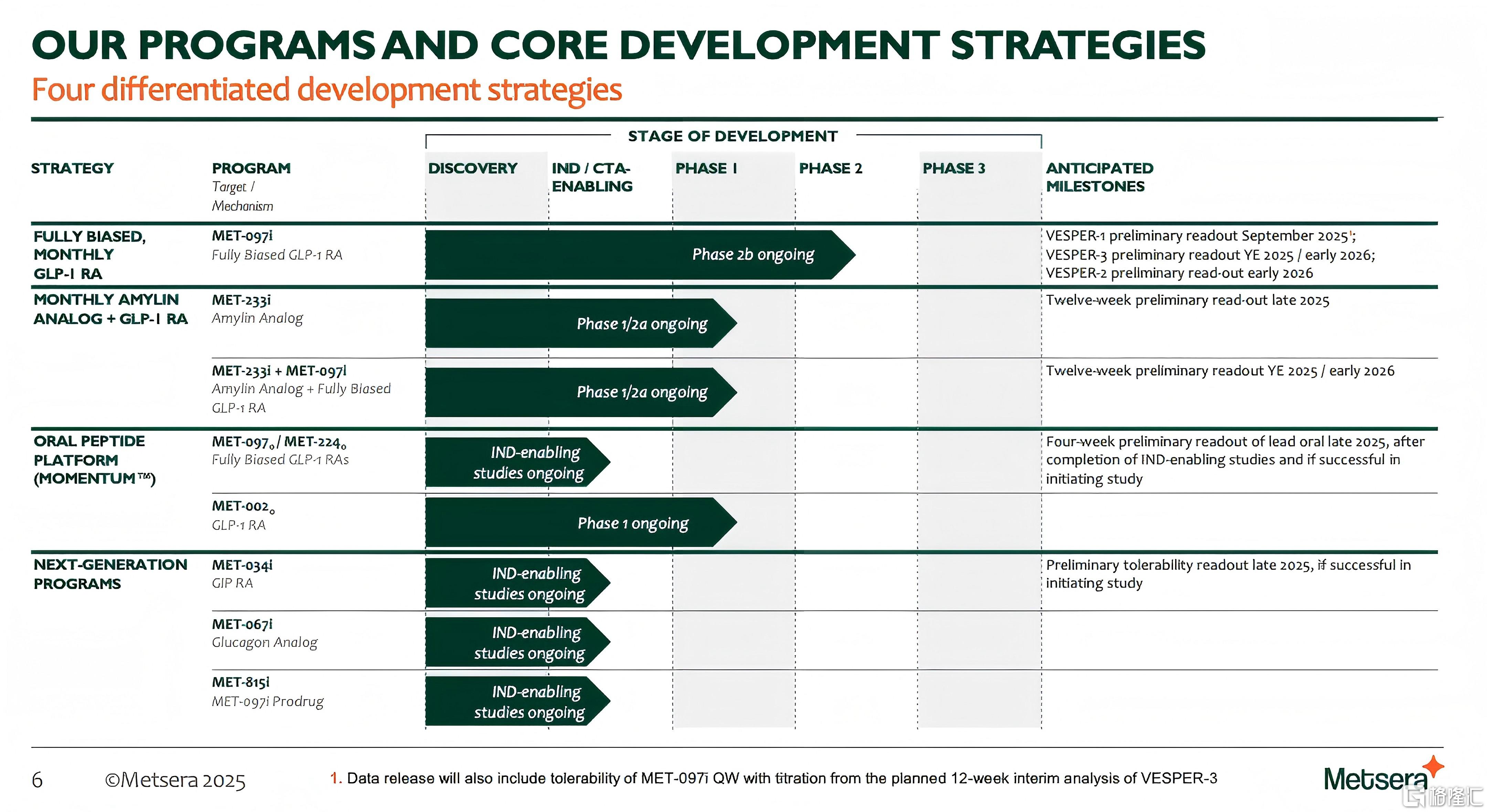
Core Insights - The acquisition battle between Pfizer and Novo Nordisk for the next-generation weight loss drug developer Metsera has concluded, with Pfizer emerging victorious, adding a new competitor in the weight loss drug market [1][3][28] Group 1: Acquisition Details - Pfizer initially reached an agreement to acquire Metsera for up to $7.3 billion in September 2023, but Novo Nordisk intervened with a $9 billion offer [3][5] - Following legal actions from Pfizer accusing Novo Nordisk of attempting to bypass antitrust scrutiny, both companies revised their bids, with Pfizer ultimately acquiring Metsera for a maximum of $10.625 billion [4][5] - Metsera's innovative drug pipeline, which includes long-acting and oral GLP-1 receptor agonists, is seen as a critical asset in the competitive weight loss market [11][23] Group 2: Market Dynamics - The competition in the weight loss drug market is intensifying, with major players like Eli Lilly challenging Novo Nordisk's dominance, particularly in the GLP-1 segment [15][18] - Novo Nordisk's sales of its flagship product, semaglutide, reached approximately $25.428 billion in the first three quarters of 2025, but it faces increasing competition from Eli Lilly's tirzepatide, which has seen a 125% year-over-year sales increase [15][18] - The market is shifting from a "duopoly" to a "mixed battle" era, with multiple companies vying for dominance in next-generation weight loss drugs [22][28] Group 3: Strategic Implications - Pfizer's acquisition of Metsera is part of a broader strategy to fill revenue gaps due to upcoming patent expirations on key products, as eight major products will lose patent protection in the next three years [13][14] - Novo Nordisk is under pressure to maintain its market position, as its core product contributes over 80% of its revenue and faces patent expiration in March 2026 [18][20] - The focus on next-generation weight loss drugs, including oral GLP-1 agonists and multi-target therapies, is critical for companies to secure a competitive edge in the evolving market landscape [23][28]

减重专题:GLP-1有望成为慢病基石药物,1
2025-11-12 02:18
Summary of Key Points from the Conference Call Industry Overview - The conference call focuses on the weight loss drug market, particularly the development of GLP-1 (glucagon-like peptide-1) medications and their potential as cornerstone treatments for chronic diseases [1][2][3]. Core Insights and Arguments - **Market Dynamics**: The weight loss drug market is characterized by both consumer and medical attributes, with commercialization being a key factor. Major pharmaceutical companies are considering consumer needs in their decision-making processes [2][3]. - **Current Market Leaders**: Tirzepatide (referred to as "替尔") has gained a significant market share in the U.S., capturing 60% due to its higher efficacy (22.5% weight loss) compared to Semaglutide (司美) (15.6% weight loss) [2][3]. - **Future Development Directions**: The focus will be on improving efficacy (15%-35% weight loss), tolerability, adherence, and differentiated competition. There is also an emphasis on treating complications and exploring new frontiers in drug development [2][3][8][9]. - **Global Patient Population**: By 2030, the target patient population is expected to reach approximately 1.5 billion globally, indicating a vast market potential [1][7]. Investment Opportunities - **Key Players**: Major pharmaceutical companies like Novo Nordisk, Pfizer, and Eli Lilly are heavily investing in the weight loss drug sector, with diverse strategies including core GLP-1 therapies and new target explorations [1][4][5]. - **Notable Products**: The UBT251 product from Federated Pharmaceuticals, which has been licensed to Novo Nordisk, is highlighted as a potential catalyst for investment due to milestone payments and profit-sharing opportunities [4]. - **Emerging Technologies**: Companies are exploring various technological routes for drug development, including the combination of calcitonin and amylin, and the SIRA technology [5][6]. Market Size and Demand Factors - **Market Size Estimation**: The U.S. has approximately 155 million obese individuals, with a penetration rate of less than 5%. If the penetration rate increases to 10%, the market size could reach $150 billion [7]. - **Cost Considerations**: The average cost per patient is estimated at $1,000, leading to a potential market size of $1.5 trillion if fully realized [7]. Development Trends and Key Focus Areas - **Future Trends**: The development of weight loss drugs will focus on achieving reasonable weight loss percentages, enhancing patient adherence, and addressing complications such as diabetes and cardiovascular diseases [8][9]. - **Clinical Data**: Upcoming clinical data from various trials, including those from Elara and Kaggle SEMA, are expected to provide insights into the efficacy and safety of new weight loss drugs [20]. Regional Insights - **China's Progress**: Chinese companies are making significant strides in dual-target and triple-target drug development, with notable projects like Hengrui's Calera expected to enter Phase III trials by the end of 2025 [10][11][30]. Conclusion - The weight loss drug market is poised for significant growth, driven by advancements in drug efficacy, patient adherence strategies, and a growing global patient population. Major pharmaceutical companies are actively investing in this space, presenting numerous investment opportunities for stakeholders.

全球疫苗大失速
3 6 Ke· 2025-11-11 23:30
Core Viewpoint - The global vaccine industry is undergoing a significant adjustment, with major players experiencing a collective decline in vaccine business due to various macro factors, including a growing public skepticism towards vaccines in the U.S. [2][3][7] Group 1: Financial Performance of Major Vaccine Companies - The latest Q3 financial reports from major vaccine companies, including Sanofi, Merck, Pfizer, and GSK, indicate a downturn in vaccine sales, with a projected 19% decline in total sales for the top ten vaccines in 2024 compared to 2023, amounting to $38.4 billion [4][6]. - Sanofi reported a 17% decline in sales of COVID-19 and flu vaccines, with traditional vaccine revenue dropping 8% to €3.36 billion, primarily due to a slowdown in flu vaccine sales [4]. - Merck's sales of its HPV vaccine Gardasil/GARDASIL 9 fell by 24% to $1.75 billion in Q3, with a staggering 40% drop in revenue for the first three quarters of the year [5]. - Pfizer's COVID-19 vaccine Comirnaty saw a 20% global sales decline, with a 25% drop in the U.S. market, alongside disappointing performances from its pneumonia and RSV vaccines [5][6]. Group 2: Macro Factors Impacting Vaccine Trust - The decline in vaccine trust in the U.S. is attributed to the actions of Robert F. Kennedy Jr., the new Secretary of Health and Human Services, who has promoted anti-vaccine sentiments and policies that undermine public confidence in vaccines [7][8]. - A recent survey indicated that 30% of Americans are skeptical about vaccines, with a significant drop in the belief that childhood vaccines are essential, from 58% in 2019 to 40% in 2024 [8]. - The CDC reported over 1,600 confirmed measles cases in 2025, a stark increase from 285 cases the previous year, highlighting the consequences of declining vaccination rates [9]. Group 3: Historical Context and Future Implications - The current situation in the U.S. vaccine market mirrors Japan's past vaccine industry decline, which was triggered by public trust issues and government policy changes that led to a significant drop in vaccination rates [10][11]. - The ongoing crisis in vaccine trust poses a risk not only to the industry but also to public health, as evidenced by the resurgence of preventable diseases like measles [9][10].


辉瑞击败诺和诺德,赢得减肥药企收购战
财富FORTUNE· 2025-11-11 14:37
Core Viewpoint - Pfizer has successfully acquired Metsera, a company focused on developing obesity and diabetes treatments, outbidding Novo Nordisk, the manufacturer of popular weight loss drugs Ozempic and Wegovy [2][3]. Group 1: Acquisition Details - Pfizer will acquire Metsera at a maximum price of $86.25 per share, which includes $65.60 in cash and potential future cash rights of up to $20.65 per share [3]. - The acquisition comes after Pfizer previously halted the development of an oral weight loss drug, indicating its continued interest in the obesity treatment market [3][4]. - Metsera's board believes Pfizer's revised offer is the most favorable for shareholders, especially considering the antitrust risks associated with Novo Nordisk's bid [3][4]. Group 2: Competitive Landscape - Novo Nordisk attempted to increase its offer to $10 billion to outbid Pfizer but ultimately decided to withdraw from the competition [5]. - Novo Nordisk's final proposal included a cash offer of $62.20 per share, which was higher than its previous offer of $56.50 per share, along with additional contingent payments based on development milestones [5].
辉瑞中国李进晖:本土合作将继续 要向更早的研发阶段延伸
Mei Ri Jing Ji Xin Wen· 2025-11-11 13:38
Core Insights - Pfizer showcased its innovative cancer treatments and rare disease therapies at the 8th China International Import Expo, marking its seventh participation and aligning with its "OUTDO CANCER" initiative and "Pfizer China 2030 Strategy" [1] - The company highlighted the innovative therapy for hemophilia, Matasimab, which is the first fixed-dose subcutaneous injection therapy approved in the US and EU [2] - Pfizer is focusing on enhancing its collaboration with local Chinese biopharmaceutical companies to address unmet clinical needs, particularly in gastrointestinal tumors [5] Group 1: Product Showcase - Pfizer displayed 9 oncology products and 4 rare disease treatments, with Matasimab being the primary focus, officially launched in Hainan in February 2023 [2] - Matasimab aims to shift the treatment focus to preventive medication, reducing bleeding events and preventing irreversible damage to joints and organs [2] Group 2: Long-term Strategy in Rare Diseases - Pfizer is exploring long-term strategies in rare diseases, such as ATTR, with the aim of improving diagnosis and treatment through the establishment of Centers of Excellence (CoE) [3] - The company is working to enhance early diagnosis and timely treatment for patients by promoting systematic screening in collaboration with major medical centers [3] Group 3: Clinical Research and Collaboration - There is a growing trend of including China in global clinical research from the outset, allowing Chinese researchers to take on leading roles in international projects [4] - Pfizer has recognized the rise of local innovation capabilities in biopharmaceuticals, transitioning from generic drug research to innovative drug development [4] Group 4: Focus on Gastrointestinal Tumors - Pfizer is expanding its focus to include gastrointestinal tumors, which have been underrepresented in innovative treatments, particularly for pancreatic and gastric cancers [5] - The company plans to engage with local startups and clinical experts to better address unmet clinical needs in the Chinese market [5]
Who's Winning the Intense Battle to Rule the White-Hot GLP-1 Drug Market?
The Motley Fool· 2025-11-11 09:25
Market Overview - The global GLP-1 market was valued at approximately $52 billion in 2024 and is projected to grow to $187 billion by 2032, indicating a compound annual growth rate of nearly 17% [2] - The number of patients in the U.S. starting GLP-1 treatments for non-diabetic purposes has surged by 700% since 2019, highlighting the increasing demand for these drugs [3] Competitive Landscape - Major pharmaceutical companies, including Novo Nordisk, Eli Lilly, and Pfizer, are competing for market share in the expanding GLP-1 market [4] - Novo Nordisk's semaglutide, marketed as Wegovy and Ozempic, reported third-quarter sales of approximately $3.1 billion and $4.7 billion, respectively, with year-over-year increases of 18% and 9% [5] - Eli Lilly's tirzepatide, sold as Mounjaro and Zepbound, became the world's best-selling drug in the third quarter, achieving year-to-date sales of $24.8 billion [7] Strategic Moves - Pfizer is attempting to enter the weight-loss market by pursuing an acquisition of Metsera, a clinical-stage biopharmaceutical company, for an estimated $4.9 billion [8] - Novo Nordisk has also expressed interest in acquiring Metsera, intensifying the competition for the startup [10] Financial Performance - Novo Nordisk's third-quarter earnings per share were 4.5 Danish krone ($0.70) on revenue of $11.6 billion, falling short of market expectations [11] - The company has revised its 2025 outlook, expecting sales and operating profit growth to be 4 and 6 percentage points lower than previously anticipated [12] - Eli Lilly and Novo Nordisk have secured agreements with the Trump administration to reduce prices for their anti-obesity drugs for Medicare and Medicaid patients, potentially increasing their market access [13][14] Stock Performance - Novo Nordisk's share price has decreased by 46% this year, while Pfizer's stock is down 6%, in contrast to Eli Lilly's stock, which has risen by 21% [16] - Eli Lilly is currently viewed as the most favorable investment option among the three companies due to its rising fortunes and market share [17]

Why a Strong Quarter Wasn't Enough to Send Shares of Pfizer Soaring
The Motley Fool· 2025-11-11 09:10
Core Insights - Pfizer reported strong quarterly results, beating Wall Street expectations with sales of $16.65 billion and adjusted earnings per share of $0.87, while also raising its guidance for the year [3] - Despite the positive earnings report and a high dividend yield of 7%, Pfizer's stock price has not seen significant movement and is down 8% this year, underperforming the S&P 500 [4][5] - Concerns about future growth due to upcoming patent expirations for key drugs like Eliquis, Vyndaqel, and Ibrance are weighing on investor sentiment [6] Financial Performance - Pfizer's sales exceeded expectations of $16.58 billion, and adjusted earnings per share surpassed the anticipated $0.63 [3] - The company raised its adjusted earnings per share guidance to a range of $3.00 to $3.15, up from $2.90 to $3.10 [3] - Current stock price is approximately $24.39, with a market cap of $139 billion and a forward price-to-earnings multiple of less than 9 [4][7] Market Sentiment - Despite strong fundamentals, investor interest in Pfizer remains low, indicating broader concerns about the company's future growth prospects [5] - The stock has not gained traction, reflecting skepticism among investors despite its low valuation and high dividend yield [5][6] Growth Challenges - Pfizer faces significant challenges with multiple top drugs nearing patent cliffs, which could impact future earnings [6] - The company is focusing on in-house drug development and acquisitions, including a $43 billion acquisition of Seagen, to bolster its pipeline [6] - There is a concern that without a major drug approval, Pfizer's earnings may decline, potentially jeopardizing its dividend payout [6] Long-term Outlook - Pfizer has over 100 potential drug candidates in its pipeline, suggesting that it still has opportunities for growth [7] - While immediate catalysts may be lacking, the company is viewed as a long-term investment opportunity due to its solid fundamentals and low valuation [8]
Pfizer Inc. (PFE) Discusses Clinical Development Strategy for 4404 Bispecific Antibody in Oncology Transcript
Seeking Alpha· 2025-11-11 08:31
Core Points - Pfizer is conducting a clinical development strategy spotlight on the PD-1 VEGF bispecific PF-4404 [1] - The Pfizer Pflash series aims to provide educational insights into the company's pipeline, products, and personnel [2] - Each session in the series focuses on a specific product, therapeutic area, or growth initiative, allowing interaction with business leaders [3]