Raytheon Technologies(RTX)

Search documents
RTX's Raytheon awarded $168 million contract for Romanian Patriot air defense equipment
Prnewswire· 2025-12-19 08:00
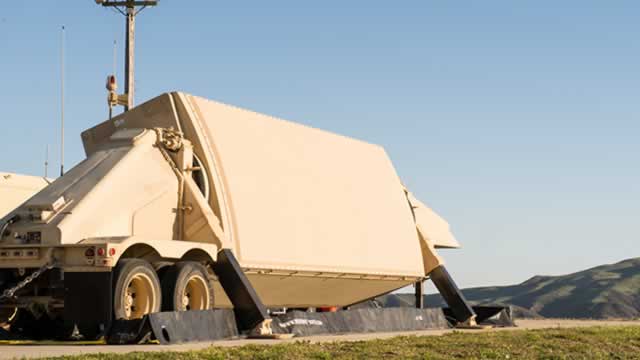
Core Insights - Raytheon has secured a $168 million contract to supply Romania with equipment for the Patriot air and missile defense system, marking the second order within a year [1][3] - The contract includes essential components such as radar, command and control systems, launchers, and various support and test equipment [1] - The Patriot system is recognized globally as a combat-proven air and missile defense solution, capable of defending against a wide range of aerial threats [2][3] Company Overview - Raytheon, part of RTX, is a leading provider of defense solutions, focusing on integrated air and missile defense, smart weapons, and advanced sensors [4] - RTX is the largest aerospace and defense company globally, with over 185,000 employees and projected sales exceeding $80 billion in 2024 [5]



安期货晨会纪要-20251219




Xin Yong An Guo Ji Zheng Quan· 2025-12-19 04:01
Core Insights - US core inflation unexpectedly eased to a four-year low, raising questions among economists about the reliability of the data due to a prior government shutdown [8][14] - ByteDance has signed an agreement to establish a joint venture in the US with majority ownership by American investors [8][14] Market Performance - The A-share market opened lower but closed higher, with the Shanghai Composite Index up 0.16% at 3876.37 points, while the Shenzhen Component fell 1.29% and the ChiNext Index dropped 2.17% [1] - The Hong Kong market also saw fluctuations, with the Hang Seng Index closing up 0.12% at 25498.13 points, while the Hang Seng Tech Index fell 0.73% [1][5] Economic Indicators - The US core Consumer Price Index (CPI) rose by 2.6% year-on-year in November, while the overall CPI increased by 2.7% [14] - The report indicated that core CPI only increased by 0.2% over the last two months, with declines in hotel, leisure, and clothing prices limiting the overall increase [14] Corporate Developments - TikTok announced the establishment of a joint venture with US investors, which will operate independently and manage US data protection and algorithm security [8][14] - China has reportedly ordered 7 million tons of US soybeans, achieving over half of the procurement target set during the Trump administration [8][14]
Jack Bowman’s CGDV ETF Breakdown: A “Dividend Value” Fund That Defies Its Label
Seeking Alpha· 2025-12-17 15:30
Core Viewpoint - The Capital Group Dividend Value ETF (CGDV) is described as misleadingly labeled, as it aims to produce a dividend yield higher than the S&P 500 while incorporating growth stocks, which differentiates it from traditional value ETFs [4][6][14]. ETF Overview - CGDV's mandate is to generate a dividend yield exceeding the S&P 500's current yield of approximately 1.3%, with CGDV achieving a yield of around 1.8% [5][11]. - The ETF has performed well since its inception, keeping pace with NASDAQ returns and outperforming traditional value ETFs [5][6]. Investment Strategy - CGDV includes a mix of growth and value stocks, with significant holdings in companies like NVIDIA, which contributes to its performance dynamics [6][10]. - The ETF allocates about 20% to mid-cap stocks and approximately 8-10% to foreign stocks, primarily from developed markets [7][10]. Holdings and Diversification - The top holdings of CGDV include major U.S. companies such as Eli Lilly, Microsoft, and NVIDIA, indicating a focus on large-cap stocks [8][10]. - The ETF is positioned as a way to diversify a core holding, offering slightly more foreign and mid-cap exposure compared to traditional indices [13]. Target Investor Profile - CGDV is suited for investors seeking total returns rather than solely focusing on dividends, appealing to those who are comfortable with some level of risk and potential share liquidation for cash needs [12][13]. - Traditional value investors may find CGDV less appealing due to its growth-oriented approach, which diverges from classic value investing principles [14][19]. Market Outlook - The ETF is not hedged against market downturns, but it has shown resilience during market shocks, indicating a potential for stability [17]. - The overall market outlook remains bullish, with expectations of continued growth driven by lower borrowing costs and expanding profit margins for growth companies [20][21].





特朗普拟对超支军火商“动刀”:以行政令限制股息、回购与高管薪酬
智通财经网· 2025-12-17 12:58
Core Viewpoint - The White House is planning to issue an executive order that will restrict defense contractors with delayed and over-budget projects from paying dividends, conducting stock buybacks, and issuing executive compensation [1][2] Group 1: Executive Order Details - The proposed order will require defense companies to tie executive compensation more closely to the overall performance of delivering specific weapon systems [2] - The exact wording of the executive order may still change, and it is unclear how the order will enforce any restrictions on defense companies [1][2] Group 2: Industry Context - The Trump administration has long complained about the high costs and slow progress of the defense industry, promising extensive reforms to accelerate the production of weapons and related technologies [2] - Last month, the Secretary of Defense, Lloyd Austin, announced a reform plan for the Pentagon's weapon procurement aimed at speeding up procurement processes and eliminating bureaucratic inefficiencies [2] Group 3: Market Reaction - Defense contractors' stock prices saw a slight decline in pre-market trading, with Lockheed Martin (LMT.US) down 1.5%, L3 Harris Technologies (LHX.US) down 1.4%, Leidos (LDOS.US) down 0.4%, Northrop Grumman (NOC.US) down 1.2%, General Dynamics (GD.US) unchanged, and Raytheon Technologies (RTX.US) down 0.8% [2]


RTX Surges to Record Highs as Defense Orders Explode
Investing· 2025-12-17 05:48
Group 1 - The core viewpoint of the article emphasizes the market analysis of Rtx Corp., highlighting its investment potential and market positioning [1] Group 2 - The article discusses Rtx Corp.'s recent financial performance, including revenue growth and profit margins, indicating a strong market presence [1] - It provides insights into the competitive landscape, detailing how Rtx Corp. compares with its peers in terms of market share and innovation [1] - The analysis includes projections for future growth, suggesting that Rtx Corp. is well-positioned to capitalize on emerging market trends [1]


The Zacks Analyst Blog Microsoft, Novartis, RTX and Air T
ZACKS· 2025-12-16 11:11
Core Insights - The article highlights the performance and outlook of several stocks, including Microsoft, Novartis, RTX, and Air T, as analyzed by Zacks Equity Research [1][2]. Microsoft - Microsoft's shares have outperformed the Zacks Computer - Software industry over the past year, with a growth of 6.8% compared to the industry's 2.3% [4]. - The company holds a 25% market share in the cloud sector through Azure and integrates AI strategically via OpenAI, generating over $100 billion in annual operating cash flows with margins exceeding 40% [4]. - Fiscal 2026 net sales are expected to grow by 15.1% from fiscal 2025, but the company faces competition from AWS and Google Cloud, regulatory scrutiny, and rising capital expenditures for AI infrastructure [5]. Novartis - Novartis has outperformed the Zacks Large Cap Pharmaceuticals industry over the past year, with a growth of 38.8% compared to 14.9% for the industry [6]. - The company has a diverse portfolio, including drugs like Kisqali and Pluvicto, with projected compound annual growth rates (CAGR) of 37.9% and 43.3% over the next three years [7]. - New drug approvals and label expansions are expected to mitigate the impact of generic competition for key drugs, supported by recent acquisitions and collaborations [8]. RTX - RTX's shares have outperformed the Zacks Aerospace - Defense industry over the past year, with a growth of 54.1% compared to 28.1% for the industry [9]. - The company has a backlog of $251 billion as of September 30, 2025, driven by strong demand for defense products and improving global commercial air traffic [10]. - However, uncertainties from U.S. government import tariffs and ongoing supply-chain challenges pose risks to RTX's performance [11]. Air T - Air T has outperformed the Zacks Transportation - Air Freight and Cargo industry over the past year, with a growth of 0.8% compared to a decline of 8.4% for the industry [12]. - The company shows operational strength with margin expansion in Commercial Aircraft & Engines and stable cash flow from FedEx feeder operations [12]. - Elevated leverage, rising interest costs, and execution risks across segments constrain earnings durability, with liquidity pressured by volatile working-capital needs [13].



大摩盘点美股航空航天/国防/太空三大板块估值变化 哪些标的值得关注?
智通财经网· 2025-12-15 08:53
Group 1: Aerospace Sector - The aerospace sector's valuation has risen above historical levels, with a current NTM EV/EBITDA trading at approximately 18 times, up from about 16 times at the beginning of the year, outperforming the S&P 500 index by a median premium of about 15% [2][3] - Strong air traffic has been a key driver for this valuation increase, highlighted by record passenger screenings by the TSA [2] - Despite some initial concerns regarding supply chain challenges and tariffs, the sector's valuation quickly rebounded as negative impacts did not materialize [2] Group 2: Defense Sector - The valuation multiples for major U.S. defense contractors have improved, with the current NTM P/E median at about 20 times, up from approximately 17 times at the beginning of 2025 [4] - The expansion in valuation multiples is partly due to alleviated concerns over potential defense spending cuts, as these cuts have not occurred [4] - Key government funding initiatives, including approximately $24 billion for the Iron Dome and $150 billion for overall defense, have provided support for the sector [4] Group 3: Space Sector - The space sector has experienced significant volatility, with the NTM EV/Sales median peaking above 10 times in September before dropping to about 4 times in November, and currently recovering to around 6 times [6] - Major IPOs in the sector, such as Voyager and Firefly, initially saw rapid market capitalization growth but have since declined below their issue prices due to investor caution [6] - Companies like Rocket Lab and Planet Labs are highlighted as strong performers, trading at approximately 35 times and 11 times NTM EV/EBITDA, respectively, supported by operational success and a new business model focus [6][7]


美国AI 专家洞察:商业售后市场定价展望AI-Unlocked Expert Insights_ Commercial Aftermarket Pricing Outlook
2025-12-15 01:55
Summary of Key Points from the Conference Call Transcript Industry Overview - **Industry**: Aerospace & Defense Electronics, specifically focusing on the Commercial Aftermarket (AM) pricing dynamics [1][2] Core Insights 1. **Maintenance Cost Increases**: Maintenance costs have risen by 30-35% since 2021/2022, with expectations for continued momentum in the high single digits (MSD+) moving forward [1][4][21] 2. **Turnaround Times (TAT)**: TATs remain elevated at approximately 100-125 days, although some relief is being found through engine exchange programs [1][16][31] 3. **PMA and USM Advantages**: Parts Manufacturer Approval (PMA) and Used Serviceable Material (USM) are gaining traction due to their pricing advantages, with PMA parts sold at a 20-25% discount to Original Equipment (OE) list prices [3][5][10] 4. **Workscope Expansion**: Workscope expansions can lead to significant increases in service costs, with second shop visits (SVs) for GE90 engines being 60-70% heavier than first visits [4][22] 5. **Parts Inflation**: Parts inflation is shifting the market mix towards USM, with certain parts seeing price increases from ~$20K to ~$30-35K, representing a 63% rise [5][21] 6. **Contract Structures**: New contract structures are reallocating risk and unlocking savings, with OEMs absorbing non-maturity risks in early program Pay-By-Hour (PBH) contracts [6][21] 7. **Lease Rates and Scarcity**: Lease rates have increased by approximately 5-10% over the past year, driven by system-wide scarcity and elongating TATs [7][16][28] Additional Important Insights 1. **Market Growth**: The aftermarket is projected to grow by 8% in 2026, outpacing the International Air Transport Association (IATA) Revenue Passenger Kilometers (RPKs) growth of 6% [8] 2. **Expert Commentary**: PMA parts are noted to have gross margins of 50-70% for suppliers, indicating a lucrative market despite historical reluctance from lessors to adopt PMA due to lease return conditions [3][10][19] 3. **MRO Capacity Constraints**: The MRO (Maintenance, Repair, and Overhaul) capacity remains constrained, with shortages in USM and spare engines pushing costs higher and extending turnaround times [28][33] 4. **Platform-Specific Dynamics**: Different engine platforms such as CFM56, LEAP, and GTF are experiencing unique challenges, including durability issues and rising maintenance demands [41][42][43] 5. **Future Projections**: LEAP services revenues are expected to reach approximately $6.5 billion by 2028, up from around $3.2 billion in 2025, indicating strong growth potential in this segment [11][12] This summary encapsulates the key points discussed in the conference call, highlighting the current state and future outlook of the aerospace and defense aftermarket industry.




Are RTX Stock Investors Happy, or Did They Miss Out?
The Motley Fool· 2025-12-14 14:15
Core Viewpoint - RTX has shown significant stock performance over the past year and five years, outperforming the S&P 500 index, but it has underperformed compared to GE Aerospace, prompting investors to consider key factors before making investment decisions [1][2]. Performance Comparison - RTX's returns over different periods are as follows: 49% for 1 year, 77% for 3 years, and 137% for 5 years, while GE Aerospace achieved 65% for 1 year, 457% for 5 years, and the S&P 500 had returns of 13% for 1 year, 74% for 3 years, and 86% for 5 years [2]. Recent Issues - In 2023, RTX faced a contamination issue in powder coating used at Pratt & Whitney, affecting engines on the Airbus A320 neo family, which impacted earnings and cash flow, contributing to its underperformance relative to GE Aerospace [3]. Market Dynamics - Both RTX and GE Aerospace have benefited from the recovery in commercial aircraft departures post-lockdowns, but RTX has faced challenges in restoring engine production due to supply chain issues [5][6]. Defense Segment Challenges - RTX's significant exposure to the defense sector, particularly through its Raytheon segment, has led to difficulties in delivering on fixed-price development programs, resulting in a reported 9% increase in operating profit for 2024 compared to 2023, from $2.379 billion to $2.594 billion [8]. Financial Adjustments - The 2024 operating profit figure was positively impacted by a $375 million gain from a business sale, while a $575 million charge was reported due to the termination of a fixed-price development program with a foreign government, indicating potential ongoing issues in the defense sector [9]. Industry Outlook - The defense industry may be entering a phase of lower margins as governments negotiate more aggressively over complex and costly technology, which could affect RTX's future performance [10]. Investment Considerations - Despite RTX's stock outperforming the S&P 500 index, investors might have achieved better returns by focusing on companies with greater exposure to commercial aerospace, such as GE Aerospace [12].
Why Is Germany Buying $3.5 Billion Worth of RTX Missiles?
The Motley Fool· 2025-12-14 11:06
Core Viewpoint - The new arms sale to Germany represents a significant opportunity for RTX, potentially yielding $350 million in operating profit, amidst a backdrop of increased defense spending in Europe due to geopolitical tensions [1][10]. Group 1: Arms Sale Details - Germany is purchasing $3.5 billion worth of missiles from RTX, specifically the SM-6 and SM-2 missile systems, which are advanced defense technologies [1][4][10]. - The Defense Security Cooperation Agency (DSCA) has notified Congress of this sale, with RTX as the principal contractor, indicating strong likelihood of approval [2][6]. - The sale includes 173 SM-6 Block I missiles and up to 577 SM-2 Block IIIC missiles, along with vertical launch systems [8]. Group 2: Financial Implications - RTX's Raytheon division generated $26.7 billion in revenue last year, with an operating profit margin close to 10%, suggesting robust financial health [9]. - The expected operating profit from the German missile sale is approximately $350 million, translating to about $0.26 per share [10]. - The average cost of the missiles indicates that Germany is paying nearly double the estimated cost for the 750 missiles, enhancing RTX's profit margins [10][11]. Group 3: Market Outlook - While the sale is expected to boost RTX's earnings, it may not be sufficient to change the stock rating from "hold" to "buy," given the current valuation and growth expectations [12][13]. - RTX's stock is priced at 35 times earnings, with a modest dividend yield of 1.6%, and analysts project a 10% annual earnings growth over the next five years [13].