Sanofi(SNY)

Search documents
Press Release: Sanofi's Qfitlia and Cablivi approved in China, expanding care for rare diseases
Globenewswire· 2025-12-11 06:00
Core Insights - The National Medical Products Administration (NMPA) in China has approved two innovative Sanofi medicines for rare hematologic diseases: Qfitlia for hemophilia and Cablivi for acquired thrombotic thrombocytopenic purpura (aTTP) [1] - These approvals represent Sanofi's fourth and fifth approvals in China for the year, following Tzield and Sarclisa [1] Group 1: Qfitlia - Qfitlia is the first antithrombin-lowering therapy for routine prophylaxis in hemophilia patients aged 12 and older, significantly reducing bleeding episodes [2][3] - The approval is based on ATLAS phase 3 studies showing a 71% reduction in annualized bleeding rates (ABR) for patients without inhibitors and a 73% reduction for patients with inhibitors [9] - Qfitlia requires as few as six subcutaneous injections per year, making it a more accessible treatment option for hemophilia patients [7][10] Group 2: Cablivi - Cablivi is the first targeted therapy for treating aTTP in adults and adolescents, addressing a critical unmet need in this life-threatening condition [4][5] - Approximately 2,700 patients are diagnosed with aTTP annually in China, with a mortality rate of up to 20% despite standard treatments [5] - Cablivi works by inhibiting the interaction between von Willebrand factor and platelets, helping to prevent organ damage during the disease [5][18] Group 3: Sanofi's Commitment - The approvals of Qfitlia and Cablivi expand Sanofi's rare hematology portfolio in China, addressing significant unmet medical needs [6] - Sanofi emphasizes its commitment to delivering meaningful innovations and improving outcomes for patients with rare diseases [7] - The company aims to bring transformative medicines across diverse disease areas, reinforcing its long-term commitment to the Chinese market [1]



JPMorgan Downgrades Sanofi (SNY) to EUR 95 from EUR 105
Yahoo Finance· 2025-12-10 16:28
Sanofi (NASDAQ:SNY) is one of the best pharma stocks to invest in. Sanofi (NASDAQ:SNY) was downgraded to Neutral from Overweight by JPMorgan on December 8, with the firm also bringing the price target down to EUR 95 from EUR 105. Is Sanofi (SNY)the Best Gene-Editing Stock to Buy? The firm told investors that it is adjusting its ratings in the European pharma group to take into account its 2026 outlook. It anticipates pipeline readouts to drive sector performance, albeit if a considerable amount of the co ...
Why Wall Street Analysts Are Closely Watching Sanofi (SNY)
Yahoo Finance· 2025-12-10 15:33
Group 1 - Sanofi is considered a cheap healthcare stock with a 'Buy' rating from most analysts and a one-year median price target of $61, indicating an upside potential of 23.16% [1] - On December 4, Sanofi completed the acquisition of Vicebio Ltd., which is expected to enhance its capabilities in vaccine design and development, particularly for respiratory vaccines [2] - The European Commission approved Dupixent (dupilumab) for chronic spontaneous urticaria (CSU) treatment, strengthening Sanofi's position in the immunology market [3] Group 2 - BofA reduced the price target on Sanofi to EUR 102 from EUR 115 while maintaining a 'Buy' rating [1]
Sanofi (SNY) Completes the Acquisition of Vicebio
Yahoo Finance· 2025-12-09 16:39
Group 1 - Sanofi has completed the acquisition of Vicebio, a clinical-stage biotechnology company focused on multi-pathogen vaccines for respiratory viral infections [1][2] - The acquisition includes Vicebio's early-stage vaccine candidate for respiratory syncytial virus and human metapneumovirus, enhancing Sanofi's vaccine design and development capabilities through Vicebio's Molecular Clamp technology [2] - Sanofi's Dupilumab, developed in collaboration with Regeneron, has received European Commission approval for treating moderate-to-severe chronic spontaneous urticaria in patients aged 12 and above, marking it as a first-line targeted treatment option [3][4] Group 2 - The approval of Dupilumab was based on positive Phase 3 study results, demonstrating symptom reduction at 24 weeks compared to placebo, with a significant addressable market of over 270,000 adults and adolescents in the EU suffering from chronic spontaneous urticaria [4] - Sanofi operates in three segments: Pharmaceuticals, Consumer Healthcare, and Vaccines, focusing on research, production, and distribution of pharmaceutical products [4]

Sanofi (SNY) Completes the Acquisition of Vicebio
Yahoo Finance· 2025-12-09 16:39
Group 1 - Sanofi has completed the acquisition of Vicebio, a clinical-stage biotechnology company focused on multi-pathogen vaccines for respiratory viral infections [1][2] - The acquisition includes Vicebio's early-stage vaccine candidate for respiratory syncytial virus and human metapneumovirus, enhancing Sanofi's vaccine design and development capabilities through Vicebio's Molecular Clamp technology [2] - Sanofi's Dupilumab, developed in collaboration with Regeneron, has been approved by the European Commission for treating moderate-to-severe chronic spontaneous urticaria in patients aged 12 and above, marking it as a first-line targeted treatment option [3][4] Group 2 - The EU approval for Dupilumab was based on positive Phase 3 study results, showing symptom reduction at 24 weeks compared to placebo, with a significant addressable market of over 270,000 adults and adolescents in the EU suffering from chronic spontaneous urticaria [4] - Sanofi operates in three segments: Pharmaceuticals, Consumer Healthcare, and Vaccines, focusing on research, production, and distribution of pharmaceutical products [4]
免疫疗法的下一波创新浪潮:全球技术趋势与行业展望
科尔尼管理咨询· 2025-12-09 03:59
Core Insights - The article discusses the trends in the development of autoimmune disease treatments, highlighting the significant growth in the global autoimmune drug market, which reached $156 billion in 2023 with a compound annual growth rate of 15% [1][2]. Group 1: Market Overview - The success of TNFα inhibitors and the emergence of IL inhibitors have marked a new era in treatment innovation [1]. - Leading products like Humira and Stelara are facing competition from biosimilars, while others like Dupixent and Skyrizi have set high efficacy standards in their respective indications [1][3]. - The market is expected to continue growing over the next three to five years, driven by the launch of JAK inhibitors and IL inhibitors across multiple disease areas [1][3]. Group 2: Competitive Landscape - Nine companies have six or more marketed products and pipeline drugs, indicating intense competition for leadership in the immunology field [3][4]. - The market is currently dominated by multi-indication blockbuster drugs, with significant ongoing clinical trials aimed at expanding indications for existing products [9][10]. Group 3: Innovation and Development Trends - Companies are increasingly focusing on new molecular entities (NMEs) and innovative treatment strategies, with 70% of pipelines dedicated to novel drug development [9][13]. - The emergence of Chinese pharmaceutical and biotech companies is notable, with firms like 3SBio and Jiangsu Hengrui actively researching innovative targets and NMEs [13][16]. - The industry is shifting towards more precise therapies, progressive innovations, and complex combination dynamics, with a focus on improving patient adherence and treatment convenience [18][23]. Group 4: Future Directions - The article emphasizes the importance of biomarker-driven patient stratification and the expansion of multi-indication models as foundational strategies in autoimmune drug development [21][22]. - The trend of "test and learn" is gaining traction, leading to increased trial activities in rare indications [21][23]. - The industry is also moving towards combination therapies and innovative drug delivery methods, such as oral formulations, to enhance patient convenience and treatment outcomes [24].


三千多一针的网红疫苗排队打,却被国内企业忽略了?
3 6 Ke· 2025-12-08 00:02
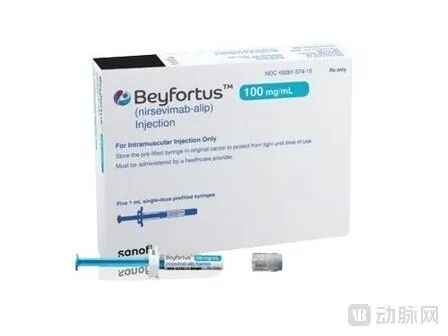
Core Insights - The RSV (Respiratory Syncytial Virus) season this year has been unusually prolonged, with parents now having the option to vaccinate their children with a high-cost monoclonal antibody, Nirsevimab, developed by Sanofi, to reduce the risk of severe RSV infections [1][2] - Nirsevimab has gained significant traction in the market, generating substantial revenue in the U.S. and Europe, and is expected to continue its growth trajectory as it expands into other markets [7][8] Group 1: RSV Infection and Treatment Landscape - RSV is the leading cause of severe lower respiratory infections in infants, with hospitalization rates for infants under three months reaching 10%-20% [2] - Prior to Nirsevimab, the RSV prevention market was dominated by Palivizumab, which had a narrow application range and was not effective for the majority of infants [2][3] - Nirsevimab is advantageous as it can be administered to healthy infants, unlike Palivizumab, which is limited to high-risk groups [3][6] Group 2: Market Demand and Supply Challenges - The demand for Nirsevimab has surged, with approximately 2.4 million infants in the U.S. eligible for treatment during the 2024 RSV season, leading to significant supply shortages [6][8] - Sanofi reported that Nirsevimab generated approximately $598 million in sales in 2023, with projections of $1.829 billion in 2024, marking it as a blockbuster drug [7][8] Group 3: Competitive Landscape - The introduction of Clesrovimab, another monoclonal antibody for RSV prevention, is anticipated to further intensify competition in the market, with its approval expected in June 2025 [9][10] - Both Nirsevimab and Clesrovimab have similar indications, but Nirsevimab has a broader age range for application, which may give it a competitive edge [9][10] Group 4: Domestic Development and Future Prospects - In China, the development of RSV monoclonal antibodies is still in its early stages, with only a few candidates in clinical trials, such as TNM-001 and RB0026, which are expected to enter the market by 2027 [14][15][16] - The complexity and high failure rates associated with developing RSV monoclonal antibodies pose challenges for domestic companies, leading to a slower response in the market compared to vaccines [16][17]
Peptide Therapeutics Market Size to Reach USD 82.19 Billion by 2032; Surging Requirements for Targeted Medicines in Oncology Augment Market Expansion - SNS Insider
Globenewswire· 2025-12-06 14:10
Market Overview - The global Peptide Therapeutics Market was valued at USD 46.04 billion in 2024 and is projected to reach USD 82.19 billion by 2032, with a CAGR of 7.51% from 2025 to 2032 driven by demand for targeted medications in oncology, metabolic diseases, and infectious diseases [1][17]. U.S. Market Insights - The U.S. peptide therapeutics market was valued at USD 20.36 billion in 2024 and is expected to grow to USD 35.71 billion by 2032, with a CAGR of 7.27% during the same period, supported by significant R&D expenditure and regulatory frameworks [2]. Technological Advancements - Innovations in peptide synthesis and drug delivery technologies, such as solid-phase peptide synthesis (SPPS) and liquid-phase peptide synthesis (LPPS), are enhancing manufacturing efficiency, purity, and scalability [4]. - Advances in delivery platforms, including sustained-release formulations and nanoparticles, are improving the stability and usability of peptide medications [4]. Market Challenges - High production costs and complex manufacturing processes pose challenges for the development of peptide therapeutics, as synthesis and purification require expensive equipment and high-purity reagents [5]. Market Segmentation By Application - The metabolic disorders segment held a 26.2% market share in 2024, driven by the prevalence of diseases like type 2 diabetes and obesity, while the pain segment is expected to grow at the highest CAGR due to rising chronic pain disorders [7]. By Therapeutics Type - The innovative segment dominated the market in 2024, reflecting the demand for high-activity and targeted treatment options [8]. By Type of Manufacturers - The in-house segment accounted for 65.25% of the market share in 2024, as major companies prefer control over the drug development process, while the outsourced segment is anticipated to grow at the highest CAGR [9]. By Route of Administration - The parenteral route led the market in 2024 due to poor oral bioavailability of most peptides, with alternative delivery methods expected to grow at the highest CAGR [10]. By Synthesis Technology - The recombinant DNA technology segment held a 64.3% market share in 2024, favored for its ability to produce long and sustained peptides of higher purity [11]. Regional Insights - North America dominated the peptide therapeutics market with a 58.1% share in 2024, attributed to advanced clinical trials and a developed pharmaceutical sector, while the Asia Pacific region is expected to grow significantly due to increased healthcare expenditure and chronic disease prevalence [12]. Key Companies - Major companies in the peptide therapeutics market include Eli Lilly and Company, Amgen Inc., Pfizer Inc., Takeda Pharmaceutical Company Limited, AstraZeneca plc, and Sanofi S.A. [13][18].





3 Large Drug Stocks to Watch as the Industry Shows Some Recovery
ZACKS· 2025-12-04 15:31
Core Insights - The drug and biotech sector has shown signs of recovery after a muted performance earlier in the year, driven by drug pricing agreements with the Trump administration [1][2] - Despite facing challenges such as pipeline setbacks and regulatory risks, the industry's focus on innovation and M&A activity suggests a favorable long-term outlook [2][7] - Eli Lilly, Johnson & Johnson, and Sanofi are highlighted as strong candidates for investment [3] Industry Overview - The Zacks Large Cap Pharmaceuticals industry includes major global companies developing multi-million-dollar drugs across various therapeutic areas, emphasizing continuous innovation and significant R&D investment [4][5] - The industry is characterized by aggressive M&A activities, with large companies acquiring smaller biotech firms to enhance their pipelines [7][8] Innovation and Pipeline - Innovation is crucial for growth, with companies investing heavily in R&D and integrating new technologies like AI and gene editing to improve drug discovery [5][6] - Key therapeutic areas attracting investment include rare diseases, oncology, obesity, and immunology [6] M&A Activity - The sector has seen a rebound in M&A activity, particularly in fast-growing markets such as oncology and rare diseases, with companies like Pfizer and Roche making significant deals [9][10] Challenges and Headwinds - The industry faces challenges including pipeline setbacks, pricing pressures, and regulatory scrutiny, which can impact share prices [10][11] - Macroeconomic uncertainties and potential tariffs on pharmaceutical imports add to the industry's challenges [11][12] Performance Metrics - The Zacks Large Cap Pharmaceuticals industry currently ranks 185, placing it in the bottom 24% of Zacks industries, indicating a dull outlook compared to the broader market [13][14] - Year-to-date, the industry has risen 15.6%, outperforming the Zacks Medical Sector but underperforming the S&P 500 [15] Valuation - The industry is trading at a forward P/E of 16.91X, lower than the S&P 500's 23.44X, suggesting potential undervaluation [18] Company Highlights - **Eli Lilly**: Strong sales growth driven by diabetes and obesity drugs Mounjaro and Zepbound, with plans for new product launches and pipeline expansion [21][22][24] - **Johnson & Johnson**: Growth in its Innovative Medicine unit despite challenges, with a focus on new drug launches and acquisitions to strengthen its pipeline [27][29][30] - **Sanofi**: Strong demand for its immunology drug Dupixent and a solid vaccine portfolio, although facing challenges from generic competition and pipeline setbacks [34][35]

Press Release: Sanofi completes acquisition of Vicebio
Globenewswire· 2025-12-04 10:00
Core Insights - Sanofi has completed the acquisition of Vicebio Ltd, enhancing its capabilities in vaccine design and development, particularly for respiratory syncytial virus (RSV) and human metapneumovirus (HMPV) through Vicebio's 'Molecular Clamp' technology [1][2] Company Overview - Sanofi is an R&D driven, AI-powered biopharma company focused on improving lives and delivering growth, with a commitment to addressing urgent healthcare challenges through innovative medicines and vaccines [3]