
TME(TME)

Search documents
“全方位完美的财报”!这家大行把腾讯音乐“夸上天”
华尔街见闻· 2025-08-13 10:11
Core Viewpoint - Barclays Bank released an extremely optimistic report, labeling Tencent Music's (TME) latest financial results as "all-around perfect" [1][2] Financial Performance - Tencent Music achieved revenue of 8.442 billion RMB in Q2 2025, a year-on-year increase of 17.9%, exceeding Barclays' expectations by 6.0% [5] - Online music service revenue reached 6.854 billion RMB, growing 26.4% year-on-year, surpassing expectations by 6.8% [6] - Notably, non-subscription online music revenue outperformed expectations by 19%, with advertising revenue growing over 30% and other income, including live concerts and merchandise, doubling [7] User Engagement and Ecosystem - The number of Super VIP (SVIP) members surpassed 15 million, indicating strong user engagement [8] - Barclays believes Tencent Music's SVIP growth strategy is clear and sustainable, focusing on converting users with core benefits and retaining them with ecosystem advantages [9] - User stickiness is evidenced by the platform's daily usage time reaching historical highs, with SVIP users spending nearly 100 minutes daily on the platform [11] Profitability and Competitive Advantage - Tencent Music has moved beyond low-level competition based on user growth and price wars, entering a high-level development phase that enhances user stickiness and profitability [3][12] - The adjusted net profit margin for Q2 2025 exceeded 30%, reaching 31.3%, up from 26% in the same period of 2024 [14] - Barclays anticipates that the trend of increasing profit margins will continue, even with a higher proportion of lower-margin businesses like concerts and merchandise [15] Valuation and Market Position - Based on the "perfect" financial report, Barclays raised its target price for Tencent Music from $16 to $27, implying a 2027 P/E ratio of 28, making it one of the highest-valued Chinese stocks [16] - Compared to global music streaming giant Spotify's expected P/E ratio of around 40 for 2027, Tencent Music is still considered relatively cheap [16] - Barclays concludes that Tencent Music's unique and recently strengthened market position, along with its consistent execution record, justifies such a valuation premium [17]


大华继显:升腾讯音乐-SW目标价至105港元 次季盈利超预期
Zhi Tong Cai Jing· 2025-08-13 09:41
Core Viewpoint - Tencent Music's Q2 2025 performance exceeded expectations with a revenue increase of 17.9% year-on-year to 8.4 billion RMB, surpassing market expectations by 6% [1] - The company maintains a "Buy" rating with a target price increase from 85 HKD to 105 HKD, based on a projected 2026 P/E ratio of 26 times, in line with peers [1] Group 1 - Non-GAAP operating profit grew by 31.4% year-on-year to 3.2 billion RMB, with an operating profit margin increase of 4 percentage points to 38% [1] - Non-GAAP net profit rose by 33% year-on-year to 2.6 billion RMB, exceeding market expectations by 16%, with a net profit margin expansion of 4 percentage points to 31% [1] - The company anticipates continued robust growth in subscriptions and advertising through the second half of 2025, driven by rich content offerings [1] Group 2 - Subscription revenue is projected to grow by 15.7% year-on-year in 2025, supported by ongoing content upgrades and increased penetration of Super VIP (SVIP) [2] - The management's long-term goal remains at 150 million subscribers, with an average revenue per paying user (ARPPU) target of 15 RMB [2] - The acquisition of Ximalaya for 2.7 billion RMB is expected to enhance user base expansion and paid conversion rates, with impacts anticipated from Q3 2025 [2] Group 3 - Revenue estimates for Q3 2025 and the full year have been raised by 2% and 3% respectively, indicating year-on-year growth of 12% and 13% [2] - Non-GAAP net profit forecasts for Q3 2025 and the full year have been increased by 7% and 8% respectively, suggesting year-on-year growth of 33% and 22% [2] - The company is expected to maintain a net profit margin of approximately 31% for both Q3 and the full year, reflecting ongoing profitability growth and streamlined social entertainment operations [2]
大和:升腾讯音乐-SW评级至“跑赢大市” 目标价上调至106港元
Zhi Tong Cai Jing· 2025-08-13 09:35
Core Viewpoint - Daiwa has upgraded Tencent Music's rating from "Hold" to "Outperform" due to strong execution in Super VIP (SVIP) and fan economy monetization, along with disciplined spending, leading to a revised 12-month target price of HKD 106 from HKD 66 based on a 25x P/E ratio, up from the previous 18x [1] Group 1: Revenue Growth Drivers - The introduction of a new incentive advertising membership price tier (RMB 10 per month, automatically renewing at RMB 5, with an initial discount of RMB 1) is expected to drive advertising revenue growth faster than subscription revenue, positively impacting Tencent Music's online music gross margin [1] - The potential acquisition of Ximalaya by Tencent Music may serve as a strategic complement to its music business and strengthen the SVIP product, leveraging Tencent's distribution network to reduce sales and marketing costs [1] Group 2: Financial Projections - Daiwa has raised its revenue forecasts for Tencent Music for 2025 to 2027 by 3% to 4% and adjusted earnings per share estimates upward by 2% to 7%, driven by better-than-expected online music revenue growth and operating profit margins [1] - For 2026 to 2027, Tencent Music's earnings growth is anticipated to be stronger than market consensus by 15% to 17% [1]
大和:升腾讯音乐-SW(01698)评级至“跑赢大市” 目标价上调至106港元
智通财经网· 2025-08-13 09:30
Core Viewpoint - Daiwa upgraded Tencent Music (01698) from "Hold" to "Outperform" due to strong execution in Super VIP (SVIP) and fan economy monetization, maintaining disciplined spending, and new projects driving revenue growth [1] Group 1: Financial Performance - Tencent Music's Q2 2025 performance reflects strong execution in SVIP and fan economy monetization [1] - Daiwa raised the 12-month target price from HKD 66 to HKD 106 based on a revised price-to-earnings ratio of 25 times, up from 18 times [1] - Revenue forecasts for 2025 to 2027 were increased by 3% to 4%, and earnings per share were raised by 2% to 7% due to better-than-expected online music revenue growth and operating profit margins [1] Group 2: Strategic Initiatives - The introduction of a new incentive advertising membership price tier (RMB 10 per month, auto-renewing at RMB 5, with a first-time discount of RMB 1) is expected to drive advertising revenue growth faster than subscription revenue [1] - The potential acquisition of Ximalaya by Tencent Music may strategically complement its music business and strengthen the SVIP product [1] - If approved by market regulators, the acquisition could contribute an estimated 5% to 10% incremental profit in 2026, which is not yet included in Daiwa's forecasts [1] Group 3: Market Outlook - Daiwa anticipates stronger profit growth for Tencent Music in 2026 to 2027, exceeding market consensus by 15% to 17% [1]
大华继显:升腾讯音乐-SW(01698)目标价至105港元 次季盈利超预期
智通财经网· 2025-08-13 09:30
Core Viewpoint - Tencent Music's performance in Q2 2025 exceeded expectations with a revenue growth of 17.9% to 8.4 billion RMB, surpassing market forecasts by 6% [1] - The company maintains a "Buy" rating with a target price increase from 85 HKD to 105 HKD, based on a projected 2026 P/E ratio of 26 times, in line with peers [1] Group 1 - Non-GAAP operating profit increased by 31.4% to 3.2 billion RMB, with an operating profit margin up by 4 percentage points to 38% [1] - Non-GAAP net profit rose by 33% to 2.6 billion RMB, exceeding market expectations by 16%, with a net profit margin expanding by 4 percentage points to 31% [1] - The company anticipates continued robust growth in subscriptions and advertising through the second half of 2025, driven by rich content offerings [1] Group 2 - Subscription revenue is projected to grow by 15.7% in 2025, supported by ongoing content upgrades and increased penetration of Super VIP (SVIP) [2] - The management's long-term goal remains at 150 million subscribers, with an average revenue per paying user (ARPPU) target of 15 RMB [2] - The acquisition of Ximalaya for 2.7 billion RMB is expected to enhance user base expansion and paid conversion rates, with impacts anticipated from Q3 2025 [2] Group 3 - Revenue estimates for Q3 2025 and the full year have been raised by 2% and 3% respectively, indicating year-on-year growth of 12% and 13% [2] - Non-GAAP net profit forecasts for Q3 2025 and the full year have been increased by 7% and 8%, suggesting year-on-year growth of 33% and 22% [2] - The company is expected to maintain a net profit margin of approximately 31% for both Q3 and the full year, reflecting ongoing profitability and streamlined social entertainment operations [2]
美股异动|腾讯音乐盘前续涨2.6% H股盘中创新高 绩后获多家大行上调目标价
Ge Long Hui· 2025-08-13 08:47
Core Viewpoint - Tencent Music (TME.US) has shown significant stock performance, with a pre-market increase of 2.6% and a notable rise of 11.85% in the previous trading session, reaching a new high since March 2021 [1] Financial Performance - In Q2, Tencent Music achieved total revenue of 8.44 billion yuan, representing a year-on-year growth of 17.9%, exceeding market expectations [1] - The adjusted net profit for the same period was 2.64 billion yuan, reflecting a year-on-year increase of 33% [1] Analyst Ratings and Price Targets - Daiwa Securities maintained a "Buy" rating for Tencent Music, raising the target price from 85 HKD to 105 HKD [1] - The firm forecasts a 15.7% annual growth in subscription revenue by 2025, driven by continuous content upgrades and increased penetration of Super VIP (SVIP) services [1] - Additionally, another report upgraded Tencent Music's rating from "Hold" to "Outperform," increasing the 12-month target price from 66 HKD to 106 HKD based on a revised price-to-earnings ratio of 25 times [1]
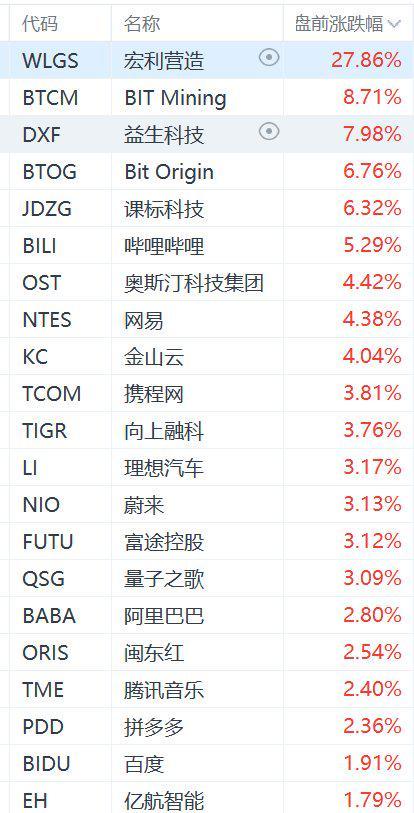
热门中概股盘前集体上涨:哔哩哔哩涨超5%,网易、金山云涨超4%


Ge Long Hui A P P· 2025-08-13 08:21
Core Viewpoint - The U.S. stock market saw a collective rise in popular Chinese concept stocks before the market opened, indicating positive investor sentiment towards these companies [1] Group 1: Stock Performance - Bilibili experienced a rise of over 5% [1] - NetEase and Kingsoft Cloud both increased by more than 4% [1] - Ctrip, Tiger Brokers, Li Auto, NIO, Futu, and Quantum Song all saw gains exceeding 3% [1] - Alibaba, Tencent Music, and Pinduoduo rose by more than 2% [1]
业绩超预期引股价大涨,腾讯音乐盘中涨超17%创历史新高
Huan Qiu Lao Hu Cai Jing· 2025-08-13 07:58
Core Insights - Tencent Music's stock price surged over 17%, reaching a historical high of HKD 104 per share, with a market capitalization of HKD 315 billion, driven by strong Q2 2025 performance [1] - The company reported total revenue of CNY 8.44 billion, a year-on-year increase of 17.9%, and adjusted net profit of CNY 2.64 billion, up 33% [1] - The growth was primarily fueled by robust online advertising revenue and strong sales from merchandise and live concerts [1] Revenue Breakdown - Online music business remained the core growth engine, generating revenue of CNY 6.85 billion, a 26.4% year-on-year increase [1] - Online music subscription revenue grew by 17.1% to CNY 4.38 billion, with paid user count reaching 124.4 million and average revenue per paying user (ARPPU) increasing from CNY 10.7 to CNY 11.7 [1] Membership and Strategic Initiatives - Tencent Music's super membership reached 15 million, marking a significant milestone [2] - The company expanded its business by collaborating with domestic and international record companies and artists, producing songs for popular films and hosting major concerts [2] - Tencent Music is planning acquisitions of South Korea's SM Entertainment and Himalaya, aiming to enhance K-pop and long audio user engagement, which could drive super membership subscriptions [2] Challenges - Social entertainment revenue declined by 8.5% to CNY 1.588 billion during the reporting period, but the overall performance remained positive due to better-than-expected online music business results [2]
大行评级|大和:上调腾讯音乐目标价至106港元 评级升至“跑赢大市”
Ge Long Hui· 2025-08-13 06:39
Core Viewpoint - Daiwa's report indicates that Tencent Music's Q2 performance reflects strong execution in monetizing Super VIP (SVIP) and fan economy, leading to an upgrade of the stock rating from "Hold" to "Outperform" due to new projects driving revenue growth [1] Group 1: Financial Performance - Tencent Music's Q2 results show a robust execution in SVIP and fan economy monetization while maintaining disciplined spending [1] - The 12-month target price has been raised from HKD 66 to HKD 106 based on a revised price-to-earnings ratio of 25 times, up from 18 times [1] Group 2: Revenue Growth Drivers - Concerns regarding Tencent Music's strategy to attract/retain price-sensitive users have been alleviated with the introduction of new incentive advertising membership pricing, which is expected to drive advertising revenue growth faster than subscription revenue [1] - The acquisition of Ximalaya may serve as a strategic complement to its music business and strengthen the SVIP product, with potential to leverage Tencent's distribution network to reduce sales and marketing costs [1] Group 3: Earnings Forecast Adjustments - Daiwa has raised revenue forecasts for 2025 to 2027 by 3% to 4% and adjusted earnings per share estimates upward by 2% to 7% due to better-than-expected online music revenue growth and operating profit margins [1] - The potential acquisition is estimated to contribute an incremental profit of 5% to 10% by 2026, pending regulatory approval, which is not yet included in Daiwa's forecasts [1]
大行评级|大华继显:腾讯音乐第二季业绩表现强劲 上调目标价至105港元
Ge Long Hui· 2025-08-13 06:32
Core Viewpoint - Tencent Music's Q2 performance was strong, with revenue growth of 17.9% year-on-year to 8.4 billion, exceeding market expectations by 6% [1] - Non-GAAP net profit increased by 33% year-on-year to 2.6 billion, surpassing market expectations by 16%, with a net profit margin expansion of 4 percentage points to 31% [1] Group 1 - The firm maintains a "Buy" rating for Tencent Music, raising the target price from 85 HKD to 105 HKD, based on a projected 2026 price-to-earnings ratio of 26 times, in line with peers [1] - The firm forecasts a 15.7% year-on-year growth in Tencent Music's subscription revenue for 2025, driven by strong pricing power from ongoing content upgrades and increased penetration of Super VIP (SVIP) [1]