TSMC(TSM)

Search documents
民进党当局的“精神胜利法”(日月谈)
Ren Min Ri Bao· 2026-01-26 21:50
此次谈判前,台湾是被美国课最高关税的地区之一,"20+N"比台湾主要产业竞争对手日本和韩国都 高。这记沉重耳光,还是赖清德当局未谈先跪,急吼吼做出向美国高额投资、开放岛内市场等承诺之后 换来的。美国之所以对献媚输诚的民进党当局如此不假辞色,就是吃定这些"倚美谋独"者绝对不敢说 个"不"字。 打了败仗却假传捷报的例子自古有之,现在民进党当局将这一戏码演绎出了无耻新高度。台美关税谈判 结果出炉,台湾被迫付出5000亿美元赴美投资、40%半导体产能向美迁移等惨痛代价后,只换来本就不 合理的20%高关税降到15%,被迫"掏空家底""自废武功"却寸利未得的民进党当局竟然宣称,这是"重大 突破""漂亮的全垒打""台湾模式的胜利",脸皮之厚真令人叹为观止。 一般的谎报军功,多是利用信息差造假瞒报,民进党当局却是在谈判结果明明白白摆在世人面前的情况 下,强行颠倒黑白,把"割地献城"说成"胜利凯旋","砸锅卖铁"说成"达成预定目标","巨额勒索"说 成"平等合作","产业掏空"说成"主动布局","滑跪投降"说成"战略定力"。 民进党一向视台积电为"护台神山",然而最爱指控别人"卖台"的绿营政客,却亲手把"神山"双手奉送给 美国 ...

This Artificial Intelligence (AI) Stock Is Trading at a Massive Discount Despite Red-Hot Growth
The Motley Fool· 2026-01-26 20:00
Core Viewpoint - Taiwan Semiconductor Manufacturing Company (TSMC) is a crucial player in the AI supply chain, manufacturing chips for companies like Nvidia and AMD, and is currently trading at a discount despite impressive growth [1][2]. Company Overview - TSMC is the world's largest semiconductor foundry, known for its efficiency, scale, precision, and yield, making it the most dependable choice for companies needing chip manufacturing [3]. - The company has shifted from primarily manufacturing smartphone chips to focusing on advanced AI chips for data centers, capturing a market share in the upper 90% range for these products [4]. Financial Performance - TSMC generated $122.4 billion in revenue in 2025, marking a nearly 36% increase from 2024, and achieving its first $100 billion year [6]. - The gross margin increased from 56.1% to 59.9% in 2025, with an operating margin rise from 45.7% to 50.8%, indicating strong operational execution [7]. - In Q4, TSMC reported a gross margin of 62.3% and an operating margin of 54% [7]. Market Position and Valuation - TSMC operates a virtual monopoly on advanced AI chips, allowing it to command premium pricing for its services [8]. - Despite a 69% increase in stock price since the start of 2025, TSMC trades at only 25 times its projected earnings for the next year, which is cheaper compared to competitors like Broadcom, Intel, and Nvidia [9]. - Given TSMC's market dominance, pricing power, and growth opportunities, its current valuation appears attractive for long-term investors [11].

If You'd Invested $10,000 in Taiwan Semiconductor Stock a Year Ago, This Is How Much You'd Have Today
Yahoo Finance· 2026-01-26 17:58
Key Points Taiwan Semiconductor reported robust growth in 2025. AI was a major growth driver, and it expects that to continue. 10 stocks we like better than Taiwan Semiconductor Manufacturing › Taiwan Semiconductor (NYSE: TSM) has been in the news lately for opening a new plant in the U.S. and signing a deal with the Trump administration to invest $250 billion in further developing its U.S. operations. The company also just released a phenomenal fourth-quarter report that signals even more growth ah ...
主题风向标1月第3期:增量政策聚焦城市更新与新兴科技
GUOTAI HAITONG SECURITIES· 2026-01-26 15:26
请务必阅读正文之后的免责条款部分 策 略 研 究 增量政策聚焦城市更新与新兴科技 [Table_Authors] 方奕(分析师) 主题风向标 1 月第 3 期 本报告导读: 热点主题交易热度回落,商业航天、资源品与建材主题领涨,扩内需与科技新动能 是增量政策方向。看好:城市更新/商业航天/国产算力/新型电网。 投资要点: 策略研究 /[Table_Date] 2026.01.26 | | 021-38031658 | | --- | --- | | | fangyi2@gtht.com | | 登记编号 | S0880520120005 | | | 苏徽(分析师) | | | 021-38676434 | | | suhui@gtht.com | | 登记编号 | S0880516080006 | [Table_Report] 相关报告 Q4 基金动向:增配 AI 基建与价值股 2026.01.24 主题轮动加快,聚焦国产半导体与电力 2026.01.18 AI 应用:以新生产工具重构新经济场景 2026.01.11 新兴产业空间广阔,看多中国产业龙头 2026.01.06 1 月金股策略:决胜"开门红" 2 ...

台积电决定穿过十字路口
财富FORTUNE· 2026-01-26 13:27
Core Viewpoint - TSMC has achieved significant milestones, with its Q4 financial report exceeding expectations, showing a 35% year-on-year net profit growth and a gross margin of 62.3%, indicating strong pricing power and production efficiency [1][3] Financial Performance - TSMC's Q4 net profit reached a historical high, with a gross margin of 62.3%, reflecting its robust pricing power and operational efficiency [1] - The company anticipates a capital expenditure increase to an unprecedented $52 billion to $56 billion by 2026, driven by sustained AI demand [1] Market Position and Client Base - TSMC's advanced process chips, particularly the 3nm process, contributed nearly 30% of wafer revenue in Q4 2025, while 77% of revenue came from 7nm and below processes [3] - NVIDIA has surpassed Apple to become TSMC's largest client, highlighting the importance of TSMC's advanced chips in the AI sector [3] Technological Advancements - TSMC is the only manufacturer capable of mass-producing 2nm process chips, which are crucial for advancing AI technology [4] - The company has successfully commenced mass production of 2nm chips by the end of 2025, maintaining its lead over competitors like Samsung and Intel [4] Global Expansion Strategy - TSMC is expanding its production capabilities internationally, with plans to establish a factory in Arizona, USA, supported by the CHIPS Act [6][7] - The company is also constructing factories in Japan and Germany, aiming to meet customer demands while navigating various operational challenges [8] Political and Economic Context - TSMC faces pressures from geopolitical tensions and trade relations, yet it prioritizes business logic in its expansion plans [5] - The company has committed to investing over $250 billion in the U.S. as part of a phased investment strategy linked to project milestones [7]
AI并非“泡沫”,而是产业趋势
3 6 Ke· 2026-01-26 12:26
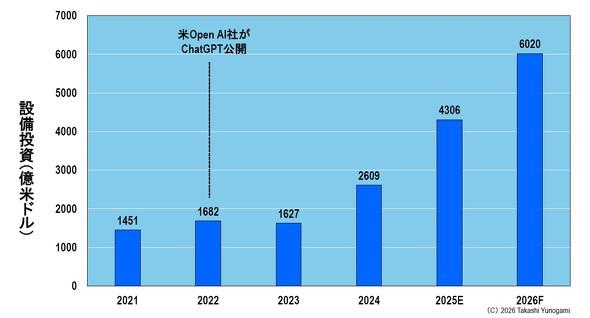
Core Insights - The capital expenditure (Capex) of the top eight cloud service providers is projected to grow from $145.1 billion in 2021 to $602 billion by 2026, representing an increase of over four times [1][5][20] - This surge in investment is driven by the exponential demand for computing power, particularly due to generative artificial intelligence (AI), which requires significantly more computational resources than traditional services [1][2][12] - The current investment trend is not a bubble but a structural shift in demand for computing infrastructure, fundamentally different from past economic bubbles [14][19] Group 1: Investment Trends - The top eight cloud service providers include Amazon (AWS), Microsoft (Azure), Google Cloud, Meta, Oracle (OCI), Alibaba Cloud, Tencent Cloud, and ByteDance [3] - Despite a temporary decline in capital expenditure during 2022-2023, a rebound is expected starting in 2024, coinciding with the launch of ChatGPT by OpenAI [5][20] - The investment in generative AI is seen as essential for maintaining competitive advantage in the cloud market, as failing to invest would lead to a loss of core value [2][23] Group 2: Computing Demand - The demand for computing power driven by generative AI is fundamentally different from traditional computing needs, necessitating a complete overhaul of the cloud computing infrastructure [6][12] - Generative AI's processing requirements are orders of magnitude greater than those of traditional search engines, with computational needs differing by a factor of 10,000 to 100,000 times [10][12] - The industry is experiencing a structural change in computing demand, with a significant increase in the need for data centers, power supply, cooling technologies, and network architecture [13][19] Group 3: Market Dynamics - The semiconductor market, particularly for data center logic chips, is expected to expand significantly, with the GPU market projected to grow from $100 billion to over $230 billion by 2030 [24][26] - The AI ASIC market is anticipated to grow ninefold, from $9 billion to $84 billion, indicating a shift towards specialized hardware for AI applications [24][26] - The memory market, especially for high-bandwidth memory (HBM), is also expected to see substantial growth, with DRAM market projections reaching $194 billion by 2030 [27][29] Group 4: Competitive Landscape - The competitive landscape for cloud service providers is becoming increasingly harsh, with a clear delineation that companies lacking sufficient computing power will be eliminated from the market [23][24] - Investment in AI-related infrastructure is viewed as a necessity for maintaining market position rather than a discretionary expenditure [23][24] - The transition from traditional computing to AI-driven infrastructure represents a significant shift in the market, with companies like TSMC poised to benefit from the demand for advanced semiconductor technologies [32][35]


芯片,没有泡沫
半导体芯闻· 2026-01-26 08:44
Group 1 - The capital expenditure (Capex) of the top eight cloud service providers is projected to grow from $145.1 billion in 2021 to $602 billion by 2026, representing an increase of over four times [1][4] - This investment surge is driven not by market speculation but by the fundamental need for computational power, particularly due to the demands of generative artificial intelligence (AI) [1][5] - The current trend is characterized as a "structural transformation" in the semiconductor market rather than a bubble, as the demand for computing resources is fundamentally changing [10][14] Group 2 - The growth in cloud investment is accelerating, with a notable increase following the release of ChatGPT by OpenAI [4][5] - Generative AI requires significantly more computational resources compared to traditional search engines, with processing demands being 10,000 to 100,000 times greater [6][7] - The competition among cloud providers is fierce, as failure to invest in generative AI capabilities could lead to losing market relevance [8][17] Group 3 - The semiconductor market, particularly the data center logic chip sector, is expected to expand significantly, with the GPU market projected to grow from $100 billion to $230 billion and the AI ASIC market from $9 billion to $84 billion by 2030 [19] - The memory market is also anticipated to experience a shift, with DRAM and HBM prices expected to rise due to increased demand from AI applications [22][24] - The transition in TSMC's primary products from N5 to N3 nodes indicates a shift towards advanced technology driven by AI demands, with NVIDIA and Broadcom expected to surpass Apple in chip investments [28][33] Group 4 - The bottleneck in AI semiconductor development is primarily due to the limited capacity of 2.5D packaging technologies like CoWoS, which are essential for integrating high-bandwidth memory with AI chips [37][39] - Once the CoWoS capacity constraints are resolved, it is expected that investment in AI infrastructure will surge, leading to further competition among cloud service providers [39][42] - The ongoing trend signifies a profound and irreversible change in the semiconductor industry, driven by the structural demands of generative AI [42]





晶圆代工,正在重构
半导体芯闻· 2026-01-26 08:44
如果您希望可以时常见面,欢迎标星收藏哦~ 最近,不少芯片设计公司在晶圆厂那里吃到了"闭门羹",不少晶圆厂反馈:部分成熟工艺的产能已 经开始不好投片。然而,这并非传统意义上"缺芯"的简单回归,而是 AI 溢出效应引发的一场深刻 连锁反应。 AI 不只抢走先进制程与先进封装的资源,也通过电源与功率链条把压力传导到成熟节点:数据中 心功耗暴涨,带动 PMIC、功率器件、驱动等需求持续抬升,而这类芯片往往依赖 8 英寸或成熟 制程产能;当供给侧又出现缩减时,成熟工艺自然更容易出现投片变难、利用率拉满、价格修复的 连锁反应。此外,AI催动的存储市场回暖,正通过 NOR Flash 等基础器件的涨价,进一步抬高 MCU 与各类模组的综合成本。 而近段时间,晶圆厂的一些动作也是暗流涌动。台积电、三星加速收缩 8 英寸旧产线,硅片厂扩 产12英寸,力积电卖掉最先进的12英寸新厂。。。一系列看似分散的事件,背后其实指向同一个 趋势——2026 年的半导体格局,早已不再是简单的周期波动,而是一场关乎生存的产能重构。 理解这场重构的第一把钥匙,就是从一个看似"过时"的主角开始:8 英寸。 8英寸,巨头退场,利弊如何? 在 8 英寸 ...

台积电变成美积电!转移40%产能
国芯网· 2026-01-26 07:03
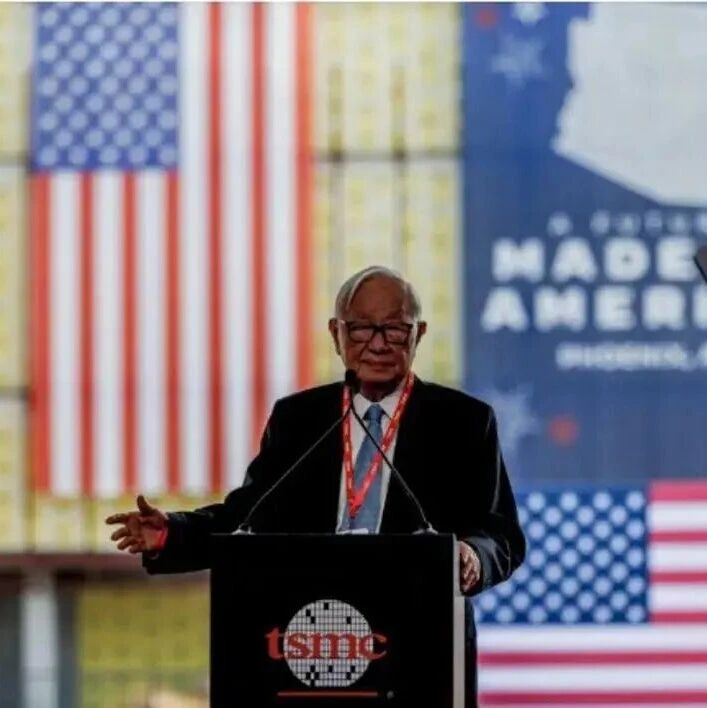
国芯网[原:中国半导体论坛] 振兴国产半导体产业! 不拘中国、 放眼世界 ! 关注 世界半导体论坛 ↓ ↓ ↓ 1月26日消息,据台媒报道,近日台湾地区与美国正式拍板关税协议,将台湾地区输美产品关税税率从20%调降至15%,且不叠加于原有税率之上。 美国商务部长霍华德·卢特尼克告诉CNBC称, 该贸易协议的目标是将台湾40%的半导体供应链转移到美国。 半导体论坛百万微信群 加群步骤: 第一步:扫描下方二维码,关注国芯网微信公众号。 据悉,台积电最近几年在美国的压力下不断增加对美国投资的,承诺的投资额已经到了1650亿美元,然而这还不看不到头,最新的协议中还要让步更多, 引发台积电变成美积电的担忧。 日前公布的协议中,总共的投资额高达5000亿美元,台积电显然会是投资的主力,不仅如此,美国还直接提出更苛刻的要求——台积电需要把40%的先进 产能转移到美国,这被视为直接掏空台积电的举措。 对于这些目标,中国台湾当地的专家学者纷纷站出来淡化影响,指出美国商务部长卢特尼克的声明更多的是政治表态,建立半导体供应链的时间以10年 计,特朗普任内是不可能做到40%产能转移的,应该不到15%产能才会在美国生产。 中国台湾成功 ...
为什么说AI不是泡沫?这些芯片已经起飞
芯世相· 2026-01-26 04:32
Group 1 - The core argument of the article is that the current investment trend in AI and cloud computing is not a bubble but a significant and irreversible shift in the semiconductor market driven by unprecedented computational demands [2][5][21] - The capital expenditure of the top eight cloud service providers is projected to grow from $145.1 billion in 2021 to approximately $602 billion by 2026, representing an increase of over four times [4][10] - The investment surge is primarily driven by the need for computational power required for generative AI, which is fundamentally different from traditional web services [5][10] Group 2 - The article emphasizes that generative AI requires a vastly different computational approach compared to traditional search engines, with computational loads differing by a factor of 10,000 to 100,000 times [12][16] - The growth trajectory of generative AI is expected to remain strong, with projected growth rates of -8.1% in 2023, 19.7% in 2024, and 22.5% in 2025, indicating a robust demand that is unlikely to decline [20][21] - The demand for logic chips in data centers is expected to grow significantly, with the GPU market projected to increase from $100 billion to over $230 billion, and AI ASICs expected to surge from $9 billion to $84 billion by 2030 [30][33] Group 3 - The storage market is anticipated to experience long-term shortages and high prices, with the DRAM market expected to grow from $97 billion to $194 billion, and HBM market reaching $98 billion by 2030 [36][38] - TSMC's revenue is shifting from N5 to N3 process nodes, indicating a transition in profitability driven by AI demands [41][46] - The bottleneck for AI semiconductors lies in CoWoS packaging capacity, and resolving this bottleneck could lead to an acceleration in investment rather than a slowdown [55][59]