TSMC(TSM)

Search documents
TSM vs. AVGO: Which is a Better Semiconductor Stock?
247Wallst· 2026-03-25 16:08
TSM vs. AVGO: Which is a Better Semiconductor Stock? - 24/7 Wall St. S&P 5006,601.60 -0.12% Dow Jones46,473.40 -0.02% Nasdaq 10024,184.20 -0.22% Russell 20002,532.82 -0.17% FTSE 10010,093.80 +0.77% Nikkei 22553,743.00 +0.68% Stock Market Live March 25, 2026: S&P 500 (SPY) Roller Coaster Ride Continues Investing TSM vs. AVGO: Which is a Better Semiconductor Stock? By Vandita JadejaPublished Mar 25, 12:08PM EDT Quick Read How to Add Us to Google News Sending You to Google News in 3 Chip maker Taiwan Semicondu ...


The AI Gatekeeper: TSMC's Chokehold Signals Dominance
Yahoo Finance· 2026-03-25 12:51
TSMC semiconductor fab with wafer and robotic arms, highlighting chip supply bottleneck in AI hardware industry. Key Points TSMC's technological leadership in advanced chip manufacturing creates a significant and durable competitive advantage over its industry rivals. Overwhelming demand from the AI sector for its cutting-edge production and packaging technologies is fueling exceptional financial performance. TSMC’S foundational position as the primary manufacturer for top technology firms makes it a c ...
2026年度策略:算力闭环加速,重塑价值新锚点
GOLDEN SUN SECURITIES· 2026-03-25 12:29
证券研究报告 | 行业策略 gszqdatemark 2026 03 25 年 月 日 电子 2026 年度策略:算力闭环加速,重塑价值新锚点 存储:AI 存力大时代已至。本轮存储有何不同?我们认为,本轮存储行情 已经跳出此前的周期循环,进入人工智能重塑底层逻辑的成长大时代。从 存储板块业绩表现来看,台股存储业绩不断提升,其中南亚科因 DDR4 涨 价迅猛表现尤为亮眼,业绩层面进一步确认景气度,存储板块的业绩确定 性也不断提升。从国内公司来看,我们认为在供需紧缺背景下,能拿到稳 定、高品质颗粒供给的模组厂商有望充分受益于 AI 时代供需紧缺下存储 升级+涨价+国产化三重β,业绩弹性显著、估值提升空间广阔。存储是有 业绩(有安全边际)、有长逻辑(AI+国产化)的板块,我们看好存储涨价 周期持续,重视 AI 存力大时代投资机遇。 PCB:AI 硬件架构与性能升级推动 PCB 价值量加速通胀。在产能紧缺背 景下,行业进入新一轮 AI 资本开支周期,各大厂商纷纷着手加速推进产 能建设,把握需求热潮。进入 2026 年我们预计 PCB 行业高景气度仍将持 续,一方面,经历 2025 年 GB200 服务器的产能及良率爬 ...


UPS opens $100 million Taiwan logistics hub to meet tech boom demand
Yahoo Finance· 2026-03-25 09:48
TAOYUAN, Taiwan, March 25 (Reuters) - United Parcel Service opened a new $100 million logistics centre in Taiwan on Wednesday, its largest in the Asia Pacific, riding a wave of demand from tech companies. Taiwan is home to TSMC, the world's top contract chip-maker and dominant supplier of the advanced semiconductors powering the boom in AI technologies. UPS said the site in northern Taiwan's Taoyuan, a short drive from the island's largest international airport, will also be used by Applied Materi ...


AI Sell-Off: 3 Stocks Investors Should Load Up On
The Motley Fool· 2026-03-25 08:05
Artificial intelligence (AI) stocks have not been in favor with the market recently. The days of monster returns in short periods seem to have gone by the wayside, but that doesn't mean that there aren't several strong AI investment options available right now.While the stocks have been dormant, the companies have not, and many of these top AI picks have been crushing it, even if the market isn't responding by sending their stocks higher.I've got three top picks that investors should load up on before they ...
Investors have learned their lesson about this, expert reveals
Youtube· 2026-03-25 07:00
to tackle all the major events moving the markets. Let's get right to the floor show. Joining me now, Henyion and Walsh Asset Management President and CIO Kevin Man.People think the private credit is one of these niche parts of the markets. >> However, when it starts to hit big companies and whether this is fair doesn't matter because perception at the moment is private credit bad. We need our money out.Starts to hit the Blackstones and the Apollos and the the KKKRS >> that does become an issue. How closely ...




亚马逊加速Leo卫星发射节奏,年发射或超20次;丰田宣布向美国肯塔基州和印第安纳州工厂投资10亿美元丨智能制造日报
创业邦· 2026-03-25 03:50
1.【阿里新一代旗舰处理器玄铁C950发布】阿里达摩院新一代旗舰处理器玄铁C950发布,达摩院首 席科学家孟建熠称其为全球性能最高的RISC-V CPU,在SPEC Cint2006测试中,单核性能首次超 过70分。此外,玄铁C950利用RISC-V开源开放特性,搭载自研AI加速引擎,首次原生支持 Qwen3、DeepSeek V3等千亿参数大模型。(凤凰网 ) 2.【亚马逊加速Leo卫星发射节奏,年发射或超20次】3月24日,亚马逊宣布加快Leo低轨卫星项目 部署。目前已发射超200颗卫星,数百颗待发卫星已准备就绪。公司计划在项目第二年将年发射频次 提升一倍以上,达20次以上,并采用批量发射方式。(界面新闻) 3.【丰田宣布向美国肯塔基州和印第安纳州工厂投资10亿美元】3月24日电,丰田汽车北美公司3月 24日宣布,将投资10亿美元用于其位于肯塔基州和印第安纳州的工厂,这项投资是去年11月13日宣 布的未来五年在美国追加投资高达100亿美元的计划的一部分。(财联社) 4.【台积电Fab 21工厂建设进度或提前】3月24日消息,台积电位于亚利桑那州的Fab 21工厂的建 设进度正在提前,P2晶圆厂预计最早将于 ...



球半导体与半导体设备:你相信埃隆(马斯克)吗?-Global Semiconductors and Semicap Do you believe in Elon
2026-03-25 02:50
on 23-Mar-2026 23 March 2026 Global Semiconductors and Semiconductor Capital Equipment Global Semiconductors and Semicap: Do you believe in Elon? David Dai, CFA +852 2918 5704 david.dai@bernsteinsg.com Qingyuan Lin, Ph.D. +852 2123 2654 qingyuan.lin@bernsteinsg.com Arpad von Nemes +1 917 344 8461 arpad.vonnemes@bernsteinsg.com Yipin Cai, CFA +852 2123 2669 yipin.cai@bernsteinsg.com Juho Hwang +852 2123 2632 juho.hwang@bernsteinsg.com Stacy A. Rasgon, Ph.D. +1 213 559 5917 stacy.rasgon@bernsteinsg.com Mark L ...


TSMC (TSM) Ascends While Market Falls: Some Facts to Note
ZACKS· 2026-03-24 22:46
TSMC (TSM) ended the recent trading session at $343.25, demonstrating a +1.42% change from the preceding day's closing price. The stock outperformed the S&P 500, which registered a daily loss of 0.37%. Elsewhere, the Dow saw a downswing of 0.18%, while the tech-heavy Nasdaq depreciated by 0.84%. Shares of the chip company have depreciated by 8.54% over the course of the past month, underperforming the Computer and Technology sector's loss of 2.83%, and the S&P 500's loss of 3.7%.Market participants will be ...
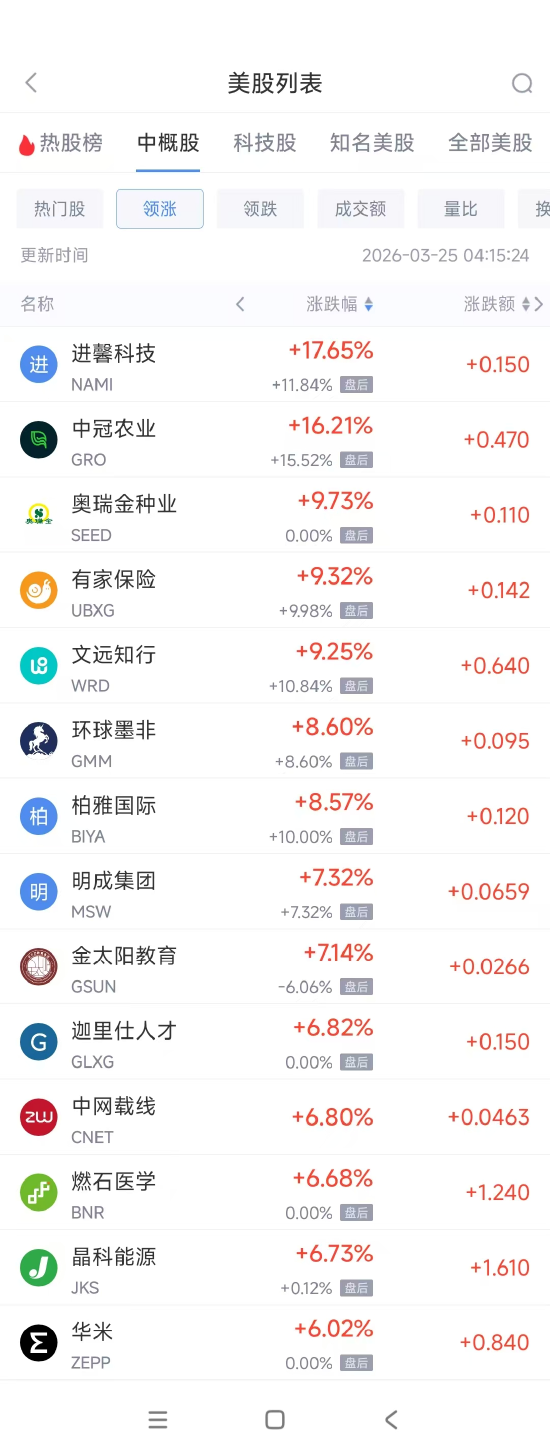
3月25日热门中概股涨跌不一 理想汽车涨3.62%,禾赛科技跌14.16%
Xin Lang Cai Jing· 2026-03-24 20:20
3月25日热门中概股涨跌不一,纳斯达克中国金龙指数(HXC)收跌0.43%。 上涨股当中(按市值从高到低),台积电涨1.42%,拼多多涨1.91%,中华电信涨0.52%,富途控股涨 0.18%,中通涨1.28%,贝壳涨0.06%,理想汽车涨3.62%,华住酒店集团涨0.82%,中国新城农村涨 6.20%,新东方涨0.36%,万国数据涨2.79%,WSP控股涨0.31%,拓臻生物涨0.79%,名创优品涨 0.24%,小马智行涨1.36%,金山云涨1.24%,欢聚涨0.15%,雾芯科技涨1.65%。 美股周二收跌,科技股跌幅领先,三大股指均部分回吐了周一所获涨幅。油价再度上涨,同时美以对伊 战争进入第四周,市场继续关注中东局势的最新发展。 道指跌84.41点,跌幅为0.18%,报46124.06点;纳指跌184.87点,跌幅为0.84%,报21761.89点;标普 500指数跌24.63点,跌幅为0.37%,报6556.37点。 领涨中概股列表: | | | 美股列表 | | | | --- | --- | --- | --- | --- | | ▲热股榜 | 中概股 | 科技股 | 知名美股 | 全部美股 | ...