
ExxonMobil(XOM)

Search documents
果然 美国石油股暴涨!刚刚 马杜罗画面曝光
Zhong Guo Ji Jin Bao· 2026-01-05 14:37
Group 1 - The U.S. oil sector experienced a significant surge following the arrest of Venezuelan President Maduro, with energy-related stocks rising sharply [2] - Chevron, the only major U.S. oil company still operating in Venezuela, saw a pre-market increase of over 6%, while ConocoPhillips and ExxonMobil, which withdrew from Venezuela nearly 20 years ago, also saw substantial gains [2] - Trump announced that U.S. oil companies would invest billions to restore Venezuela's energy infrastructure, aiming to revive the country's oil and gas industry [4] Group 2 - Chevron is positioned to benefit the most from re-entering Venezuela, having remained in the country after the nationalization of foreign oil assets in the early 2000s [4] - ConocoPhillips is owed over $8 billion by Venezuela, while ExxonMobil has approximately $1 billion in compensation claims related to asset nationalization [4] - Analysts suggest that a full recovery of Venezuela's oil sector could take years and cost over $100 billion due to long-standing issues like corruption and insufficient investment [4] Group 3 - Chevron contributes about 20% of Venezuela's oil production and continues to ship crude oil to U.S. refineries despite some U.S. government restrictions [4] - There is uncertainty regarding whether global oil companies will invest in Venezuela under a "U.S.-backed interim government" due to unclear legal and financial frameworks [6] - Current contributions of Venezuelan oil to global supply are minimal, despite the country holding the largest oil reserves in the world [6]


果然,美国石油股暴涨!刚刚,马杜罗画面曝光
Zhong Guo Ji Jin Bao· 2026-01-05 14:27
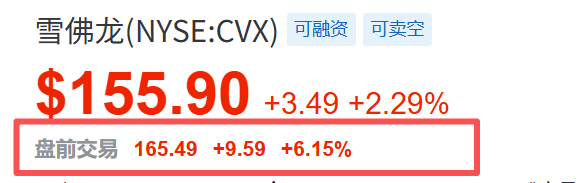
【导读】美国石油股暴涨,马杜罗现身 美股石油股,果然暴涨。 美股石油板块暴涨 1月5日晚间,美军抓走委内瑞拉总统马杜罗及其夫人并将他们带离委内瑞拉,且特朗普承诺美国石油企 业将恢复该国原油产能后,能源相关股票随之上涨。 雪佛龙作为目前唯一仍留在委内瑞拉的美国石油巨头,盘前上涨超6%。涨幅居前的还包括康菲和埃克 森美孚——这两家公司在近20年前,在马杜罗前任将其资产国有化后已撤出委内瑞拉。油服板块同样走 强,例如SLB(斯伦贝谢)和贝克休斯(Baker Hughes)等。 在制裁豁免下,雪佛龙贡献了委内瑞拉约20%的产量,并将原油运往美国炼厂。即便特朗普政府启动了 部分海上封锁措施,雪佛龙仍持续从委内瑞拉发运原油。 雪佛龙一位发言人周一在声明中称:"雪佛龙始终将员工的安全与福祉,以及资产完整性放在首位。我 们将继续不间断运营,并完全遵守所有相关法律法规。" 外界仍不清楚,全球石油公司是否愿意向一个由"美国支持的临时政府"管理、但尚未建立明确法律与财 政规则的国家投入巨额资金。 特朗普表示,美国石油公司将投入数十亿美元,修复委内瑞拉破败的能源基础设施,让该国油气产 业"重回昔日荣光"。 雪佛龙在全球大型石油公司中 ...
果然,美国石油股暴涨!刚刚,马杜罗画面曝光
中国基金报· 2026-01-05 14:20
特朗普表示,美国石油公司将投入数十亿美元,修复委内瑞拉破败的能源基础设施,让该国油气产业"重回昔日荣光"。 雪佛龙在全球大型石油公司中,被认为最有条件第一时间从"美国更广泛进入全球最大原油储量国"中获益。该公司在本世纪初委内瑞拉没 收外资油气资产后仍选择留在当地。根据国际仲裁裁决,康菲目前被委内瑞拉拖欠超过80亿美元,埃克森美孚则仍有约10亿美元的资产国 有化相关赔偿未收回。 【导读】美国石油股暴涨,马杜罗现身 中国基金报记者 泰勒 美股石油股,果然暴涨。 美股石油板块暴涨 1月5日晚间, 美军抓走委内瑞拉总统马杜罗及其夫人并将他们带离委内瑞拉, 且特朗普承诺美国石油企业将恢复该国原油产能后,能源相关股 票随之上涨。 雪佛龙作为目前唯一仍留在委内瑞拉的美国石油巨头,盘前上涨超6%。涨幅居前的还包括康菲和埃克森美孚——这两家公司在近20年前, 在马杜罗前任将其资产国有化后已撤出委内瑞拉。油服板块同样走强,例如SLB(斯伦贝谢)和贝克休斯(Baker Hughes)等。 埃克森美孚CEO达伦·伍兹在11月的一次采访中表示,公司会评估委内瑞拉的潜在机会,但会保持谨慎,因为其在当地资产过去曾被征收。 分析师与交易员称 ...

三大股指期货涨跌不一,委内瑞拉局势突变扰动油市预期!石油股闻风大涨
Zhi Tong Cai Jing· 2026-01-05 13:30
Market Overview - US stock index futures showed mixed performance with Dow futures down 0.08%, S&P 500 futures up 0.25%, and Nasdaq futures up 0.63% [1] - European indices also saw gains, with Germany's DAX up 0.68%, UK's FTSE 100 up 0.18%, France's CAC40 up 0.16%, and the Euro Stoxx 50 up 0.65% [2] Oil Market Dynamics - WTI crude oil rose by 0.63% to $57.68 per barrel, while Brent crude increased by 0.51% to $61.06 per barrel [3] - The arrest of Venezuelan President Maduro led to a drop in oil prices, alleviating inflation concerns and causing US Treasury yields to rise [4] - Goldman Sachs indicated that the short-term impact on oil prices from the Venezuelan situation is expected to be limited, but long-term production may increase, potentially putting pressure on global oil prices [6] Company-Specific News - Chevron (CVX.US) stock rose by 6% in pre-market trading following the US government's actions in Venezuela, which may lead to a relaxation of sanctions on Venezuelan oil [9] - Tesla (TSLA.US) faced challenges in the Chinese market, with a significant decline in annual shipments compared to 2024, losing its top position in the electric vehicle market to BYD [10] - Novo Nordisk (NVO.US) launched its oral weight loss drug Wegovy in the US, priced at $149 per month for self-paying patients, which could enhance its competitive position against Eli Lilly (LLY.US) [10] - L3Harris Technologies (LHX.US) is nearing a significant deal to sell 60% of its aerospace and propulsion business to AE Industrial Partners, focusing on national security technology [11] - Trump Media Technology Group (DJT.US) saw a surge in short positions following a merger announcement with TAE Technologies, valued at over $60 billion [12]




Oil and defense stocks react to Venezuela news: Chevron, Exxon Mobil, Palantir, Lockheed, Halliburton, more
Fastcompany· 2026-01-05 13:02
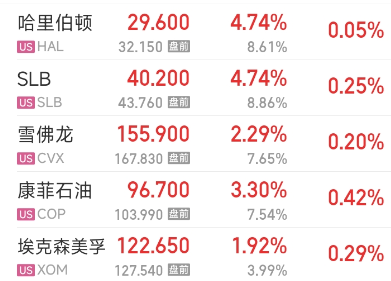
Market Reaction to U.S. Intervention - The market reaction to the U.S. military intervention in Venezuela has been significant, particularly among energy stocks, with notable movements in publicly traded companies [1][2]. Energy Sector Performance - Chevron Corporation (NYSE: CVX) has seen a rise of 7.3%, while Exxon Mobil (NYSE: XOM) increased by 4.5%, ConocoPhillips (NYSE: COP) also rose by 7.3%, and Halliburton Company (NYSE: HAL) surged by 10.3% [7]. - The intervention is expected to benefit U.S. oil companies, especially Chevron, which has a substantial presence in the region [3][4]. Foreign Oil Companies' Performance - Shell (NYSE: SHEL) and BP (NYSE: BP), both foreign companies, experienced a slight decline of 0.7% in premarket trading, indicating investor skepticism about foreign companies profiting from U.S. actions in Venezuela [4][5]. Defense Sector Performance - Defense stocks have shown a cautious response, with companies like Lockheed Martin (NYSE: LMT) up by 1%, RTX (NYSE: RTX) by 0.7%, Northrop Grumman (NYSE: NOC) by 1%, General Dynamics (NYSE: GD) by 1%, and Boeing Company (NYSE: BA) by 0.2% [9]. - The expansion of military operations is generally seen as beneficial for defense companies, although investors are currently taking a cautious approach [8]. Tech Sector Performance - Tech companies with defense contracts, such as Palantir Technologies (NASDAQ: PLTR) which rose by 3.8%, Honeywell International (NASDAQ: HON) up by 0.2%, and L3Harris Technologies (NYSE: LHX) up by 0.7%, are also expected to benefit from increased military operations [10].


Oil and defense stocks react to Venezuela news: Chevron, Exxon Mobil, Palantir, Lockheed, Halliburton, more
Yahoo Finance· 2026-01-05 12:53
Group 1: Market Reactions to U.S. Intervention - The immediate market reaction to the U.S. military intervention in Venezuela has been significant, particularly among oil and energy stocks [1][2] - Chevron Corporation, being the largest American energy company in the region, is expected to benefit the most from the intervention, with its stock rising by 7.3% [3][7] - Other oil companies such as Exxon Mobil and ConocoPhillips also saw stock increases of 4.5% and 7.3% respectively, while Halliburton Company experienced a rise of 10.3% [7] Group 2: Impact on Foreign Oil Companies - Two prominent foreign oil companies, Shell and BP, saw slight declines of 0.7% in premarket trading, indicating investor skepticism about their ability to profit from the U.S. intervention [5] - The market sentiment suggests that investors believe the U.S. may prioritize American companies over foreign ones in the Venezuelan oil sector [5] Group 3: Defense Stocks Caution - Investors are showing caution regarding defense stocks, as the military intervention indicates a potential shift towards a more expansionist U.S. foreign policy under Trump's administration [6]
美股前瞻 | 三大股指期货涨跌不一,委内瑞拉局势突变扰动油市预期!石油股闻风大涨
智通财经网· 2026-01-05 12:50
1. 1月5日(周一)美股盘前,美股三大股指期货涨跌不一。截至发稿,道指期货跌0.08%,标普500指数期货涨0.25%,纳指期货涨0.63%。 | ■ US 30 | 48,343.00 | 48,437.20 | 48,316.50 | -39.40 | -0.08% | | --- | --- | --- | --- | --- | --- | | ■ US 500 | 6,875.60 | 6,881.60 | 6,855.80 | +17.10 | +0.25% | | 트 US Tech 100 | 25,365.90 | 25,393.00 | 25,213.90 | +159.70 | +0.63% | 2. 截至发稿,德国DAX指数涨0.68%,英国富时100指数涨0.18%,法国CAC40指数涨0.16%,欧洲斯托克50指数涨0.65%。 | 3. 截至发稿,WTI原油涨0.63%,报57.68美元/桶。布伦特原油涨0.51%,报61.06美元/桶。 | | --- | | ■ WTI原油 | 2026年2月 | 57.68 | 57.75 | 56.32 | +0.36 | +0.63% ...

Wall Street cheers the prospect of conflict in Venezuela and Greenland
Yahoo Finance· 2026-01-05 11:27
Core Viewpoint - The price of oil fell nearly 2% following the U.S. invasion of Venezuela and the capture of Nicolás Maduro, with traders believing this would not significantly impact oil prices in the short term [1] Group 1: Oil Market Dynamics - U.S. oil company stocks experienced significant increases, with Chevron up 7.82%, Halliburton up 8.45%, ConocoPhillips up 7.54%, and ExxonMobil up 3.95% in premarket trading [1] - Despite Venezuela's vast oil reserves, which account for about 17% of the world's total, its oil production has drastically declined by 75% from 2013 to 2020, now supplying less than 1% of daily global oil [3] - To fully exploit Venezuelan oil, U.S. companies would require strong guarantees against renationalization, the ability to commercialize discoveries, and freedom to explore the Orinoco oil belt, necessitating billions in investment and years of development [4] Group 2: Market Reactions and Trends - The overall market sentiment was positive, with S&P 500 futures up 0.29%, and significant gains in Asian and European markets, including a 2.97% rise in Japan's Nikkei 225 and a 3.43% increase in South Korea's KOSPI [5] - Following renewed threats from President Trump regarding Greenland, defense stocks saw a global uptick, with Rheinmetall up 7.4%, Saab AB up 5.75%, and Mitsubishi Heavy Industries up 8.39% [6] - The private sector is actively preparing for Venezuelan oil projects, with a former Chevron executive raising a $2 billion fund and plans for visits to Venezuela by industry leaders [7] Group 3: Currency and Investment Implications - The U.S. dollar experienced a modest increase, up 0.32% on the ICE U.S. Dollar Index, as the market reacted to the events in Venezuela, leading to a flight to quality assets like gold and the Swiss franc [8]
委内瑞拉石油储备价值17万亿美元,美国石油巨头股价集体暴涨!特朗普又威胁伊朗、古巴、哥伦比亚和墨西哥
Mei Ri Jing Ji Xin Wen· 2026-01-05 11:20
Group 1 - U.S. energy stocks surged in pre-market trading, with Halliburton and Schlumberger rising over 11%, and Chevron and ConocoPhillips increasing by over 7% [1][2] - The U.S. government has taken control of Venezuelan President Maduro and is expected to push for significant investments in Venezuela's oil resources, despite maintaining sanctions on Venezuelan oil [3][4] - Venezuela's oil exports have nearly dropped to zero due to U.S. sanctions, leading to a saturation of domestic storage facilities and a reduction in oil production [3][5] Group 2 - Venezuela has proven oil reserves exceeding 300 billion barrels, accounting for about 17% of global reserves, with an estimated value of $17 trillion at current WTI prices [4] - Chevron remains the only major U.S. oil company still operating in Venezuela, while other companies have exited due to U.S. sanctions [4][5] - The Venezuelan oil company has begun to reduce production and close some oil fields due to a lack of diluents for heavy oil, which has also affected joint ventures with foreign companies [5][6] Group 3 - The current situation in Venezuela shows significant economic distress, with many shops closed and limited availability of goods, particularly fresh produce [7][8] - Reports indicate that U.S. military actions in Venezuela have resulted in civilian casualties, raising concerns about the humanitarian impact of U.S. interventions [8][9] - President Trump has expressed intentions to gain full access to Venezuela's resources and has threatened military action against several countries, including Colombia and Iran, in relation to drug trafficking and regional stability [9][10]
美股策略周报:圣诞、新年假期成交清淡,重点关注消费电子展-20260105
Eddid Financial· 2026-01-05 11:17
Economic Data - Initial jobless claims decreased to 199,000, better than the expected 220,000, marking a continuous decline for four weeks [6][8] - The number of individuals continuing to receive unemployment benefits fell to 1.866 million, with a four-week moving average also declining [6][8] - The New York Fed's weekly economic index stood at 2.23, with a 13-week moving average of 2.26 [7][10] Market Sentiment - The overall market sentiment remained in the "neutral" range, with the S&P 500 fear and greed index indicating a slight decrease compared to the previous week [11][12] - The volatility index (VIX) closed at 14.51, below the critical value of 20 and the 50-day moving average [11][13] Global Market Overview - Global equity markets experienced a weekly decline of 0.3%, with emerging markets up by 2.3% and developed markets down by 0.6% [14] - The US dollar index increased by 0.4%, while gold fell by 4.6% and Bitcoin rose by 3.1% [14] US Stock Market Performance and Style - The S&P 500 index decreased by 1.0% for the week, while the Nasdaq index fell by 1.5% [15] - The technology sector, represented by the "seven giants," saw a decline of 1.9%, and small-cap stocks, represented by the Russell 2000, also dropped by 1.0% [15] - Value stocks outperformed growth stocks, with large-cap stocks leading small-cap stocks [15] Industry Performance - Among the 36 secondary industries in the US stock market, 14 saw gains, with the top five performers being coal, oil and petrochemicals, defense and military, electrical equipment, and semiconductors, with weekly increases of 5.9%, 3.1%, 1.8%, 1.7%, and 1.4% respectively [17] - The automotive and parts sector lagged with a weekly decline of 5.0% [17]


