Yum!(YUM)

Search documents
Morning Movers: Eli Lilly rises, Boston Scientific falls after quarterly results
Yahoo Finance· 2026-02-05 14:00
Market Overview - Stock futures are mixed, showing signs of stabilization after a downturn in software and AI-related technology stocks, leading some investors to view the selloff as a buying opportunity [1] - Defensive sectors and commodity-linked assets are gaining interest, particularly as gold prices have risen above $5,000 per ounce, indicating strong demand for safe havens amid market uncertainty [1] Pre-Market Trading - In pre-market trading, S&P 500 futures rose by 0.11%, Nasdaq futures fell by 0.34%, and Dow futures increased by 0.22% [2] Company Movements - Silicon Labs (SLAB) shares surged by 49% following a definitive agreement for acquisition by Texas Instruments (TXN) at $231 per share in an all-cash transaction [3] - Texas Instruments (TXN) shares declined by 3% after announcing the acquisition of Silicon Labs [6] - Other notable stock movements include Eli Lilly (LLY) up 9%, Johnson Controls (JCI) up 5%, and AMD (AMD) down 10% [6]


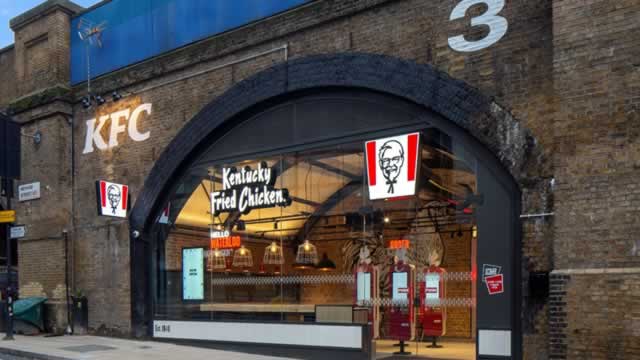
肯德基小候鸟基金十周年“新春欢聚游园会”系列活动在京举办
Zheng Quan Ri Bao Zhi Sheng· 2026-02-05 12:11
Core Viewpoint - The KFC Little Migrant Bird Fund, in collaboration with the China Children and Teenagers' Fund, is launching a series of charitable activities themed "Together for Reunion Year, Let Love Not Wait" to support left-behind and disadvantaged children during the upcoming Spring Festival in 2026 [1][3]. Group 1: Fund Background and Activities - Established in 2016, the KFC Little Migrant Bird Fund aims to care for the growth of left-behind, mobile, and disadvantaged children, marking its 10th anniversary this year [3][6]. - The new Spring Festival initiative continues the commitment to the "Little Migrant Bird" group, addressing their unique needs and helping their parents return home for the holiday [3][4]. - Activities will take place in over 23 cities, inviting "Little Migrant Bird" families to gather at KFC restaurants for a "Little Migrant Bird Reunion Fair," featuring cultural experiences and interactive games [3][4]. Group 2: Cultural and Emotional Impact - The "New Year Reunion Fair" series is designed to incorporate local cultural elements and blessings, fostering emotional connections among families [4]. - The events transform KFC restaurants into warm gathering places, allowing children to experience the festive atmosphere and engage in cultural activities [4]. - The initiative aims to create lasting memories for the children, with KFC brand ambassador Sun Yingsha providing support for the second consecutive year [4][6]. Group 3: Commitment to Social Responsibility - Since its inception, the KFC Little Migrant Bird Fund has engaged in various activities, including reading, arts, and sports, to support left-behind and mobile children, expanding its focus to disadvantaged children in 2024 [6]. - By the end of 2025, the fund has donated over 1.25 million books, benefiting nearly 6.5 million children, demonstrating a commitment to practical and effective charitable actions [6]. - KFC has emphasized its long-term commitment to social responsibility, aiming to expand its support and deepen its impact on the lives of "Little Migrant Birds" over the next decade [6].



因业绩下滑与激烈竞争,必胜客宣布将在美关闭250家门店
Yang Zi Wan Bao Wang· 2026-02-05 12:01
据介绍,在竞争激烈的披萨赛道上,必胜客长期面临着老对手达美乐的强势挤压。最新季度的财报数据 显示,必胜客在美国门店的同店销售额下降了3%。 为了挽回颓势,必胜客曾试图通过价格战来吸引顾客,比如推出了新的"5美元披萨"超值活动。然而, 这一策略并未引起市场的共鸣,消费者似乎并不买账。 尽管具体的关店名单尚未公布,但这仅仅是必胜客正在进行的重大调整的一部分。早在去年11月,百胜 集团就宣布启动针对必胜客的"战略选择正式审查",甚至不排除出售该品牌的可能性。百胜方面表示, 这项审查预计将在今年年内完成。 据CNN报道,当地时间2月4日,百胜集团在财报电话会议上透露,公司计划在今年上半年在全美关闭 约250家表现不佳的必胜客门店,这约占其美国门店总数的3%。 ...
Wall Street Breakfast Podcast: Alphabet’s Growth, Capex Bill
Seeking Alpha· 2026-02-05 11:32
分组1: Alphabet (GOOG) Earnings - Alphabet reported an 18% increase in revenues, reaching $113.8 billion, surpassing expectations of $111.5 billion, driven by growth in Google Services and Google Cloud [3] - CEO Sundar Pichai indicated that capital expenditures for 2026 are projected to be between $175 billion and $185 billion, significantly higher than Bloomberg's estimate of $119.5 billion [3] - Capital expenditures for 2025 were reported at $91.5 billion, aligning with previous guidance of $91 billion to $93 billion [4] 分组2: Qualcomm (QCOM) Earnings - Qualcomm's adjusted earnings were $3.50 per share with a revenue increase of 5% year-over-year to $12.25 billion, slightly above the expected revenue of $12.2 billion [5] - For the upcoming second quarter, Qualcomm expects adjusted earnings between $2.45 and $2.65 per share, with revenue forecasted between $10.2 billion and $11 billion, missing analyst expectations of $2.90 per share and $11.1 billion in revenue [5] - The guidance reflects the impact of memory supply constraints and pricing on demand from several handset customers [6] 分组3: Yum! Brands (YUM) Strategy - Yum! Brands announced the closure of approximately 250 underperforming Pizza Hut locations in the U.S. as part of a portfolio cleanup, with a total of 19,974 Pizza Hut locations globally at the end of Q4 [6] - The closures are focused on weaker-performing locations rather than a broad brand retrenchment, as Pizza Hut division sales declined by 5% in Q4, including a 1% drop in same-store sales [7] - The "Hut Forward" plan aims to revitalize the brand through enhanced marketing, technology modernization, and new franchise agreements [8]



Yum! Brands posts double-digit profit growth in Q4 2025
Yahoo Finance· 2026-02-05 10:17
Financial Performance - Yum! Brands reported a 27% increase in fourth-quarter 2025 net income, rising to $535 million from $423 million a year earlier [1] - Revenue for Q4 2025 was $2.51 billion, up 6% from $2.36 billion in Q4 2024 [1] - Global system sales in the quarter rose 5%, with Taco Bell leading at 8% growth and KFC at 6% [1][3] Expansion and Growth - The company opened 1,814 gross units in the quarter, translating to 3% year-on-year unit growth [2] - KFC accounted for the majority of the expansion with 1,132 gross restaurant openings, while Taco Bell added 228 new outlets [2] - For the full fiscal year 2025, Yum! Brands opened 4,567 gross units [3] Digital Sales and Profitability - Digital system sales in Q4 exceeded $11 billion, with digital channels accounting for nearly 60% of system sales [2] - GAAP earnings per share (EPS) were $1.91 for the quarter, while EPS excluding special items was $1.73 [3] Strategic Focus and Future Plans - CEO Chris Turner highlighted strong fundamentals at KFC and Taco Bell, with a focus on accelerating long-term growth through the "Raise the Bar" priorities [4] - The board approved a dividend of $0.75 per share, marking a 6% increase [4] - A strategic review of the Pizza Hut brand is expected to be completed this year, which may involve shutting down 250 underperforming stores in the US in the first half of 2026 [4][5]
Yum! to close 250 Pizza Hut stores as sales slump amid strategic review
Invezz· 2026-02-05 07:18
Core Insights - Yum! Brands announced the closure of approximately 250 underperforming Pizza Hut locations across the United States during the first half of 2026 [1] Company Actions - The decision to close these locations is part of a strategic move to enhance overall performance and profitability within the Pizza Hut brand [1]
Giant pizza restaurant chain closing 250 restaurants nationwide
Yahoo Finance· 2026-02-04 23:58
The downturn in the pizza restaurant sector is continuing into 2026 with major dining chains closing hundreds of locations, making it more difficult for consumers to get their favorite meal. Pizza restaurants have faced severe economic headwinds over the last two years, as several chains have dealt with fierce competition, rising labor and food costs, and high lease rates requiring several companies to launch out-of-court restructurings, close locations, and in some cases, file for bankruptcy. Seattle-b ...
How to play the stock market now, Charles Schwab CEO on crypto investing and prediction markets
Youtube· 2026-02-04 22:35
Market Overview - The market is mixed, with the Dow up 336 points (0.7%) while the NASDAQ is down over 1% [1] - The S&P 500 is down 0.21%, but the equal-weighted S&P 500 is performing better, indicating strength in smaller stocks [1] - The Dow transports have surged 2.5% over the last three days, up nearly 8% since the ISM manufacturing report [1] Sector Performance - Materials sector is leading with a 2.4% increase, followed by real estate and energy sectors, which is up over 15% year-to-date [1] - The healthcare, staples, and financials sectors are also showing gains of more than 1% [1] - The tech sector is under pressure, with significant declines in major stocks like Tesla (down 3%), Broadcom (down 4%), and AMD (down 16%) [1] Earnings Growth Forecast - Morgan Stanley forecasts a 17% earnings growth for the S&P 500 this year, driven by positive operating leverage and improved pricing power [2] - The median stock in the Russell 3000 is experiencing a 13% year-over-year earnings growth, the best in four years [2] Valuation Insights - Current valuation is extended historically, with the median stock in the S&P trading at a three-turn discount to the cap-weighted index [2] - Historical data suggests that when earnings growth exceeds 8% and the Fed funds rate declines, market multiples tend to expand 90% of the time [2] Investment Opportunities - Small caps and consumer discretionary sectors are highlighted as areas of opportunity, with the S&P 600 small cap index showing 10% earnings growth, the best since 2022 [2] - Consumer discretionary is favored due to improving unit demand and pricing, alongside a fiscal tailwind of $65 billion expected in 2026 [2] Tech Sector Analysis - Despite recent pressures, the fundamental setup for large-cap tech remains intact, with revenue revisions at 20-year highs [2] - The market is rewarding high capital expenditure to sales behavior, benefiting AI enablers and hyperscalers [2] Crypto Market Dynamics - The crypto market has seen significant volatility, with Bitcoin down approximately 40% from its October highs, raising concerns about leverage and liquidity [5] - Tokenization is expected to gain traction in 2026, with tokenized treasuries and stocks showing substantial growth [6] Ford's EV Strategy - Ford's US vehicle sales dropped about 5% in January, with EV sales collapsing by approximately 70% [5] - The company is working on a universal EV platform expected to be profitable by 2027-2028, while also exploring partnerships with Chinese OEMs [5] Uber's Business Model - Uber reported strong fourth-quarter results, with bookings up 22% and revenue up 20%, but guidance weighed on stock performance [5] - The long-term risk for Uber lies in the evolution of autonomous vehicles and potential market share loss to vendors like Waymo and Tesla [5]


Pizza Hut will close 250 ‘underperforming’ locations in 2026 as list of struggling restaurants grows
Yahoo Finance· 2026-02-04 21:15
Group 1 - Pizza Hut will close approximately 3% of its U.S. locations, equating to around 250 stores, in the first half of 2026 due to underperformance and competition from Domino's Pizza [1] - In contrast, Taco Bell and KFC reported strong sales growth, with Taco Bell's same-store sales increasing by 7% for the quarter and KFC achieving a 1% increase while opening its 30,000th international restaurant [4] - Yum Brands reported fourth-quarter revenue of $2.51 billion, surpassing expectations of $2.45 billion, although it missed earnings per share (EPS) estimates, reporting $1.73 adjusted compared to the expected $1.77 [3] Group 2 - The company opened over 440 new Pizza Hut restaurants globally in the fourth quarter of 2025 and nearly 1,200 in total for the year across 65 countries [2] - CEO Chris Turner highlighted the strong fundamentals at KFC and Taco Bell, emphasizing a strategic focus on long-term growth through the "Raise the Bar" initiative [5] - Shares of Yum Brands experienced a slight decline of less than 1% in afternoon trading but have increased by 6% year-to-date [5]
KFC parent company's loyalty program in China surpasses 590 million members
Reuters· 2026-02-04 20:38
Core Insights - KFC's parent company in China has reported significant growth in its digital loyalty programs, with membership exceeding 590 million, which accounts for more than 40% of the country's population [1] Company Summary - The aggressive expansion of KFC's digital loyalty programs indicates a strong engagement strategy aimed at enhancing customer retention and driving sales [1] - The membership figure of over 590 million highlights the company's substantial market penetration and potential for further growth in the digital space [1] Industry Summary - The growth in digital loyalty programs reflects a broader trend in the fast-food industry towards digital engagement and customer loyalty initiatives [1] - The statistic of over 40% membership in the digital loyalty program suggests a competitive advantage for KFC in the Chinese market, positioning it favorably against other fast-food chains [1]