景顺长城基金管理有限公司

Search documents
景顺长城成长优选混合型证券投资基金基金份额发售公告
Sou Hu Cai Jing· 2025-12-21 22:27
Core Viewpoint - The Invesco Great Wall Growth Preferred Mixed Securities Investment Fund has been approved for fundraising registration by the China Securities Regulatory Commission (CSRC), with the fundraising period set from January 8, 2026, to January 21, 2026 [1][2]. Fund Overview - The fund is a contract-based open-end mixed securities investment fund [2]. - The fund manager is Invesco Great Wall Fund Management Co., Ltd., and the custodian is Industrial and Commercial Bank of China [2]. - The fund is open to individual investors, institutional investors, qualified foreign investors, and other investors permitted by laws and regulations [2][12]. Fund Sale Details - The fund will be publicly offered from January 8, 2026, to January 21, 2026, through the company's direct sales center and other sales institutions [5][13]. - The minimum initial subscription amount is 1 yuan (including subscription fees), with no limit on additional subscriptions [3][19]. - There is no upper limit on the maximum subscription amount for individual accounts during the fundraising period, but the fund manager may impose restrictions if a single investor's total subscription exceeds 50% of the total fund shares [3][20]. Subscription Process - Investors must open a fund account to purchase the fund, and account opening and subscription applications can be processed simultaneously during the fundraising period [6][22]. - The subscription fee is applicable and will be used for market promotion, sales, and registration expenses incurred during the fundraising period [16][18]. - Investors can subscribe multiple times during the fundraising period, and once a subscription is accepted, it cannot be revoked [21][22]. Fund Management and Fees - The fund adopts a floating management fee model, which includes fixed management fees, performance-based fees, and excess management fees based on the holding period and annualized return [18][19]. - The management fee is calculated at a rate of 1.20% of the previous day's net asset value, which may vary for different investors [18][19]. Fund Contract and Effectiveness - The fund's contract will become effective if the total number of shares raised meets the regulatory requirements within three months of the fundraising start date, including a minimum of 200 million shares and 200 investors [28][29]. - If the fundraising does not meet the conditions, the fund manager will return the investors' contributions with interest [29]. Contact Information - The fund management company is located in Shenzhen, and investors can contact them for inquiries regarding subscriptions and other related matters [30][31].

盘点2025公募基金“换帅”潮:头部公司董事长密集更迭 谢卫、朱永强等老将荣退
Xin Lang Cai Jing· 2025-12-19 10:19
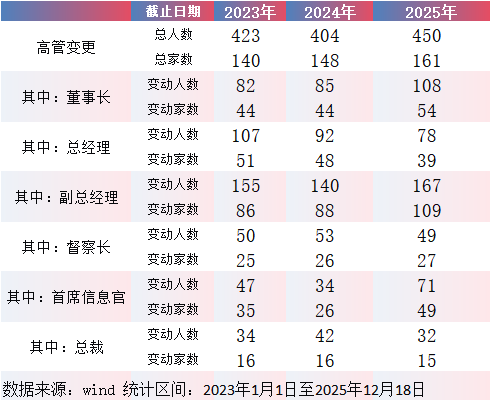
专题:2025基金行业年终大盘点:公募规模近36万亿元,主动权益重夺主场,"冠军基"揭榜倒计时 12月19日,岁末将至,回首展望。盘点2025年公募基金行业高管变更情况,WIND数据显示,截止2025 年12月18日,高管变更涉及161家450人,人员变动规模在三年内保持高位。 数据显示,近三年基金行业高管层处于活跃变动期,且变动重心从"总经理"向"董事长"和"副总经 理""首席信息官"转移。这或反映出行业可能在经历深刻的战略调整、业务线重组与数字化变革。 整体图谱:变动范围持续扩大,核心职位流动加速 近三年,发生高管变动的基金公司家数从 2023年的140家增长至 2025年的161家,表明高管变动现象波 及的公司范围在扩大。涉及变动的高管总人数从 2023年的423人 增至 2025年的450人,人员变动规模在 三年内保持高位。 | | 截止日期 | 2023年 | 2024年 | 2025年 | | --- | --- | --- | --- | --- | | 高管变更 | 总人数 | 423 | 404 | 450 | | | 总家数 | 140 | 148 | 161 | | 其中:董事长 | 变 ...

基金分红:景顺长城中证500行业中性低波动指数基金12月23日分红
Sou Hu Cai Jing· 2025-12-19 02:15
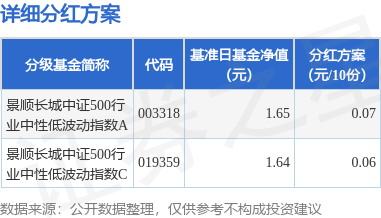
Group 1 - The core announcement is regarding the fifth dividend distribution for the Invesco Great Wall CSI 500 Industry Neutral Low Volatility Index Fund for the year 2025 [1] - The dividend distribution base date is December 12, 2025, with specific dividend amounts outlined for different fund classes: 0.07 yuan per 10 shares for Class A and 0.06 yuan per 10 shares for Class C [1] - The eligible recipients for the dividend are all fund shareholders registered with the registration agency as of the equity registration date, which is December 22, 2025 [1] Group 2 - The cash dividend payment date is set for December 23, 2025, and investors opting for dividend reinvestment will have their cash dividends converted into fund shares based on the net asset value determined on December 22, 2025 [1] - Fund shares resulting from the reinvestment will be credited to investors' accounts on December 23, 2025, and can be queried or redeemed starting the next business day [1] - According to relevant laws and regulations, income derived from fund distributions is exempt from individual income tax and corporate income tax for both individual and institutional investors [1]
创业50ETF(159682)跌2.17%,半日成交额2.35亿元
Xin Lang Cai Jing· 2025-12-18 03:38
12月18日,截止午间收盘,创业50ETF(159682)跌2.17%,报1.440元,成交额2.35亿元。创业50ETF (159682)重仓股方面,宁德时代截止午盘跌2.85%,中际旭创跌3.92%,东方财富跌0.78%,新易盛跌 4.28%,阳光电源跌3.83%,胜宏科技跌3.70%,汇川技术跌0.14%,迈瑞医疗涨0.75%,亿纬锂能跌 1.11%,同花顺跌1.09%。 来源:新浪基金∞工作室 创业50ETF(159682)业绩比较基准为创业板50指数收益率,管理人为景顺长城基金管理有限公司,基 金经理为汪洋、张晓南,成立(2022-12-23)以来回报为47.21%,近一个月回报为3.45%。 风险提示:市场有风险,投资需谨慎。本文为AI大模型自动发布,任何在本文出现的信息(包括但不 限于个股、评论、预测、图表、指标、理论、任何形式的表述等)均只作为参考,不构成个人投资建 议。 ...

芯片ETF景顺(159560)开盘跌1.06%,重仓股中芯国际跌0.43%,寒武纪跌1.19%
Xin Lang Cai Jing· 2025-12-18 01:41
Group 1 - The core viewpoint of the article highlights the performance of the Invesco Chip ETF (159560), which opened down by 1.06% at 1.584 yuan on December 18 [1] - The major holdings of the ETF include companies such as SMIC, Cambricon, and Huagong Information, with varying performance; for instance, SMIC decreased by 0.43%, while Zhaoyi Innovation increased by 0.65% [1] - The ETF's performance benchmark is the CSI Chip Industry Index return, managed by Invesco Great Wall Fund Management Company, with a return of 60.58% since its establishment on November 9, 2023, and a return of 0.60% over the past month [1]




关于景顺长城安享回报灵活配置混合型证券投资基金新增东方证券为销售机构的公告
Zhong Guo Zheng Quan Bao - Zhong Zheng Wang· 2025-12-17 04:58
Group 1 - The company has signed a sales agreement with Dongfang Securities to sell its fund starting from December 17, 2025 [1] - The fund involved is the Invesco Great Wall Anxiang Return Flexible Allocation Mixed Securities Investment Fund [1] - Investors can inquire about details through the customer service hotline of Invesco Great Wall Fund Management Company [3] Group 2 - The company has also signed a sales agreement with Jinshan Bank to sell part of its funds starting from December 17, 2025 [6] - The sales institution is Jinshan Bank, with specific contact details provided for investor inquiries [6][8] - Similar to the previous agreement, the fund operations will follow the regulations set by Jinshan Bank [6] Group 3 - A sales agreement has been established with China Postal Savings Bank for the "You Ni Tong Ying" cooperative platform, effective December 17, 2025 [10] - The platform will facilitate the sale of part of the company's funds, with specific operational details to be determined by the platform [10][11] - Investors can contact the customer service hotline for inquiries regarding this platform [13] Group 4 - The company has entered into a sales agreement with Sunshine Life Insurance to sell the Invesco Great Wall Taihe Return Flexible Allocation Mixed Securities Investment Fund starting December 17, 2025 [15] - The sales institution is Sunshine Life Insurance, with contact information provided for investor inquiries [15][17] - Fund operations will adhere to the regulations set by Sunshine Life Insurance [15] Group 5 - A sales agreement has been signed with Guosen Securities for the Invesco Great Wall Steady Return Flexible Allocation Mixed Securities Investment Fund, effective December 17, 2025 [19] - The sales institution is Guosen Securities, with specific contact details for investor inquiries [19][22] - Fund operations will follow the guidelines established by Guosen Securities [19]



关于景顺长城基金管理有限公司旗下部分基金新增晋商银行为销售机构的公告
Shang Hai Zheng Quan Bao· 2025-12-16 19:05
Group 1 - The company has signed a sales agreement with Jinshan Bank to sell certain funds starting from December 17, 2025 [1] - The sales process, opening status, handling time, methods, and fee discounts will be determined by Jinshan Bank [1] - Investors can inquire about details through the company's customer service [3] Group 2 - The company has also signed a sales agreement with China Postal Savings Bank to sell certain funds through the "You Ni Tong Ying" platform starting from December 17, 2025 [6] - Similar to the agreement with Jinshan Bank, the sales process and fee discounts will be based on the platform's arrangements [6] - Investors can consult details through the customer service of China Postal Savings Bank [8] Group 3 - The company has entered into a sales agreement with Shanxi Securities to sell the "Jingshun Changcheng Jingying Shuangli Bond Fund" starting from December 17, 2025 [10] - The sales process and fee discounts will be determined by Shanxi Securities [10] - Investors can inquire about details through the customer service of Shanxi Securities [13] Group 4 - The company has appointed Wang Gaobin as an assistant fund manager for two specific funds, effective immediately [16] - Wang Gaobin holds a master's degree in economics and has 7 years of experience in the securities and fund industry [17]

权益因子观察周报第 130 期:上周大市值风格占优,分析师、盈利因子表现较好-20251216
GUOTAI HAITONG SECURITIES· 2025-12-16 05:17
Quantitative Models and Factor Analysis Quantitative Models and Construction - **Model Name**: Multi-factor Stock Selection Model **Construction Idea**: The model selects effective factors from a factor library to construct weekly enhanced index strategies for different stock pools (CSI 300, CSI 500, CSI 1000, CSI 2000) [68] **Construction Process**: 1. **Factor Selection**: Hundreds of factors from the equity factor library are screened for effectiveness in the respective stock pools [68] 2. **Portfolio Optimization**: - For CSI 300: Strictly neutralize market capitalization and industry, set individual stock weight limits at 8% and deviation limits at 3% [68] - For CSI 500: Strictly neutralize market capitalization and industry, set individual stock weight limits and deviation limits at 1% [68] - For CSI 1000: Control market capitalization deviation to 0.5 standard deviations, industry deviation to 2.5%, and set individual stock weight limits and deviation limits at 1% [68] - For CSI 2000: Control market capitalization deviation to 0.5 standard deviations, industry deviation to 2.5%, and set individual stock weight limits and deviation limits at 0.5% [68] 3. **Weekly Tracking**: The performance of the enhanced index strategies is tracked weekly [68] Model Backtesting Results - **CSI 300 Enhanced Strategy**: - Weekly return: 0.63%, excess return: 0.71% [69] - Monthly return: 2.02%, excess return: 0.82% [69] - Annual return: 24.02%, excess return: 7.6%, maximum drawdown: -3.15% [69] - **CSI 500 Enhanced Strategy**: - Weekly return: 1%, excess return: -0.02% [69] - Monthly return: 2.55%, excess return: 0.58% [69] - Annual return: 26.41%, excess return: 1.19%, maximum drawdown: -4.76% [69] - **CSI 1000 Enhanced Strategy**: - Weekly return: -0.64%, excess return: -1.03% [73] - Monthly return: 0.92%, excess return: 0.42% [73] - Annual return: 36.94%, excess return: 13.22%, maximum drawdown: -5.59% [73] - **CSI 2000 Enhanced Strategy**: - Weekly return: -0.62%, excess return: -0.67% [73] - Monthly return: -0.25%, excess return: -0.58% [73] - Annual return: 59.24%, excess return: 27.14%, maximum drawdown: -5.23% [73] --- Quantitative Factors and Construction - **Factor Name**: Standardized Unexpected Price-to-Book Ratio **Construction Idea**: Measures the deviation of the price-to-book ratio from expectations, reflecting valuation anomalies [34] **Construction Process**: 1. Calculate the raw factor value for each stock [34] 2. Apply absolute median method for outlier removal [34] 3. Perform Z-Score standardization [34] 4. Neutralize the factor by regressing against logarithmic market capitalization and industry dummy variables, using the residuals as the final factor values [34] - **Factor Name**: Analyst Forecast Net Profit FY1 120-day Change **Construction Idea**: Tracks changes in analysts' net profit forecasts over the past 120 days, reflecting market sentiment and expectations [35] **Construction Process**: 1. Collect analysts' net profit forecasts for FY1 over the past 120 days [35] 2. Calculate the percentage change in forecasts over the period [35] - **Factor Name**: Analyst Forecast Revenue Growth Rate FY3 **Construction Idea**: Measures analysts' expectations for revenue growth in FY3, capturing long-term growth potential [37] **Construction Process**: 1. Aggregate analysts' revenue growth forecasts for FY3 [37] 2. Standardize the data and calculate the growth rate [37] Factor Backtesting Results - **CSI 300 Stock Pool**: - Best weekly factors: Standardized Unexpected Price-to-Book Ratio (1.97%), Analyst Forecast Net Profit FY1 120-day Change (1.67%), Past 90-day Report Upgrade Ratio (1.39%) [35] - Best annual factors: Single-quarter ROE (25.63%), Single-quarter Revenue YoY Growth Rate (25.1%), Single-quarter ROA Change (22.51%) [35] - **CSI 500 Stock Pool**: - Best weekly factors: Net Operating Asset Return (1.5%), Past 90-day Post-announcement Report Upgrade Ratio (1.16%), Analyst Forecast Net Profit FY3 120-day Change (1.11%) [36] - Best annual factors: Analyst Forecast Net Profit Growth Rate FY3 (15.13%), Analyst Forecast Revenue FY3 120-day Change (14.74%), Analyst Forecast Revenue Growth Rate FY3 (14.74%) [36] - **CSI 1000 Stock Pool**: - Best weekly factors: Analyst Forecast Revenue Growth Rate FY3 (1.82%), Analyst Forecast Revenue FY3 120-day Change (1.76%), 90-day Earnings Upgrade Ratio (1.7%) [37] - Best annual factors: Analyst Forecast ROE FY3 120-day Change (21.77%), Standardized Unexpected Single-quarter ROE with Drift (20.54%), Standardized Unexpected Single-quarter Net Profit with Drift (20.32%) [37] - **CSI 2000 Stock Pool**: - Best weekly factors: Analyst Forecast Revenue Growth Rate FY3 (2.24%), Analyst Forecast Net Profit Growth Rate FY3 (2.15%), Post-morning 30-minute Price Change (1.92%) [38] - Best annual factors: Standardized Unexpected Single-quarter Excluding Non-recurring Net Profit with Drift (25.17%), Past 90-day Report Upgrade Ratio (24.28%), 5-minute Volume Skewness (23.98%) [38] - **CSI All-share Stock Pool**: - Best weekly factors: Analyst Forecast ROE FY3 120-day Change (2.5%), Analyst Forecast ROA FY3 (2.36%), Analyst ROE FY3 (2.27%) [39] - Best annual factors: Analyst Forecast ROE FY3 120-day Change (27.33%), Single-quarter Revenue YoY Growth Rate (21.77%), Analyst Forecast ROA FY3 120-day Change (21.27%) [39] --- Large Factor Categories and Performance - **CSI 300 Stock Pool**: - Best weekly categories: Analyst Surprise (1.57%), Profitability (1.45%), Growth (1.22%) [45][46] - Best annual categories: Profitability (31.35%), Analyst Surprise (27.31%), Growth (26.87%) [45][46] - **CSI 500 Stock Pool**: - Best weekly categories: Profitability (1.6%), Growth (0.39%), Analyst (0.01%) [52][53] - Best annual categories: Growth (16.53%), Analyst (9.54%), Analyst Surprise (7.35%) [52][53] - **CSI 1000 Stock Pool**: - Best weekly categories: Profitability (0.05%), Growth (0.03%), Analyst (-0.06%) [54][57] - Best annual categories: Growth (17.31%), Analyst Surprise (11.02%), Analyst (10.98%) [54][57] - **CSI 2000 Stock Pool**: - Best weekly categories: Analyst (0.46%), Profitability (-0.58%), Growth (-0.61%) [60][62] - Best annual categories: Market Capitalization (23.11%), Analyst Surprise (20.67%), Growth (20.33%) [60][62] - **CSI All-share Stock Pool**: - Best weekly categories: Analyst (0.32%), Analyst Surprise (0.19%), Profitability (-0.14%) [63][65] - Best annual categories: Market Capitalization (42.55%), Growth (24.85%), Analyst Surprise (22.12%) [63][65]
全方位解析2026年投资机会,景顺长城2026年度策略来了
Xin Lang Cai Jing· 2025-12-16 02:31
Group 1: Market Overview - In 2025, global markets showed a divergent pattern influenced by monetary policy shifts, geopolitical easing, and the AI wave, with China's equity market benefiting from technology breakthroughs and supportive policies, leading to a surge in sectors like AI, innovative pharmaceuticals, new energy, and non-ferrous metals, pushing the Shanghai Composite Index above 4000 points [1][14] - The bond market has transitioned from years of unilateral growth to increased volatility and narrowed yield space [1][14] - The outlook for 2026 remains optimistic, particularly for the equity market, with technology expected to be the main theme, while resource and cyclical sectors may present specific opportunities [1][14] Group 2: Economic Fundamentals - The "14th Five-Year Plan" emphasizes economic construction, targeting a GDP growth rate of around 5% for 2026, with a focus on domestic demand and consumption as primary growth drivers [3][16] - Inflation is expected to rise from its low point due to policies aimed at stimulating demand, including subsidies and increased public service spending [3][16] - The real estate sector's drag on the economy is diminishing, with various policies expected to stabilize housing prices [3][16] Group 3: Equity Market Insights - The equity market is projected to benefit from long-term structural advantages in the Chinese economy, with a focus on corporate profit recovery [5][19] - As of November, the TTM P/E ratio of the CSI 300 Index was approximately 14 times, indicating room for growth, with improving corporate profits and a favorable risk appetite due to easing US-China relations [6][19] - Key areas of focus include technology, particularly AI, semiconductors, and consumer electronics, as well as resource and cyclical sectors [6][20] Group 4: Bond Market Analysis - The bond market is expected to experience narrow fluctuations, with the 10-year government bond yield projected to remain between 1.75% and 1.9% [8][23] - Government bond net financing is anticipated to increase by approximately 1.1 trillion yuan in 2026 compared to 2025, although the overall supply increase is not significant [8][23] - There is a focus on trading opportunities within the bond market, particularly related to inflation expectations and long-term bond supply [8][23] Group 5: Global and Commodity Market Opportunities - The outlook for overseas markets, including Hong Kong, US, Europe, and Japan, is mixed, with optimism for Hong Kong due to domestic growth policies and potential capital inflows [10][25] - The commodity market is expected to rebalance in 2026, with industrial metals like copper and tin likely to perform well due to supply-demand dynamics and the recovery of global manufacturing [10][26] - Gold is expected to maintain its appeal as a financial and safe-haven asset, supported by central bank purchases and the US Federal Reserve's easing cycle [10][26]
海量财经丨基金业的“冰与火”:当私募狂欢与公募沉默成本相遇
Sou Hu Cai Jing· 2025-12-15 12:40
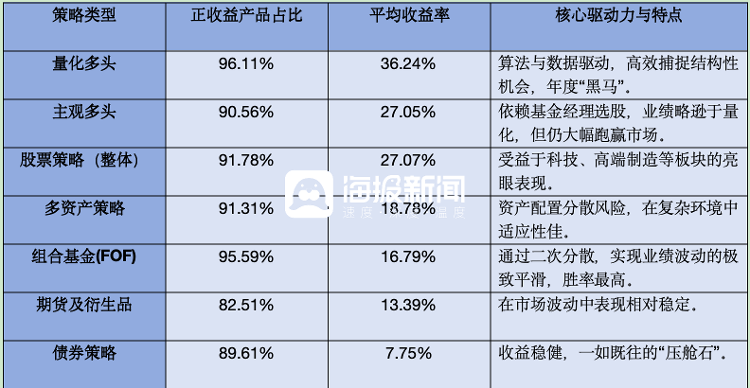
Core Viewpoint - The Chinese fund industry in 2025 presents a stark contrast, with private equity funds performing exceptionally well while public funds struggle significantly, revealing systemic issues in the industry after over two decades of rapid development [1] Performance Disparity: A True Reflection of the Market - In 2025, the structural market conditions of A-shares serve as a key differentiator for performance, leading to a stark contrast between public and private fund results [1] - Private equity securities products show strong profitability, with over 90% achieving positive returns and an average return rate of 22.61%, while stock strategies yield an impressive average return of 27.07% [2] Public Fund Struggles - Among 6,129 public active equity products that have been established for over three years, 60.5% failed to outperform their benchmarks [3] - A significant number of funds, 2,454, lagged their benchmarks by over 10 percentage points, indicating a consistent underperformance compared to market averages [3] Investor Losses: The Cost of Silence - The performance disparity results in real financial losses for investors, with previously celebrated fund managers delivering disappointing results [4] - For instance, a fund managed by Liu Yanchun reported a return of -23.05% over three years, while its benchmark yielded a positive 14.41%, resulting in a 37.46 percentage point gap [4] Corporate Profit vs. Investor Loss - Despite poor performance, some fund companies continue to distribute substantial dividends, creating a stark contrast with the losses faced by investors [5] - A leading fund company distributed nearly 83 billion yuan in dividends over ten years, while its products collectively lost 1,004 billion yuan in the same period [5] Structural Issues: Root Causes of Industry Ailments - The root of performance disparity lies in differing incentive mechanisms, with private funds typically using a performance-based compensation model that aligns managers' interests with those of investors [6] - In contrast, public funds often rely on management scale for fees, leading to a focus on growth rather than performance [6] - Only three out of 28 large-scale active equity funds managed to achieve excess returns while maintaining positive profits over the past three years [6] Regulatory Restructuring: From Scale-Oriented to Performance-Linked - In response to industry issues, regulators are implementing new performance assessment guidelines that tie fund managers' compensation directly to product performance and investor profits [10] - This shift is expected to drive significant changes in the industry, with many active equity fund managers adjusting their strategies to align more closely with benchmark indices [10] Market Trends: Shifts in Fund Flows - Under regulatory and market pressures, there is a noticeable change in fund flows, with private equity products showing a 90.66% positive return rate compared to public funds [12] - High-net-worth clients and institutional investors are increasingly turning to private equity, particularly quantitative strategy products, while ordinary investors are becoming more cautious and reevaluating their investment strategies [12]