激励机制

Search documents
年会上“惊喜式激励”,也许是错误的
3 6 Ke· 2026-02-25 02:35
Core Viewpoint - The article discusses the misconceptions surrounding employee incentive mechanisms in companies, emphasizing that surprise-based incentives are flawed and that a structured approach is necessary for sustainable motivation and performance [1][12]. Group 1: Employee Compensation Structure - Employee compensation consists of various components, including benefits, allowances, salary, and bonuses, each serving different purposes [4][11]. - Benefits are universal and provide security, while allowances are targeted compensations for specific expenses [4]. - Salary is divided into two parts: position salary (60%-70% of total income) and performance salary (30%-40%), with the latter being more fixed than variable due to the nature of performance evaluations [5][6]. Group 2: Types of Bonuses - Commission bonuses, also known as "track bonuses," are awarded based on specific measurable outcomes, such as sales performance or cost savings in production [7][8]. - Operational incentive bonuses are recommended as a more effective form of motivation, allowing employees to act like small business owners within their operational domains [9][10]. - Equity incentives are often misused as a blanket reward for many employees, but should be reserved for those who significantly impact company performance [11]. Group 3: Misconceptions and Challenges - Many employers and employees misunderstand the nature of incentives, leading to dissatisfaction on both sides when expectations are not met [2][3]. - The tendency for employers to rely on dramatic displays of generosity during events can overshadow the need for a well-thought-out incentive structure [12][13]. - The article argues that effective incentive mechanisms should focus on value creation, evaluation, and distribution rather than emotional short-term rewards [13].


收益1%管理费收0.9%,这些基金“历史遗留”问题待解
券商中国· 2025-12-18 01:26
Core Viewpoint - Recent adjustments in management fees for several public fund money market funds have drawn market attention, particularly as these funds yield around 1% while management fees reach as high as 0.85% to 0.9% [1][2]. Group 1: Management Fee Adjustments - Many of the funds adjusting their management fees are transformed from asset management collective products, which previously had a floating fee model [2][4]. - The recent decline in money market fund yields has triggered the fee adjustment mechanism, with many funds now showing a 7-day annualized yield below 1% [2][5]. - The average management fee for money market funds is currently around 0.23%, with a median of 0.2% [2][6]. Group 2: Historical Context and Fee Structure - The management fees were primarily set before the transformation of these funds, with some funds adjusting fees based on specific yield thresholds relative to bank deposit rates [3][4]. - A notable example includes a fund that adjusted its management fee from 0.90% to 0.30% based on its yield performance [3]. - The fluctuation in management fees is based on a rule where if the 7-day annualized yield is less than or equal to twice the current deposit rate, the management fee must decrease [4][6]. Group 3: Future Expectations - As the trend of lowering fees continues, it is expected that fund companies will adjust their management fees in line with market conditions [2][5]. - Currently, there are approximately 103 public funds that have transitioned from asset management collective products, with a total asset value nearing 200 billion [5][6]. - Among the transformed funds, 14 are money market funds, with a total scale exceeding 150 billion, and many of these have management fees above the average market level [5][6]. Group 4: Investment Strategy Considerations - The transformation of these funds often involves changes in fund managers, which can lead to shifts in investment strategies and risk-return profiles [7][8]. - Investors should pay attention to the changes in investment strategies and the performance of the new fund managers as these factors may significantly impact fund performance [7][8].

海量财经丨基金业的“冰与火”:当私募狂欢与公募沉默成本相遇
Sou Hu Cai Jing· 2025-12-15 12:40
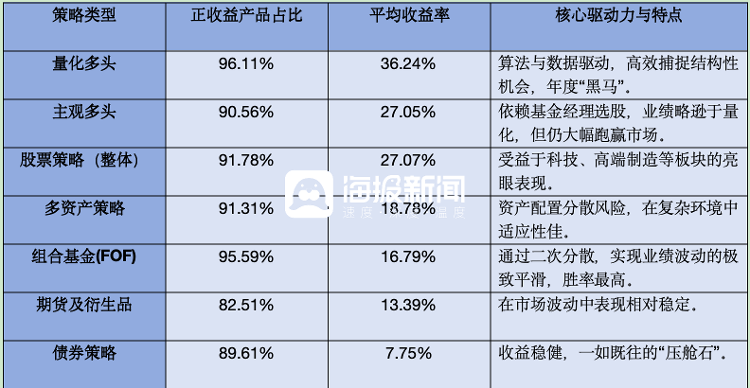
Core Viewpoint - The Chinese fund industry in 2025 presents a stark contrast, with private equity funds performing exceptionally well while public funds struggle significantly, revealing systemic issues in the industry after over two decades of rapid development [1] Performance Disparity: A True Reflection of the Market - In 2025, the structural market conditions of A-shares serve as a key differentiator for performance, leading to a stark contrast between public and private fund results [1] - Private equity securities products show strong profitability, with over 90% achieving positive returns and an average return rate of 22.61%, while stock strategies yield an impressive average return of 27.07% [2] Public Fund Struggles - Among 6,129 public active equity products that have been established for over three years, 60.5% failed to outperform their benchmarks [3] - A significant number of funds, 2,454, lagged their benchmarks by over 10 percentage points, indicating a consistent underperformance compared to market averages [3] Investor Losses: The Cost of Silence - The performance disparity results in real financial losses for investors, with previously celebrated fund managers delivering disappointing results [4] - For instance, a fund managed by Liu Yanchun reported a return of -23.05% over three years, while its benchmark yielded a positive 14.41%, resulting in a 37.46 percentage point gap [4] Corporate Profit vs. Investor Loss - Despite poor performance, some fund companies continue to distribute substantial dividends, creating a stark contrast with the losses faced by investors [5] - A leading fund company distributed nearly 83 billion yuan in dividends over ten years, while its products collectively lost 1,004 billion yuan in the same period [5] Structural Issues: Root Causes of Industry Ailments - The root of performance disparity lies in differing incentive mechanisms, with private funds typically using a performance-based compensation model that aligns managers' interests with those of investors [6] - In contrast, public funds often rely on management scale for fees, leading to a focus on growth rather than performance [6] - Only three out of 28 large-scale active equity funds managed to achieve excess returns while maintaining positive profits over the past three years [6] Regulatory Restructuring: From Scale-Oriented to Performance-Linked - In response to industry issues, regulators are implementing new performance assessment guidelines that tie fund managers' compensation directly to product performance and investor profits [10] - This shift is expected to drive significant changes in the industry, with many active equity fund managers adjusting their strategies to align more closely with benchmark indices [10] Market Trends: Shifts in Fund Flows - Under regulatory and market pressures, there is a noticeable change in fund flows, with private equity products showing a 90.66% positive return rate compared to public funds [12] - High-net-worth clients and institutional investors are increasingly turning to private equity, particularly quantitative strategy products, while ordinary investors are becoming more cautious and reevaluating their investment strategies [12]
“董事长反对自己当选董事长”,本人回应
新浪财经· 2025-12-03 12:34
Core Viewpoint - The chairman of Aibisen, Ding Yanhui, cast a dissenting vote against the election of the new board chairman due to dissatisfaction with the chairman's compensation and the company's governance structure [2][4][5]. Group 1: Governance Issues - Ding Yanhui expressed that the company's governance structure has serious problems, particularly regarding the concentrated shareholding and the lack of willingness from major shareholders to reduce their stakes, which hampers governance optimization [5][6]. - He highlighted the inadequacy of the company's incentive mechanisms and the unscientific nature of the compensation distribution system [6]. Group 2: Financial Performance - Aibisen reported a revenue of 2.872 billion yuan for the first three quarters of the year, representing a year-on-year increase of 5.66%. The revenue for the third quarter alone was 1.053 billion yuan, showing a growth of 14.5% compared to the same period last year [10]. - The net profit attributable to shareholders for the first three quarters was 185 million yuan, marking a significant year-on-year increase of 57.33%. The net profit for the third quarter reached approximately 69.05 million yuan, up 138.55% year-on-year [10]. Group 3: Compensation Details - Ding Yanhui directly holds 124,671,149 shares of the company, accounting for 33.78% of the total share capital, making him the actual controller of Aibisen [8]. - His pre-tax compensation for 2024 was reported at 4.3556 million yuan, which includes 1.7399 million yuan from the employee stock ownership plan. This represents a 51% increase from his 2023 salary of 2.8845 million yuan [8].


上市公司董事长投票反对自己连任:不满意薪酬!去年年薪435万,本人回应
Sou Hu Cai Jing· 2025-12-03 04:46
Core Viewpoint - The only dissenting vote in a recent board decision came from Ding Yanhui, who expressed dissatisfaction with the chairman's compensation, which sparked discussions on social media about the appropriateness of a salary of 4.35 million yuan [1][2]. Group 1: Compensation and Governance - Ding Yanhui's dissenting vote was initially attributed to dissatisfaction with his salary, but he later clarified that his real concern was with the company's incentive mechanism and the concentrated ownership structure, which he believes hinders governance [3]. - According to the 2024 annual report, Ding Yanhui's salary was 4.3556 million yuan, an increase of 1.4711 million yuan from the previous year [4]. Group 2: Company Background - Aibisen, founded in 2001, is a leading provider of LED display applications and services globally. In the first three quarters of 2025, the company reported revenues of 2.872 billion yuan and a net profit attributable to shareholders of 185 million yuan [3].

创世纪董事会换届焕新:实控人掌舵企业战略转型,技术引才配合双重激励筑牢发展根基
Zheng Quan Shi Bao Wang· 2025-12-01 11:49
Core Viewpoint - The company is undergoing a board restructuring to enhance governance and strategic direction, with a focus on integrating diverse expertise in sales, technology, and law to support its growth trajectory [1][2]. Group 1: Board Restructuring - The company announced a board restructuring, proposing candidates with diverse backgrounds to strengthen governance [1]. - The nominated candidates include key figures from sales and technology, indicating a strategic focus on enhancing operational capabilities [1]. - The upcoming shareholder meeting on December 15 will address the election of the new board members [1]. Group 2: Strategic Focus and Performance - The controlling shareholder, Xia Jun, has led the company to focus on high-end CNC machine tools, achieving significant revenue growth [2]. - As of Q3 2025, the company reported revenues of 3.826 billion and a net profit of 348 million, reflecting year-on-year growth rates of 16.80% and 72.56% respectively [2]. - The company has successfully restructured its business by divesting from precision components and concentrating on core CNC machine tool operations [2]. Group 3: Employee Incentive Plans - The company has introduced an employee stock ownership plan to align interests between employees and shareholders, fostering long-term commitment [3]. - A previous restricted stock incentive plan was initiated, with 13 million shares granted to key personnel, aimed at enhancing performance in high-end intelligent equipment [3]. - The dual incentive systems are designed to strengthen the company's governance structure and support sustainable growth [3].

跨越速运的销售好做吗,我认为激励机制是关键
Sou Hu Cai Jing· 2025-12-01 02:06
Core Insights - The importance of a strong sales team is emphasized as it directly impacts a company's performance and brand image [1][3] - The effectiveness of the incentive mechanism and corporate culture in motivating sales personnel is highlighted as a critical factor for success [1][3] Group 1: Sales Team Dynamics - Sales roles are challenging and require self-motivation and resilience; a lack of transparent and timely incentives can demotivate sales personnel [3] - The company has established a positive and timely incentive system, including regular performance commissions and various instant rewards like "Monthly Star" and "Team Contribution Award," which help maintain high morale among the sales team [3][5] Group 2: Recognition and Motivation - Beyond financial incentives, the company places significant importance on recognition, publicly acknowledging outstanding individuals and teams, which fosters a competitive atmosphere and motivates employees [5] - The company effectively aligns its development goals with the personal aspirations of sales personnel through a mature incentive mechanism, leading to a fulfilling work environment where employees experience both pressure and joy in their growth [5]

真刀真枪干,解决矛盾和困难
Ren Min Ri Bao· 2025-11-14 02:29
Group 1 - The core message emphasizes the importance of taking responsibility and facing challenges head-on to achieve success in reform and development [1][3] - There is a concern regarding some party members who exhibit a tendency to avoid responsibilities and challenges, leading to a culture of inaction and evasion [2][4] - The need for a robust mechanism to encourage and support proactive behavior among party members is highlighted, including the establishment of error-correction and incentive systems [4] Group 2 - The article stresses that taking action in the face of difficulties is essential for personal and professional growth, as well as for the advancement of the organization [3][4] - It calls for a shift in mindset among party members to embrace challenges and view them as opportunities for development rather than obstacles [3] - The importance of selecting and nurturing capable leaders who can handle significant tasks and risks is underscored, suggesting that practical experience is crucial for developing effective leadership skills [4]
真刀真枪干,解决矛盾和困难(思想纵横)
Ren Min Ri Bao· 2025-11-13 22:10
Core Viewpoint - The article emphasizes the importance of taking responsibility and facing challenges head-on in order to achieve success in reform and development tasks. It advocates for a proactive approach among party members and officials to confront problems rather than avoiding them [1][2][3]. Group 1: Issues Faced by Officials - Some party members exhibit a tendency to avoid responsibilities, preferring to do less or nothing at all to evade potential issues. This behavior stems from a lack of courage to tackle difficult problems and a mindset that prioritizes avoiding mistakes over taking action [2]. - The article identifies a "lying flat" mentality among some officials, where they take pride in not causing problems rather than striving for progress and development [2]. - Institutional shortcomings, such as inadequate error-correction mechanisms and lack of incentives, contribute to this avoidance behavior, discouraging proactive engagement from capable officials [2][4]. Group 2: Solutions and Recommendations - Establishing a clear direction that encourages tackling challenges directly is essential. The article stresses that recognizing the inherent risks in undertaking tasks is crucial for effective problem-solving [3]. - It is necessary to create robust error-correction and incentive mechanisms to support those who take responsibility and act decisively. This includes distinguishing between different types of actions and providing support for those who are willing to take risks [4]. - The article advocates for selecting and nurturing officials through practical experiences in challenging situations, thereby enhancing their capabilities and fostering a culture of accountability and action [4].
想要培养更强的意志力?试试海豹突击队的40%法则
3 6 Ke· 2025-10-01 00:06
Core Insights - The article emphasizes the importance of perseverance and the psychological mechanisms behind it, particularly the "40% rule" which suggests that individuals often have more energy reserves than they perceive when feeling fatigued [5][6][10] Group 1: Psychological Mechanisms - The brain's perception of fatigue is influenced by specific regions, such as the right insula and the dorsolateral prefrontal cortex, which can lead to premature cessation of effort [6][12] - Research indicates that cognitive fatigue can distort the actual capabilities of the brain, leading individuals to abandon tasks that could yield higher rewards if they were sufficiently motivated [10][11] Group 2: Motivation and Performance - The presence of a compelling incentive can significantly alter an individual's willingness to exert effort, as demonstrated by the example of offering a monetary reward for additional work [3][12] - Time constraints and setting clear goals can enhance performance, as individuals are more likely to push through perceived limits when they have a defined endpoint [16][17]