鱼跃医疗

Search documents
2025 年治疗设备品牌推荐:国产“智能微创”技术领航,进口“高精稳定”深耕高端,分级诊疗场景精准匹配
Tou Bao Yan Jiu Yuan· 2026-01-07 13:12
Investment Rating - The report does not explicitly state an investment rating for the industry Core Insights - The treatment equipment industry in China has experienced significant growth, with the market size increasing from 375.23 billion RMB in 2019 to 621.39 billion RMB in 2023, reflecting a compound annual growth rate (CAGR) of 13.44% [9] - The market is expected to continue growing, with projections indicating an increase to 872.09 billion RMB by 2028, at a CAGR of 6.12% [10] - The integration of AI and advanced technologies is driving innovation and efficiency in treatment devices, enhancing diagnostic accuracy and treatment precision [31] Market Background - The medical device sector includes instruments and software for diagnosis, monitoring, and treatment, with a notable increase in clinical trial institutions from 1,176 in 2022 to 1,340 in 2023, a growth of 13.8% [5] - The treatment equipment category encompasses surgical instruments and rehabilitation devices, which are crucial for patient recovery [6][7] Market Status - The treatment equipment market is expanding due to improved regulatory frameworks and increased domestic innovation, with a total of 13,260 medical device registrations in 2023, a 25.4% increase from 2022 [9] - The demand for treatment devices is rising, driven by an aging population and increased surgical procedures, with PCI surgeries growing from 915,000 in 2018 to 1,636,000 in 2023, a 26.4% year-on-year increase [13] Market Competition - The competitive landscape features a tiered structure, with leading companies like Mindray Medical and MicroPort in the first tier, and others like Qizhi Laser and Yuyue Medical in subsequent tiers [17][18] - The total R&D investment among the top 20 listed medical device companies reached 11.18 billion RMB in 2023, up 14.9% from 2022, indicating a strong focus on innovation [18] Recommended Brands - Mindray Medical is recognized for its leadership in ultrasound imaging and life information support, with a significant market share in high-end ultrasound products [19] - MicroPort specializes in minimally invasive intervention technologies, particularly in cardiovascular and neurological fields [20] - Yuyue Medical leads in home medical devices, with a dominant market position in respiratory therapy and blood glucose monitoring [22] Development Trends - The industry is undergoing a technological revolution with AI, 5G, and IoT integration, enhancing diagnostic and treatment capabilities [31] - The shift towards tiered medical services is optimizing the structure of healthcare consumption, with increased procurement of high-end devices by tertiary hospitals [32] - National policies are fostering domestic innovation and internationalization in the medical device sector, with a focus on streamlining approval processes for innovative products [33]



2026“科技春晚”来了!这些产业链 或迎机遇
Zhong Guo Zheng Quan Bao· 2026-01-06 04:42
Group 1 - CES 2026 is set to take place in Las Vegas from January 6 to 9, 2026, focusing on AI and robotics as the main themes [1] - The event will feature a dedicated area for AI and quantum innovation, showcasing new AI chips, embodied intelligent robots, AI PCs, and smart driving applications [1][4] - Major tech leaders, including NVIDIA's CEO Jensen Huang and AMD's CEO Lisa Su, will deliver keynote speeches, highlighting the competitive landscape among chip manufacturers [1][7] Group 2 - Several A-share listed companies will participate in CES 2026, focusing on robotics, smart hardware, and automotive technologies [9] - Notable exhibitors include Zhaowei Machinery, which will showcase a new dexterous hand with 20 degrees of freedom, and Stone Technology, expected to unveil "embodied intelligent black technology" [9][10] - Great Wall Motors will present its full product line with a focus on new energy and AI vehicles, while TCL Technology will highlight its display technology and AI integration [11] Group 3 - The core theme of CES 2026 is expected to shift from traditional consumer electronics to AI-centered system-level technological transformations [13] - Key investment opportunities are anticipated in four main areas: edge AI, industrial AI, Physical AI, and automotive intelligence [13] - The technology investment narrative is moving from computational infrastructure to a closed-loop of simulation, training, and real-world deployment, with Physical AI becoming a central theme [13] Group 4 - The upstream sector includes AI chip manufacturers like Cambricon and Haiguang Information, as well as optical and electronic companies such as Sunny Optical Technology [15] - The robotics industry chain features core components from companies like Zhaowei Machinery and system integration from firms like Tosida and Kelaimechatronics [16] - The downstream applications encompass smart home products from Haier and Midea, new energy vehicles from BYD, and healthcare solutions from Mindray and Yuyue [17]
2026“科技春晚”来了!这些产业链,或迎机遇
Zhong Guo Zheng Quan Bao· 2026-01-06 04:36
Group 1 - CES 2026 is set to take place in Las Vegas from January 6 to 9, showcasing AI and robotics as the main themes, with a focus on new AI chips, embodied intelligent robots, AI PCs, and smart driving applications [1][3] - Major tech leaders, including NVIDIA's CEO Jensen Huang and AMD's CEO Lisa Su, will deliver keynote speeches, highlighting the competitive landscape among chip manufacturers [1][6] - A number of A-share listed companies, such as Zhaowei Electromechanical, Stone Technology, Great Wall Motors, and TCL Technology, will present their latest products in robotics, smart hardware, and new energy vehicles [1][9][10] Group 2 - The core theme of CES 2026 is expected to shift from traditional consumer electronics to AI-centric system-level technological transformations, focusing on four key areas: edge AI, industrial AI, Physical AI, and automotive intelligence [11] - Key players in the upstream sector include AI chip manufacturers like Cambricon and Haiguang Information, as well as optical and electronic firms such as Sunny Optical Technology and Lianchuang Electronics [12] - In the midstream, the robotics industry will feature core components from companies like Zhaowei Electromechanical and system integrators like Tosstar and Kelaimechatronics [12]
ETF盘中资讯|脑机接口迎政策技术双催化,三博脑科、美好医疗20CM两连板!全市场规模最大医疗ETF(512170)20日新高!
Jin Rong Jie· 2026-01-06 02:17
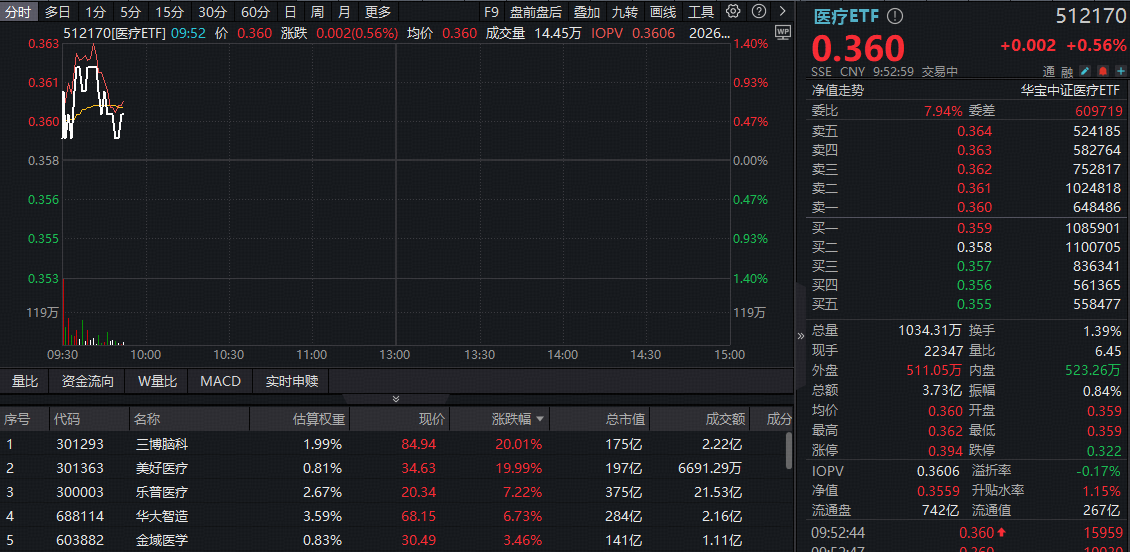
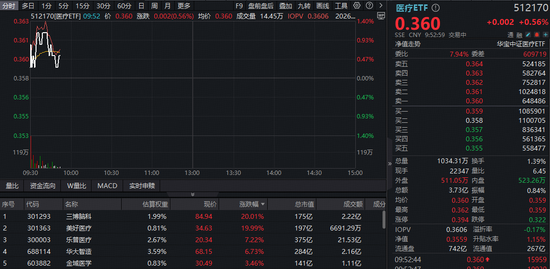
Core Viewpoint - The medical ETF (512170) has shown significant performance, with a daily increase of over 5% and reaching a 20-day high, indicating strong market interest and potential growth in the healthcare sector [1]. Group 1: ETF Performance - The medical ETF opened high on January 6 and saw a peak increase of over 1%, with a trading volume exceeding 350 million yuan [1]. - The ETF has recorded five consecutive days of gains, reflecting a robust upward trend in the healthcare sector [1]. Group 2: Component Stocks - Brain-computer interface stocks, specifically Sanbo Brain Science and Meihua Medical, both hit the daily limit up of 20%, marking two consecutive days of gains [1]. - Conversely, the CXO sector experienced a pullback, with Tigermed seeing a decline of over 1% [1]. Group 3: Market Insights - Tesla CEO Elon Musk announced that Neuralink plans to start large-scale production of brain-computer interface devices in 2026, which could accelerate the commercialization of this technology [2]. - The National Medical Products Administration of China held a meeting to expedite the review and approval of related medical devices, indicating regulatory support for the industry [2]. Group 4: Industry Outlook - CITIC Securities highlighted that China's brain-computer interface technology is relatively advanced globally, which may lead to the emergence of leading companies in this field and enhance valuations in the secondary market [3]. - Zhongtai Securities noted a potential rebound in the pharmaceutical sector after four years of decline, driven by the realization of innovative drug export logic and industry recovery due to policy reforms [3].


脑机接口迎政策技术双催化,三博脑科、美好医疗20CM两连板!全市场规模最大医疗ETF(512170)20日新高!
Xin Lang Cai Jing· 2026-01-06 02:01
Group 1 - The medical ETF (512170) opened high on January 6, rising over 1% and reaching a 20-day high, with real-time transaction volume exceeding 350 million yuan. The ETF recorded a daily increase of over 5%, marking five consecutive days of gains [1][5] - Brain-computer interface stocks, including Sanbo Brain Science and Meihua Medical, both hit the 20% daily limit up, achieving two consecutive boards. Conversely, the CXO sector saw a pullback, with Tigermed falling over 1% [1][5] Group 2 - On January 5, 2026, Elon Musk announced that Neuralink plans to start large-scale production of brain-computer interface devices, advancing the commercialization of the technology. Concurrently, the National Medical Products Administration held a meeting to expedite the review and approval of related medical devices [3][6] - According to CITIC Securities, China's brain-computer interface technology is relatively advanced globally, with potential to cultivate leading companies in the sector. This could enhance the valuations of related listed companies in the secondary market and stimulate financing in the primary market, creating a synergy between capital and industry development [7] - Zhongtai Securities noted that the pharmaceutical sector is expected to rebound in 2025 after four consecutive years of decline, driven by the realization of innovative drug export logic and industry recovery post-policy reform. Certain areas of the medical device sector may also see a reversal of difficulties [7]


鱼跃医疗:公司推出了便携式小型呼吸机
Zheng Quan Ri Bao Zhi Sheng· 2026-01-05 13:07
证券日报网讯 01月5日,鱼跃医疗在互动平台回答投资者提问时表示,公司不同款型的呼吸机产品可满 足多类用户群体的需求,目前公司推出了便携式小型呼吸机,产品详情请咨询客服热线400-828-7768。 (编辑 任世碧) ...
重磅风口降临!脑机接口技术突破落地,医疗器械板块能否借势开启春季反攻大幕?
Xin Lang Cai Jing· 2026-01-05 10:44
Group 1 - Haitai Xinguang, based in Qingdao, specializes in the research, production, and sales of medical endoscope instruments and optical products, being a leading enterprise in the domestic medical endoscope optical field [1][30] - The company has established long-term collaborations with international medical giants such as Karl Storz and Olympus, and its high-definition optical imaging technology supports navigation equipment for neurosurgery [1][30] - By 2026, the market demand for its high-end optical components is expected to further release due to the recovery of the medical device sector and the advancement of brain-computer interface medical applications [1][30] Group 2 - Huqiang Technology, registered in Yichang, focuses on special protective equipment, pharmaceutical packaging, and medical devices, with a strong advantage in public health emergency material supply [2][31] - Its medical protective equipment is applicable in sterile operating environments for brain-computer interface implantation surgeries, enhancing product competitiveness in the medical device sector [2][31] Group 3 - Zhengde Medical, headquartered in Shaoxing, is a leading enterprise in the medical dressing industry, with a product matrix covering medical dressings, infection control, and rehabilitation care [3][32] - The company's surgical infection control products meet the sterile operation requirements for brain-computer interface implantation surgeries, and its rehabilitation products cater to post-operative patient management needs [3][32] - By 2026, the surgical infection control consumables business is expected to see market growth as brain-computer interface medical applications accelerate [3][32] Group 4 - Linuo Pharmaceutical Packaging, based in Jinan, specializes in the research, production, and sales of pharmaceutical packaging materials, including sterile medical device packaging suitable for brain-computer interface components [4][33] - The company is gradually expanding into the high-end medical device packaging market, seizing opportunities in the brain-computer interface industry [4][33] Group 5 - Rendu Biotech, located in Shanghai, focuses on RNA molecular diagnostic technology, with applications in infection detection post-brain-computer interface implantation surgeries [5][34] - The company’s post-operative infection detection reagents are expected to see new demand growth by 2026 as brain-computer interface clinical surgeries are promoted [5][34] Group 6 - Huangshan Capsule, based in Anhui, specializes in the research and production of pharmaceutical hollow capsules, gradually expanding into medical device auxiliary materials [6][36] - The company’s medical capsule carriers can adapt to the encapsulation needs of sustained-release bioelectrodes in brain-computer interface devices [6][36] Group 7 - ST Kelly, headquartered in Suzhou, focuses on medical device research and production, particularly in ultrasound equipment and rehabilitation devices [7][37] - The company’s ultrasound diagnostic equipment can be used for pre-operative brain tissue imaging assessments in brain-computer interface surgeries [7][37] Group 8 - Aotai Biotech, based in Hangzhou, specializes in rapid diagnostic reagents, with its rapid infection detection reagents applicable in brain-computer interface clinical settings [8][38] - The company is developing rapid detection products for post-operative neurological function assessment related to brain-computer interfaces [8][38] Group 9 - Dongfang Ocean, located in Yantai, focuses on marine biological medical materials, with collagen materials applicable as coatings for brain-computer interface electrodes [9][39] - The company is increasing its R&D investment in the medical device sector, particularly in the integration of biological medical materials with brain-computer interface devices by 2026 [9][39] Group 10 - Shuoshi Biotech, based in Taizhou, specializes in nucleic acid detection technology, with products applicable for precise diagnosis of post-operative brain infections in brain-computer interface surgeries [10][40] - The company is exploring detection technologies related to neurotransmitters in brain-computer interfaces, aiming for breakthroughs in neurological disease diagnostics [10][40] Group 11 - Guofa Co., located in Beihai, focuses on pharmaceutical manufacturing and medical device sales, with a distribution network covering Guangxi and surrounding areas [11][41] - The company plans to increase its agency layout for high-end medical devices related to brain-computer interfaces by 2026 [11][41] Group 12 - Nanwei Co., based in Nantong, specializes in medical dressings and hygiene products, with its adhesive dressings suitable for post-operative care in brain-computer interface surgeries [12][42] - The company is enhancing its R&D on functional medical dressings, launching products tailored for long-term post-operative care in brain-computer interfaces [12][42] Group 13 - Mingde Biotech, located in Wuhan, is a leading enterprise in the field of rapid diagnostic reagents, with products applicable for monitoring vital signs during brain-computer interface surgeries [13][43] - The company is developing rapid assessment devices for post-operative neurological function related to brain-computer interfaces [13][43] Group 14 - Hualan Co., based in Wuxi, specializes in medical rubber products, with its rubber sealing components applicable in fluid control systems for brain-computer interface devices [14][44] - The company is collaborating with research institutions to develop rubber insulation components for brain-computer interface electrodes [14][44] Group 15 - Yuyue Medical, headquartered in Danyang, is a leading enterprise in home medical devices, with products applicable in brain-computer interface surgeries [15][45] - The company is increasing its R&D on medical-grade rehabilitation robots, aiming to integrate brain-computer interface technology with rehabilitation devices [15][45] Group 16 - Shengxiang Biotech, located in Changsha, focuses on nucleic acid detection technology, with products applicable for rapid diagnosis of central nervous system infections post-brain-computer interface surgeries [16][46] - The company is exploring gene detection technologies related to neurological genetic diseases, expanding the application boundaries of molecular diagnostics [16][46] Group 17 - Jiga Development, based in Jinan, focuses on high-end medical device incubation and industrialization, particularly in brain-computer interface-related medical device enterprises [17][47] - The company is responsible for industrial park construction and resource integration for brain-computer interface medical device companies [17][47] Group 18 - Anxu Biotech, located in Hangzhou, specializes in rapid diagnostic reagents, with products applicable for instant infection screening during brain-computer interface surgeries [18][48] - The company is developing rapid detection products for neurotransmitters related to brain-computer interfaces, aiming for breakthroughs in neurological function assessment [18][48] Group 19 - Wantai Biotech, based in Beijing, is a comprehensive enterprise in biopharmaceuticals and medical devices, with products applicable for biochemical index detection post-brain-computer interface surgeries [19][49] - The company is exploring biopharmaceutical development related to brain-computer interfaces, seeking new growth points in nerve repair [19][49] Group 20 - Jiuan Medical, located in Tianjin, focuses on home health devices, with products applicable for synchronized monitoring of brain signals and vital signs in brain-computer interface scenarios [20][50] - The company is increasing its R&D investment in brain-computer interface wearable devices, aiming to create an intelligent medical ecosystem [20][50] Group 21 - Jidan Biotech, based in Nanjing, specializes in POCT reagents and instruments, with products applicable for cardiovascular function assessment in brain-computer interface surgeries [21][51] - The company is developing rapid detection products for post-operative cerebrovascular diseases related to brain-computer interfaces [21][51] Group 22 - Wanfeng Biotech, located in Guangzhou, is a leading enterprise in the POCT field, with products applicable for instant infection screening during brain-computer interface surgeries [22][52] - The company is developing neurobiomarker detection reagents to assess post-operative neurological function recovery, providing comprehensive support for brain-computer interface surgeries [22][52] Group 23 - Haier Biotech, based in Qingdao, specializes in low-temperature storage devices for biological materials, with applications in brain-computer interface-related biological sample preservation [23][53] - The company is increasing its R&D on high-end medical storage devices tailored for brain-computer interface biological materials by 2026 [23][53] Group 24 - Haooubo, located in Suzhou, focuses on immune diagnostic reagents and instruments, with products applicable for immune function assessment in brain-computer interface surgeries [24][54] - The company is developing detection reagents for immune rejection post-brain-computer interface implantation, providing technical support for surgical complications [24][54] Group 25 - Shandong Pharmaceutical Glass, based in Zibo, is a leading enterprise in pharmaceutical glass, with products applicable for insulation packaging of brain-computer interface electrodes [25][55] - The company is expanding into the high-end medical device glass materials market, targeting the brain-computer interface industry [25][55] Group 26 - Innotech, located in Langfang, specializes in infectious disease diagnostic reagents, with products applicable for pre-operative lung infection screening in brain-computer interface surgeries [26][56] - The company is developing rapid detection products for post-operative lung infections related to brain-computer interfaces, aiming for breakthroughs in post-operative complication detection [26][56] Group 27 - Jianer Kang, based in Changzhou, focuses on medical dressings and rehabilitation care products, with its antibacterial medical dressings applicable for post-operative care in brain-computer interface surgeries [27][59] - The company is increasing its R&D on functional medical dressings, launching products tailored for long-term post-operative care in brain-computer interfaces [27][59]


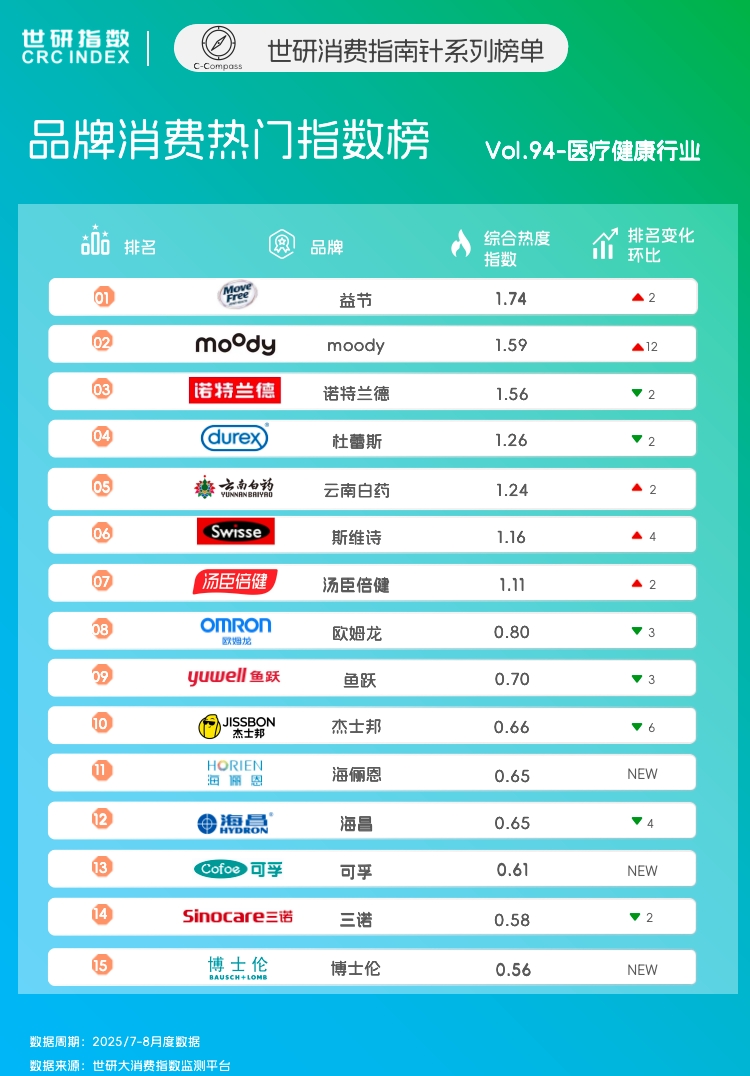
你的健康,可以有多“轻”?|世研消费指数品牌榜Vol.94
3 6 Ke· 2026-01-05 07:53
Group 1 - The healthcare consumption sector is experiencing a dual upgrade focusing on "self-care" and "professionalism," particularly in eye care and health monitoring devices [1] - In the eye care segment, brands are leveraging emotional IP and silicone hydrogel technology to balance aesthetics and health, with a focus on integrating professional monitoring into daily life [1][2] - The trend of proactive health management is reshaping consumer experiences, moving from passive treatment to active management, with a demand for convenience, seamlessness, and intelligence in health monitoring [3] Group 2 - Moody has seen a significant rise in ranking, benefiting from promotional activities and emotional storytelling, while new entrants like Hai Li En are integrating pet-themed IP into their marketing strategies [2] - The product focus among domestic brands is on small diameter, low-saturation color aesthetics, utilizing silicone hydrogel materials to enhance comfort and promote high-end contact lenses for everyday use [2] - Omron and Sinocare are adapting to the demand for efficient multi-dimensional testing, with innovations like smart blood pressure monitors and portable multi-functional testing devices to facilitate community and home health management [4] Group 3 - The "lightweight scene, efficient testing, and closed-loop management" are emerging as core trends in the health management industry, pushing for professional health management to be integrated into daily routines [4] - The report by Shiyan Index aims to objectively present consumption trends across various sectors, including healthcare, to help brands and industries track market dynamics and enhance competitive strength [5][6]
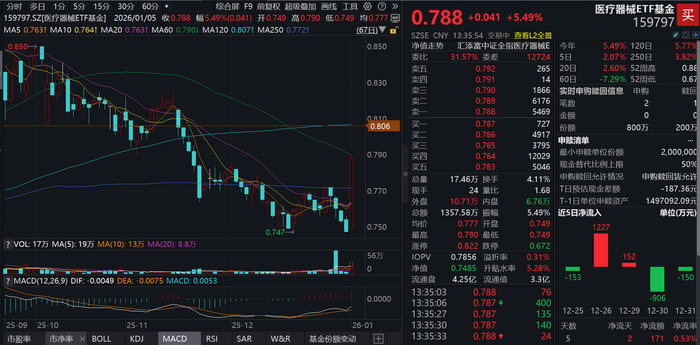
马斯克宏图的下一个篇章,2026年将大规模生产脑机接口!医疗器械ETF基金(159797)暴涨超5%,再获资金青睐!
Xin Lang Cai Jing· 2026-01-05 05:56
Group 1: Market Performance - The medical device ETF fund (159797) surged over 5% after four consecutive days of decline, indicating a significant rebound in the market [1] - The fund saw a net subscription of 6 million shares during the trading session, with a total inflow of over 30 million yuan in the past 10 days, including 7 days of net inflow [1] - Most component stocks of the medical device ETF fund performed positively, with notable gains including Lepu Medical reaching a 20% limit up, and other companies like United Imaging and Huatai Medical rising over 4% [1] Group 2: Neuralink and Brain-Computer Interface Developments - Neuralink is expected to enter large-scale production by January 1, 2026, with nearly automated surgical operations, enhancing safety by allowing guide wires to pass through the dura mater without opening it [4] - The advancement of Neuralink's technology is anticipated to facilitate collaboration with Tesla's Optimus humanoid robot, aiming to create a "human brain + robot" ecosystem [5] - The technology is transitioning from clinical trials to commercial viability, marking a significant step in making brain-computer interfaces widely accessible [3] Group 3: Policy and Industry Trends - The National Medical Products Administration (NMPA) emphasized the strategic importance of brain-computer interfaces in a meeting held on December 18, 2025, focusing on safety, innovation in regulatory methods, and collaboration across sectors [6] - Recent clinical trials have shown promising results for brain-computer interface systems, with successful implantations and significant improvements in patients' hand functions [6] - The rapid iteration and upgrade of brain-computer interface technology are driven by advancements in signal acquisition, materials science, and multi-modal integration, paving the way for broader applications beyond medical use [7]




2025年中国健康服务行业发展历程、政策、发展现状、重点企业及趋势研判:健康服务业态日趋多元,精准化与个性化服务成为未来发展核心方向[图]
Chan Ye Xin Xi Wang· 2026-01-01 03:22
Core Insights - The health service industry aims to create a favorable organizational environment by providing safe, effective, convenient, and affordable basic medical and public health services to meet various health needs of residents. The demand for health-related products and services is rapidly increasing due to social progress and changes in lifestyle [1][7]. Industry Overview - The health service industry encompasses medical services, health management, health insurance, and related services, involving pharmaceuticals, medical devices, health products, and fitness products [4]. - The industry has experienced rapid growth in China, with the market size increasing from 6.37 trillion yuan in 2018 to an expected 9.55 trillion yuan by 2024, representing a compound annual growth rate of 6.98%. The "Healthy China 2030" plan projects the total market size to reach 16 trillion yuan by 2030, indicating significant growth potential [1][8]. Development History - The development of China's health service industry can be divided into four stages: 1. 1949-1990: Health check-ups were primarily hospital services focused on disease detection rather than prevention. 2. 1991-2000: Independent health check-up service institutions began to emerge in cities like Beijing. 3. 2001-2010: The introduction of Western health service concepts and rapid market demand growth led to the fast development of health service institutions. 4. 2011-present: Increased focus on medical information technology and service upgrades has improved the capabilities of health service institutions [4][5]. Relevant Policies - Recent government policies aim to optimize resource allocation, enhance preventive interventions, and improve service accessibility, which helps control the rapid growth of medical costs and reduce the disease burden on families and society. For instance, the National Health Commission issued a notice in February 2025 to address public health concerns and improve service efficiency [6]. Industry Structure and Key Companies - The operational models of health service institutions in China are diverse, including: 1. Hospital-based models leveraging brand and client resources. 2. Independent medical models with self-owned brands and facilities. 3. Health management models centered on health check-ups. 4. Comprehensive information platform models connecting online and offline services [8]. - Major companies in the health service industry include: - Meinian Health Industry Holdings Co., Ltd. - Tongce Medical Co., Ltd. - Ruici Medical Service Holdings Co., Ltd. - Ciming Health Checkup Management Group Co., Ltd. - Aikang Guobin Health Checkup Management Group Co., Ltd. [2][3][9]. Trends in Health Services - The future of health services will focus on personalized and precise care, moving from a "one-size-fits-all" approach to individualized health management based on personal data [11]. - Service delivery will become decentralized, extending beyond traditional healthcare facilities to community and home settings, enhancing accessibility and convenience [12]. - Payment models will evolve from fee-for-service to value-based care, with insurance companies and service providers collaborating to create innovative health products [13].