脑虎科技

Search documents
资本涌入脑机接口:融资频创新高,企业格局一览
Sou Hu Cai Jing· 2025-09-19 04:16
Core Insights - The brain-computer interface (BCI) sector is experiencing a significant surge in investment and financing activities, with notable examples including Shanghai Brain Rhythm Technology's angel round financing and Guangdong Daoshi Technology's investment in Qiangnao Technology [1][2] - In 2024, the financing activities in the BCI field accelerated, with the total investment in the first half of the year surpassing the entire previous year, and a notable $650 million raised by Neuralink in its Series E funding round [1][2] Investment Trends - Domestic companies are also showing strong performance, with Beijing Zhiruan Medical Technology completing over 300 million RMB in Series A financing and other companies like BrainCo and Boryu Kang securing significant funding to advance their BCI technologies [2] - The largest domestic financing in the implanted BCI sector to date was completed by JieTi Medical, raising 350 million RMB to accelerate clinical trials and technology development [2] Industry Chain and Market Outlook - The BCI industry chain in China has been established, covering components from chips to terminal applications, with a clear direction for development outlined in a report by the China Academy of Information and Communications Technology [3] - The report emphasizes the importance of a closed-loop system connecting research, clinical applications, and industry, with ongoing clinical trials and technological advancements [3] Technological Diversity and Healthcare Focus - BCI technology is expanding into various fields, including medical rehabilitation and cognitive enhancement, with non-invasive optical BCI technologies gaining significant attention due to their safety and scalability [4] - The first prospective clinical trial of an invasive BCI in China has been successfully conducted, showcasing the potential for AI-assisted BCIs to improve patient capabilities [4] Corporate Innovations and Compliance - Companies are actively exploring compliant business models, with innovations such as closed-loop stimulators for Parkinson's disease treatment and high-density flexible electrode systems [5] - Huichuang Medical has developed a complete closed-loop BCI system and is collaborating with hospitals to establish BCI assessment clinics [5] Consumer Applications - In the consumer electronics sector, BCIs are enhancing user experiences through non-invasive devices that monitor brain activity and provide personalized interventions for mental health and cognitive training [7] Policy and Standardization - The establishment of the Brain-Computer Interface Standardization Technical Committee by the Ministry of Industry and Information Technology aims to optimize standards and accelerate technological development [8] - Recent policies are set to foster innovation in the BCI industry, with goals to establish a competitive ecosystem by 2030 [8]

【解放日报】脑机接口长期稳定植入
Jie Fang Ri Bao· 2025-09-15 03:37
Core Insights - A significant breakthrough in brain-computer interface (BCI) technology has been achieved with the development of a universal implantable flexible BCI system by BrainTiger Technology, enabling long-term stable implantation and precise control of over 20 digital/physical devices [1][2] - The research, conducted by the Shanghai Institute of Microsystem and Information Technology, BrainTiger Technology, and Huashan Hospital affiliated with Fudan University, represents the first long-term clinical trial article based on high-throughput, high-resolution flexible BCIs [1] Technical Innovations - The research team utilized semiconductor micro-nano processing technology to create an ultra-flexible 256-channel electrode array with a density of 64 channels per square centimeter, enhancing traditional electrode performance by 64 times [1] - The ultra-thin mesh recording area closely adheres to the brain cortex, ensuring high-fidelity signal acquisition, while the thickened lead area guarantees mechanical stability for long-term implantation [1] - The system features a customized titanium alloy waterproof shell and low-power processing unit, achieving breakthroughs in high throughput, high resolution, and low invasiveness [1] Performance Metrics - In clinical trials, subjects completed a total of 25,412 training tasks, achieving a maximum bit rate of 4.15 bits per second, comparable to the performance levels of subjects from Elon Musk's Neuralink [2] - The electrode array is placed subdurally, adhering to the surface of the brain cortex without penetrating brain tissue, significantly reducing implantation risks while maintaining performance on par with Neuralink [2]
宏观观察2025年第32期(总第604期):我国脑科学与脑机接口行业发展现状及建议
Zhong Guo Yin Hang· 2025-09-12 06:45
Industry Overview - The brain science and brain-computer interface (BCI) industry in China is rapidly developing, with a market size projected to reach 5.58 billion yuan by 2027, growing at a compound annual growth rate (CAGR) of 26%[20] - The global BCI market is expected to grow from 1.98 billion USD in 2023 to over 6 billion USD by 2028, with a CAGR of 25%[20] Technological Development - BCI technology is categorized into three types: invasive, semi-invasive, and non-invasive, with non-invasive methods leading in application[6] - The industry is characterized by high dependence on advanced technology, requiring significant investment in research and development, with an average R&D expense ratio of 18%[37] Policy Support - The Chinese government has prioritized brain science and BCI research as a national strategic technology, with plans to establish a comprehensive technology and industry system by 2030[12] - Major cities like Beijing and Shanghai are leading in policy support and establishing research institutions to foster BCI development[14] Financial Landscape - Investment in the BCI sector has surged, with over 1,500 financing events globally, totaling nearly 10 billion USD, and China accounting for approximately 20 billion USD of that[47] - In 2024, the domestic BCI industry secured over 1.5 billion yuan in financing, with 80% directed towards invasive technology[47] Market Challenges - The industry faces challenges such as reliance on imported core components, low efficiency in technology transfer, and ethical concerns regarding safety and privacy[5] - The average gross profit margin for listed companies in the BCI sector is 33.89%, but net profit margins for downstream companies are below 10% due to market expansion pressures[37] Future Trends - The BCI industry is expected to see multi-modal integration, combining various signal acquisition methods to enhance accuracy and stability[41] - Applications in healthcare are expanding beyond existing treatments for Parkinson's and epilepsy to include conditions like Alzheimer's and ALS[42]
脑机接口长期稳定植入 精准意念操控20多种设备
Jie Fang Ri Bao· 2025-09-12 00:19
Group 1 - The research published in the journal "Advanced Science" presents a significant breakthrough in brain-computer interface technology, developed by BrainTiger Technology, achieving long-term stable implantation and solving the generalizability issue [1][2] - The flexible brain-computer interface system can precisely control over 20 digital and physical devices, with an information transmission rate comparable to that of Neuralink's subjects after similar training times [1][2] - The research was a collaboration between the Shanghai Institute of Microsystem and Information Technology, BrainTiger Technology, and Huashan Hospital affiliated with Fudan University [1] Group 2 - The innovative use of semiconductor micro-nano processing technology led to the creation of a super-flexible 256-channel electrode array, with a density of 64 channels per square centimeter, enhancing traditional electrode performance by 64 times [1] - The ultra-thin recording area closely adheres to the brain cortex for high-fidelity signal acquisition, while the thicker lead area ensures mechanical stability for long-term implantation [1] - The product's electrode array is placed subdurally, adhering to the brain surface without penetrating brain tissue, significantly reducing implantation risks while achieving performance comparable to Neuralink [2]
通用型脑机接口系统获突破 广泛用于运动重建、语言重建等多临床场景
Xin Hua Cai Jing· 2025-09-11 07:50
Core Viewpoint - A significant research achievement has been made in developing a versatile implantable flexible brain-machine interface (BMI) system, which has demonstrated compatibility with over 20 digital and physical devices, achieving information transmission rates comparable to those of Neuralink [1][4]. Group 1: Technical Innovations - The research team has addressed the longstanding challenge of balancing high performance and safety in brain-machine interface technology by developing a highly flexible, high-density 256-channel μECoG electrode array, which has a density of 64 channels per square centimeter, enhancing the signal acquisition capabilities significantly [2][5]. - The μECoG electrode system has shown excellent long-term stability in a 203-day in vivo experiment, maintaining a signal-to-noise ratio above 20dB, which is essential for real-time decoding [3]. Group 2: Clinical Applications - The system has been clinically validated, allowing a patient to control brain activity and complete tasks such as playing games with high accuracy after only 7 minutes of model training, achieving a decoding accuracy of 90% for a one-dimensional task [4]. - In a clinical trial with a participant who completed 25,412 tasks over 19.87 hours, the participant achieved a peak bit rate of 4.15 bits per second, indicating performance on par with Neuralink subjects, showcasing the system's potential for various applications including smart homes and assistive devices [4][5]. Group 3: Future Implications - This breakthrough in high-throughput flexible brain-machine interfaces not only enhances clinical feasibility but also opens new avenues in neurorehabilitation, potentially providing home-based solutions for patients with motor function impairments [5].
精准意念操控!中国团队破解脑机接口通用性难题
第一财经· 2025-09-11 04:26
Core Insights - A recent brain-computer interface (BCI) research achievement from a Chinese research team has gained attention, showcasing a versatile implantable flexible BCI system that can control over 20 digital physical devices through thought [3][5] - The study indicates that the information transmission rate (BPS) of patients using this BCI system is comparable to that of subjects from Neuralink, with a maximum bit rate of 4.15 bits per second achieved after extensive training [3][5] Group 1: Research and Development - The BCI system developed by Brain Tiger Technology, in collaboration with the Shanghai Institute of Microsystem and Information Technology and Huashan Hospital, has achieved long-term stable implantation and addresses the universality challenge in BCI technology [3][5] - The system's high compatibility with the XessOs operating system allows users to control complex games, smart wheelchairs, smart homes, and various applications, indicating significant clinical application potential [3][5] Group 2: Market and Industry Outlook - The year 2025 is anticipated to be a pivotal year for BCI technology, with Chinese government departments aiming for breakthroughs in key technologies by 2027, potentially benefiting 1 to 2 million patients [5][6] - The BCI technology's primary applications include neuro-rehabilitation, prosthetic control, and emotional regulation, with potential uses in treating conditions like epilepsy and Parkinson's disease [5][6] Group 3: Regulatory and Competitive Landscape - China's planning for BCI technology development is noted to be the most comprehensive globally, integrating industry planning, medical regulation, and research oversight into a cohesive action plan [6] - The Chinese model aims to streamline regulatory processes, potentially reducing the time from laboratory to market compared to the U.S. model, which faces stringent compliance challenges [6] Group 4: Broader Applications and Ethical Considerations - Beyond medical applications, Chinese BCI companies are exploring consumer markets, with potential applications in industrial production, education, gaming, sleep assistance, psychological therapy, and autonomous driving [7] - Experts caution about privacy risks associated with BCI technology, emphasizing the need for strict data privacy and ethical review mechanisms to protect brain data [7]

精准意念操控!中国团队破解脑机接口通用性难题,距离临床应用还有多远
Di Yi Cai Jing· 2025-09-11 02:51
Core Viewpoint - The research on a universal implantable flexible brain-machine interface (BMI) system developed by a Chinese team demonstrates significant advantages over existing technologies, including high resolution, long-term stability, and low invasiveness, with potential applications in various clinical scenarios such as motor and speech rehabilitation [1][2]. Group 1: Company Developments - The universal implantable flexible BMI system can precisely control over 20 types of digital and physical devices, showcasing its broad clinical application prospects [1]. - The founder of Brain Tiger Technology reported that after 25,412 training tasks, the highest information transmission rate achieved by patients was 4.15 bits per second, comparable to the performance of subjects reported by Neuralink [1][2]. - As of September 10, Neuralink has implanted devices in 12 patients, with a total of 2,000 days of implantation and over 15,000 hours of usage [2]. Group 2: Industry Trends - The Chinese government has set ambitious goals for the brain-machine interface industry, aiming for breakthroughs in key technologies by 2027, with an estimated 1 to 2 million patients benefiting from assistive technologies [2][3]. - The development plan for brain-machine interfaces in China is considered the most comprehensive globally, integrating industry planning, medical regulation, and research supervision into a unified approach [3]. - The market potential for non-invasive brain-machine interface products in China is significant, with applications expected in various sectors including industrial production, education, gaming, sleep assistance, psychological therapy, and autonomous driving [4].
脑机接口,引起下一场中美科技战?
思宇MedTech· 2025-08-20 09:26
Core Viewpoint - Brain-computer interface (BCI) technology has made significant advancements in China, with the inclusion of BCI services in medical insurance and competitive pricing compared to international counterparts like Neuralink [2][3]. Group 1: Technological Advancements - In 2025, China successfully completed its first invasive BCI clinical trial, positioning itself as a key player alongside Neuralink [3]. - The development of ultra-flexible electrodes by companies like JieTi Medical has overcome traditional BCI limitations, allowing for enhanced patient experiences [3][8]. - Neuralink's high-precision invasive technology, while advanced, comes with exorbitant costs, making it less accessible [5][7]. Group 2: Cost and Accessibility - The cost of invasive BCI procedures in China is significantly lower, with prices for invasive surgeries around 6,552 RMB (approximately 912 USD) compared to Neuralink's estimated costs of 5,000 to 10,000 USD [2][3]. - Non-invasive BCI options in China are even more affordable, with prices ranging from 1,000 to 5,000 RMB, making them comparable to mid-range smartphones [15]. Group 3: Competitive Landscape - The competition between Neuralink and Chinese companies highlights differing technological approaches, with the latter focusing on practical, cost-effective solutions [4][8]. - Chinese companies are exploring both invasive and non-invasive technologies, aiming to broaden the application of BCI in various sectors, including healthcare and consumer markets [8][19]. Group 4: Data and Standards Control - The accumulation and analysis of brainwave data are crucial for establishing industry standards, which will determine future market leadership [16]. - Chinese companies are adopting a multi-faceted approach to data collection, enhancing their ability to set standards in the BCI industry [17]. Group 5: AI Integration and Future Prospects - The integration of AI with BCI technology is expected to create a significant data advantage, enabling the development of more sophisticated AI applications tailored to Asian cultural contexts [20]. - China's advancements in BCI technology not only focus on technical superiority but also aim to influence global standards and cultural practices [21].

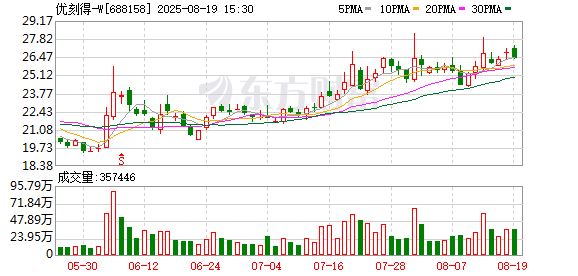
优刻得:公司与脑虎科技建立了合作关系,为其提供GPU算力、存储等核心云端资源及专业技术支持
Mei Ri Jing Ji Xin Wen· 2025-08-19 10:53
Core Viewpoint - The company, UCloud (688158.SH), is actively involved in the brain-computer interface (BCI) sector by leveraging its cloud computing resources and expertise to support related businesses [2]. Group 1: Company Capabilities - UCloud has extensive experience in cloud computing, which is essential for the development of BCI technologies [2]. - The company has established a partnership with BrainTiger Technology to provide GPU computing power, storage, and technical support [2]. - UCloud's high-performance and elastic computing resources enable real-time decoding and analysis of large multimodal signals generated from experiments, aiding in model training and algorithm optimization [2]. Group 2: Future Prospects - The company aims to continue leveraging its strengths to support advancements in China's brain-computer interface field [2].

脑机接口概念股龙头“8天5板”,广东以三大优势卡位产业临界点
2 1 Shi Ji Jing Ji Bao Dao· 2025-08-14 13:29
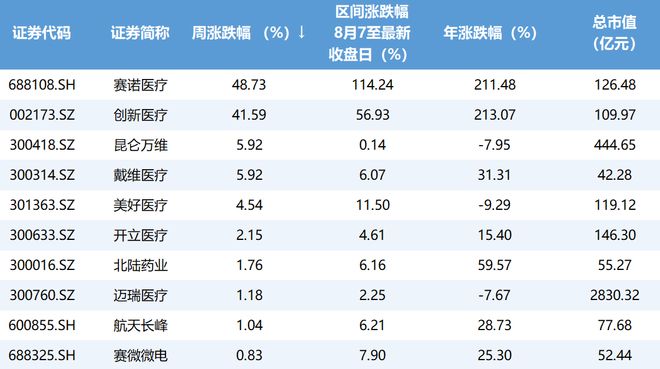
Core Viewpoint - The brain-computer interface (BCI) industry is experiencing significant growth driven by policy support and technological advancements, with a notable increase in stock prices of leading companies in this sector [1][2][10]. Industry Overview - The brain-computer interface index has risen by 36.20% since April, reaching 1774.04 points, indicating a strong upward trend in the market [1]. - The Ministry of Industry and Information Technology and six other departments issued a policy document on August 7, 2025, outlining a national strategy for BCI development, aiming for key technological breakthroughs by 2027 and international competitiveness by 2030 [1][5]. Company Performance - Innovation Medical has seen a stock price increase of 213.07% year-to-date, with a recent weekly gain of 41.59% and a net capital inflow of 1.1781 billion yuan [2][3]. - Sino Medical, despite not having BCI products, has experienced a stock price surge of 211.48% year-to-date, driven by market speculation regarding its potential applications in BCI [2][3]. Market Dynamics - The BCI market is projected to grow from $1.98 billion in 2023 to over $6 billion by 2028, with a compound annual growth rate (CAGR) of 25.22% [4]. - The BCI sector is characterized by a concentration of capital towards companies with high technological relevance and clear market positioning [2][3]. Regional Development - Guangdong province leads the nation in BCI enterprise scale, with 80 key companies forming a complete industrial chain from research to application [6]. - The region benefits from a robust electronic information industry, abundant research resources, and a collaborative ecosystem between academia and industry, enhancing the efficiency of technology commercialization [6][9]. Technological Advancements - Companies like Xiangyu Medical and Brain Tiger Technology are making significant strides in non-invasive and invasive BCI technologies, respectively, with clinical applications underway [5][9]. - The establishment of the first clinical research ward for BCI in Guangdong marks a critical step in translating technology from the lab to clinical settings [9]. Future Outlook - The BCI industry is at a critical juncture, with expectations for rapid development in mental health, rehabilitation, and assistive technologies [9]. - As policy incentives and technological innovations continue to unfold, companies that secure a competitive edge in technology and industry chain integration are likely to lead the next growth phase [10].