
Snowflake Inc.

Search documents
提前逃顶软件板块的基金经理预言:多数公司将像报纸一样消失
天天基金网· 2026-02-17 07:30
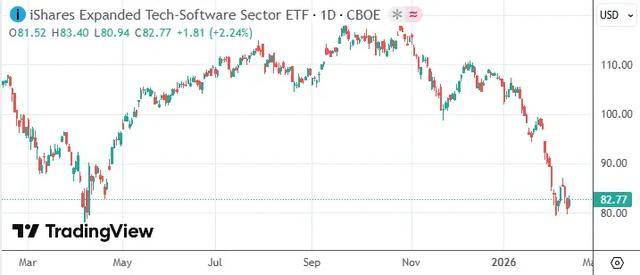
上天天基金APP搜索777注册即可领500元券包,优选基金10元起投!限量发放!先到先得! Polar Capital基金经理Nick Evans在软件股被抛售前提前离场,他提醒那些想"抄底"的投资 者:多数软件股仍然充满风险,只有少数公司能够存活下来。 "我们认为,应用软件正面临来自人工智能生存性威胁(existential threat)。"Evans管理 的一只规模120亿美元的全球科技基金,过去一年业绩击败99%的同业,过去五年跑赢了 97%同行。 近期,市场担心Anthropic推出的Claude Cowork等先进AI工具将颠覆软件行业的商业模式, 相关股票大幅下跌。iShares扩展科技软件行业ETF(IGV)年内已累跌21.53%,半导体股却 因算力需求而大涨。 Evans认为,用于撰写文档、管理薪资等任务的"应用软件"风险尤为突出。除了持有少量微软 和部分看涨期权外,他已清仓该板块其他所有股票,包括SAP、ServiceNow、Adobe和 HubSpot。 "我们不会再买这些公司了,"Evans称,AI编程工具的能力已经强大到可以复制并修改大量现 有软件。这意味着,老牌软件公司如今不仅要面 ...


提前逃顶软件板块的基金经理预言:多数公司将消失
Sou Hu Cai Jing· 2026-02-17 01:26
来源:智通财经 Polar Capital基金经理Nick Evans在软件股被抛售前提前离场,他提醒那些想"抄底"的投资者:多数软件 股仍然充满风险,只有少数公司能够存活下来。 "我们认为,应用软件正面临来自人工智能生存性威胁(existential threat)。"Evans管理的一只规模120 亿美元的全球科技基金,过去一年业绩击败99%的同业,过去五年跑赢了97%同行。 近期,市场担心Anthropic推出的Claude Cowork等先进AI工具将颠覆软件行业的商业模式,相关股票大 幅下跌。iShares扩展科技软件行业ETF(IGV)年内已累跌21.53%,半导体股却因算力需求而大涨。 此外,为了提振增长而收购AI初创公司,也会进一步加重财务负担。"我们认为,当前股价并未反映最 终价值的不确定性,也没有计入自由现金流面临的压力。" 当下,华尔街对于AI规模的争论仍在持续。摩根大通的策略师上周表示,近期的"极端价格波动"之后, 软件股可能反弹,他们更看好微软和ServiceNow。 Evans也称,并非所有软件领域都同样脆弱。今年1月,他增持了基础设施软件公司——这些企业为消费 者和企业应用提供底 ...
ServiceNow Inc (NOW) Draws Analyst Attention Amid AI Shift
Yahoo Finance· 2026-02-16 15:05
Core Viewpoint - ServiceNow Inc (NYSE:NOW) is highlighted as a strong long-term investment opportunity despite current stock trading near its 52-week low, driven by robust earnings and strategic initiatives [1][5]. Group 1: Company Developments - Danielle Fontaine has been appointed as chief accounting officer and corporate controller, effective February 17 [1]. - ServiceNow reported Q4 2025 earnings with a revenue increase of 20.5% year-over-year to $3.57 billion, supported by a strong subscription business [5]. - Following the strong earnings report, ServiceNow announced a $5 billion increase to its share repurchase program [5]. Group 2: Market Analysis - Morgan Stanley noted that the decline in software valuations, approximately 33% since October 2025, presents buying opportunities, suggesting that concerns over generative AI disruption are overstated [2]. - Analysts from Truist reduced ServiceNow's price target from $240 to $175 while maintaining a Buy rating, indicating that the recent decline in infrastructure software stocks is more about long-term value concerns than immediate fundamentals [3]. - Companies utilizing seat-based models have underperformed, and there is a growing trend towards AI use cases, which is becoming a key strategy for software vendors [4]. Group 3: Competitive Landscape - ServiceNow is among several companies, including Microsoft, Intuit, and Salesforce, identified as attractive investment picks due to strong product cycles, improved financials, and lower valuations [3]. - The company operates in a competitive environment focused on cloud-based and AI-driven solutions aimed at enhancing business workflows and productivity [6].

业绩超越99%同行的基金认为:AI浪潮下,仅有少数软件公司能存活
Xin Lang Cai Jing· 2026-02-16 13:09
Core Viewpoint - The manager of Polar Capital, Nick Evans, has reduced exposure to software stocks, warning that most remain risky and only a few companies will survive the AI wave [1][5]. Group 1: Software Sector Risks - Application software is facing existential threats from AI advancements, with a significant decline in software stocks, exemplified by a 22% drop in an ETF tracking the U.S. software industry [1][5]. - Evans has liquidated all software holdings except for a small position in Microsoft, indicating a lack of confidence in companies like SAP, ServiceNow, Adobe, and HubSpot [1][6]. - The rise of AI programming tools poses a dual threat to traditional software companies, as clients are increasingly developing their own tools to cut costs while numerous AI startups emerge [6]. Group 2: Financial Pressures - The market downturn triggered by AI disruption is exacerbating cash flow pressures for software companies, as management may need to compensate for stock value losses with cash [3][7]. - The current stock prices do not reflect the uncertainty of long-term valuations or the pressures on free cash flow [8]. Group 3: Investment Outlook - Evans believes that companies providing complex software suites, like SAP, may exhibit more resilience, but their long-term valuations remain highly uncertain due to the rapid enhancement of AI tools [2][6]. - The fund's top holdings include seven semiconductor companies, with Nvidia being the largest at nearly 10% of the portfolio, alongside interests in network equipment and energy infrastructure for data centers [2][6]. - Infrastructure software companies, such as Cloudflare and Snowflake, are expected to thrive, as evidenced by recent strong performance from Datadog and Fastly, with stock prices rising over 10% and doubling, respectively [8]. - Evans anticipates a brutal industry shakeout, predicting that most companies will face a fate similar to that of the print media industry in the 2000s, which was disrupted by the internet [8].

Global week ahead: Markets brace for more AI noise and 'scare trading'
CNBC· 2026-02-15 08:36
Core Viewpoint - The global stock markets are experiencing significant volatility due to concerns over AI disruption, with various sectors being affected as investors speculate on which industries may be impacted by the rise of agentic AI [1]. Group 1: Market Reactions - In Europe, software companies faced severe declines, with Dassault Systemes experiencing its largest one-day drop and RELX recording its worst session since 1988 [2]. - Wealth management firms such as St James's Place, Aberdeen Group, and Quilter also reported substantial losses amid the AI-driven sell-off [2]. Group 2: Analyst Perspectives - UBS analysts indicated that the AI-driven sell-off suggests that disruption is extending beyond just software, warning that markets have not fully accounted for the credit implications, which are expected to escalate through 2026 and into 2027 in the U.S. and to a lesser extent in Europe [3]. - Conversely, Dan Ives from Wedbush argued that the fears of a "software Armageddon" are exaggerated, asserting that established companies like Salesforce and ServiceNow will play crucial roles in the AI revolution rather than being undermined by it [4]. Group 3: Upcoming Events - An important AI summit is set to take place in India, attracting thousands of attendees and featuring prominent figures from major tech companies, which is expected to lead to significant deals and partnerships in the AI and cloud sectors [6][7]. - The event, dubbed the "AI Impact Summit," is anticipated to highlight the growing interest of tech giants in India's large customer base and engineering talent [6][7].

上一次“软件要亡”论发生在10年前,后续如何了?
Hua Er Jie Jian Wen· 2026-02-15 07:39
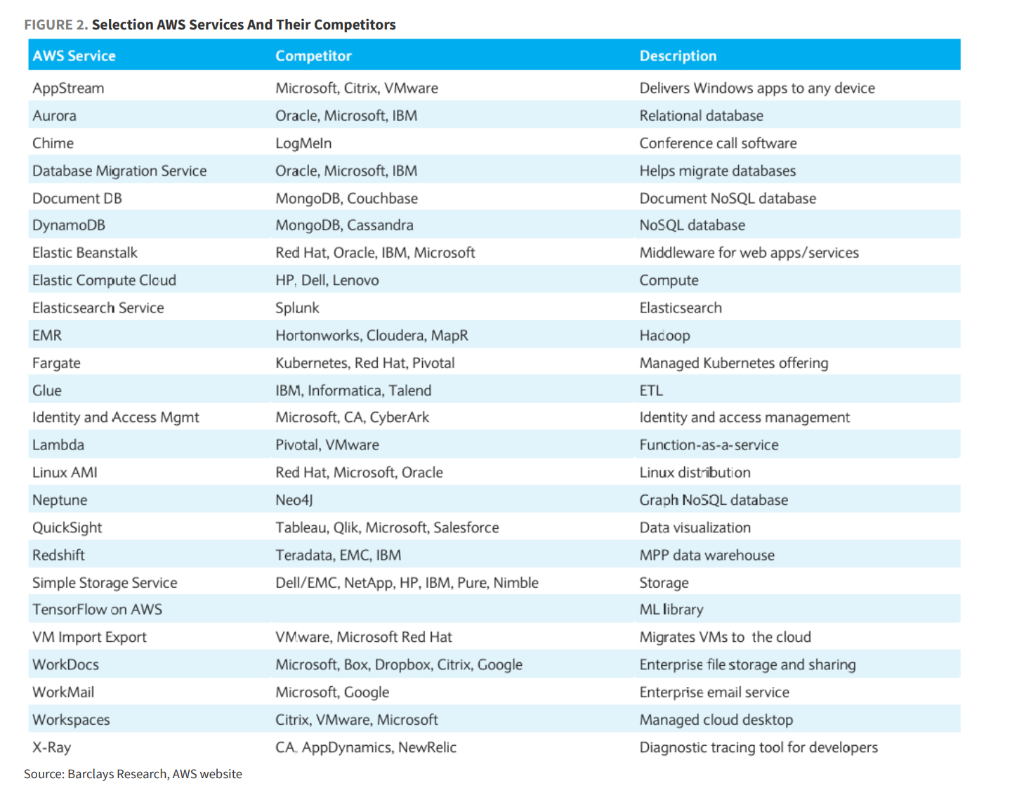
Core Viewpoint - Barclays believes that the current market panic regarding generative AI (GenAI) is based on a "worst-case scenario" assumption, predicting the extinction of traditional software companies, which mirrors the panic seen a decade ago with the rise of Amazon AWS [1][2] Historical Context - The current investor sentiment in the software sector is extremely negative, with a simplistic investment logic of buying AI newcomers and shorting traditional software [2] - This situation is reminiscent of the panic surrounding AWS's growth, where established software companies faced similar doomsday predictions, yet none went bankrupt due to AWS competition [4][5] Market Dynamics - Historical data shows that while AWS gained significant market share, it did not lead to the extinction of mature software companies; instead, these companies evolved and thrived [4][5] - The market's current indiscriminate sell-off of software stocks, with the IGV (software ETF) down approximately 24% year-to-date, is viewed as irrational [6] Mispricing Opportunities - Barclays identifies significant mispricing opportunities in the current market, particularly for companies with strong core record systems and specific domain moats that are being undervalued [1][6] - The panic selling creates an opportunity for investors to identify industry leaders that have been unfairly punished [7] Defensive Sectors - Two defensive sectors highlighted are: 1. Owners of record systems, such as Salesforce and SAP, which hold core enterprise data and are difficult to replace [9] 2. Vertical SaaS companies, like Veeva Systems and Tyler Technologies, which possess deep domain-specific data moats [9] Company Performance - Notable company performances include: - CyberArk's market cap surged from $885 million to $22.516 billion, a 2443% increase [8] - Microsoft and Google also saw significant market cap growth, with increases of 1048% and 871%, respectively [8] - Traditional companies like Teradata experienced a 73% decline, while others like Tableau and Splunk were acquired at high premiums [8]




Software Bear Market: 5 Best-of-Breed Software Stocks With 42% to 209% Upside to Buy Right Now, According to 1 Wall Street Analyst
The Motley Fool· 2026-02-14 08:02
Core Viewpoint - The software sector is experiencing significant declines due to fears surrounding AI advancements, creating potential investment opportunities for discerning investors [1][2]. Group 1: Market Overview - The S&P North American Technology Software Index has entered bear market territory, dropping over 30% from its peak in early September [2]. - Concerns about AI tools disrupting traditional software and digital automation providers have led to a sell-off in legacy software and SaaS stocks [2]. Group 2: Expert Opinions - Nvidia CEO Jensen Huang and Wedbush analyst Dan Ives argue that the software industry is not in decline and that the current sell-off is exaggerated, suggesting that enterprises will not abandon established software for unproven technologies [3]. - Ives believes this situation presents a buying opportunity for reputable technology stocks [3]. Group 3: Company Highlights - **Microsoft**: - Stock has fallen 25% from its peak and is trading at 25 times earnings, with a price target of $575, indicating a potential upside of 42% [6]. - The company is heavily invested in AI, integrating it across its products and services, and its Azure Cloud solutions are seeing strong demand [5][6]. - **CrowdStrike**: - The stock has decreased by 25% and is trading at 22 times sales, with a price target of $600, suggesting a 44% upside [8]. - CrowdStrike specializes in cybersecurity and is well-positioned to protect against AI-driven threats [7][8]. - **Snowflake**: - The stock has dropped 35% from its peak and is trading at 13 times sales, with a price target of $270, indicating a potential upside of 51% [11]. - Snowflake's AI-centric platform enhances data management and security, benefiting from increased AI adoption [10][11]. - **Salesforce**: - The stock has fallen 44% and is trading at 25 times earnings, with a price target of $375, implying a potential upside of 103% [13]. - Salesforce has a long history in CRM solutions and has integrated AI into its offerings, creating a strong competitive advantage [12][13]. - **Palantir Technologies**: - The stock has decreased by 36% and is trading at 210 times earnings, with a price target of $230, suggesting a 70% upside [16]. - Palantir's AI platform is in high demand, providing real-time solutions and a strong ROI for businesses [15][16]. - Ives predicts Palantir could become a trillion-dollar market cap company, indicating a long-term upside of 209% [17].



索罗斯Q4调仓路线图:猛砍Snowflake,狂买微软、英伟达,新建仓黄金股
美股IPO· 2026-02-14 04:12
Core Viewpoint - Soros Fund Management made significant adjustments to its investment portfolio in the fourth quarter, focusing on increasing exposure to tech giants while engaging in "buy high, sell low" strategies for energy and cryptocurrency stocks [1]. Group 1: Technology Sector Investments - The fund substantially increased its holdings in core technology stocks, including adding 161,000 shares of Microsoft (MSFT.US), 118,000 shares of Nvidia (NVDA.US), and approximately 66,000 shares of Apple [3]. - In the software and mobility sectors, the fund also increased its positions by acquiring approximately 216,000 shares of Atlassian (TEAM.US), 55,000 shares of Salesforce (CRM.US), and 119,000 shares of Uber (UBER.US) [3]. Group 2: Defensive and Growth Investments - In the defensive sector and consumer space, the fund increased its holdings in utility company Exelon (EXC.US) by approximately 488,000 shares and in gaming giant Electronic Arts (EA.US) by about 318,000 shares [3]. Group 3: Reduction in High Volatility and Financial Stocks - The fund reduced its positions in high-volatility and financial stocks, significantly cutting approximately 168,000 shares of Snowflake (SNOW.US) [4]. - It also reduced its holdings in Circle Internet Group (CRCL.US) by about 151,000 shares and in Interactive Brokers (IBKR.US) by approximately 813,000 shares, indicating a cautious stance towards the financial brokerage sector [5][6]. Group 4: New Positions and Exits - The fund opened new positions by purchasing gold-related assets such as New Gold (NGD.US) and established positions in DigitalBridge (DBRG.US), Blue Owl Capital (OWL.US), Exact Sciences (EXAS.US), and Xcel Energy (XEL.US) [7]. - It completely exited positions in KeyCorp (KEY.US), CareTrust REIT (CTRE.US), Cipher Mining (CIFR.US), and KKR & Co. (KKR.US), indicating a shift away from traditional banking and certain cryptocurrency mining stocks towards more stable or defensive sectors [7]. Group 5: Overall Strategy - The overall strategy of Soros Fund Management in the fourth quarter reflects a clear approach: embracing AI and core tech assets like Microsoft and Nvidia while avoiding high-volatility cloud and data companies like Snowflake, and hedging against macroeconomic uncertainties by investing in gold stocks. This "pick and choose" adjustment strategy highlights the pursuit of certainty and safety margins amid global economic uncertainties [7].






索罗斯Q4调仓路线图:猛砍Snowflake,狂买微软、英伟达,新建仓黄金股
Zhi Tong Cai Jing· 2026-02-14 02:05
Group 1: Core Investment Strategy - Soros Fund Management significantly increased its exposure to core technology stocks, including adding 161,000 shares of Microsoft (MSFT.US), 118,000 shares of Nvidia (NVDA.US), and approximately 66,000 shares of Apple [1] - The fund also made moves in the software and mobility sectors, increasing positions in Atlassian (TEAM.US) by approximately 216,000 shares, Salesforce (CRM.US) by about 55,000 shares, and Uber (UBER.US) by around 119,000 shares [1] - In defensive and growth sectors, the fund increased its holdings in utility company Exelon (EXC.US) by approximately 488,000 shares and gaming giant Electronic Arts (EA.US) by about 318,000 shares [1] Group 2: Reduction and Caution - The fund reduced its positions in high-volatility and financial stocks, significantly cutting 168,000 shares of Snowflake (SNOW.US) and 151,000 shares of Circle Internet Group (CRCL.US) [2] - A notable reduction was also seen in Interactive Brokers (IBKR.US), with a decrease of 813,000 shares, indicating a cautious stance towards the financial brokerage sector [2] Group 3: New Positions and Exits - Soros Fund Management opened new positions in gold-related assets such as New Gold (NGD.US) and established positions in DigitalBridge (DBRG.US), Blue Owl Capital (OWL.US), Exact Sciences (EXAS.US), and Xcel Energy (XEL.US) [3] - The fund completely exited positions in KeyCorp (KEY.US), CareTrust REIT (CTRE.US), Cipher Mining (CIFR.US), and KKR & Co. (KKR.US), indicating a shift away from traditional banking and certain cryptocurrency mining stocks towards more stable or defensive sectors [3] - Overall, the fund's strategy reflects a clear intention to embrace AI and core technology assets while avoiding high-volatility cloud and data companies like Snowflake, and hedging against macroeconomic uncertainties by investing in gold stocks [3]
"AI恐慌交易"冲击软件股
Xin Lang Cai Jing· 2026-02-13 15:36
Core Viewpoint - The recent sharp sector rotation has negatively impacted software stocks such as ServiceNow (NOW), Thomson Reuters (TRI), Intuit (INTU), and Snowflake (SNOW), but analysts believe that AI will enhance rather than completely replace many existing businesses [1][2]. Group 1 - The sharp sector rotation has affected several software companies [1][2]. - Analysts maintain that AI will serve to enhance current business operations instead of fully replacing them [1][2].

