
中国平安

Search documents
平安好医生升级“岁岁平安”守护服务,护航居家养老安全
Cai Jing Wang· 2026-01-20 13:14
Core Insights - The article discusses the launch of the "Sui Sui An Ping" protection plan by Ping An, aimed at enhancing home care safety for elderly individuals, particularly those living alone [1][4] - The plan upgrades the traditional daily check-in model by integrating a complete feedback loop of "identification-response-rescue," combining technology alerts with offline intervention [1][2] Group 1: Service Features - The "Sui Sui An Ping" plan allows elderly users to check in daily for safety and choose reminder cycles of 3 or 5 days; if they fail to check in, emergency contacts are notified through various communication methods [1] - The "Ping An Butler" service brand offers a comprehensive service system that includes smart devices, platform monitoring, and human assistance, enabling rapid response to emergencies [2] - The system can identify risks such as falls or unconsciousness and coordinate immediate offline rescue services, ensuring a seamless transition from online check-ins to real-life assistance [2] Group 2: Strategic Direction - Under the "14th Five-Year Plan," addressing population aging and promoting the coordinated development of the elderly care industry is a key strategic direction for the country [3] - Ping An is committed to deepening its "comprehensive finance + medical care and elderly care" strategy, leveraging over a decade of experience in insurance and healthcare to create a professional ecosystem for family doctors and elderly care [3] - The company aims to implement a "Four Arrivals + Six Bests" healthcare service model, ensuring that clients receive the most suitable medical care and experience [3] Group 3: Market Impact - As a flagship member of Ping An's elderly care service ecosystem, Ping An Good Doctor has responded to national policy initiatives by developing a dual service model of "family doctor + elderly care manager" [4] - The "Ping An Butler" service has expanded to cover 100 cities nationwide, with over 240,000 elderly individuals qualifying for services, achieving a 100% response rate for smart alerts [4] - The service recently received a five-star rating from the China Quality Certification Center (CQC), marking it as a leader in home elderly care services [4]



A股两融余额结束10连增
Zheng Quan Shi Bao Wang· 2026-01-20 10:51
Core Viewpoint - The A-share market has experienced a cooling in margin trading, ending a streak of ten consecutive increases in margin balance as new regulations were implemented on January 19, 2026 [1][2]. Group 1: Margin Trading Regulations - On January 19, 2026, the minimum margin requirement for investors financing the purchase of securities was raised from 80% to 100% [3]. - This adjustment applies only to new financing contracts, while existing contracts will continue under the previous regulations [3]. Group 2: Market Data and Trends - As of January 19, 2026, the margin trading balance in the A-share market was approximately 27,232 billion yuan, a decrease of about 84 billion yuan from the previous trading day, marking the end of a ten-day growth streak [2]. - The financing balance on the same day was around 27,059 billion yuan, down by approximately 85 billion yuan, also ending a ten-day increase [2]. - The total margin trading volume on January 19 was about 2,684 billion yuan, the lowest daily figure since January 6, 2026, and the lowest for the year [2]. - The proportion of margin trading volume to total A-share trading volume fell to 9.82%, the first time it has been below 10% since December 16, 2025, compared to 11.01% on January 16, 2026 [2]. Group 3: High Margin Balances in Specific Stocks - Despite the overall decline in margin trading balance, many stocks still maintain high margin balances, with 17 stocks having balances exceeding 10 billion yuan as of January 19, 2026 [4]. - Notably, stocks such as China Ping An, Dongfang Wealth, and Ningde Times have margin balances exceeding 20 billion yuan [4].
2026年格隆汇“下注中国”十大核心资产之中国平安
Ge Long Hui A P P· 2026-01-20 10:13
Core Insights - China Ping An has been recognized as one of the top ten core assets in the "Betting on China" list for 2026, reflecting its comprehensive strength and industry leadership [1] - The year 2025 marked a strong recovery for China Ping An, with A-shares increasing by 37% and H-shares by over 50%, indicating a reassessment of its long-term value due to its unique "comprehensive finance + healthcare and elderly care" ecosystem [1] - Major institutions like Morgan Stanley and CITIC Securities have identified China Ping An as a top choice in the industry, anticipating further valuation increases as the company enters a new growth cycle [1] Group 1: Market Position and Trends - China Ping An's market position is bolstered by its understanding of the structural changes in wealth allocation and the long-term trends of an aging society, positioning itself as a core platform for comprehensive family needs [2] - The shift in asset allocation among Chinese residents is moving from singular appreciation to comprehensive planning for "protection, retirement, health, and inheritance," driven by two main trends [3][4] - The restructuring of the "balance sheet" is attracting interest in insurance products that offer stable long-term returns and retirement planning, with the wealth management industry expected to grow by 8% in 2026 [4] Group 2: Demand for Health and Retirement Services - The rise in demand for health services is driven by accelerated aging and increased health awareness, making "insurance + services" products a necessity for families [6] - The total scale of China's pension system is projected to reach 15.66 trillion yuan by the end of 2024, indicating significant growth potential in pension finance [6] - The health service ecosystem is expected to expand, with the market for comprehensive health services projected to reach 11.8 trillion yuan by 2029, growing at a compound annual growth rate of 7.7% from 2024 to 2029 [6] Group 3: Strategic Advantages - China Ping An's unique competitive advantage lies in its dual strengths of comprehensive finance and healthcare, supported by technology, creating a difficult-to-replicate strategic triangle [10] - The comprehensive financial model allows for deep customer value extraction and risk diversification, with nearly 250 million personal customers and a high retention rate of 97.5% for clients holding four or more contracts [11] - The healthcare and elderly care ecosystem has evolved into a growth engine, with significant contributions to new business value, showcasing a shift from a cost center to a profit driver [15] Group 4: Technological Empowerment - Technology plays a crucial role in enhancing efficiency and creating a competitive edge, with a vast database supporting AI capabilities that improve customer service and operational efficiency [16][17] - The "super AI entry" has facilitated over 12.92 billion service interactions, significantly increasing operational efficiency and enhancing customer engagement [17] - The integration of AI in sales and risk management has led to substantial improvements in sales assistance and fraud prevention, demonstrating the transformative impact of technology on business growth [17] Group 5: Financial Performance and Valuation - China Ping An's financial performance is on a clear recovery path, with diversified revenue sources and improved income quality, supported by deep customer engagement and the healthcare ecosystem's contributions [18] - The company is expected to benefit from favorable regulatory conditions and increased insurance capital inflows into the stock market, enhancing its recovery momentum [19] - Market valuation is shifting from traditional models to a higher-dimensional view of China Ping An as a composite ecological giant, with expectations for double-digit growth in new business value and improved return on equity [20][21]

港股20日跌0.29% 收报26487.51点
Xin Hua Wang· 2026-01-20 09:51
Market Overview - The Hang Seng Index fell by 76.39 points, a decrease of 0.29%, closing at 26,487.51 points [1] - The total turnover on the main board was HKD 2,377.66 million [1] - The National Enterprises Index dropped by 39.69 points, closing at 9,094.76 points, a decline of 0.43% [1] - The Hang Seng Tech Index decreased by 66.54 points, closing at 5,683.44 points, a drop of 1.16% [1] Blue-Chip Stocks - Tencent Holdings decreased by 1.48%, closing at HKD 601 [1] - Hong Kong Exchanges and Clearing fell by 1.11%, closing at HKD 427 [1] - China Mobile remained unchanged, closing at HKD 79.3 [1] - HSBC Holdings increased by 1.1%, closing at HKD 128.4 [1] Local Hong Kong Stocks - Cheung Kong Holdings rose by 0.74%, closing at HKD 43.34 [1] - Sun Hung Kai Properties decreased by 0.99%, closing at HKD 110.2 [1] - Henderson Land Development increased by 0.52%, closing at HKD 31.12 [1] Chinese Financial Stocks - Bank of China fell by 0.45%, closing at HKD 4.47 [1] - China Construction Bank decreased by 0.51%, closing at HKD 7.76 [1] - Industrial and Commercial Bank of China dropped by 0.47%, closing at HKD 6.31 [1] - Ping An Insurance rose by 0.88%, closing at HKD 69 [1] - China Life Insurance increased by 4.31%, closing at HKD 33.4 [1] Oil and Petrochemical Stocks - China Petroleum & Chemical Corporation fell by 0.61%, closing at HKD 4.92 [1] - China National Petroleum Corporation decreased by 0.12%, closing at HKD 8.21 [1] - CNOOC Limited dropped by 1.74%, closing at HKD 21.52 [1]





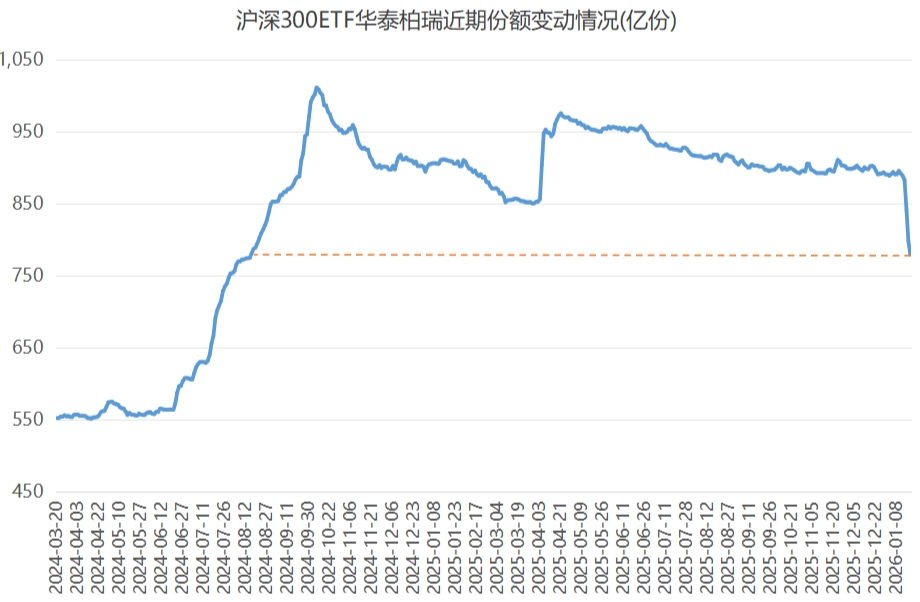
A股重磅!宽基ETF连续出现净赎回,有“巨无霸”份额回落至“924”行情之前,多只科创、创业板系ETF份额缩水,发生了啥?
Jin Rong Jie· 2026-01-20 08:57
Group 1 - Recent net redemptions in A-share broad-based ETFs have drawn market attention, with significant outflows recorded on January 15 and 16, totaling 687 billion and 863 billion respectively, marking the highest single-day outflows in history [1] - As of January 19, four out of six major broad-based ETFs saw their shares decline by over 10% in the last three trading days, with the largest, Huatai-PB CSI 300 ETF, dropping to 778.63 billion shares, a scale of approximately 369.2 billion, the lowest since August 2024 [1] - The ChiNext and STAR Market ETFs also experienced significant declines, with the E Fund STAR 50 ETF and E Fund ChiNext ETF seeing share reductions of 34.55% and 20.22% respectively [3] Group 2 - In contrast to the outflows from broad-based ETFs, certain commodity, cross-border, and narrow-based ETFs attracted significant inflows, with the Southern Nonferrous ETF being the only product to receive over 10 billion in net inflows, totaling 100.87 billion, driven by rising base metal prices [3] - Other ETFs such as Yongying Satellite ETF, Harvest Software ETF, and GF Media ETF also received net inflows exceeding 6 billion [3] - According to CITIC Securities, the impact of ETF redemptions on individual stocks was significant, with main board, ChiNext, and STAR Market stocks experiencing sell-offs of 946 billion, 334 billion, and 265 billion respectively during the peak outflow days [3] Group 3 - Regulatory measures have been implemented to cool down the market following rapid price increases and overheated sentiment, including raising the minimum margin requirement for margin trading from 80% to 100% [5][6] - The China Securities Regulatory Commission emphasized the need for comprehensive market monitoring and timely counter-cyclical adjustments to maintain market stability and prevent excessive volatility [6] - There are differing views on the long-term outlook for A-shares, with some analysts suggesting the potential for a slow bull market due to reforms, while others remain skeptical about escaping historical volatility patterns [7]




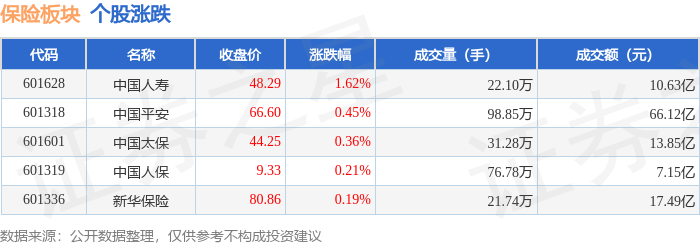
保险板块1月20日涨0.86%,中国人寿领涨,主力资金净流入7.64亿元
Zheng Xing Xing Ye Ri Bao· 2026-01-20 08:56
Group 1 - The insurance sector increased by 0.86% on January 20, with China Life leading the gains [1] - The Shanghai Composite Index closed at 4113.65, down 0.01%, while the Shenzhen Component Index closed at 14155.63, down 0.97% [1] - Key stock performances in the insurance sector included China Life at 48.29 with a rise of 1.62%, Ping An at 66.60 with a rise of 0.45%, and China Pacific Insurance at 44.25 with a rise of 0.36% [1] Group 2 - The net inflow of main funds in the insurance sector was 764 million yuan, while retail funds experienced a net outflow of 354 million yuan [1] - Major fund flows for key companies included Ping An with a net inflow of 332 million yuan, New China Life with 180 million yuan, and China Pacific Insurance with 124 million yuan [2] - Retail fund flows showed significant outflows for China Life and New China Life, with outflows of 132 million yuan and 1.22 billion yuan respectively [2]




2026年格隆汇“下注中国”十大核心资产之中国平安
格隆汇APP· 2026-01-20 08:55
Core Viewpoint - China Ping An has been recognized as a core asset in the "Betting on China" list for 2026, reflecting its comprehensive strength and industry leadership [2] - The year 2025 marked a strong recovery in stock prices and market confidence for China Ping An, with A-shares increasing by 37% and H-shares by over 50% [2] - The market's positive outlook is attributed to the reassessment of the long-term value of its unique "comprehensive finance + healthcare and elderly care" ecosystem [2][3] Financial Performance - In the first three quarters of 2025, China Ping An achieved a year-on-year net profit growth of 11.5%, with a significant quarterly increase of 45.4% [3] - The new business value in life and health insurance grew robustly by 46.2% [3] - The revenue structure for H1 2025 shows life and health insurance contributing 45.8%, property insurance 34.5%, banking 13.9%, and other asset management 5.3% [6] Market Position and Trends - China Ping An's market position is strengthened by its ability to adapt to structural changes in wealth allocation and the aging population, becoming a core platform for family needs [10] - The shift in asset allocation from single appreciation to comprehensive planning for "protection, retirement, health, and inheritance" is a significant trend [10] - The insurance products that provide stable long-term returns are increasingly attractive as the real estate market evolves [10] Healthcare and Elderly Care Ecosystem - The demand for integrated healthcare and elderly care services is rising due to accelerated aging and increased health awareness [12] - The healthcare ecosystem is expected to grow significantly, with the comprehensive health service market projected to reach 11.8 trillion yuan by 2029, growing at a CAGR of 7.7% [12] - The healthcare ecosystem contributes nearly 70% to the new business value of life insurance, indicating a shift from merely selling insurance contracts to providing comprehensive solutions [23] Technological Empowerment - Technology plays a crucial role in enhancing the efficiency of the financial and healthcare ecosystems, with a focus on AI capabilities [25] - The "super AI portal" has significantly improved operational efficiency, handling over 12.92 billion service interactions in the first three quarters of 2025 [26] - The integration of AI has led to a 23% improvement in policy renewal efficiency and a reduction of 91.5 billion yuan in claims through fraud prevention [26] Valuation and Market Recognition - The valuation of China Ping An is being driven by a dual engine: short-term financial recovery and long-term structural revaluation [28] - The company is recognized for its high dividend yield, with expected yields of 4.0% for A-shares and 4.5% for H-shares in 2025 [30] - Major institutions have raised their target prices for China Ping An, reflecting a shift in market perception towards its unique ecosystem model [32][33] Future Outlook - 2026 is anticipated to be a pivotal year for value re-evaluation, with multiple catalysts expected to drive performance and valuation recovery [37] - The company is well-positioned to benefit from structural adjustments in financial demand and aligns with national policies addressing health and aging [37]

平安产险江苏分公司:冰雪寒潮下的“逆行者” 筑牢农业生产安全防线
Jiang Nan Shi Bao· 2026-01-20 08:50
Core Viewpoint - The company has proactively responded to a severe snowstorm in Jiangsu province, focusing on risk reduction to protect agricultural production and the livelihoods of local residents [1][12]. Group 1: Emergency Response Actions - The company initiated an emergency plan in Xuzhou on January 19, where heavy snowfall covered agricultural greenhouses, leading to immediate action by agricultural insurance specialists to clear snow and reinforce structures [1]. - Other branches across the province entered standby mode, utilizing various communication channels to send disaster warnings and frost prevention guidelines to farmers, while also preparing emergency supplies [3]. - By January 20, after a night of snowfall, agricultural insurance teams were deployed across multiple cities, including Nantong, Yangzhou, Changzhou, Yancheng, and Lianyungang, to assist farmers [3]. Group 2: Specific Actions by Regional Branches - The Yangzhou branch assisted farmers in the Jiangdu vegetable greenhouse area by clearing snow and advising on multi-layer insulation for crops [5]. - The Nantong branch conducted field inspections at orchid planting bases to assess frost damage and provided technical guidance for recovery [6]. - The Changzhou branch focused on identifying risks in older greenhouses and helped farmers relocate vulnerable seedlings [8]. - The Yancheng branch engaged in snow removal and soil condition checks, advising farmers on soil maintenance and organic fertilization to mitigate cold impacts [10]. - The Lianyungang branch distributed de-icing agents and other supplies to support local farmers and communities [12]. Group 3: Overall Impact and Future Plans - The company has sent over 50,000 warning messages and identified more than 200 agricultural risk points, assisting in the clearing of over 1,000 acres of greenhouse snow, effectively reducing disaster losses [12]. - The company plans to continue monitoring weather changes and enhance risk reduction services to support stable agricultural production and rural revitalization in Jiangsu [12].


净资产比率排行丨增速大幅减缓!46%险企下降,数量翻倍,形势严峻
Xin Lang Cai Jing· 2026-01-20 08:47
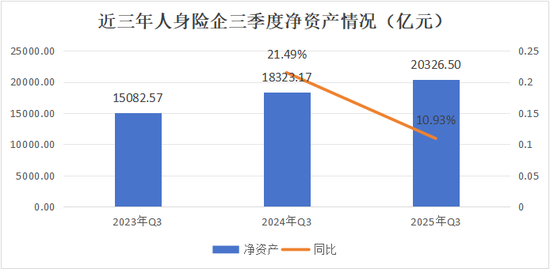
Core Insights - The net asset scale of the life insurance industry reached 2.03 trillion yuan in Q3 2025, an increase of approximately 200 billion yuan compared to the same period in 2024, reflecting a year-on-year growth of 10.93%, but the growth rate has significantly slowed down [1][36] - The increase in net assets is primarily driven by the stable growth of large and medium-sized insurance companies and the capital raising activities of smaller firms [2][36] - Among the 72 life insurance companies that reported their Q3 2025 net assets, 54% achieved positive growth, while 46% experienced a year-on-year decline, indicating a challenging industry environment [4][38] Net Asset Growth - The top 10 companies in terms of net asset growth are dominated by large and medium-sized insurers, with the top seven including China Life, Ping An, New China, Taiping, AIA, PICC Health, and China Post Life, collectively increasing their net assets by 206.17 billion yuan [1][36] - The number of companies experiencing a decline in net assets has doubled compared to the previous year, with 33 companies reporting a decrease in Q3 2025, up from 14 in Q3 2024 [4][40] - The proportion of companies with a net asset ratio exceeding 10% is only 28%, while 72% of companies fall below this threshold, indicating a significant disparity in financial health across the industry [23][36] Capital Raising Activities - A total of 12 life insurance companies have been approved for capital increases from October 1, 2024, to September 30, 2025, with several smaller firms showing significant growth due to capital injections [8][36] - The issuance of bonds for capital supplementation has also been a key strategy for many smaller insurers, with 16 companies issuing bonds during the same period [9][36] Net Asset Ratio Trends - The number of companies with an increasing net asset ratio has dropped sharply from 38 in Q3 2024 to only 20 in Q3 2025, while 72% of companies have seen their ratios decline [24][36] - The net asset ratio of the top 10 companies is predominantly above 20%, but five of these companies have experienced a decline in their ratios compared to the previous year [27][36] Performance of Major Insurers - The "big four" insurers (China Life, Ping An, Taiping, and Taikang) collectively hold 1.33 trillion yuan in net assets, accounting for 65.37% of the industry's total net assets [7][41] - Notable changes in rankings have occurred, with China Post Life entering the top 10 due to significant capital increases [40][41] Challenges and Future Outlook - The industry faces significant challenges, with many companies struggling to maintain positive growth amid changing accounting standards and market conditions [20][41] - The future landscape of the industry will likely be shaped by the resilience and internal capital generation capabilities of insurers as the effects of recent capital-raising activities and accounting changes stabilize [33][41]
银保重构:头部险企狂飙,中小公司承压分化
Mei Ri Jing Ji Xin Wen· 2026-01-20 08:29
Core Viewpoint - The insurance industry is experiencing a strong recovery in the bancassurance channel, which has become a core pillar supporting industry growth, with a projected 10% year-on-year increase in premium income from this channel in 2025. However, this recovery is characterized by a polarized growth pattern, with leading insurers showing significant gains while smaller firms struggle [1][11]. Group 1: Industry Growth and Trends - The "old seven" life insurance companies are expected to see a 48% year-on-year growth, with Ping An Life leading at a remarkable 163% increase in premium income from the bancassurance channel [1][3]. - The bancassurance channel's average commission level has decreased by approximately 30% following the implementation of the "reporting and banking integration" policy, which has shifted the focus from cost-driven competition to demand-driven and product-driven strategies [3][13]. - The overall growth rate for the bancassurance channel is projected to be around 10% in 2025, with the market share of the "old seven" companies increasing to 36% [3][14]. Group 2: Competitive Landscape - The competitive landscape is intensifying, with larger insurers leveraging their resource advantages and channel strengths to capture market opportunities, while smaller firms face challenges in resource allocation [2][12]. - The bancassurance channel has seen a compound annual growth rate of 16.2% from 2019 to 2023, while standard premium income from bancassurance and individual insurance has declined by 4.9% and 10.9%, respectively [2][12]. - The removal of the "1+3" restriction on bank- insurer partnerships has allowed leading firms to accelerate their acquisition of quality bank resources, further enhancing their market position [4][14]. Group 3: Performance of Key Players - Ping An Life's bancassurance channel new business value grew by 170.9% in the first three quarters of 2025, contributing 35.1% to the company's overall new business value [7][17]. - China CITIC Insurance and other firms have achieved significant growth, with CITIC Insurance's new business scale premium surpassing 11.5 billion yuan, marking a 141% year-on-year increase [8][18]. - MetLife has established partnerships with over 20 banks, focusing on high-net-worth clients and aiming for long-term, value-driven development in its bancassurance operations [9][19]. Group 4: Future Outlook - The outlook for the bancassurance channel in 2026 is optimistic, with expectations of a 30% increase in new premium income driven by the reallocation of household savings and strategic positioning by insurers [6][16]. - The projected incremental funds for the bancassurance channel in 2026 are expected to show a "high first, low later" trend, with significant contributions in the first quarter due to the timing of household savings [6][16]. - The ongoing trend of market differentiation will likely continue, with firms that possess comprehensive service capabilities and differentiated competitive advantages expected to lead the market [10][19].