
脑虎科技

Search documents
七部门联合发布《关于推动脑机接口产业创新发展的实施意见》
Zhong Guo Chan Ye Jing Ji Xin Xi Wang· 2025-08-13 22:54
Core Insights - The Ministry of Industry and Information Technology, along with six other departments, has released implementation opinions to promote the innovation and development of the brain-computer interface (BCI) industry, setting two development goals for 2027 and 2030, and outlining five key tasks and 17 specific measures to foster high-quality growth in the BCI sector [1][2] Group 1: Development Goals and Key Tasks - By 2027, breakthroughs in key BCI technologies are expected, establishing an advanced technical, industrial, and standard system, with products achieving international standards in performance across various fields [2] - By 2030, the BCI industry aims to significantly enhance innovation capabilities, develop a reliable industrial system, and nurture 2 to 3 globally influential leading enterprises along with a number of specialized small and medium-sized enterprises [2][3] Group 2: Market Potential and Growth Projections - The BCI market in China is projected to exceed 60 billion yuan by 2028, with a compound annual growth rate of 17.7% from 2024 to 2028 [1][3] - In 2024, the market size is expected to reach 32 billion yuan, reflecting an 18.8% growth rate [3] Group 3: Investment Trends and Opportunities - The BCI sector has garnered significant attention from the capital market, with over 1,000 disclosed investment transactions globally and more than 300 BCI companies receiving funding as of March 2025 [4] - In China, from 2022 to 2024, there were 30 investment events in the BCI field, totaling 1.34 billion yuan, with non-implantable BCI receiving the highest investment [4] - The investment trend in the BCI sector is positive, driven by supportive policies and increasing investor confidence, indicating substantial potential in areas such as neuropharmaceutical alternatives and various consumer markets [4]
【医药】《实施意见》聚焦五大重点任务、三个重点工程,有望加速脑机接口发展——《关于推动脑机接口产业创新发展的实施意见》点评
光大证券研究· 2025-08-09 00:04
Core Viewpoint - The article discusses the recent implementation opinions released by the Ministry of Industry and Information Technology and other ministries, aiming to promote the innovation and development of the brain-computer interface (BCI) industry, with specific targets set for 2027 and 2030 [4][5]. Group 1: Key Tasks and Projects - The implementation opinions outline five key tasks: strengthening basic software and hardware research, creating high-performance products, promoting the application of technological achievements, expanding innovative entities, and enhancing industrial support capabilities [5]. - Three key projects are highlighted: core software and hardware foundation project, high-quality machine project, and application expansion project [5]. Group 2: Local Action Plans and Medical Pricing - Local governments, such as Beijing and Shanghai, have introduced action plans to establish a BCI industry ecosystem by 2030, focusing on breakthroughs in foundational research, core technology, and product development [6]. - The medical service pricing for BCI has been released, with costs for invasive procedures set at 6,552 yuan for insertion and 3,139 yuan for removal, while non-invasive procedures are priced at 966 yuan [7]. Group 3: Product Development Progress - The development of non-invasive BCI products is progressing rapidly, with several companies expected to receive approvals for multiple products in the second half of the year [8]. - Invasive and semi-invasive BCI products are also advancing, with companies like Brain Tiger Technology and Ladder Medical leading in clinical trial progress [8].


数字孪生大脑与人类大脑相似度已近六成
3 6 Ke· 2025-07-28 00:25
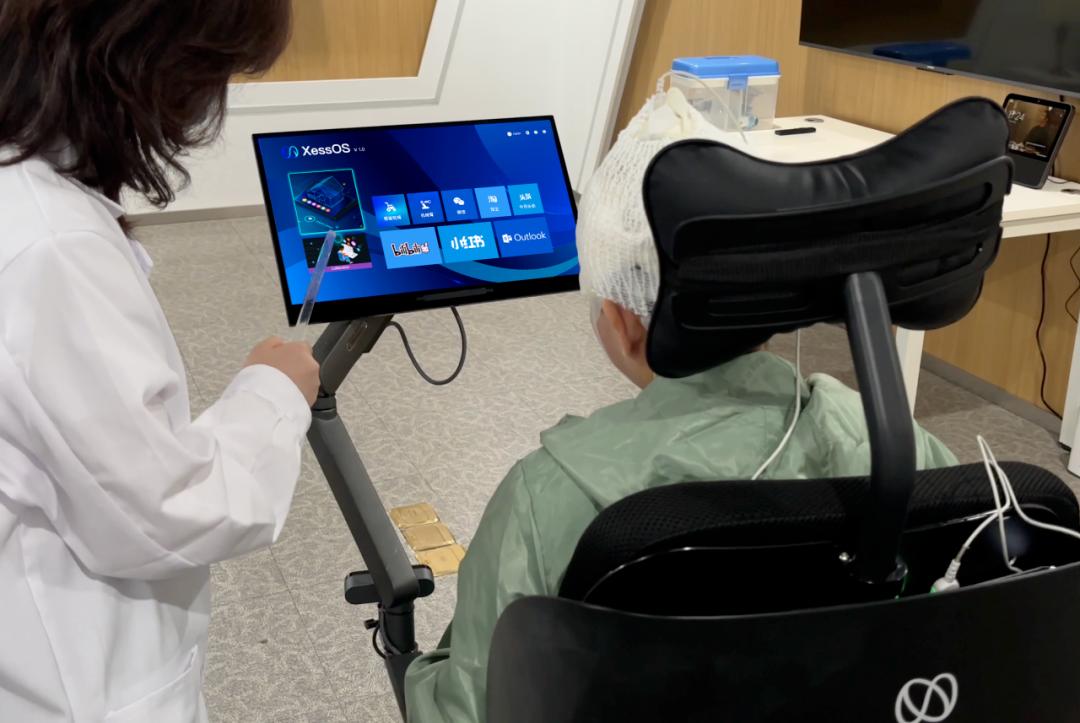
Group 1: Brain-Machine Interface Achievements - A patient with motor dysfunction successfully operated social media applications and controlled a smart wheelchair using a 256-channel flexible brain-machine interface designed by Brain Tiger Technology after two weeks of training [1] - Another patient with language dysfunction achieved real-time Mandarin communication at a speed of 50 words per minute, which is about one-third of the average person's speaking speed, with a latency of less than 100 milliseconds [1][3] Group 2: Digital Twin Brain Development - The Digital Twin Brain (DTB) project, led by a team from Fudan University, aims to simulate the human brain to enhance understanding of information processing and improve brain disease diagnosis and treatment [4][5] - The DTB is constructed by dividing brain imaging data into 23,000 blocks, each approximately 3mm in size, and using MRI data to clarify connections between these blocks [4][5] - The team has achieved a Pearson correlation coefficient of 0.63 for visual experiments and 0.57 for auditory experiments, indicating a high similarity between DTB activity patterns and human brain activity [5] Group 3: Advancements in Brain-Like Intelligence - Research on brain-like intelligence focuses on creating systems that mimic the efficiency of biological brains while overcoming high energy consumption issues faced by current AI systems [7][8] - The development of the Darwin III brain-like chip, which has the largest scale of neurons on a single chip, represents a significant advancement in this field [7] - The goal is to extract efficient characteristics from biological brains, such as sparse connectivity and dynamic activation, rather than mechanically replicating them [8] Group 4: Cross-Species Brain Research - Cross-species brain research is emerging as a critical area in brain science, providing simplified models from lower organisms that can inform human brain models [9] - The ultimate aim of both Digital Twin Brain and brain-like intelligence research is to deepen the understanding of brain mysteries and advance AI technology to better serve medical and scientific fields [9][10] - The Digital Twin Brain has shown potential for precision medicine, allowing for the simulation of specific brain conditions to test treatment options, thereby reducing clinical trial costs and improving targeted therapies [10]
陈天桥:科创投资不要沿用互联网套路
Nan Fang Du Shi Bao· 2025-07-25 10:36
Group 1 - The core viewpoint emphasizes the need for patience in capital investment within the hard technology sector, particularly in brain-computer interface (BCI) development, contrasting it with past internet investment strategies [2][4] - The brain-computer interface industry has seen rapid development, with an increase in startups and significant attention from top investors, particularly in Shanghai, which is establishing itself as a key innovation center [3][4] - Brain Tiger Technology, founded by Professor Tao Hu, has emerged as a leading company in the invasive brain-computer interface sector, receiving substantial support from local government and recognition at major events [3][5] Group 2 - Investment in hard technology should not be measured by short-term returns typical of internet investments; instead, it requires a long-term vision and stable support to navigate the lengthy cycles of technology validation and market cultivation [4] - Recent breakthroughs in real-time Chinese language decoding and motion decoding by Brain Tiger Technology have positioned it at the forefront of international technology, garnering special coverage in the academic journal Nature [5] - The company aims to build a world-class team focused on brainwave modeling and decoding algorithms, leveraging the latest AI technologies to enhance its competitive edge against other players like Neuralink [5]
陈天桥罕见公开呼吁: 科创投资不要沿用互联网套路
Sou Hu Cai Jing· 2025-07-23 09:43
Group 1 - Chen Tianqiao, a prominent entrepreneur and philanthropist, emphasizes the rapid development of the brain-computer interface (BCI) industry in China, particularly in Shanghai, which is becoming a technology center for this field [2][3] - Brain Tiger Technology, founded by Tao Hu, is recognized as a leading company in China's invasive BCI sector, having received significant support from local government and institutions [3][8] - The company has achieved notable accolades, including the highest award at the World Artificial Intelligence Conference, highlighting its impact in the industry [3] Group 2 - Chen Tianqiao advocates for a patient investment approach in the hard technology sector, contrasting it with the fast-paced returns typical of internet investments [4][5] - He cites Neuralink as an example of a company that took years to generate revenue, underscoring the need for long-term support in BCI development [4] - The investment community is encouraged to provide stable backing for innovative companies like Brain Tiger, focusing on understanding the industry and technology rather than seeking immediate returns [4][5] Group 3 - The rise of hard technology has brought attention to scientists starting their own ventures, although some face challenges in commercialization and management [6][7] - Chen Tianqiao highlights the importance of a supportive innovation ecosystem for scientists transitioning to entrepreneurship, beyond just financial backing [9] - Recent breakthroughs by Brain Tiger in real-time language and motion decoding have been recognized internationally, showcasing the company's technological advancements [8][9]

实现多个国际首次!美媒:脑机接口技术,“中国正迎头赶上”
Huan Qiu Shi Bao· 2025-07-21 22:40
【环球时报特约记者 谢昭 环球时报记者 马俊】脑机接口技术被认为是当前最热门的前沿领域之一,美国富豪埃隆·马斯克创立的Neuralink公司已经成功实施 了多例相关手术。美国有线电视新闻网(CNN)20日注意到,中国当前在该领域正迎头赶上,"正在接近全球先进水平,在复杂性上与美国和英国相当"。 帮患者重建交流能力 所谓脑机接口技术,是指从大脑采集高质量的脑电信号,然后将其处理解码后输出,实现对其他设备的操作。CNN称,北京脑科学与类脑研究所研制的无 线脑机接口芯片已经在临床试验中植入5名患者的大脑中。《环球时报》记者此前在采访中了解到,按照脑电波接收方式的不同,脑机接口主要分为三条技 术路线:不用手术,只是将电极贴在头皮上采集脑电波的无创(非侵入式)模式;通过手术让电极贴着大脑皮层,但并没有插进脑组织的半侵入式;利用微 针或微丝将电极直接插入脑组织的侵入式。从理论上看,采集电极与大脑组织离得越近,收集的脑电波信号质量就越好,但手术风险性也越大。 北京脑科学与类脑研究所研制的名为"北脑一号"的芯片只有硬币大小,属于半侵入式。CNN引用美国乔治城大学神经科学教授马克西米利安·里森胡贝尔的 评论称,大多数美国公司采 ...
意念说话!脑机接口临床新突破引国际权威学术期刊关注
第一财经· 2025-07-18 13:06
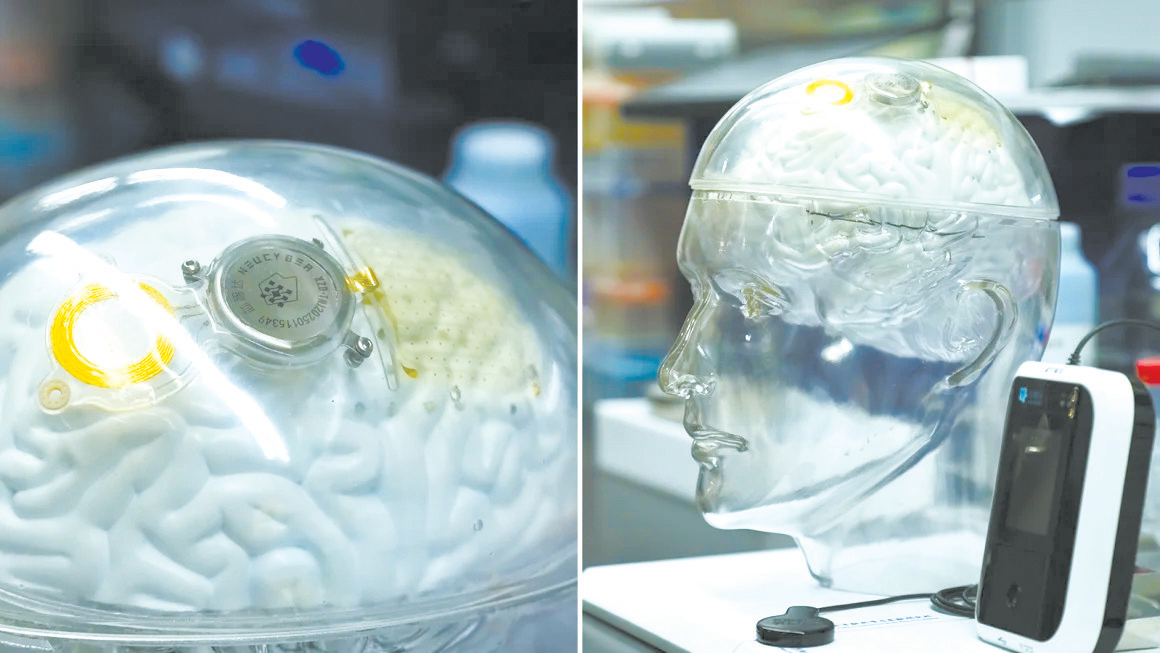
Core Viewpoint - The article highlights a significant breakthrough in brain-computer interface (BCI) technology achieved by Shanghai YanSi Brain-like Artificial Intelligence Research Institute in collaboration with Huashan Hospital of Fudan University, enabling patients with speech impairments to communicate through thought [1][2]. Group 1: Technological Breakthroughs - The BCI technology allows real-time decoding of brain activity to display intended Chinese phrases, marking a major advancement in language decoding for patients with conditions like ALS and stroke [1]. - The research has been recognized in the prestigious journal "Nature," showcasing China's progress in invasive BCI technology, including real-time motion and language decoding capabilities [1]. Group 2: Technical Details - The decoding of Chinese brain signals is more complex than English due to the higher number of phonetic components, with over 400 compared to English's 50 [2]. - The YanSi Brain-like Institute utilizes a multi-region collaborative decoding technique and a large intracranial EEG dataset to achieve over 83% accuracy in recognizing Chinese consonants and over 84% in recognizing vowels, positioning it at the forefront of the industry [2]. Group 3: Future Applications - The BCI technology not only aims to restore communication abilities for speech-impaired patients but also has potential applications in controlling physical devices through thought, interacting with the metaverse, and generating artistic expressions from mental imagery [2]. Group 4: Implantation Techniques - The founder of Brain Tiger Technology emphasizes the challenge of balancing brain function utilization with minimizing damage during invasive BCI implantation, opting for flexible electrodes placed beneath the dura mater to enhance signal quality while reducing brain injury [3].

意念说话!脑机接口临床新突破引国际权威学术期刊关注
Di Yi Cai Jing· 2025-07-18 09:25
Core Insights - The article discusses significant advancements in brain-computer interface (BCI) technology, particularly in decoding Chinese language brain signals, which is notably more complex than English due to the higher number of phonemes involved [1][2]. Group 1: Technological Breakthroughs - Shanghai Yansi Brain AI Research Institute has collaborated with Huashan Hospital to achieve breakthroughs in BCI, enabling real-time display of intended Chinese phrases from brain activity [1]. - The BCI technology developed by Yansi Brain utilizes a multi-region collaborative decoding technique and a large intracranial EEG dataset, achieving over 83% accuracy in recognizing Chinese consonants and over 84% in recognizing vowels, marking a leading position in the industry [2]. Group 2: Clinical Applications - The advancements in BCI technology are expected to benefit patients with speech impairments, such as those suffering from amyotrophic lateral sclerosis (ALS) and stroke, by restoring their ability to communicate [1][2]. - The technology also holds potential for broader applications, including controlling intelligent devices through thought and interacting with the metaverse [2]. Group 3: Implantation Techniques - The founder of Brain Tiger Technology emphasizes the importance of balancing functionality and minimizing damage in invasive BCI techniques, opting for flexible electrodes implanted beneath the dura mater to reduce brain damage while obtaining higher quality brain signals [3].
脑机接口大战:马斯克抛“三年全脑计划”,中国企业追赶
2 1 Shi Ji Jing Ji Bao Dao· 2025-07-17 10:44
Core Insights - The competition among leading brain-computer interface (BCI) companies is intensifying, with Neuralink announcing ambitious plans to achieve a "full brain interface" by 2028 and increase the number of electrode channels from thousands to tens of thousands [1][3][7] - The Chinese market is witnessing a shift towards invasive BCI technologies, with companies accelerating clinical trials and gaining significant attention from both the government and investors [1][6][7] Industry Developments - Neuralink's roadmap includes expanding capabilities from motor functions to language and vision, with plans to increase implanted electrodes from 3,000 in 2026 to over 25,000 by 2028 [3][10] - The focus on effective channel count rather than just the number of electrodes is emphasized, as many signals can be redundant [4][5] - The industry is experiencing a new peak in clinical progress, technology, and capital investment, driven by advancements in AI and supportive government policies [7][8][11] Company Insights - Brain Tiger Technology, founded in 2021, has become a leader in invasive BCI in China, raising significant funding and achieving notable clinical milestones, including real-time Chinese language decoding [6][8][12] - The founder of Brain Tiger, Tao Hu, highlights the importance of system-level thinking in commercializing BCI technology, contrasting it with traditional research approaches [12] - The integration of AI into BCI technology is seen as a key factor for future advancements, enabling better data analysis and potential direct brain-to-AI interactions [11][12]
中美脑机接口竞速,差异在哪里
2 1 Shi Ji Jing Ji Bao Dao· 2025-07-14 13:47
21世纪经济报道记者骆轶琪 广州报道 中国脑机接口公司上大分!这两年已经有不少"全球首个""中国首次"的案例出现。 在脑机接口行业,中国公司到底发展到了什么程度,全球头部企业之间的路线有什么差异,AI又会给 这个行业带来什么新的催化? 21世纪经济报道记者对话脑虎科技创始人兼首席科学家陶虎,听听他的分析。 《21世纪》:近两年国内侵入式脑机接口临床试验案例增多的原因? 陶虎:最近这两年,随着技术的进步,尤其是AI技术的进步。对于行业来说,一方面,让我们对大脑 脑电信号采集的能力,从数量和质量方面都大幅提高。同时随着AI技术发展,对于之前采集来的高质 量、大规模数据,能够更好去分析,进而进行神经编解码。 这让行业可以较好实现用意念合成运动、脑虎团队做到用意念合成语言。这都是基于近些年技术的发展 实现的。 陶虎:我来举个例子,至少我们内部是这样认为的。 例如智能驾驶或无人驾驶,有相对明确的L1-L5技术边界。那么脑机接口行业也有类似定义,至少我们 内部会有这样的定义,也是根据本身实现的难易程度、实现后的获益程度决定的。 L1基本就认为是实时运动解码。相对来说,其涉及的脑区比较单一、所需通道数也比较少。其实目前 行 ...