Gucci

Search documents
X @mert | helius.dev
mert | helius.dev· 2025-08-29 16:02
it is absolutely fucking overpls just block internet access for all gfs for a bit while I can still sell at a higher price*Walter Bloomberg (@DeItaone):GUCCI NOW ACCEPTS PAYMENTS IN CRYPTOCURRENCIES INCLUDING $ETH AND $DOGE AT SELECT U.S. STORES ...
X @Bitcoin Archive
Bitcoin Archive· 2025-08-29 15:28
Market Trend - Luxury brand Gucci will accept Bitcoin and crypto at select stores [1]
X @Ash Crypto
Ash Crypto· 2025-08-29 13:03
Cryptocurrency Adoption - Gucci 开始在美国指定门店接受 ETH 和 DOGE 作为支付方式 [1] Retail Industry Trend - 奢侈品行业对加密货币的接受度正在提高 [1]
X @Crypto Rover
Crypto Rover· 2025-08-29 10:44
💥BREAKING:GUCCI NOW ACCEPTS PAYMENTS IN CRYPTOCURRENCIES INCLUDING $ETH AND $DOGE AT SELECT U.S. STORES! https://t.co/4Lx23Qjwth ...
七夕营销上演“罗曼蒂克消亡史”
3 6 Ke· 2025-08-29 03:55
Core Insights - The brand marketing for this year's Qixi Festival is characterized by both vibrancy and a sense of restraint, with major luxury brands and domestic brands investing in creative campaigns while lacking the romantic exuberance seen in previous years [1][3][4] Group 1: Marketing Trends - Brands are increasingly cautious in conveying romantic themes, opting for a more reserved and subtle approach in their advertisements, reflecting a shift in consumer sentiment towards love and relationships [4][5][20] - The rise of "her economy" has become a focal point for brands, emphasizing female empowerment and diverse relationships beyond traditional romantic narratives [12][14] Group 2: Innovative Campaigns - Brands are exploring new formats such as short dramas and collaborations with cultural elements to engage consumers, with LOEWE being the first luxury brand to create an original short drama for Qixi [6][8] - Collaborations with popular cultural brands, such as Chopard partnering with POP MART, illustrate a strategy to reach younger consumers through familiar and appealing products [9][11] Group 3: Consumer Engagement - The shift in consumer engagement strategies reflects a need for brands to adapt to changing attitudes towards love and relationships, with a focus on emotional value and authenticity in marketing [11][12] - The emphasis on female narratives and values in marketing campaigns indicates a broader cultural shift, as brands seek to resonate with the evolving identity and aspirations of women [14][15]

Perfect Corp (PERF) FY Conference Transcript
2025-08-26 19:22
Summary of Perfect Corp (PERF) FY Conference Call - August 26, 2025 Company Overview - Perfect Corp is a Taiwan-based company with approximately 400 employees, primarily focused on R&D in the beauty and fashion app space [2][3] - The company was founded a decade ago and initially operated as an app maker before transitioning to B2B software solutions for beauty brands [4][5] Revenue Breakdown - Revenue sources: Approximately 50% from the US, 30% from the EU, and 20% from Japan [4][5] - Initial revenue breakdown at listing (2022): 75% B2B and 25% B2C; as of 2023, it has shifted to roughly 50% B2B and 50% B2C, with projections for 2024 indicating 60% B2C and 40% B2B [7][8] - B2C apps operate on a freemium model, with subscription prices increasing from $5-$7 to $79 per year [8][9] Product Offerings - B2C apps include "You Can Makeup" and "You Can Perfect," focusing on photo editing and virtual try-ons [6][9] - B2B services include virtual try-ons for makeup and skin analysis, with clients such as Estee Lauder, LVMH, and Chanel [7][19] - The company has over 800 brand clients and 914,000 SKUs running on its software, showing a growth of over 20% in brand clients since 2021 [19][20] Financial Performance - 2024 growth rate: 12.5%; guidance for 2025 is 13% to 14.5% [25][26] - Gross margin decreased from 79% to 75% year-over-year due to lower margins in B2C compared to B2B [26][27] - Positive operating cash flow with $167 million in cash and cash equivalents [28] Strategic Initiatives - Recent acquisition of Wana for $6 million to enhance offerings in AIAR technology for luxury brands [24] - Focus on reinvesting in R&D for premium Gen AI features and expanding B2B client base [29][30] Market Challenges - The company faces macroeconomic pressures affecting clients like Estee Lauder and LVMH, leading to tighter budgets [42] - Currency exchange issues due to the appreciation of the Taiwanese dollar impacting operational costs [28][29] Competitive Landscape - The company maintains a 90% retention rate in B2B, indicating strong client loyalty [47] - Differentiation from competitors lies in continuous R&D investment and user-friendly app design [44][45] Technology and Innovation - The company is exploring advancements in 3D virtual try-ons for clothing, although current technology is not yet ready for full implementation [37][38] - Color calibration challenges exist across different devices, particularly on Android, requiring significant investment in accuracy [50][51] Conclusion - Perfect Corp is positioned for growth with a strong focus on B2C expansion and innovative technology solutions, despite facing market challenges and competitive pressures [30][42]

500亿之上持续增长:淘天与中国宠物经济不断探索新边界
Sou Hu Cai Jing· 2025-08-26 12:19
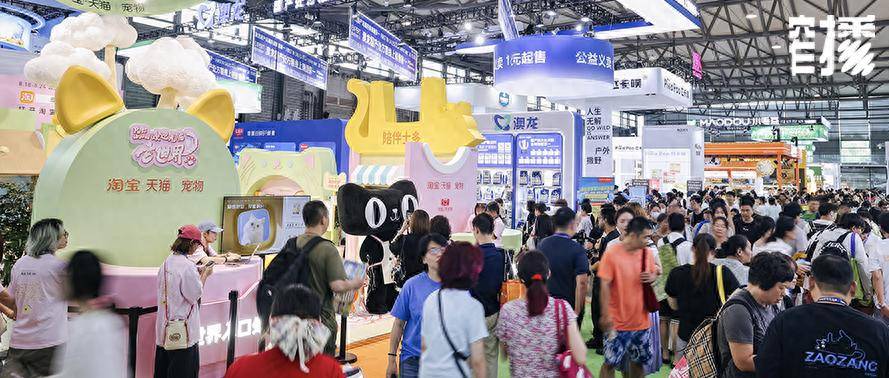
Core Insights - The domestic pet industry in China is rapidly growing, driven by demographic changes, economic cycles, and evolving consumer trends, with a projected market size of 1.15 trillion yuan by 2028 [2][4][24] - The pet ownership demographic is shifting, with younger consumers becoming the primary drivers of market growth, as they invest time and money into pet care [6][10][12] Market Growth and Trends - The number of urban pets (dogs and cats) in China is expected to exceed 120 million by 2024, with a market scale reaching 300.2 billion yuan, reflecting a year-on-year growth of 7.5% [2] - Pet food consumption is dominated by dogs at 155.7 billion yuan, while cat consumption is growing faster at 10.7% year-on-year [2] - The recent Asia Pet Expo saw a 20% increase in attendance, indicating a thriving pet consumption environment [2] Market Maturity and Opportunities - The market maturity of the pet food industry in China is relatively low, with the top ten companies holding only 24% market share compared to 47.4% in the US and 50.4% in Japan [4] - There is a significant opportunity for brands to address unmet needs in the market, particularly in e-commerce, where platforms like Taobao and Tmall are leading [5][21] Consumer Demographics - Young consumers (under 35) account for 67% of pet owners, with a notable increase in pet ownership among lower-tier cities [8][9] - Emotional consumption drives pet spending, with young consumers prioritizing pet care even during economic downturns [7][14] Product Innovation and Segmentation - The rise of specialized pet products is evident, with a focus on tailored nutrition and care based on pet type, age, and health needs [24][29] - Innovative brands are emerging to meet specific consumer demands, such as high-quality pet food and specialized pet care products [18][20] E-commerce and Brand Development - E-commerce plays a crucial role in the pet industry, with platforms like Tmall capturing significant market share and facilitating brand growth [7][21] - Brands are increasingly focusing on innovation and supply chain optimization to maintain competitive advantages in a growing market [25][31] Future Directions - The pet market in China is still in its early to mid-stages, with significant room for growth and education among consumers [27][28] - Continuous innovation and brand strength will be essential for companies to thrive in a competitive landscape, as new trends and consumer needs emerge [25][29]
2025年第33周:服装行业周度市场观察
艾瑞咨询· 2025-08-25 00:06
Group 1: Industry Environment - The fragrance business is becoming an important area for fashion brands to expand their lifestyle offerings, with the global fragrance market expected to grow from $53 billion in 2025 to $77.53 billion by 2032, driven by high-end segments [3][4] - Luxury brands are investing in upgrading their stores in China despite a slowdown in the luxury market, with new store openings down 38% year-on-year in the first half of 2025 [5] - Sports and outdoor brands are increasingly capturing market share from luxury brands by appealing to high-end consumers through design innovation and upgraded retail experiences [6] Group 2: Market Trends - The outdoor running shoe market is rapidly growing in China, with brands like HOKA and Salomon leading the charge, driven by a surge in events and consumer interest [7] - Chinese domestic sports brands are facing challenges with growth slowing to 5.9%, as they struggle with brand power and market concentration [8] - The shift in brand slogans among sports brands reflects a change in consumer focus towards personal experience and inclusivity, particularly among Gen Z [9] Group 3: Luxury Market Challenges - The luxury goods sector is facing significant challenges, with the global market potentially experiencing zero growth for two consecutive years, largely due to a decline in spending from Gen Z consumers [10] - The beauty segment within luxury brands is one of the few bright spots, but it is not substantial enough to offset declines in core luxury business [10] Group 4: Fashion Industry Dynamics - The Chinese lingerie market is undergoing a transformation, with traditional brands struggling while new brands focusing on comfort and innovation are gaining traction [11] - The fashion industry is seeing a return to conservative and retro styles, with niche brands gaining attention for their craftsmanship and authenticity [12] Group 5: Brand Performance and Strategies - The "Luxury Brand China Vitality List 2025H1" was released, covering 86 luxury brands and their commercial dynamics in China, providing valuable insights for industry leaders [13] - The retail market for clothing and textiles in China reached 742.6 billion yuan in the first half of the year, with natural materials like linen becoming increasingly popular [15] - The sunscreen clothing market is projected to exceed 80 billion yuan in 2024, driven by rising consumer awareness and demand for outdoor activities [16] Group 6: Corporate Developments - Lao Pu Huang Jin expects to report revenue of 12 to 12.5 billion yuan for the first half of 2025, a year-on-year increase of 241%-255%, driven by product optimization and channel expansion [26] - The fashion brand La Chapelle has successfully transformed from bankruptcy to becoming a top seller on Douyin through a brand authorization model [21] - Bosideng is focusing on ESG practices and aims for net-zero emissions by 2038, showcasing its commitment to sustainable development [22]

中产迷上奢侈品特卖
Sou Hu Cai Jing· 2025-08-22 11:34
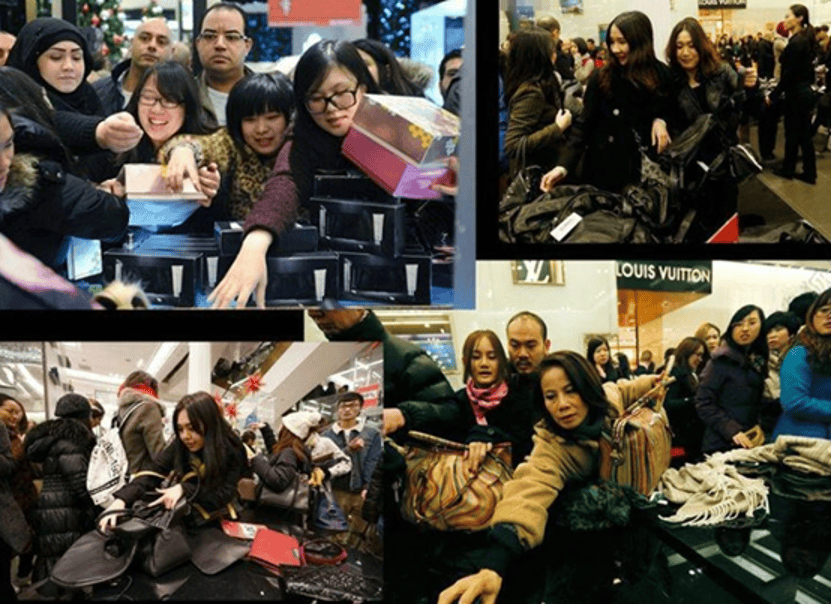
Core Insights - The luxury goods market is experiencing a shift towards discount sales, with consumers increasingly favoring sales events over traditional retail purchases [1][3][5] - The high-end consumer market is projected to decline by 2% in 2024, while sales through discount channels are on the rise, indicating a change in consumer spending behavior [3][5] - Platforms like Vipshop are capitalizing on this trend by offering significant discounts on luxury brands, leading to increased sales and membership growth [5][7] Group 1 - The presence of luxury goods sales events has become more prominent, with discounts of up to 70% attracting consumer attention [1] - Consumers are now more strategic in their luxury purchases, often waiting for sales to maximize value, as illustrated by anecdotes of significant savings on high-end items [3][5] - The shift in consumer mindset reflects a broader trend where spending wisely is prioritized over simply spending more [7] Group 2 - Vipshop's sales data indicates a strong performance, with 514 billion yuan in sales reported for Q2 2025 and a 15% increase in super member numbers, highlighting the effectiveness of their discount strategy [5] - The appeal of luxury goods is not diminishing; rather, consumers are learning to navigate the market more effectively, seeking out deals and discounts [3][5] - The new consumer behavior emphasizes the importance of smart spending, allowing individuals to maintain a high quality of life while being financially savvy [7]