
Nissan Motor

Search documents
日产汽车拟减持雷诺股份 联盟关系“松绑”再进一步?
Zhong Guo Jing Ying Bao· 2025-06-18 08:44
Core Viewpoint - Nissan is planning to reduce its stake in Renault by 5%, bringing its ownership down to 10%, with the proceeds estimated at 100 billion yen (approximately 4.96 billion RMB) to be used for new vehicle development in response to market competition [1][2]. Group 1: Shareholding Adjustments - The reduction in cross-shareholding follows a previous agreement in July 2023 to lower mutual shareholding ratios from 15% to 10%, aimed at increasing flexibility for both companies [2][3]. - This move is interpreted as a continuation of the strategy to "unbind" the capital relationship between Nissan and Renault, transitioning to a phase of "low binding, high autonomy" [1][3]. Group 2: Strategic Implications - Nissan's decision to lower its stake is seen as a way to gain financial independence and focus on new product development, particularly in the face of challenges in key markets like China and North America [4][6]. - The company aims to enhance its strategic autonomy, allowing for more flexibility in partnerships and collaborations beyond the Renault-Nissan-Mitsubishi Alliance [3][4]. Group 3: Financial Performance - Nissan's financial results for the fiscal year 2024 show a significant decline, with operating profit down 87.7% to 69.8 billion yen (approximately 3.48 billion RMB) and a net loss of 670.9 billion yen (approximately 33.42 billion RMB) [7]. - The company is under pressure from various factors, including U.S. trade tariffs and intense competition from Chinese automakers, necessitating a strategic overhaul [7]. Group 4: Restructuring Efforts - The new CEO, Ivan Espinosa, has initiated a major restructuring plan named "Re: Nissan," aiming to cut 500 billion yen (approximately 24.65 billion RMB) in costs and achieve positive operating profit and free cash flow by fiscal year 2026 [7]. - The restructuring includes plans to lay off 20,000 employees, representing 15% of the workforce, and close seven factories globally [7]. Group 5: R&D and Market Strategy - Nissan is increasing its investment in research and development, with a 12% year-on-year rise in R&D expenses, primarily focused on electrification and advanced driving assistance technologies [8]. - The company is committed to enhancing its product strategy in China, emphasizing local development and a stronger focus on electric vehicles [8].

Nissan Considers Stake Reduction in Renault to Fund New Investments
ZACKS· 2025-06-17 14:41
Key Takeaways NSANY is considering a stake reduction in Renault to support new product development. The companies' updated alliance allows mutual stakes to drop from 15% to 10% for flexibility. NSANY plans to raise 1 trillion yen via bonds and asset sales to fund restructuring and debt payments.Nissan Motor Co., Ltd. (NSANY) plans to reduce its ownership stake in its long-standing French partner Renault SA (RNLSY) to allocate more resources toward the development of new vehicles. Per Nikkei, Nissan’s part ...

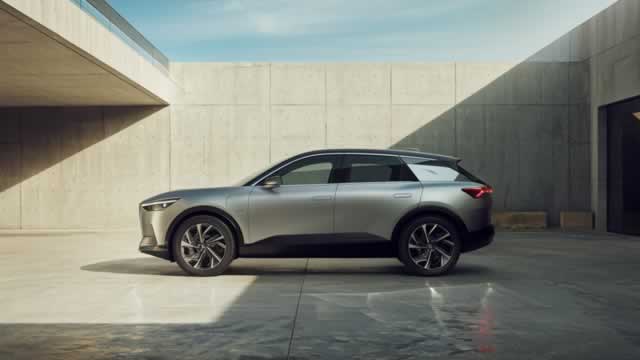
日产汽车,昔日辉煌难再续?
Hu Xiu· 2025-06-10 06:49
Core Viewpoint - Nissan is facing significant operational challenges, leading to a large-scale layoff of 20,000 employees, approximately 15% of its workforce, primarily due to a drastic decline in sales in the Chinese market, which fell by 12.2% in fiscal year 2024, totaling around 690,000 units sold [1][3][5]. Group 1: Sales Performance - Nissan's sales in China have been declining for six consecutive years, with a notable drop from approximately 1.38 million units in 2021 to 1.045 million in 2022 (down 22.1%), further decreasing to 793,000 in 2023 (down 24.2%), and reaching only 696,000 in 2024 (down 12.2%) [3][4][5]. - The company's market share in China has decreased from around 6% a few years ago to less than 4% in 2023, while the overall passenger vehicle market grew by 5.6% to 21.7 million units [6][3]. Group 2: Internal Challenges - The decline in Nissan's performance is attributed to slow decision-making and strategic missteps by the management team following Carlos Ghosn's departure, leading to a lack of innovation and product development [2][9][10]. - Nissan's product lineup is heavily reliant on an aging model, the Sylphy sedan, with over 99% of its sales still coming from traditional fuel vehicles, indicating a significant delay in the transition to electric vehicles [6][10][11]. - The company has faced internal turmoil, including management instability and governance issues, which have hindered its ability to respond effectively to market changes [12][13]. Group 3: Market Environment - The Chinese automotive market is undergoing a significant shift towards electrification, with local brands capturing over 90% of the new energy vehicle market share, while Nissan's presence in this segment remains minimal [14][15]. - In 2023, the sales of new energy vehicles in China reached 7.748 million units, growing by 36.5%, while Nissan's electric vehicle offerings have been limited, resulting in negligible sales impact [14][15]. - The competitive landscape has intensified, with local brands like BYD achieving substantial sales growth, further pressuring Nissan's market position [15][16]. Group 4: Future Strategies - Nissan is at a crossroads, facing potential outcomes of gradual exit, decisive transformation, or a struggle for resurgence in the Chinese market [18][19]. - The company has announced plans to invest 10 billion RMB in China and aims to launch 10 new models by 2027, indicating a commitment to revitalizing its product offerings [20][21]. - To regain market share, Nissan may need to adopt aggressive pricing and service strategies, balancing short-term profitability with long-term brand recovery [22][21].
Nissan's CEO on leading in chaos: be fast and be flexible
CNBC· 2025-06-04 14:49
Core Insights - Nissan's new CEO Ivan Espinosa emphasizes the need for optimism and adaptability in a challenging global auto industry environment marked by slowing EV sales, increased competition from China, and new tariffs impacting profits [1][2] Group 1: Industry Challenges - The global auto industry is facing significant challenges, including slowing electric vehicle (EV) sales and heightened competition from Chinese manufacturers [1] - New tariffs are posing additional threats to profit margins within the industry [1] Group 2: Leadership Dynamics - CEO departures in U.S. companies surged by 38% in December, with a record total of 2,221 CEOs stepping down in 2024, the highest since tracking began in 2002 [3] - Espinosa advocates for a modern leadership approach that embraces flexibility and openness to change, contrasting with past leadership styles that were often stubborn and resistant [3] - The current environment necessitates more collaboration among industry leaders, as geopolitical issues and supply chain challenges make it difficult for companies to operate independently [3]

Nissan CEO says short-term focus is to fix the company
CNBC· 2025-06-04 08:57
Core Viewpoint - Nissan's CEO Ivan Espinosa emphasized the company's short-term focus on fixing its operational struggles to regain stability [1]. Group 1 - The company is currently prioritizing internal improvements to address its challenges [1]. - Espinosa expressed confidence in the robustness of the company's recovery plan [1].
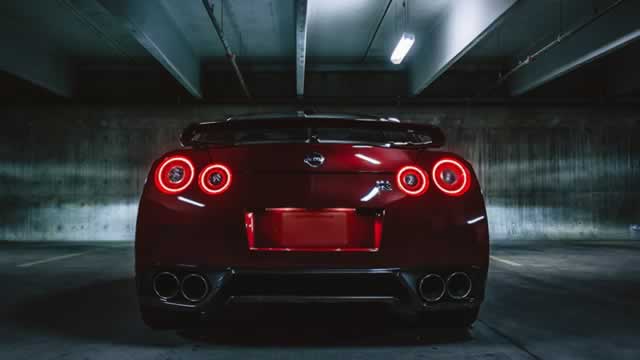
Nissan Resorts to e-Power Technology to Reshape Vehicle Lineup
ZACKS· 2025-05-28 13:55
Core Viewpoint - Nissan Motor Co., Ltd. is leveraging its new e-Power technology to facilitate a turnaround after reporting significant financial losses, focusing on the North American market for recovery [1][2]. Group 1: e-Power Technology - e-Power is a hybrid system that utilizes both an electric motor and a gasoline engine, providing a smooth driving experience without the need for charging [1][2]. - Unlike traditional electric vehicles, e-Power generates its own charge through gasoline, making it more convenient for drivers [2]. Group 2: Financial Performance and Strategy - Nissan reported a $4.5 billion loss for the fiscal year ending in March, highlighting the urgent need for a successful model [2]. - The company is implementing a major restructuring plan, which includes cutting about 15% of its global workforce (approximately 20,000 jobs) and reducing manufacturing plants from 17 to 10 [3]. Group 3: Market Position and Competitors - e-Power is currently available on models like Qashqai and X-Trail in Europe and Note in Japan, with plans to launch in the U.S. in the new Rogue [4]. - The only other automaker offering a similar hybrid system is Suzuki, indicating a competitive landscape for e-Power technology [4]. Group 4: Future Developments - Nissan is also working on advanced electric vehicles and solid-state battery technology, which may replace current lithium-ion batteries [5]. - Previous merger talks with Honda were dropped, indicating a shift in strategic focus [5].
内部邮件显示,日产汽车已开始向美国员工提供买断协议,包括位于坎顿工厂的生产线工人。日产已暂停全球范围内的绩效加薪。
news flash· 2025-05-28 08:53
内部邮件显示,日产汽车已开始向美国员工提供买断协议,包括位于坎顿工厂的生产线工人。日产已暂 停全球范围内的绩效加薪。 ...
日产汽车公司正寻求通过发债和资产出售筹集超过1万亿日元,以保持正常运营。
news flash· 2025-05-28 03:10
日产汽车公司正寻求通过发债和资产出售筹集超过1万亿日元,以保持正常运营。 ...
启动大规模重组计划 日产汽车“自救”
Zhong Guo Jing Ying Bao· 2025-05-27 02:20
中经记者尹丽梅张硕北京报道 根据日产汽车近期披露的2024财年(2024年4月至2025年3月)财报,公司营业利润同比下滑87.7%至 698亿日元(约合人民币34.77亿元),净利润由盈转亏,从上一财年的盈利4266亿日元(约合人民币 214.38亿元)转为亏损6709亿日元(约合人民币334.23亿元)。 在惨淡的业绩以及转型压力下,日产汽车决定"断腕求生"。伊万·埃斯皮诺萨在财报发布会上对外披露 了一项名为"Re:Nissan"的大规模业务重组计划,改革力度堪比1999年由前日产汽车CEO卡络斯·戈恩主 导的"日产复兴计划"。据悉,日产汽车将削减2500亿日元(约合人民币124.31亿元)的变动成本和2500 亿日元的固定成本。其目标是到2026财年实现汽车业务的正营业利润和自由现金流。在新的重组框架 下,日产汽车计划到2027财年前裁员2万人,占员工总数的15%,并将在全球范围内关闭7家工厂。 "现在的情况很明显,我们的成本结构非常高。更复杂的是,全球市场环境动荡且难以预测,使得规划 和投资越来越具有挑战性。"伊万·埃斯皮诺萨表示,日产汽车的最新重组计划是不得已而为之,"如果 我们现在不采取行动,问题 ...