青岛银行

Search documents
鑫闻界丨“存银行不如买银行股”的讨论持续升温,银行上半年的日子过得怎么样?
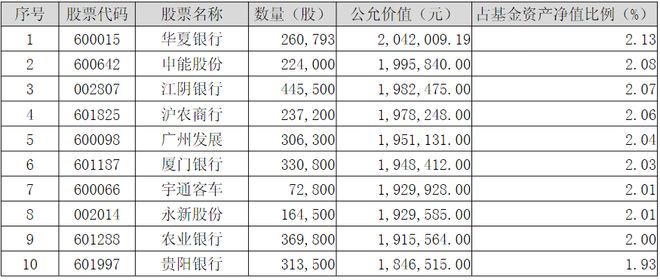
Qi Lu Wan Bao· 2025-07-16 08:51
Group 1 - The discussion around "putting money in banks is worse than buying bank stocks" is gaining traction as many A-share listed banks are in their dividend distribution peak period, with over half having completed year-end dividends by June 30 [1] - In June, the banking sector faced significant regulatory scrutiny, with 156 fines totaling over 100 million yuan, primarily due to violations in credit operations and customer identity verification [1][2] - Commercial banks have issued nearly 900 billion yuan in bonds to replenish capital, with 57 issues of perpetual bonds and secondary capital bonds recorded by mid-July [3] Group 2 - More than 120 regional commercial banks, including city commercial banks and rural commercial banks, have received approval for capital increase or completed capital registration changes since the beginning of the year [4] - The banking sector saw a market capitalization increase of 2 trillion yuan in the first half of the year, with a 14.5% rise in bank stocks, outperforming the overall A-share market [5] - As of June 30, 41 out of 42 A-share listed banks reported positive stock price growth, with significant increases seen in banks like Shanghai Pudong Development Bank and Qingdao Bank [5][6] Group 3 - Major banks such as Agricultural Bank of China, Industrial and Commercial Bank of China, and China Construction Bank have the highest market capitalizations among A-share listed banks, with respective values of 2.54 trillion yuan, 2.03 trillion yuan, and 1.94 trillion yuan [5] - A significant number of A-share listed banks have dividend yields above 3%, with Huaxia Bank leading at 5.12%, and Agricultural Bank of China at 4.11% among state-owned banks [5] - Major banks have begun implementing dividend distributions for the 2024 fiscal year, with substantial cash dividends announced by Agricultural Bank, Industrial and Commercial Bank, and China Merchants Bank [6]

银行行业主题报告
2025-07-16 06:13
Summary of Conference Call Notes Industry Overview - The conference call discusses the banking sector in the context of macroeconomic conditions, particularly focusing on the impact of fiscal and monetary policies amid ongoing external economic disturbances [1][2][3]. Key Points and Arguments 1. **Macroeconomic Environment**: The current external economic disturbances are expected to lead to continued fiscal and monetary policy support, with a focus on consumer demand recovery despite low CPI levels [1]. 2. **Export Challenges**: Export growth has been volatile due to fluctuating tariff policies, particularly since the announcement of increased tariffs on China, which significantly impacted exports to the U.S. from February to May [2]. 3. **Government Debt Issuance**: From January to May, government debt issuance increased by 44.5% year-on-year, indicating a strong fiscal response [2]. 4. **Interest Rates**: The yield on ten-year government bonds has decreased by 17 basis points to 1.64% since the end of Q1, reflecting a downward trend in interest rates [3][5]. 5. **Banking Sector Performance**: The banking sector is characterized by high dividend yields, attracting investor interest. The stability of earnings is a key focus, especially after the impact of external shocks in Q1 [4]. 6. **Revenue Contributions**: In Q1, the decline in bond investment-related income significantly affected the overall revenue and profitability of listed banks, with a contribution drop of 5.1 percentage points [4]. 7. **Asset Quality**: The non-performing loan ratio decreased to 1.22%, with coverage ratio at 238%, indicating stable asset quality despite some fluctuations in specific sectors like retail [12][13]. 8. **Fee Income Trends**: The fee and commission income for listed banks saw a slight decline of 0.7% year-on-year in Q1, but a recovery is expected in subsequent quarters [11]. 9. **Deposit Costs**: The average cost of deposits has decreased significantly, with a 36 basis point drop year-on-year, which is expected to positively impact profitability [10]. 10. **Investment Opportunities**: The banking sector's dividend yield remains attractive at around 4%, providing a premium over ten-year government bond yields, which is appealing to long-term investors [14][15]. Additional Important Insights - **Funding Flows**: There has been a notable inflow of long-term capital into the banking sector, particularly from insurance funds seeking stable returns [15][16]. - **Regulatory Environment**: Recent regulatory changes are expected to facilitate further capital inflows into the market, particularly into high-dividend stocks [18]. - **Stock Selection**: Emphasis on dividend stability and trading costs is crucial for stock selection, with a focus on banks with high dividend yields and strong market positions [19][20]. - **Regional Bank Performance**: Regional banks like Chengdu and Nanjing are noted for their strong return on equity (ROE) and asset quality, positioning them favorably within the sector [20]. Conclusion - The banking sector is poised for a gradual recovery with stable asset quality and attractive dividend yields, making it a favorable investment opportunity amidst ongoing macroeconomic challenges [21].
五年一阶 崛起青岛金融“强引擎”
Zhong Guo Jin Rong Xin Xi Wang· 2025-07-16 02:13
Group 1 - The core objective of the Jinjialing Financial Zone is to establish itself as an international wealth management center, venture capital center, and digital finance center, with a projected increase in financial institutions to over 1,500 by the end of 2025, marking a 50% growth since 2020 [2] - The financial sector in the Jinjialing Financial Zone has achieved an average annual growth rate of approximately 7.78% during the 14th Five-Year Plan period, laying a solid foundation for becoming a top-tier financial district [2] - The financial zone has attracted around 500 new financial institutions over five years, highlighting its competitive advantages in wealth management, venture capital, and digital finance [2][3] Group 2 - Wealth management has become a key focus for the Jinjialing Financial Zone, with three wealth management subsidiaries established since 2019, leading to a product management scale of nearly 2 trillion yuan by the end of 2024, ranking fifth nationally [3] - The financial zone has seen a qualitative and quantitative increase in high-net-worth wealth management institutions, with the establishment of three family offices and significant capital increases in trust companies [3] - The financial zone has developed a diversified wealth management landscape, integrating various financial institutions such as banks, securities firms, and private equity funds [3] Group 3 - The venture capital landscape in the Jinjialing Financial Zone has become increasingly prominent, with 112 registered fund managers and a total fund management scale of 89.2 billion yuan, accounting for over 30% of the city's total [4] - The financial zone has attracted a variety of investment funds, including foreign capital and state-owned capital, enhancing its ability to support the real economy [4] Group 4 - The digital finance sector is emerging as a distinctive feature of the Jinjialing Financial Zone, with over 80 digital finance companies established and the successful implementation of digital yuan applications [5] - The financial zone has hosted three digital finance innovation competitions, showcasing leading innovative cases and establishing a digital finance industry alliance [5] Group 5 - The Jinjialing Financial Zone has effectively facilitated the collaboration between finance and industry, supporting the transformation of the economy and the upgrading of industries [6] - Numerous innovative financial products and services have been launched, including pilot projects in pension wealth management and blockchain applications [6][7] Group 6 - The financial zone has attracted 15 listed companies, with five new listings during the 14th Five-Year Plan period, enhancing its reputation as a hub for listed and pre-listed enterprises [9] - The financial zone is committed to high-quality development, aiming to enhance its international influence in wealth management and deepen reform and opening-up [10]
“红包雨”来了!30余家上市行年度分红“到账”,哪家出手最阔绰?
Xin Lang Cai Jing· 2025-07-16 00:40
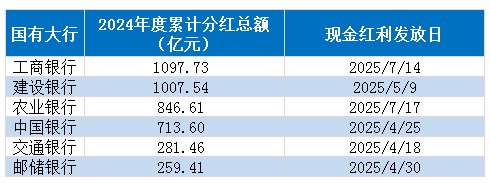
Core Viewpoint - A-share listed banks are experiencing a peak in dividend distribution for the 2024 fiscal year, with over thirty banks having completed their annual dividends and several others announcing dividend implementation plans [1][3][4]. Group 1: 2024 Annual Dividends - The Industrial and Commercial Bank of China (ICBC) leads with a total cash dividend of approximately 109.77 billion yuan for the previous year [3][4]. - The six major state-owned banks have collectively distributed over 420 billion yuan in dividends for 2024, with ICBC, China Construction Bank, Agricultural Bank of China, and Bank of China being the top contributors [4][6]. - Other banks such as China CITIC Bank and Beijing Bank have also announced significant cash dividends, with CITIC Bank distributing around 19.46 billion yuan [4][5]. Group 2: 2025 Mid-Year Dividend Plans - Several banks, including China Merchants Bank and Hangzhou Bank, have initiated plans for mid-year dividends in 2025, aiming to enhance investor returns [1][8][10]. - The focus on mid-year dividends is seen as a strategy to improve liquidity and provide more consistent cash flow to investors, which may support long-term stock price appreciation [10]. - Banks like Su Nong Bank and Changsha Bank have expressed intentions to implement mid-year dividend plans based on their financial performance and regulatory requirements [8][9]. Group 3: Stock Performance and Market Trends - The banking sector has shown strong performance in the A-share market, with several banks achieving significant stock price increases in the first half of the year [12][13]. - The overall dividend yield of the banking sector remains attractive, particularly in a low-interest-rate environment, making it appealing for long-term investors [10][13]. - Some banks have faced challenges in executing share buyback plans due to stock price fluctuations, indicating a cautious approach to capital management [11][14].






“沪九条”,来了!针对充电宝,国家又出手了!吉利汽车、极氪,合并→
新华网财经· 2025-07-16 00:29
Group 1: Government Initiatives - Shanghai Municipal Party Committee and the Cyberspace Administration of Shanghai launched "Several Measures to Support Quality Internet Content Creation," outlining nine support policies including financial incentives, talent policies, scene construction, and overseas support [1][6] - The Ministry of Industry and Information Technology is soliciting opinions on the revision of the "Mobile Power Safety Technical Specifications," which will impose stricter technical standards on mobile power supplies, including power banks [3][4] Group 2: Economic Data - The National Bureau of Statistics reported that China's GDP for the first half of the year reached 660,536 billion yuan, with a year-on-year growth of 5.3%. The primary, secondary, and tertiary industries grew by 3.7%, 5.3%, and 5.5% respectively [3] - The second quarter GDP growth was 5.2%, with a quarter-on-quarter increase of 1.1% [3] Group 3: Corporate Developments - Geely Holding Group announced the signing of a merger agreement between Geely Automobile and Zeekr Technology, with Geely acquiring all outstanding shares of Zeekr, offering shareholders the option of cash or stock exchange [3][14] - Bubble Mart expects its revenue for the six months ending June 30, 2025, to grow by no less than 200% year-on-year, with profits potentially increasing by no less than 350% [13][14] - Xpeng Huitian announced the completion of a $250 million Series B financing round, indicating a $100 million amount for the B2 round [13][15] Group 4: Market Trends - The banking sector has shown an upward trend, with several A-share listed banks, including Xiamen Bank and Shanghai Pudong Development Bank, seeing stock price increases of over 30% this year [8] - The eleventh batch of national drug centralized procurement has been initiated, focusing on quality control and compliance in the procurement process [5] Group 5: Strategic Partnerships - Ningde Times signed a strategic cooperation agreement with T3 Mobility to advance Robotaxi business development, leveraging its battery swap and intelligent technology solutions [13][16] - BMW China partnered with Momenta to develop a smart driving assistance solution based on a large model, applicable to multiple vehicle models [13][16]




存银行不如买银行股?大象起舞背后的虚实之争
Zhong Guo Zheng Quan Bao· 2025-07-15 20:57
尽管近两日银行股股价有所震荡,但整体依然保持在强势区间。Wind数据显示,截至7月15日收盘,今 年以来,42只A股银行股全部飘红,其中有35只股价累计涨幅超10%。 随着银行股走高,"存银行不如买银行股"的观点引发热议。业内人士认为,尽管银行面临净息差收窄压 力,但整体发展韧性较强。此外,日前出台的政策促进险资强化长周期考核,将增厚银行股红利价值, 后续银行板块的良好表现有望延续。但也有不少业内人士表达了对银行股短期行情过热的担忧,认为随 着股价持续攀升,其估值潜力正在被快速消化,短期存在技术性调整的可能性。 ● 本报记者 石诗语 银行股涨势抢眼 截至7月15日收盘,Wind数据显示,今年以来,42只A股银行股均呈上涨趋势,其中有35只股价累计涨 幅超10%,厦门银行今年以来累计涨幅41.03%,浦发银行、青岛银行、兴业银行、浙商银行、民生银行 今年以来累计涨幅均超30%。 此外,王一峰认为,结合近期银行发布的公告,部分追求绝对收益的产业资本亦对高股息且基本面稳健 的优质银行股有投资诉求;公募基金考核机制改革持续发酵,市场对于推动主动型公募基金投资部分向 基准收敛抱有预期。 光大证券金融业首席分析师王一峰表 ...
首份红利主题基金中报出炉,十大重仓股已无银行股踪影
2 1 Shi Ji Jing Ji Bao Dao· 2025-07-15 07:51
Core Viewpoint - The report of the China Europe Dividend Select Mixed Fund indicates a positive performance in net asset value growth, with A and C class shares showing growth rates of 2.16% and 2.01% over the past three months, and 15.74% and 15.08% since the fund's inception [1][2]. Fund Performance - As of June 30, the total fund shares amounted to 10.9 million, with A class shares at 4.73961 million and C class shares at 6.18585 million [2]. - The fund primarily invests in dividend-themed listed companies, managed by Liu Yong and Zhang Xue Ming, who have 9 and 8 years of experience in the securities industry, respectively [2]. Investment Strategy - The fund managers have shifted focus from bank stocks to market-oriented dividend stocks, citing a decrease in the attractiveness of bank dividends due to significant price increases [4]. - The top ten holdings in the second quarter no longer included bank stocks, with new investments in companies like Zhengmei Machine and Midea Group [3][4]. Market Context - The banking sector has seen substantial growth, with the Shanghai Securities Bank Index rising over 17% year-to-date, and several banks, including Xiamen Bank, showing increases exceeding 40% [4][5]. - Analysts remain optimistic about bank stocks, suggesting that the evolution of long-term bad debt cycles, rather than short-term economic fluctuations, will drive bank stock valuations [5][6]. Dividend Stock Appeal - The high dividends from dividend stocks are increasingly attractive in a low overall investment return environment, providing a valuable return source for funds facing a debt asset shortage [6]. - Banks are highlighted as the best performers among dividend stocks due to their stable future net profits and cash flows, supported by significant retained earnings [6].
银行股持续走“牛”,这家银行大股东抛出减持计划
券商中国· 2025-07-14 23:31
Core Viewpoint - The A-share banking sector has shown a strong upward trend, with significant stock price increases among listed banks, while some major shareholders are cashing out by reducing their holdings [1][2][4]. Group 1: Stock Performance - On July 14, 2025, 36 out of 42 listed banks in A-shares recorded varying degrees of increase, with notable gains from banks like Pudong Development Bank and Guiyang Bank, which rose over 2% [1]. - Since the beginning of 2025, Qilu Bank's stock has increased by over 20%, and in 2024, it saw a remarkable rise of 49.51%, placing it in the upper-middle range among listed banks [4]. Group 2: Shareholder Actions - Major shareholders of listed banks are increasingly reducing their holdings to realize profits. For instance, Chongqing Huayu Group plans to reduce its stake in Qilu Bank by up to 1.1% through block trading within two months [2][3]. - Chongqing Huayu has previously reduced its holdings in Qilu Bank multiple times, with a notable reduction in October 2024, where it sold 63.7 million shares, amounting to approximately 3.01 billion yuan [4]. Group 3: Institutional Investment Trends - Despite some major shareholders cashing out, other institutional investors, including insurance companies, are actively increasing their stakes in banking stocks. For example, Ping An Life has made multiple investments in Agricultural Bank and Postal Savings Bank [11][12]. - A total of 10 insurance institutions have made 20 stake increases in 16 listed companies, with banking stocks being a significant focus [11]. Group 4: Market Outlook - Analysts remain optimistic about the banking sector, citing improvements in liability costs and stable asset quality as positive indicators for future performance [13]. - The overall dividend yield for banking stocks remains above 4%, making them attractive compared to long-term bonds, suggesting that there is still room for growth in the sector [13].


上市银行年度“红包”密集落地
Zhong Guo Zheng Quan Bao· 2025-07-14 20:55
Group 1 - The current period marks a peak for cash dividends among listed banks in A-shares, with over 30 banks having announced their annual dividends [1] - Industrial and Commercial Bank of China (ICBC) distributed approximately 44.378 billion yuan in cash dividends on July 14, with a per-share dividend of about 0.16 yuan [1] - Other banks such as China Merchants Bank and Agricultural Bank of China have also announced significant cash dividends, with China Merchants Bank distributing around 41.258 billion yuan and Agricultural Bank of China planning to distribute approximately 40.065 billion yuan [1] Group 2 - Several listed banks have indicated intentions for mid-term dividends for 2025, with Changsha Bank planning to distribute dividends based on its net profit, which has totaled 9.373 billion yuan from 2018 to 2024 [2] - The banking sector has shown strong stock performance this year, with several banks experiencing stock price increases exceeding 30% as of July 14 [2] - High dividend yields, with some banks exceeding 4.5%, are contributing to the positive performance of bank stocks, as the average dividend yield of state-owned banks surpasses the yield of 10-year government bonds [2] Group 3 - Multiple brokerages remain optimistic about bank stocks, citing the increasing certainty of insurance capital allocation to bank stocks amid an "asset shortage" [3] - The long-term investment and value investment strategies of insurance capital align with the stable dividend yields and potential for performance improvement in the banking sector [3] - A series of financial policies and structural tools are expected to support the positive accumulation of fundamental factors for banks, indicating a potential performance turning point [3] Group 4 - Some banks have announced share buyback plans, but these have been delayed due to stock price fluctuations and other factors, as seen with Huaxia Bank's announcement regarding its planned share buyback [4] - Chengdu Bank's major shareholders have also postponed their buyback plans due to the stock price exceeding the set upper limit, with the stock reaching a historical high of 20.96 yuan per share [4] - The implementation of buyback plans will depend on future stock price movements and overall market trends [4]



今年机构密集调研银行股超200次,哪些指标最受关注?
2 1 Shi Ji Jing Ji Bao Dao· 2025-07-14 11:36
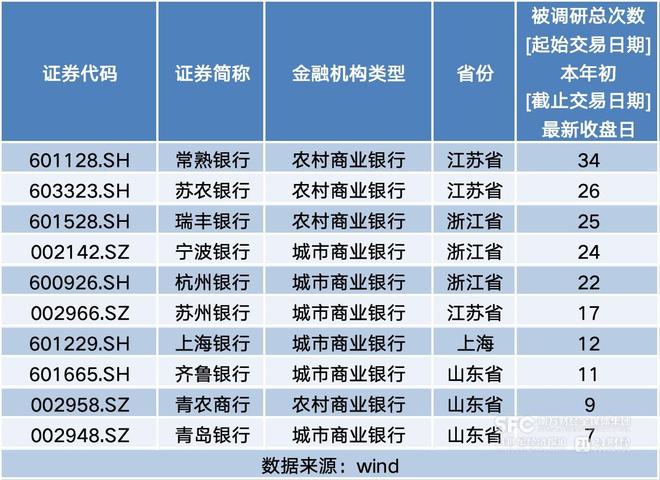
Core Viewpoint - The banking sector has seen increased institutional research interest, with over 1,000 institutions conducting intensive investigations into bank stocks this year, reflecting a significant rise in market attention towards this sector [1][4]. Group 1: Institutional Research and Market Performance - A total of 42 listed banks have been researched 263 times by 1,667 institutions since the beginning of the year, with an overall research count of 2,724 times from their listing to the latest closing date [1]. - The Shenwan Bank Index (801780) has increased by 33.66% over the past year, outperforming the CSI 300 Index, which rose by 15.70% [1]. - The weighted average dividend yield of the 42 listed banks is approximately 3.61%, indicating strong investment attractiveness [1]. Group 2: Focused Banks in Research - Among the banks, rural commercial banks and city commercial banks have emerged as the main subjects of research, with the top ten banks by research frequency including four rural banks and six city banks [2]. - Changshu Bank has been the most researched, with 34 investigations, while Ningbo Bank received the highest number of institutional inquiries at 221 [3][4]. Group 3: Key Topics in Institutional Research - The most frequently discussed topics during institutional research include net interest margin stability, asset quality, and credit issuance [5][6]. - The net interest margin for commercial banks was reported at 1.43% in Q1, a year-on-year decrease of 12 basis points [5]. - Four banks among the top ten have non-performing loan ratios exceeding 1%, while the remaining six are below this threshold [6]. Group 4: Foreign Investment Interest - Foreign institutions have shown significant interest in listed banks, with Ningbo Bank, Hangzhou Bank, and Shanghai Bank being the most researched by foreign entities [7][8]. - The foreign capital inflow into A-shares has increased, with a notable rise in holdings of bank stocks, particularly among joint-stock banks [9][10].