
以量补价

Search documents
宁德时代:以量补价
YOUNG财经 漾财经· 2026-03-19 14:11
Core Viewpoint - CATL's 2025 financial report has exceeded market expectations, showcasing its dominance in the battery industry despite a declining market share in domestic power battery installations [4][5][19]. Financial Performance - In 2025, CATL achieved a revenue of 423.7 billion yuan, a year-on-year increase of 17%, and a net profit of 72.2 billion yuan, up 42% [5]. - The company reported a daily profit of nearly 200 million yuan and held over 300 billion yuan in cash [5]. - The fourth quarter saw a significant revenue surge, exceeding 140 billion yuan, marking a 36.6% year-on-year increase [7]. Market Share and Sales Growth - CATL's domestic power battery installation market share has declined from 52.1% in 2021 to 43.42% in 2025 [6][19]. - The company sold 661 GWh of lithium batteries in 2025, a 39.16% increase year-on-year, benefiting from a growing industry demand [8]. - The global sales of new energy vehicles reached 21.47 million units in 2025, a 21.5% increase, with China's sales surpassing 13.875 million units [8]. Business Segments - The power battery segment generated 316.5 billion yuan in revenue, accounting for 74.7% of total revenue, with a year-on-year growth of 25.08% [8]. - The energy storage business has become a significant growth driver, with revenue increasing to 62.44 billion yuan, a growth of 8.99% [9]. - CATL's energy storage battery shipments reached 121 GWh, a 29% increase, maintaining its global market leadership [9]. Production Capacity and Utilization - CATL's battery system production capacity was 772 GWh in 2025, with a utilization rate of 96.9% [11]. - The company faced short-term capacity shortages, leading to some orders being unfulfilled [11]. International Expansion - CATL's overseas revenue reached 129.6 billion yuan, accounting for 30.6% of total revenue, indicating a significant growth in international markets [11]. - The company has accelerated its global expansion, with plans for new production facilities in Hungary, Spain, and Indonesia [21]. Profitability and Financial Health - The net profit margin for 2025 was 18.12%, an increase of 3.20 percentage points year-on-year [13]. - The company generated a net cash flow from operating activities of 133.2 billion yuan, with total cash and cash equivalents nearing 392.5 billion yuan [12]. Inventory and Contract Liabilities - CATL's inventory reached 94.52 billion yuan, a 58% increase, with a significant portion being unfinished products [14]. - Contract liabilities surged to 49.2 billion yuan, reflecting a strong order backlog but also indicating potential future demand concerns [17]. Competitive Landscape - CATL's market share has been eroded by competitors like BYD and other second-tier manufacturers, leading to a more fragmented market [20]. - The company is actively seeking to strengthen partnerships and optimize collaborations with key automotive clients to secure its market position [21]. Technological Development - CATL is focusing on sodium-ion and solid-state battery technologies, with significant investments in research and development [22]. - The company aims to commercialize sodium batteries in various applications by 2026, while solid-state batteries are expected to see limited production until 2027 [22]. Future Outlook - Management remains optimistic about maintaining profitability in 2026, despite potential challenges from raw material price fluctuations and market demand [18]. - The company anticipates a compound annual growth rate of 20%-30% over the next five years, driven by ongoing electrification trends [18].



宝丰能源:公司事件点评报告:煤制烯烃龙头以量补价构筑业绩高增长-20260317
Huaxin Securities· 2026-03-17 02:45
Investment Rating - The report maintains a "Buy" investment rating for the company [9] Core Insights - The company, Baofeng Energy, achieved significant revenue growth in 2025, with total operating income reaching 48.038 billion yuan, a year-on-year increase of 45.64%, and a net profit attributable to shareholders of 11.35 billion yuan, up 79.09% year-on-year [5][9] - The growth in performance is primarily attributed to increased sales volume of polyolefin products, driven by the release of production capacity at the Inner Mongolia base, which is the largest coal-to-olefins project globally with a capacity of 3 million tons per year [5][8] - The company adopted a strategy of "volume compensating for price" in response to declining product prices due to industry oversupply, achieving production volumes of 2.5492 million tons for polyethylene and 2.4752 million tons for polypropylene, representing year-on-year increases of 125% and 110.95% respectively [5][6] Summary by Sections Market Performance - The company’s stock price is currently at 34.13 yuan, with a total market capitalization of 250.3 billion yuan and a 52-week price range of 14.3 to 34.7 yuan [1] Financial Performance - In Q4 2025, the company reported operating income of 12.493 billion yuan, a year-on-year increase of 43.46%, and a net profit of 2.4 billion yuan, up 33.29% year-on-year [5] - The company’s cash flow from operating activities reached 8.939 billion yuan, an increase of 87.03% year-on-year, reflecting strong cash generation capabilities [6] Future Projections - The company is expected to continue its growth trajectory, with projected net profits of 14.125 billion yuan, 15.688 billion yuan, and 17.405 billion yuan for 2026, 2027, and 2028 respectively, corresponding to PE ratios of 17.7, 16.0, and 14.4 times [9][11] - The total production capacity is anticipated to reach 5.7 million tons per year by 2026, further solidifying the company's leading position in the coal-to-olefins industry [7][8]

沪上券商A股经纪业务平均佣金率跌破“万二”
Zheng Quan Ri Bao· 2026-01-28 16:31
Core Insights - The focus of industry competition has shifted towards asset allocation capabilities and comprehensive service experiences, as the brokerage business remains a fundamental aspect of operations [1][3] Group 1: Commission Rates and Revenue Growth - The average commission rate for A-shares in Shanghai has dropped to a historical low of 0.0192% in 2025, a decrease of 13.9% year-on-year [1] - Despite the declining commission rates, brokerage revenue in Shanghai has increased by 45.4% year-on-year, driven by a significant expansion in trading volume [2] - The trading volume for A-shares in Shanghai reached 128.19 trillion yuan in 2025, representing a year-on-year growth of 80.4% [2] Group 2: Business Model Transformation - The traditional reliance on "transaction volume × commission rate" is being replaced by a focus on "client asset scale × management fee rate," particularly among internet brokerages [3] - The brokerage industry is experiencing a shift towards a diversified income structure, with a decrease in the proportion of single commission income [4] - The implementation of a buyer advisory model has led to a significant increase in the asset management scale of firms like CICC Wealth, surpassing 100 billion yuan [4] Group 3: Operational Efficiency and Client Retention - The industry is moving towards centralized management of long-tail clients, which reduces marginal service costs and enhances overall operational efficiency [4] - The ability to provide warm and in-depth comprehensive financial services is becoming crucial for client retention, as low commissions alone are insufficient [2][3] - The competitive landscape is increasingly defined by the ability to attract and retain clients through enhanced service offerings rather than just pricing strategies [3][4]
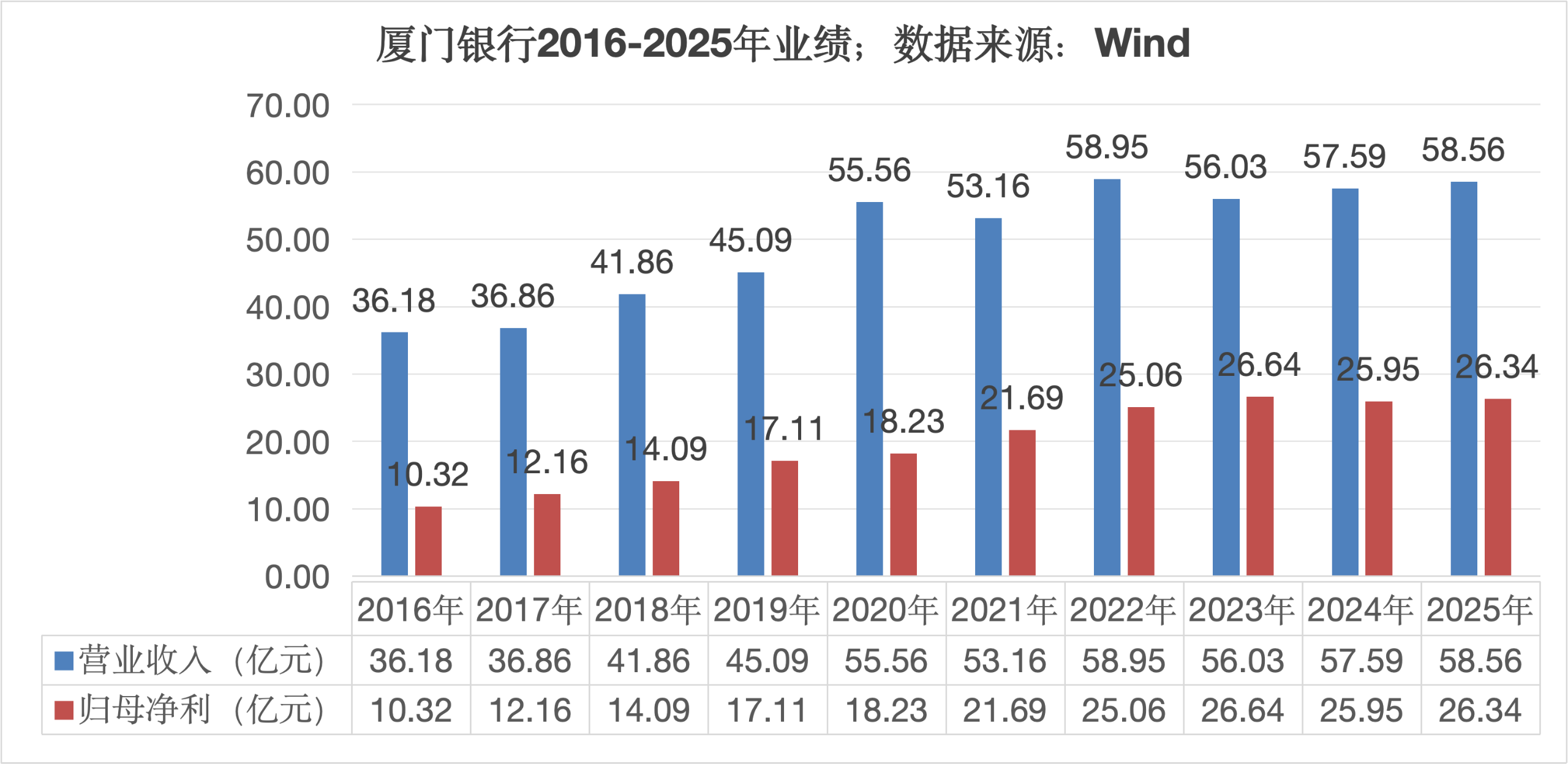
厦门银行营收、净利“双增”,贷款增超18%
Hua Er Jie Jian Wen· 2026-01-28 12:22
Core Viewpoint - The growth logic of city commercial banks is changing, as exemplified by Xiamen Bank's 2025 performance report, which highlights a strategy of "increasing volume to compensate for price" Group 1: Financial Performance - As of the end of 2025, Xiamen Bank's total assets reached 453.099 billion yuan, a year-on-year increase of 11.11%, with loans and advances growing even more aggressively by 18.39% [1] - The bank achieved total operating revenue of 5.856 billion yuan in 2025, reflecting a year-on-year growth of 1.69%, while net profit attributable to shareholders reached 2.634 billion yuan, with a growth rate of 1.52% [1] Group 2: Asset and Profitability Dynamics - The bank's asset growth significantly outpaced revenue and profit growth, with asset growth being over six times that of revenue growth, indicating a dilution of return on assets [3] - The rapid expansion of the balance sheet has not translated proportionately into the income statement, highlighting the common industry challenge of narrowing interest margins [3] Group 3: Provision Coverage and Asset Quality - By the end of 2025, the bank's provision coverage ratio was 312.63%, a significant decrease of 79.32 percentage points compared to the previous year, indicating potential pressure on profit maintenance [4] - The slight increase in non-performing loan ratio to 0.77% suggests that the decline in provision coverage may be a response to revenue pressures rather than an improvement in asset quality [5] Group 4: Liquidity and Growth Strategy - The growth rate of deposits at Xiamen Bank was 13.75%, which lagged behind loan growth by nearly 5 percentage points, leading to an increased loan-to-asset ratio [7] - This strategy of consuming liquidity to achieve asset growth may pose long-term challenges to capital adequacy and liquidity management [7] Group 5: Industry Context - Overall, Xiamen Bank's 2025 report illustrates the typical struggles of small and medium-sized banks during a period of narrowing interest margins, relying on rapid asset expansion to offset declining margins while depleting provision resources to maintain profit growth [8]
减速提质、降本增效,巩固高质量发展态势——A股上市农商银行三季报分析
Xin Lang Cai Jing· 2025-12-30 03:32
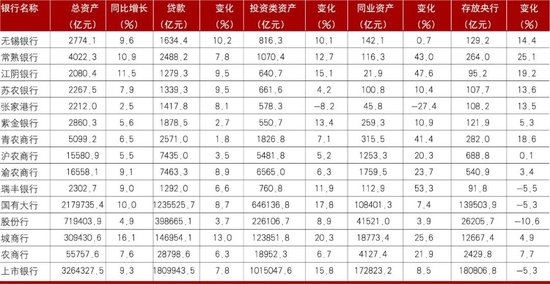
Core Viewpoint - The listed rural commercial banks are focusing on cost control and optimizing asset structure while maintaining steady growth in total assets, reflecting a shift in operational strategy towards enhancing efficiency and quality of growth rather than merely expanding scale [1][24]. Group 1: Asset Growth and Structure - As of the end of Q3 2025, the total asset size of listed rural commercial banks reached 5.58 trillion yuan, with a year-on-year growth of 7.56%, which is lower than the industry average [1][25]. - The growth rate of listed rural commercial banks is relatively stable compared to other bank types, with city commercial banks growing by 16.12% and state-owned banks by 9.95% during the same period [1][25]. - The asset structure is being adjusted, with personal loans decreasing to 51.25% of total loans, down 2.6 percentage points year-on-year, while corporate loans increased to 56.45%, up 2.9 percentage points [3][27]. Group 2: Revenue and Profitability - Revenue growth for listed rural commercial banks remained flat year-on-year, with an average increase of 3.60% in net profit, surpassing the overall growth of listed banks [8][16]. - Net interest income remains the primary source of revenue, accounting for 74.36% of total income, but its growth is hindered by a narrowing net interest margin [8][16]. - The strategy of "volume compensating for price" has become ineffective, leading to a rational shift in operational focus away from aggressive scale expansion [8][20]. Group 3: Cost Management - The average growth of total liabilities for listed rural commercial banks was 7.59%, aligning closely with asset growth, indicating a cautious approach to liability expansion [13][15]. - The banks are emphasizing cost control, particularly in managing interest expenses, operational costs, and risk costs, to enhance profitability [12][16]. - The cost-to-income ratio has shown improvement, reflecting effective cost management practices [16]. Group 4: Risk Management and Asset Quality - The overall non-performing loan (NPL) ratio for listed rural commercial banks was 1.07%, a decrease of 0.02 percentage points year-on-year, indicating improved asset quality [18][19]. - The reduction in NPLs is attributed to effective control over new bad loans and the disposal of existing non-performing assets [18][19]. - The banks are adjusting their credit strategies in response to rising credit risks and changing market conditions, focusing more on corporate lending [9][27]. Group 5: Future Strategy Outlook - The future strategy for listed rural commercial banks will focus on enhancing differentiated competitive advantages by serving the real economy and optimizing wealth management services [21][22]. - There is a need to strengthen cost management and risk control to ensure stable asset quality and reduce risk losses [22][23]. - Leveraging digital technologies for operational efficiency and risk management will be crucial for achieving high-quality development [23].
“材料组装厂”金戈新材IPO来了:核心技术是用5万块买来的,核心原材料竟也是从“友商”买来的!
Xin Lang Cai Jing· 2025-12-17 10:12
Group 1 - The core focus of Guangdong Jinge New Materials Co., Ltd. is on thermal interface materials, specifically in the field of thermal conductive fillers, which are essential for improving heat transfer efficiency in electronic devices [3][4] - The company is preparing for an IPO on the Beijing Stock Exchange, with CICC as the sponsor [3][4] - Jinge New Materials' product range includes thermal conductive powders, flame retardant powders, and wave-absorbing powders, with thermal conductive powders being the most significant contributor to revenue [4][6] Group 2 - In 2024, the company expects to achieve revenue of 320 million yuan from thermal conductive powders, accounting for 68.4% of total revenue, with a gross profit margin of 83.5% [6][40] - The revenue from flame retardant powders is projected at 129 million yuan, representing 27.7% of total revenue, but with a low gross margin of 6.8% [6][40] - The revenue from wave-absorbing powders is limited, expected to be only 17.81 million yuan in 2024 [6][41] Group 3 - The company primarily focuses on aluminum oxide as its thermal conductive filler, which, while not as effective as advanced materials like aluminum nitride or silicon carbide, is favored for its cost-effectiveness [10][45] - The main application areas for Jinge's products include consumer electronics, new energy vehicles, and 5G communication bases, which collectively contribute over 80% of revenue [12][46] Group 4 - In 2024, Jinge New Materials achieved a revenue of 467 million yuan, a year-on-year increase of 21.6%, with a net profit of 47.39 million yuan, up 14.8% [13][48] - The company has been facing a decline in product prices across all categories, particularly thermal conductive powders, which saw a price drop from 15,600 yuan per ton in 2022 to 12,900 yuan in the first half of 2025 [14][50] - To counteract declining prices, the company has increased its production capacity from 28,600 tons per year to 56,400 tons, effectively doubling its output [17][51] Group 5 - The IPO plans to raise 205 million yuan, primarily for expanding production capacity, with an expected addition of 30,000 tons [18][53] - Jinge's strategy contrasts with competitors like Lianrui New Materials, which focuses on high-end products and has maintained higher gross margins [20][55] - Jinge's R&D expenditure has been low, with a rate below 5%, and a further decline to 3.6% in the first three quarters of 2025, indicating a lack of investment in innovation [21][58] Group 6 - The company relies heavily on external suppliers for key raw materials, particularly spherical aluminum oxide, with 90% of its procurement coming from competitors [29][32] - This dependency on suppliers poses a significant risk to Jinge's business model, as it may affect the company's ability to maintain competitive pricing and profitability [32][34] - The company's workforce includes a significant number of employees without relevant academic backgrounds in materials science, raising concerns about its R&D capabilities [61][62]
宏明电子创业板IPO定于12月12日上会 公司前景面临多重考验
Ju Chao Zi Xun· 2025-12-06 02:37
Core Viewpoint - Chengdu Hongming Electronics Co., Ltd. is facing scrutiny regarding its growth sustainability and financial health due to stagnant revenue growth, pricing pressures, and rising accounts receivable despite high R&D investments [1][2]. Group 1: Financial Performance - The company's R&D expenses have consistently accounted for over 8% of its revenue, significantly higher than the industry average, indicating a strong focus on technology [1]. - Revenue growth has not materialized effectively from high R&D spending, with core products, particularly high-reliability capacitors, experiencing declining sales prices and volumes, suggesting a potential long-term "volume and price decline" trend [1]. - Accounts receivable increased sharply from 731 million to 1.204 billion, with the proportion of accounts receivable to revenue rising from 23.24% to 47.68%, indicating deteriorating cash flow health [2]. Group 2: Market Challenges - The company has shifted its strategy to increase the proportion of low-price customers and low-margin products to maintain revenue, which has led to a decline in overall profit quality and growth momentum [1]. - The precision components business has seen significant revenue declines due to a weak consumer electronics market and customer order shifts, revealing vulnerabilities in customer concentration and industry volatility resilience [2]. - Despite claims of a recovery in the consumer electronics sector, the restructuring of supply chains poses challenges to regaining previous market share, leaving the recovery outlook uncertain [2]. Group 3: Regulatory Scrutiny - The company has been asked by regulators to provide further evidence of its growth potential, but current disclosures are deemed weak, particularly in analyzing the impact of price fluctuations and core customer order changes on profitability [3].

三季报利润承压,吉祥航空还有看头吗?
市值风云· 2025-11-19 10:09
Core Viewpoint - The aviation transportation sector has shown a strong recovery, with private airlines like Juneyao Airlines outperforming state-owned carriers, despite a general trend of "volume increase and price decrease" in the market for 2024 [3][4]. Group 1: Industry Performance - The aviation market in 2024 is characterized by a significant increase in passenger transport volume, reaching historical highs during the peak summer travel season, while airlines have lowered prices to compete with high-speed rail and adapt to market changes [3][5]. - The overall civil aviation industry saw a 6.0% year-on-year increase in passenger volume, with international passenger transport growing by 28.5% [8]. Group 2: Company Performance - Juneyao Airlines reported operating revenue of 17.48 billion yuan for the first three quarters of 2025, remaining stable year-on-year, but total profit and net profit attributable to shareholders decreased by 13.1% and 14.3%, respectively [5]. - In Q3 2025, the company generated revenue of 6.41 billion yuan, a decrease of 1.9% year-on-year, with net profit attributable to shareholders dropping by 25.3% [7]. - The decline in profits is attributed to non-operating costs, particularly due to engine maintenance affecting domestic capacity and increasing related expenses, which is seen as a temporary operational adjustment [8]. Group 3: Strategic Focus - Juneyao Airlines has shifted its strategic focus towards international markets, with a slight decrease in domestic passenger volume by 6.2% to 11.34 million, while international passenger volume surged by 45.9% to 2.10 million in the first half of 2025 [10][11]. - The company optimized its international route network, operating 12,370 international flights and opening new destinations such as Kobe and Kuala Lumpur [11]. - The comprehensive passenger load factor improved to 85.2%, with domestic and international load factors rising to 88.1% and 78.4%, respectively, although revenue per passenger kilometer declined from 0.47 yuan to 0.45 yuan, reflecting the market trend of "price for volume" [11].


重庆多家银行违规遭处罚 涉事银行拒绝回应整改措施
Xin Lang Cai Jing· 2025-11-13 02:31
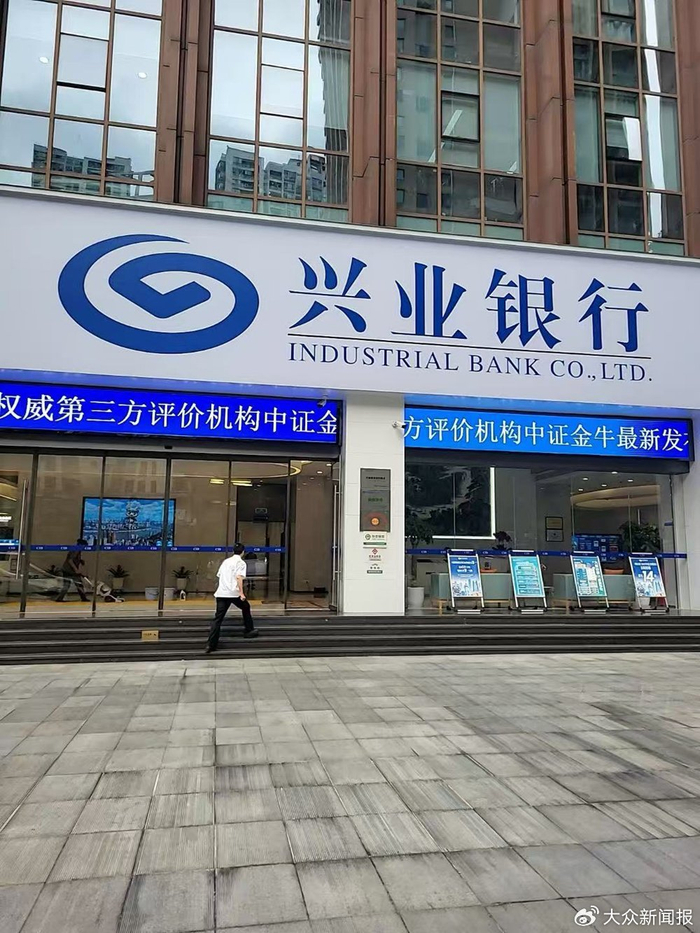
Core Insights - The banking sector in Chongqing is facing increased regulatory scrutiny, with multiple banks receiving fines for various violations, indicating a trend of heightened enforcement in the industry [1][8]. Regulatory Actions - Industrial Bank's Chongqing branch was fined 4.2 million yuan for serious violations, including inadequate loan "three checks," poor credit management, and evasion of recording regulations [3][4]. - Chongqing Bank was fined 2.2 million yuan for similar issues, including inadequate loan "three checks" and imprudent investment practices [5][9]. - Hengfeng Bank's Chongqing branch was fined 2.6 million yuan for covering up bad loans and failing to manage investments properly [1]. Violations and Consequences - The violations at Industrial Bank included multiple serious issues such as inadequate loan checks, misclassification of assets, and poor management of non-standard investment businesses [3][4]. - Several individuals associated with these violations received warnings or fines, highlighting accountability within the institutions [3][5]. Industry Trends - In the third quarter of 2025, banks received a total of 1,448 fines amounting to 829 million yuan, representing an 84.63% year-on-year increase, with credit business violations being a significant concern [8]. - The trend of violations has shifted from real estate to other areas, including the repayment of bad loans and investment in stocks and funds [8]. Financial Health of Chongqing Bank - As of July 2023, Chongqing Bank's total assets reached 1,008.7 billion yuan, but the bank's risk management shortcomings have been exposed by repeated fines [7]. - The bank's non-performing loan ratio stood at 1.17% as of mid-2025, with declines in key capital adequacy ratios compared to the end of 2024 [7]. Expert Opinions - Experts attribute the frequent violations to a combination of factors, including banks prioritizing short-term performance over risk management and a lack of compliance systems in rapidly expanding new business areas [10]. - The increased regulatory penalties serve as a warning about management vulnerabilities and signal a normalization of stringent regulatory oversight in the banking sector [10].

农业银行(601288):业绩持续领跑大行,维持“买入”评级
Shenwan Hongyuan Securities· 2025-11-10 08:13
Investment Rating - The report maintains a "Buy" rating for Agricultural Bank of China [1] Core Insights - Agricultural Bank of China continues to lead among major banks in performance, with a 2.0% year-on-year revenue growth and a 3.0% increase in net profit for the first nine months of 2025 [4][6] - The bank's non-interest income has seen a significant increase of 20.7% year-on-year, contributing positively to revenue growth despite a decline in net interest income [6][10] - The bank's asset quality remains strong, with a slight decrease in the non-performing loan (NPL) ratio to 1.27% and a high provision coverage ratio of 295% [6][10] Financial Data and Earnings Forecast - For 2025, the bank is projected to achieve total revenue of 718.7 billion yuan, with a year-on-year growth rate of 1.15% [5] - The net profit attributable to shareholders is expected to reach 290.5 billion yuan in 2025, reflecting a growth rate of 2.99% [5] - The bank's return on equity (ROE) is forecasted to be 10.10% in 2025, with a price-to-earnings (P/E) ratio of 10.43 [5] Performance Metrics - As of September 30, 2025, the bank's total assets amounted to 48.14 trillion yuan, representing a year-on-year growth of 10.5% [10] - The total loans increased by 9.3% year-on-year, with total deposits also growing by 9.3% [10] - The bank's net interest margin (NIM) is projected to be 1.30% for 2025, down from previous levels due to competitive pressures [6][10]
