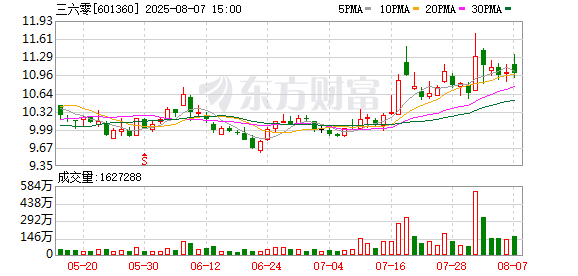
三六零

Search documents
软件开发行业上市公司财务总监PK:金宏气体宗卫忠年薪169.87万元,为全行业最高
Xin Lang Cai Jing· 2025-08-08 06:40
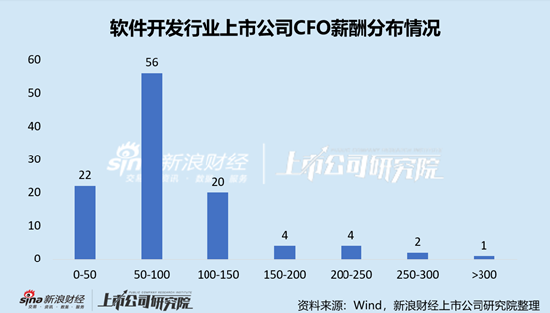
软件开发行业上市公司中,年龄最大的CFO为金橙子崔银巧,今年65岁,自2020年4月开始担任金橙子 财务总监。其次是石基信息赖德源,今年62岁,自2008年9月开始担任石基信息财务总监。业内年龄最 小的为中望软件李奎,今年31岁,于2023年12月开始担任公司财务总监。 专题:专题|2024年度A股董秘数据报告:1144位董秘年薪超百万 占比超21% 数据显示,截止7月29日,A股市场共有5817家上市公司。作为上市公司核心管理层关键成员,财务总 监CFO不仅需要确保公司财务稳健、资金高效运转,更需要从财务视角为公司的战略制定提供支撑,其 能力与决策直接影响公司的财务健康、战略成败、资本市场形象乃至生存风险。据2024年年报显示,去 年A股CFO(财务总监、财务负责人等)薪酬合计达42.43亿元,平均薪酬76.03万元。 分行业来看,软件开发行业信息完备的上市公司CFO共有109位,2024年CFO平均薪酬为88.38万元,在 124个申万一级行业中排名第53位,CFO薪资水平处于行业中上游。此外, 2024年软件开发行业CFO平 均薪资水平相较上年提升3.82万元,薪酬增幅在124个申万一级行业中排名第53 ...


GPT-5震撼发布,AI迈向“超级智能”新阶段!哪些公司能抢占C位?
Sou Hu Cai Jing· 2025-08-08 06:31
Group 1 - OpenAI has officially released its new AI model, GPT-5, which is described as a significant upgrade over GPT-4, likened to a true expert in writing, coding, and medical applications [1][3] - GPT-5 shows comprehensive performance improvements across various fields, ranking first in text generation, web development, and visual perception, and maintaining a leading position in hard prompts, coding, mathematics, creativity, and long queries [3] - The model will be available to all users, with Plus members receiving increased usage limits and Pro members accessing a version with enhanced reasoning capabilities [3] Group 2 - The year 2025 is anticipated to be a pivotal year for the commercialization of AI agents, with major companies like Huawei planning to release their AI agents [4] - Huawei's Harmony AI Super Agent can perform tasks such as booking flights and purchasing products through voice commands, showcasing a significant advancement in immersive interaction [4] - Other tech giants, including 360 Group and Baidu, are also making strides in AI agents, with 360 Group launching a "multi-agent swarm" and Baidu testing an AI application entry on its search homepage [5] Group 3 - The global AI agent market has surpassed $5 billion, with an impressive annual growth rate of 40%, indicating vast development potential [6] - Many listed companies are actively investing in AI agents, with several revealing progress in related business areas and collaborations with Harmony AI agents [6]

软件概念股走低,相关ETF跌约2%
Mei Ri Jing Ji Xin Wen· 2025-08-08 03:27
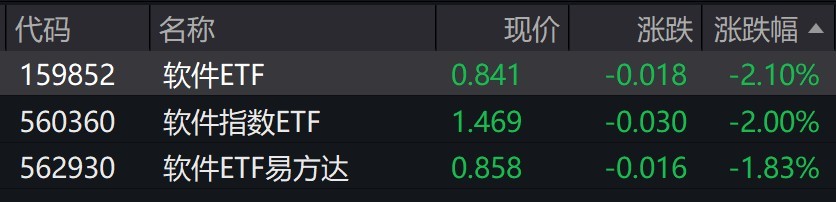
软件概念股走低,金山办公跌超5%,三六零跌超3%,润和软件、软通动力、中国软件跌超2%。 受盘面影响,跟踪中证软件服务指数的ETF跌约2%。 | 代码 | 名称 | 现价 | | 涨跌 涨跌幅 ▲ | | --- | --- | --- | --- | --- | | 159852 | 软件ETF | 0.841 | -0.018 | -2.10% | | 560360 | 软件指数ETF | 1.469 | -0.030 | -2.00% | | 562930 | 软件ETF易方达 | 0.858 | -0.016 | -1.83% | 中证软件服务指数选取30只业务涉及软件开发、软件服务等领域的上市公司证券作为指数样本,以反映软件服务产业 上市公司证券的整体表现。 有券商表示,AI技术创新是国家建设科技强国的重点发力方向,更多政策红利释放将促进技术迭代以及地方政府/企业 信创需求增长,而DeepSeek打破OpenAI闭源+高昂使用成本限制,通过算力创新实现AI普惠,促进AI应用落地加速, 提振市场对AI技术发展前景的投资信心。随着地缘政治影响缓和,同时国产替代及AI应用落地支撑收入及利润加速增 长,软件 ...


信创概念股走低,信创相关ETF跌超2%
Mei Ri Jing Ji Xin Wen· 2025-08-08 02:45
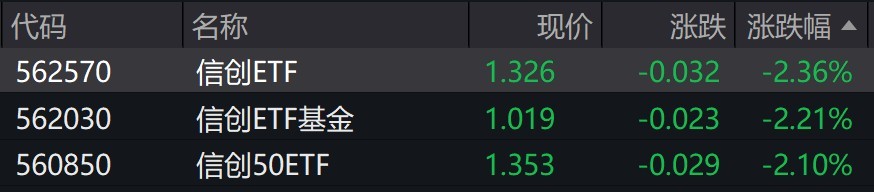
Group 1 - The core viewpoint indicates a decline in the "信创" concept stocks, with notable drops in companies such as 用友网络 (over 6% decline), 金山办公 (over 5% decline), and others like 华大九天, 三六零, and 深信服 (over 2% decline) [1] - The ETF tracking the 中证信息技术应用创新产业指数 has also experienced a decline of over 2% [1] - The 中证信息技术应用创新产业指数 includes up to 50 listed companies involved in various segments such as basic hardware, software, application software, information security, and external devices, reflecting the overall performance of the 信创 industry [2] Group 2 - Some brokerages report that the current "信创" sector is experiencing a continuous recovery in prosperity, with both the number and scale of tenders showing positive growth on a month-on-month basis [2] - Companies in the database-related segment of the 信创 sector are expected to see significant growth in their performance by the first half of 2025, confirming the high prosperity of the industry [2] - Other segments with longer revenue recognition cycles are anticipated to improve or grow in performance in the second half of the year [2]
专家呼吁 推动人工智能与数字安全融合发展
Ke Ji Ri Bao· 2025-08-08 00:49
Group 1 - The integration of artificial intelligence (AI) technology, particularly large models, is accelerating global digitalization while also increasing network threats, necessitating the fusion of AI and digital security for effective digital economy development [1] - Large models exhibit strong general capabilities but face challenges in specialized applications due to insufficient professional knowledge and limited adaptability, requiring collaboration between AI providers and industry leaders to create high-quality professional datasets [1][2] - There is a call for innovative models like "industry large model as a service" to lower application barriers, enabling small and medium enterprises to access customized AI capabilities affordably [1] Group 2 - A fundamental transformation of digital security systems is needed, shifting from passive to proactive immune models driven by AI, utilizing large models for threat hunting, anomaly detection, and automated responses [2] - The theme of the conference emphasizes the strategic value of integrating AI with cybersecurity, highlighting the necessity for collaborative efforts across sectors to address global challenges [2] - The evolution from large models to intelligent agents is essential for enhancing productivity, as intelligent agents can understand goals, plan tasks, and utilize tools effectively [3] Group 3 - The emergence of "intelligent agent hackers" poses a new challenge in cybersecurity, where a single hacker can control multiple agents to launch automated attacks, increasing the risk of cyber warfare [3] - 360 Group is developing security intelligent agents based on large security models to enhance cybersecurity capabilities, aiming to replicate the skills of human security experts [3][4] - The company emphasizes the dual focus on "security + AI" to protect the digital era while defining the future through AI advancements [4]
从“助手”到“数字员工”,第十三届互联网安全大会探讨人工智能新趋势
Huan Qiu Wang Zi Xun· 2025-08-07 23:04
Core Viewpoint - The rapid development of artificial intelligence (AI) technology poses both risks and opportunities for cybersecurity, with the emergence of "super hackers" being a significant concern. The solution lies in effectively utilizing intelligent agents to enhance security measures and response capabilities [1][2][3]. Group 1: AI and Cybersecurity Challenges - Intelligent agents are AI entities capable of perceiving their environment, making autonomous decisions, and executing actions, which can significantly impact cybersecurity [2]. - The rise of AI has led to an increase in complex and covert cyberattack methods, highlighting the need for improved cybersecurity measures and response capabilities [2][3]. - The current global digital technology landscape is uneven, with some regions lacking robust digital infrastructure, making them more vulnerable to cyberattacks [2]. Group 2: Evolution of Intelligent Agents - Intelligent agents are evolving through various levels, with L1 being basic chat assistants and L5 potentially being self-evolving superintelligent agents [6][7][8]. - The transition from traditional AI models to intelligent agents is crucial for addressing the limitations of current AI applications, particularly in operational tasks [4][6]. - Intelligent agents can enhance operational efficiency by acting as digital counterparts to human experts, thereby addressing talent shortages in cybersecurity [4][5]. Group 3: Future Directions and Collaboration - There is a pressing need for international collaboration on AI ethics, data sharing, and cybersecurity standards to effectively combat new security threats [3][4]. - The future of human-AI interaction is expected to shift towards collaboration with intelligent agents, which will take on routine tasks, allowing humans to focus on higher-level management and oversight [6][7]. - The management of intelligent agents will require new strategies to handle their coordination and ensure effective task execution [10][11].
360发布智能体工厂 殷宇辉:重构企业知识管理与智能协作两大核心场景
Sou Hu Cai Jing· 2025-08-07 21:51
Core Insights - 360 Group launched the "Intelligent Agent Factory" at the ISC.AI 2025 Internet Security Conference, enabling enterprises to customize L3 intelligent agents without programming knowledge and to create L4 multi-agent swarm teams [1][4] - The CEO of 360 Group emphasized the need to overcome technical bottlenecks and application challenges in deploying intelligent agents in government and enterprise scenarios, introducing the SEAF as the world's first L4 enterprise intelligent agent factory [1][3] Group 1 - The four principles for building quality intelligent agents include selecting very small application scenarios, knowledge-friendly scenarios, convergent field scenarios, and high market potential application scenarios to ensure effective AI deployment [3] - An example provided is the implementation of an intelligent agent for a rail transit group to digitize and automate meeting materials, which previously required ten personnel for economic analysis [3] - The company aims to address core pain points in small scenarios with significant depth, achieving tenfold returns [3] Group 2 - Intelligent agents are categorized into five levels (L1-L5) based on autonomous driving standards, with L5 capable of creating other intelligent agents [4] - L4 intelligent agents are multi-agent swarms with token consumption ranging from 10 million to 100 million tokens per task, suitable for high-value creative applications like long video generation [4] - The company is focused on developing L3 and L4 intelligent agents, with the capability to create agents from L1 to L4, allowing customization for individuals and enterprises [4]

从“人机协同”向“自主执行”跃迁 AI智能体L4级商用落地
Zheng Quan Ri Bao· 2025-08-07 16:27
Core Insights - The development of AI agents is entering a new phase, characterized by "autonomous perception, decision-making, and execution," which is increasingly integrating into core industrial sectors [1][3] - AI agents are evolving from large models and are now classified into four levels, with the latest advancements allowing for collaborative multi-agent systems [2] - The market for AI agents is projected to grow significantly, with a compound annual growth rate of 44.8%, reaching $47.1 billion by 2030 [3] Group 1: AI Agent Evolution - Traditional AI agents are limited by mechanical responses, while the new generation possesses autonomous capabilities [1] - The evolution of AI agents includes four levels, with L4 representing advanced multi-agent systems capable of collaboration [2] - The potential for L3 and L4 AI agents is vast, with applications expected to expand into various professional fields [2] Group 2: Market Growth and Impact - The AI agent market is expected to grow from $5.1 billion in 2024 to $47.1 billion by 2030, indicating a strong demand for AI solutions [3] - Goldman Sachs predicts that AI agents will significantly transform the enterprise software ecosystem, with a potential 20% expansion in the global software market by 2030 [3] Group 3: Industry Adoption and Support - Major companies are rapidly developing AI agents, supported by government initiatives aimed at enhancing AI application capabilities [4] - The emergence of specialized AI agents for different industries and roles is anticipated, leading to a diverse ecosystem of digital employees [4] Group 4: Future Trends - The evolution of AI agents will focus on specialization, collaboration, and trustworthiness, with a need for industry standards and regulations [5] - Companies that successfully implement AI agents in their operations will set the benchmarks for future industry standards [5]
对话周鸿祎:大模型能力已经超过了每一个人,不可能和人“对齐”
Bei Ke Cai Jing· 2025-08-07 13:00
Core Insights - The 13th Internet Security Conference in Beijing featured a humanoid robot named "Red Coat" as the host, with Zhou Hongyi, founder of 360 Group, delivering a keynote titled "ALL IN AGENT" [1] - Zhou expressed concerns about AI safety, emphasizing the need for a "power switch" for large models to ensure human control over AI capabilities [2][3] AI Safety and Control - The rapid advancement of AI models has led to increased risks, with Zhou advocating for the analysis and monitoring of large models using other large models [2] - Zhou criticized the notion of aligning AI with human values, stating that current large models have capabilities that surpass individual human understanding [2] Evolution of Intelligent Agents - Zhou outlined a clear progression of intelligent agents from L1 (chat tools) to L4 (multi-agent collaborative systems), highlighting the limitations of each level [4] - The L4 level, referred to as "multi-agent swarm collaboration space," allows for flexible grouping and task execution, achieving a success rate of up to 95.4% for complex tasks [5] Competitive Landscape - Zhou acknowledged the intense competition in the AI industry, suggesting that the only sustainable advantage is execution capability and the ability to adapt quickly [6] - The rapid evolution of intelligent agents means that any product's lead time is short, with new concepts quickly being adopted by competitors [6]
「AI新世代」周鸿祎大讲智能体故事,360“第二春”在路上
Hua Xia Shi Bao· 2025-08-07 12:24
Core Viewpoint - 360 is attempting to break through the development bottleneck of the AI era with its intelligent agent strategy, upgrading its generative AI search product, Nano AI, to a "multi-agent swarm" and launching the "Agent Factory" to facilitate collaborative AI capabilities [2][3]. Group 1: Strategic Developments - The transition from "single-agent operation" to "group collaboration" is a significant evolutionary step for AI, marking a key transition into the "results delivery era" [3]. - 360 has introduced the "Agent Factory," allowing enterprises to customize their own L3 intelligent agents without programming knowledge, aiming to enable every company to create its own intelligent agents [3]. - The evolution of intelligent agents is categorized into four levels: L1 (chat assistants), L2 (low-code workflow agents), L3 (reasoning agents), and L4 (multi-agent swarms) [3]. Group 2: Market Position and Performance - Nano AI is positioned as the world's first true L4 intelligent agent system, reflecting a competitive landscape where various companies are rapidly developing intelligent agents [4]. - Despite the competitive environment, Nano AI has achieved significant recognition, ranking first among intelligent agents in terms of traffic in June [6]. - 360's financial performance has been under pressure, with a projected net loss of approximately 320 million to 240 million yuan for the first half of 2025, although losses have narrowed compared to the previous year [5][6]. Group 3: Future Outlook and Challenges - The success of 360's AI business is crucial for improving its financial situation, with a focus on integrating AI with security services [6][7]. - Industry experts emphasize that 360 must leverage its dual advantages in security and traffic to create a paradigm shift in the AI landscape, rather than merely following trends [7].