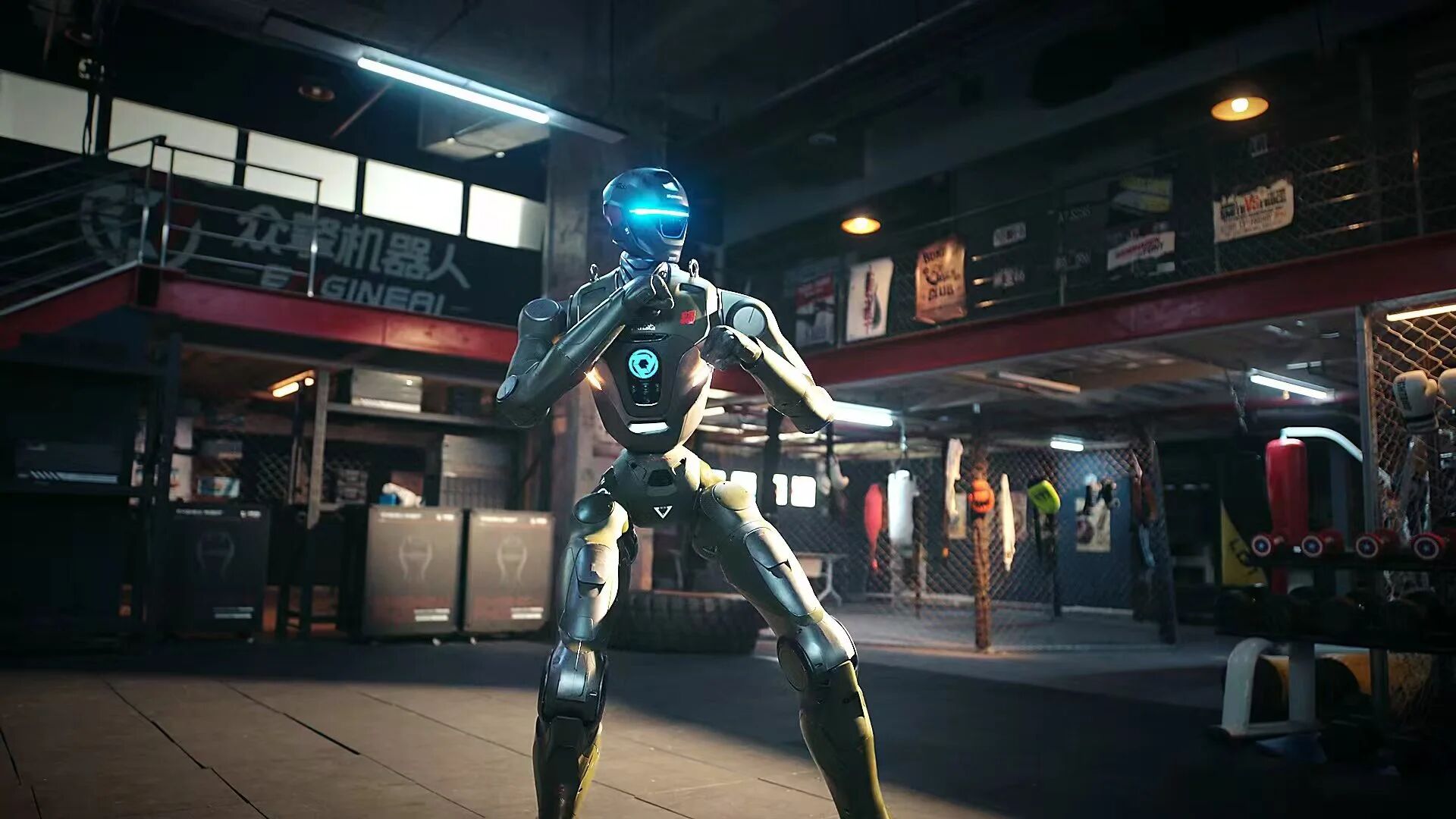
众擎机器人

Search documents
中国机器人独角兽集体“秀肌肉”
Zheng Quan Shi Bao· 2026-01-06 18:24
Group 1: Industry Overview - The 2026 CES is expected to be a pivotal year for the integration of AI technology in humanoid robots, transitioning from showcasing technology to practical applications [1] - Various types of embodied intelligent robots are anticipated to be among the most highlighted groups at CES 2026 [1] Group 2: Key Developments in Robotics - Zhiyuan Robotics showcased a full range of products at CES, including the G2 model, which has been integrated into over a thousand application stations within the Junsen Electronics system [1] - Zhongqing Robotics made its global debut with the T800 humanoid robot, featuring breakthroughs in torque, long-lasting stability, and dexterous hand control [1] Group 3: Advancements in Dexterous Hands - DexRobot introduced the DexHand021 Pro, a high-performance dexterous hand with 22 degrees of freedom and a maximum load of 50N, priced at one-fifth of similar international products [2] - The launch of DexHand021 Pro is expected to facilitate the adoption of robotics across various industries, including remote operations in power inspection and educational applications in universities [2] Group 4: AI and Data Challenges - The robotics industry faces a significant data imbalance, with a lack of real human action detail data necessary for training robots, which limits their dexterity [3] - Daimeng Robotics launched the DM-EXton2, the world's first force/touch feedback remote operation data collection system, addressing the core data challenges in robot training [3] Group 5: Participation of Startups - The CES featured participation from numerous startups, including the XbotPark platform initiated by Professor Li Zexiang, showcasing a variety of technology companies across multiple sectors [3]

我与国家一起前行|跑好中国创新的马拉松 具身智能加速奔跑
Yang Shi Wang· 2026-01-06 16:18
Core Insights - The article discusses the emergence of "embodied intelligence" as a future industry highlighted in China's 14th Five-Year Plan, emphasizing its capabilities in perception and action by 2025 [1] Group 1: Technological Advancements - The rapid iteration of humanoid robots in 2025 has led to significant improvements in their agility and stability, driven by complex motion control algorithms [5][7] - A humanoid robot developed by Yushutech features high-performance solid-state batteries and 29 degrees of freedom, achieving a peak torque of 450 N·m, surpassing 90% of adult males in physical capabilities [10] - The development of autonomous robots capable of self-navigation and interaction with humans marks a significant upgrade in their operational capabilities [23][25] Group 2: Industry Applications - Humanoid robots are increasingly utilized in various sectors, including industrial applications where they perform assembly and quality inspection tasks, achieving production efficiency levels of 30% to 40% compared to human workers [20][22] - The robots have been designed to autonomously recharge, enhancing their operational efficiency and enabling continuous production [22] Group 3: Supply Chain and R&D - The strong supply chain in Shenzhen allows for rapid access to nearly half of the robot components within a 10-kilometer radius, facilitating quick iterations and development [15][17] - Companies are focusing on in-house research and development to enhance core competitiveness, addressing initial challenges with component performance by creating their own solutions [12][14] Group 4: Broader Impact and Future Outlook - The development of embodied intelligence is seen as a key driver for innovation across various industries, with robots being trained for diverse applications from healthcare to emergency response [30] - The article highlights the importance of integrating education, technology, and talent development to sustain innovation and maintain competitive advantages in the global market [31]

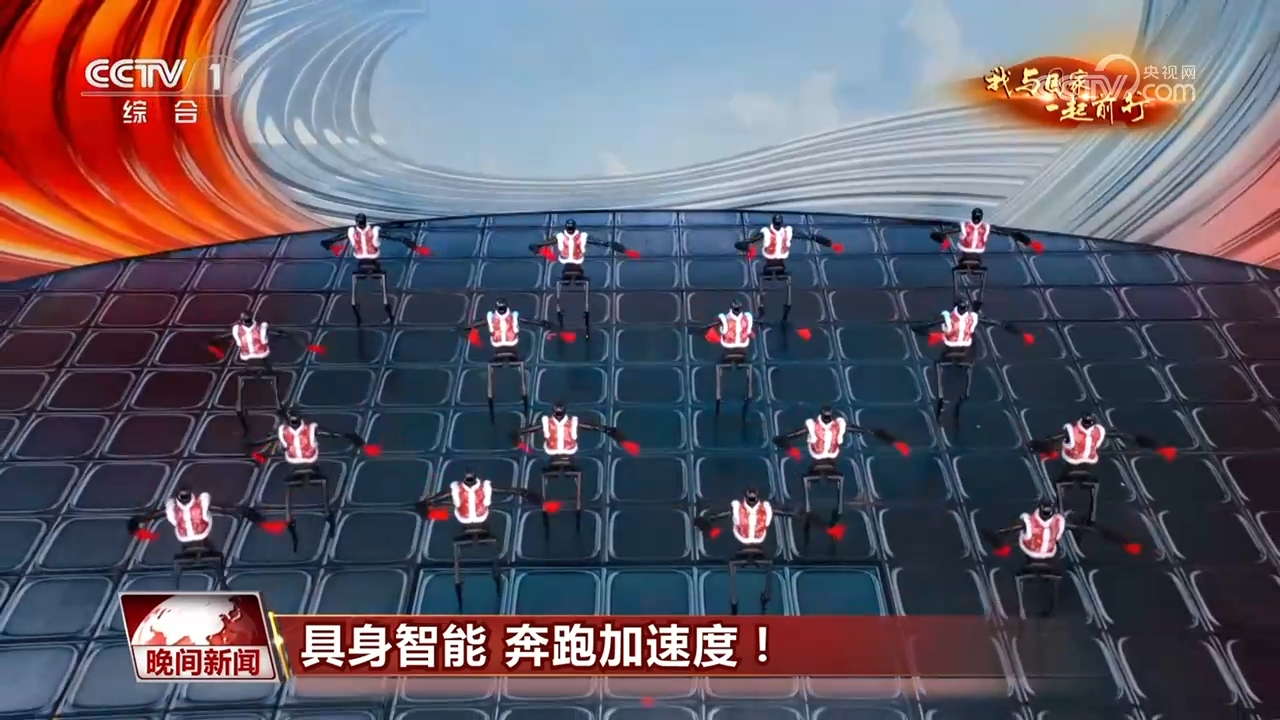
中国机器人行业年度融资回顾
机器人圈· 2026-01-06 12:06
Core Insights - The Chinese robotics industry in 2025 is characterized by a dramatic interplay of capital, technology, and application scenarios, described as a "song of ice and fire" [2] - The industry has seen unprecedented growth in financing, with approximately 610 financing events and a total amount nearing 50 billion RMB, representing over a 150% increase compared to the previous year [5][9] - A shift in investment logic is evident, moving from a focus on flashy technological demonstrations to a critical evaluation of scalable production capabilities and real-world commercial applications [10][11] Financing Scale and Structure - The financing scale in 2025 has reached a historic high, with total financing exceeding 50 billion RMB, marking a 2.5 times increase from the previous year [5] - There is a significant "head concentration" effect, with 9 companies completing 13 financing rounds of over 100 million USD, indicating that "billion-level" financing has become the new norm for leading players [5][9] - The capital structure has evolved into a diversified ecosystem, with financial VCs, industrial capital, and state-owned capital forming a "tripod" [6][8] Investment Logic Evolution - The focus of investors has shifted from prototype demonstrations to the ability to scale production, with metrics such as production line progress and order stability becoming critical [10][11] - Companies that can disclose specific order data and delivery milestones are more attractive in the financing market, as seen with firms like UBTECH and Zhiyuan Robotics [11] Application Scenario Differentiation - The application scenarios for robotics are increasingly stratified, moving away from the ambition of creating a general AI to focusing on practical economic value [14][15] - A "value pyramid" is forming, with high-end manufacturing at the top, standardized process scenarios in the middle, and specialized tasks at the base [14][15][16] Challenges and Market Dynamics - The robotics industry faces significant challenges, including technological bottlenecks in hardware and software, as well as economic viability issues related to manufacturing costs [19][20] - The current high valuations in the market are under scrutiny, with debates on whether they reflect genuine future potential or are speculative bubbles [21][22] Future Trends and Competitive Landscape - 2026 is anticipated to be a pivotal year for mass production in the robotics sector, with key performance indicators such as delivery rates and customer retention becoming crucial [23][24] - The competitive landscape is expected to evolve from product-centric competition to a more integrated ecosystem approach, with major tech companies like Tencent and JD.com establishing platforms to enhance their competitive edge [25][26]

【时代风口】人形机器人火爆背后的冷思考
Zheng Quan Shi Bao· 2026-01-05 18:49
刘诗梦 从火爆蛇年春晚的机器人扭秧歌节目到宇树科技的机器人格斗赛,再到近日特斯拉人形机器人在柏林市 集上售卖爆米花,从试验场到应用场,人形机器人的发展是人类科技史上一次对自身形态与能力的深度 仿生与超越,已突破了"表演"的定义,走向了人类的实际生活。 本报专栏文章仅代表作者个人观点,特此说明。 (文章来源:证券时报) 目前,人形机器人不仅能完成工厂装配、仓库搬运、家庭清洁等不同的任务,还能在服务、陪伴、教育 中与人类进行交互,并建立信任与情感连接。例如星动纪元的人形机器人已实现在物流分拣场景中的协 同工作,能够满足多种复杂场景的需求。 虽然人形机器人产业爆发出巨大的市场潜力,但整体仍处于"小规模单点试验"和商业化早期阶段,距离 达到理想状态还有很长一段时间。其一,脱离人类辅助仍旧是一个核心难题。从技术层面看,大多数人 形机器人还得依赖人类进行远程辅助才能完成任务,多模态感知技术还不成熟,其泛化能力等方面未达 理想预期。其二,获得高质量数据比较困难。高质量数据是人形机器人精确实现场景运用中非常重要的 一点,其大模型需要大量的高质量数据进行训练,从而完成一系列复杂工作。其三,硬件与物理方面的 限制。人形机器人的运 ...
【时代风口】 人形机器人火爆背后的 冷思考
Zheng Quan Shi Bao· 2026-01-05 18:32
目前,人形机器人不仅能完成工厂装配、仓库搬运、家庭清洁等不同的任务,还能在服务、陪伴、教育 中与人类进行交互,并建立信任与情感连接。例如星动纪元的人形机器人已实现在物流分拣场景中的协 同工作,能够满足多种复杂场景的需求。 虽然人形机器人产业爆发出巨大的市场潜力,但整体仍处于"小规模单点试验"和商业化早期阶段,距离 达到理想状态还有很长一段时间。其一,脱离人类辅助仍旧是一个核心难题。从技术层面看,大多数人 形机器人还得依赖人类进行远程辅助才能完成任务,多模态感知技术还不成熟,其泛化能力等方面未达 理想预期。其二,获得高质量数据比较困难。高质量数据是人形机器人精确实现场景运用中非常重要的 一点,其大模型需要大量的高质量数据进行训练,从而完成一系列复杂工作。其三,硬件与物理方面的 限制。人形机器人的运动离不开手、关节、传感器等系统配合,但目前来看,除了其硬件成本极高以 外,还有易损坏、信息融合算法复杂、续航能力不足等问题。其四,安全责任划分的争议。当发生事故 时,对于涉及的制造商、程序员、所有者以及机器人自身的责任划分,现有法律框架难以对其进行清晰 界定。 当大家都站在风口抢占人形机器人赛道时,就更应该保持理性思考 ...
2025,人形机器人终于不演了
创业邦· 2026-01-03 03:43
Core Insights - The article highlights the rapid development of the embodied intelligence industry in China, marked by significant events and advancements in technology and market dynamics [6][44]. Group 1: Industry Developments - The year 2025 saw embodied intelligence officially included in the national strategy, indicating a shift from academic concept to government-backed initiative [11][12]. - Over 150 humanoid robot companies have emerged in China, focusing on practical applications rather than mere technological showcases [13]. - The industry is transitioning from a "technology imagination" driven approach to one focused on "commercial certainty," emphasizing investment returns and clear payback periods [13]. Group 2: Key Events - On New Year's Eve 2025, Yush Robot showcased 16 humanoid robots performing a dance on CCTV, marking a significant milestone for the industry [5][8]. - The first "human-robot marathon" took place in Beijing, featuring 20 humanoid robot teams, which tested their endurance and environmental perception [17][20]. - A major controversy arose when a video from UBTECH showing their humanoid robot's capabilities was questioned for authenticity, sparking a global debate on technology demonstration [22][23]. Group 3: Company Highlights - Yush Technology accelerated its growth following its Spring Festival performance, completing a C-round financing led by major companies, achieving a valuation exceeding 10 billion RMB [10]. - Galactic AI completed a record-breaking financing round of over 300 million USD, reflecting a shift in investor focus towards AI-driven capabilities [37][38]. - The collapse of Yixing Robot, founded by a prominent figure, highlighted the importance of clear strategic direction and sustainable business models in the industry [30][31]. Group 4: Challenges and Controversies - Datar Technology faced liquidity challenges, raising concerns about cash flow health and the sustainability of business models in the high-investment, long-cycle industry [14][16]. - The marketing strategy of Zhongqing Robot, which involved a controversial stunt, sparked discussions about ethics and professionalism in the industry [39][43]. - The public's trust in technology demonstrations was tested, as seen in the reactions to UBTECH's and Xiaopeng's robot showcases [22][36]. Group 5: Conclusion - The events of 2025 illustrate a significant shift in the Chinese humanoid robot industry, moving towards practical applications and value creation, supported by favorable policies and capital market conditions [44][46].

生态融合新样本:京东渠道+宇树技术,共拓机器人产业未来
Xin Lang Cai Jing· 2025-12-31 16:00
导读 2025年12月31日,京东与宇树科技的全球首店于北京开业。此次合作是宇树向"平台+生态"转型的关键 一步,也是京东百亿投入构建机器人产业生态的重要落子,共同推动人形机器人商业化进程加速。 京东蓝图,百亿投入构建机器人生态 京东在智能机器人领域的布局已形成完整体系。今年世界机器人大会期间,京东发布 "智能机器人产业 加速计划" ,宣布将在该领域投入超百亿资源。 具体目标是在三年内助力100个智能机器人品牌成交额破10亿元,推动智能机器人走进超百万个终端场 景。 为实现这一目标,京东正通过多种方式深度介入产业:今年3月,京东成立具身智能相关业务部门;7 月,发布自研品牌JoyInside,为机器人提供自然对话能力。同时,京东积极投资智能机器人产业链,今 年已陆续投资智元、众擎机器人、千寻智能、逐际动力等多家具身智能企业。 2025年12月31日上午,京东与宇树科技联合打造的全球首店在京东MALL北京双井店正式开业。宇树科 技G1人形机器人及Go2机器狗等明星产品在首店悉数亮相,展示出机器人的无限潜力。 京东与宇树科技的合作,代表着机器人产业生态融合的新趋势。对宇树科技而言,与京东合作不仅是销 售渠道的拓展 ...

具身智能,国产机器人为美好生活赋能
Xin Hua She· 2025-12-31 08:48
Core Insights - The article emphasizes the rapid integration of domestic robots into daily life by 2025, showcasing their diverse applications in various sectors such as entertainment, healthcare, and agriculture [1][12][21] Industry Developments - By 2025, domestic humanoid robots have achieved multiple breakthroughs, including the first human-like robot to perform a front flip and a marathon completion, indicating significant advancements in robotics technology [3][5] - The launch of the T800 humanoid robot by Zhongqing Robotics highlights the technological integration capabilities of domestic robots, featuring advanced materials and systems for enhanced performance [4][5] Technological Advancements - The core technological upgrades in humanoid robots are driven by the collaboration of their "brain," "small brain," and body design, which collectively enhance their operational capabilities [5][11] - The development of autonomous battery-swapping systems for humanoid robots by Youbixuan enables continuous operation without human intervention, significantly improving efficiency in industrial applications [9][10] Market Applications - The demand for humanoid robots in the elderly care sector is increasing due to the growing aging population in China, with robots being utilized for assistance in daily activities and health monitoring [12][13] - The industrial sector is identified as the primary training ground for humanoid robots, with significant orders and applications in assembly, transportation, and maintenance processes [10][11] Challenges and Opportunities - Despite the rapid growth, the industry faces challenges such as technological limitations, narrow application scopes, and the need for standardized practices across the sector [14][15][16] - The article suggests that policy support and market-driven initiatives are crucial for overcoming current obstacles and fostering high-quality development in the domestic robot industry [18][19] Future Outlook - The future of the domestic robot industry is projected to align with the growth of smart technologies, with expectations of significant advancements in the next 5 to 15 years [19][20] - The integration of robots into everyday life is anticipated to evolve gradually, starting with low-intelligence applications before expanding into more complex domestic roles [20][21]
联美控股:目前各投资项目对公司主营业务影响很小
Zheng Quan Ri Bao Wang· 2025-12-30 11:12
Core Viewpoint - The company, Lianmei Holdings (600167), indicated that its current investment projects have minimal impact on its main business operations [1] Investment Details - The company has invested 20 million yuan in Xingneng Xuanguang through its wholly-owned subsidiary, Lhasa Lianhong Technology Development Co., Ltd [1] - Other investment situations can be referenced in the company's annual report [1] Project Involvement - Projects such as Zhongqiong Robot and Dapu Micro are classified as non-direct investments [1] - The company has invested in Beijing Guoxiang Shangheng Equity Investment Fund Partnership (Limited Partnership) through its wholly-owned subsidiary, which oversees the relevant projects [1]

深圳创投的25年,投对了什么
2 1 Shi Ji Jing Ji Bao Dao· 2025-12-30 08:34
Group 1: Shenzhen Venture Capital Landscape - Shenzhen has over 1,500 local venture capital firms with a management scale exceeding 1.5 trillion yuan and has nurtured over 1,000 listed companies [1] - The success of Shenzhen's venture capital industry is attributed to a unique combination of an encouraging innovation mindset and two supply chains: a robust product supply chain and a comprehensive financial support system [1][1] - The "accompanying philosophy" of Shenzhen's venture capital encourages innovation and supports companies through economic cycles [1] Group 2: Investment in Robotics and AI - Da Chen Capital has made multiple investments in Zhongqing Robotics, driven by a long-term belief in the embodied intelligence sector, with a target allocation of 30%-40% of their fund to AI-related industries [2][2] - Zhongqing Robotics' founder, Zhao Tongyang, has shown resilience through multiple failures, ultimately leading to the establishment of a successful robotics company [2][3] - The latest product from Zhongqing Robotics, the T800, has surpassed the physical capabilities of 90% of adult males, with plans for advanced functionalities in household tasks within six months [4] Group 3: Investment in Biotechnology - Zhenmai Biotechnology, known for its high-throughput sequencing instruments, faced skepticism but secured early investments that were crucial for its development [6][6] - The company has successfully navigated cash flow challenges and has seen significant growth, with a projected revenue of nearly 400 million yuan by 2025 [9] - The partnership between Zhenmai and Tongchuang Weiye exemplifies the importance of comprehensive support beyond just capital, emphasizing long-term investment in the medical sector [8] Group 4: Long-term Partnerships in Life Sciences - BGI Group, a leader in life sciences, has maintained a nearly 20-year partnership with Songhe Capital, which began with an unsuccessful project but evolved into a strong mutual trust [10][11] - The collaboration has led to significant advancements in the domestic gene technology sector, breaking the monopoly of international giants [11] - Both companies emphasize the importance of dual support and trust in fostering innovation within the life sciences industry [11]