LG Display

Search documents
LGD广州工厂易主在即,战投创维半价“贱卖”离场
Ge Long Hui· 2025-06-09 01:47
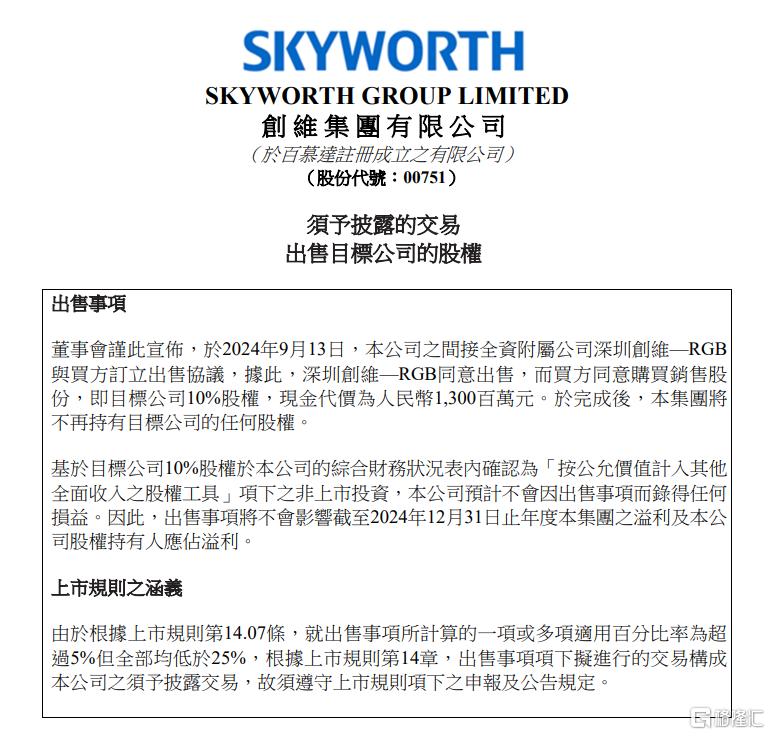
Core Viewpoint - The article discusses the sale of a 10% stake in LG Display (China) by Skyworth Group to LG Display (Guangzhou) for 1.3 billion yuan, marking Skyworth's exit from the investment, which is perceived as a "fire sale" given the significant undervaluation of the asset [1][5][13]. Group 1: Transaction Details - Skyworth's subsidiary signed an agreement to sell a 10% stake in LG Display (China) for 1.3 billion yuan, after which Skyworth will no longer hold any shares in the company [1][5]. - The sale price represents a significant discount, with the book value of the shares being approximately 740 million yuan, indicating a sale at about 55.5% and 62.7% of their book value [13][14]. - Skyworth aims to use the proceeds from the sale to improve liquidity and fund other business operations [14]. Group 2: Industry Context - LG Display's Guangzhou factory is a critical asset in the Chinese panel industry, with a total investment of 4 billion USD and a production capacity of 180K, contributing to 4% of the global TV panel market [10][11]. - The factory's operational challenges, including a drop in utilization rates to around 50%, have led to speculation about its future, with TCL and BOE expressing interest in acquiring the asset [8][10]. - The sale of the factory is seen as a reflection of the broader struggles within the global panel industry, where LG Display is shifting focus towards OLED and MLED technologies [10][11]. Group 3: Company Performance - Skyworth's revenue declined by 6.6% year-on-year to 29.83 billion yuan in the first half of the year, despite a slight increase in gross profit [19][21]. - The company has reduced its workforce by 3,000 employees while simultaneously increasing investment in facilities and equipment by over 60% to 342 million yuan [21]. - Skyworth's reliance on its home appliance segment, particularly TVs, has increased, with this segment accounting for 51.7% of total revenue, while other segments like new energy have seen significant declines [21][22].


TCL百亿大并购!
国芯网· 2025-05-28 11:22
Core Viewpoint - TCL Technology is aggressively expanding its semiconductor display business through significant acquisitions, despite a decline in net profit, indicating a strong commitment to strengthening its core operations in the semiconductor sector [2][3]. Group 1: Acquisition Details - TCL Technology announced the acquisition of 21.53% of Shenzhen Huaxing Semiconductor for 11.562 billion yuan, using a combination of cash (7.203 billion yuan) and shares (4.359 billion yuan) [2]. - Post-acquisition, TCL's stake in Shenzhen Huaxing Semiconductor will increase from 62.68% to 84.21%, enhancing its control over this core asset [2]. - This acquisition marks TCL's second major acquisition within six months, following a 10.8 billion yuan purchase of LG Display's Guangzhou LCD panel factory to expand capacity and capture market share vacated by Korean companies [2]. Group 2: Financial Performance - In 2024, TCL Technology's semiconductor display business revenue grew by 24.6% year-on-year to 104.3 billion yuan, achieving a historical high and accounting for over 60% of total revenue [3]. - The net profit for TCL Technology rebounded significantly from a slight loss of 0.07 billion yuan in 2023 to a profit of 6.23 billion yuan in 2024 [3]. - TCL Huaxing, as the core panel business, is the second-largest panel manufacturer in mainland China, with large-size LCD TV panels being its primary strength [3]. Group 3: Business Focus - TCL Technology, founded in 1982, has shifted its focus entirely to the panel industry following a major asset restructuring in 2018, divesting traditional consumer terminal and related businesses [2]. - The company's current business segments include semiconductor displays, new energy photovoltaics, and semiconductor materials [2].
三星MLC NAND,将停产
半导体芯闻· 2025-05-27 10:21
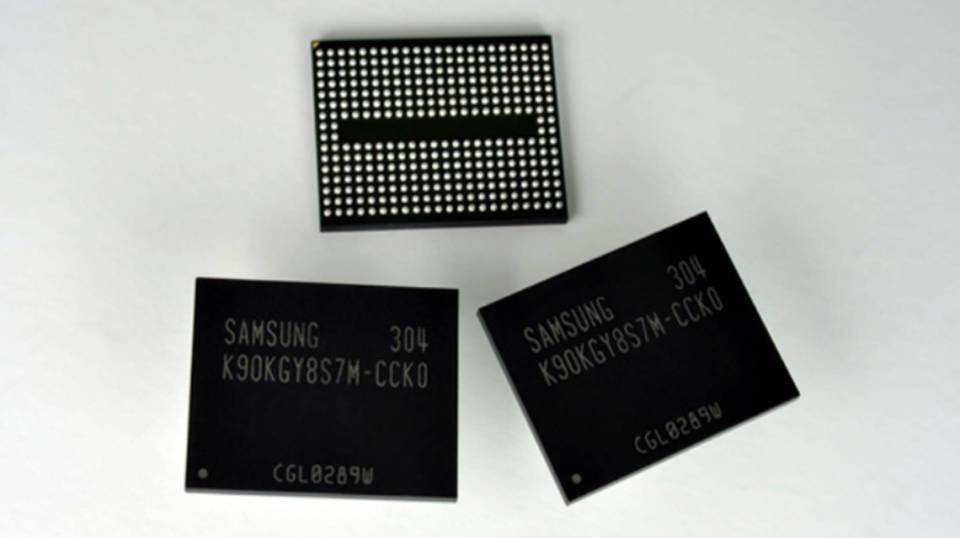
Group 1 - Samsung plans to exit the Multi-Level Cell (MLC) NAND business and will only accept chip orders until next month [1] - Samsung has informed a customer about increasing MLC NAND prices, prompting the customer to seek alternative suppliers [1] - LG Display is also looking for another MLC NAND supplier to replace Samsung, as it has been using Samsung's MLC NAND in its 4GB eMMC for large OLED panels [1] Group 2 - The production halt of MLC NAND may lead Samsung to focus its resources on Triple-Level Cell (TLC) and Quad-Level Cell (QLC) NAND technologies [1] - TLC currently dominates the global NAND market, accounting for 62% of global NAND sales according to Mordor Intelligence [2]
器件寿命可提升250倍,美国密歇根大学研究新型蓝色磷光OLED材料
WitsView睿智显示· 2025-05-27 08:57
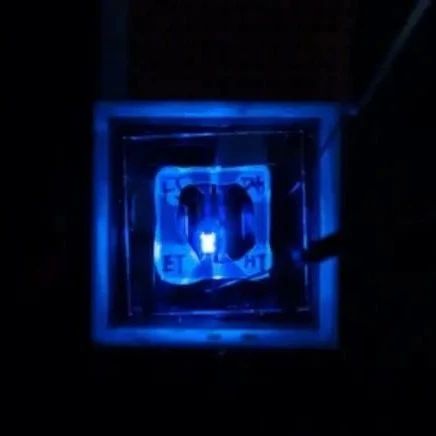
Core Viewpoint - A research team led by Professor Forrest from the University of Michigan has developed a new blue phosphorescent OLED (PHOLED) material that significantly enhances the lifespan of OLED devices, providing a viable path for commercial blue PHOLED devices [1][5]. Group 1 - The new design of the tandem device using this OLED material has a lifespan that is 250 times longer than traditional single-layer PHOLED devices [1]. - The researchers employed a Polariton-enhanced Purcell (PEP) effect on both the cathode and anode to achieve this significant lifespan improvement, resulting in the creation of PEP-PHOLED devices [3]. - The blue color coordinates of the new device are CIExy = (0.14, 0.12), indicating its color performance [3]. Group 2 - A notable achievement of the research is a tandem PEP-PHOLED device based on a platinum (Pt) complex, which has achieved an LT90 lifespan of 1,800 hours at a brightness of 500 cd/m² and has a front external quantum efficiency (EQE) of 56% [4]. - The University of Michigan has been developing commercial blue PHOLED devices for over 20 years and has collaborated closely with several display companies, including Universal Display, which recently announced that its blue PHOLED materials are nearing commercialization [4]. - LG Display has also validated the performance of the new material in a hybrid tandem structure device [4].
LG Display透明OLED屏幕亮相韩国地铁站台
WitsView睿智显示· 2025-05-27 08:57
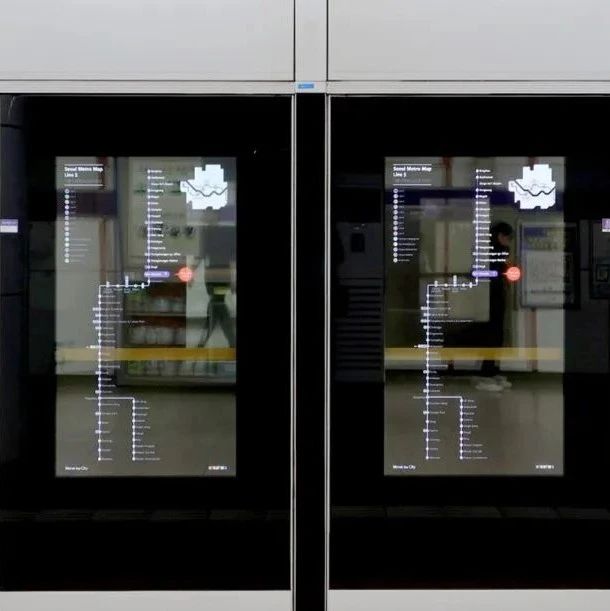
【WitsView整理】 5月26日, LG Display ( LGD ) 官网消息,今年4月,LGD的 透明OLED显示 屏 已应用在韩国首尔地铁 汝矣岛站 的 站台门 上 。 这些 屏幕不仅 可以 显示首尔全新的单线路地铁地图,还提供运营信息、紧急疏散等多种 内容,方 便乘客了解地铁信息。 据悉, 地铁站台门最基本的功能是提供清晰可视的内外部环境。 LGD的 透明OLED 显示屏 具有 高透明度、轻薄特性 ,可直接替代玻璃窗, 在 保留了安全性能 的同时,还 能在大尺寸屏幕上显 示地图、运营信息 、 广告 等内容。 LGD表示,公司旗下的 透明OLED 显示屏已在多个国家的 交通场景中应用 。 包括 北京、深圳、 广州、重庆 等 中国 城市的 地铁以及 日本 的 JR列车 公共交通系统都已引入这种技术。 而在韩国,LGD的 透明OLED 显示屏 最早于去年4月安装在 GTX-A线列车 的 车窗中,为乘客带来 开放、宽敞的视觉感受与丰富的信息体验。 图片来源: LG Display 除在公共交通上的应用外,LGD的 透明OLED 显示屏还在扩展应用到 汽车、航空、零售、广告标 牌、建筑设计 等多个领域 。 ...
消息称三星电子 MLC NAND 闪存将停产,计划6月再收最后一批订单
Sou Hu Cai Jing· 2025-05-27 01:23
Group 1 - Samsung Electronics announced the discontinuation of MLC NAND flash memory production, with the last orders to be accepted next month [1] - The company has also informed clients about a price increase for MLC NAND, prompting customers to seek alternative suppliers [1] - LG Display is looking for alternative suppliers for MLC NAND, primarily for 4GB eMMC used in large-sized OLED panels, as it currently relies on Samsung, Kioxia, and ESMT [3] Group 2 - The discontinuation of MLC NAND is expected to have a minimal impact on Samsung's sales, as it represents a negligible portion of their revenue [5] - Samsung plans to focus resources on TLC and QLC product lines, with TLC currently holding a 62% share of the global NAND flash memory market [5]
2025年Q1面板价格趋势回顾:波动中寻求平衡
WitsView睿智显示· 2025-05-15 10:03
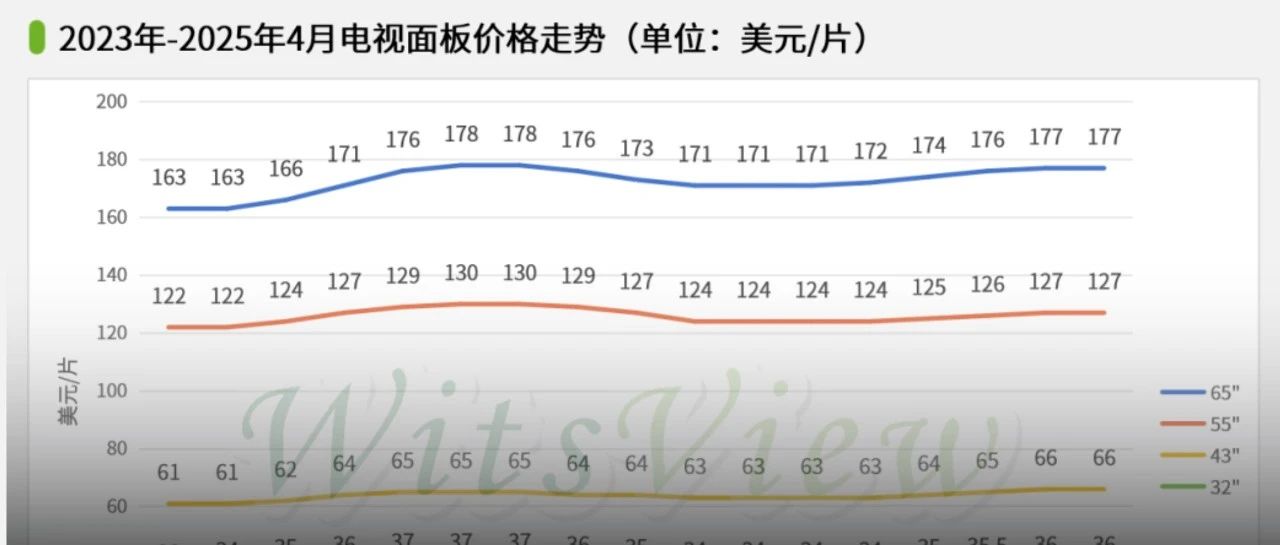
Core Viewpoint - The global panel market in Q1 2025 experienced complex and dynamic price trends influenced by multiple factors, with television panels showing initial strength but weakening by the end of the quarter, while monitor panels saw a price increase towards the end of the quarter, and notebook panels remained stable throughout [1][19]. Television Panel Price Trends - In January 2025, television panel prices rose due to strong demand driven by China's "trade-in" policy, particularly for large-sized panels, with price increases of $1 for 32-inch and 43-inch panels, $1 for 55-inch, $2 for 65-inch, $3 for 75-inch, and $4 for 85-inch panels [2][3]. - The demand for large-sized panels caused a squeeze on the production capacity of smaller-sized panels, indirectly pushing up their prices [3]. - By March, the market began to cool, with North American demand weakening post-Super Bowl promotions and Chinese policy effects diminishing, leading to a cautious outlook from brand clients due to high inventory levels [3][10]. Monitor Panel Price Trends - Monitor panel prices remained stable in January, with demand holding steady compared to Q4 2024, but began to rise in March as television panel price increases created opportunities for monitor panels [4][6]. - In February, despite being a traditional off-season, monitor panel demand remained strong, leading to a slight price increase of $0 to $0.1 for Open Cell types, while module prices stayed flat [6]. - March marked a turning point with comprehensive price increases for monitor panels, although brand clients remained cautious about future demand and international trade relations [6][10]. Notebook Panel Price Trends - Notebook panel prices remained stable throughout Q1 2025, with no significant changes observed [7][9]. - Despite some brands increasing inventory levels due to international trade issues, most panel manufacturers and brand clients adopted a cautious approach, focusing on maintaining market share and customer relationships [9][10]. Overall Market Dynamics - The price fluctuations in the panel market were influenced by demand-side drivers and constraints, with initial boosts from policies like "trade-in" in China, but diminishing effects over time [10]. - Supply-side strategies and unexpected events, such as the earthquake in Taiwan affecting production, also played a role in market dynamics [10]. - External uncertainties, particularly international trade relations, significantly impacted brand clients' inventory strategies and supply chain management [10][19]. Company Performance - In Q1 2025, several panel companies reported strong earnings, with notable revenue growth from major players like Samsung Display, BOE, and TCL Huaxing, while LG Display, AU Optronics, and others successfully turned losses into profits [11][12][14]. - TCL Huaxing's acquisition of LG Display's Guangzhou LCD line is expected to enhance its market position further [14]. - The performance of leading companies indicates strong resilience and growth potential in a competitive market, despite ongoing challenges faced by some firms [14][19].

SID 2025:京东方、TCL华星、天马等8家面板厂新品一览
WitsView睿智显示· 2025-05-14 10:03
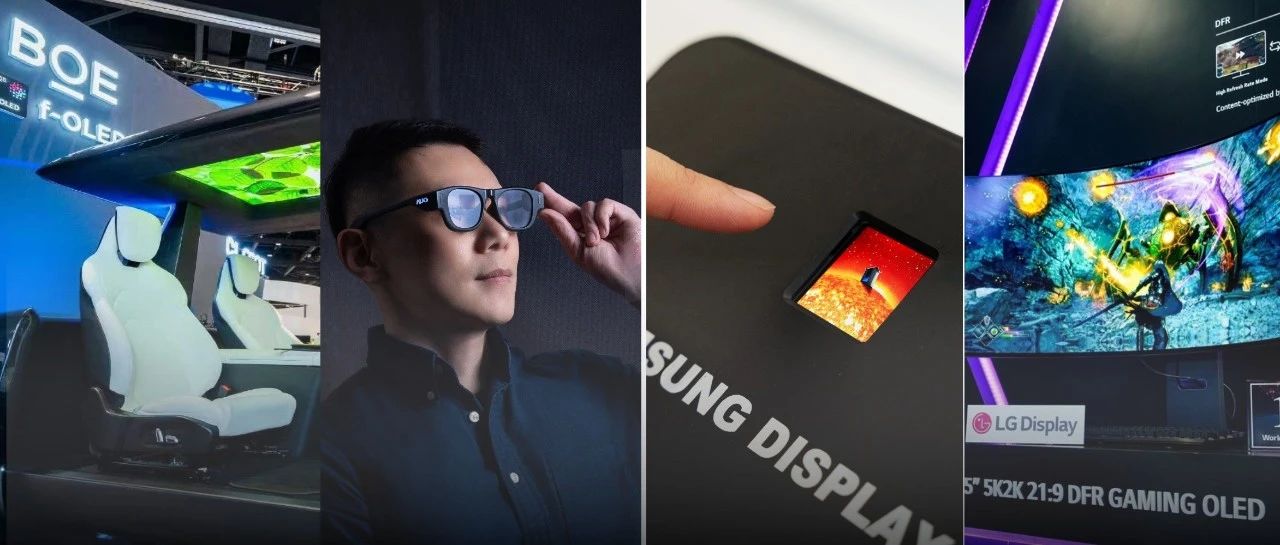
Group 1 - BOE showcased the world's first 75-inch 4K UB Cell 4.0 TV with ultra-high color gamut and 1400:1 contrast ratio [1][6] - In the flexible OLED display sector, BOE introduced a solution featuring TADF+Tandem COE technology, enhancing color gamut and power efficiency [3][6] - BOE's Mini LED display included a 27-inch HDR gaming monitor with a 300Hz refresh rate and 2304 local dimming zones, outperforming OLED displays [6][7] Group 2 - TCL Huaxing presented a full range of printed OLED products, from 6.5-inch mobile displays to 65-inch TVs, achieving comprehensive coverage in size [10][12] - The world's first 14-inch printed OLED tablet display was also unveiled, featuring a 30% increase in pixel density and 99% DCI P3 color gamut coverage [12][13] - TCL Huaxing's 219-inch MLED display supports high contrast and can be seamlessly spliced for large-scale applications [14] Group 3 - Tianma introduced the world's first 6.51-inch HOI display with integrated sensing capabilities for fingerprint recognition and color temperature detection [20][21] - The 12.3-inch "wood grain hidden" display features anti-peep technology and can display dynamic images while maintaining aesthetic design [23][25] - Tianma also showcased innovations in Micro-LED and health-focused displays [25] Group 4 - Visionox presented a range of ViP AMOLED displays for wearables, smartphones, and laptops, achieving 100% DCI-P3 color gamut [26][29] - The company launched the world's first glass-based AMOLED solution for VR/AR applications, achieving 2000 PPI resolution [29][30] - Visionox also introduced several first-of-their-kind flexible AMOLED technologies [33] Group 5 - AUO focused on Micro LED and AI technologies, showcasing a 64-inch transparent Micro LED display with high brightness and color accuracy [34][35] - The company also presented a 13-inch Micro LED head-up display designed for automotive applications [35] Group 6 - Innolux displayed a MicroLED mirror display with high color gamut and brightness, suitable for smart cockpit applications [44][46] - The company introduced an 85-inch 4K AI interactive digital art display that minimizes environmental light reflection [46][49] - Innolux's 12.3-inch active privacy display for vehicles adapts to driver needs while ensuring safety [51] Group 7 - Samsung Display launched the EL-QD technology, enhancing color accuracy and reducing power consumption compared to traditional QD-OLED [55][56] - The company also showcased a 1.4-inch RGB OLEDOS with a peak brightness of 15,000 nits and a resolution of 5,000 PPI [58] - Samsung introduced a stretchable Micro LED display, offering new user experiences [59] Group 8 - LG Display presented its fourth-generation OLED panels with a peak brightness of 4,000 nits, targeting high-end markets [62][64] - The company showcased a 45-inch 5K2K gaming OLED display, enhancing immersive experiences [64][66] - LG Display's concept car featured a 57-inch P2P display and an 18-inch retractable OLED screen for rear-seat entertainment [66]


夏普拟再出售液晶面板厂,买家是?
WitsView睿智显示· 2025-05-13 08:06
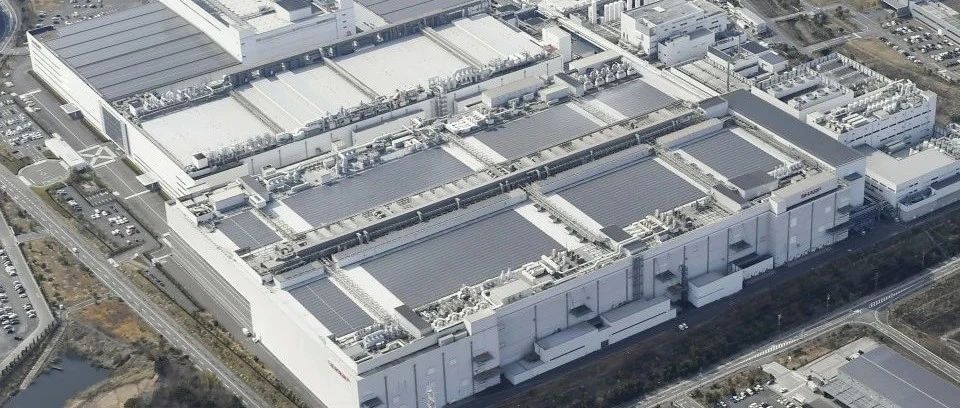
Core Viewpoint - Sharp is strategically divesting its LCD panel production facilities to focus on high-growth, high-margin sectors such as automotive, VR, and AI, amidst a declining profitability trend in the LCD panel market due to increased competition and technological advancements in OLED and Mini/Micro LED technologies [2][3]. Group 1: Business Adjustments - Sharp plans to sell its second LCD panel factory in Kameyama to its parent company Foxconn, marking another step in its strategy to reduce its LCD panel business [1][8]. - The company has reported cumulative losses of 410 billion yen for the fiscal years 2022-2023, prompting a shift from heavy asset reliance in LCD production to a lighter asset model [3][8]. - Sharp aims to transform into a brand-centric enterprise, focusing on high-value sectors while divesting from low-margin LCD production [3][8]. Group 2: Timeline of Asset Sales - On May 14, 2024, Sharp announced the closure of its Sakai 10th generation factory, which primarily produced large LCD TV panels, with full production ceasing by the third quarter of 2024 [4][5]. - Sharp has reached agreements to sell parts of the Sakai factory site to KDDI for an AI data center, expected to be operational by 2026 [6]. - In March 2025, Sharp signed a deal with SoftBank for the sale of the Sakai factory and land for approximately 100 billion yen, aiming to develop a large data center in collaboration with OpenAI [7]. - The company also sold its first factory in Mie Prefecture to Aoi Electronics, which plans to introduce semiconductor packaging lines there by 2027 [7]. Group 3: Financial Performance - Sharp reported a net profit of 36.1 billion yen for the fiscal year ending March 31, 2025, marking its first profit in three years, compared to a loss of 149.98 billion yen in the previous year [9][8]. - The company’s net sales for the fiscal year ending March 31, 2025, were 2,160.15 million yen, reflecting a year-on-year decrease of 7% [9]. Group 4: Industry Trends - The LCD panel industry is undergoing consolidation, with a shift towards higher generation panel production and a focus on improving profitability through strategic mergers and acquisitions [10][11]. - Demand for larger panels is increasing, which is expected to help normalize inventory levels and drive future growth in panel shipments [12]. - The industry is moving towards a more balanced supply-demand dynamic, with manufacturers adjusting production rates in response to market fluctuations [12].
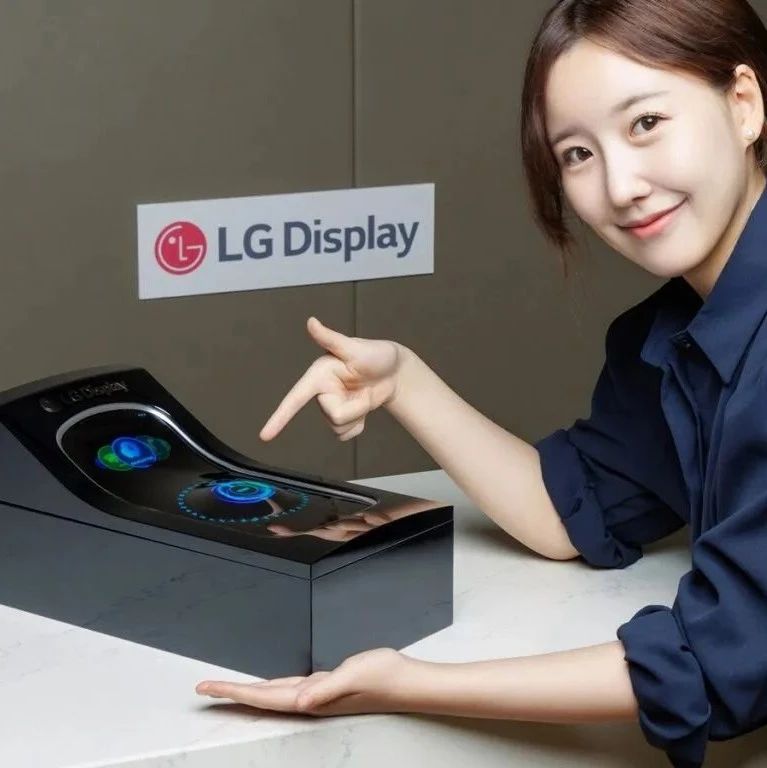
LG Display推出可拉伸汽车显示屏
WitsView睿智显示· 2025-05-07 09:58
Core Viewpoint - LG Display is set to showcase innovative automotive display technologies at the SID Display Week 2025, focusing on solutions for electric and high-tech vehicles [1]. Group 1: Key Product Features - The "Driving the Future" stretchable automotive display can expand to 150% of its original size without losing resolution or color fidelity, maintaining 100 pixels per inch (ppi) and full RGB color quality [3]. - This display allows touch buttons to protrude, enabling easy operation while driving, and aims to integrate the functions of separate automotive displays and physical buttons into a single unit [3]. - LG Display is also developing a display with a switchable privacy mode, allowing front passengers to view content without the driver being distracted [3]. Group 2: Additional Innovations - LG Display will present a 57-inch "Pillar-to-Pillar" OLED screen, the largest in its category, spanning the entire width of the dashboard, with a confirmed supply of a 40-inch version to automotive manufacturers [3]. - The company is working on an 18-inch retractable OLED display for rear-seat entertainment, which can be stored in the roof when not in use and maintains clarity and performance in extreme temperatures ranging from -40°C to 85°C [4].