
联影医疗

Search documents
聚焦“医保支持创新药械”,国家医保局连开五场座谈会
Guang Zhou Ri Bao· 2025-08-06 09:46
Core Insights - The National Healthcare Security Administration (NHSA) of China has held five symposiums focusing on "Medicare support for innovative drugs and medical devices," signaling a comprehensive approach to support the entire lifecycle of innovation in the pharmaceutical sector [1][2][4] Group 1: Comprehensive Support for Innovation - The symposiums established a support network covering the entire lifecycle of innovative drugs and devices, transitioning from "experience-based" to "data-driven" research [1] - Emphasis was placed on using real-world data to support the development and approval of innovative drugs, facilitating faster clinical application [1] - A scientific evaluation of the comprehensive value of innovative products was highlighted, providing a basis for Medicare purchasing decisions [1] Group 2: Multi-Stakeholder Engagement - The participation in the symposiums included a wide range of stakeholders, from academic institutions and research organizations to pharmaceutical companies and financial institutions, creating a collaborative environment for innovation [2] - Various entities, including hospitals and investment organizations, contributed to the discussion, enhancing the ecosystem for innovative drug and device development [2] Group 3: Integration of Key Elements - The symposiums underscored the importance of integrating data, policy, and funding to activate innovation in the pharmaceutical sector [3] - A focus on establishing a collaborative channel between Medicare data and research was emphasized, utilizing epidemiological and disease burden data to guide development [3] - Financial institutions' involvement was noted as a crucial factor in addressing the challenges of long research cycles and high investment costs [3] Group 4: Commitment to Innovation - The NHSA's leadership demonstrated a strong commitment to supporting genuine innovation, rejecting superficial or redundant innovations [4] - The consistent messaging from the NHSA indicates a determination to facilitate the global advancement of China's innovative drugs and medical devices, ultimately benefiting patients [4]
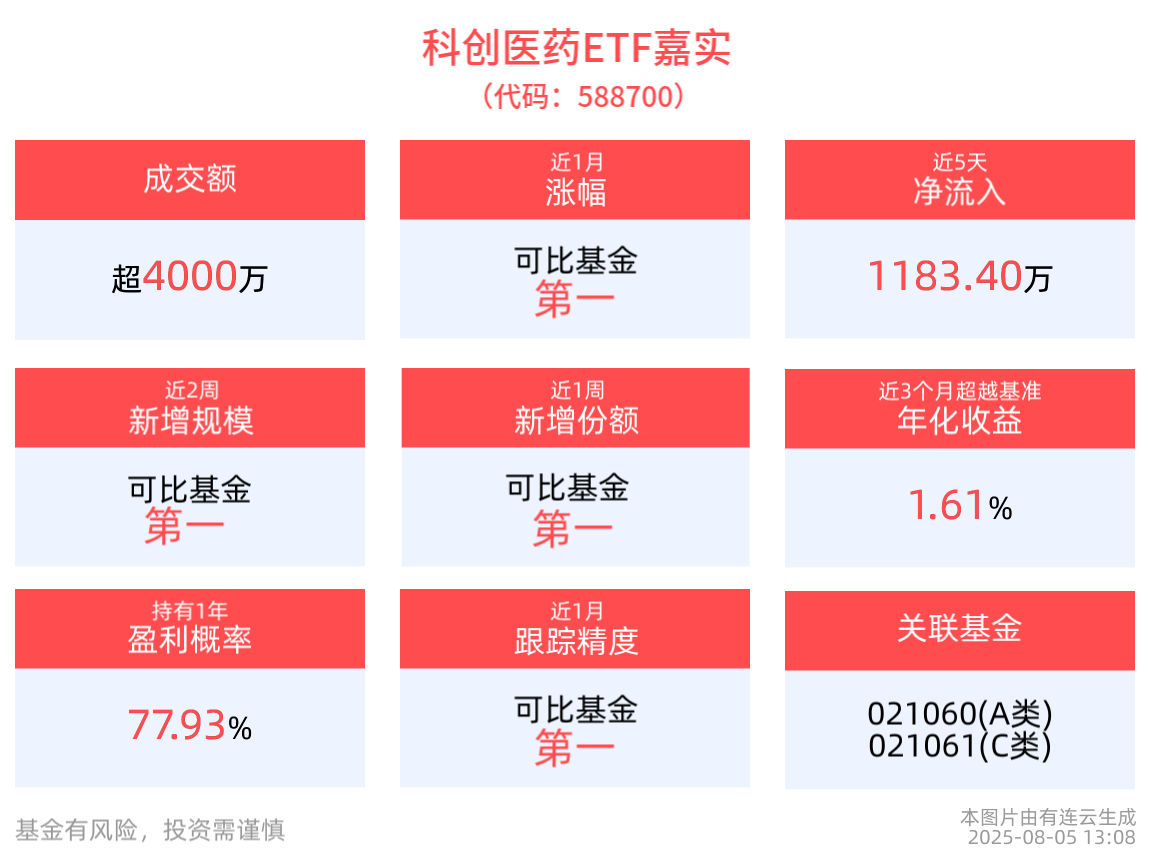
AI制药领域金额最大的BD交易达成!科创医药ETF嘉实(588700)午后涨近1%
Xin Lang Cai Jing· 2025-08-06 05:53
Group 1 - The Shanghai Stock Exchange Sci-Tech Innovation Board Biopharmaceutical Index increased by 0.85%, with notable stock performances including Boryung Pharmaceutical up by 15.37% and Junshi Biosciences up by 6.49% [1] - The market activity for the Jiashi Sci-Tech Medicine ETF was robust, with a turnover rate of 18.13% and a transaction volume of 42.47 million yuan, leading in comparable funds [3] - As of August 5, the Jiashi Sci-Tech Medicine ETF achieved a net inflow of 11.73 million yuan, totaling 14.69 million yuan over the last five trading days [3] Group 2 - The top ten weighted stocks in the Sci-Tech Innovation Board Biopharmaceutical Index accounted for 49.14% of the index, with leading stocks including United Imaging Healthcare and Boryung Pharmaceutical [3][5] - A significant business development deal was announced by Crystal Technology Holdings, with a total order size of approximately 47 billion HKD (5.99 billion USD), marking it as one of the largest BD transactions in China's AI pharmaceutical sector for 2025 [5] - According to research from Everbright Securities, the mid-year reporting period in July may lead to positive changes in the performance of some innovative drug companies, potentially catalyzing a new market trend [6]





最高套现17.83亿,联影医疗再遭减持,薛敏身家两年缩水超百亿
Sou Hu Cai Jing· 2025-08-06 00:56
Core Viewpoint - The announcement from United Imaging Healthcare regarding the employee stockholding platform's plan to reduce its holdings indicates a significant liquidity need, with a potential cash-out of approximately 1.78 billion yuan from the sale of up to 13.38 million shares, representing 1.62% of the total share capital [1][2][3] Group 1: Employee Stockholding and Share Reduction - The employee stockholding platform plans to reduce its holdings due to funding needs, as some employees have requested to sell their shares [2] - This is not the first reduction; the platform previously sold 7.47 million shares for 894 million yuan in July of the previous year [2] - The reduction comes shortly after the company has shown signs of recovery from a performance low in 2024, where it faced its first revenue and net profit decline since its IPO [1][3] Group 2: Financial Performance and Market Position - In 2024, United Imaging Healthcare reported a revenue of 10.3 billion yuan, a year-on-year decrease of 9.73%, and a net profit of 1.26 billion yuan, down 36.08% [3] - The company's gross margin was 48.54%, significantly lower than its competitor Mindray Medical's 63.11%, and its net profit margin was 12.06%, compared to Mindray's 36.3% [3] - By the first quarter of 2025, the company achieved a revenue of 2.48 billion yuan, a year-on-year increase of 5.42%, and a net profit of 370 million yuan, a slight increase of 1.87% [3] Group 3: Leadership and Company Background - United Imaging Healthcare was founded in 2011 and went public in 2022, with its actual controller being Xue Min, who has seen a significant decrease in personal wealth from 35.3 billion yuan in 2023 to 24.94 billion yuan in 2025 [4][5] - Xue Min is recognized as a pioneer in China's medical imaging field, having previously developed the country's first 1.5T superconducting MRI system [4][5] - The company has established a strong market presence through innovation and government support, launching several groundbreaking products [5] Group 4: Current Market Valuation - As of August 6, the stock price of United Imaging Healthcare was 128.55 yuan per share, with a market capitalization of 105.9 billion yuan, reflecting a significant decline from its peak valuation of over 170 billion yuan [6]
新药稳价机制落地,政策利好推动创新药盈利确定性,医疗健康ETF泰康(159760)盘中翻红上行
Xin Lang Cai Jing· 2025-08-05 07:11
Core Insights - The healthcare ETF, Taikang (159760), has shown a slight increase of 0.46%, tracking the National Public Health and Healthcare Index (980016), which rose by 0.48% [1] - A new pricing mechanism for newly launched drugs has been established by the National Healthcare Security Administration, allowing high-level innovative drugs a five-year price stability period, which is expected to reverse the trend of price drops upon market entry [1] - Innovative drugs like Zebutinib from BeiGene and the dual-antibody drug from Baillie Tianheng are anticipated to drive significant revenue growth in the coming years [1][2] Industry Developments - The index constituents are experiencing a technological breakthrough, with companies like Kangfang Bio and Eli Lilly making significant advancements in drug development [2] - The AI+mRNA platform developed by CloudTop has achieved full-chain coverage from antigen design to industrial production, indicating a shift in innovative drug development paradigms [3] - The index includes companies that are directly benefiting from healthcare payment reforms and supportive policies for innovative drugs, with over 80% of the constituents poised to gain from these changes [4] Financial Performance - As of June 30, 2025, the top ten weighted stocks in the National Public Health and Healthcare Index accounted for 51.67% of the index, with companies like WuXi AppTec and Hengrui Medicine leading the way [5] - Hengrui Medicine's R&D investment ratio reached 28% in the first half of 2025, with a 50% year-on-year increase in the number of new drug approvals, indicating strong growth potential [4] Market Outlook - The healthcare ETF is expected to continue leading in the structural market of the healthcare industry, driven by the expansion of commercial insurance innovative drug catalogs and accelerated approvals for AI medical devices [4] - The index reflects the performance of listed companies in the public health and healthcare sector, focusing on prevention, testing, and treatment areas with significant potential for AI technology applications [4]




科创医药ETF嘉实(588700)红盘蓄势,机构:医药生物行业全年业绩有望持续企稳向上
Sou Hu Cai Jing· 2025-08-05 05:41
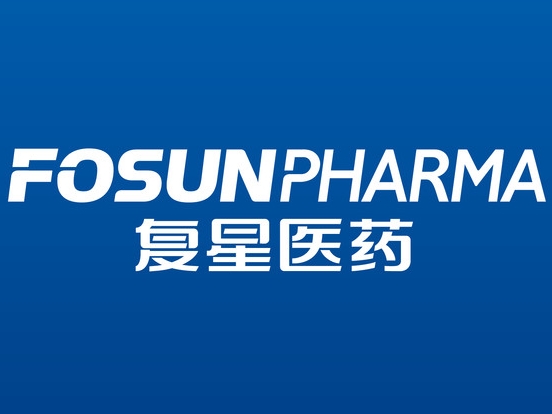
Group 1 - The core viewpoint highlights the strong performance and growth of the Kexin Pharmaceutical ETF managed by Jiashi, with significant trading activity and inflows [2] - As of August 4, the Kexin Pharmaceutical ETF Jiashi has seen a weekly average trading volume of 58.54 million yuan, ranking first among comparable funds [2] - The fund's scale increased by 12.30 million yuan over the past two weeks, also leading among comparable funds [2] - The fund's net asset value has risen by 50.01% over the past year, placing it in the top 15.64% of index equity funds [2] Group 2 - The top ten weighted stocks in the Shanghai Stock Exchange Science and Technology Innovation Board Biopharmaceutical Index account for 49.14% of the index, with leading companies including United Imaging Healthcare and BeiGene [2][4] - The biopharmaceutical industry is expected to stabilize and grow throughout 2025, supported by favorable policies for innovative drug development and medical equipment updates [5] - The transition to the 2.0 era of innovative drugs in China is marked by a qualitative improvement, with domestic new drugs expected to participate deeply in the global market over the next decade [4]


广生堂乙肝新药I期数据获《柳叶刀》背书,科创生物医药ETF(588250)备受关注
Xin Lang Cai Jing· 2025-08-05 05:32
Group 1: Breakthroughs in Innovative Drugs - The innovative drug sector has achieved significant breakthroughs, with Guangshantang's hepatitis B new drug Phase I data endorsed by The Lancet, targeting low-viral-load patients unresponsive to existing therapies, indicating a broad commercialization prospect [1] - Hanyu Pharmaceutical is exploring drug revenue rights tokenization, pioneering a new financing model in the biopharmaceutical sector [1] Group 2: Future Trends in Innovative Drugs - Dongwu Securities highlights four key points regarding the future of innovative drugs: 1) The fundamentals of two major leaders have changed, with BeiGene's revenue and profit expected to turn around by 2025, and Heng Rui's innovative drug proportion expected to exceed 50% in 2024 [2] - 2) The logic behind the two innovative drug bull markets differs, with the 2021 and 2025 markets driven by domestic commercialization and strategic overseas expansion, respectively [2] - 3) China is the second-largest source of quality innovative drug pipelines globally, holding 22% of global FIC pipelines, with a potential market share of $275 billion if the global market reaches $1.1 trillion by 2024 [2] - 4) The market capitalization of the healthcare sector in A-shares, Hong Kong, and U.S. markets is lower than that of the U.S., indicating structural growth opportunities for domestic innovative drug companies [2] Group 3: Performance of Biopharmaceutical Index - The STAR Market Biopharmaceutical Index (000683) includes 50 large-cap companies from various sectors, reflecting the overall performance of representative biopharmaceutical companies in the STAR Market [3] - As of July 31, 2025, the top ten weighted stocks in the STAR Market Biopharmaceutical Index accounted for 49.14% of the index, indicating a concentration of market value among leading companies [3]


创新药产业链表现活跃,行业龙头基本面持续改善,医疗健康ETF泰康(159760)盘中一度涨近1%
Xin Lang Cai Jing· 2025-08-05 03:25
Group 1 - The core viewpoint of the news highlights the active performance of the innovative drug industry chain in China, supported by the National Medical Insurance Administration's new pricing mechanism for newly launched drugs and medical devices [1][2] - The healthcare ETF, Taikang (159760), closely tracks the National Index of Public Health and Medical Health (980016), which reflects the market performance of listed companies in the public health and medical health industry in the A-share market [2] - The index includes companies focused on prevention, testing, and treatment, which are seen as having significant potential for AI technology applications in proactive health management [2] Group 2 - Key stocks in the National Index of Public Health and Medical Health include WuXi AppTec (603259), Heng Rui Medicine (600276), and Mai Rui Medical (300760), with the top ten stocks accounting for 51.67% of the index [3] - The innovative drug leaders, BeiGene and Heng Rui Medicine, have shown significant changes in their fundamentals, with BeiGene expected to turn profitable by 2025 and Heng Rui's innovative drug proportion exceeding 50% in 2024 [2] - China's position as the second-largest source of quality innovative drugs globally, with a potential market value increase of nearly 3.6 trillion RMB if the global market share reaches 25%, presents structural growth opportunities for A+H shares in innovative drugs [2]

医疗器械行业及重点个股更新
2025-08-05 03:16
Summary of Key Points from Medical Device Industry and Companies Industry Overview - The medical device sector has faced challenges due to centralized procurement and anti-corruption measures, leading to concerns about earnings certainty. However, with policy optimization and growth in international business, opportunities are increasing within the sector [1][2] - The medical device index has rebounded by 12% since the beginning of the year, following a period of decline due to significant events and policy factors [2] Company Performance and Outlook - **Mindray Medical**: Experienced revenue and profit pressure due to delayed domestic equipment tenders, but is expected to see a performance turnaround in Q3. The company has significant international growth potential [3][11] - **MicroPort Medical**: Currently has a low valuation, with a projected valuation of only 11 times earnings next year. The company is expected to benefit from the approval of its coronary stent application in the U.S. and potential domestic approval [5] - **Sino Medical**: Recent approval of its intracranial self-expanding drug stent is expected to drive growth, with strong clinical results anticipated to facilitate commercialization [19] - **HuiTai Medical**: In the electrophysiology sector, the company is expected to see rapid growth due to innovative products like PFA ablation catheters, which are anticipated to gain market traction [14][13] Sector-Specific Insights - **High-Value Consumables**: The sector is seeing valuation recovery and improved earnings certainty due to policy optimization. Surgical volumes are expected to grow steadily, with specific segments like electrophysiology and peripheral nerve intervention showing high growth potential [7][8] - **IVD Sector**: The IVD industry is facing challenges from price adjustments in testing services, but companies with strong innovation capabilities and international expansion potential are still expected to grow [9][28] Investment Opportunities - Companies like **Xinmai Medical** and **Nanwei Medical** have shown significant stock price increases, with some companies in the medical device sector experiencing substantial gains [4] - Low-valuation growth potential stocks such as **Chunli Medical** and **Yingke Medical** have seen price increases of up to 60% since Q2 [4][5] - The orthopedic sector is stabilizing, with companies like **Chunli** and **Aikang** showing potential for international market expansion [12] Future Trends - The medical device sector is expected to see a performance turnaround starting in Q3, driven by improved tender data and reduced channel inventory pressure [6][10] - The overall medical industry is projected to face volume and price pressures in the first half of 2025, but improvements are expected in the second half, potentially leading to a growth inflection point by year-end [10] Conclusion - The medical device industry is on the cusp of recovery, with several companies poised for growth due to policy changes and international expansion. Investors are encouraged to focus on undervalued companies with strong growth potential, particularly in high-value consumables and innovative medical technologies [29]


上海发布支持企业加强基础研究《若干措施》及“探索者计划”细化配套政策 激励领军企业在技术底层创新突破
Jie Fang Ri Bao· 2025-08-05 01:43
Core Viewpoint - The Shanghai government has introduced measures to enhance corporate investment in fundamental research, aiming to strengthen the role of enterprises in technological innovation and improve original innovation capabilities in key and future industries [1] Group 1: Policy Measures - The "Explorer Program" is a detailed policy under the measures to solidify effective policies and expand the scale of cooperating enterprises [1] - The measures include both "giving fish" and "teaching to fish" policies to encourage corporate investment in fundamental research [2] - Financial incentives are provided for companies based on their annual investment in fundamental research, with subsidies ranging from 200 million to 1 billion yuan [2] Group 2: Corporate Participation - As of now, 22 enterprises have joined the "Explorer Program," including state-owned, private, and foreign companies [3] - The program encourages collaboration between enterprises and research institutions to address scientific problems behind technological challenges [3] - Companies like United Imaging Healthcare have successfully launched clinical trials for innovative technologies supported by the program [3] Group 3: Collaborative Innovation - The measures promote deep integration of industry and academia through collaborative innovation centers, enhancing project-based cooperation [4] - United Imaging Healthcare has established partnerships with Shanghai Jiao Tong University and Ruijin Hospital to advance research in medical imaging technology [5] Group 4: Philanthropic Initiatives - The measures support the establishment of public welfare funds by enterprises to promote fundamental research, with matching support from the government [5] - Titan Technology has set up a non-public fundraising foundation to support original research projects in materials science and chemistry [6] - A new public welfare fund initiated by 16 state-owned enterprises aims to support fundamental research, marking a significant step in corporate involvement in scientific exploration [6]
联影医疗获融资买入0.31亿元,近三日累计买入0.64亿元
Sou Hu Cai Jing· 2025-08-05 00:22
8月4日,沪深两融数据显示,联影医疗获融资买入额0.31亿元,居两市第554位,当日融资偿还额0.23亿 元,净买入786.57万元。 最近三个交易日,31日-4日,联影医疗分别获融资买入0.20亿元、0.14亿元、0.31亿元。 融券方面,当日融券卖出0.37万股,净卖出0.14万股。 来源:金融界 ...