Stellantis

Search documents
Stellantis France steps up discounts in 2026 to regain volume levels
Reuters· 2026-01-28 10:58
Core Viewpoint - Stellantis plans to increase price cuts on new cars sold in France to boost sales volumes in its largest European market [1] Group 1 - The initiative is led by Stellantis France chief Xavier Duchemin, indicating a strategic move to enhance competitiveness in the French automotive market [1] - The decision comes as part of a broader strategy to recover from declining sales and improve market share in France [1]



Stellantis Stock: Why A Rebound Is Closer Than You Think (NYSE:STLA)
Seeking Alpha· 2026-01-28 01:08
Core Viewpoint - The article emphasizes the importance of quantitative methods in identifying undervalued stocks across various industries, suggesting that numerical data often provides a clearer picture of a company's potential than narrative descriptions [1]. Group 1 - The analyst employs backtested quantitative methods to search for undervalued stocks of any size [1]. - The belief is that numbers are more significant than stories in assessing a company's prospects [1]. - The analyst has been investing since 2013 and has gained knowledge from extensive reading of stock market literature [1].

Is Archer Aviation Stock Yesterday's News?
The Motley Fool· 2026-01-28 00:32
Core Viewpoint - Archer Aviation has experienced significant stock volatility since its SPAC merger, with its share price down approximately 39% from its peak, raising questions about its competitive position in the eVTOL market [1][2]. Company Performance - After going public in September 2021, Archer's stock peaked at $14.62 in October 2025 but has since declined by about 40% [2]. - The company reported a net loss of approximately $129 million in the third quarter of the previous year, and its manufacturing activity remains low [7]. - Archer's current market capitalization is around $5.3 billion, with no significant revenue recorded, indicating a high-risk investment [6]. Competitive Landscape - Archer Aviation is perceived to be lagging behind its main competitor, Joby Aviation, which has a strong financial backing from Stellantis [3]. - Joby Aviation's stock has increased by 53% over the past year, while Archer's stock has decreased by roughly 18% during the same period [4]. - Despite the challenges, Archer's stock has seen an 8% increase year-to-date in 2026, outperforming Joby's 1.3% gain, potentially due to interest in defense applications for its aircraft [4]. Market Outlook - The commercialization outlook for consumer flights in the U.S. appears less promising, contributing to Archer's declining valuation [6]. - There is still a feasible path for Archer in the consumer air taxi market, but the overall business remains unproven, with its primary rival possibly ahead [8].

经销商隔空“逼宫”,捷豹官方强势回应
汽车商业评论· 2026-01-27 23:08
Core Viewpoint - Jaguar is facing scrutiny regarding its electric vehicle strategy, with rumors suggesting a potential shift back to hybrid or gasoline engines, despite the company's commitment to an all-electric future [4][6][7]. Group 1: Electric Vehicle Strategy - Jaguar is reportedly exploring the integration of small gasoline engines into its new electric platform to create range-extended electric vehicles, which has raised concerns about its commitment to full electrification [4][8]. - The company has publicly reaffirmed its dedication to becoming a pure electric luxury brand, with plans to launch three new high-performance electric models, starting with a four-door GT model expected to begin orders in March or April at a starting price of approximately $130,000 [5][8][11]. - The first model is based on the Type 00 concept car, which has already entered road testing phases [9]. Group 2: Dealer Concerns - Some Jaguar dealers have expressed doubts about the brand's transition to electric vehicles, particularly in light of slowing electric vehicle sales in key markets [12][14]. - Jaguar's annual sales target is set at 10,000 units, which has been met with skepticism given the challenges in the luxury electric vehicle segment [15]. - Analysts have raised concerns about the feasibility of Jaguar's strategy, questioning which consumer base the brand aims to attract with its electric luxury models [15][16]. Group 3: Industry Context - The challenges faced by Jaguar are reflective of broader trends in the luxury automotive sector, where many brands are reassessing their electric vehicle strategies amid market uncertainties [18][20]. - Other luxury brands, such as Porsche and Mercedes-Benz, have also adjusted their electric vehicle timelines and strategies, indicating a shift towards a more cautious approach [21][23]. - The fluctuating policies regarding carbon emissions and the future of gasoline vehicles in Europe and the U.S. are contributing to the industry's hesitance in fully committing to electric vehicle production [24][26].

Is Ituran Location and Control Ltd. (ITRN) Trading at a Discount?
Yahoo Finance· 2026-01-27 12:30
Core Insights - Vulcan Value Partners reported positive results across all its investment strategies for the year, with notable returns in both large and small cap composites despite overvalued markets [1] - The firm emphasizes a disciplined investment approach, prioritizing safety and long-term gains, reminiscent of the late 1990s dot-com bubble dynamics [1] Investment Performance - Large Cap Composite (Net) returned -1.5% in Q4 and 7.9% YTD - Small Cap Composite (Net) gained 3.2% in Q4 and 9.5% YTD - Focus Composite (Net) returned 0.1% in Q4 and 7.1% YTD - Focus Plus Composite (Net) returned 0.1% in Q4 and 6.2% YTD - All-Cap Composite (Net) returned 1.3% in Q4 and 10.7% YTD [1] Company Highlight: Ituran Location and Control Ltd. - Ituran Location and Control Ltd. (NASDAQ:ITRN) is recognized as a significant contributor within Vulcan's Small Cap Strategy [2] - The company specializes in telematics products and services, particularly in stolen vehicle recovery, with a market cap of $877.904 million [2][3] - Ituran's stock traded between $30.06 and $45.90 over the past year, closing at $44.13 on January 26, 2026, with a one-month return of 4.08% and a three-month gain of 14.62% [2] Business Performance of Ituran - Ituran's revenue increased by 5% year-to-date, with 70% of its revenue derived from ongoing subscriptions [3] - The EBITDA margin has slightly contracted due to currency headwinds [3] - Recent agreements with Stellantis and Renault in Latin America are expected to bolster its business [3] - The company is viewed as trading at a substantial discount to its intrinsic value [3]

CAC 40 Up Marginally At Noon; Bank Stocks Move Higher
RTTNews· 2026-01-27 11:11
Group 1 - France's equity index CAC 40 experienced a marginal gain of 0.11%, rising by 9.15 points to 8,140.30, as investors cautiously assessed trade developments [1][2] - Bank stocks showed some support, with Credit Agricole increasing by 2.7%, while Societe Generale, Legrand, and Vinci saw gains between 1.4% and 1.5% [2][3] - Other notable gainers included Eiffage and Saint Gobain, which rose by 2.4% and 2.3%, respectively, while moderate gains were observed in companies like Schneider Electric and Safran [2][3] Group 2 - Conversely, Capgemini and Pernod Ricard faced declines of 2.5% and 2.1%, respectively, with Renault, Stellantis, Dassault Systemes, and Carrefour also experiencing losses between 1% and 1.3% [3] - The consumer confidence index in France remained unchanged at 90, consistent with December figures and below the long-term average of 100, indicating a stable but cautious consumer sentiment [4]

DriveItAway Holdings Accelerates National Scale with Free2move - Launches 8 New Cities in January, Now Operating in 21 Major U.S. Markets
Globenewswire· 2026-01-26 13:30
Core Insights - DriveItAway Holdings, Inc. is expanding its operations rapidly, launching in eight additional major U.S. markets, bringing its total to twenty-one active metropolitan regions within just over twelve months [1][2][9] - The expansion is part of a strategic roadmap aimed at building a NASDAQ-tier platform by 2026, leveraging a co-branded mobility platform developed in partnership with Stellantis' Free2move [1][6] Expansion Strategy - The recent expansion follows a December rollout of nine new cities, indicating a strong growth trajectory in the flexible mobility sector [2][9] - DriveItAway's service model aims to eliminate traditional barriers such as down payments and credit thresholds, facilitating easier access to vehicle ownership [3][4] Infrastructure and Technology - The company utilizes an industrial-scale SaaS infrastructure to automate dealer inventory feeds and consumer demand, enhancing operational efficiency [3][4] - DriveItAway's proprietary architecture and telematics-driven risk management support immediate transportation access while creating pathways toward ownership [4][11] Market Positioning - The expansion reflects a deliberate strategy to establish a national mobility infrastructure rather than merely pilot programs, positioning DriveItAway as a leader in flexible lease and subscription-to-ownership mobility [5][6] - The partnership with Free2move integrates DriveItAway's technology with Stellantis' global mobility infrastructure, enabling a dealer-led national deployment [12] Future Outlook - DriveItAway anticipates continued expansion into additional U.S. markets throughout 2026, driven by dealer participation and consumer demand for flexible mobility models [10] - The company is focused on disciplined growth and infrastructure scale, which are essential for building a durable, institutional-grade company [6][9]
中国汽车行业 “走出去”:对欧洲供应商意味着什么China Going Global_ What It Implies for European Suppliers
2026-01-26 02:50
Summary of Conference Call Notes on European Automotive Industry Industry Overview - The focus is on the European automotive industry, particularly in the context of competition from Chinese suppliers and the implications of local content rules [1][14][16]. Key Points and Arguments Competitive Pressure from Chinese Suppliers - Chinese suppliers are increasingly shifting their competitive pressure onshore in Europe, becoming the marginal price setters in various component categories [1][2]. - The expectation is that Chinese auto parts suppliers will capture a US$240 billion opportunity and secure a 10% overseas market share by 2030, with a compound annual growth rate (CAGR) of 12% from 2025 to 2030 [2][15]. Local Content Rules - Minimum local content policies may provide short-term relief for European suppliers but do not address the structural cost disadvantages of 15-35% that Europe faces compared to other regions [3][16]. - Local content requirements could buy time for restructuring but are unlikely to reset competitiveness, as Chinese suppliers are already establishing manufacturing footprints in Europe [3][16][64]. Earnings and Margin Outlook - Near-term earnings for European suppliers are insulated due to programs awarded several years ago, but longer-term margins are at risk as Chinese pricing pressure will gradually emerge [4][19]. - The structural risk remains unchanged, with Chinese suppliers progressing rapidly in establishing local manufacturing capabilities [64]. Pricing Power Dynamics - Pricing power among European suppliers is expected to weaken over time, with significant dispersion based on product complexity and localization intensity [5][20][65]. - Autoliv is noted for having the most protected pricing power due to high regulatory barriers, while Valeo faces increasing pressure in advanced driver-assistance systems (ADAS) and thermal management [24][67]. Structural Cost Disadvantages - Europe faces a 15-35% structural cost disadvantage across key auto component categories, driven by higher material, energy, and labor costs, as well as stricter regulations [7][22]. - The value capture per vehicle in the EU is projected to erode by 20-25% by 2030 due to electrification and competitive pressures [11][33]. Adaptation Strategies - European suppliers are adapting by collaborating with Chinese OEMs and establishing R&D facilities in China to tailor products for local markets [17][64]. - The introduction of binding local content rules could provide upside risks for European suppliers, but the overall competitive landscape remains challenging [21][63]. Geopolitical Pressures - Geopolitical dynamics, including requests from US OEMs to eliminate China-origin components, add complexity to the supply chain landscape [62]. Other Important Insights - The transition from exports to offshore plants by Chinese suppliers is expected to continue, with key locations being Mexico, Eastern Europe, and Southeast Asia [42][59]. - The competitive impact of Chinese suppliers extends beyond awarded volumes to influence the broader margin structure of incumbent Tier-1 suppliers in Europe [27][64]. This summary encapsulates the critical insights from the conference call regarding the European automotive industry's current state and future outlook amidst rising competition from Chinese suppliers and evolving regulatory frameworks.
长安福特数据“消失”背后:年销量腰斩至不足10万辆
Guo Ji Jin Rong Bao· 2026-01-23 13:57
Core Insights - Changan Ford is facing a significant decline in sales, with retail sales in China dropping to 99,400 units in 2025, nearly halving from 247,000 units in 2024 [3] - The financial performance of Changan Ford has also deteriorated, with revenue falling by approximately 20% to 18.16 billion yuan in the first half of 2025, and net profit decreasing by about 59% to 753 million yuan [3] - The decline in Changan Ford's sales reflects broader challenges faced by joint venture automakers in China, with other brands like Changan Mazda and Dongfeng Peugeot experiencing similar downturns [4] Sales Performance - Changan Ford's retail sales in 2025 were reported at 99,400 units, while wholesale sales were 121,500 units, marking a significant drop from the previous year's figures [3] - In the first five months of 2025, Changan Ford's cumulative sales were only 76,000 units, representing a year-on-year decline of 16.43% [3] - The peak sales for Changan Ford were around 1 million units in 2016, but sales have since plummeted to one-tenth of that figure [3] Financial Performance - In the first half of 2025, Changan Ford's revenue was 18.16 billion yuan, down from 22.707 billion yuan in the same period the previous year [3] - The net profit for the same period was 753 million yuan, a decrease from 1.821 billion yuan year-on-year [3] Industry Challenges - The struggles of Changan Ford are indicative of a larger trend affecting joint venture automakers in China, with brands like Changan Mazda and Dongfeng Peugeot also facing significant sales declines [4] - Even larger Japanese automakers, such as Honda, have seen substantial drops in sales, with Honda's sales in China falling by 24.28% year-on-year to 645,300 units [4] - Some joint venture companies are adapting by exploring new sales strategies, such as IAT Toyota and GAC Toyota collaborating in lower-tier cities [4] Strategic Adjustments - In response to the crisis, Ford China announced the establishment of a wholly-owned subsidiary in Shanghai to manage marketing, sales, and service for Ford brand vehicles [6] - The new subsidiary aims to integrate sales across Changan Ford, JMC Ford, and imported vehicles, with plans to launch several new products in 2026 [6] - However, the company is also facing customer complaints regarding the performance of the Mondeo model, which has led to negative publicity [7][8]
NOA将不再是BEV专属?
Zhong Guo Qi Che Bao Wang· 2026-01-23 06:53
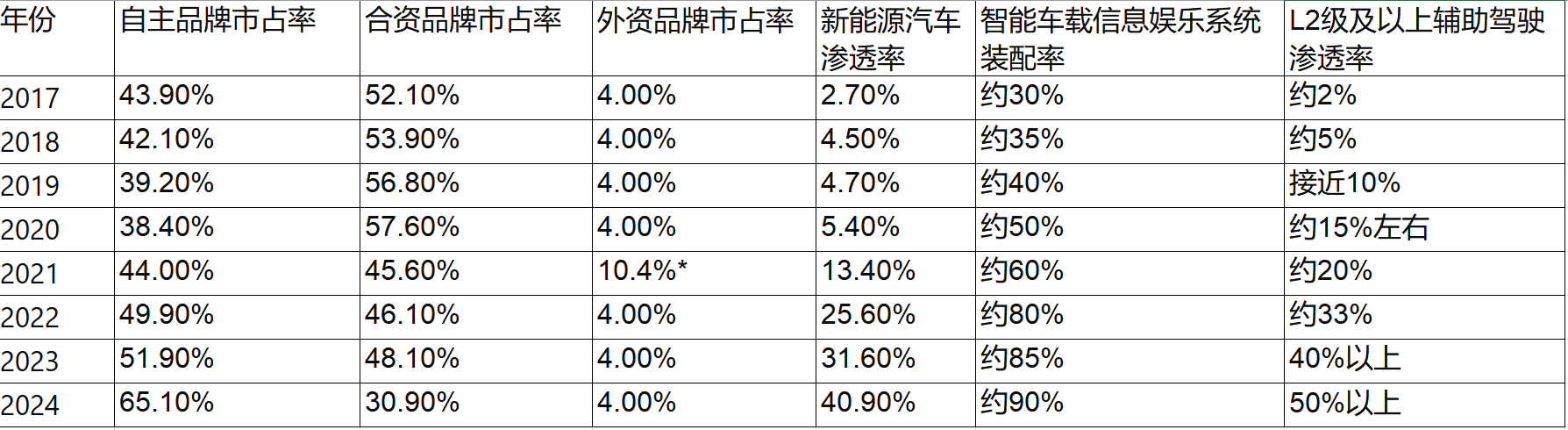
Core Insights - Goldman Sachs' report titled "2026 Outlook: Navigating Divergence" highlights 2026 as a pivotal year for the adoption of Battery Electric Vehicles (BEVs) and Navigation on Autopilot (NOA), suggesting that these technologies may develop into separate standards [1] - The report indicates a slowdown in BEV sales in Europe and the U.S., with consumers showing interest in advanced NOA but being cautious about purchasing BEVs [1][7] - In China, the integration of NOA in vehicles has led to a significant increase in sales, showcasing the advantages of BEVs in utilizing NOA, while traditional fuel vehicles are losing market share [1][5] Group 1: Market Trends - The market share of domestic brands in China has risen from 43.9% in 2017 to 51.9% in 2023, with the penetration rate of new energy vehicles increasing from 2.7% to 31.6% during the same period [3] - The report notes that the global electricity consumption of BEVs is expected to grow from 0.7% in 2024 to 2.5% by 2030, despite a stabilization in new BEV sales [7] - The competition landscape is shifting as NOA enhances the recognition and purchase intent for domestic brands, narrowing the gap with joint venture brands [5][6] Group 2: Technological Developments - Many automotive companies are focusing on applying NOA in hybrid models, although Goldman Sachs expresses skepticism about the medium-term effectiveness of this strategy [13] - The report lists various global automakers' progress in developing electronic and electrical architectures and end-to-end autonomous driving technologies, with companies like Tesla and BYD having completed their developments [14] - Traditional fuel vehicle manufacturers are exploring NOA applications in hybrid vehicles, but face challenges due to the inherent complexities of integrating NOA into their existing systems [15][16] Group 3: Future Outlook - The report suggests that by 2026, NOA may not solely rely on BEVs for growth, as traditional vehicles could also play a role in developing their own systems [19] - Concerns are raised about whether hybrid vehicles will be able to catch up with BEVs in terms of NOA capabilities, especially as BEVs are already testing Level 3 autonomous driving [19] - The future of NOA in traditional vehicles will depend on their ability to attract consumers and demonstrate value, as the market for traditional fuel vehicles remains substantial [19]