吉利汽车

Search documents
大和:欧盟批准内地车企最低进口价格 比亚迪股份、吉利汽车受惠
智通财经网· 2026-01-14 07:49
Core Viewpoint - The EU has issued price commitment guidelines for Chinese exporters, allowing eligible car manufacturers to replace existing high tariffs with a minimum import price, which is seen as a positive development for companies not engaged in low-price competition in Europe, such as BYD and Geely [1] Group 1: Impact on Chinese Automakers - The report suggests that the prices of electric vehicles sold by Chinese brands in Europe are unlikely to decrease [1] - The main positive impact is that automakers can retain the tariff differential that would have been paid to the EU, which is expected to improve profit margins [1] - Companies like BYD and Geely, which have performed well in Europe, are anticipated to benefit directly, maintaining current prices while enjoying higher profit margins [1]


大和:欧盟批准内地车企最低进口价格 比亚迪股份(01211)、吉利汽车(00175)受惠
智通财经网· 2026-01-14 07:44
Core Viewpoint - The EU has issued price commitment guidelines for Chinese exporters, allowing eligible car manufacturers to replace existing high tariffs with a minimum import price, which is seen as a positive development for companies not engaged in low-price competition in Europe, such as BYD and Geely [1] Group 1: Impact on Chinese Car Manufacturers - The new guidelines are expected to improve profit margins for car manufacturers by allowing them to retain the tariff differential that would have been paid to the EU [1] - Companies like BYD and Geely, which have performed well in Europe, are anticipated to benefit directly from these changes, maintaining current prices while enjoying higher profit margins [1]
欣旺达董事长回应沃尔沃召回风波:涉事电池组并非欣旺达供货
Sou Hu Cai Jing· 2026-01-14 07:25
Group 1 - Volvo Cars is recalling its EX30 electric vehicles due to potential thermal runaway risks associated with the battery packs [2][3] - The battery cells in question are not supplied by the battery manufacturer, Sunwoda, but are produced by a joint venture between Geely and Sunwoda, where Sunwoda holds a 30% stake [1][2] - Prior to the recall, the electric vehicle technology company, Weirui, which is owned by Geely and Zeekr, had sued Sunwoda for 2.314 billion yuan over defective batteries supplied to Zeekr vehicles [2][3] Group 2 - Sunwoda reported a total revenue of 43.534 billion yuan for the first three quarters of 2025, representing a year-on-year growth of 13.73%, and a net profit attributable to shareholders of 1.405 billion yuan, up 15.94% year-on-year [3] - In the first eleven months of 2025, Sunwoda's domestic power battery installation volume reached 21.8 GWh, capturing a market share of 3.25%, ranking sixth in the industry [3]


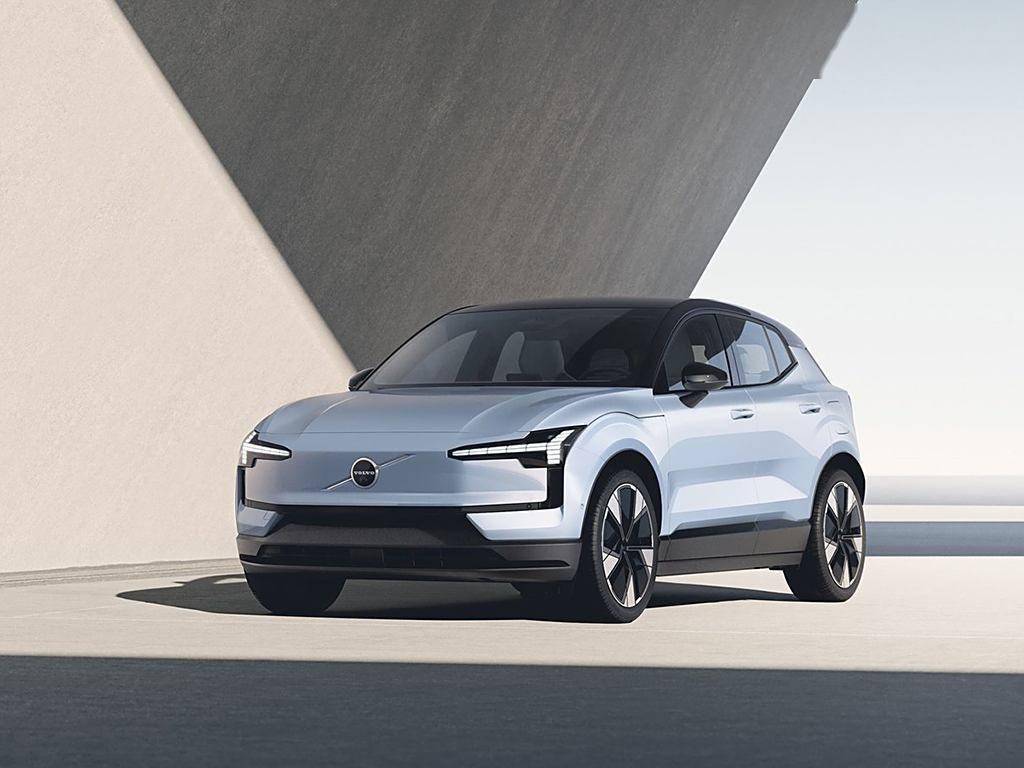
从“车能融合”看未来,绿色甲醇如何破解交通减排难题
Zhong Guo Qing Nian Bao· 2026-01-14 07:20
Core Viewpoint - The global automotive industry is accelerating its transition to green and low-carbon technologies, with a diverse range of technical routes emerging, including green synthetic fuels like hydrogen, ammonia, and methanol, which are seen as strategic supplements to electrification [1] Group 1: Green Methanol Development - The development of green methanol is not merely about fuel substitution but involves a systemic approach to energy system reconstruction and industrial ecosystem collaboration [2] - The concept of "vehicle-energy integration" emphasizes that future competition will be about the transportation energy ecosystem rather than just automotive products [2] - Green methanol is positioned as a key player in addressing electrification challenges in specific scenarios such as heavy-duty transport and cold regions, showcasing its economic and low-carbon potential [4] Group 2: Advantages of Green Methanol - Green methanol acts as a "renewable energy carrier" and "power stabilizer," converting abundant renewable energy into liquid fuel for long-distance transport and storage [3] - Its production can utilize various resources, including industrial by-product hydrogen and organic waste, aligning with China's resource endowment [3] - The focus should be on reducing lifecycle carbon emissions rather than strictly adhering to "absolute green" raw materials during the initial industrialization phase [3] Group 3: Challenges to Scale-Up - The high production cost of green methanol remains a significant barrier to market competitiveness, necessitating a focus on low-carbon methanol production methods [5] - The lack of standards and certification systems for green methanol poses another challenge, highlighting the need for alignment with international standards to facilitate global trade [5] - Infrastructure development for methanol refueling stations is lagging, with existing gas stations being potential sites for conversion to multi-energy stations [6] Group 4: Policy and Market Dynamics - Policy precision and systemic guidance are crucial for overcoming challenges, including integrating green methanol's carbon reduction benefits into carbon markets [6] - Demonstration projects in specific sectors like heavy trucks and shipping are recommended to drive technological innovation and cost reduction [6] - The transition to a green methanol ecosystem is seen as a vital part of China's broader energy transformation strategy, with the potential to provide a "Chinese solution" for global decarbonization challenges in heavy transport [7]
2025年中国汽车产销量创历史新高,连续17年稳居全球第一
Xin Lang Cai Jing· 2026-01-14 07:19
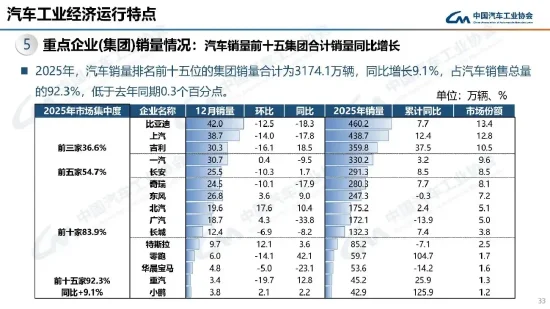
Core Insights - The Chinese automotive industry is projected to achieve record production and sales figures in 2025, with production reaching 34.53 million vehicles and sales at 34.40 million vehicles, maintaining its position as the world's largest automotive market for 17 consecutive years [1][4]. Group 1: Market Performance - The passenger vehicle market is experiencing steady growth, significantly contributing to the overall automotive market expansion [5]. - The commercial vehicle market is recovering, with production and sales increasing by over 10%, surpassing 4 million units [5]. - New energy vehicles (NEVs) are leading the market, with production and sales exceeding 16 million units, accounting for over 50% of domestic new car sales [5]. Group 2: Export and Trade - The automotive export market shows strong resilience, with total exports exceeding 7 million vehicles, including 2.615 million NEVs, marking a new high in export scale [5]. Group 3: Market Concentration - The top fifteen automotive groups sold a total of 31.741 million vehicles, reflecting a year-on-year growth of 9.1%, which constitutes 92.3% of total vehicle sales, slightly down by 0.3 percentage points from the previous year [5]. - The top three automotive groups, BYD, SAIC, and Geely, accounted for 36.6% of total vehicle sales [5]. - In the NEV segment, the top fifteen groups sold 15.669 million units, a year-on-year increase of 29.2%, representing 95% of total NEV sales, up by 0.7 percentage points from the previous year [5].

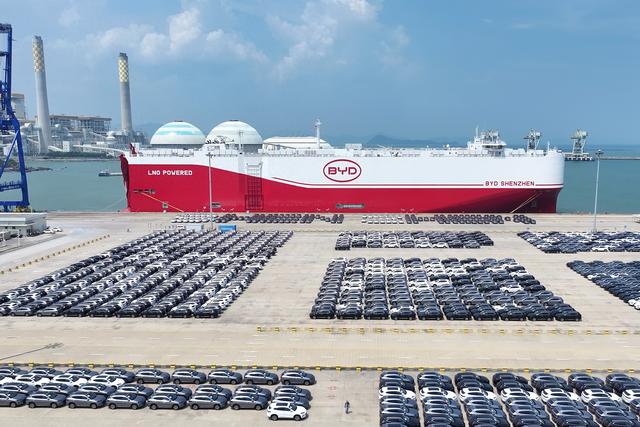
2025年我国新能源汽车出口达261.5万辆,出口规模再上新台阶
Xin Lang Cai Jing· 2026-01-14 07:19
Core Insights - The Chinese automotive industry is projected to achieve record production and sales figures of 34.53 million and 34.40 million vehicles respectively in December 2025, maintaining its position as the world's largest market for 17 consecutive years [1][4]. Group 1: Market Performance - The passenger vehicle market is experiencing steady growth, significantly contributing to the overall automotive market expansion [5]. - The commercial vehicle market is recovering, with production and sales increasing by over 10%, surpassing 4 million units [5]. - New energy vehicles (NEVs) are leading the market, with production and sales exceeding 16 million units, accounting for over 50% of domestic new car sales [5]. Group 2: Export and Trade - The automotive export market shows strong resilience, with total exports exceeding 7 million vehicles, including 2.615 million NEVs, marking a new high in export scale [5]. Group 3: Market Concentration - The top fifteen automotive groups sold a total of 31.741 million vehicles, reflecting a year-on-year growth of 9.1%, which constitutes 92.3% of total vehicle sales, slightly down by 0.3 percentage points from the previous year [5][7]. - The top three groups, BYD, SAIC, and Geely, accounted for 36.6% of total vehicle sales [5][7]. - In the NEV segment, the top fifteen groups sold 15.669 million units, a year-on-year increase of 29.2%, representing 95% of total NEV sales, up by 0.7 percentage points from the previous year [5][7].



外资机构分析师:中欧EV价格承诺指引显利好,吉利、小鹏等高欧洲敞口车企或受最大提振
Guan Cha Zhe Wang· 2026-01-14 07:15
【文/观察者网 潘昱辰 编辑/高莘】据《华尔街日报》1月13日报道,随着中欧电动汽车案磋商取得进 展、欧盟将向出口纯电动汽车的中国出口商提供关于价格承诺的通用指导,分析师认为,这一进展将对 中国汽车制造商的与市场产生积极影响。 花旗银行分析师在一份报告中写道,中欧磋商的进展可能对在欧洲有大量敞口的中国汽车制造商产生轻 微的积极影响,同时也将有助于宝马、大众和沃尔沃等欧洲车企向欧洲进口更多中国制造的汽车。不 过,这也将加剧欧洲市场的竞争,并进一步降低欧洲的生产能力。花旗同时认为,这笔交易无法以任何 方式帮助在中国的欧洲汽车制造商,因为其在中国的市场份额下降仍然是不可避免的。 星展银行分析师同样在一份报告中表示,与欧盟有业务往来的中国汽车制造商,可能会从中欧磋商的进 展中受益最多。星展表示,双方旨在解决补贴问题,而不仅仅依赖关税,通过降低关税风险,中国车企 可以提高出口竞争力,提高利润率,支持国际增长战略。包括上汽、比亚迪、小鹏、零跑和吉利在内的 公司可能会受益最多,因为它们在欧盟的敞口更大。相比之下,理想和蔚来这样专注于国内市场的企业 的影响可能较小。 分析师表示,星展首先看好的是吉利和小鹏,因为它们的销量增长 ...

三年两款,雷诺将在韩推出与吉利合作第二款车型
Guan Cha Zhe Wang· 2026-01-14 06:49
该车型基于合作伙伴吉利的紧凑型模块化架构打造,并将在雷诺位于韩国釜山的工厂投产。吉利也通过 官方渠道确认了这一消息。 在Filante车型背后,雷诺与吉利的合作其实已走过数年磨合期。早在2022年,双方就围绕动力总成与区 域制造展开接触,随后在韩国市场率先落地——雷诺将釜山工厂部分产能向吉利开放,引入其模块化平 台与混合动力技术,用于开发面向本地与出口市场的新车型。2024年上市的大科雷傲(Grand Koleos),正是这一合作机制下的首个成果。 对雷诺而言,与吉利合作的核心价值在于"降本+提速"。在电动化与智能化投入高企、欧洲市场增长趋 缓的背景下,雷诺需要更具性价比的技术路径与更灵活的区域制造能力。吉利成熟的模块化架构、混合 动力系统以及在亚洲供应链上的规模优势,使雷诺能够在不大幅增加研发成本的前提下,快速推出符合 新兴市场需求的产品。 (文/观察者网 张家栋 编辑/高莘) 据路透社1月13日报道,雷诺宣布,其全新Filante混合动力SUV跨界车型将于今年3月率先在韩国上市, 并计划于2027年初进入拉丁美洲及海湾国家市场。 路透社 本文系观察者网独家稿件,未经授权,不得转载。 场,共同生产和销售汽车 ...

智能汽车ETF(159889)盘中涨超2%,政策与技术双轮驱动行业前景
Mei Ri Jing Ji Xin Wen· 2026-01-14 06:39
Core Viewpoint - The Shanghai Municipal Government has issued a three-year action plan (2026-2028) to support the transformation and upgrading of advanced manufacturing, emphasizing the development of the intelligent connected new energy vehicle industry, indicating ongoing policy support for the sector [1] Industry Dynamics - Geely Auto Group has obtained a full-area L3 autonomous driving road test license in Hangzhou, while BAIC Blue Valley's L3 vehicles are officially on the road and plan to gradually open to individuals, showcasing the acceleration of autonomous driving technology implementation [1] - The vehicle replacement policy from 2024 to 2025 is expected to drive the proportion of new energy vehicles to nearly 60%, indicating a sustained growth in industry demand [1] - In the humanoid robot sector, Chinese company Zhiyuan Robotics leads with a 39% global market share, reflecting the expansion of intelligent technology applications [1] - Despite the recent underperformance of the automotive sector, policy support and technological breakthroughs provide long-term development momentum for the smart automotive industry [1] Investment Vehicle - The Smart Automotive ETF (159889) tracks the CS Smart Automotive Index (930721), which selects listed companies involved in smart driving and vehicle networking from the A-share market, covering the entire smart automotive industry chain from hardware to software [1] - The index's industry allocation is primarily focused on information technology and consumer discretionary, aiming to reflect the overall performance of listed companies related to smart automotive [1]

特朗普对中国车企在美国生产持积极态度
日经中文网· 2026-01-14 06:32
Group 1 - Trump expressed a positive attitude towards Chinese car manufacturers establishing factories in the U.S., stating "let China in" during a speech in Detroit [2] - He emphasized that tariffs have prompted American automakers like General Motors and Ford to make significant investments in the U.S. [4] - Trump indicated that he does not exclude Chinese car manufacturers from producing in the U.S., aligning with previous statements made before his presidency [4] Group 2 - Chinese companies, including BYD, are striving to expand into overseas markets, with some indicating potential plans to enter the U.S. market [6] - Analysts warn that the entry of Chinese car manufacturers into the U.S. could impact Japanese companies that currently have an advantage in the North American market [6] - The North American strategy of Japanese automakers is based on the premise that Chinese cars do not enter the U.S. market, and their ecosystem may be threatened if this changes [6]