
京东方

Search documents
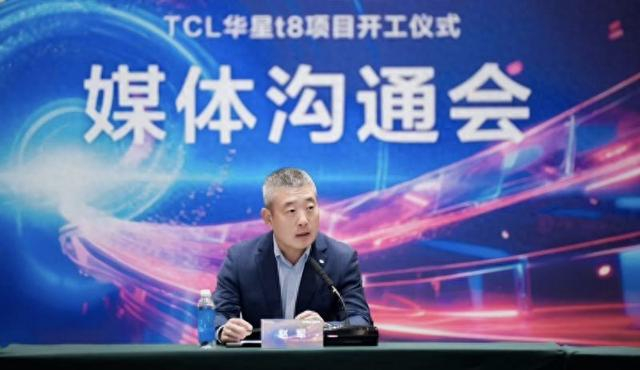
全球首条印刷OLED8.6代线开工!TCL华星295亿元押注,中尺寸“耐力赛”开启
Hua Xia Shi Bao· 2025-10-22 09:18
Core Viewpoint - TCL Huaxing has officially commenced construction of its OLED 8.6 generation line, becoming the fourth global player in this segment, with a total investment of approximately 29.5 billion yuan, expected to achieve mass production by 2027 [2][3]. Investment and Production - The T8 project is a joint investment between TCL Huaxing, the Guangzhou Municipal Government, and the Guangzhou Economic and Technological Development Zone Management Committee [2]. - The total investment of 29.5 billion yuan for the T8 project is significantly lower than that of competitors, such as BOE's 63 billion yuan and Visionox's 55 billion yuan for their respective OLED 8.6 generation lines [3][4]. Technology and Production Capacity - TCL Huaxing's T8 project is the world's first printed OLED 8.6 generation line, differing from competitors who use evaporation technology [3]. - The initial design capacity of the T8 project is 22,500 panels per month, which is lower than the 32,000 panels per month capacity of other OLED 8.6 generation lines [4]. - The company aims to achieve a 50% localization rate for equipment in the first phase of the T8 project, with expectations for further increases in subsequent phases [3]. Market Dynamics and Competition - The competition for mid-size displays is intensifying, with TCL Huaxing planning to expand its OLED market presence from niche professional fields to broader consumer electronics [5][6]. - The demand for AMOLED panels is projected to grow significantly, with an expected shipment of 1.01 billion panels in 2024, increasing to over 1.33 billion by 2030 [6]. - The entry of TCL Huaxing into the OLED market is seen as a challenge to South Korean companies, marking a shift in competitive dynamics within the industry [7]. Future Outlook - TCL Huaxing's first consumer OLED product is expected to enter mass production in the first half of next year, focusing on mid-size applications such as monitors, laptops, tablets, and automotive displays [5][6]. - The company anticipates that the growth of mid-size OLED demand will accelerate significantly starting in 2026, leading to increased competition and potential market consolidation [7].


智能穿戴设备密集上新,消费电子赛道迎新增长引擎
Zhong Guo Zheng Quan Bao· 2025-10-22 08:37
Group 1 - Rokid announced a strategic agreement with JD Technology to launch the JoyGlance shopping AI on Rokid smart glasses in November, enabling users to identify and purchase items through the glasses' camera [1] - Samsung Electronics released the Galaxy XR, the first XR headset based on a joint development platform with Google and Qualcomm, featuring a 2.5-hour battery life and integration with the Gemini large model for task management [1] - Samsung is developing various XR terminal products, including AI glasses, to expand its product offerings in the XR market [1] Group 2 - Meta partnered with Oakley to launch the AI smart glasses Oakley Meta Vanguard, designed for sports, with a 9-hour battery life and high-resolution recording capabilities, set to retail at $499 [2] - IDC predicts that global smart glasses shipments will reach 14.518 million units by 2025, a 42.5% year-on-year increase, while China's market is expected to grow by 121.1% to 2.907 million units [2] - The smart glasses chip market includes SoC main control chips, storage chips, and Bluetooth chips, with Qualcomm leading in XR-specific computing platforms, while domestic companies focus on low power consumption and audio processing [2]
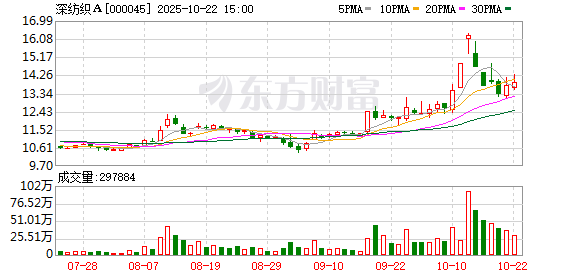
深纺织A:公司偏光片产品未直接出口至欧盟国家
Mei Ri Jing Ji Xin Wen· 2025-10-22 07:13
Group 1 - The company has received recognition for its products from both domestic and international clients [2] - The company's polarizer products are primarily supplied to major panel manufacturers and module companies, including Huaxing Optoelectronics, BOE, and LGD [2] - The company does not directly export its products to EU countries and has disclosed relevant information as required [2]

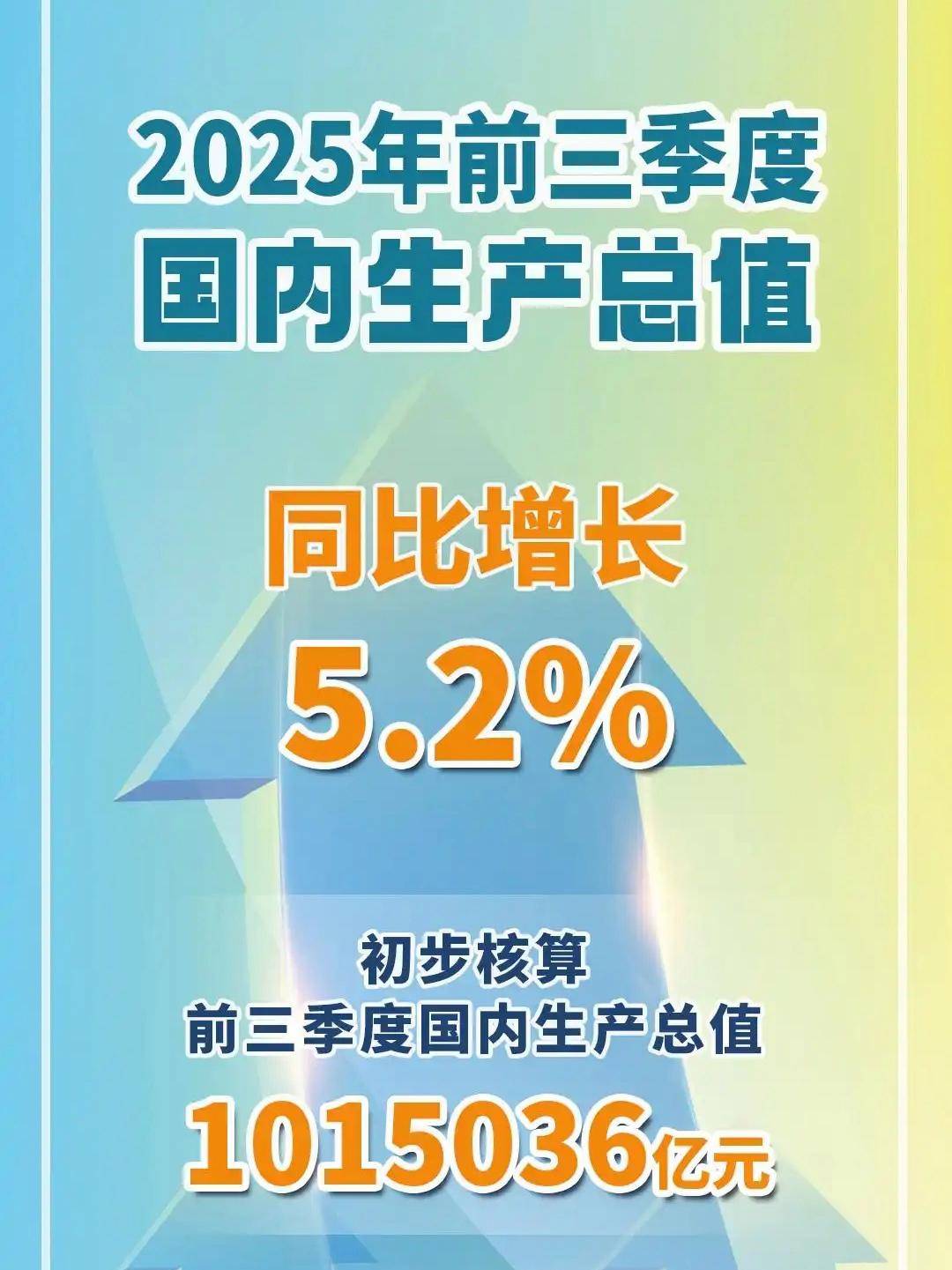
前三季度给力!全国GDP超101.5万亿,四川近5万亿,那河南、广东呢
Sou Hu Cai Jing· 2025-10-22 05:47
Economic Overview - China's GDP exceeded 101.5 trillion yuan in the first three quarters of 2025, with a year-on-year growth of 5.2%, reflecting the deep resilience of the economy under multiple pressures [1] - The contribution of social retail sales to GDP was nearly 65%, with significant performance in upgraded consumption categories such as smart home appliances and cultural tourism services [1] Industry Insights - The manufacturing sector is supported by the upgrade and cultivation of new driving forces, with a more than 30% year-on-year increase in new energy vehicle production and double-digit growth in strategic emerging industries like integrated circuits and industrial robots [1] - The clean energy industry in Sichuan province saw an 18% increase in added value, driven by the second-largest hydropower station and resources in vanadium-titanium, contributing over 60 billion yuan to industrial added value [4] Trade and Export - Exports of "new three items" such as electric passenger cars, lithium batteries, and solar cells increased by 21% year-on-year, playing a crucial role in stabilizing foreign trade [1] Policy Impact - The issuance of new special bonds reached 2.8 trillion yuan in the third quarter, focusing on technology innovation and modern infrastructure, effectively activating market expectations [2] Regional Economic Performance - Sichuan province's GDP approached 5 trillion yuan with a nominal growth rate of 4.93%, supported by the construction of the Chengdu-Chongqing economic circle and the emergence of major industrial clusters [4] - The tourism sector in Sichuan experienced explosive growth, with summer tourism routes generating over 750 billion yuan in revenue, significantly boosting the restaurant and accommodation industries [4] Future Outlook - The economic growth data indicates a dynamic balance between new and old driving forces under the framework of innovation-driven, industry collaboration, and regional balance [7] - High-quality economic development is anticipated for the entire year as policy tools are further opened in the fourth quarter [7]
杉杉重整生变 相关方回应:赛迈科起诉对重整没影响 表决期结束后有结果
Xin Lang Cai Jing· 2025-10-22 03:46
Group 1 - The core issue revolves around the restructuring of Shanshan Group, where the original selected investor, Saimaike, has been excluded from the restructuring process, leading to a lawsuit to delay the creditor voting [1][2] - Saimaike claims that its qualification as a restructuring investor was changed without its knowledge by the management firm Zhonglun Law Firm, which replaced it with a fund under TCL [1] - The third creditor meeting took place on October 21, and while the meeting has occurred, there is still a voting period before the results are finalized [1] Group 2 - Saimaike was one of the shortlisted investors in the restructuring process, which involved narrowing down from 17 to 3 potential investors [2] - The final three investors include a consortium led by BOE Technology Group, China National Building Material Group, and the Yangtze River consortium, which includes Jiangsu New Yangtze Commerce [2] - Saimaike filed a lawsuit on October 15, seeking to invalidate the restructuring investment agreement signed on September 29 and to postpone the creditor meeting [2]
AI智能眼镜出货量同比增长超64%,消费电子ETF(561600)长期值得关注
Xin Lang Cai Jing· 2025-10-22 02:25
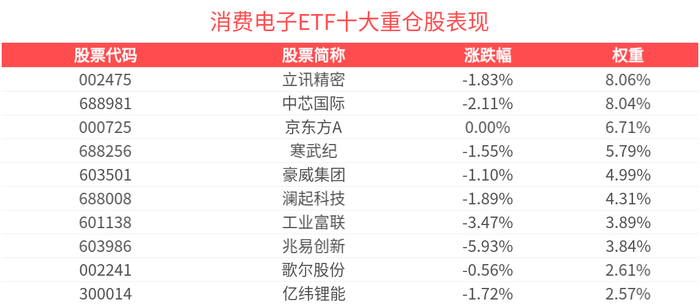
Group 1: Market Overview - The global smart glasses market is expected to reach a shipment volume of 4.065 million units in the first half of 2025, representing a year-on-year growth of 64.2% [1] - The industry is entering a rapid development phase driven by AI technology, supply chain optimization, optical solution advancements, and major players entering the market [1] - By 2029, global smart glasses shipments are projected to exceed 40 million units, with China's market share steadily increasing and a five-year compound annual growth rate (CAGR) of 55.6% from 2024 to 2029, the highest globally [1] Group 2: Index Performance - As of October 22, 2025, the CSI Consumer Electronics Theme Index (931494) has decreased by 1.77%, with component stocks showing mixed performance [1] - Leading gainers include Lixun Precision (3.85%), Deli Technology (2.93%), and Huagong Technology (1.76%), while major decliners include Zhaoyi Innovation (5.93%), Huatian Technology (5.12%), and Silan Microelectronics (4.23%) [1] - The Consumer Electronics ETF (561600) has fallen by 2.09%, with a recent price of 1.22 yuan, but has seen a cumulative increase of 3.84% over the past week as of October 21, 2025 [1] Group 3: Index Composition - The CSI Consumer Electronics Theme Index comprises 50 listed companies involved in component production and consumer electronics brand design and manufacturing [2] - As of September 30, 2025, the top ten weighted stocks in the index include Luxshare Precision, SMIC, Cambricon, Industrial Fulian, and others, collectively accounting for 55.93% of the index [2]






研判2025!中国微纳光学器件行业产业链、市场规模及重点企业分析:高端应用面临技术挑战,规模化生产仍待突破[图]
Chan Ye Xin Xi Wang· 2025-10-22 01:15
Core Insights - The Chinese micro-nano optical device industry is experiencing rapid growth driven by technological breakthroughs and market demand, with a projected market size of approximately 865 million yuan in 2024, representing a year-on-year increase of 2.13% [1][4][8] - China has achieved global leadership in areas such as 3nm lithography, atomic-level manufacturing (0.3nm precision), and all-solid-state deep ultraviolet lasers, supporting the nano-level processing of micro-nano components like superlenses and diffraction gratings [1][4][8] - High-end applications of micro-nano optical devices, such as quantum information and biosensing, face technical challenges including insufficient nano-imprinting precision and poor stability of phase-change materials, limiting large-scale production [1][4][8] Industry Overview - Micro-nano optical devices operate at sub-wavelength scales (micron to nano level) to emit, guide, modulate, localize, absorb, and detect light, characterized by micro-nano structural designs that precisely control light field properties [4][5] - These devices are compact, highly integrated, and multifunctional, meeting the demands for miniaturization and multifunctionality in modern equipment, with typical applications in AR/VR near-eye displays, biosensing, optical communication, and quantum information processing [4][5] Industry Value Chain - The upstream of the micro-nano optical device industry includes raw materials such as optical glass, optical crystals, optical plastics, coating materials, and nano materials, as well as production equipment like lithography machines and nano-imprinting machines [4][5] - The midstream involves the manufacturing of micro-nano optical devices, while the downstream applications span consumer electronics, optical communication, biomedical imaging, and automotive electronics [4][5] Market Size - The micro-nano optical device industry in China is projected to grow significantly, with a market size of approximately 865 million yuan in 2024, reflecting a year-on-year growth of 2.13% [1][4][8] - The lithography machine market in China is expected to reach 17.875 billion yuan in 2024, with an 11.11% year-on-year increase, driven by the rising demand for chips due to emerging technologies like 5G, AI, and IoT [6][7] Key Companies - Suzhou Su Da Wei Ge Technology Group Co., Ltd. is a leading enterprise in the micro-nano optical industry, developing nano-imprinting and laser direct-write lithography equipment, achieving 12-inch wafer-level imprinting, and supporting high-end products like AR diffraction waveguide lenses [8] - Shenzhen Hui Chuang Da Technology Co., Ltd. is a global leader in laptop light guide structure components, utilizing micro-nano imprinting technology to achieve self-sufficient production of light guide films and backlight modules, entering supply chains of major companies like Lenovo and HP [9] Industry Development Trends 1. Continuous technological innovation will drive improvements in high-precision manufacturing, with advanced lithography technologies like EUV expected to enhance manufacturing precision [10] 2. Significant growth in market demand is anticipated, with micro-nano optical devices expanding from traditional optical instruments to emerging markets such as semiconductor lighting, VR, and AR [10] 3. The industry landscape is optimizing, with Chinese companies expected to enhance their competitiveness in technology innovation and market expansion, potentially becoming the largest production base for ultra-precision micro-nano optical devices globally [11]




【奥来德(688378.SH)】业绩符合预期,关注大客户在设备及材料端的合作赋能——25年前三季度业绩预告点评(赵乃迪/周家诺)
光大证券研究· 2025-10-21 23:07
Core Viewpoint - The company anticipates a decline in revenue and net profit for the first three quarters of 2025, with a significant drop in both operational and non-operational profit metrics [4][5]. Group 1: Financial Performance - For the first three quarters of 2025, the company expects revenue between 370 to 400 million yuan, representing a year-on-year decrease of 13.75% to 20.22% [4]. - The projected net profit attributable to shareholders is estimated to be between 29 to 34 million yuan, reflecting a year-on-year decline of 66.42% to 71.36% [4]. - The company anticipates a non-operational net profit loss between 6.7 to 5.6 million yuan, indicating a year-on-year decrease of 108.47% to 110.13% [4]. - In Q3 2025, the company expects to achieve revenue of 8.9 to 11.9 million yuan, a year-on-year decrease of 2.17% to 26.83% and a quarter-on-quarter decrease of 6.87% to 30.34% [4]. Group 2: Business Segments - The materials business is projected to generate revenue between 310 to 330 million yuan for the first three quarters of 2025, showing a year-on-year growth of 2.68% to 9.31% [5]. - The electronic functional materials, including OLED organic light-emitting materials and PSPI materials, have successfully been introduced to customers, contributing to steady sales growth in the materials segment [5]. - The equipment business is expected to generate revenue between 60 to 70 million yuan, reflecting a year-on-year decline of 56.66% to 62.85% [5]. - The decrease in equipment revenue is attributed to the transition period of OLED production lines, particularly the 6th generation line nearing completion and the 8.6 generation line under construction, leading to a temporary drop in evaporator demand [5]. Group 3: Strategic Partnerships - The company has signed a strategic cooperation framework agreement with BOE Technology Group, focusing on four core areas related to OLED organic materials and evaporator equipment [6][7]. - The partnership aims to ensure the security of evaporator supply and promote innovation in key equipment technologies, including OLED display evaporators and perovskite vapor deposition equipment [6]. - The collaboration is expected to deepen the company's relationship with major clients, potentially leading to significant performance growth and expansion in both equipment and materials businesses [7].


北京东方园林环境股份有限公司关于独立董事获得独立董事培训证明的公告
Shang Hai Zheng Quan Bao· 2025-10-21 19:27
Core Viewpoint - Beijing Oriental Garden Environment Co., Ltd. has announced the election of independent directors and provided updates on ongoing litigation, indicating a focus on corporate governance and legal matters affecting the company [1][2]. Group 1: Independent Director Training - The company held its third extraordinary general meeting on July 28, 2025, where Yang Lei and Zhang Xiaoyu were elected as independent directors for the ninth board, with their term lasting until the board's term ends [1]. - Yang Lei has completed the required training and obtained the independent director training certificate from the Shenzhen Stock Exchange [1]. Group 2: Litigation Progress - The company and its subsidiaries have faced a total of 31.7 million yuan in litigation and arbitration cases over the past twelve months, representing approximately 20.61% of the company's latest audited net assets [2]. - Of this amount, 13.5 million yuan is related to cases where the company is the plaintiff, accounting for about 8.79% of the latest audited net assets [2]. Group 3: Ongoing Legal Matters - The company is actively managing its litigation cases, with ongoing cases as a plaintiff progressing normally, and any significant developments will be disclosed as required [4]. - For cases where the company is a defendant, creditors can seek repayment based on the reorganization plan for debts incurred before November 22, 2024, without impacting the company's post-reorganization operations [5][6]. - Other minor lawsuits primarily involve engineering contract disputes and labor disputes, which do not meet the disclosure standards set by the Shenzhen Stock Exchange [5].

VR与AI深度融合正重塑产业格局
Zheng Quan Ri Bao· 2025-10-21 16:25
Core Insights - VR technology is transitioning from a supplementary tool to a necessity in various sectors such as industry, healthcare, education, and cultural tourism, driven by the integration of AI [1] - The 2025 World VR Industry Conference highlighted the theme "VR makes the world more exciting - VR + AI opens the digital future," focusing on four core activities: release, discussion, connection, and experience [1] - The deep integration of AI and VR is reshaping industry dynamics and is seen as a new force driving the transformation of the digital economy and physical industries [1] Industry Developments - A wide range of advanced technologies were showcased at the conference, including AI glasses for real-time translation and intelligent robots, demonstrating the convergence of virtual and real experiences [2] - New display technologies like OLED and MicroOLED have significantly improved the resolution of VR headsets, enhancing visual clarity and detail [2] - The introduction of the Real pixel FastLCD display technology by BOE has set a new record for LCD resolution, addressing traditional VR display limitations and preparing for mass production [2] Market Trends - The global VR industry is expanding, with China emerging as a key growth area, making significant advancements in hardware manufacturing, content development, and application scenarios [3] - Core technologies such as chips, micro-displays, and optical waveguides are rapidly advancing, leading to a high demand for new products like AR glasses [3] - The optimization of domestic 3D rendering engines and development tools, along with the acceleration of generative AI technology, has significantly improved the supply of quality content [3] AI and VR Integration - The fusion of AI and VR is creating new applications and business models across various sectors, including entertainment, education, and healthcare [4] - AI's deep learning capabilities enhance VR content generation and interaction, while VR provides a realistic platform for AI applications [4] - Companies are actively implementing "AI+" action plans to explore new paths for the integration of AI and VR, fostering a collaborative ecosystem for industry development [4] Future Directions - Experts emphasize the need for deeper integration of AI and VR technologies, focusing on overcoming common technical challenges and enhancing the synergy between algorithms and hardware [5] - There is a call to promote the application of "AI + VR" in areas such as industrial digital twins, medical VR training, and immersive cultural tourism experiences [5] - The establishment of an XR patent pool and the development of industry standards are crucial for fostering a collaborative and innovative XR industry ecosystem [5] Challenges and Solutions - The VR/AR/XR industry in China faces key bottlenecks, including high reliance on foreign core components and insufficient cross-domain collaboration [6] - To address these challenges, the industry is encouraged to enhance R&D investment, foster cooperation among upstream and downstream players, and create replicable benchmark cases in digital tourism and telemedicine [6] - Active participation in global industry collaboration is essential for improving technical standards and intellectual property rights, promoting an open and win-win global VR industry ecosystem [6]