OPPO

Search documents
OPPO发布新AI操作系统,首发搭载Find X9系列、一加15等机型
Guo Ji Jin Rong Bao· 2025-10-15 14:02
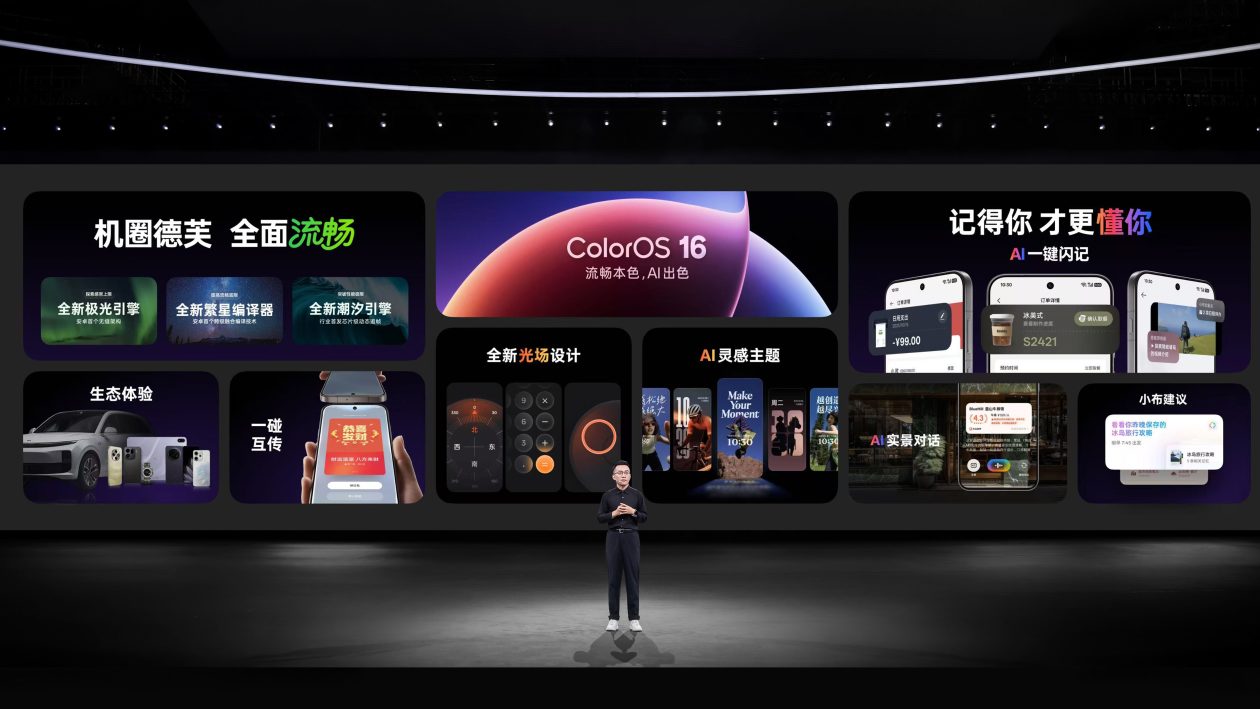
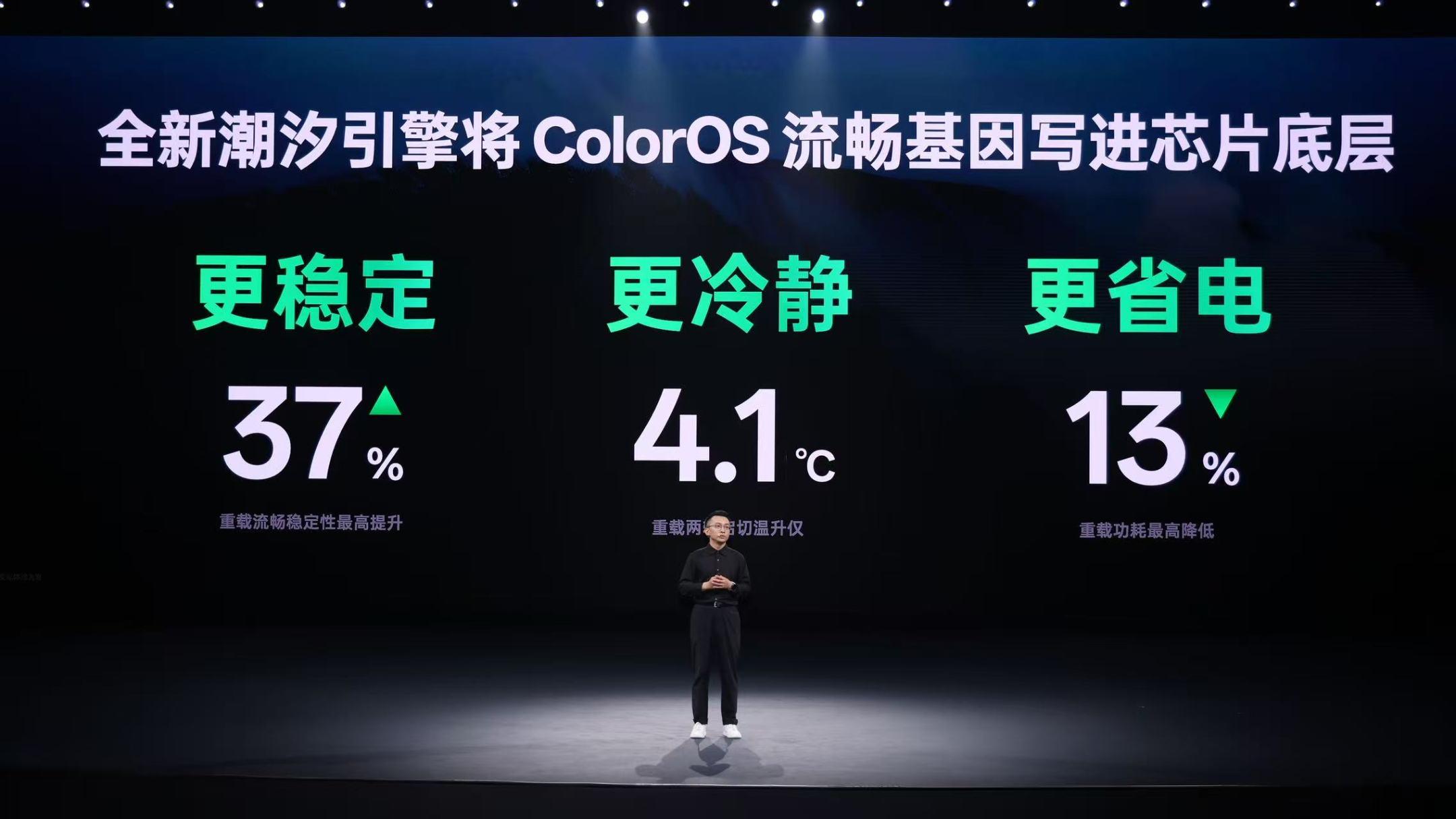
Core Insights - The competition in the smartphone industry is shifting from hardware performance to software experience as marginal improvements in hardware become less significant [1] - OPPO has launched its new mobile operating system, ColorOS 16, at the 2025 OPPO Developer Conference, emphasizing a seamless and smooth user experience [1][2] - ColorOS 16 integrates three core technology engines: Aurora Engine, Tidal Engine, and Star Compiler, to enhance system-level fluidity [1][2] Software Experience Enhancements - The Aurora Engine introduces the first seamless architecture on the Android platform, allowing for integrated rendering and distributed response scheduling, achieving a smooth interaction experience [1] - The Tidal Engine features chip-level dynamic frame tracking technology, improving fluidity by 37% and reducing power consumption by 13% during system overload scenarios [2] - The Star Compiler utilizes a unique Android cross-level fusion compilation technology, enabling mid-range devices to achieve performance comparable to flagship models [2] Cross-Device Connectivity - ColorOS 16 will be initially available on upcoming devices such as the OPPO Find X9 series and OPPO Pad 5, and it breaks down brand ecosystem barriers by allowing OPPO phones to receive calls and notifications from iPhones [4] - The system supports seamless connectivity with AirPods, including native noise control and spatial audio features [4] - The upgraded cross-screen interaction allows users to mirror their phone screens to computers and transfer files easily, enhancing multi-device collaboration efficiency [5] AI Strategy - OPPO has introduced a new AI strategy based on three technological foundations: On-Device Compute, PersonaX memory engine, and Agent Matrix ecosystem [5] - On-Device Compute focuses on high-density models and performance frameworks for mobile AI applications, achieving peak inference performance of 300 tokens/s [5] - PersonaX is a user-centered multi-modal memory engine that deeply understands user behavior across various dimensions, creating a "smart AI" capability [5] - The Agent Matrix framework enables cross-device collaboration for AI agents, enhancing user interaction through complex task planning and seamless device integration [5]

OPPO发布“新计算、新感知、新生态”全新AI战略布局
Zheng Quan Ri Bao Wang· 2025-10-15 12:18
Core Insights - OPPO launched the new ColorOS 16 and introduced a new strategic layout for OPPO AI at the 2025 OPPO Developer Conference (ODC25) in Shenzhen [1] - The new ColorOS 16 features a seamless architecture and significant performance improvements, including a 37% increase in system smoothness and a 13% reduction in power consumption [1] - OPPO AI's strategy focuses on "New Computing, New Perception, New Ecology," leveraging On-Device Compute, PersonaX memory engine, and Agent Matrix ecosystem [1][2] ColorOS 16 Features - The new Aurora Engine introduces the first seamless architecture for Android, integrating different business modules for smooth performance [1] - The upgraded Tidal Engine features industry-first chip-level dynamic frame tracking technology, optimizing system animation performance [1] OPPO AI Strategy - On-Device Compute enables high-density models and high-performance inference on mobile devices, achieving peak inference performance of 300 tokens/s and a maximum context length of 128k [2] - PersonaX is a user-centered multi-modal memory engine that builds a lifelong memory-driven AI capability [2] - Agent Matrix serves as the core platform for cross-device collaboration, enhancing user interaction through seamless and intelligent experiences [2] Privacy and Developer Support - OPPO introduced the "OPPO Privacy Security Protection System" to enhance user privacy management and transparency [2] - The company aims to support developers with a comprehensive solution from technical support to growth strategies, facilitating efficient growth while ensuring security compliance [2][3] Ecosystem Development - OPPO is opening application upload permissions to individual developers, allowing for greater innovation and equal growth support [3] - The OPPO Open Platform provides a streamlined overseas growth channel, enabling developers to reach 108 countries with a single application upload [3]
继iPhone后,华为等厂商将发布eSIM机型
3 6 Ke· 2025-10-15 11:52
与之相应的,10月14日,媒体发现苹果的中国官网也同步更新了iPhone Air的发售信息。明确表示在中国大陆范围内,中国移动、中国电信、中国联通均 可为其提供eSIM支持,且消费者从官方购买的iPhone Air均为"无合约机"。 换言之,10月22日正式发售的iPhone Air(官方渠道)不仅允许消费者自由选择不同运营商所提供的网络,还支持他们根据个人的喜好在不同运营商的资 费套餐间灵活切换。在这样的背景下,已官宣获得"eSIM手机运营服务商用试验批复"的三大运营商也进入了eSIM预约的冲刺阶段,争相推出了自己的线 上预约通道。 | 中国民信合面支持eSIM虚拟卡槽 標 Phone Air全新工 | | --- | | 14 省出空间/颜值拉满 机双号/虚拟卡槽 | | eSIM取消物理卡槽 双号实用隐私保护 空间里新成就极致轻薄 握脱传统SIM卡繁琐拆装 | | 2 电信加持/安全给力 59 优惠购机/尊享权益 | | 电信反诈平台全网守护 购机最高直降10800元 严控境内外潜在威胁 享2000M宽带及5G-A高速网络 | | eSIM手机 | | 通过电子化卡数据文件 | | 替代物理卡片 | | ...

手机“无卡化”来了:三大运营商可线下办,eSIM手机赛道鸣枪
Bei Ke Cai Jing· 2025-10-15 11:34
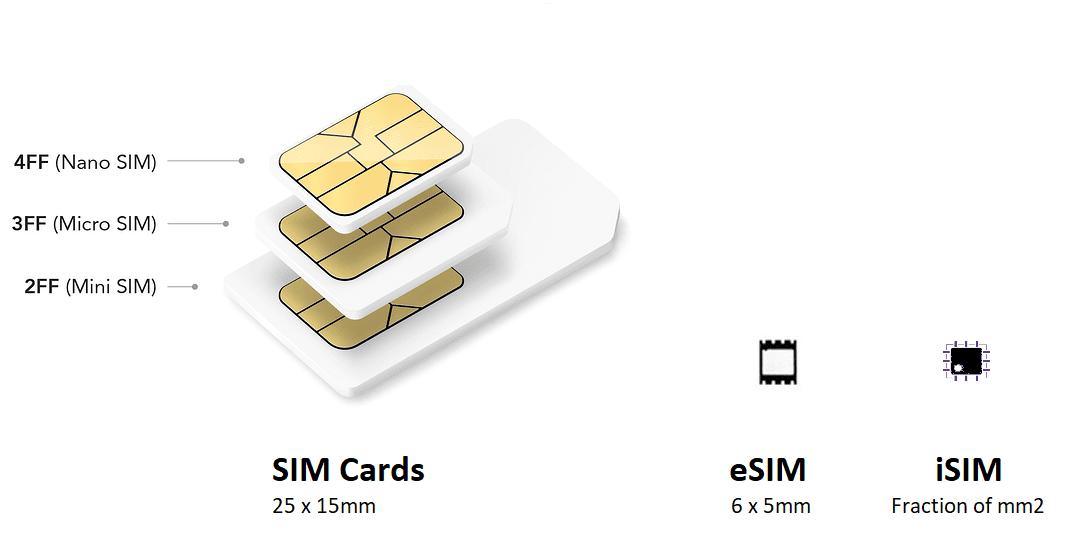
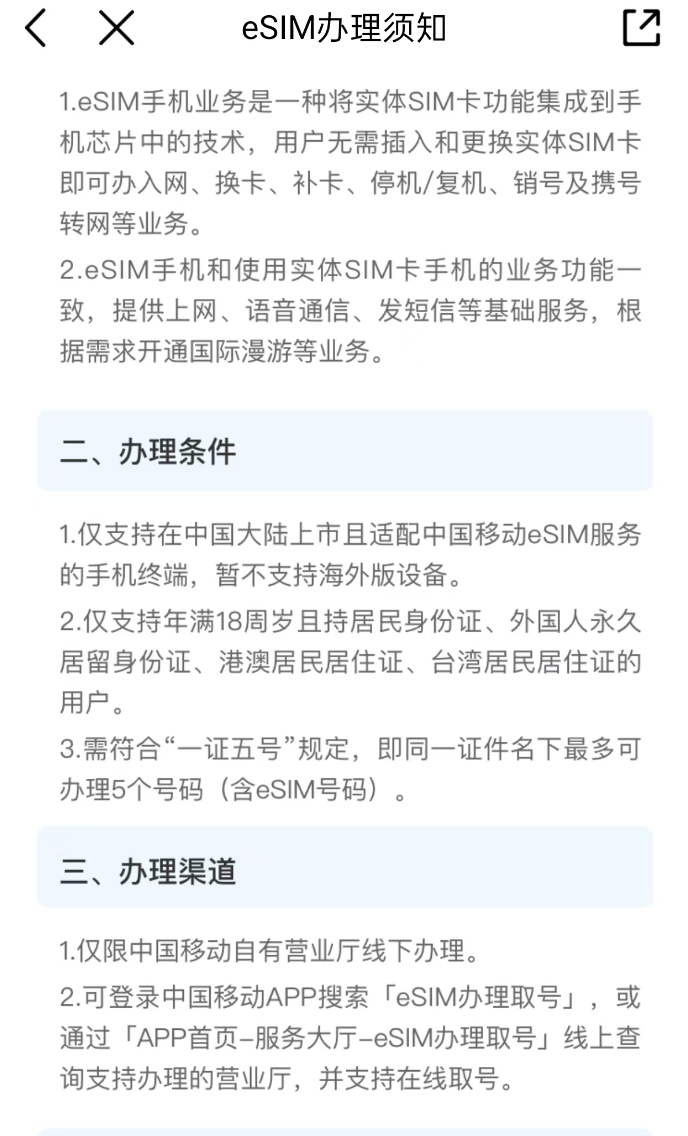
Core Points - The launch of iPhone Air in China is set for October 17, following the approval of eSIM services by major telecom operators [2][9] - The domestic smartphone market is rapidly adapting to the eSIM technology, with companies like Huawei and OPPO planning to release eSIM-enabled devices [3][14] - The transition to eSIM technology is seen as a significant step towards a "no-card" era in mobile communications [4][12] Group 1: eSIM Launch and Adoption - Major telecom operators in China, including China Mobile, China Unicom, and China Telecom, have received approval to conduct eSIM mobile service trials [4][9] - China Telecom has confirmed that eSIM services are officially available in all 31 provinces and municipalities in China [9] - As of October 15, over 185,000 users have already registered for eSIM services through China Unicom [8] Group 2: Market Dynamics and Competition - The introduction of eSIM technology is expected to reduce the physical space required for SIM cards in devices, making them smaller and lighter [9] - The competitive landscape may shift as eSIM technology allows users to switch carriers more easily, potentially decreasing customer loyalty to specific operators [10][11] - By 2025, global eSIM smartphone connections are projected to reach 1 billion, with significant growth expected by 2030 [15] Group 3: Industry Implications - The eSIM technology is anticipated to streamline the production process for manufacturers, allowing for a unified hardware version across global markets [17] - The domestic eSIM market is still in its early stages, with many manufacturers observing consumer acceptance before fully committing to large-scale production [16][17] - The transition to eSIM is viewed as an irreversible trend, with the iPhone Air launch acting as a catalyst for further adoption [12]



对话 OPPO AI 姜昱辰:手机才是 Memory 最好的土壤,AI 一定会彻底改变智能手机
Founder Park· 2025-10-15 11:26
Core Viewpoint - The article discusses the evolution and potential of AI products, particularly focusing on the role of mobile manufacturers like OPPO in developing AI capabilities that leverage personal data and memory systems to enhance user experience [6][7][12]. Group 1: AI Product Landscape - The AI industry is characterized by innovative products that aim to disrupt existing paradigms, yet many of these products struggle with user retention and engagement [3][4]. - There is a notable absence of mobile manufacturers in discussions about key players in the AI space, despite their significant user bases and potential for innovation [5][6]. Group 2: OPPO's AI Initiatives - OPPO has introduced "Little Memory," an AI product focused on memory systems, which was upgraded in October 2023 as part of ColorOS 16 [7][12]. - The development of AI products at OPPO is informed by a deep understanding of user needs and the importance of personal data accumulation [6][7]. Group 3: Memory and Personalization - The concept of an AI phone is evolving towards a personalized AI operating system that serves as a super assistant, utilizing extensive personal data to provide tailored services [12][14]. - Memory systems are crucial for enhancing user experience, allowing for the collection and organization of fragmented information across various applications [15][21]. Group 4: User Engagement and Feedback - User engagement with memory features has revealed diverse use cases, from academic study aids to personal finance management, indicating a broad spectrum of user needs [57][58]. - The feedback loop from users has been instrumental in refining the memory functionalities, leading to improvements in summarization and contextual understanding [43][48]. Group 5: Future Directions - The future of AI memory systems involves expanding capabilities to include proactive features that anticipate user needs and provide personalized insights [90][91]. - The integration of memory across devices and applications is seen as a key direction for enhancing user experience and maintaining relevance in a rapidly evolving tech landscape [67][70].

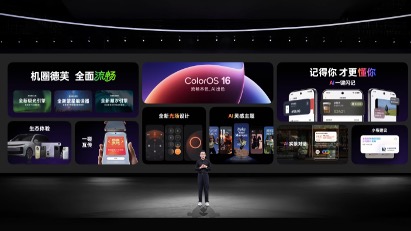
ColorOS 16携三大流畅科技亮相,首发搭载Find X9系列和一加15等机型
Jing Ji Wang· 2025-10-15 10:25
Core Insights - OPPO has officially launched the revamped ColorOS 16 at the 2025 OPPO Developer Conference, focusing on enhancing user experience through advanced technology and addressing user pain points [1][12] Group 1: Technological Innovations - ColorOS 16 introduces three major technologies for seamless performance, including the new Aurora Engine, which redefines the traditional Android modular architecture for a smooth user experience across various applications [3] - The new Tidal Engine features industry-first chip-level dynamic frame rate technology, improving system fluidity by 37% while reducing power consumption by 13%, ensuring stable performance even in high-load scenarios [3] - The self-developed Star Compiler enhances performance for low-power devices, significantly improving compilation efficiency and making flagship-level fluidity accessible to mid-range devices [4] Group 2: AI Enhancements - The upgraded AI One-Click Flash Note feature allows users to extract and summarize information from long texts and videos, streamlining the process of capturing ideas and managing content [6] - The system-wide integration of the AI memory feature enables users to search and retrieve past records easily, enhancing personalized interactions and recommendations based on user habits [7] - New AI functionalities include real-time transcription and summarization in recordings, as well as advanced writing support for various formats, enhancing productivity [8] Group 3: Cross-Device Connectivity - ColorOS 16 breaks down communication barriers with iPhone, allowing users to receive calls, messages, and notifications seamlessly on OPPO devices [11] - The cross-screen connectivity feature enables users to mirror their phone screens to computers, facilitating easy file transfers and notifications management [11] - OPPO's ecosystem enhancements include improved sharing capabilities across various platforms, enriching user experience [11] Group 4: Privacy and Developer Support - OPPO has introduced a privacy protection system to assist developers in achieving efficient growth while ensuring compliance [12] - The "One-Click Overseas" service simplifies the process for developers to launch applications globally, covering 108 countries without the need for multiple uploads [12]
该治好AI的健忘症了
虎嗅APP· 2025-10-15 09:50
Core Viewpoint - The article discusses the concept of "anterograde amnesia" in both a cinematic context and its parallel in AI technology, emphasizing the importance of memory in AI systems for enhancing user experience and task execution [4][6][35]. Group 1: AI and Memory Issues - Anterograde amnesia refers to the inability to form new long-term memories, which affects both individuals in films and early AI systems that struggled to retain user information [6][8]. - The emergence of AI agents capable of understanding tasks and executing them autonomously is hindered by the lack of memory, leading to a "chatbot" experience rather than a fully functional assistant [8][12]. - The computational cost of maintaining context in conversations increases significantly as the complexity of tasks rises, making memory a critical factor for AI development [9][12]. Group 2: Competitive Landscape in AI Memory - Major tech companies are competing to enhance AI memory capabilities, with significant investments being made to address the limitations of current models [13][14]. - The introduction of memory features by companies like Apple, OpenAI, OPPO, and others indicates a shift towards creating AI that can remember user preferences and context over time [15][16][18][19]. - The competition is not limited to traditional internet companies; hardware manufacturers are also entering the fray, recognizing the importance of AI memory in user engagement [19][20]. Group 3: OPPO's Approach to AI Memory - OPPO's "Little Bu Memory" system utilizes a hybrid architecture that balances on-device and cloud-based memory, allowing for efficient data processing while ensuring user privacy [22][23]. - The system is designed to capture and organize user information seamlessly across applications, addressing the "information island" problem prevalent in mobile ecosystems [30][31]. - OPPO aims to create a long-term relationship with users through continuous interaction, enabling the AI to understand and adapt to user preferences over time [26][27]. Group 4: Future Implications - The article posits that memory is not just a technical advancement but a core competitive advantage in the AI landscape, with companies that excel in memory capabilities likely to dominate the market [35][36]. - The ongoing development of AI memory systems is expected to break down barriers between applications and enhance the personalization of services, ultimately leading to a more intuitive user experience [34][35].

OPPO全新AI战略曝光 ColorOS深度融入AI
Zheng Quan Shi Bao Wang· 2025-10-15 08:56
Core Insights - OPPO unveiled its new AI strategy and the ColorOS 16 operating system at the OPPO Developer Conference on October 15, focusing on new computing, perception, and ecosystem development [1] Group 1: AI Strategy and Features - OPPO's AI strategy emphasizes on-device computing, the PersonaX memory symbiosis engine, and the Agent Matrix intelligent ecosystem framework to create a personalized AI operating system called AIOS [1] - ColorOS 16 aims to enhance user experience by deeply understanding user habits and providing personalized services, with a focus on smooth performance across all scenarios and devices [1] Group 2: AI Applications and Innovations - The upgraded AI One-Click Flash Note feature in ColorOS 16 allows effective extraction and saving of text and images from long content, as well as summarizing long videos into structured AI chapter summaries [2] - The AI One-Click Flash Note can also record spontaneous ideas through voice interaction and automatically upload codes like meal orders and coupons to the cloud [2] Group 3: Memory and Assistant Features - ColorOS 16 integrates the Xiaobu memory system for intelligent services, including memory search, Q&A, and recommendations based on user habits, enhancing personalized user experiences [3] - The upgraded Xiaobu assistant supports continuous real-world dialogue, allowing users to interrupt and ask questions even in noisy environments, utilizing voice recognition technology [3] Group 4: Additional AI Enhancements - The AI recording feature now supports real-time role-based transcription and AI summarization, along with automatic title extraction for audio files [4] - ColorOS 16 will begin internal testing on October 15 and will first be available on the OPPO Find X9 series and OnePlus 15, with a formal release scheduled for November [4]
国家贴息活动再升级 京东白条撬动近亿级商品为用户提供至高24期免息
Zhong Jin Zai Xian· 2025-10-15 08:43
Group 1 - The core idea of the news is that JD.com is enhancing its consumer financing options through the upgraded "White Bar" interest-free installment plan during the 2025 Double 11 shopping festival, making it more attractive for cost-conscious consumers [1][2] - JD.com is collaborating with over 50 brands, including Xiaomi, Apple, and Haier, to launch a "Super Brand White Bar Interest-Free Day," allowing consumers to purchase premium brands at better financing terms [1] - Consumers can combine national subsidies with the White Bar interest-free benefits on eligible products, further stimulating consumer spending [1] Group 2 - JD Finance is introducing interactive user engagement activities, such as the "White Bar Tie Tie Festival," where users can collect rewards and participate in a chance to win significant prizes, including a year of free household services [2] - The White Bar program is also providing exclusive benefits to participating merchants, such as up to 18 days of zero interest fees and cash incentive packages, which help reduce operational pressures for businesses [2] - As the first internet credit consumption product in China, the White Bar has served nearly 300 million consumers and connected over 2 million merchants and 100+ financial institutions, continuously enhancing its services to boost consumer activity and industry growth [2]

ColorOS 16正式亮相:首发搭载在OPPO Find X9系列、一加15等新品
Huan Qiu Wang· 2025-10-15 08:35
Core Viewpoint - OPPO has officially launched the revamped ColorOS 16 at the 2025 OPPO Developer Conference, focusing on enhanced user experience through advanced technology and seamless integration across devices [1][18]. Group 1: Technological Innovations - ColorOS 16 introduces a new smooth technology architecture, featuring the Aurora Engine, Tidal Engine, and the self-developed Star Compiler, aimed at providing a comprehensive smooth experience [3][5]. - The Aurora Engine offers the first seamless architecture in Android, integrating various business modules for a fluid user experience across all scenarios [5][6]. - The Tidal Engine incorporates chip-level dynamic frame tracking technology, achieving a 37% improvement in system smoothness and a 13% reduction in power consumption [6][7]. Group 2: AI Enhancements - The AI One-Click Flash Memory feature has been significantly upgraded to extract and summarize information from long texts and videos, enhancing user productivity [9][10]. - The new AI assistant, Xiaobu, provides personalized memory services, including memory search, Q&A, and recommendations based on user habits [10]. Group 3: User Experience Design - ColorOS 16 features a new light field design that simulates real-world light interactions, creating a more natural and comfortable visual experience [12]. - The system supports personalized themes and dynamic wallpapers, allowing users to express their individuality [12]. Group 4: Cross-Ecosystem Integration - ColorOS 16 breaks down communication barriers with iPhone, enabling users to receive calls and notifications from iPhones on OPPO devices [14]. - The system also enhances cross-screen connectivity, allowing users to mirror their phone screens to computers and manage notifications seamlessly [14]. Group 5: Device Compatibility - ColorOS 16 is designed to enhance the performance of OPPO's IoT devices, including tablets and smartwatches, providing a smooth and efficient user experience across all devices [15][16]. - The new smartwatch system allows one watch to connect to two phones, catering to users with multiple devices [16].