平安银行

Search documents
平安银行:上半年不良贷款生成率1.64%
Zheng Quan Ri Bao· 2025-09-30 12:16
Core Viewpoint - Ping An Bank is actively enhancing its risk management policies and asset quality, demonstrating a stable overall performance in its financial health [2] Group 1: Risk Management - The bank is strengthening its forward-looking risk policy assessments and agile adjustments to manage risks effectively [2] - There is a focus on early warning and resolution of risks associated with existing assets [2] Group 2: Asset Quality - As of June 30, 2025, the non-performing loan (NPL) ratio is 1.05%, a decrease of 0.01 percentage points from the end of the previous year [2] - The NPL generation rate for the first half of the year is 1.64%, down by 0.05 percentage points year-on-year [2] - The provision coverage ratio stands at 238.48%, indicating strong risk compensation capabilities [2] Group 3: Retail Loan Structure - The bank is continuously optimizing the structure of its retail loan assets, leading to a corresponding reduction in impairment provisions [2]


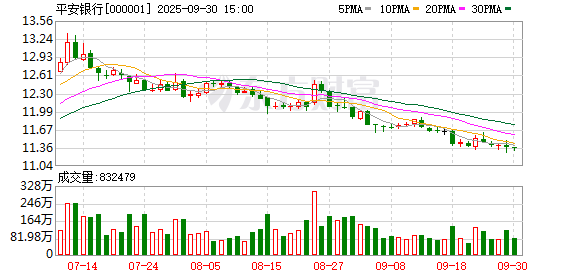
平安银行:2025年上半年,本行净息差1.80%,较去年同期下降16个基点
Zheng Quan Ri Bao Wang· 2025-09-30 12:11
Core Viewpoint - Ping An Bank reported a net interest margin of 1.80% for the first half of 2025, a decrease of 16 basis points compared to the same period last year, primarily due to declining market interest rates and adjustments in loan business structure [1] Group 1: Financial Performance - The bank's net interest margin is expected to face continued downward pressure, although the rate of decline is anticipated to slow down [1] - The bank aims to enhance asset-liability management and implement refined pricing strategies to mitigate the impact of declining net interest margins [1] Group 2: Asset Management Strategy - On the asset side, the bank will focus on optimizing asset allocation and encouraging high-quality credit investments [1] - The bank plans to strengthen market analysis and dynamically adjust interbank asset allocations to improve fund utilization efficiency [1] Group 3: Liability Management Strategy - On the liability side, the bank will concentrate on attracting low-cost deposits while managing high-cost deposits to control and reduce overall funding costs [1]
平安银行:截至2025年6月末,本行零售客户数12668.01万户,较上年末增长0.9%
Zheng Quan Ri Bao Wang· 2025-09-30 12:11
Core Viewpoint - Ping An Bank has reported growth in both retail and corporate customer numbers and loan balances as of June 30, 2025, indicating a stable expansion in its lending business [1] Retail Banking - As of June 30, 2025, the number of retail customers reached 126.68 million, representing a year-on-year growth of 0.9% [1] - The personal loan balance stood at 1,725.98 billion yuan [1] Corporate Banking - The number of corporate clients reached 909,100, showing a year-on-year increase of 6.5% [1] - The corporate loan balance was reported at 1,682.52 billion yuan, reflecting a growth of 4.7% compared to the previous year [1]
监管披露多张罚单!五家银行合计被罚超4600万元
Bei Jing Shang Bao· 2025-09-30 11:23
Group 1 - The National Financial Regulatory Administration and its Beijing branch announced administrative penalties totaling 46.4267 million yuan for five banks [1] - Postal Savings Bank and Citic Baixin Bank were fined a combined total of 39.1167 million yuan, with Postal Savings Bank facing penalties of 27.9167 million yuan for various management violations [1] - Citic Baixin Bank was fined 11.2 million yuan for issues related to internet loan management and non-compliance in regulatory data reporting [1] Group 2 - Beijing Bank was fined 5.3 million yuan for multiple violations, including inaccurate loan risk classification and inadequate impairment provisions for financial investments [2] - Ping An Bank's Beijing branch was fined 2 million yuan for using improper means to attract deposits, with a related individual banned for life from the banking industry [2] - Industrial and Commercial Bank of China’s Beijing Mudanyuan branch received a warning and a fine of 10,000 yuan for damaging its financial license [2]



探索产业金融服务新模式,平安银行上海分行协办“AI赋能低空经济”论坛
Guan Cha Zhe Wang· 2025-09-30 11:17
Core Insights - The forum held on September 23 focused on the integration of AI and the low-altitude economy, highlighting the evolving role of financial institutions in supporting technology-driven industries [1][3] Group 1: Financial Institution's Role - Ping An Bank showcased its tailored financial service system for technology innovation enterprises, covering a range of products from credit loans for startups to cross-border mergers and acquisitions for mature companies [1][3] - The bank's participation signifies a shift from traditional credit providers to active participants in the industrial ecosystem, addressing the financing needs of technology and capital-intensive industries [1][3][4] Group 2: Industry Characteristics and Financial Strategies - Financial institutions need to adjust their service approach to meet the unique characteristics of the low-altitude economy, which is driven by technology and primarily relies on intellectual property and R&D equipment [2][3] - Ping An Bank's strategy includes a comprehensive financial support system throughout the enterprise lifecycle, emphasizing a "pragmatic" attitude, "long-termism," and "open innovation" to adapt to industry needs [2][3] Group 3: Industry Trends and Applications - The low-altitude economy is recognized as a strategic emerging industry, with commercial applications in logistics, inspection, and urban management already in pilot projects, although large-scale implementation faces challenges [3][4] - The integration of AI technology is expected to significantly enhance the intelligence and operational efficiency of low-altitude vehicles, with ongoing improvements in regulatory frameworks and infrastructure investment [2][3] Group 4: Collaborative Ecosystem Development - Ping An Bank aims to strengthen collaboration with government, associations, and research institutions to build an "industry + finance + technology" ecosystem, aligning with national policies supporting the low-altitude economy and AI [3][4] - The evolving role of financial institutions is shifting from passive policy responders to proactive participants in the industrial chain, which may accelerate the maturity of the low-altitude economy [3][4]
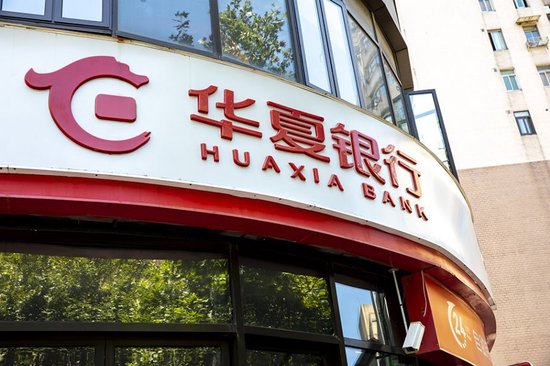
助贷新规10月1日落地,银行不得与名单外机构合作
2 1 Shi Ji Jing Ji Bao Dao· 2025-09-30 10:51
Core Viewpoint - The implementation of the new regulatory policy, referred to as the "Assisted Loan New Regulations," will significantly reshape the landscape of the assisted loan industry by establishing clear compliance boundaries for commercial banks' internet-assisted loan businesses [1][3]. Group 1: Regulatory Changes - The new regulation, effective from October 1, 2025, mandates commercial banks to adopt a "list management" system for assisted loan cooperation institutions, which has led to a lack of transparency regarding the cooperation lists of major banks [4][5]. - The regulation imposes strict controls on "comprehensive financing costs," particularly targeting products with annualized comprehensive costs exceeding 24%, which poses a challenge to existing business models in the assisted loan sector [1][9]. Group 2: Market Dynamics - The disclosed cooperation lists indicate a trend where major internet giants are preferred partners for banks, leading to a concentration of funds and resources in the hands of a few leading institutions [5][6]. - Various banks have begun to reveal their cooperation lists, with significant participation from both state-owned and private banks, although the six major state-owned banks have yet to disclose their lists [4][6]. Group 3: Business Models and Strategies - Banks like Ping An Bank have developed platforms such as the "Smart Loan Platform" to enhance compliance and safety while expanding their internet credit ecosystem, reflecting a shift towards more regulated and secure lending practices [7]. - Some banks are reconsidering their involvement in assisted loan businesses due to high default rates and rising customer acquisition costs, which are compressing profit margins [7]. Group 4: Financial Implications - The new regulations are expected to create a significant stratification in funding sources, with high-interest assets losing bank support while assets with annualized rates below 24% become highly competitive [9][10]. - Trust funds have seen a temporary increase in demand as an alternative funding source, but their higher costs and regulatory constraints limit their sustainability [10]. Group 5: Regulatory Focus Post-Implementation - Post-implementation, regulatory scrutiny will focus on pricing transparency and comprehensive cost control, particularly regarding the inclusion of service fees in the overall financing costs [11]. - The regulatory authorities will also evaluate banks' risk management capabilities and their adherence to core responsibilities in the assisted loan sector [11].




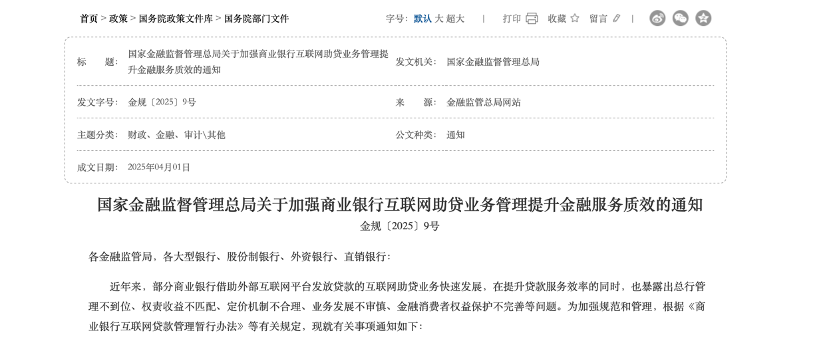
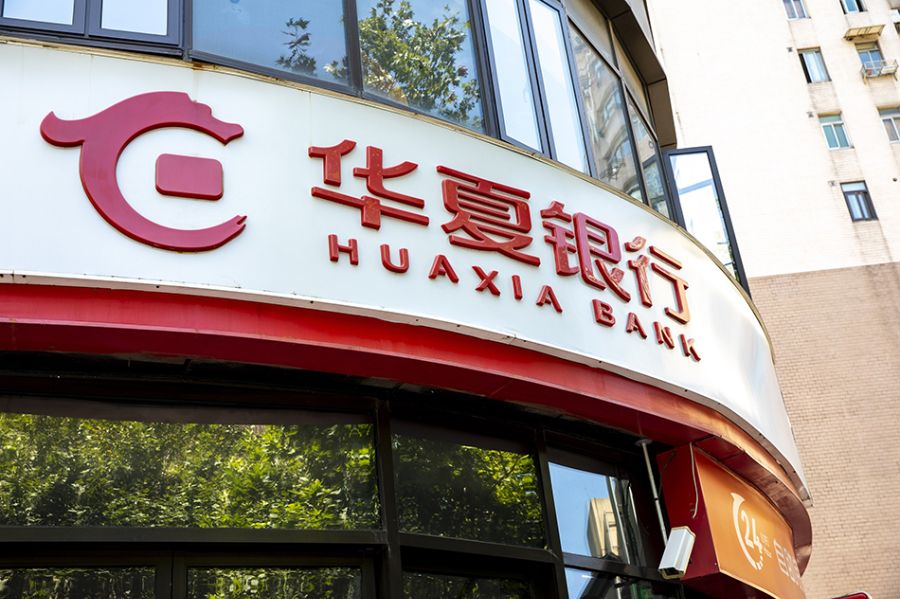
华夏银行“刀刃向内”改革再落子,股份行第8家资金运营中心可期
2 1 Shi Ji Jing Ji Bao Dao· 2025-09-30 10:20
Core Viewpoint - Huaxia Bank is advancing its internal reform by establishing a dedicated Fund Operations Center and optimizing the organizational structure of its headquarters [1][3][4]. Group 1: Establishment of Fund Operations Center - The establishment of the Fund Operations Center is part of Huaxia Bank's internal organizational reform, aimed at enhancing specialized and refined fund management capabilities [3][4]. - The Fund Operations Center will focus on various financial activities, including bond investments, foreign exchange trading, and asset custody services [3][4]. - If approved, Huaxia Bank will become the eighth joint-stock bank to establish such a center, joining other banks like Industrial Bank and Ping An Bank [3][6]. Group 2: Organizational Changes and Leadership - The internal restructuring involves splitting and integrating departmental responsibilities to better align with new development strategies [4][10]. - Recent leadership changes at Huaxia Bank include several executives from Beijing Bank, indicating a shift in management approach towards reform and innovation [4][11]. - The new leadership emphasizes a proactive approach to reform, urging the bank to move out of its comfort zone and tackle challenges head-on [4][11]. Group 3: Industry Context and Trends - As of now, 27 banks in China have received approval to operate independent Fund Operations Centers, with a significant number being city commercial banks [6][9]. - The trend of establishing Fund Operations Centers is driven by regulatory compliance needs, particularly for banks operating in multiple regions [8][9]. - Shanghai has emerged as the preferred location for these centers due to its advantages in policy, talent, and market access [9][10]. Group 4: Benefits of Fund Operations Centers - Establishing a Fund Operations Center allows banks to enhance their financial market business capabilities and improve risk management [10][11]. - These centers serve as crucial hubs for liquidity management, financial market investments, and risk control, directly impacting the bank's profitability and risk management quality [10][11]. - The specialized teams within these centers can effectively manage complex financial operations, optimize investment strategies, and respond to market fluctuations [11].

助贷新规10月1日落地,银行不得与名单外机构合作
21世纪经济报道· 2025-09-30 10:13
Core Viewpoint - The implementation of the new regulation on internet lending by commercial banks, referred to as the "Assisted Lending New Regulation," is expected to significantly reshape the lending landscape and impose strict compliance requirements on banks and lending institutions [1][2]. Group 1: Regulatory Changes - The new regulation, effective from October 1, 2025, establishes clear compliance boundaries for internet lending by commercial banks, which will have a profound impact on the assisted lending industry [1][2]. - One of the core requirements of the regulation is the "list management" of lending partners, mandating banks to disclose their cooperative institutions [4][10]. Group 2: Market Dynamics - As of the night before the new regulation took effect, major state-owned banks had not disclosed their cooperative institution lists, indicating a cautious approach towards the assisted lending business [2][8]. - The disclosed lists show a trend where large internet companies are preferred partners for banks, leading to a concentration of funding and resources in the hands of major players [2][5]. Group 3: Financial Implications - The regulation imposes strict controls on "comprehensive financing costs," particularly targeting products with annualized costs exceeding 24%, which may lead to a significant restructuring of the lending market [2][10]. - The regulation aims to eliminate high-interest lending practices, with banks collectively rejecting asset categories with annualized costs as high as 36% [11]. Group 4: Institutional Responses - Different types of banks exhibit varying preferences and scales in their cooperative lists, influenced by their risk appetites and business strategies [7]. - Some banks, like Ping An Bank, have a higher number of disclosed partners due to their internet loan platform needs, while others are considering withdrawing from the assisted lending sector due to rising costs and high default rates [7][8]. Group 5: Future Regulatory Focus - Post-implementation, regulatory attention will likely focus on pricing transparency and comprehensive cost control, particularly regarding hidden fees and charges that may arise in the lending process [10][12]. - The regulation emphasizes the need for banks to take core responsibility for risk management, with a focus on evaluating their independent risk control capabilities [12].

华夏银行“刀刃向内”改革再落子 股份行第8家资金运营中心可期
2 1 Shi Ji Jing Ji Bao Dao· 2025-09-30 09:05
Core Viewpoint - Huaxia Bank is advancing its internal reform by establishing a dedicated fund operation center and optimizing the organizational structure of certain departments [1][3]. Group 1: Establishment of Fund Operation Center - The establishment of the fund operation center is part of Huaxia Bank's internal organizational reform, aimed at enhancing specialized and refined fund management capabilities [3][4]. - If approved, Huaxia Bank will become the eighth joint-stock bank to set up a fund operation center, joining the ranks of other banks like Industrial Bank and Ping An Bank [3][4]. - The fund operation center will focus on various financial activities, including bond investment, foreign exchange trading, and asset custody, which are crucial for improving asset-liability management efficiency [3][8]. Group 2: Organizational Changes and Leadership - The recent leadership changes at Huaxia Bank, with several executives from Beijing Bank taking key positions, indicate a strategic shift towards a more reform-oriented approach [4][6]. - The new management has emphasized the need for structural adjustments within the bank to align with its development plans and strategies [4][6]. - The call for a "breakthrough mindset" reflects the bank's commitment to addressing challenges in innovation and transformation [4][6]. Group 3: Regulatory Compliance and Market Positioning - The establishment of fund operation centers by banks, particularly city commercial banks, is largely driven by the need to comply with regulatory requirements for cross-regional operations [6][7]. - Shanghai has emerged as the preferred location for these centers due to its advantages in policy, talent, and market access, with a significant number of banks choosing to set up operations there [7][8]. - The fund operation center serves as a critical hub for liquidity management and risk control, directly impacting the bank's profitability and risk management quality [8][9]. Group 4: Industry Trends and Implications - The trend of establishing independent fund operation centers reflects a broader industry shift towards specialization and risk isolation in response to increasing complexity in financial markets [9]. - Banks with larger business scales and active trading are more likely to establish these centers to enhance their operational efficiency and market competitiveness [9]. - The establishment of these centers is expected to improve investment decision-making and execution capabilities, ultimately supporting the banks' strategic development goals [9].
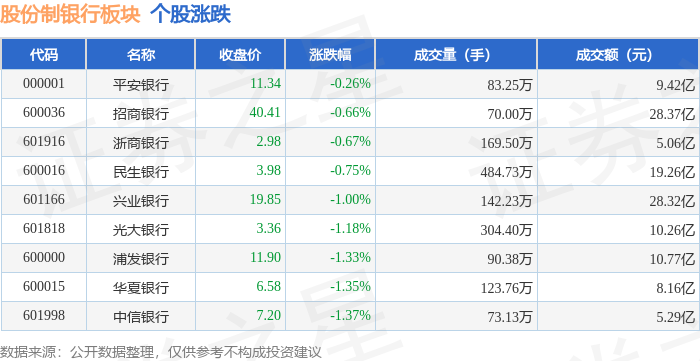
股份制银行板块9月30日跌0.92%,中信银行领跌,主力资金净流出22.07亿元
Zheng Xing Xing Ye Ri Bao· 2025-09-30 08:51
Core Insights - The banking sector experienced a decline of 0.92% on September 30, with CITIC Bank leading the drop [1] - The Shanghai Composite Index closed at 3882.78, up 0.52%, while the Shenzhen Component Index closed at 13526.51, up 0.35% [1] Banking Sector Performance - Ping An Bank closed at 11.34, down 0.26% with a trading volume of 832,500 shares and a transaction value of 942 million [1] - China Merchants Bank closed at 40.41, down 0.66% with a trading volume of 700,000 shares and a transaction value of 2.837 billion [1] - Zhejiang Commercial Bank closed at 2.98, down 0.67% with a trading volume of 1.695 million shares and a transaction value of 506 million [1] - Minsheng Bank closed at 3.98, down 0.75% with a trading volume of 4.847 million shares and a transaction value of 1.926 billion [1] - Industrial Bank closed at 19.85, down 1.00% with a trading volume of 1.422 million shares and a transaction value of 2.832 billion [1] - Everbright Bank closed at 3.36, down 1.18% with a trading volume of 3.044 million shares and a transaction value of 1.026 billion [1] - Shanghai Pudong Development Bank closed at 11.90, down 1.33% with a trading volume of 903,800 shares and a transaction value of 1.077 billion [1] - Huaxia Bank closed at 6.58, down 1.35% with a trading volume of 1.237 million shares and a transaction value of 816 million [1] - CITIC Bank closed at 7.20, down 1.37% with a trading volume of 731,300 shares and a transaction value of 529 million [1] Capital Flow Analysis - The banking sector saw a net outflow of 2.207 billion from institutional investors, while retail investors had a net inflow of 1.312 billion [1] - The table shows detailed capital flows for individual banks, indicating varying levels of net inflow and outflow among institutional, speculative, and retail investors [2]