Mistral AI

Search documents
核心模型被曝蒸馏DeepSeek?前女友一纸控诉,曝出欧版OpenAI塌房真相
3 6 Ke· 2025-08-18 12:12
Core Viewpoint - Mistral AI, once hailed as "Europe's OpenAI," is embroiled in a scandal involving allegations of plagiarism, specifically that its core technology is derived from DeepSeek, misleadingly presented as an original RL achievement [1][3][21]. Group 1: Allegations and Scandal - A former female employee of Mistral revealed in a personal letter that the company distilled DeepSeek's technology and misrepresented it as their own, using OpenAI's data while distorting benchmark results [3][4][21]. - The scandal gained traction online, with notable figures in the AI community, such as DeepMind researcher Susan Zhang, publicly condemning Mistral's unethical practices [4][21]. - The former employee expressed her frustrations about being sidelined and ignored when she raised concerns about the company's practices, leading to her eventual dismissal [6][7]. Group 2: Technical Comparisons - An industry insider, Sam Paech, had previously noted similarities between Mistral's Small 3.2 model and DeepSeek, suggesting that Mistral's outputs closely mirrored those of DeepSeek [9][10]. - Further analysis revealed that Mistral-small-3.2 and DeepSeek-v3 exhibited strikingly similar characteristics, indicating a lack of originality in Mistral's model [12][21]. Group 3: Historical Context and Achievements - Mistral AI was once celebrated for its rapid rise, achieving a valuation of $6.2 billion within just over a year of its establishment, positioning itself as a significant player in the European AI landscape [24][34]. - The company had previously launched successful products, including the Le Chat application, which topped the charts in France, and was supported by French President Macron as a key player in the national AI strategy [26][28][34].


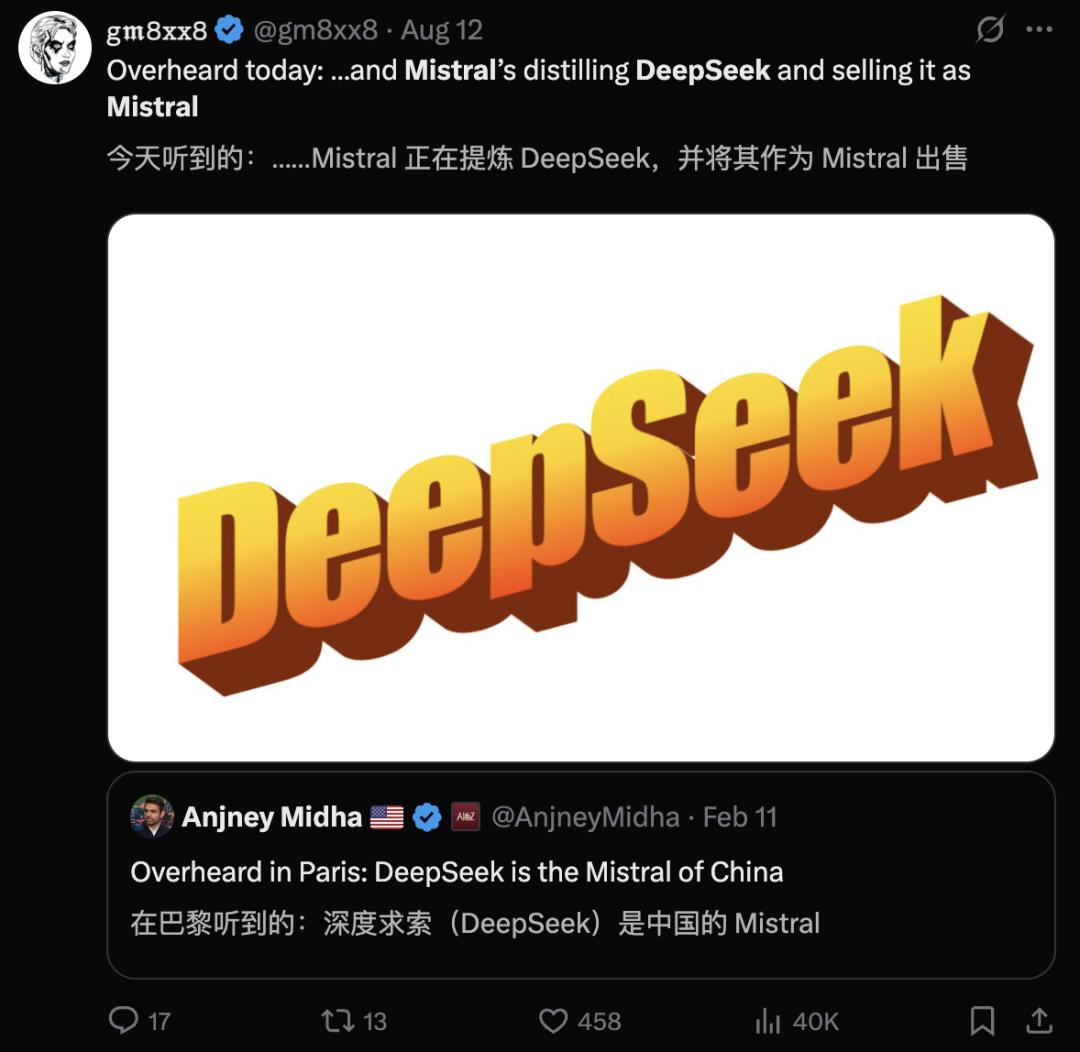
三位90后,估值700亿
创业家· 2025-08-11 10:09
Core Viewpoint - Mistral AI, founded by three young graduates, is raising $1 billion in a new funding round, reaching a valuation of $10 billion, reflecting a nearly 50-fold increase in just two years [4][8]. Group 1: Company Overview - Mistral AI was established by three 90s graduates who previously worked at top AI companies and returned to France to seize the AI opportunity [8]. - The company launched its first open-source model, Mistral 7B, which outperformed competitors in several benchmarks, quickly gaining attention in the developer community [8][9]. - Mistral aims to lead the generative AI wave through open-source initiatives, contrasting with closed models from competitors like OpenAI [8][9]. Group 2: Funding and Valuation - Mistral AI completed a record seed round of $113 million shortly after its founding, achieving a valuation of over $260 million [12]. - By the end of 2023, Mistral raised $415 million in Series A funding, led by a16z, increasing its valuation to $2 billion [13]. - The company’s valuation skyrocketed to $6 billion after a $640 million Series B round, with major investors including Microsoft and Nvidia [14]. - Currently, Mistral is negotiating a $1 billion funding round, which could elevate its valuation to approximately $10 billion [14]. Group 3: Competitive Landscape - The AI landscape is becoming increasingly competitive, with the emergence of DeepSeek as a significant player, prompting Mistral to accelerate its product development and commercialization efforts [9]. - Mistral has launched several products, including the chatbot Le Chat, which achieved high download rates in France but struggled internationally [9]. - The company is actively pursuing partnerships with industry giants like Nvidia to enhance its market position [9]. Group 4: Young Entrepreneurs in AI - The AI sector is witnessing a surge of young entrepreneurs, with several companies founded by 90s graduates achieving significant funding and rapid growth [16][17]. - Companies like Perplexity and Genesis AI have also seen remarkable valuations, highlighting the trend of young innovators in the AI space [16][17]. - This new generation of entrepreneurs is characterized by their global perspective and technical expertise, positioning them well to capitalize on AI opportunities [18].

三位90后,估值700亿
3 6 Ke· 2025-08-10 23:32
Core Insights - Mistral AI is raising approximately $1 billion in a new funding round, which will bring its valuation to $10 billion, marking a nearly 50-fold increase in valuation since its inception two years ago [1] - The founders, all in their 30s, are highly educated individuals with backgrounds from top institutions and experience in leading AI companies [2][4] - Mistral AI aims to lead the generative AI wave through open-source models, contrasting with closed models from competitors like OpenAI and Anthropic [4][5] Company Overview - Mistral AI was founded by three young scholars who returned to Paris from Silicon Valley to capitalize on the AI revolution [4] - The company launched its first open-source large model, Mistral 7B, which outperformed competitors in benchmark tests [4] - Mistral has received significant backing from prominent venture capital firms and wealthy individuals, achieving record seed funding and subsequent rounds [7][10] Funding and Valuation - Mistral AI's initial funding round raised $1.13 billion, setting a record for seed funding in Europe, with a valuation exceeding $2.6 billion [7] - Subsequent funding rounds have seen Mistral's valuation soar to $20 billion and then to $60 billion, with major investments from firms like a16z and Nvidia [9][10] - The latest funding round aims to secure $1 billion, potentially increasing the company's valuation to $10 billion [1][10] Competitive Landscape - The AI open-source landscape is becoming increasingly competitive, with companies like DeepSeek gaining traction and being referred to as "the Chinese version of Mistral" [5] - Mistral has launched several products, including a chatbot and an inference model, to compete directly with emerging players [5] - Despite initial success in France, Mistral's international market performance has been mixed, prompting a focus on commercialization and partnerships with industry giants [5][10] Industry Trends - The rise of AI has led to a surge of young entrepreneurs entering the field, with many achieving significant funding and rapid growth [11][12] - Companies like Perplexity and Anysphere have also seen remarkable valuations and funding, indicating a broader trend of youth-driven innovation in AI [12][13] - The current generation of entrepreneurs is characterized by a strong educational background and a global perspective, positioning them well to leverage opportunities in the AI sector [14]
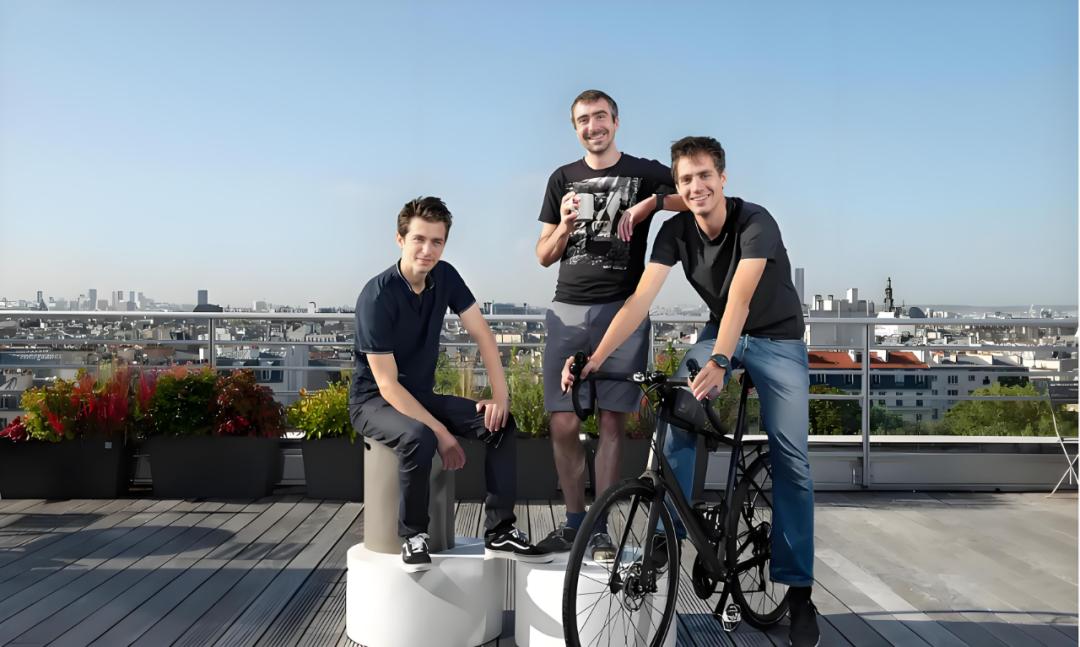
欧洲版DeepSeek,估值700亿
Hu Xiu· 2025-08-10 08:16
Core Viewpoint - Mistral AI, founded by three young graduates, has achieved a staggering valuation of $10 billion within two years, reflecting the rapid growth and potential of the AI industry [2][16]. Group 1: Company Overview - Mistral AI was established by three 90s graduates who previously worked at top AI firms and recognized the opportunity in the AI revolution [5][6]. - The company raised $1 billion in its latest funding round, increasing its valuation to approximately $10 billion [2][26]. - Mistral's first product, the open-source model Mistral 7B, outperformed competitors in benchmark tests, quickly gaining attention in the developer community [7][8]. Group 2: Investment and Growth - Mistral AI has attracted significant investment from notable venture capital firms, achieving a record seed funding of $113 million shortly after its inception [17][18]. - The company’s valuation skyrocketed from $2.6 million to $20 million within six months, marking its entry into the unicorn club [23]. - Recent partnerships with major players like Nvidia and Microsoft have further solidified Mistral's position in the AI landscape [24][14]. Group 3: Competitive Landscape - The AI sector is becoming increasingly competitive, with Mistral facing challenges from other open-source models like DeepSeek, which has gained global popularity [10][11]. - Despite initial success in France, Mistral's international performance has been mixed, prompting the company to enhance its product offerings [13][12]. - The emergence of other young AI startups, such as Perplexity and Anysphere, highlights the growing trend of young entrepreneurs in the AI space [30][32]. Group 4: Future Outlook - Mistral aims to lead the AI industry over the next decade, emphasizing the importance of open-source models for global AI development [8][28]. - The founders express a strong commitment to maintaining their ambitious vision as they navigate the evolving AI landscape [15].
三位90后,估值700亿
投资界· 2025-08-10 07:45
Core Viewpoint - The article highlights the rapid rise of Mistral AI, a startup founded by three young graduates, which has achieved a remarkable valuation of approximately $10 billion within two years, showcasing the explosive growth potential in the AI sector [2][6][12]. Group 1: Company Overview - Mistral AI was founded by three 90s graduates who previously worked at top AI firms and returned to France to capitalize on the AI revolution [6][8]. - The company launched its first open-source large model, Mistral 7B, which outperformed competitors in several benchmark tests, quickly gaining attention in the developer community [6][7]. - Mistral AI aims to lead the generative AI wave through open-source initiatives, contrasting with closed models from competitors like OpenAI [6][7]. Group 2: Funding and Valuation - Mistral AI completed a record seed round of $1.13 billion shortly after its establishment, achieving a valuation of over $2.6 billion [10]. - By the end of 2023, the company raised $415 million in Series A funding, increasing its valuation to $2 billion, and later secured $640 million in Series B funding, bringing its valuation to $6 billion [11][12]. - The latest funding round discussions could potentially elevate Mistral's valuation to around $10 billion, with significant interest from major investors [12][13]. Group 3: Competitive Landscape - The AI landscape is becoming increasingly competitive, with the emergence of other open-source models like DeepSeek, which has gained significant traction [7][8]. - Mistral AI has launched several products, including a chatbot and a reasoning model, to compete directly with other players in the market [8]. - Despite initial success in France, Mistral's international performance has been mixed, indicating challenges in scaling beyond local markets [8]. Group 4: Industry Trends - The article notes a trend of young entrepreneurs in the AI sector, with many 90s graduates leading startups that are rapidly gaining valuations and market presence [14][16]. - The rise of AI is compared to the historical impact of electricity, suggesting that AI will significantly influence GDP across nations [13].

OpenAI releases lower-cost models to rival Meta, Mistral and DeepSeek
CNBC· 2025-08-05 17:00
Core Insights - OpenAI has released two open-weight language models, gpt-oss-120b and gpt-oss-20b, marking the first release since GPT-2 in 2019, aimed at providing lower-cost options for developers and researchers [1] - Open-weight models have publicly available parameters, offering transparency and control, but differ from open-source models which provide full source code [2] - OpenAI collaborated with major tech companies like Nvidia and AMD to ensure compatibility of the models across various chips [3] Industry Context - The release of open-weight models by OpenAI contributes to a growing ecosystem, with other companies like Meta and Mistral AI also launching similar models [2][3] - Nvidia's CEO highlighted OpenAI's role in advancing innovation in open-source software, indicating a significant impact on the AI landscape [4]


微软为何豪掷17亿美金“埋粪”?
Hu Xiu· 2025-08-04 13:55
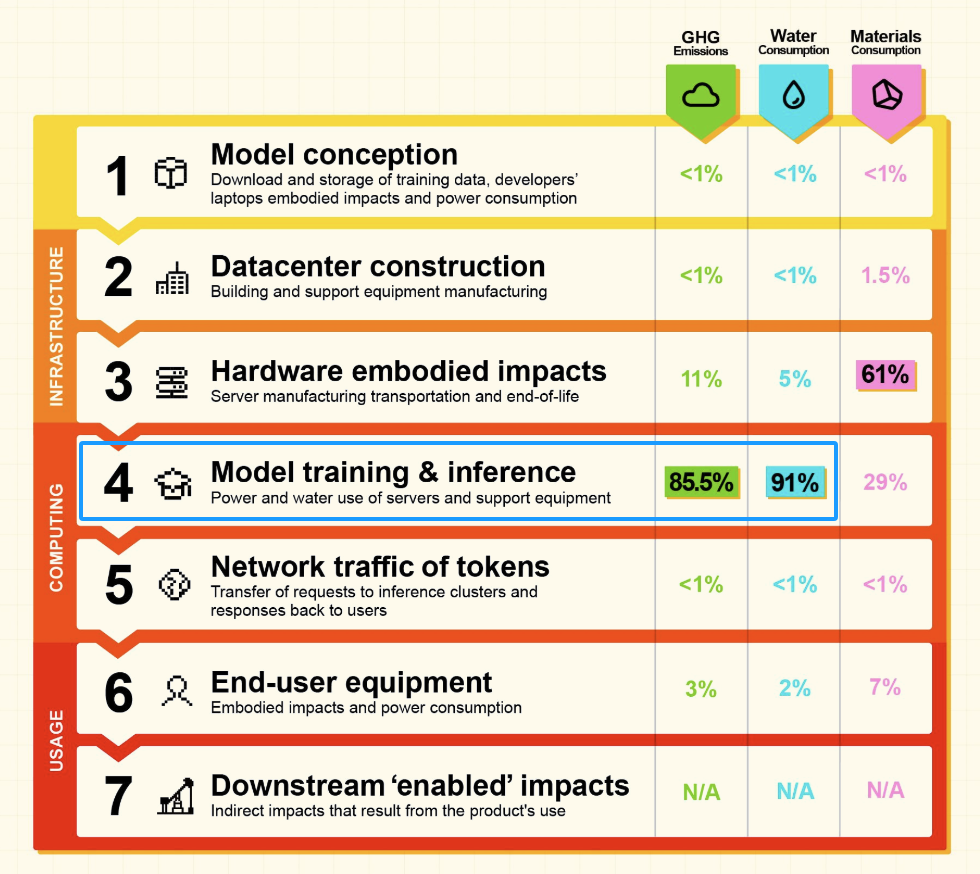
Core Viewpoint - The rapid development of AI technology is leading to significant environmental costs, including increased carbon emissions and resource consumption, prompting companies like Microsoft to invest heavily in carbon offset initiatives [3][5][10]. Group 1: Microsoft's Investment in Carbon Offsetting - Microsoft has signed a deal with Vaulted Deep to achieve a carbon removal target of 4.9 million tons by 2038, with the total value of the deal reportedly exceeding $1 billion, potentially costing Microsoft up to $1.7 billion [6][7]. - Vaulted Deep specializes in converting organic waste into a "bio-slurry" that is injected deep underground to permanently remove carbon and reduce methane emissions [8]. - This expenditure is essentially a purchase of "emission rights" for Microsoft, as the company faces increasing carbon emissions due to its expanding cloud computing and AI operations [9][10]. Group 2: Environmental Impact of AI - The environmental costs of AI are often overlooked, with current carbon accounting mechanisms being criticized for their inadequacies [11][12]. - Major tech companies, including Amazon, Microsoft, Alphabet, and Meta, have seen their indirect carbon emissions increase by an average of 150% from 2020 to 2023 due to the high energy demands of data centers [13]. - Specific data shows that Microsoft's operational carbon emissions increased by 155% in 2023 compared to three years prior [14]. Group 3: Water and Resource Consumption - AI models, such as Mistral Large 2, have significant water consumption, using 281,000 cubic meters of water over 18 months, equivalent to filling 112 Olympic swimming pools [16]. - The lifecycle of AI models shows that training and inference phases account for 85.5% of greenhouse gas emissions and 91% of water consumption [17]. Group 4: Future Projections and Industry Response - By 2027, AI is projected to consume up to 6.6 billion cubic meters of water, double Switzerland's annual consumption, and data center energy consumption may double by 2030 [20]. - The tech industry is under pressure to reduce emissions, with companies like Google, Microsoft, and Meta committing to net-zero emissions by 2030, while Amazon aims for 2040 [23]. - Experts emphasize the need for companies to prioritize renewable energy and transparency in environmental impact disclosures, with government intervention being crucial for effective regulation [27][28].

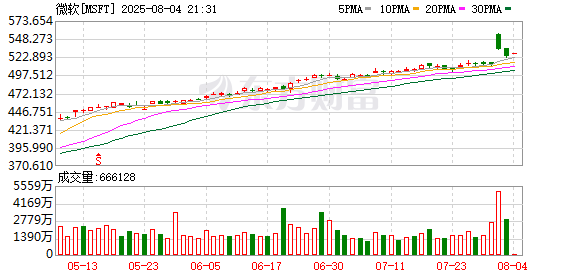
微软花17亿美元“埋粪”!把人类粪便和污水转化成“生物泥浆” 注入地壳1500米深处
Mei Ri Jing Ji Xin Wen· 2025-08-04 13:31
Core Insights - The article discusses the environmental costs associated with the rapid development of artificial intelligence (AI), highlighting Microsoft's significant investment in carbon removal initiatives as a response to its increasing carbon footprint [3][4][6]. Group 1: Microsoft's Investment in Carbon Removal - Microsoft has signed a deal with Vaulted Deep to achieve a carbon removal target of 4.9 million tons by 2038, with the total value of the contract reportedly exceeding $1 billion, potentially costing Microsoft up to $1.7 billion [4][6]. - The method employed by Vaulted Deep involves converting organic waste into a "bio-sludge" and injecting it deep underground to permanently remove carbon and prevent pollution [5][6]. Group 2: AI's Environmental Impact - The carbon emissions from AI operations are substantial, with a report indicating that the training and operation of Mistral AI's flagship model generated CO2 emissions equivalent to that of 5,000 cars over 18 months [3][8]. - Major tech companies, including Microsoft, have seen significant increases in their carbon emissions, with Microsoft's emissions rising by 23.4% since 2020 due to the expansion of its cloud and AI businesses [6][8]. Group 3: Criticism of Carbon Offset Strategies - Experts criticize Microsoft's approach of purchasing carbon credits as a means to offset emissions, arguing that it does not address the root cause of emissions and can mislead the public regarding actual reductions [6][12]. - The current carbon accounting mechanisms are seen as flawed, allowing companies to claim zero emissions through market-based accounting without making substantial changes to their energy consumption practices [7][12]. Group 4: Future Projections and Industry Actions - By 2027, AI is projected to consume up to 6.6 billion cubic meters of water annually, and data center energy consumption could double by 2030, surpassing the total energy consumption of countries like Japan [12][13]. - Major tech companies are taking steps towards sustainability, with commitments to achieve net-zero emissions by 2030 or 2040, but there is a call for more transparency and government regulation to ensure accountability [13][14].
微软花17亿美元“埋粪”!把人类粪便和污水转化成“生物泥浆”,注入地壳1500米深处,一科技初创公司靠这项业务接到微软大单
Mei Ri Jing Ji Xin Wen· 2025-08-04 13:19
Core Insights - The article discusses the environmental costs associated with the rapid development of artificial intelligence (AI), highlighting Microsoft's significant investment in carbon removal initiatives as a response to its increasing carbon footprint [2][7]. Group 1: Microsoft's Investment in Carbon Removal - Microsoft has signed a deal with Vaulted Deep to achieve a carbon removal target of 4.9 million tons by 2038, with the total value of the contract reportedly exceeding $1 billion, potentially costing Microsoft up to $1.7 billion based on a fee of $350 per ton [3][5]. - The investment is part of Microsoft's strategy to purchase "emission rights" as its carbon emissions have increased by 23.4% since 2020 due to the expansion of its cloud computing and AI businesses [7]. Group 2: Environmental Impact of AI - The AI industry is facing growing scrutiny over its environmental impact, with reports indicating that the indirect carbon emissions from major tech companies like Amazon, Microsoft, Alphabet, and Meta have increased by an average of 150% from 2020 to 2023 [9][10]. - A specific AI model, Mistral Large 2, produced 20.4 tons of CO2 over 18 months, equivalent to the annual emissions of 5,000 average cars, and consumed 281,000 cubic meters of water [10]. Group 3: Criticism of Carbon Offset Strategies - Experts criticize Microsoft's approach of "buying offsets," arguing that it distracts from the need for genuine emission reductions at the source [8][14]. - The current carbon accounting mechanisms are seen as flawed, allowing companies to claim zero emissions through market-based accounting, which may not reflect actual environmental impacts [9][10]. Group 4: Future Projections and Industry Actions - By 2027, AI is projected to consume up to 6.6 billion cubic meters of water annually, and data center energy consumption could double by 2030, surpassing the total energy consumption of countries like Japan [13][14]. - Major tech companies are making commitments to achieve net-zero emissions by 2030 or 2040, but experts emphasize the need for a focus on renewable energy and reducing emissions at the source rather than relying solely on carbon credits [14][15].

Forge CEO Kelly Rodriques on soaring AI valuations: These businesses are on fire
CNBC Television· 2025-08-04 12:39
AI Valuation & Fundraising - Open AI 在最近一轮融资中以 3000 亿美元的估值筹集了 83 亿美元[1] - 法国 AI 初创公司 Mistral 寻求在最新一轮融资中获得 100 亿美元的估值[1] - 私募市场 AI 领域中的 19 家公司在过去两三年中平均增长了 300%,收入基数较大,达 10 亿美元级别[2] - 截至目前,这 19 家公司已筹集了 650 亿美元,相当于美国股市流入资金的一半[17] AI Market Dynamics & Competition - 每周有 7 亿人使用 Open AI,几个月前这一数字为 5 亿[3] - 自 2024 年 1 月以来,整个 AI 行业的估值增长了约 200%[10] - 私募市场自 2024 年 1 月以来增长迅速,约为 56%,而标准普尔 500 指数增长了约 36%[10] - 生成式 AI 领域可能只有少数赢家,但在 Agentic 和其他基础设施领域,可能会涌现出几家规模远超其他行业的公司[7] - 行业竞争激烈,企业愿意花费数百万甚至数十亿美元来挖走竞争对手的顶尖人才[8] Investment Strategies & Public Market Exposure - Anthropic 和 Open AI 吸引了大量资本涌入[5] - 通过投资微软(Open AI 的主要所有者)和软银(向 Open AI 投资了 300 亿美元)等上市公司,公众可以在公开市场参与对私有 AI 公司的投资[16]