
中国国航

Search documents
春秋航空回应赴港上市传闻,谁在催促春秋“二次起飞”?
Guan Cha Zhe Wang· 2025-10-05 07:36
Core Viewpoint - Spring Airlines is considering an IPO in Hong Kong, potentially raising several hundred million USD, with discussions ongoing regarding the specifics of the issuance [1][2] Company Overview - Spring Airlines, listed on A-shares since 2015, is China's first privately listed airline, with a current market capitalization of 52.32 billion RMB as of September 30, 2025 [1] - The airline operates 134 aircraft and covers over 190 domestic routes and more than 50 international routes, focusing on popular tourist destinations in Asia [1] Financial Performance - For the first half of 2025, Spring Airlines reported revenue of 10.3 billion RMB, a year-on-year increase of 4.3%, while net profit decreased by 14% to 1.17 billion RMB [2] - The decline in net profit is attributed to the reduction of previously unrecognized deferred tax assets, impacting tax expenses significantly [2] - Excluding fluctuations in fuel and material costs, the airline's unit costs in July and August 2025 were lower than those in the same period of 2019 [2] Market Trends - There is a growing interest from investors in Chinese companies, leading to more firms considering listings on the Hong Kong Stock Exchange to support business expansion [2] - As of September 25, 2025, 11 A-share companies have successfully listed in Hong Kong, raising over 90 billion HKD, with more than 30 additional companies preparing for listings [3] Industry Context - The Hong Kong stock market has seen significant performance, with the Hang Seng Index and related indices showing year-to-date increases of 32.03%, 42.77%, and 29.55% respectively [3] - The trend of A-share companies seeking secondary listings in Hong Kong is driven by improved policies, increased internationalization needs, and enhanced liquidity in the Hong Kong market [3][5] Strategic Implications - If Spring Airlines successfully lists in Hong Kong, it would become another airline with dual listings (A+H), potentially setting a precedent for private airlines seeking financing [3] - The current environment is seen as a critical phase for Chinese companies "going global," with Hong Kong serving as a key hub for capital flow and international market access [5]

海口美兰机场预计10月5日20时逐步恢复运行
Huan Qiu Wang· 2025-10-04 07:33
来源:南海网 10月4日,记者从海口美兰国际机场获悉,受今年第21号台风"麦德姆"影响,为保障广大旅客安全出 行,10月4日23时起,各航空公司在海口美兰国际机场执飞的进出港航班全部取消。 来源:南海网、南国都市报 根据目前掌握的气象信息,预计10月5日20时,海口美兰国际机场逐步恢复运行(实际恢复时间及航班 将根据台风动态和航司安排而定)。 海口美兰国际机场提醒,各位旅客请关注航空公司官方通知或及时联系航空公司获取航班最新动态信 息,合理安排出行计划。 海南机场集团将在民航局运行监控中心统筹指导下,通过民航海南区域运行机制,协同空管单位全力保 障三亚凤凰机场航班运行,保障旅客进出岛。同时,海南机场集团还将通过协同各航司"以小换大"增加 宽体机执行航班的方式增大座位供给,保障旅客进出岛需求。 值得一提的是,10月5日—8日,三亚出港部分重点客源地城市航班均有部分余票,供旅客出行参考。 | 城市 | 航空公司 | | 10月5日 10月6日 | 10月7日 10月8日 | | | --- | --- | --- | --- | --- | --- | | 北京 | 南方航空 | 充足 | 充足 | 充足 | 充 ...

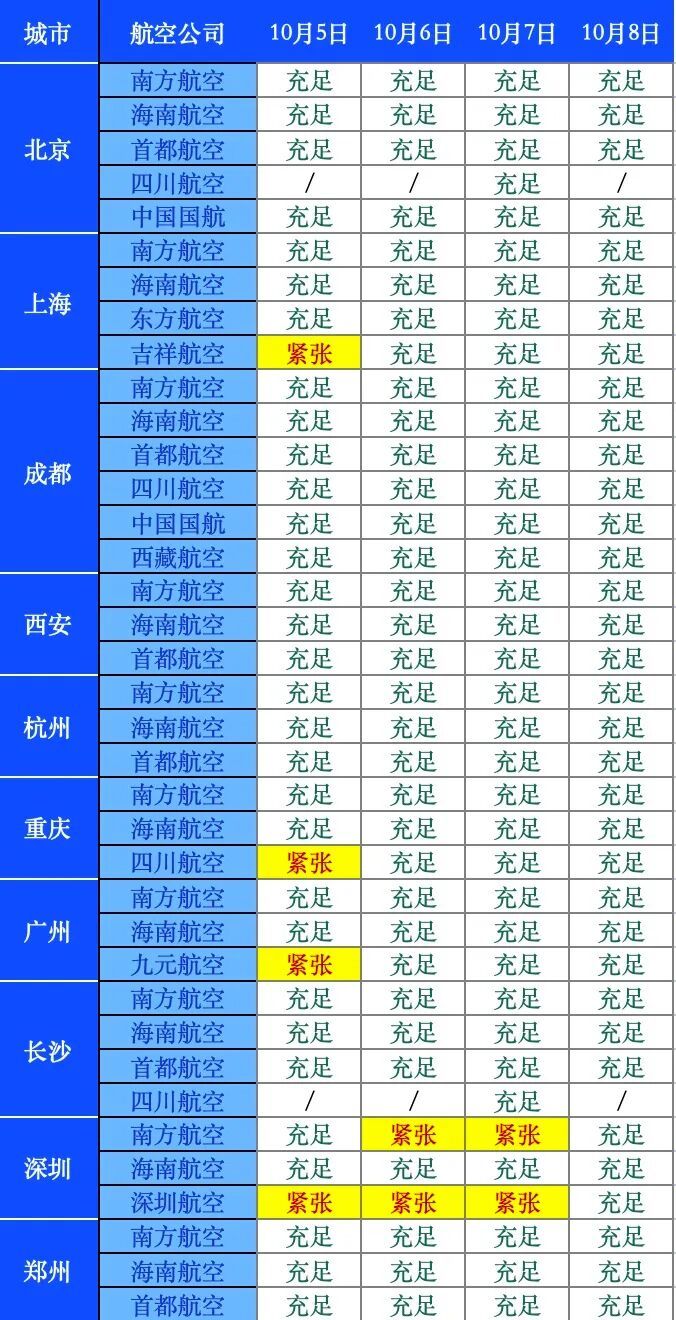
10月4日23时起,海口美兰机场执飞航班全部取消
Huan Qiu Wang· 2025-10-04 05:56
Core Viewpoint - The approach taken by Hainan Airport Group to ensure passenger safety and manage flight operations in response to Typhoon "Maidam" is highlighted, with specific measures for flight cancellations and operational adjustments at airports [1]. Flight Operations - All flights at Haikou Meilan Airport will be canceled starting from 23:00 on October 4 due to Typhoon "Maidam," with the resumption of operations dependent on the typhoon's impact [1]. - Sanya Phoenix Airport is currently operating normally, but flights may experience delays due to the typhoon's cloud system [1]. - Hainan Airport Group is coordinating with air traffic control to ensure flight operations at Sanya Phoenix Airport and is implementing measures to increase seat availability by using larger aircraft [1]. Passenger Information - Passengers are advised to monitor official notifications from airlines for the latest flight updates and to plan their travel accordingly [1]. - From October 5 to 8, there are available tickets for flights departing from Sanya to several key cities, including Beijing, Shanghai, and Chengdu, indicating a stable travel option for passengers [2][3].

从一线看高质量发展这五年丨“我开上了国产大飞机”
Bei Jing Ri Bao Ke Hu Duan· 2025-10-03 22:57
Core Insights - The C919, a domestically produced large passenger aircraft, successfully completed its commercial flight, marking a significant milestone in China's aviation industry [1][2] - The aircraft has been recognized for its advanced technology and design, with pilots noting its superior automation and control systems compared to foreign counterparts [2] Group 1: C919 Development and Milestones - The C919 project has made substantial progress since its inception, achieving key milestones such as the first order in 2021, obtaining the type certificate in 2022, and completing its first commercial flight in 2023 [1] - China Southern Airlines has already operated over 8,500 flight hours and carried nearly 500,000 passengers with the C919 since its introduction [2] Group 2: Pilot Experience and Feedback - Pilots have expressed high satisfaction with the C919's flight control system, which is considered to be at a world-leading level, enhancing both safety and operational efficiency [2] - Continuous feedback from pilots is being utilized to optimize the aircraft's performance during its commercial operation phase [2]
旅游,正在成为2025年最难做的生意?
Feng Huang Wang Cai Jing· 2025-10-03 13:46
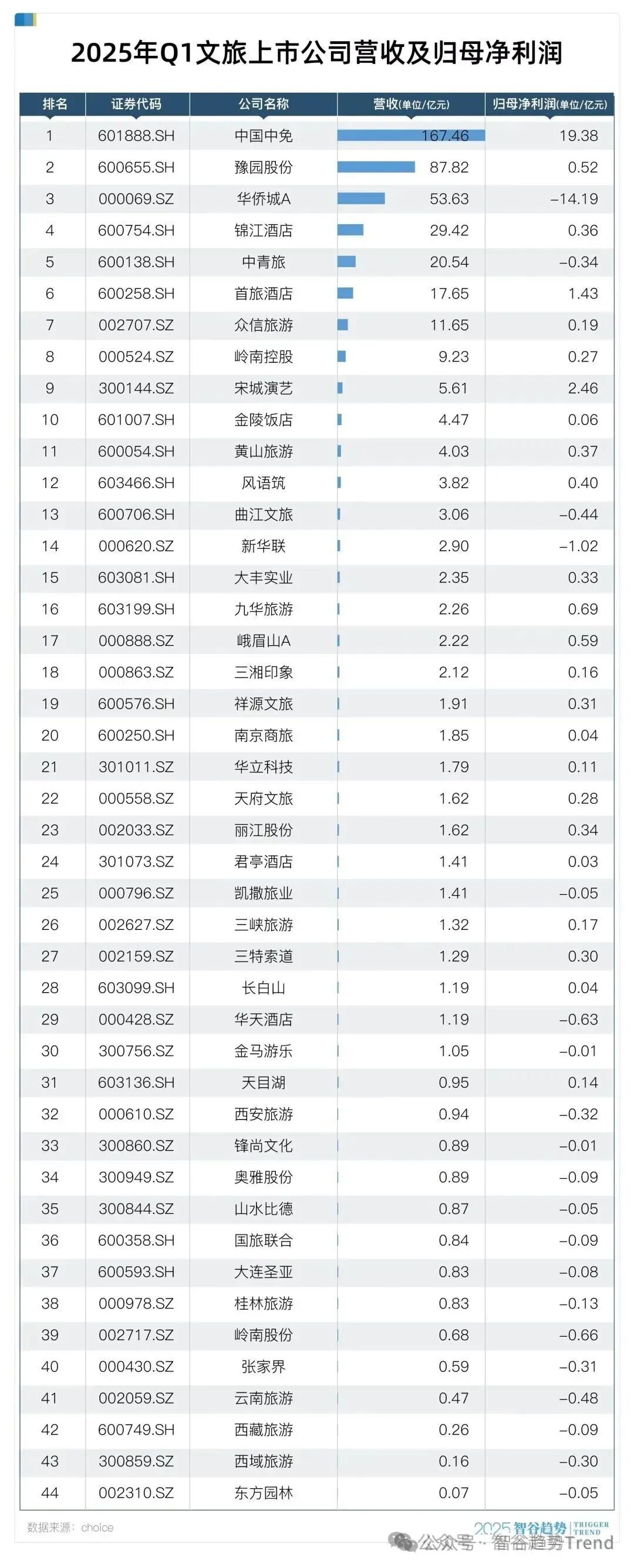
Core Insights - The tourism industry is facing significant challenges, with the recent bankruptcy of Qinghai Tourism Investment Group and its subsidiaries highlighting the difficulties within the sector [1] - Despite an increase in domestic travel and spending, many tourism companies are struggling financially, indicating a disconnect between rising visitor numbers and profitability [4][11] Group 1: Company Performance - Qinghai Tourism Investment Group, once aiming for substantial growth, has declared bankruptcy, losing 480 million in registered capital and facing over 323 million in enforced execution [1][6] - In Q1 2025, 25 out of 44 listed tourism companies reported negative revenue growth, accounting for 56.8% of the total [1] - Major airlines like China Southern Airlines, China Eastern Airlines, and Air China reported significant losses in Q1 2025, with losses of 747 million, 995 million, and 2.044 billion respectively [3] Group 2: Market Dynamics - The tourism market is experiencing a paradox where visitor numbers and spending are increasing, yet many companies are not profiting, raising questions about where the money is going [4][11] - Online travel platforms such as Ctrip and Tongcheng are thriving, with Ctrip reporting a net profit of approximately 4.3 billion and a net profit margin of 31.16% in Q1 2025 [11] - The number of A-level scenic spots has increased by 3,000 from 2019 to 2023, yet average income has decreased by nearly 40%, indicating oversupply in the market [11] Group 3: Industry Trends - The tourism industry is transitioning into a 2.0 era, where experiential offerings are becoming more important than traditional attractions [20][21] - Successful attractions like Jiuhua Mountain and Disney are focusing on enhancing visitor experience, which is crucial for profitability in the current market [14][17] - The shift towards experience-driven tourism is leading to the decline of many traditional tourism platforms that fail to adapt, as seen with Qinghai Tourism Investment Group [22][23]


旅游,正在成为2025年最难做的生意?
凤凰网财经· 2025-10-03 13:44
Core Viewpoint - The tourism industry, once seen as a promising sector, is now facing significant challenges, with many companies struggling financially despite an increase in tourist numbers and spending [2][5][6]. Group 1: Company Performance - Qinghai Tourism Investment Group and its subsidiaries have filed for bankruptcy, highlighting the struggles within the tourism sector [2]. - Among 44 listed tourism companies, 25 reported negative revenue growth in Q1 2025, accounting for 56.8% of the total [2]. - Major airlines like China Southern Airlines, China Eastern Airlines, and Air China reported significant losses in Q1 2025, with losses of 0.747 billion, 0.995 billion, and 2.044 billion respectively [4]. Group 2: Market Dynamics - Despite a 20.6% increase in domestic travel and a 15.2% rise in spending in the first half of 2025, the tourism industry is struggling to convert this growth into profitability [5][6]. - Online travel platforms like Ctrip and Tongcheng have seen substantial profits, with Ctrip reporting a net profit of approximately 4.3 billion in Q1 2025, reflecting a net profit margin of 31.16% [17]. - The increase in the number of A-level scenic spots and travel agencies has led to a decline in average income, with the average profit for travel agencies dropping to 66,500 [20]. Group 3: Industry Trends - The tourism industry is transitioning from a focus on scarce resources to an emphasis on customer experience, marking the shift to a 2.0 era [30][33]. - Successful attractions like Jiuhua Mountain and Disney have thrived by enhancing visitor immersion and emotional value, contrasting with struggling traditional scenic spots [23][28]. - The current competitive landscape indicates that only those who can effectively engage tourists will succeed, while many tourism platforms may face bankruptcy due to poor business models and operational inefficiencies [36][39].

19元飞泰国,机票彻底绷不住了
盐财经· 2025-10-03 10:07
Core Viewpoint - The article discusses the phenomenon of airlines selling tickets at significantly discounted prices through live streaming platforms, highlighting a shift in consumer behavior and airline marketing strategies in response to ongoing financial challenges in the aviation industry [2][22]. Group 1: Ticket Pricing and Consumer Behavior - Many consumers believe that waiting to purchase tickets will yield lower prices, while others are actively buying tickets in advance during live streams, treating them like essential goods [2][4]. - Recent promotions have led to astonishingly low ticket prices, such as 200 yuan for flights to South Korea and 19 yuan for flights from Chengdu to Bangkok, raising questions about the sustainability of such pricing [4][7]. - The trend of airlines selling tickets through live streaming has become more frequent, with some airlines hosting multiple sessions each month [7][9]. Group 2: Airline Financial Performance - Major airlines in China have faced significant financial losses, with the three largest airlines collectively losing 496.59 billion yuan in the first half of 2022, and continuing to report losses in 2025 [27][28]. - Despite a recovery in domestic travel, airlines have struggled to return to profitability, with average ticket prices dropping to 740 yuan, a 6.9% decrease year-on-year [31][32]. - The financial struggles of airlines are compounded by high fixed costs and a competitive market, leading to a strategy of "price for volume" to maintain cash flow [29][30]. Group 3: Market Competition and Challenges - The aviation industry is experiencing intense competition, with many airlines unable to reduce flight schedules due to high fixed costs, resulting in an oversupply of flights [29][40]. - The expansion of high-speed rail networks has created direct competition for airlines, particularly on short-haul routes, leading to a decline in flight numbers and passenger volumes [38][39]. - International flight recovery has been slow, with airlines facing challenges in filling seats, further exacerbating the oversupply situation in the domestic market [40][43]. Group 4: Future Outlook and Consumer Impact - The current market conditions are prompting airlines to innovate and differentiate their services to attract consumers, suggesting a potential shift towards enhanced customer experience [48]. - Consumers are benefiting from lower ticket prices and increased flexibility in travel options, as airlines adapt to the changing landscape [48].






小摩:料内地航空业定价持平 看好中国东方航空(00670)等
智通财经网· 2025-10-03 09:09
Core Viewpoint - The aviation sector in Hong Kong and mainland China has underperformed the market this year due to cost pressures, intensified competition, and weak pricing power, leading to profit constraints. Recent stock price rebounds are attributed to strong travel demand expectations for the October Golden Week and price stabilization, but the sustainability of this momentum remains uncertain as the industry approaches the off-peak season [1] Industry Summary - The aviation sector is facing challenges from cost pressures and competition, which have negatively impacted profitability [1] - Regulatory measures aimed at reducing competition have had limited effects on improving pricing levels [1] - The forecast for ticket prices remains flat from 2025 to 2027, reflecting weak economic conditions and the continued impact of high-speed rail on demand [1] Company Summary - Morgan Stanley favors Spring Airlines (601021.SH) and China Eastern Airlines (00670)(600115.SH) as the top picks, followed by Cathay Pacific (00293) and Air China (00753)(601111.SH), while China Southern Airlines (01055)(600029.SH) is viewed less favorably [1] - Cathay Pacific's rating has been upgraded to "Neutral," with a target price increase from HKD 8.2 to HKD 9.1 due to an attractive dividend yield exceeding 6% [1] - China Eastern Airlines has seen its A-share rating upgraded to "Buy," with a target price raised from RMB 4.1 to RMB 5, as the company focuses on passenger services after divesting its cargo business [1] - Spring Airlines maintains a "Buy" rating, with a target price increase from RMB 63 to RMB 65, benefiting from the strong recovery in domestic tourism [1]

中印时隔5年恢复直航,疫情前最热门航线是这条→
第一财经· 2025-10-03 08:44
Core Viewpoint - India and China are set to resume direct flights for the first time since the pandemic, with a consensus reached to restore designated routes by the end of October 2025, pending commercial decisions by airlines and operational standards [3][4]. Group 1: Flight Resumption Details - IndiGo, India's largest airline, will initiate flights from Kolkata to Guangzhou starting October 26, 2025 [3]. - Air India also plans to return to the Chinese market, with other airlines like Air China and Eastern Airlines expected to operate routes between Beijing and New Delhi, and Shanghai and New Delhi, respectively [4]. Group 2: Pre-Pandemic Flight Data - In October 2019, there were four Chinese carriers operating flights to India, with Eastern Airlines having the largest share at 24.2%, followed by Southern Airlines at 22.9%, and Air China at 12.4% [5]. - Two Indian airlines operated flights to China, with IndiGo holding a 20.8% share and Air India at 8.2% [5]. - The most frequent route was from Guangzhou to New Delhi, accounting for 22.9% of the total flights, followed by Shanghai to New Delhi and Kunming to Kolkata [5]. Group 3: Visa Policy and Trade Relations - Prior to the resumption of direct flights, India optimized its visa policy by reinstating tourist visas for Chinese citizens in July 2023, and a consensus was reached in August to promote bilateral trade and investment [5]. Group 4: Market Impact - The resumption of direct flights is expected to reshape the Asian aviation market, as many Indian travelers previously relied on transit through Hong Kong and Singapore to reach Europe and vice versa for Chinese travelers [6].

中印时隔5年恢复直航 疫情前最热门航线是这条
Di Yi Cai Jing· 2025-10-03 07:26
Core Points - India and China will resume direct flights for the first time since the pandemic, with a consensus reached to restore designated routes by October 2025 [1] - IndiGo has announced the first direct flight from Kolkata to Guangzhou starting October 26, 2025, while Air India plans to re-enter the Chinese market [1] - Prior to the resumption, there were discussions about other airlines like Air China and China Eastern Airlines operating routes between major cities [1] Summary by Sections Flight Operations - In 2019, before the pandemic, there were four Chinese carriers operating flights between India and China, with China Eastern Airlines having the largest share at 24.2% [2] - Indian carriers included IndiGo with a 20.8% share, primarily flying from Chengdu to New Delhi and Guangzhou to Kolkata [2] - The most frequent route was from Guangzhou to New Delhi, accounting for 22.9% of the total flights [2] Visa and Trade Policies - Visa policies have been optimized, with India resuming tourist visa issuance to Chinese citizens in July 2023 [2] - In August 2023, foreign ministers from both countries reached a consensus to promote bilateral trade and investment [2] Market Impact - The resumption of direct flights may reshape the Asian aviation market, reducing reliance on transit hubs like Hong Kong and Singapore for travelers between India and Europe or the US [3] - The opening of direct routes is expected to attract Indian travelers through major Chinese cities to international destinations [3]