
中国信达

Search documents
汇金系三家券商筹划合并,中金筹划通过换股方式吸收合并东兴、信达
Zhi Tong Cai Jing· 2025-11-20 01:43
汇金系再有大动作。截至发稿, 涨超40%, 涨超6%。 | | | / 消息面上,中金公司与东兴证券、信达证券同步发布公告,宣布正在筹划由中金公司通过换股方式吸收合并这两家公司。根据三季报,中央汇金通过中国信 达间接持有信达证券78.67%股权;通过东方资产间接持有东兴证券45.14%股权。而中央汇金也是中金公司的实控人,直接持有中金公司40.11%股权。 I U:SU I I : I S.SU 9 富途牛牛 01359 中國信達 交易中 11/20 09:38:39 1.340 + +0.100 +8.06% | 最高 | | | 1.370 | | 를従 | | | 1.290 | | 開市 | | | --- | --- | --- | --- | --- | --- | --- | --- | --- | --- | --- | --- | | 成交量 | | | 1.72億 | | 成交額 | | | 2.27億 | | | | | ID) ▲ | ミ目 | 日K | 園K | 月K | 愛K | 年K | 1分 | 3分 | 5分 | 10分 | 15分 | | 1.344 | | | | | | ...


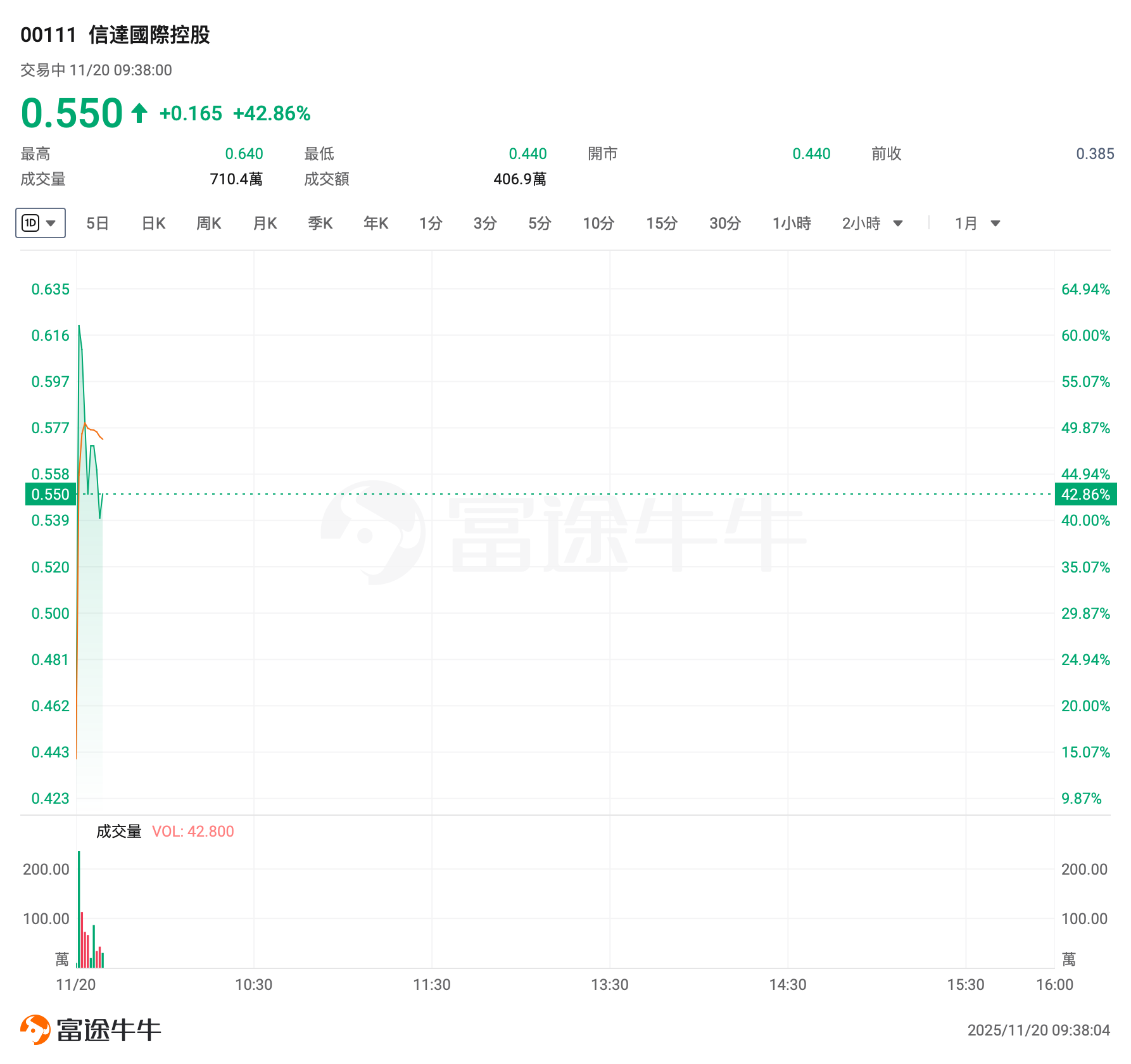
港股异动 | 汇金系三家券商筹划合并 信达国际控股(00111)高开逾14% 中国信达(01359)高开逾7%
智通财经网· 2025-11-20 01:32
消息面上,中金公司与东兴证券、信达证券同步发布公告,宣布正在筹划由中金公司通过换股方式吸收 合并这两家公司。根据三季报,中央汇金通过中国信达间接持有信达证券78.67%股权;通过东方资产 间接持有东兴证券45.14%股权。而中央汇金也是中金公司的实控人,直接持有中金公司40.11%股权。 智通财经APP获悉,汇金系再有大动作。截至发稿,信达国际控股(00111)涨14.29%,报0.44港元;中国 信达(01359)涨7.26%,报1.33港元,成交额4760.95万港元。 信达证券也发布公告称,公司与中金公司、东兴证券正在筹划由中金公司通过向东兴证券全体A股换股 股东发行A股股票、向信达证券全体A股换股股东发行A股股票的方式换股吸收合并东兴证券、信达证 券。据悉,信达证券为中国信达附属公司,为信达国际控股间接控股股东。 ...
中金公司收购东兴、信达!香港证券ETF(513090)标的指数全市场中金公司含量最高
Ge Long Hui· 2025-11-20 01:09
Group 1 - Central Huijin's brokerage integration marks the first case of mergers and acquisitions in the industry, with CICC announcing the issuance of shares to acquire Dongxing Securities and Xinda Securities [1] - The merger is expected to enhance the industry structure, leading to stronger operational growth and sustainability, potentially raising the industry's ROE central level in the medium to long term [1] - Despite high performance growth in brokerage firms this year, stock prices have lagged, with the brokerage sector's valuation and holdings at relatively low levels, making M&A expectations a potential catalyst for valuation recovery [1] Group 2 - The Hong Kong Securities ETF (513090) has seen a net inflow of 8.21 billion yuan over the past 60 days, with a latest scale of 31.689 billion yuan and only 16 constituent stocks [2] - Major weighted stocks in the ETF include leading companies such as CITIC Securities, Hong Kong Exchanges, Guotai Junan, and CICC, with an average daily trading volume of 14 billion yuan over the past six months [2] - The ETF supports T+0 trading and has the lowest fee rate in the market at 0.2% per year, indicating good liquidity [2]

中国信达(01359.HK):中金公司拟换股吸收合并东兴证券、信达证券
Ge Long Hui A P P· 2025-11-19 14:25
格隆汇11月19日丨中国信达(01359.HK)公告,公司注意到,公司附属公司信达证券股份有限公司(股份 代号:601059.SH)("信达证券")于2025年11月19日刊发的一则停牌公告中提述,中国国际金融股份有限 公司(股份代号:3908.HK及601995.SH)("中金公司")作为一方,与东兴证券股份有限公司(股份代号: 601198.SH)("东兴证券")及信达证券作为另一方,已就中金公司拟透过吸收合并及换股方式进行的拟议 合并("拟议合并")签订一份具法律约束力的合作协议。有关详情,请参阅信达证券于上海证券交易所网 站刊登的公告(网址:www.sse.com.cn)。 ...
中国信达(01359) - 内幕消息
2025-11-19 14:14
香港交易及結算所有限公司及香港聯合交易所有限公司對本公告的內容概不負責,對其準確性或完整性亦不發表 任何聲明,並明確表示,概不對因本公告全部或任何部份內容而產生或因倚賴該等內容而引致的任何損失承擔任 何責任。 China Cinda Asset Management Co., Ltd. 中國信達資產管理股份有限公司 (於中華人民共和國註冊成立的股份有限公司) (股份代號:01359及04621(優先股)) 於2029年到期的600,000,000美元利率為4.75厘的擔保優先票據 警告:無法保證擬議合併會落實或最終完成,中金公司、東興證券及信達證券之間就擬 議合併進行的任何討論可能會也可能不會導致中金公司、東興證券及信達證券的合併。 務請相關證券及債券的持有人及潛在投資者於買賣本公司及其子公司的相關證券、債券 及╱或其他證券時謹慎行事。對應採取的行動有疑問的人士應諮詢其股票經紀人、銀行 經理、律師或其他專業顧問。 承董事會命 (股份代號:5783) 於2048年到期的200,000,000美元利率為5.000厘的擔保優先票據 (股份代號:4424) 於2028年到期的1,200,000,000美元利率為4.7 ...
荣盛发展拟与信达河北签署约20亿元债务重组协议
Bei Ke Cai Jing· 2025-11-19 08:48
Core Viewpoint - Rongsheng Real Estate Development Co., Ltd. is undertaking a debt restructuring plan to alleviate its financial pressure and promote sustainable business development [1][3]. Debt Restructuring Details - The debt restructuring involves a total amount of approximately 2 billion yuan, with the agreement to sign a contract with China Cinda Asset Management Co., Ltd. Hebei Branch [2]. - If Rongtu Shengzhan or an approved third party repays 1.05 billion yuan according to the repayment plan, including 350 million yuan through asset transfer, the remaining debt will be waived by Cinda Hebei [2]. Company Perspective - The board of directors believes that this debt restructuring is a necessary measure to reduce the company's debt burden and does not harm the interests of the company and its shareholders [3].

银行下场卖房降风险也要防风险
Zheng Quan Shi Bao· 2025-11-18 00:07
Core Viewpoint - Banks are actively selling properties at prices significantly lower than market rates, driven by the need to manage non-performing assets and respond to economic pressures in the real estate market [1][2] Group 1: Market Context - The trend of banks selling properties is a response to increasing defaults on personal mortgage loans and real estate development loans, leading to a rise in "foreclosure properties" and "debt settlement assets" on bank balance sheets [1] - Traditional channels for disposing of these assets have become bottlenecks, with high rates of unsold foreclosure properties due to issues like unclear tax obligations and difficulties in clearing properties [1][3] Group 2: Benefits of Direct Property Sales - Direct property sales by banks can significantly enhance asset disposal efficiency and accelerate capital recovery, while also reducing legal disputes through better control of the transaction process [2] - Buyers benefit from lower prices, typically 16% to 31% below market rates, along with a transparent transaction process and access to mortgage services, addressing the challenges associated with purchasing foreclosure properties [2] Group 3: Challenges and Risks - Banks face challenges in selling properties due to a lack of professional sales teams and market experience, which may lead to inefficiencies and potential conflicts of interest [3] - The influx of low-priced properties into the market could temporarily suppress surrounding property values, as evidenced by a 4.2% drop in average transaction prices in certain areas [3] Group 4: Alternative Asset Disposal Strategies - Banks have other mature pathways for disposing of non-performing assets, such as packaging them for asset management companies (AMCs), which can leverage their expertise for more effective asset management [4] - Establishing special asset divisions or utilizing asset securitization can also help banks manage risks and share returns with investors [4] - Collaborating with local governments and quality real estate companies on projects related to housing delivery can maximize asset value while ensuring timely project completion [4]
前10月国有土地使用权出让收入24982亿元;荣盛发展与中国信达签署20亿元债务重组协议|房产早参
Mei Ri Jing Ji Xin Wen· 2025-11-17 23:11
Group 1: Government Land Use Rights Revenue - In the first ten months of 2025, the revenue from state-owned land use rights reached 24,982 billion yuan, a year-on-year decrease of 7.4% [1] - The overall government fund budget revenue was 34,473 billion yuan, reflecting a 2.8% decline compared to the previous year [1] - The decline in land use rights revenue indicates that the adjustment in the land market is ongoing, although it has shifted from a "cliff-like drop" to a "moderate decline," suggesting increased market resilience [1] Group 2: Qu Mei Home's Loan Guarantee - Qu Mei Home announced it would provide a guarantee for a bank loan of up to 2.3 billion Norwegian Krone for its overseas subsidiary, Ekornes QM Holding AS [2] - The guarantee involves pledging 100% equity of its wholly-owned subsidiary, Ekornes AS, aimed at optimizing the company's debt structure [2] - This move is seen as necessary for debt optimization, although it introduces exchange rate and operational risks [2] Group 3: Oppein Home's Cash Management - Oppein Home plans to invest 320 million yuan of idle raised funds into structured deposits to enhance fund utilization efficiency [3] - The investment will be split into two products with terms of 52 days, expected to yield annualized returns of 0.65% to 1.9% and 0.65% to 2.5% respectively [3] - This strategy aligns with the company's conservative management style and is expected to generate some returns while ensuring project construction is not affected [3] Group 4: Rongsheng Development's Debt Restructuring - Rongsheng Development signed a debt restructuring agreement with China Cinda Asset Management for approximately 2 billion yuan to alleviate company debt [4] - The agreement stipulates that if certain repayment conditions are met, the remaining debt will be waived, significantly reducing the company's liabilities [4] - This restructuring is a critical step in the company's debt resolution strategy, providing essential breathing space for operations [4] Group 5: Poly Developments' Convertible Bonds - Poly Developments announced the initiation of the conversion of its 8.5 billion yuan convertible bonds, with a maturity of six years and a tiered interest rate structure [5] - The latest conversion price is set at 15.92 yuan per share, with the total amount raised matching the bond issuance [5] - This action is part of a long-term strategy to optimize the financing structure and potentially convert debt into equity in the future [5]


【头条评论】 银行下场卖房降风险也要防风险
Zheng Quan Shi Bao· 2025-11-17 23:08
Core Viewpoint - Banks are actively selling properties at prices significantly lower than market rates, driven by the need to manage non-performing assets and respond to economic pressures in the real estate market [1][2] Group 1: Market Context - The trend of banks selling properties is a response to increasing personal mortgage defaults and real estate loan defaults, leading to a rise in "foreclosed properties" and "debt settlement assets" on bank balance sheets [1] - Traditional disposal channels for these assets have become bottlenecked, with high rates of unsold foreclosed properties due to issues like unclear tax obligations and difficulties in clearing properties [1][3] Group 2: Benefits of Direct Property Sales - Direct property sales by banks can significantly enhance asset disposal efficiency and accelerate capital recovery, while also reducing legal disputes through better control of the transaction process [2] - Buyers benefit from purchasing "direct supply houses" at prices generally 16% to 31% lower than market rates, with transparent transaction processes and access to mortgage services, addressing the full payment requirement of foreclosed properties [2] Group 3: Challenges and Risks - Banks face challenges in selling properties due to a lack of professional sales teams and market experience, which may lead to inefficiencies and potential conflicts of interest [3] - Issues related to property rights and fees could result in disputes that harm the bank's reputation, while the influx of low-priced properties may temporarily suppress surrounding property values [3] Group 4: Alternative Asset Disposal Strategies - Besides direct sales, banks can utilize asset management companies (AMCs) to package and dispose of non-performing assets, leveraging their expertise for more effective management [4] - Banks can also establish special asset divisions or use asset securitization to attract capital market investors, and repurpose unsold properties into long-term rental apartments to align with policy directions [4] - Collaborating with local governments and quality real estate companies to inject funds into ongoing projects can help ensure timely delivery of housing and maximize asset value [4]
【头条评论】银行下场卖房 降风险也要防风险
Zheng Quan Shi Bao· 2025-11-17 17:12
Core Viewpoint - Banks are actively selling properties at prices significantly lower than market rates, driven by the need to manage non-performing assets and respond to economic pressures in the real estate market [1][2]. Group 1: Market Context - Recent economic downturns and deep adjustments in the real estate market have led to increased defaults on personal mortgage loans and real estate development loans, resulting in a growing scale of "foreclosure properties" and "debt settlement assets" held by banks [1]. - Traditional disposal channels for these assets have faced bottlenecks, with high rates of unsold foreclosure properties due to issues like unclear tax obligations and difficulties in clearing properties [1][3]. Group 2: Benefits of Direct Property Sales - Direct property sales by banks can significantly enhance asset disposal efficiency and accelerate capital recovery, while also reducing legal disputes through better control of the transaction process [2]. - Buyers benefit from "direct supply properties" that are generally priced 16% to 31% lower than market rates, with transparent transaction processes and access to mortgage services, addressing the challenges of full cash payments for foreclosure properties [2]. Group 3: Challenges and Risks - Banks may face challenges due to a lack of professional sales teams and market promotion experience, which could lead to inefficiencies and imbalances in cost and revenue [3]. - Potential issues with property rights and payment of property fees could result in disputes that harm the bank's reputation [3]. - The influx of low-priced properties into the market could temporarily suppress surrounding property prices, as seen in certain areas where average transaction prices have dropped [3]. Group 4: Alternative Asset Disposal Strategies - Besides direct sales, banks can utilize more mature and innovative methods for disposing of non-performing assets, such as packaging them for asset management companies (AMCs) that specialize in efficient asset disposal [4]. - Establishing "special asset divisions" or using asset securitization to attract capital market investors are also viable strategies for risk sharing and maximizing returns [4]. - For properties that are difficult to sell, converting them into long-term rental apartments or affordable rental housing aligns with policy directions and helps activate assets [4]. Group 5: Long-term Strategy - The decision for banks to sell properties directly is a tactical choice aimed at quickly mitigating risks and recovering funds, but it is essential to focus on preventing transaction disputes and reputation risks [4]. - A long-term solution involves building a multi-layered, professional, and market-oriented system for disposing of non-performing assets, with banks acting as financial providers and coordinators through collaboration with AMCs, technology companies, and local governments [4].