
新产业

Search documents
报告发布丨中智咨询《央企A股上市公司战新产业布局和模式路径比较研究报告》
Sou Hu Cai Jing· 2026-01-20 08:25
Core Insights - Strategic emerging industries have become the core battlefield for state-owned enterprises (SOEs) to explore a "second growth curve" under the national strategy of cultivating new productive forces [1] Group 1: Industry Overview - A report by Zhongzhi Consulting indicates that among 402 SOE-controlled A-share listed companies, 257 have over 30% of their revenue from strategic emerging industries, which are included in the study [6] - By the end of 2024, strategic emerging industry enterprises are expected to contribute 26% of operating income and 31.27% of total profit with approximately 25% of total assets, showing a net asset return rate superior to traditional industries [7] Group 2: Structural Layout - Nearly 80% of enterprises focus on advantageous fields such as new-generation information technology, new materials, and new energy, but there is a relative weakness in key areas like industrial mother machines and biomanufacturing, necessitating increased investment to enhance industry influence [8] - 43.85% of manufacturing enterprises in strategic emerging industries are actively upgrading to high-value-added segments like new materials and high-end equipment, while the share of strategic emerging business in transportation and financial service companies is less than 1% [9] Group 3: R&D Investment - Overall R&D investment intensity in strategic emerging industry enterprises is higher than that of traditional industries, but sectors like biotechnology, new materials, and energy conservation have lower R&D investment intensity compared to the average level of SOE A-shares (5.86%), indicating a gap with industry leaders [12] Group 4: Sector-Specific Insights - In the new energy sector, SOEs have established a full industrial chain layout covering power generation operations, equipment manufacturing, and technical services, transitioning from "scale competition" to "quality and efficiency competition" [14] - In the new materials sector, advanced steel materials face industry pressures, while advanced non-ferrous metal materials show high profitability and R&D investment, with companies adopting niche market and industry chain extension strategies [16] - In the biotechnology sector, many enterprises are positioned in relatively mature areas like raw materials and trade, but there is insufficient investment in innovative drugs and precision instruments, indicating a need to strengthen overall industry resilience [18] Group 5: Strategic Recommendations - Establish a full-cycle evaluation and adjustment mechanism for emerging industries, transitioning from experience-based to data-driven decision-making [21] - Implement a "one enterprise, one strategy; one industry, one model" incubation path to guide enterprises in selecting flexible combinations of business extensions, platform incubation, equity cooperation, and fund investment [21] - Optimize resource allocation mechanisms driven by innovation and capital, enhancing collaborative innovation resources and establishing special funds for emerging development [21] - Focus on creating an economic empowerment organization characterized by "small teams, large platforms" to enhance industry leadership and ecological construction capabilities [21]


自然资源部发布首批支持新产业新业态发展的规划和土地政策创新案例集
Xin Lang Cai Jing· 2026-01-20 07:12
Core Viewpoint - The Ministry of Natural Resources has released the first batch of the "Planning and Land Policy Innovation Case Collection" to promote innovative practices in urban land use and planning across various cities in China [1] Group 1: Key Highlights - The case collection includes 19 exemplary cases from cities such as Beijing, Shanghai, Hangzhou, Guangzhou, Shenzhen, Nanjing, Chengdu, Xi'an, Dalian, Xiangtan, and Zhuzhou [1] - These cases are derived from grassroots practices nationwide, showcasing recent explorations in optimizing planning adjustments, land use conversion rules, and supporting land compatibility and composite utilization [1] - The initiative encourages local governments to proactively devise innovative measures, exploring flexible and efficient resource allocation methods to create a virtuous cycle of "one place innovation, multiple places benefit" [1] Group 2: Policy Implications - The shift in spatial utilization models is emphasized, moving from "incremental expansion" to "stock potential excavation" and from "rigid control" to "flexible adaptation" [1] - The transformation of planning and land policies is aimed at changing the mindset from regulatory thinking to operational thinking, further enhancing and expanding the comprehensive effectiveness of policies [1]
新产业跌2.05%,成交额1.12亿元,主力资金净流出764.90万元
Xin Lang Cai Jing· 2026-01-20 04:16
Core Viewpoint - The company, New Industry Biomedical Engineering Co., Ltd., has experienced a decline in stock price and a mixed financial performance, with a slight increase in revenue but a significant decrease in net profit [1][2]. Group 1: Stock Performance - On January 20, the stock price of New Industry fell by 2.05% to 56.76 CNY per share, with a trading volume of 112 million CNY and a turnover rate of 0.29%, resulting in a total market capitalization of 44.597 billion CNY [1]. - Year-to-date, the stock price has increased by 0.91%, but it has decreased by 4.96% over the last five trading days, 3.80% over the last 20 days, and 8.32% over the last 60 days [1]. Group 2: Financial Performance - For the period from January to September 2025, the company achieved a revenue of 3.428 billion CNY, representing a year-on-year growth of 0.39%, while the net profit attributable to shareholders was 1.205 billion CNY, reflecting a year-on-year decrease of 12.92% [2]. - Cumulatively, since its A-share listing, the company has distributed a total of 3.86 billion CNY in dividends, with 2.357 billion CNY distributed over the last three years [3]. Group 3: Shareholder Information - As of September 30, 2025, the number of shareholders decreased by 15.87% to 13,100, with an average of 51,997 circulating shares per shareholder, which is an increase of 18.87% [2]. - Among the top ten circulating shareholders, Hong Kong Central Clearing Limited is the fourth largest, holding 26.4824 million shares, an increase of 4.2383 million shares from the previous period [3].
中国医院调研:对 2026 年持谨慎乐观态度-China Healthcare-China Hospital Survey Cautiously Optimistic for 2026
2026-01-20 03:19
Summary of China Healthcare Conference Call Industry Overview - **Industry**: China Healthcare - **Survey**: AlphaWise survey conducted with 80 hospital executives in November 2025, focusing on hospital capital expenditures (capex), procedure volumes, and brand preferences for 2026 [1][26] Key Findings Hospital Capex Outlook - **Cautiously Optimistic**: 59% of hospital executives expect higher capex in 2026, up from 43% in 2025, but still below 85% in 2024 [3][51] - **Expected Growth**: Average capex growth projected at 4.7% YoY for 2026, compared to 3.0% for 2025 [3][51] - **Actual Growth in 2025**: Estimated capex growth for 2025 was 5.8% YoY, indicating better-than-expected performance [3][51] - **Key Drivers**: Hospital surplus (69%), patient demand (50%), and local fiscal budgets (44%) are primary factors influencing capex decisions [31] Equipment Spending Trends - **Top Equipment Categories**: Surgical and soft endoscopes expected to see the highest unit growth at 26% and 16% respectively, followed by CT, ultrasound, and CLIA analyzers with high-teens growth [32][93] - **AI and Digitization**: AI, digitization, and cloud capabilities are the top investment priorities, with 84% of executives planning to increase spending in these areas [33][78] Brand Preferences and Market Dynamics - **Domestic Brands**: Mindray and United Imaging maintain strong positions in brand preference, with Mindray expected to gain share in surgical endoscopes and ultrasound [36][38] - **Foreign Brands**: Siemens Healthineers, GE Healthcare, and Philips show mixed performance, with potential share losses due to domestic competition [17][19][20] - **Market Shifts**: United Imaging is expected to gain significant share in CT and MR equipment, while Mindray is anticipated to strengthen its position in various categories [38] Pricing and Procurement - **Pricing Pressures**: Continuous pricing pressure expected in clinical testing, negatively impacting the IVD segment [10][42] - **Procurement Changes**: Increased expectations for centralized procurement and shorter tender cycles, which could lead to downward pricing pressures [30][61][62] Procedure Volume Expectations - **Moderating Growth**: Only 17% of executives expect growth in procedure volumes, down from 31% in the previous year, primarily due to budget constraints [39] - **Specialty Procedures**: Expected growth across major specialties is clustered in the mid-single-digit range, indicating stable demand [40] Stock Implications - **Positive Outlook for Certain Companies**: - **Mindray**: Expected to recover to positive revenue growth in 2026 due to stable capex environment [11] - **United Imaging**: Positioned to benefit from high-end imaging demand [12] - **APT Medical**: Anticipated to capture growth in cardiac ablation procedures [14][15] - **Zylox-Tonbridge**: Expected to see growth in neuro and peripheral intervention procedures [16] Risks and Challenges - **Market Uncertainty**: Hospital executives express caution regarding capex decisions, with procurement timing expected to be back-loaded into the second half of 2026 [68] - **Regulatory Pressures**: Ongoing regulatory scrutiny and tighter budgets continue to pose challenges for lower-tier hospitals [56] Conclusion The 2026 outlook for the China healthcare sector is cautiously optimistic, with expected growth in hospital capex and a focus on advanced medical technologies. However, challenges such as pricing pressures and market competition from domestic players remain significant factors influencing the landscape.



“四连跳”背后的韧性与活力
Jin Rong Shi Bao· 2026-01-20 02:08
2025年,我国国内生产总值突破140万亿元,按不变价格计算,比上年增长5.0%;全国城镇调查失业率 平均值为5.2%;货物贸易再创新高,外汇储备余额超过3.3万亿美元……1月19日,国家统计局公布了 2025年国民经济运行成绩单。 从110万亿元到140万亿元,"十四五"时期,我国经济总量实现"四连跳"。这背后,不是数字的简单叠 加,而是结构之变、动能之新、底气之足的生动诠释,更是中国经济向新向优、行稳致远的有力印证。 站在"十五五"规划开局的新起点,中国经济发展更具底气。尽管外部环境复杂多变,国内挑战依然存 在,但中国经济长期向好的基本面没有改变,高质量发展的大势没有改变。我们将持续以新质生产力培 育新优势,以深化改革破解新挑战,以扩大开放拓展新空间,中国经济必将在新的征程上,续写更多跨 越式奇迹,在中国式现代化道路上书写更为精彩的发展篇章。 没有一蹴而就的跨越,只有久久为功的积淀。中国经济5年实现"四连跳",是传统产业转型升级的坚 守,是新兴产业加速崛起的奋进,是改革开放持续深化的红利,更是14亿人携手前行、共促发展的磅礴 合力。 高质量发展的成色,在结构优化中愈发鲜亮。告别粗放增长的旧路径,中国经济迈 ...
省领导赴连云港推进南北共建园区工作
Xin Hua Ri Bao· 2026-01-18 21:06
Group 1 - The core focus of the news is the promotion of the South-North collaborative development of industrial parks, particularly in the context of the Xilian Industrial Park in Lianyungang City, which is a key project for enhancing cooperation between Wuxi and Lianyungang [1][2] - Shangneng Electric (300827) is highlighted as a key enterprise in the Xilian Industrial Park, emphasizing its role in the development of energy storage systems and battery modules, and its market reach to state-owned enterprises and exports to regions like the Middle East and North America [1] - The Wuxi-Lianyungang specialized and innovative industry park (300832) is noted as a high-standard industrial carrier and the first new industrial land project in Lianyungang, with a focus on integrating management and operational models to enhance industrial collaboration [1] Group 2 - The emphasis is placed on implementing the national strategy for regional coordinated development and the provincial government's requirements for deepening South-North paired assistance cooperation [2] - The development of new productive forces and the promotion of industrial collaborative development are identified as key objectives, aiming to create a high-quality regional economic layout that leverages the complementary advantages of the South and North [2]

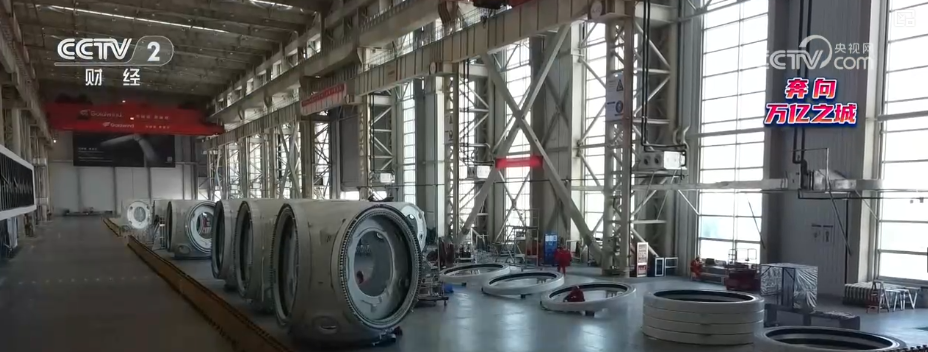
从“制造”到“智造”传统产业焕新“加速跑” 新产业激活增长新动能奔向万亿之城
Yang Shi Wang· 2026-01-18 04:34
Core Insights - Wenzhou, known as the "capital of China's private economy," is transitioning towards a trillion-level economic scale, focusing on new growth points and industrial transformation [1] Group 1: Offshore Wind Power Development - Wenzhou is accelerating the development of deep-sea offshore wind power, with 17 projects planned and a capacity exceeding 20 million kilowatts, accounting for over 50% of the province's total [7] - The deep-sea wind power base in Wenzhou is set to deliver over 50 large offshore wind turbines and complete over 100 overseas orders by 2025 [1][3] Group 2: Manufacturing Investment Growth - Manufacturing investment in Wenzhou increased by 23.9% year-on-year from January to November 2025, driven by significant project implementations [5] Group 3: Artificial Intelligence and Data Integration - Wenzhou is leveraging data elements to support the development of its artificial intelligence industry, with plans to create a 100 billion-level AI industry cluster by 2027 [10] - The city has developed 50 high-quality datasets across various fields, including healthcare and industrial manufacturing, to support the training of vertical AI models [10] Group 4: Traditional Industry Transformation - The automotive and motorcycle parts industry in Wenzhou saw an increase of nearly 20% in value added from January to November 2025, showcasing its ability to maintain growth during transformation [12][21] - Traditional automotive parts are evolving towards high-end and intelligent upgrades, with a complete industrial chain being revitalized in Wenzhou [19] Group 5: Technological Advancements - Investment in technology research and development is creating new growth drivers for traditional industries, with automotive parts companies supplying over 100 vehicle models and producing more than 5,000 product varieties [21]
国务院国资委:“十五五”时期大幅提升国企战新产业增加值占比
Zhong Guo Zheng Quan Bao· 2026-01-17 03:02
Core Viewpoint - The State-owned Assets Supervision and Administration Commission (SASAC) emphasizes the need to significantly increase the proportion of value added from strategic emerging industries during the 14th Five-Year Plan period, focusing on optimizing the layout and structural adjustments of state-owned enterprises (SOEs) [1][2]. Group 1: Key Goals for State-owned Enterprises - The total assets of state-owned enterprises under SASAC grew from 235 trillion yuan to 387 trillion yuan during the 14th Five-Year Plan, with an average annual growth rate of 10.5% [2]. - By the end of 2025, local state-owned enterprises achieved a value added of 6.9 trillion yuan and completed fixed asset investments of 5.3 trillion yuan [2]. - The main goals for the 15th Five-Year Plan include enhancing strategic missions, improving contributions to economic and social development, and increasing the number of leading technology enterprises [2][3]. Group 2: Enhancing Capabilities of State-owned Enterprises - SASAC aims to improve five key capabilities of SOEs: value creation, technological innovation, industrial upgrading, reform breakthroughs, and party leadership [3][4]. - In terms of value creation, SOEs are encouraged to focus on long-term value and improve productivity metrics such as labor productivity and asset turnover [3]. - For technological innovation, there is a push for increased investment in basic research and the cultivation of talent to enhance the national innovation system [3][4]. Group 3: Industrial Upgrading and Reform - The focus on industrial upgrading includes promoting intelligent, green, and integrated development, while also strengthening traditional industries and creating new pillar industries [4][5]. - SASAC emphasizes the need for deeper reforms in SOEs to establish a modern corporate governance structure and a market-oriented operational mechanism [4][5]. - The importance of artificial intelligence is highlighted, with support for enterprises to engage in AI-related initiatives and the development of high-value application scenarios [5][6]. Group 4: Investment and Innovation Strategies - SASAC encourages the use of special bonds and loans to support key projects that strengthen supply chains and stimulate demand [5][6]. - There is a call for the establishment of high-level innovation platforms and mechanisms to facilitate the commercialization of research outcomes [6]. - The integration of local industrial policies and resources is crucial for driving the development of emerging pillar industries through internal growth and mergers [6].
国务院国资委召开会议提出 “十五五”时期大幅提升国企战新产业增加值占比
Zhong Guo Zheng Quan Bao· 2026-01-16 21:40
Core Viewpoint - The State-owned Assets Supervision and Administration Commission (SASAC) aims to significantly enhance the contribution of state-owned enterprises (SOEs) to the economy during the 14th Five-Year Plan period, with a focus on strategic emerging industries and technological innovation [1][2]. Group 1: Economic Growth and Performance - During the 14th Five-Year Plan period, the total assets of state-owned enterprises under SASAC increased from 235 trillion yuan to 387 trillion yuan, representing an average annual growth of 10.5% [1][2]. - From January to November 2025, local state-owned enterprises achieved a value-added output of 6.9 trillion yuan and completed fixed asset investments of 5.3 trillion yuan [2]. Group 2: Strategic Goals for the 15th Five-Year Plan - The SASAC plans to enhance the strategic mission of SOEs, focusing on strategic security, industry leadership, and public service, while increasing the contribution of state-owned economy to social development [2]. - Key goals include improving self-reliance in technology, increasing the number of leading technology enterprises, optimizing the layout of state-owned capital, and enhancing the vitality of enterprises [2][3]. Group 3: Enhancing Capabilities - SASAC emphasizes the need to improve five key capabilities of SOEs: value creation, technological innovation, industrial upgrading, reform breakthroughs, and party leadership [3][4]. - In terms of value creation, SOEs are encouraged to focus on long-term value and improve productivity metrics such as labor productivity and asset turnover [3]. - For technological innovation, there is a push for increased investment in basic research and the cultivation of talent to enhance the innovation capacity of enterprises [3]. Group 4: Industry Upgrading and Reform - The SASAC aims to guide SOEs in pursuing intelligent, green, and integrated development, while fostering new production capabilities and enhancing the competitiveness of traditional industries [4]. - There is a call for deeper reforms in the governance and operational mechanisms of SOEs to support high-quality development [4]. Group 5: Focus on Technological Innovation and AI - SASAC highlights the importance of artificial intelligence and encourages enterprises to participate in national AI initiatives, aiming to create high-value applications across various industries [6]. - The focus is on fostering collaboration within the industrial chain and promoting the development of emerging pillar industries that can lead future growth [6].
“十五五”时期大幅提升国企战新产业增加值占比
Zhong Guo Zheng Quan Bao· 2026-01-16 20:47
Core Viewpoint - The State-owned Assets Supervision and Administration Commission (SASAC) aims to enhance the strategic role and contribution of state-owned enterprises (SOEs) in China's economic development during the 14th Five-Year Plan period, with a focus on optimizing the layout and structure of state-owned capital and promoting emerging industries. Group 1: Economic Growth and Performance - During the 14th Five-Year Plan period, the total assets of enterprises supervised by the SASAC increased from 235 trillion yuan to 387 trillion yuan, representing an average annual growth of 10.5%, which significantly supported China's sustained economic and social development [1][2] - From January to November 2025, local state-owned enterprises achieved a value-added output of 6.9 trillion yuan and completed fixed asset investments of 5.3 trillion yuan [1] Group 2: Strategic Goals for the 15th Five-Year Plan - The SASAC aims to strengthen the strategic mission of SOEs, enhancing their roles in national security, public service, and economic contribution [2] - Key goals include improving the level of technological self-reliance, increasing the number of leading technology enterprises, and optimizing the layout of SOEs in critical industries [2][3] Group 3: Enhancing Capabilities of State-Owned Enterprises - The SASAC emphasizes the need to improve five key capabilities of SOEs: value creation, technological innovation, industrial upgrading, reform breakthroughs, and party leadership [2][3] - There is a focus on guiding enterprises to adopt a value creation orientation, improve productivity, and enhance risk management [2] Group 4: Technological Innovation and Industrial Upgrading - The SASAC plans to strengthen the role of SOEs in technological innovation by increasing investment in basic research and fostering talent [3] - Enterprises are encouraged to pursue intelligent, green, and integrated development, while also enhancing their competitive position in global industrial divisions [3][4] Group 5: Structural Adjustment and Investment Strategies - The SASAC aims to optimize the layout and structure of state-owned capital, focusing on strengthening core businesses and supporting the modernization of the industrial system [4][5] - There is an emphasis on leveraging long-term special bonds and loans to implement key projects that enhance supply chains and stimulate demand growth [4][5]