MR

Search documents
Scorpio Tankers Inc. Announces Updates on First and Second Quarter 2026 TCE Rates and Liquidity
Globenewswire· 2026-03-25 20:15
MONACO, March 25, 2026 (GLOBE NEWSWIRE) -- Scorpio Tankers Inc. (NYSE:STNG) (“Scorpio Tankers,” or the “Company”) announced today an update on its first quarter and second quarter of 2026 average daily Time Charter Equivalent (“TCE”) rates, and its liquidity and outstanding debt. First and Second Quarters 2026 TCE Rate Update Below is a summary of the average daily TCE revenue and duration of contracted voyages and time charters for the Company’s vessels (both in the pools and outside of the pools) thus far ...


申万宏源交运一周天地汇(20260315-20260320):新造船价上涨,阿芙拉油轮TCE突破18万重视中国油轮避险属性
Shenwan Hongyuan Securities· 2026-03-22 08:40
Investment Rating - The report maintains a positive outlook on the shipping industry, particularly emphasizing the value of Chinese tanker assets as a safe haven [2]. Core Insights - The report highlights a significant increase in Aframax tanker rates, which surged by 54% to $188,000 per day, driven by geopolitical tensions and changes in trade routes [2]. - The report recommends several companies, including China Merchants Energy Shipping, COSCO Shipping Energy Transportation, and China Merchants South China Shipping, as key players to watch in the sector [2]. - The report notes that the global oil trade routes are being reassessed, with the price at Yanbu port reaching $287,000 per day, indicating strong demand and potential for further growth [2]. Summary by Sections Shipping Market Performance - The transportation index fell by 2.65%, underperforming the CSI 300 index by 0.46 percentage points, with the shipping sector showing the largest gain of 1.21% among sub-sectors [4]. - The Baltic Dry Index reported a slight decrease of 0.05%, while the crude oil tanker index increased by 4.22% [4]. Oil Transportation - The report indicates that the average VLCC rate increased by 22% week-on-week, reaching $230,208 per day, with specific routes like the Middle East to China remaining stable at $410,872 per day [2]. - The report emphasizes the potential for increased volumes in the Atlantic market due to significant price differentials and strategic oil reserve releases [2]. Product Oil Transportation - The LR2-TC1 rate rose by 37% to $118,991 per day, driven by geopolitical factors affecting Middle Eastern exports [2]. - The report notes a 20% increase in MR average rates, reflecting a recovery in the Atlantic market [2]. Dry Bulk Shipping - The report mentions that the BDI recorded a slight decrease, but larger vessels like Capesize saw a 3.1% increase in rates, indicating resilience in the market [2]. - The report highlights increased coal exports from Indonesia and Australia, supporting Panamax rates [2]. Air Transportation - The report discusses the ongoing challenges in the aircraft manufacturing supply chain and the aging fleet, which is expected to constrain supply [2]. - Despite short-term pressures from rising oil prices, the long-term outlook for the air transport sector remains positive [2]. Express Delivery - The report anticipates a recovery in delivery fees due to new policies, benefiting leading companies like ZTO Express and YTO Express [2]. - The report highlights the growth potential of J&T Express in Southeast Asia [2]. Rail and Road Transportation - The report notes resilience in rail freight volumes and highway truck traffic, with significant week-on-week increases reported [2]. - It suggests that traditional high-dividend investment themes and potential value management catalysts in the highway sector are worth monitoring [2].





Scorpio Tankers Inc. Announces Availability of 2025 Annual Report on Form 20-F
Globenewswire· 2026-03-20 20:20
Company Overview - Scorpio Tankers Inc. is a provider of marine transportation of petroleum products worldwide, currently owning 89 product tankers, which include 33 LR2 tankers, 42 MR tankers, and 14 Handymax tankers, with an average age of 10.1 years [3] - The company has agreements to sell one LR2 product tanker and two MR product tankers, expected to close in the first or second quarter of 2026 [3] - Scorpio Tankers has also reached agreements for four MR newbuildings currently under construction, with deliveries expected in 2026 and 2027, four LR2 newbuildings with deliveries expected in 2027 and 2029, and two VLCC newbuildings with deliveries expected in the second half of 2028 [3] Financial Reporting - The company filed its Annual Report on Form 20-F for the year ended December 31, 2025, with the Securities and Exchange Commission, which can be accessed on the company's website [1] - Shareholders can request a hard copy of the Annual Report, which includes the complete 2025 audited financial statements, free of charge [2]
RadNet (NasdaqGM:RDNT) M&A announcement Transcript
2026-03-05 16:32
Summary of RadNet Gleamer Conference Call Company Overview - **Company**: RadNet - **Acquisition**: Recently announced acquisition of Gleamer, a Paris-based leader in artificial intelligence in healthcare [2][14] - **Business Focus**: RadNet is a leader in diagnostic imaging services and digital health solutions, operating over 430 imaging centers across 9 states in the U.S. [4][5] Industry Insights - **Market Size**: The AI-enabled health informatics market is projected to grow from $5.1 billion in 2024 to $7.7 billion by 2028, representing an 11% growth rate [8] - **Clinical AI Solutions**: This segment is expected to grow at a rate of 26%, significantly faster than traditional radiology informatics, which is growing at 5% [8] - **Challenges in Healthcare**: Key challenges include disconnected patient engagement, workforce shortages, inconsistent clinical outcomes, and fragmented technology systems, leading to inefficiencies estimated at $25 billion [9][10] Acquisition Details - **Gleamer's Performance**: Gleamer has shown a 90% annual recurring revenue growth over the last four years, managing over 30 million studies annually with 700+ customer contracts across 40 countries [14][15] - **FDA and CE Clearances**: Gleamer holds over 4 FDA and 6 CE clearances, expanding its portfolio from X-ray to CT, mammography, and MR [14][15] - **Strategic Fit**: The acquisition is expected to enhance RadNet's portfolio, accelerate commercial reach, and improve operational efficiency [15][16] Expected Synergies and Financial Projections - **Revenue Synergies**: Over $7 million in revenue synergies anticipated, with a timeline for realization extending to 2027 [28] - **Cost Synergies**: Identified cost synergies of over $4 million, expected to be realized quickly [28][30] - **Financial Guidance for 2026**: Combined revenue for RadNet and Gleamer projected to be between $135 million and $145 million, with an annual recurring revenue growth of 80%-90% [31] Operational Impact - **Radiologist Efficiency**: The integration of Gleamer's AI tools is expected to reduce radiologist burnout and improve productivity, particularly in high-volume X-ray operations [46][47] - **Automated Reporting**: Gleamer's technology will facilitate automated reporting, enhancing turnaround times and consistency in diagnoses [21][66] - **Market Expansion**: The acquisition allows RadNet to penetrate alternative care sites, such as urgent care centers, enhancing service offerings and reducing costs [72][74] Future Outlook - **Continued Innovation**: RadNet aims to leverage Gleamer's capabilities to drive innovation in clinical AI and expand its product offerings [51][55] - **Strategic Partnerships**: The company is open to exploring partnerships with emerging AI startups to enhance its technology stack [53][80] - **Market Positioning**: RadNet positions itself as a leader in the clinical radiology AI space, with a focus on maximizing patient benefits and operational efficiencies [55][70] Conclusion - The acquisition of Gleamer represents a significant strategic move for RadNet, enhancing its capabilities in the rapidly growing AI healthcare market and addressing critical challenges in radiology [84]

霍尔木兹海峡阻断下的油轮运输市场重构
2026-03-03 02:52
Summary of Conference Call on Oil Transportation Market Dynamics Industry Overview - The conference call discusses the oil transportation market, particularly focusing on the implications of the recent events in the Strait of Hormuz and their impact on the oil shipping industry [1][2]. Key Points and Arguments Market Dynamics - The potential blockage of the Strait of Hormuz could lead to a restructuring of VLCC (Very Large Crude Carrier) routes towards the Atlantic Basin, significantly increasing travel distances and absorbing effective capacity [1]. - If the Strait is reopened, a concentrated demand for replenishment could drive freight rates higher, potentially exceeding expectations [1]. - The core risk for the oil transportation industry lies in the sustained high oil prices, which could trigger systemic shocks rather than the form of blockade itself [1][3]. Supply Chain and Capacity - The sanctions on Iran have resulted in a significant amount of crude oil being parked offshore, with approximately 163 VLCCs affected, leading to a structural change in effective capacity supply [1][4]. - The shadow fleet, which constitutes over 16% of the total fleet, has about half of its vessels unable to operate normally, resulting in an effective capacity loss of around 8% [4]. - Oil tankers currently anchored in the Persian Gulf account for 15%-20% of global capacity, with a short-term outlook of being "frozen" or on hold due to rising risks [4]. Demand Side Analysis - China's necessity for oil replenishment has increased, with Iranian crude accounting for 10%-15% of its import structure, translating to approximately 1.5 million barrels per day [5]. - If Iranian supply is disrupted, OPEC may increase production, which could expand compliant market space and drive demand for compliant vessels, thus benefiting freight rates [5]. Impact on Product Oil Transportation - The disruption of Middle Eastern exports could elevate prices for diesel and jet fuel, triggering a restructuring of the refined oil supply chain [6]. - Europe may shift its procurement to the U.S. Gulf or further regions, benefiting large product tankers like LR2 and LR1, while MR tankers may see regional benefits due to increased trade activity [6]. Investment Insights - The valuation differences among oil shipping stocks have narrowed significantly, with companies like COSCO Shipping Energy experiencing substantial price increases [7]. - Key metrics for overseas oil shipping companies include fleet size and structure, as well as the ratio of spot to time charter contracts [8]. Financial Metrics - Overseas companies benefit from low tax burdens and generous dividends, with dividend yields exceeding 15% for many [9]. - Free cash flow (FCF) yields for most companies are above 30%, with some nearing 40%, indicating strong cash generation capabilities [9]. Risk Assessment - The primary risk remains the potential for sustained high oil prices, which could lead to significant economic downturns and reduced oil consumption [13]. - The uncertainty surrounding geopolitical events may lead to short-term disruptions, but the long-term trend for the oil shipping industry remains bullish [12]. Additional Important Insights - The historical performance of shipping stocks can provide insights into current market dynamics, with parallels drawn to past events affecting freight rates and stock prices [12]. - The current market conditions suggest a favorable risk-reward profile for investments in the oil shipping sector, with limited downside and significant upside potential [11].
申万宏源交运一周天地汇:伊朗局势油运行情空中加油,集运造船联动关注ST松发、招商轮船
Shenwan Hongyuan Securities· 2026-03-01 05:06
Investment Rating - The report maintains a positive outlook on the shipping sector, indicating a bullish trend in the energy chain and shipping stocks overall [5]. Core Insights - The report highlights that the current uptrend in the shipping market is not limited to tankers but encompasses the entire energy chain, with VLCC TCE rates rising to $200,000 per day. The supply tightness in long-cycle tankers and geopolitical tensions, particularly in Iran, are driving freight rates higher [5]. - The report recommends specific stocks based on their performance in the shipping sector, including China Shipbuilding, China Power, ST Songfa, and others, while also noting the strong performance of companies like COSCO Shipping Energy and China Merchants Energy [5]. Summary by Sections Shipping Market Overview - The shipping index increased by 3.64%, outperforming the CSI 300 index by 2.56 percentage points. The shipping sub-sector saw the largest gain of 11.81%, while the airline sector experienced a decline of 1.41% [6]. - The VLCC average freight rate surged by 38% week-on-week, reaching $206,763 per day, indicating a strong market for oil tankers [5]. Geopolitical Impact - The report emphasizes the potential impact of the Iranian situation on oil supply and shipping rates, with a possible increase in compliant demand by 4-5% if conflicts cease. Conversely, ongoing tensions could lead to increased freight rates due to widening price differentials [5]. Stock Recommendations - Recommended stocks include: - Long-cycle logic: China Shipbuilding, China Power, ST Songfa - Mid-cycle shipping stocks: COSCO Shipping Energy, China Merchants Energy, and others [5]. - The report notes that the shipping market is entering a strong pricing phase, with owners gaining significant pricing power due to tight capacity [5]. Freight Rate Trends - The report details significant increases in freight rates across various categories, including a 41% rise in Middle East to Far East rates, reaching $231,399 per day, and a 42% increase in Suezmax rates [5]. - The report also highlights the resilience of dry bulk rates, with the BDI index recording a 1.09% increase, indicating a stable market for bulk carriers [6]. Airline Sector Insights - The report suggests that the airline industry is at a turning point, with potential for significant profit growth due to rising passenger volumes and constrained supply. Key airlines to watch include China Eastern Airlines, China Southern Airlines, and Spring Airlines [5]. Logistics and Express Delivery - The report indicates that policies aimed at protecting end-user rights in the express delivery sector may stabilize delivery fees, with a focus on leading companies like ZTO Express and YTO Express [5].

设备白送,耗材翻5倍!医疗采购\"1元中标\"的隐秘生意经还能持续多久?
Xin Lang Cai Jing· 2026-02-24 11:06
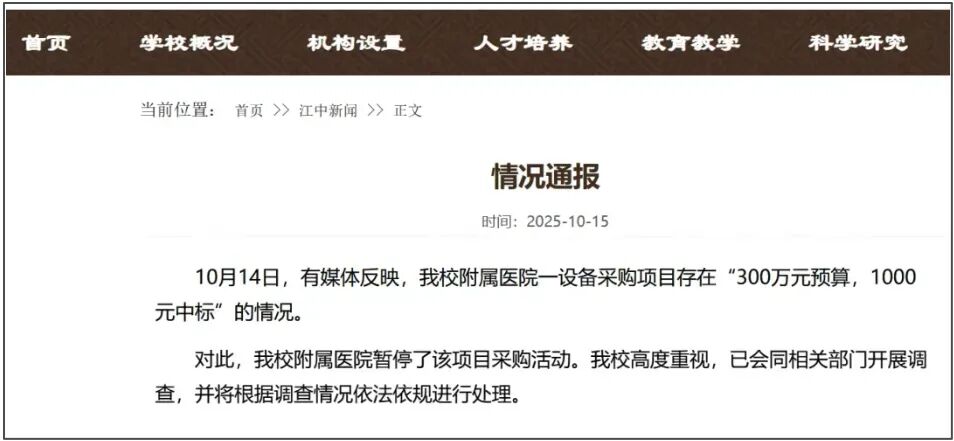
Core Viewpoint - The recent notice from Hubei Province addresses the issue of "abnormally low bidding" in government procurement, particularly targeting bids as low as "1 yuan" or "0.01 yuan" [1][19]. Group 1: Government Procurement Issues - The focus on abnormally low bids is not new, with previous regulations implemented in regions like Jiangxi, Guangxi, and Jiangsu, emphasizing scrutiny on bids below 50% of the average price or 45% of the maximum limit [2][10]. - A notable case involved a hospital with a budget of 3 million yuan for medical equipment, which was awarded to a bid of only 1,000 yuan, leading to increased costs for consumables later on [2][19]. Group 2: Market Dynamics and Company Performance - Companies like Wandong Medical have seen high bidding rates in 2025, with CT, MR, and DR equipment winning bids at rates of 47%, 56%, and 50% respectively, but this has come at the cost of profitability [3][20]. - Wandong Medical forecasts a net loss of 199 million to 257 million yuan for 2025, marking the worst annual performance since its listing, while Mindray's gross margin has dropped by 4.59 percentage points to 61.21% [3][15][28]. Group 3: Competitive Strategies and Industry Trends - The intense competition in the in-vitro diagnostics (IVD) sector has led to a significant reduction in the number of companies, from 2,320 to 1,530 between 2023 and 2025, with many resorting to extreme pricing strategies to capture market share [5][23]. - Companies often employ a bundling strategy, offering low-priced equipment while charging high prices for consumables, leading to increased overall costs for hospitals [6][24]. Group 4: Regulatory Responses - The national government has begun to take serious measures against low-cost bidding practices, with new regulations set to take effect in 2026 that will enforce scrutiny on bids significantly below average prices [9][25]. - Hubei Province has established specific thresholds for triggering reviews of abnormally low bids, which may be adjusted based on actual circumstances [11][27]. Group 5: Future Directions for the Medical Equipment Market - Companies are increasingly focusing on international markets and developing differentiated products to navigate the pressures of price competition [16][29]. - The need for innovation is emphasized as the industry shifts from a manufacturing to a creative approach, highlighting the importance of driving growth through new product development [30][31].


申万宏源交运一周天地汇:拥抱油运右侧行情,造船有望共振,关注ST松发、中远海能H
Shenwan Hongyuan Securities· 2026-02-23 07:27
Investment Rating - The report maintains a positive outlook on the shipping industry, particularly focusing on oil transportation and shipbuilding sectors, recommending stocks such as ST Songfa and China Merchants Energy [4]. Core Insights - The report highlights a strong performance in oil shipping, with VLCC TCE rates rising by 24% to $146,385 per day, and a significant increase in demand leading to higher freight rates [4]. - The global energy chain's valuation is on the rise, driven by long-term capacity utilization and mid-cycle profit expectations, suggesting a favorable environment for shipping rates [4]. - The report emphasizes the resilience of the dry bulk market, with the BDI index recording a slight increase of 1.19% to 2,043 points, indicating stable demand despite seasonal fluctuations [5]. Summary by Sections Shipping Market Performance - The shipping index decreased by 1.41%, underperforming the CSI 300 index by 1.77 percentage points, with the aviation sector experiencing the largest decline at -5.16% [5]. - The report notes that the coastal dry bulk freight index in China fell by 1.76%, while the Baltic Dry Index increased by 1.19% [5]. Oil Transportation - VLCC rates reached a new high of approximately $160,000 per day during the Spring Festival, with expectations for continued strength in the coming weeks [4]. - The report indicates that the average VLCC freight rate increased by 23% week-on-week, reaching $149,564 per day, reflecting tight capacity and strong demand [4]. Dry Bulk Market - The report mentions that the Capesize freight rate decreased by 4.1%, while the Panamax index showed resilience with a 3.5% increase [4]. - The report anticipates that post-holiday demand recovery will be crucial for the dry bulk market, particularly in iron ore shipments [4]. Air Transportation - The report suggests that the airline industry is at a turning point, with potential for significant profit growth due to increased passenger volumes and operational efficiencies [4]. - Airlines such as China Eastern Airlines and Spring Airlines are highlighted as key players to watch in this sector [4]. Express Delivery - The report notes uncertainties in the express delivery sector due to fluctuating demand and competitive pressures, but highlights the strong market position of leading companies like ZTO Express and YTO Express [4]. Rail and Road Transportation - Rail freight volumes and highway truck traffic are reported to be resilient, with the Ministry of Transport data showing a slight decrease in freight volume but overall stability [4]. - The report identifies two main investment themes in the highway sector: high dividend yields and potential value recovery in undervalued stocks [4].




瀛通通讯2025年业绩预亏,实控人股份质押及AI布局引关注
Jing Ji Guan Cha Wang· 2026-02-13 02:21
Core Viewpoint - The company, YingTong Communications, is facing significant challenges with an expected net profit loss for 2025, attributed to increased market investment and depreciation costs, while also actively pursuing opportunities in the AI consumer electronics sector [1][2]. Financial Performance - For the fiscal year 2025, the company anticipates a net profit loss ranging from 65 million to 75 million yuan, primarily due to heightened sales expenses from increased market investment and rising fixed asset depreciation, with scale effects not yet fully realized [2]. Company Governance - The actual controller, Huang Hui, has pledged 2.31 million shares, representing 5.17% of his holdings, with a cumulative pledge ratio reaching 41.22%. This situation raises concerns about potential risks related to margin calls or changes in corporate governance, although the company asserts that operations remain unaffected [3]. Strategic Development - The company is actively entering the AI consumer electronics market, having signed agreements in 2025 with companies like Nix Technology and Montong Intelligence, focusing on AI glasses and MR technologies. Although these collaborations began in 2025, advancements in product development and market introduction are expected to be significant in 2026, especially in light of a recovering consumer electronics industry [4]. Stock Performance - Since the beginning of 2026, the company's stock has experienced notable volatility, with a year-to-date increase of 10.12% as of February 2, but a decline of 7.38% over the past 60 days. The capital flow has shown divergence, with a slight net inflow of 115,800 yuan on February 2, contrasting with a net outflow of 13.52 million yuan on January 6. The high turnover rate and volatility indicate intense short-term sentiment trading, necessitating attention to the alignment of fundamentals and valuations [5].

美的医疗铁血突围:不做第二个东芝
2 1 Shi Ji Jing Ji Bao Dao· 2026-02-11 12:28
Core Insights - Midea Group is focusing on the healthcare sector as a strategic pivot, acquiring Carestream Health's international business to enhance its medical imaging capabilities and compete with established players like GE, Philips, and Siemens [2][3][4] - The company is positioning itself for leadership in the medical field, with a strong emphasis on AI technology to drive innovation and efficiency in its healthcare offerings [13][14][17] Group 1: Leadership Transition and Strategic Focus - The key concerns among shareholders include the timing of Chairman Fang Hongbo's retirement and the selection of his successor, which is closely tied to Midea's future direction [2] - Wang Jianguo, seen as a potential successor, is taking on significant roles within Midea's healthcare division, indicating a shift towards a more focused leadership in this sector [2][3] Group 2: Market Position and Competitive Landscape - Midea's healthcare division faces significant challenges from established competitors like Philips, which has a strong market share in medical imaging and a well-developed ecosystem that integrates technology and services [3][7][9] - The company aims to avoid the pitfalls experienced by Toshiba Medical, which struggled to compete in the medical imaging market and ultimately exited the sector [10][11] Group 3: Business Structure and Product Offerings - Midea's healthcare business comprises several entities, including Wandong Medical and KUKA Medical, focusing on a comprehensive ecosystem that spans clinical technology and hospital operations [5][6] - The company is actively working to enhance its product offerings in high-end imaging equipment, although it currently holds a low market share in critical areas like CT and MR imaging [6][8] Group 4: AI Integration and Future Strategies - Midea is leveraging AI technology to transform its healthcare offerings, with plans to integrate AI into its products and services to enhance operational efficiency and patient care [13][14] - The company has committed to significant R&D investments, aiming to establish itself as a provider of comprehensive smart healthcare solutions rather than just medical equipment [14][17] Group 5: Challenges and Future Outlook - Despite its ambitions, Midea's healthcare division must navigate the complexities of the medical industry, which requires a different approach compared to its traditional consumer electronics business [16] - The company has outlined a five-year plan to address potential overlaps and competition between its subsidiaries, ensuring a clear market strategy moving forward [16]