
阿斯利康

Search documents
百利天恒(688506):创新驱动发展,全球布局未来
Shenwan Hongyuan Securities· 2025-12-24 14:40
Investment Rating - The report initiates coverage with an "Accumulate" rating for the company [3][9]. Core Insights - The company has successfully transitioned to innovative drug development, particularly in the ADC (Antibody-Drug Conjugate) sector, highlighted by a significant global collaboration with BMS worth $8.4 billion for the EGFR/HER3 dual-target ADC, which positions the company for accelerated growth [6][8]. - The core product, iza-bren, is advancing through clinical trials and is expected to enter commercialization soon, with a potential market approval in 2026 for nasopharyngeal carcinoma [8][41]. - The company has established four major technology platforms that support a diverse pipeline of innovative drug candidates, enhancing its competitive edge in the oncology market [37][41]. Financial Data and Profit Forecast - Total revenue projections for 2025 are estimated at 2,211 million yuan, with a significant year-on-year decline of 62% due to increased R&D investments [7]. - The company anticipates net losses of 599 million yuan in 2025, with further losses projected for 2026 and 2027 [9]. - The gross margin is expected to decrease from 89% in 2025 to 85.6% by 2027, reflecting the evolving product mix as innovative drugs gain market traction [7][10]. Pipeline Analysis - The company is focusing on the clinical development of iza-bren, with multiple indications being pursued, including high-incidence tumors, and aims to submit additional regulatory applications in the coming years [8][41]. - Other innovative products in the pipeline, such as HER2 ADC and EGFR/HER3 dual-target antibodies, are also under development and could significantly contribute to future revenue [8][11]. Valuation and Market Potential - The target market capitalization for the company is set at 159.4 billion yuan, indicating a 13% upside potential from the current market value [9]. - The report emphasizes that the current market valuation does not fully reflect the potential of the company's diverse pipeline, suggesting further upside as clinical data emerges [11].
资本涌入、合作爆发,AI制药迈入加速发展期|记“医”2025
2 1 Shi Ji Jing Ji Bao Dao· 2025-12-24 10:32
Core Insights - The pharmaceutical industry is experiencing a transformation driven by artificial intelligence (AI), which is reshaping drug discovery and development processes, making it a focal point for global technological and pharmaceutical innovation [1][4][14] - AI-driven drug development is moving from concept validation to early value realization, attracting significant attention from capital markets, policymakers, and research institutions [1][5][14] Investment and Financing Activity - The global AI pharmaceutical sector has over 350 companies, with at least 101 based in China, most of which are in the early stages of development [5] - In 2023, there were nearly 80 investment events related to AI pharmaceuticals globally, with at least 31 occurring in China, indicating a growing interest from investors [5][6] - The trend of increasing investment in AI pharmaceuticals has been consistent over the past three years, with the number of financing events rising from 19 in 2023 to 31 in 2024, matching previous years' levels [5] Technological Advancements - AI technologies, particularly large language models and generative AI, are redefining traditional drug development paradigms, which have historically been time-consuming and costly [4][7] - New AI models are capable of generating drug molecules with potential biological activity tailored to specific diseases, significantly enhancing the drug design process [4][8] Collaboration and Partnerships - The AI pharmaceutical landscape is witnessing an increase in collaborations, with over 30 partnerships established in 2023 between multinational companies and AI-related firms, valued at approximately $10 billion [10][11] - Major pharmaceutical companies are shifting from solely in-house AI tool development to a mixed strategy that includes external collaborations, reflecting a significant change in industry mindset [10] Data Challenges - The success of AI in drug development is heavily reliant on the availability of high-quality data, which remains a challenge due to proprietary data restrictions within pharmaceutical companies [12][13] - The concept of "data capitalization" is proposed as a solution to enhance data sharing among companies, which could facilitate more effective AI model development [13] Future Outlook - As AI pharmaceutical models improve and data governance frameworks become more robust, AI-driven drug development is expected to become a key indicator of national pharmaceutical innovation competitiveness [14]


资本涌入、合作爆发,AI制药迈入加速发展期
2 1 Shi Ji Jing Ji Bao Dao· 2025-12-24 10:13
Core Insights - The pharmaceutical industry is experiencing a transformation driven by artificial intelligence (AI), which is reshaping drug discovery and development processes, making it a focal point for global technological and pharmaceutical innovation [1][3] - AI-driven drug development is moving from concept validation to early value realization, attracting significant attention from capital markets, policymakers, and research institutions [1][4] - The integration of AI technologies, particularly generative AI and multimodal models, is expected to overcome traditional drug development challenges, enhancing the efficiency and success rates of new drug candidates [3][4] Investment and Financing Activity - The global AI pharmaceutical sector has over 350 companies, with at least 101 based in China, most of which are in the early stages of development [4] - In 2023, there were nearly 80 investment events related to AI pharmaceuticals globally, with at least 31 occurring in China, indicating a strong upward trend in investment activity [4][5] - The financing round for InSilico Medicine raised $123 million, marking a significant investment in the AI pharmaceutical space [5] Collaboration and Partnerships - The trend of collaboration in AI drug development is increasing, with over 30 partnerships established between multinational corporations and AI companies in 2023, valued at approximately $10 billion [7][8] - Major pharmaceutical companies are shifting from solely developing in-house AI tools to exploring hybrid strategies and external solutions, reflecting a significant change in industry mindset [7][8] Data Challenges - The AI pharmaceutical sector faces challenges related to data scarcity, as high-quality data necessary for effective model development is often locked within proprietary corporate databases [9][10] - The concept of "data capitalization" is proposed as a solution to enhance data sharing among companies, which could facilitate better AI model development [10][11] Technological Advancements - The rapid development of cloud computing capabilities by tech giants like Amazon, Google, and Microsoft is providing essential computational power for pharmaceutical companies, alleviating some constraints on data and model development [11] - Continuous improvements in model performance and data governance are expected to position AI pharmaceuticals as a key measure of national pharmaceutical innovation competitiveness [11]
港股异动 | 加科思-B(01167)涨近5% 公司获阿斯利康近20亿美元BD大单 公司称首付比例均值偏上
Zhi Tong Cai Jing· 2025-12-24 03:01
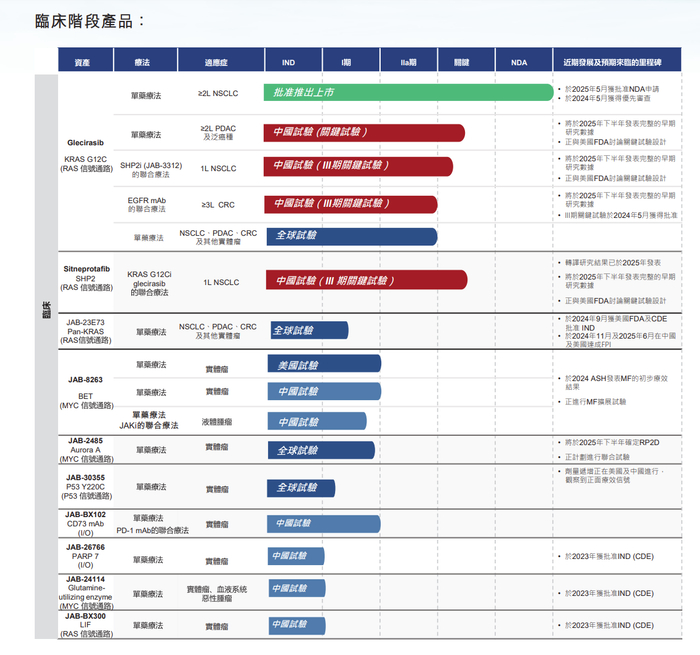
智通财经APP获悉,加科思-B(01167)涨近5%,截至发稿,涨4.86%,报7.77港元,成交额864.39万港 元。 在12月22日加科思召开的媒体沟通会上,加科思董事长兼首席执行官王印祥回应称,加科思此次BD交 易是中国近几年来处于临床阶段的小分子抗肿瘤药中金额最大的对外授权。王印祥在沟通会上回应了首 付款是否低于预期这一问题。"根据小分子抗肿瘤药的交易案例,一般来说,首付款占总交易额的 3%-8%,这都是合理的。如果超过总交易额的10%,算是比较大的。我们这次交易,首付款占总交易额 5%,也算中间偏上水平。" 消息面上,12月21日,加科思发布公告称,已就其自主研发的泛KRAS(Pan-KRAS)抑制剂JAB-23E73 与阿斯利康达成合作协议。加科思将获得1亿美元的首付款,根据开发及商业化进度,还可获得最高 19.15亿美元的里程碑付款,以及中国以外市场的净销售额特许权使用费。首付款占总金额比例为5%。 ...
加科思-B涨近5% 公司获阿斯利康近20亿美元BD大单 公司称首付比例均值偏上
Zhi Tong Cai Jing· 2025-12-24 02:58
在12月22日加科思召开的媒体沟通会上,加科思董事长兼首席执行官王印祥回应称,加科思此次BD交 易是中国近几年来处于临床阶段的小分子抗肿瘤药中金额最大的对外授权。王印祥在沟通会上回应了首 付款是否低于预期这一问题。"根据小分子抗肿瘤药的交易案例,一般来说,首付款占总交易额的 3%-8%,这都是合理的。如果超过总交易额的10%,算是比较大的。我们这次交易,首付款占总交易额 5%,也算中间偏上水平。" 加科思-B(01167)涨近5%,截至发稿,涨4.86%,报7.77港元,成交额864.39万港元。 消息面上,12月21日,加科思发布公告称,已就其自主研发的泛KRAS(Pan-KRAS)抑制剂JAB-23E73与 阿斯利康达成合作协议。加科思将获得1亿美元的首付款,根据开发及商业化进度,还可获得最高19.15 亿美元的里程碑付款,以及中国以外市场的净销售额特许权使用费。首付款占总金额比例为5%。 ...
加科思达成临床阶段小分子抗癌药对外授权合作
Mei Ri Jing Ji Xin Wen· 2025-12-23 13:16
Core Viewpoint - The announcement of a $2.015 billion licensing deal for the KRAS inhibitor JAB-23E73 by GakoSi has generated significant investor interest, despite a notable drop in the company's stock price following the announcement [1][2]. Group 1: Business Development and Financials - GakoSi has entered into a business development agreement with AstraZeneca for the KRAS inhibitor JAB-23E73, which includes an upfront payment of $100 million and potential milestone payments of up to $1.915 billion [2][3]. - AstraZeneca will be responsible for all clinical development, regulatory submissions, and commercialization activities for JAB-23E73 outside of China [3]. - The funds received from this collaboration will be allocated primarily to research and development, with over 90% dedicated to advancing next-generation drug development [3]. Group 2: Product and Market Potential - JAB-23E73 targets various KRAS mutations and is currently in Phase I clinical trials for late-stage solid tumor patients in China and the U.S., with plans to expand indications to pancreatic cancer, non-small cell lung cancer, and colorectal cancer [2][3]. - KRAS mutations are prevalent in approximately 23% of cancer patients, with specific mutation rates of 32% in lung cancer, 50% in colorectal cancer, and 88% in pancreatic cancer [2]. Group 3: Competitive Landscape - GakoSi is positioned as a key player in the KRAS inhibitor market, utilizing a small molecule approach, while other companies like Revolution Medicines focus on molecular glue strategies [4][5]. - The KRAS G12C inhibitor market is highly competitive, with five approved drugs targeting this mutation, and GakoSi, along with other domestic firms, has opted for partnerships with larger pharmaceutical companies for commercialization [5]. Group 4: Market Reaction and Company Strategy - Following the announcement, GakoSi's stock price fell by over 10%, closing down 13.58%, which the company's chairman attributed to various market factors rather than the deal itself [1][4]. - The chairman emphasized the importance of focusing on research and development rather than being swayed by market fluctuations, advocating for a specialized approach in the biopharmaceutical sector [6].
加科思刷新国产小分子新药出海交易金额
Xin Lang Cai Jing· 2025-12-23 09:04
Core Viewpoint - The collaboration between Gakos Pharma and AstraZeneca for the Pan-KRAS inhibitor JAB-23E73 marks a significant milestone in the domestic small molecule oncology drug licensing market, with a total transaction value potentially reaching $19.15 billion [1][2]. Group 1: Collaboration Details - Gakos Pharma has entered into a partnership with AstraZeneca, granting the latter exclusive rights to JAB-23E73 outside of China, while both companies will co-develop and commercialize the product in the Chinese market [1]. - The agreement includes an upfront payment of $100 million and potential milestone payments up to $19.15 billion, along with a share of net sales in markets outside China [1][2]. Group 2: Product and Market Context - JAB-23E73 is an innovative Pan-KRAS inhibitor targeting various KRAS mutation subtypes, currently undergoing Phase I clinical trials in China and the U.S. KRAS mutations account for approximately 23% of all cancer patients [1][2]. - The global market for KRAS inhibitors is still in its early stages, with no approved Pan-KRAS inhibitors to date, presenting a significant commercial opportunity for Gakos Pharma [4][6]. Group 3: Company Background and Financials - Gakos Pharma was established in 2015 and focuses on developing breakthrough drugs in the KRAS and SHP2 inhibitor fields [2]. - The company reported revenues of 45.7 million yuan in the first half of the year, primarily from milestone payments, while incurring a loss of 59 million yuan, indicating a narrowing loss compared to the previous year [8][9]. Group 4: Competitive Landscape - AstraZeneca has a strong track record in oncology, with notable products generating significant sales, such as the EGFR inhibitor Osimertinib, which had global sales of approximately $6.5 billion in 2023 [5]. - The collaboration with Gakos Pharma is part of AstraZeneca's strategy to penetrate the KRAS market, which is considered a "blue ocean" opportunity [5].
2025年中国合成致死药物行业政策、产业链、市场规模、竞争格局、重点企业及未来前景研判:抗癌药开发中的新策略,需求持续增加,知名药企已竞相布局PRMT5赛道[图]
Chan Ye Xin Xi Wang· 2025-12-23 01:22
Core Viewpoint - Synthetic lethality drugs are emerging as a promising treatment strategy in oncology, allowing for the selective killing of cancer cells while sparing normal cells, with PARP inhibitors being a notable success in this field [1][6][7]. Industry Definition and Principles - Synthetic lethality refers to a biological phenomenon where mutations in two non-lethal genes do not affect cell survival individually, but simultaneous mutations lead to cell death. This principle is leveraged in cancer treatment to target specific pathways that cancer cells depend on [2][6]. - The concept of synthetic lethality has gained traction, particularly with the success of PARP inhibitors, which target DNA damage repair mechanisms [6][7]. Current Development Status - The global synthetic lethality drug market is projected to reach $4.3 billion in 2024, with China's market expected to grow to 3.6 billion yuan. By 2025, these figures are anticipated to rise to $4.8 billion globally and 4.6 billion yuan in China [1][7]. - The sales of PARP inhibitors reached $3.072 billion globally in 2024, showing a growth of approximately 9.3% after ten years on the market. Sales are expected to reach $3.4 billion by 2025 [1][7]. Industry Chain - The synthetic lethality drug industry chain includes upstream components such as biological raw materials, animal models, and chemical reagents; midstream focuses on drug research and production; and downstream applications are primarily in clinical settings, including hospitals and research institutions [8]. Competitive Landscape - Major companies in the synthetic lethality space include Hengrui Medicine and BeiGene, with several others like Clovis Oncology and AstraZeneca also involved. The market features a variety of PARP inhibitors, with ongoing research into additional synthetic lethality targets [2][9][10]. - The success of PARP inhibitors has led to increased interest in synthetic lethality as a viable strategy for cancer treatment, with multiple companies exploring this avenue [9][10]. Future Development - The role of synthetic lethality in modern cancer precision therapy is becoming increasingly significant, with ongoing research paving the way for new treatment avenues. Despite progress, challenges remain in the application of synthetic lethality in clinical settings [13][14].


长护险将逐步覆盖所有参保人;减重版司美格鲁肽国内获批新适应证
2 1 Shi Ji Jing Ji Bao Dao· 2025-12-23 00:17
Policy Developments - The National Healthcare Security Administration announced that the long-term care insurance system will transition from pilot programs to full establishment during the 14th Five-Year Plan period, aiming to cover nearly 300 million people and benefit over 3.3 million disabled individuals, with total fund expenditures exceeding 100 billion yuan [2] Drug and Device Approvals - Novo Nordisk's weight-loss version of semaglutide injection has been approved in China for cardiovascular indications, aimed at reducing the risk of major cardiovascular adverse events in adults with a BMI of 27 or higher who have been diagnosed with cardiovascular disease. The drug can achieve over a 20% weight reduction in about one-third of patients and reduce the risk of major adverse cardiovascular events by 20% [4] - GlaxoSmithKline announced that its new drug, Meplazumab injection, has been approved in China for the maintenance treatment of adults with chronic obstructive pulmonary disease (COPD) characterized by elevated eosinophils [5] Capital Market Activities - Weisi Medical plans to sell part of its fixed assets for a total price of 119 million yuan, which is expected to impact the company's net profit attributable to shareholders by approximately 10 million yuan in 2026 [8] - AstraZeneca and JAKS Pharmaceuticals have reached a global exclusive licensing agreement for the pan-KRAS inhibitor JAB-23E73, with JAKS receiving an upfront payment of 100 million USD and potential milestone payments of up to 1.915 billion USD [9] Industry Events - XinNuoWei announced the resignation of board member Cai Lei due to work changes, who will focus on his role at Shiyao Group, which is aligned with the group's strategy of "innovation + internationalization" [11] - Sanli Pharmaceutical signed a technology transfer contract with Hainan University for the HXW2324 compound and related patents, with a total transfer price of 200 million yuan, aimed at developing new treatments for Alzheimer's disease [12] - A new vaccine strategy developed by the Scripps Research Institute aims to prevent fatal filovirus infections by using engineered self-assembling protein nanoparticles to display viral surface proteins, enhancing immune response [13]
20亿美元牵手阿斯利康后股价大跌,加科思董事长回应
Jing Ji Guan Cha Wang· 2025-12-22 14:49
Core Viewpoint - The collaboration between 加科思 and AstraZeneca involves a total transaction value of $20.15 billion, with 加科思's drug JAB-23E73 being the focal point, yet the stock price of 加科思 fell significantly on the first trading day after the announcement [1][2]. Group 1: Transaction Details - 加科思 will receive an upfront payment of $100 million, with potential milestone payments of up to $1.915 billion based on development and commercialization progress, along with royalties on net sales outside of China [1]. - JAB-23E73 targets various KRAS mutations, which are present in approximately 23% of all cancer patients, and is currently undergoing Phase I clinical trials in China and the U.S. [1]. Group 2: Partnership with AstraZeneca - AstraZeneca will have exclusive rights to develop and commercialize the drug outside of China, while 加科思 will co-develop and commercialize it within China [2]. - 加科思 chose AstraZeneca due to its significant revenue from oncology, which is projected to account for 41% of its income in 2024, and its established global clinical network [2]. Group 3: Market Reaction and Stock Performance - Following the announcement, 加科思's stock dropped by 17% at one point, closing down 13.58% at HKD 7.83, with a total market capitalization of HKD 6.16 billion [2]. - Analysts noted that the $100 million upfront payment may not meet market expectations, which were around $200 million [2]. Group 4: Management's Perspective - The CEO of 加科思 stated that the upfront payment represents 5% of the total transaction value, which is considered reasonable compared to industry standards [3]. - The CEO also addressed the stock price decline, attributing it to the early-stage development of the biotech sector in Hong Kong and the shift in investor focus from long-term value to short-term gains [3].