
鱼跃医疗

Search documents
医疗器械板块11月26日跌0.38%,康为世纪领跌,主力资金净流出3.71亿元
Zheng Xing Xing Ye Ri Bao· 2025-11-26 09:05
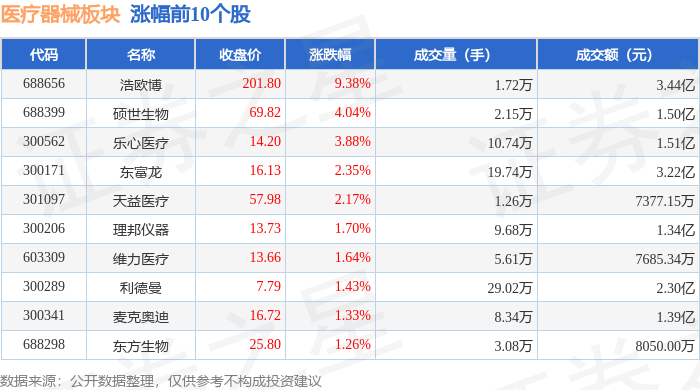
Market Overview - The medical device sector experienced a decline of 0.38% on November 26, with Kangwei Century leading the drop [1] - The Shanghai Composite Index closed at 3864.18, down 0.15%, while the Shenzhen Component Index closed at 12907.83, up 1.02% [1] Top Performers - Haobor (688656) saw a significant increase of 9.38%, closing at 201.80 with a trading volume of 17,200 lots [1] - Shuoshi Biology (6668889) rose by 4.04%, closing at 69.82 with a trading volume of 21,500 lots [1] - Lexin Medical (300562) increased by 3.88%, closing at 14.20 with a trading volume of 107,400 lots [1] Underperformers - Kangwei Century (688426) fell by 10.78%, closing at 27.80 with a trading volume of 33,000 lots [2] - Boxin Biology (920504) decreased by 5.98%, closing at 22.97 with a trading volume of 8,514 lots [2] - Zhengchuan Co. (603976) dropped by 5.25%, closing at 21.30 with a trading volume of 33,800 lots [2] Capital Flow - The medical device sector saw a net outflow of 371 million yuan from institutional investors, while retail investors contributed a net inflow of 43.54 million yuan [2][3] - The top net inflows from institutional investors were seen in Lexin Medical (300562) with a net outflow of 33.13 million yuan [3] - The highest net inflow from retail investors was in Yuyue Medical (002223) with a net inflow of 24.16 million yuan [3]


20cm速递|创业板医药ETF国泰(159377)涨超1.3%,行业技术突破与商业兑现受关注
Mei Ri Jing Ji Xin Wen· 2025-11-26 03:55
Group 1 - The pharmaceutical and biotechnology industry is experiencing stable growth in drug sales, with a year-on-year increase of 0.3% from January to August 2025. Chemical drugs maintain growth due to rigid demand, while biological products are benefiting from dual-channel and outpatient policy support, leading to rapid growth. Traditional Chinese medicine has seen a decline due to lower flu incidence, but a recent resurgence in flu cases may stabilize OTC categories [1] - The medical device sector has seen a significant narrowing of decline after household destocking, with only a 1.3% drop from January to August. Upstream companies like Yuyue Medical are showing steady growth, and home medical devices are entering a stabilization phase [1] - Regulatory policies in the industry are tightening, with strong supervision of medical insurance accelerating the exit of small pharmacies. Leading pharmacies are expected to increase their market concentration due to compliance advantages. Additionally, the non-drug adjustment in pharmacies, which includes the introduction of health products and medical devices, is in its early stages, and the rapid growth of O2O channels (29.6% increase from January to August) may inject new momentum into the industry [1] Group 2 - The Guotai Haitong Innovation Pharmaceutical ETF (159377) tracks the Innovation Pharmaceutical Index (399275), which has a daily fluctuation limit of 20%. This index selects listed companies involved in innovative drugs, medical devices, and medical services from the pharmaceutical and biotechnology industry to reflect the overall performance of high-growth and innovative pharmaceutical-related securities [1]

流感高峰将至,医药板块再度活跃!医疗器械指数ETF(159898)高开上涨0.73%
Sou Hu Cai Jing· 2025-11-26 02:52
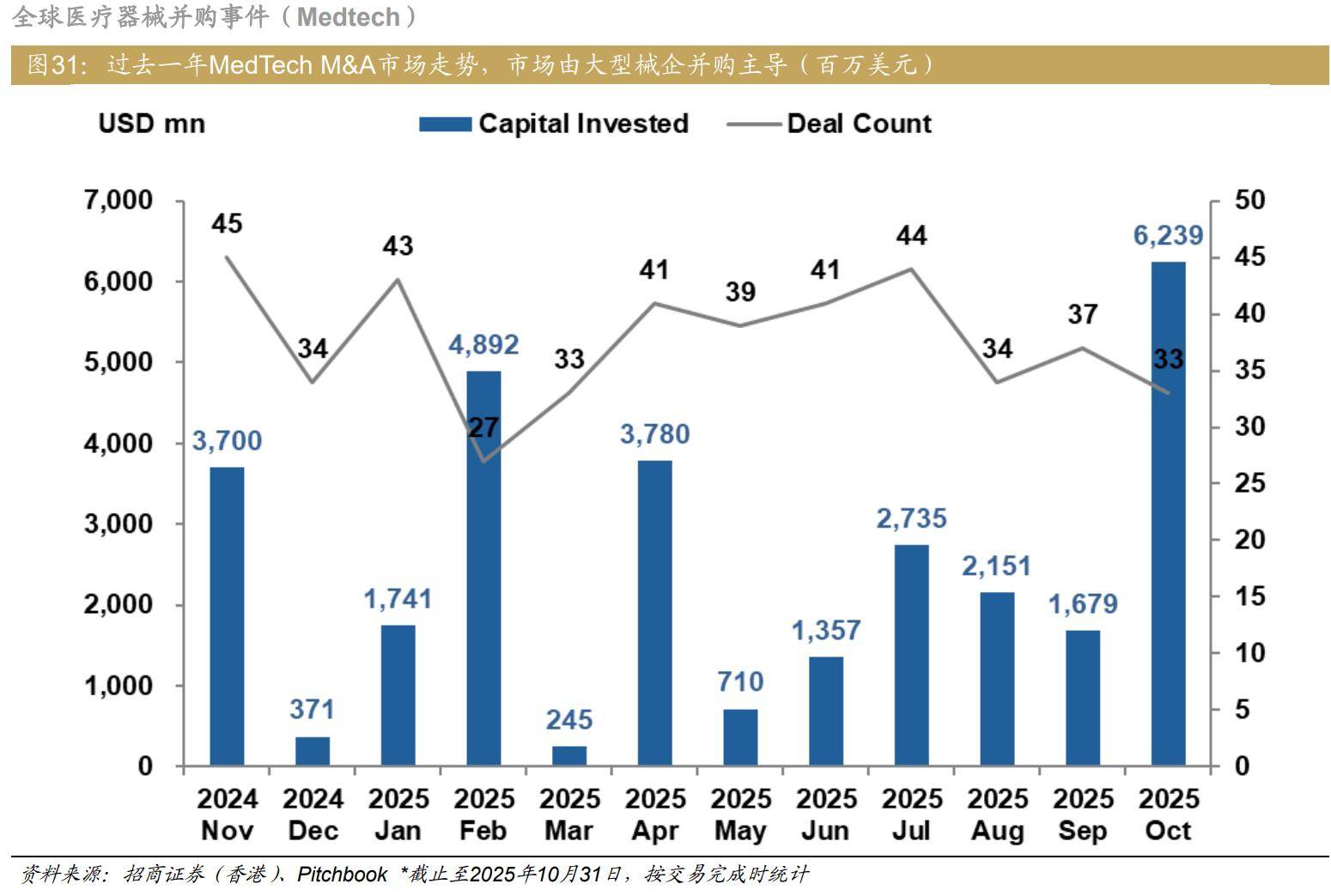
Group 1 - The core viewpoint indicates that the flu levels in China are expected to rise, with a peak likely occurring between mid-December and early January, leading to a strong performance in the flu and pharmaceutical sectors [1] - On November 26, the medical device index ETF (159898) opened up by 0.73%, with several medical stocks leading the market gains, including Haobor, which surged by 9.75% [1] - Other notable stocks that saw increases include Shuoshi Biology, Jinyu Medical, and Rejing Biology, each rising over 3%, along with strong follow-ups from companies like Lianxin, Yuyue Medical, Weili Medical, and Yingke Medical [1] Group 2 - The global medical and pharmaceutical capital market is experiencing a recovery, with total financing in October reaching approximately $112 billion, marking a year-to-date high [2] - The medical device sector saw significant mergers and acquisitions in October, reflecting companies' ongoing investment in innovative technologies and confidence in high-growth potential markets [2] - From November 2024 to October 2025, there were 431 recorded M&A transactions in the global medical device and technology sector, with a total disclosed amount of about $34.8 billion, indicating a moderate recovery and increased market concentration [3] Group 3 - The long-term growth potential of the medical device market in China is viewed positively, despite short-term challenges related to pricing, policy, and the overall economic environment [4] - Specific segments within the A-share medical device market that may be worth attention include medical equipment, medical consumables, and in vitro diagnostics, focusing on companies with innovation and international expansion capabilities [6] - The medical device index ETF (159898) tracks the CSI All-Index Medical Device Index, covering leading companies in various segments, providing an opportunity to capture overall industry beta [9]
2025年中国血氧仪行业政策、发展背景、市场规模、重点品牌及发展趋势研判:远程医疗与居家监测普及,推动血氧仪规模达45亿元[图]
Chan Ye Xin Xi Wang· 2025-11-26 02:42
Core Insights - The blood oxygen monitor industry in China is experiencing strong growth driven by the increasing prevalence of chronic respiratory and cardiovascular diseases, particularly due to the aging population, which has led to a significant rise in demand for long-term blood oxygen monitoring [1][9] - The market size of the blood oxygen monitor industry in China is projected to grow from 3.8 billion yuan in 2019 to 4.5 billion yuan in 2024, with a compound annual growth rate (CAGR) of 3.44%. By 2030, the market size is expected to exceed 8 billion yuan, indicating a promising future for the industry [1][9] - The rapid adoption of telemedicine and the general increase in public health awareness are facilitating the transition of blood oxygen monitors from professional medical settings to home care and chronic disease management [1][9] Industry Overview - Blood oxygen monitors are medical devices used to measure vital indicators such as blood oxygen saturation and heart rate, with common types including fingertip, wrist, tabletop, handheld, and wearable monitors [3] - The industry has evolved significantly since the mid-1990s, transitioning from professional medical use to home and mobile applications, with advancements in technology enabling features like data collection and remote monitoring [3] Industry Policies - Blood oxygen monitors are classified as Class II medical devices under the Medical Device Supervision and Administration Regulations, requiring strict management to ensure safety and effectiveness [4] - Recent government policies aim to enhance the development of the blood oxygen monitor industry, including measures for intellectual property protection and subsidies for consumers purchasing medical devices [4] Market Dynamics - The aging population in China is a key driver for the demand for blood oxygen monitors, with the number of individuals aged 60 and above expected to reach 31.03 million by the end of 2024, accounting for 22% of the total population [5] - The blood oxygen monitor industry is supported by a robust supply chain, including raw materials, manufacturing, and sales channels, with both online and offline distribution methods [5][6] Competitive Landscape - The global blood oxygen monitor market is characterized by a mix of established international players and emerging domestic brands, with companies like Masimo Corporation and Philips leading in high-end medical-grade monitors [10][11] - Chinese companies such as Yuyue Medical and Kangtai Medical are gaining market share by offering competitive products in the mid to low-end segments, with a focus on quality and performance [10][11] Future Trends - The blood oxygen monitor industry is expected to see advancements in smart technology, enabling continuous data collection and personalized health management [14] - The trend towards portability will drive the development of smaller, lighter devices that integrate with wearable technology, enhancing user convenience [15] - The application scenarios for blood oxygen monitors are expanding beyond traditional medical settings to include fitness, high-altitude travel, and workplace health management [16]

北京上海发文促进医疗器械产业高质量发展
Zheng Quan Shi Bao· 2025-11-25 18:31
Group 1: Policy Initiatives - Beijing's Economic and Information Technology Bureau, along with five other departments, issued measures to promote high-quality development in the medical device industry, focusing on innovation, clinical research, registration, production, application, cluster development, digital empowerment, and international expansion [1] - Shanghai also released measures to deepen drug and medical device regulatory reforms, encouraging expedited registration for innovative Class II medical devices with significant clinical value [1] Group 2: Market Growth and Projections - The medical device market in China is experiencing steady growth, with the market size projected to increase from 729.8 billion RMB in 2020 to 941.7 billion RMB by 2024, reflecting a compound annual growth rate (CAGR) of 6.6% [2] - By 2035, the overall market size for medical devices in China is expected to reach 1.81 trillion RMB [2] Group 3: Investment Opportunities - Long-term investment opportunities in the medical device sector are identified in innovation, international expansion, and mergers and acquisitions, with a recognition of the sector's innovative and international capabilities leading to a revaluation of its stocks [2] - Following a surge in the innovative drug sector, the medical device sector is seeing recognition for its competitive products, with companies actively pursuing growth strategies to enhance overseas business [2] Group 4: Market Valuation and Performance - As of November 25, the market capitalization of the medical device industry in A-shares reached 1.38 trillion RMB, with major companies like Mindray Medical and United Imaging Healthcare having market caps exceeding 235 billion RMB and 110 billion RMB, respectively [3] - Among 45 medical device stocks with rolling price-to-earnings ratios below 40, 12 stocks have ratios below 20, indicating potential undervaluation [3] - Some stocks have experienced significant price corrections, with 20 stocks retreating over 20% from their yearly highs, and five stocks, including Aibo Medical and Jianfan Biological, seeing declines exceeding 30% [3]

“国产流感创新药元年”迎大考,多家上市公司回应,揭示市场真实脉搏!
Quan Jing Wang· 2025-11-25 13:01
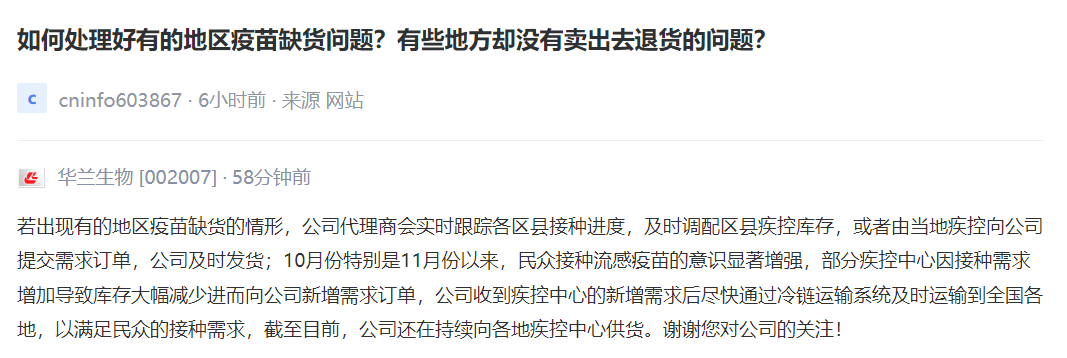
Core Viewpoint - The recent surge in flu activity across China has led to a significant increase in demand for flu-related products, prompting pharmaceutical companies to respond with new innovative treatments and ensuring supply chain stability [1]. Group 1: Market Demand and Product Approval - The flu season has intensified, with most provinces reaching epidemic levels, and the dominant strain being the H3N2 subtype [1]. - Several domestic antiviral drugs have been approved, including products from companies like Zhongsheng Pharmaceutical, Qingfeng Pharmaceutical, and Jichuan Pharmaceutical, marking 2025 as a pivotal year for domestic flu innovation [1]. - Sales of flu-related products have skyrocketed, with Oseltamivir sales on JD.com increasing by 4.5 times and Mabalaosavir sales increasing by 5 times [1]. Group 2: Company Responses and Supply Chain Management - Companies like Hualan Biological have implemented strategies to manage vaccine shortages by tracking vaccination progress and adjusting supply accordingly [2]. - Renhe Pharmaceutical has prioritized the supply of flu medications in response to high market demand [3]. - Yiyigou has reported a significant increase in orders for flu-related medications, although specific sales data has not been publicly disclosed [5]. Group 3: Product Offerings and Innovations - ST Xiangxue has highlighted its core products for flu treatment, indicating that demand has led to full production capacity [6]. - Zhongsheng Pharmaceutical has confirmed that its antiviral drug, Angladiwei, is in the process of being included in the medical insurance directory, ensuring sufficient production capacity [7]. - Companies like Kangzhi Pharmaceutical and Qidi Pharmaceutical have a range of products targeting flu symptoms, including cough suppressants and antibiotics [8][9]. Group 4: Pediatric and Diagnostic Products - Te Yi Pharmaceutical has a comprehensive product line for treating flu symptoms in children, including cough syrups and granules [10]. - Yuyue Medical has developed flu diagnostic kits and a variety of medical devices that can assist in managing flu-related health issues [12]. Group 5: Competitive Landscape and Future Prospects - Health元's TG-1000 is positioned as a competitive alternative to Japanese flu treatments, with a focus on better efficacy for certain patient demographics [19]. - Companies are actively pursuing innovations and expansions in their product lines to meet the growing demand for flu treatments and diagnostics [19].
11月25日深港通医疗(983035)指数涨0.45%,成份股平安好医生(01833)领涨
Sou Hu Cai Jing· 2025-11-25 11:07
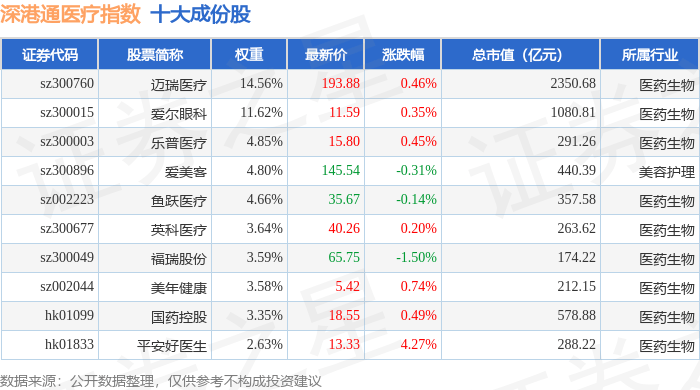
Core Viewpoint - The Shenzhen-Hong Kong Medical Index (983035) closed at 4488.12 points on November 25, with a 0.45% increase and a trading volume of 7.719 billion yuan, indicating a stable performance in the healthcare sector [1]. Group 1: Index Performance - On the same day, 40 out of the index's constituent stocks rose, with Ping An Good Doctor leading the gains at 4.27%, while 16 stocks declined, with Ruimaite leading the losses at 1.98% [1]. - The top ten constituent stocks of the Shenzhen-Hong Kong Medical Index include: - Mindray Medical (14.56% weight, market cap 235.068 billion yuan) [1] - Yier Eye Hospital (11.62% weight, market cap 108.081 billion yuan) [1] - Lejin Medical (4.85% weight, market cap 29.126 billion yuan) [1] - Aimeike (4.80% weight, market cap 44.039 billion yuan) [1] - Yuyue Medical (4.66% weight, market cap 35.758 billion yuan) [1] - Yingke Medical (3.64% weight, market cap 26.362 billion yuan) [1] - Furuishi (3.59% weight, market cap 17.422 billion yuan) [1] - Meinian Health (3.58% weight, market cap 21.215 billion yuan) [1] - China National Pharmaceutical (3.35% weight, market cap 57.888 billion yuan) [1] - Ping An Good Doctor (2.63% weight, market cap 28.822 billion yuan) [1]. Group 2: Capital Flow - The net outflow of main funds from the constituent stocks totaled 251 million yuan, while retail investors saw a net inflow of 199 million yuan [3]. - The detailed capital flow for selected stocks includes: - Aimeike: Main net inflow of 23.5405 million yuan, retail net outflow of 35.0461 million yuan [3]. - New Mileage: Main net inflow of 14.1523 million yuan, retail net outflow of 6.6983 million yuan [3]. - Jianfan Biological: Main net inflow of 4.5525 million yuan, retail net outflow of 8.5385 million yuan [3]. - A total of one stock was newly added to the Shenzhen-Hong Kong Medical Index in the last ten days [4].



鱼跃医疗:公司建立了严格的供应商筛选和准入机制
Zheng Quan Ri Bao· 2025-11-25 09:40
Core Viewpoint - Yuyue Medical has established a strict supplier selection and admission mechanism, aiming to continuously develop and introduce high-quality suppliers [2] Group 1 - The company has set up multi-dimensional supplier admission standards [2] - The focus on quality suppliers indicates a commitment to enhancing product quality and reliability [2]

鱼跃医疗:建立严格供应商筛选准入机制,持续开发引入优质供应商
Sou Hu Cai Jing· 2025-11-25 02:39
Core Viewpoint - The company is actively evaluating the compliance progress of domestic injection molding machines in the medical field and is committed to developing and introducing high-quality suppliers [1] Group 1 - Investors inquired about the strict requirements for cleanliness and consistency in medical-grade injection molding and whether the company has assessed the progress of domestic injection molding machines in terms of medical compliance [1] - The company has established a rigorous supplier screening and admission mechanism, implementing multi-dimensional standards for supplier admission [1] - The company will continue to develop and introduce high-quality suppliers, indicating a potential shift towards local premium suppliers in its key equipment procurement strategy over the next three years [1]
科技创新与产业创新如何实现“双向奔赴” 打造创新高地的无锡实践
Jin Rong Shi Bao· 2025-11-25 02:08
Core Insights - Wuxi is positioning itself as a leading hub for industrial technology innovation in Jiangsu Province, aiming to integrate technology and industry deeply [1][2] - The city is focusing on developing a modern industrial cluster and future industries, particularly in semiconductor and medical device sectors [1][2] Group 1: Semiconductor Industry - Wuxi is becoming a significant support point for integrated circuit development in China, leveraging its strong industrial foundation and innovation capabilities [2] - The Jiangsu Integrated Circuit Application Technology Innovation Center has successfully developed domestic chips for medical devices, overcoming supply chain issues during the pandemic [2][3] - The center focuses on industrial-grade chips, addressing the urgent need for supply chain security and self-sufficiency in the automotive sector [3][4] Group 2: Innovation Center Achievements - The innovation center has served over 100 companies and established a regional automotive chip industry alliance, fostering a collaborative innovation ecosystem [4] - It aims to create a national-level automotive chip pilot platform, focusing on satellite communication and industrial sensor chips [5] Group 3: Artificial Intelligence Development - The Tsinghua University Wuxi Institute's Smart Industry Innovation Center is dedicated to AI research and its industrial applications, emphasizing the importance of top talent [6][7] - The center is concentrating on three major areas with significant market potential: autonomous driving, IoT, and life sciences [6][7] Group 4: Commercial Aerospace Sector - Wuxi is capitalizing on its manufacturing strengths to support the commercial aerospace industry, with a focus on reducing costs and enhancing local supply chains [8][9] - The city has established supportive policies and funding initiatives to foster the growth of aerospace companies, aiming to create a comprehensive ecosystem [10]