
Neuralink

Search documents
17连阳!“AI+”涨疯了
Ge Long Hui A P P· 2026-01-12 10:47
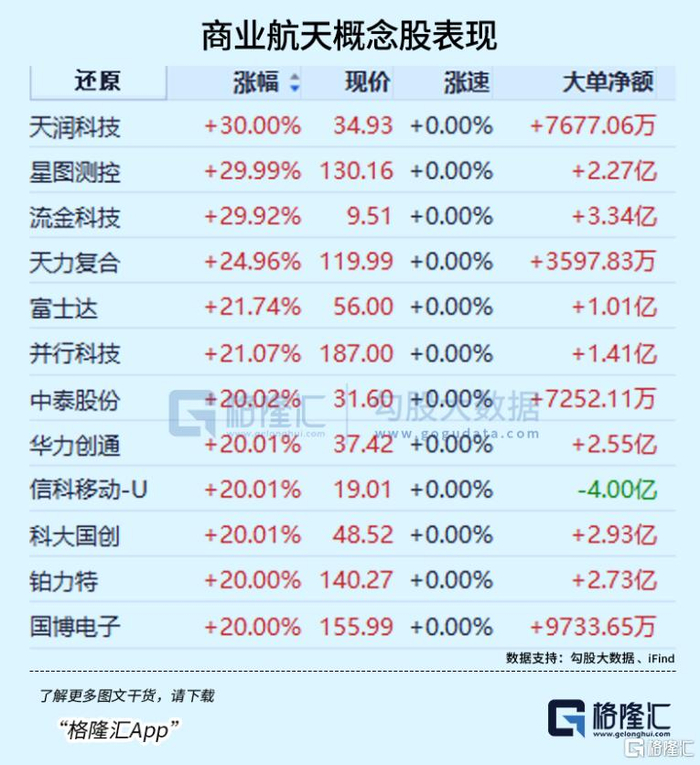
Core Viewpoint - The A-share market is experiencing a significant surge, with the Shanghai Composite Index rising by 1.09%, marking a 17-day consecutive increase and reaching a new high not seen in over a decade [1]. Market Performance - The single-day trading volume exceeded 3.6 trillion yuan, setting a new historical record, indicating heightened market enthusiasm [2]. - The "AI+" concept has seen a resurgence, with sectors such as AI healthcare, AI marketing, and various AI-related concepts leading in gains. The medical device ETF (562600) rose by 2.27% today and has increased by 11.66% year-to-date [3]. Sector Analysis - The "AI+" concept has concentrated its explosive growth, with sectors like AI applications, commercial aerospace, photovoltaics, retail, and precious metals showing significant gains, while oil and coal sectors faced declines [4]. - Notable stocks in the commercial aerospace sector include Luxin Venture Capital, which has seen 10 trading limits in 12 days, and other companies like Goldwind Technology and Tongyu Communication also performed well [4]. Specific Stock Performance - In the commercial aerospace sector, stocks such as Tianrun Technology (+30.00%), Xingtou Measurement Control (+29.99%), and Liujin Technology (+29.92%) have shown remarkable increases [6]. - The photovoltaic sector has also benefited from advancements in perovskite batteries and space photovoltaic concepts, with companies like Dongfang Risheng and Maiwei Shares leading the gains [7]. AI Applications - The AI application sector has collectively strengthened, with stocks like Yidian Tianxia and Liou Shares hitting the daily limit [9]. - Recent developments in AI applications include Walmart's collaboration with Google to enhance shopping experiences through AI [11]. Future Outlook - The AI industry is shifting focus from "computing power competition" to "application value," with 2026 expected to be a pivotal year for AI applications transitioning from "technology validation" to "commercial promotion" [14]. - The medical device ETF (562600) is highlighted for its significant exposure to the brain-computer interface sector, with a 23.79% concentration in this area, making it a key investment vehicle [20]. Investment Trends - The medical device ETF has seen a net inflow of 1.31 billion yuan over the past five days, indicating strong investor interest [22]. - The Hang Seng Medical ETF (159892) is also noted for capturing the trend of Chinese biopharmaceuticals going global, with significant inflows and a 13.56% increase year-to-date [24]. Conclusion - The integration of technology and healthcare is at a critical juncture, with investment strategies focusing on quality index tools to capitalize on long-term growth opportunities in AI healthcare and brain-computer interfaces [26].


利好突袭!杭州“六小龙”,传出大消息!2000亿巨头大涨10%!
券商中国· 2026-01-12 10:16
Core Insights - The article highlights the increasing momentum in the brain-computer interface (BCI) sector, with significant developments such as the IPO application of Qiangnao Technology and the establishment of new industry standards by the National Medical Products Administration [1][4][7] Group 1: Company Developments - Qiangnao Technology has reportedly submitted a confidential IPO application in Hong Kong, indicating strong market interest and potential for growth in the BCI sector [1][4] - The company has completed approximately 2 billion yuan in financing, with investors including IDG, Huaden International, and Lens Technology, showcasing strong capital recognition and industry collaboration expectations [4] - Lens Technology, a strategic investor in Qiangnao Technology, has seen its market value exceed 200 billion yuan and is actively involved in the mass production of core hardware modules for Qiangnao [1][4] Group 2: Industry Trends - The BCI industry is experiencing rapid growth, with projections indicating that the global market could reach $12.4 billion by 2034 and the Chinese market could reach 6.14 billion yuan by 2028 [8] - The industry is transitioning from research and development to commercialization, with various segments such as invasive, semi-invasive, and non-invasive approaches gaining attention [8] - The Chinese government is strengthening its top-level planning for the BCI sector, with initiatives like the "Brain-Computer Interface Industry Innovation Development Action Plan (2025-2028)" highlighting national support for the industry [7] Group 3: Technological Advancements - The focus on non-invasive BCI technologies is growing, with companies exploring dual-driven models combining medical and consumer applications, which are expected to accelerate commercialization [8] - The upcoming J.P. Morgan Healthcare Conference is anticipated to provide insights into the latest developments in the global pharmaceutical and biotechnology sectors, including BCI technologies [5]

弯道超车马斯克!盛大陈天桥出手!国产脑机接口,让8年瘫痪者“复活”
Sou Hu Cai Jing· 2026-01-12 09:52
你有没有想过,一个人高位截瘫8年,只靠"想",就能打游戏、网购,甚至控制家里的智能电器? 最近,国内首款、也是全球第二款内置电池的脑机接口产品,公布了临床试验结果,上面这些设想,已 经成真了。 这款产品由脑虎科技自主研发,临床试验由华山医院毛颖、陈亮教授团队牵头完成。 从这一点就能清晰感受到,中美在脑机接口的赛道上,走的根本是两条路。 一边追求极致性能,一边专注安全可行,俨然一场硬科技时代的路线对决。 最厉害的一点是,这款产品做到了"三全",即全植入、全无线和全功能。 这个"三全"设计,不仅是技术上的突破,更是从身体、社交、能力三个维度,帮助重度残疾患者重新找 回作为"人"的尊严和主动权: 全植入,从物理上杜绝感染风险,同时也隐藏了疾病的痕迹,保护了用户的身体自主与隐私尊严。 全无线,给了用户行动和场景的自由,让他们能在最少限制下重建社会联系、找回自信。 全功能加上开放的操作系统,则让用户不再是被动受助者,而是能主动掌控生活,从"生存"转向"生 活"。 这里要特别提一下脑虎科技对电池的处理方式。 和马斯克的Neuralink把电池塞进脑袋里不同——那样会牺牲部分数据来防止电池发热伤到大脑——脑虎 科技创新地把 ...
股市暴涨13.7%!脑机接口凭什么成为2026开年顶流?
机器人圈· 2026-01-12 09:29
Core Viewpoint - The recent surge in the brain-computer interface (BCI) sector in the A-share market reflects a significant shift from laboratory research to clinical application, marking a milestone in the integration of life sciences and engineering technology [1] Group 1: Domestic Breakthroughs - The domestic BCI field has seen a rapid increase in clinical achievements, highlighted by Brain Tiger Technology's launch of the first fully implanted, wireless, and fully functional BCI product, which successfully enabled a high-level paraplegic patient to control web browsing through thought [2] - This "three-in-one" product addresses critical issues such as infection risks associated with external systems and allows patients to connect with various devices, creating an "extended body" ecosystem [2] - Clinical data shows that patients achieved thought control within five days post-surgery, with a decoding rate of 5.2 BPS, comparable to international standards [2] Group 2: Technological Advancements - The second-generation high-throughput wireless invasive BCI system developed by the Chinese Academy of Sciences allows high-level paraplegic patients to control wheelchairs and other devices using only their thoughts, with a fourfold increase in data reading speed [3] - The establishment of China's first comprehensive clinical trial area for BCIs signifies the standardization and scaling of clinical research in this field, providing ample clinical data support for technological iterations [3] Group 3: Industry Acceleration - The rapid advancements in domestic technology are fueled by a competitive global environment, exemplified by Neuralink's plans for large-scale production of BCI devices and significant reductions in surgical time and costs [4] - The shift from niche research to essential medical applications is driven by the need for effective treatments for patients with spinal cord injuries and other neurological conditions, marking a revolutionary breakthrough in life sciences [4] Group 4: Caution Amidst Enthusiasm - Despite the excitement in the capital markets, the BCI field is still in a critical phase of clinical validation, with significant challenges remaining before large-scale commercialization can be achieved [5] - The complexity of the human brain presents a major challenge for accurately capturing and interpreting neural signals, with projections indicating that recording from one million neurons may not be feasible until 2100 [5] Group 5: Long-term Value of Technological Progress - The stock market surge in the BCI sector represents a forward-looking vote of confidence in breakthroughs in life sciences technology, which has the potential to transform the lives of millions suffering from neurological diseases [6] - As China transitions from a follower to a competitor in the BCI field, ongoing clinical breakthroughs and technological innovations are paving the way for new possibilities in human health [6]

传强脑科技秘密交香港IPO申请,或成“杭州六小龙”首家上市公司
Feng Huang Wang· 2026-01-12 09:05
1月12日,据彭博社消息,浙江强脑科技有限公司(BrainCo)已秘密提交香港IPO申请,有望成为中 国"杭州六巨头"(杭州六大新兴科技公司)中首家上市的企业。 此次发行由中金公司与瑞银集团合作推进,预计募集资金规模为数亿美元,具体细节仍在讨论中。 据了解,强脑科技是一家专注于脑机接口技术的科技公司,属于杭州新兴科技企业群体"杭州六小龙"之 一,该群体还包括人工智能公司深度求索(DeepSeek)。此外,杭州作为阿里巴巴集团总部所在地, 近年来已培育出多家科技创新企业。 强脑科技由韩璧丞于2015年创立,专注于非侵入式脑机接口技术,产品包括仿生肢体等,其技术路线区 别于需植入设备的美国脑机接口"领头羊"公司——Neuralink。 脑机接口技术近年被视为中美科技竞争的前沿领域之一,中国亦在政策与资本层面加大对相关本土企业 的支持。强脑科技若成功上市,将成为国内脑机接口赛道走向公开资本市场的重要节点。 公开信息显示,强脑科技近期完成了一轮约20亿元人民币的融资,由IDG资本与华登国际领投。目前, 脑机接口领域已成为科技发展的前沿赛道之一,除强脑科技外,中国国内亦有神玑医疗、脑陆科技等公 司在该领域进行探索。 另 ...
电子行业跟踪报告:2026年Neuralink将对脑机接口设备进行大规模生产
Shanghai Aijian Securities· 2026-01-12 08:30
Investment Rating - The report rates the electronic industry as "Outperform" compared to the market [1]. Core Insights - Neuralink is set to begin large-scale production of brain-computer interface (BCI) devices in 2026, transitioning to a more streamlined and nearly fully automated surgical process [2][5]. - The global BCI market is projected to reach $3.3 billion by 2026, with a compound annual growth rate (CAGR) of 12.7% from 2024 to 2026 [15][16]. - Non-invasive BCI technology is expected to dominate the market, accounting for over 80% of the BCI products by 2024 [16]. Summary by Sections Neuralink Development History - Neuralink was founded in 2016 by Elon Musk, focusing on invasive brain-computer interfaces and AI integration into the human cortex [6]. - The first product was launched in 2019, featuring ultra-thin flexible electrodes and a custom microchip [9]. Overview of Brain-Computer Interfaces - BCIs establish a direct communication pathway between the brain and external devices, aiming to interpret brain activity and convert it into commands for controlling devices [10]. Market Analysis - The global BCI market is expected to reach $2.6 billion in 2024, with a year-on-year growth of 8.3% [15]. - In China, the BCI market is projected to reach $460 million in 2024, growing by 18.5% [15]. Non-Invasive BCI Manufacturers - Companies like Kernel, Neurable, and MindMaze are actively developing non-invasive BCI technologies [20]. - Domestic companies such as Strong Brain Technology and Xiangyu Medical are also making significant advancements in this field [20].
脑机接口IPO浪潮起!强脑科技赴港上市,行业商业化拐点已至?
Jin Rong Jie· 2026-01-12 08:20
Group 1: Industry Overview - Brain-computer interface (BCI) technology is at a critical juncture of "technological breakthrough to commercialization," supported by policies, technology, and application scenarios [2] - The global market for BCI is expected to change due to policy benefits, external production expectations, and domestic clinical breakthroughs [2] - Invasive BCI products are still in clinical trials, while non-invasive products, such as rehabilitation systems and sleep aids, have been partially launched [2] Group 2: Technological Advancements - Advancements in chips, electrodes, and algorithms, along with improved regulatory standards, are expected to lead to intensive commercialization of BCI products in the coming years [2] - Companies like Neuralink plan to start large-scale production of BCI devices by 2026, with significant innovations in surgical procedures [2] Group 3: Competitive Landscape - The BCI industry in China is still in its early stages, with most companies being small in scale [2] - There is a notable advantage in the signal quality of invasive BCIs, while non-invasive BCIs offer high safety and ease of operation, serving as a complement to invasive types [2] Group 4: Industry Chain and Key Players - Upstream: Innovative Medical has strategically invested in Hangzhou Boling Medical Technology to enter the BCI field [3] - Midstream: Nanjing Panda is developing key technologies for multimodal human-computer interaction systems based on BCI technology [6] - Downstream: Sanbo Neuroscience has achieved breakthroughs in precise tumor removal technology and is exploring clinical applications related to brain science [8]
杭州“六小龙”加速资本化!强脑科技秘密提交港股IPO申请
Hua Er Jie Jian Wen· 2026-01-12 07:10
Core Insights - Strong Brain Technology, a unicorn in the brain-computer interface sector, has confidentially submitted an IPO application in Hong Kong, potentially raising hundreds of millions of dollars [1] - The company recently completed a financing round of approximately 2 billion RMB, marking the second-largest funding record globally in this sector, excluding Neuralink [2] - The IPO submission indicates a significant acceleration in the capital market for the "Hangzhou Six Little Dragons," a group of notable tech startups [1][4] Financing and Commercialization - Strong Brain Technology has established a leading position in the non-invasive brain-computer interface field, with recent funding led by IDG Capital and Walden International [2] - The company focuses on non-invasive technology, providing solutions that establish signal pathways between the brain and external devices, and has received FDA and CE certifications for its core product, the "super sensor" [2] - The Chinese brain-computer interface industry is expected to maintain a 20% annual growth rate in the coming years, with Strong Brain Technology positioned as a key player in competing with U.S. companies [2] Competitive Landscape - Brain-computer interface technology is becoming a new frontier in tech competition, with Neuralink leading in the invasive chip sector [3] - Recent announcements from Neuralink regarding large-scale production in 2026 have significantly boosted market expectations for the technology's transition from research to everyday life [3] - Strong Brain Technology aims to raise funds through its IPO to better compete with U.S. rivals like Neuralink and expand its global market influence [3] Capitalization Progress of "Hangzhou Six Little Dragons" - The IPO progress of Strong Brain Technology indicates a clearer and accelerated capitalization path for the "Hangzhou Six Little Dragons" [4] - Manycore Tech has also submitted an IPO application, showing rapid progress, with projected revenue growth and profitability [4][5] - Four companies from the "Hangzhou Six Little Dragons" have clarified their IPO directions or are in substantial operational stages, indicating a collective pursuit of market funding [6]
传强脑科技以保密形式提交港股IPO申请
Zhi Tong Cai Jing· 2026-01-12 06:49
Core Viewpoint - Qiangnao Technology, one of the "Six Little Dragons" in Hangzhou, has submitted a confidential IPO application for the Hong Kong stock market, following a strategic financing round of approximately 2 billion yuan, making it the second-largest single financing round in the global brain-computer interface sector, only behind Elon Musk's Neuralink [1] Group 1: Company Overview - Qiangnao Technology has focused on non-invasive brain-computer interface technology since its establishment in 2015 [1] - The company has developed a proprietary "super sensor" that captures weak brain electrical signals with high precision and converts them into control commands [1] - Qiangnao Technology has launched products such as smart bionic hands and brain-machine sleep instruments, with the smart bionic hand being the first non-invasive brain-computer interface device in China to receive FDA certification [1] Group 2: Financing History - The company completed its angel round and Pre-A round financing in 2016, followed by a $400 million A round financing in 2019 [1] - In 2025, Qiangnao Technology secured $30 million in Pre-B round financing and $20 million in B round financing from Daoshi Technology and 37 Interactive Entertainment [1]
脑机接口概念股拉升 微创脑科学涨超8% 南京熊猫电子股份涨超7%
Zhi Tong Cai Jing· 2026-01-12 06:47
Core Viewpoint - The brain-computer interface (BCI) sector is experiencing significant stock price increases, driven by strong market interest and recent developments in the industry [1] Group 1: Stock Performance - Micron Brain Science (02172) rose by 8.15%, reaching HKD 13.53 [1] - Nanjing Panda Electronics (00553) increased by 7.38%, trading at HKD 6.26 [1] - Lens Technology (06613) saw a rise of 5.07%, priced at HKD 30.26 [1] Group 2: Market Developments - Strong Brain Technology has confidentially submitted an IPO application in Hong Kong after securing approximately CNY 2 billion in funding, marking the second-largest financing record in the BCI field globally, after Neuralink [1] - Elon Musk announced plans to commence large-scale production of BCI devices in 2026, alongside the development of fully automated surgical solutions, expressing confidence in aiding paralysis patients to regain full functionality [1] Group 3: Market Size and Growth Projections - According to Precedence Research, the global BCI market is projected to reach USD 2.62 billion in 2024, increasing to USD 2.94 billion by 2025, and potentially growing to USD 12.4 billion by 2034, with a compound annual growth rate (CAGR) of 17.35% over the next decade [1] - The Chinese BCI market is expected to reach CNY 3.2 billion in 2024, with projections of CNY 6.14 billion by 2028 [1] - The Central Committee of the Communist Party of China emphasizes the development of future industries, including BCI, as new economic growth points, aiming to create a new high-tech industry in China over the next decade [1]

