阿福

Search documents
古典传播在回归,GEO骗子在扎堆
虎嗅APP· 2026-03-11 13:50
Core Viewpoint - The article discusses the shift in communication budgets from short video content to deep content and authoritative media, predicting that by 2026, the budget ratio will change from 8:2 to 6:4, and by 2027 to 4:6 [6][7]. Group 1: Budget Allocation Changes - The current trend shows a significant shift in budget allocation towards deep content, with many companies recognizing the need for quality over quantity in their communication strategies [11]. - A case study from an automotive company illustrates that deep articles published in authoritative media can have a lasting impact on public perception, outweighing technical efforts to manipulate AI rankings [11]. - Companies are increasingly focusing on core keywords and competitive messaging to solidify their market position, leading to a reduction in low-quality content [11][12]. Group 2: The Role of AI in Communication - AI is becoming a central figure in information dissemination, with its ability to discern credible sources and content becoming more sophisticated [8][19]. - The article emphasizes that AI's rational nature will prioritize deep content and authoritative sources, marking a shift away from emotionally driven short videos [8][19]. - The evolution of AI is making it increasingly difficult for companies to manipulate information, as AI can now identify and reject low-quality or deceptive content [17][19]. Group 3: The Future of Public Relations and Media - Traditional public relations and media practices are expected to regain prominence, focusing on deep content and factual reporting [22][25]. - The effectiveness of traditional communication strategies is highlighted, with long-term benefits compared to the short-lived impact of technical manipulation [23]. - Companies are encouraged to engage in genuine content creation and media interaction, moving away from reliance on superficial metrics and focusing on quality storytelling [25][26].


阿里Qwen深夜地震,核心团队或集体出走;马斯克确认SpaceX的IPO目标估值超1.75万亿美元;微信加大对“AI魔改”视频的治理力度丨邦早报
创业邦· 2026-03-04 00:36
Group 1 - Alibaba's Qwen team experiences significant leadership changes as Lin Junyang announces his departure, along with other key members, leaving uncertainty about succession and team structure [2] - Elon Musk confirms SpaceX's IPO target valuation of over $1.75 trillion, indicating plans for funding related to space exploration and colonization [3] - Mark Zuckerberg and his wife purchase a $170 million property in Miami to avoid California's proposed billionaire tax, setting a record for the most expensive residential transaction in Miami-Dade County [5] Group 2 - Saudi Aramco is restructuring its export routes, focusing on the Red Sea port of Yanbu due to disruptions in the Strait of Hormuz, which has affected oil shipments [10] - Huawei unveils a new generation of green AI site and GW-level AIDC solutions at MWC 2026, emphasizing advancements in power supply and cooling systems [12] - Amazon Web Services faces significant operational disruptions after drone attacks on its data centers in the Middle East, affecting service availability and infrastructure [12] Group 3 - OPPO announces the global launch of its Find X9 Ultra series, marking a strategic move to expand its presence in the high-end smartphone market [12] - Honor introduces the MagicAgent, an intelligent agent foundational model aimed at global open-source deployment, showcasing advanced planning capabilities [22] - A report indicates that by 2030, the mobile technology and services industry will contribute approximately $11.3 trillion to the global GDP, representing about 8.4% of it [25]





国内AI医疗进展更新
2026-02-27 04:00
Summary of Key Points from the Conference Call on AI in Healthcare Industry Overview - The conference discusses advancements in AI healthcare, particularly focusing on the capabilities of large models in enhancing language understanding and diagnostic abilities in medical settings [1][2][3]. Core Insights and Arguments - **Advancements in AI Models**: Large models have significantly improved language comprehension and knowledge density, enhancing diagnostic capabilities. Smaller models can match or exceed the performance of general practitioners in disease identification, although they still lag behind specialists in rare diseases [1][2]. - **Commercialization Focus**: The clearer commercial direction for AI in healthcare is in B2B efficiency improvements, particularly in areas like medical documentation and research. The C2B commercialization faces challenges due to regulatory constraints on AI prescription rights [1][5]. - **Ant Financial's "Afu" Super Entry**: Ant Financial's "Afu" is positioned well as a super entry point in healthcare, leveraging its user base and significant investment to create a strong platform for monetization, although it currently focuses more on value exploration than immediate commercial gains [1][6][7]. - **C2B Monetization Paths**: The primary monetization strategies in C2B healthcare revolve around selling medications and services, with limited direct monetization from services. The strategy includes user acquisition and partnerships with government hospitals to enhance monetization potential [1][8]. - **Data Monetization**: Healthcare data is sensitive and traditionally monetized by pharmaceutical companies for drug development. Platforms may offer data services to large B2B clients, aiding pharmaceutical companies in training and developing drugs or devices [1][9]. Additional Important Insights - **Regulatory Challenges**: The implementation of AI in healthcare requires compliance and validation, particularly concerning prescription rights and the role of AI in diagnostics [4][5]. - **AI in Hospitals**: Hospitals are seen as stable commercial sources for AI applications, with potential for efficiency improvements through integration with existing information systems [2][20]. - **Market Dynamics**: The healthcare AI market is characterized by a mix of traditional and new players, with traditional HIS vendors potentially lacking the necessary AI capabilities to drive innovation [22]. - **AI Voice Technology**: Companies like Yunzhisheng are making strides in AI voice technology for medical applications, indicating a growing market for AI-generated medical documentation [24][27]. - **Long-term Viability**: The sustainability of government or insurance-funded models in healthcare is questioned, as they may not provide stable revenue streams due to the complexities of healthcare financing and management [18][19]. This summary encapsulates the key points discussed in the conference call, highlighting the advancements, challenges, and potential pathways for AI in the healthcare sector.
年轻人带着AI春节“下乡”后:下沉、渗透与留存
2 1 Shi Ji Jing Ji Bao Dao· 2026-02-25 02:20
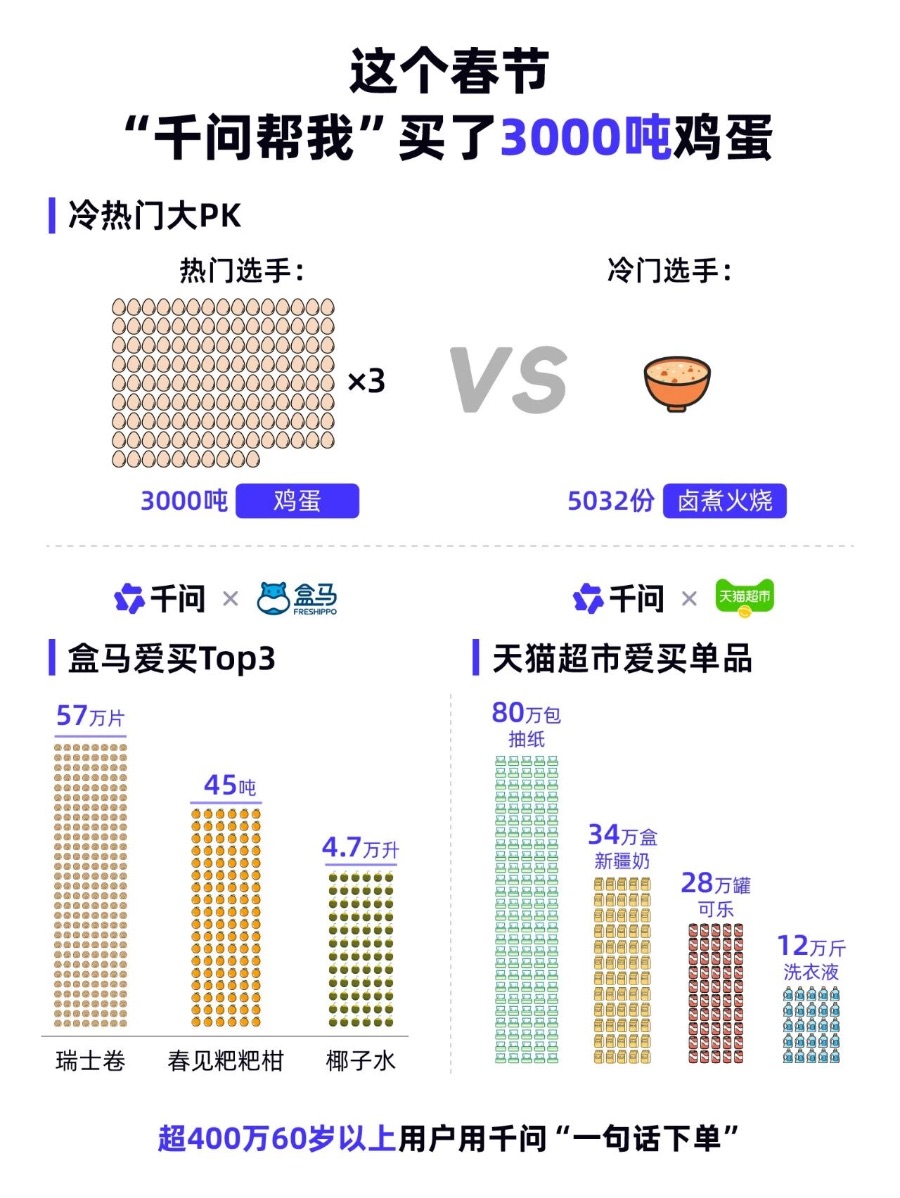
Core Insights - The article discusses the significant penetration of AI applications into lower-tier cities during the Spring Festival, driven by major tech companies like Alibaba, ByteDance, and Tencent, with a total investment exceeding 8 billion yuan [1] - The success of AI applications is highlighted by impressive user engagement metrics, such as over 50 million daily active users for Tencent's Yuanbao and nearly 2 billion AI interactions on New Year's Eve [1][3] - The challenge remains whether these AI applications can maintain their relevance in users' daily lives after the festive period [1] Group 1: User Engagement and Adoption - During the Spring Festival, AI applications like Qianwen and Doubao saw a surge in usage, with nearly half of AI orders coming from county and town users, and over 400 million users aged 60 and above utilizing AI for ordering [1][4] - The introduction of user-friendly features, such as voice-activated ordering in Qianwen, has made AI more accessible to older demographics, significantly reducing the steps required to place an order [4] - The trend of younger users teaching their parents to use AI applications has created a natural word-of-mouth marketing channel, enhancing trust in these technologies [3][8] Group 2: Market Dynamics and Future Challenges - The article notes a growing demand for AI in health-related inquiries among older users, with many using AI to seek medical advice and manage health conditions [7][9] - Despite the initial excitement, the long-term retention of users post-festival remains uncertain, as many older adults may not see the necessity of AI in their daily lives [10][11] - The success of AI applications will depend on their ability to integrate into users' everyday routines and provide indispensable services beyond promotional activities [10][11]

看好底部反转的医疗服务和药店板块
2026-02-24 14:16
Summary of Conference Call on Healthcare Services and Pharmacy Sector Industry Overview - The focus is on the healthcare services and pharmacy sectors within the pharmaceutical industry, particularly consumer-oriented segments, which are currently viewed positively due to historical low valuations after a prolonged adjustment period [1][2]. Key Points and Arguments Healthcare Services - The healthcare services sector has experienced significant declines, with current valuations at historical lows, indicating a potential for recovery by 2026 [1]. - Specific companies highlighted for their optimistic 2026 guidance include Tongce Medical, Gushengtang, and Aier Eye Hospital, all expected to show double-digit growth [1][2]. - The recovery in the sector is anticipated to be driven by improvements in supply structure and consumer environment, leading to a business rebound [2]. - Aier Eye Hospital is introducing new consumer-oriented surgical procedures, which may increase average transaction values despite stable surgical volumes [2]. Market Trends - Data from October 2025 shows positive growth in outpatient services in cities like Chongqing and Tianjin, with increases of 5-6% and 13-14% respectively [3]. - The overall trend indicates a recovery in both service volume and pricing, particularly in consumer-oriented medical fields like ophthalmology [3][4]. AI Integration - AI is expected to empower healthcare service companies, with applications like Ant Group's AI health app showing significant user growth, indicating a new growth driver for leading healthcare service firms [4][5]. Pharmacy Sector - The pharmacy sector is experiencing notable improvements in performance since Q3 2025, with leading companies showing consistent same-store sales growth [6]. - The sector is supported by government policies aimed at increasing industry concentration and chain store rates, which are expected to drive medium-term performance [6][7]. - Companies like Yifeng Pharmacy and Dazhong Pharmacy are highlighted for their strong cash flow and dividend yields, with Dazhong reporting a 60% dividend payout ratio [6][7]. Online vs. Offline Dynamics - The online pharmacy market is growing rapidly, but it serves a different demographic compared to traditional pharmacies, which cater more to older consumers [7][8]. - The online pharmacy market is projected to grow significantly, driven by products like GLP-1, but the overall growth rate may stabilize as both online and offline markets adjust [9][10]. Regulatory Environment - Recent government policies emphasize enhancing pharmacy service capabilities and supporting prescription outsourcing, which could lead to increased revenue opportunities for pharmacies [13][14]. - The focus on compliance and competition is expected to benefit larger pharmacy chains with established networks and resources for mergers and acquisitions [17]. Home Medical Devices - The home medical device sector is poised for growth due to an aging population and increasing health awareness, with significant potential in health monitoring devices like blood pressure monitors and glucose meters [18][19]. - Companies such as Yuyue Medical and Sanofi are recommended for their strong growth prospects in this segment [21]. Conclusion - The healthcare services, pharmacy, and home medical device sectors are expected to experience a bottom reversal, driven by improving fundamentals and supportive government policies. Key players in these sectors are well-positioned to capitalize on these trends, making them attractive investment opportunities moving forward [1][21].




蚂蚁数科将发布百灵大模型企业版
Xin Lang Cai Jing· 2026-02-19 02:50
Core Insights - Ant Group's subsidiary, Ant Technology, is accelerating the deployment of enterprise-level AI models, with the upcoming launch of the Bailing Model Enterprise Edition aimed at real-world applications in businesses [1][2] Group 1: Product Development - The Bailing Enterprise Edition will focus on key areas such as hallucination suppression, instruction adherence, Agentic Engineering, and safety compliance to meet high standards for B2B scenarios [1][2] - Ant Technology has released multiple models during the Spring Festival, including the multimodal model Ring-2.5-1T, the thinking model Ming-flash-omni-2.0, and the flagship base model Ling-2.5-1T, achieving leading levels in open-source metrics [1][2] Group 2: Market Positioning - The health AI application "Afu" reached the top of the Apple App Store download rankings on February 14, indicating strong market interest and user engagement [1][2] - Ant Technology's model solutions are currently being implemented in various financial and energy sector clients, showcasing the practical application of their technology [1][2] Group 3: Organizational Strategy - Ant Technology has established a "Large Model Technology Innovation Department" this year to focus on the deployment of the Bailing Model in B2B scenarios [1][2]
2026马年春晚15个关于AI的看点 - 有一种人类之外的美。
数字生命卡兹克· 2026-02-16 23:00
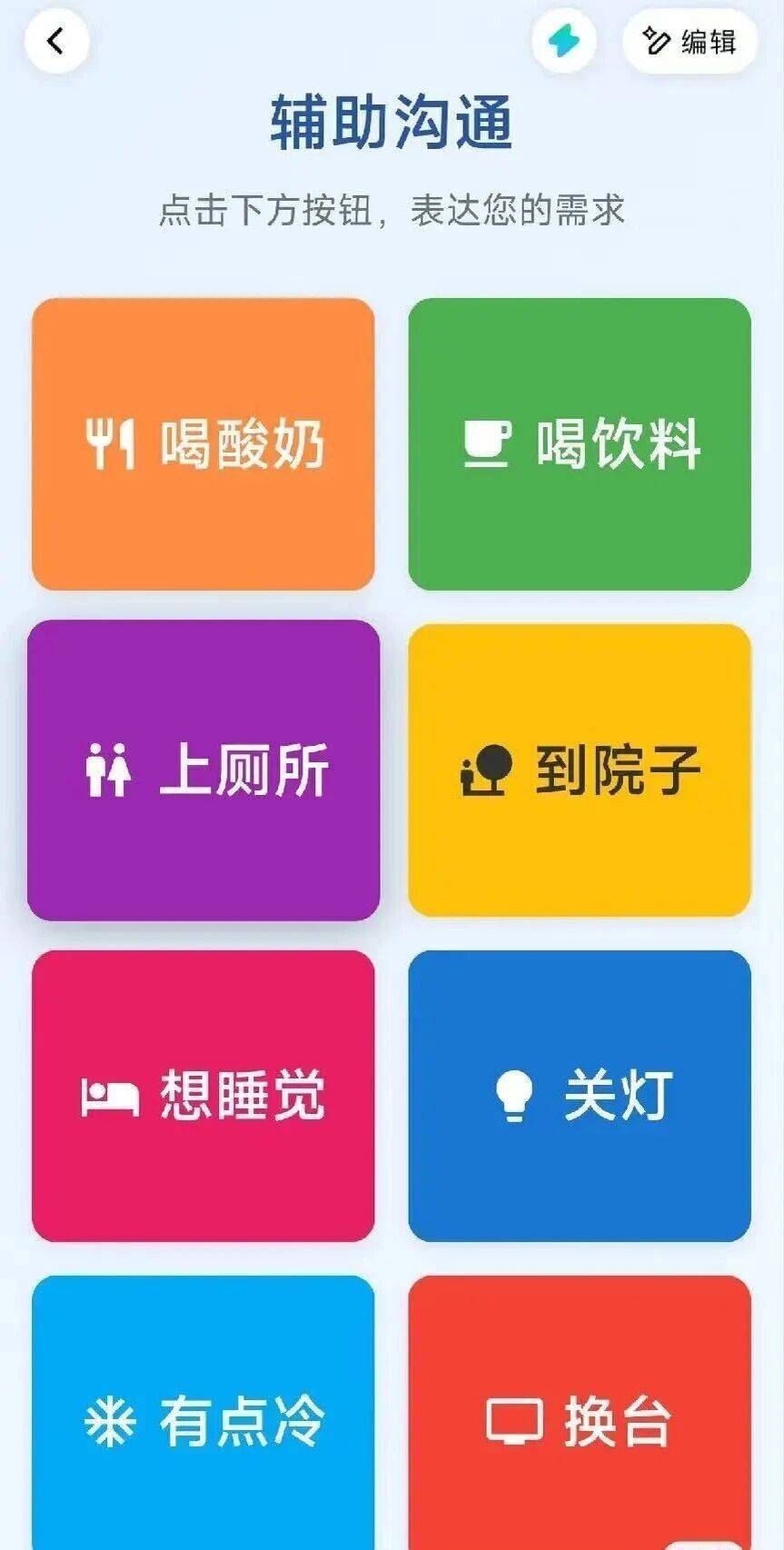
Group 1 - The core theme of the article revolves around the significant integration of AI technology in the 2026 Spring Festival Gala, marking a shift in sponsorship and performance dynamics towards tech-driven innovations [2][3][4]. - The presence of AI companies as sponsors, such as ByteDance's Volcano Engine and various robotics firms, indicates a new trend where hard tech is becoming a leading force in major cultural events [4][6][9]. Group 2 - The performance featuring Cai Ming and a lifelike robot symbolizes the evolution of public perception towards AI, transitioning from fear to acceptance and fascination over the past 30 years [10][12][18]. - The robot used in the skit "Grandma's Favorite" was developed by Songyan Power, showcasing advanced facial recognition and 3D modeling capabilities [21][22]. Group 3 - The article highlights the rapid advancements in robotics, with the performance of the Yushu robot demonstrating significant improvements in coordination and stability compared to previous years [28][30][41]. - The song "Creating the Future" reflects the integration of various technologies like VR, AI, and drones, emphasizing China's shift from manufacturing to intelligent creation [42][50]. Group 4 - The segment "Heavenly Flower God" is noted as a standout performance, utilizing Seedance 2.0 for impressive visual effects, showcasing the potential of AI in enhancing live performances [54][68]. - The gala achieved an unprecedented video quality of 8K resolution, indicating the use of advanced AI technologies for video enhancement [70][72]. Group 5 - The introduction of an AI-assisted version of the gala for accessibility, featuring sign language and AI-generated subtitles, represents a significant step towards inclusivity in media [87][89]. - The collaboration with AI applications like "Afu" from Ant Group illustrates the growing trend of integrating AI into various aspects of entertainment and health [99][101]. Group 6 - The article discusses the collaboration between Yushu Robotics and the game "Black Myth: Wukong," showcasing the intersection of gaming and robotics in cultural presentations [102][107]. - The appearance of the G1 robot in a microfilm highlights the practical applications of robotics in everyday scenarios, suggesting a future where intelligent machines become commonplace in households [112][116]. Group 7 - The historical context of the Spring Festival Gala is outlined, illustrating its evolution from a small-scale event in 1983 to a technologically advanced spectacle in 2026, with AI becoming a central element [119][123][128].

AI问诊,靠谱吗?
Huan Qiu Wang· 2026-02-10 02:00
Core Viewpoint - The rise of AI medical consultation in China is transforming healthcare access and efficiency, but concerns about reliability and data protection persist [4][11][14]. Group 1: AI Medical Consultation Overview - By the end of 2025, AI medical consultation advertisements are expected to be ubiquitous in Beijing, indicating a significant market presence [1]. - Users like Liu Yu are turning to AI for quick medical advice, completing processes that traditionally take hours in just minutes [3][4]. - Major companies such as JD Health, Ant Group, and Baidu are launching AI medical products, reflecting a competitive landscape in the sector [4]. Group 2: Functionality and Training of AI - AI medical products are categorized into two main types: those for general patients and those for healthcare professionals [7][10]. - The training of AI involves extensive input of medical knowledge and real patient interaction data to enhance diagnostic accuracy [7][12]. - Current AI models have shown a top-5 diagnostic accuracy rate of 97%, with the first suggestion accuracy at approximately 80% [12]. Group 3: Advantages and Limitations - AI consultation offers convenience, operating 24/7 without the need for appointments, which alleviates pressure on overburdened hospitals [10][11]. - AI is best suited for managing minor symptoms and chronic conditions, while complex cases still require in-person consultations [11][14]. - The technology's limitations include potential inaccuracies and the inability to replace physical examinations, which are crucial for accurate diagnosis [11][12]. Group 4: Legal and Ethical Considerations - The question of liability in cases of AI misdiagnosis remains unresolved, with current regulations not clearly defining responsibility [13][14]. - Experts suggest that AI should be viewed as a supportive tool rather than a replacement for human doctors, emphasizing the need for transparency in AI recommendations [12][14]. - The development of a regulatory framework is necessary to ensure the safe and effective use of AI in healthcare, with suggestions for a tiered system similar to that used in autonomous driving [16].

从沉寂到进击:蚂蚁AI押注“两朵花”
2 1 Shi Ji Jing Ji Bao Dao· 2026-02-05 11:32
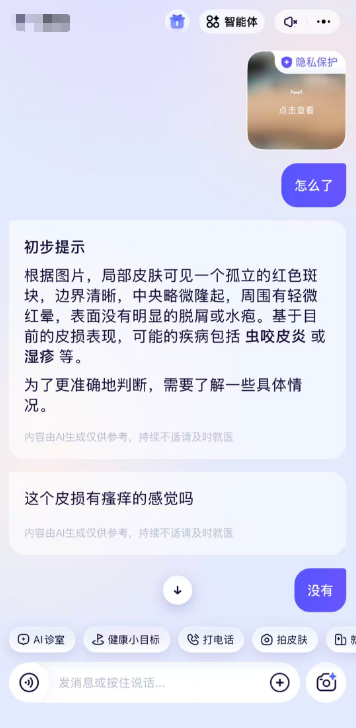
Core Insights - The article discusses the evolution of artificial intelligence (AI) from a technical concept to a competitive landscape in key sectors such as healthcare, finance, and industry, highlighting a "arms race" among major players like Alibaba, ByteDance, and Tencent [1] - Ant Group's AI assistant "Afu" has made significant upgrades, including a "senior mode" targeting the elderly market, differentiating its strategy from competitors focused on general models [1][2] - Ant Group's CEO emphasizes the need for continuous innovation and warns against complacency, stating that the company is still a "follower" in the AI space [2][3] Ant Group's Strategy - Ant Group is focusing on three core areas: payment, finance, and healthcare, which are seen as essential for its future development [3] - The company aims to leverage its long-standing experience in payment and healthcare to create a unique advantage in the vertical model space [1][4] - Ant Group's AI assistant "Afu" has achieved over 10 million daily health inquiries, with a significant portion coming from users aged 50 and above, capitalizing on the aging population [1][3] Market Dynamics - The competition among major players is characterized by a focus on foundational models, with a significant emphasis on parameter scale, computing power, and ecosystem influence [4] - Ant Group's approach contrasts with the broader strategies of competitors, as it seeks to build deep understanding and service loops within the healthcare sector [4][5] - The healthcare market presents substantial opportunities, with a notable shortage of quality medical resources and a fragmented patient demand [5] Organizational Changes - Ant Group is enhancing its internal incentives for teams making innovative contributions in AI, indicating a commitment to fostering innovation [2][9] - The company has restructured its health business into an independent unit alongside payment and finance, reflecting a strategic focus on health [5][9] AI Integration in Payment - Ant Group is integrating AI into its payment systems, exemplified by the "Alipay AI Pay" feature that allows users to place orders using natural language commands [6][7] - The introduction of the ACT protocol aims to create a standardized framework for AI and e-commerce collaboration, enhancing service efficiency and user experience [6][8] Future Outlook - Ant Group's strategic evolution is closely tied to the concept of "inclusive finance," with significant investments in AI and technology infrastructure planned for the coming years [9][10] - The competitive landscape is intensifying, with major companies like Alibaba and Tencent also ramping up their AI investments, indicating a broader industry shift towards AI capabilities [10][11] - The article concludes with a perspective that Ant Group has the potential to change the competitive landscape, moving from being a variable in the AI ecosystem to a key player [13]
蚂蚁归来:一场回应普通人关切的AI进击
Sou Hu Cai Jing· 2026-02-02 04:21
Core Insights - Ant Group is re-entering the competitive landscape with a new AI-driven strategy, focusing on practical applications that address everyday concerns of ordinary people [1][2][4] Group 1: Business Strategy - Ant Group's CEO, Han Xinyi, outlined a clear strategy involving two main pillars: financial services ("You Can Spend") and health services ("You Can Live"), leveraging AI to transform these areas into sustainable products [1][4] - The company has adopted an "AI First" strategy, elevating AI to a central role in its business model, with significant advancements in AI applications and model development [2][3] - Ant Group's focus is on a few high-demand application scenarios, specifically in payment, finance, and healthcare, which are seen as foundational for the company's future growth [3][4] Group 2: AI Applications - The "Lingguang" application has enabled users to create over 12 million personalized apps, while the "Afu" health application has surpassed 30 million monthly active users, positioning it among the top AI applications in China [1][2] - The "One Tap" payment feature has achieved over 100 million daily transactions, covering 2,260 life scenarios, demonstrating the integration of AI into everyday financial transactions [1][2] - Ant Group's AI applications are designed to address common anxieties related to wealth and health, rather than merely enhancing productivity for specific user groups [4][7] Group 3: Technological Development - Ant Group has made significant investments in AI technology, including the development of its own large model, "Bailing," which has been registered for generative AI services [2][12] - The company has a history of focusing on individual needs, which has guided its approach to integrating AI into services that enhance the quality of life for ordinary users [8][9] - Ant Group's health service, "Afu," builds on previous investments in healthcare technology, including digital appointment systems and insurance services, creating a robust ecosystem for health-related AI applications [9][10] Group 4: Future Outlook - Ant Group plans to continue investing in core application scenarios like health and payment, while also maintaining a long-term focus on foundational AI model development and research [13] - The company aims to embed AI into everyday financial and health decisions, addressing real-world problems faced by users, which aligns with its mission of providing inclusive professional services [12][13]