
荣耀

Search documents
Counterpoint Research:5月中国市场智能手机平均电池容量同比增长11% 居全球首位
Zhi Tong Cai Jing· 2025-08-07 03:01
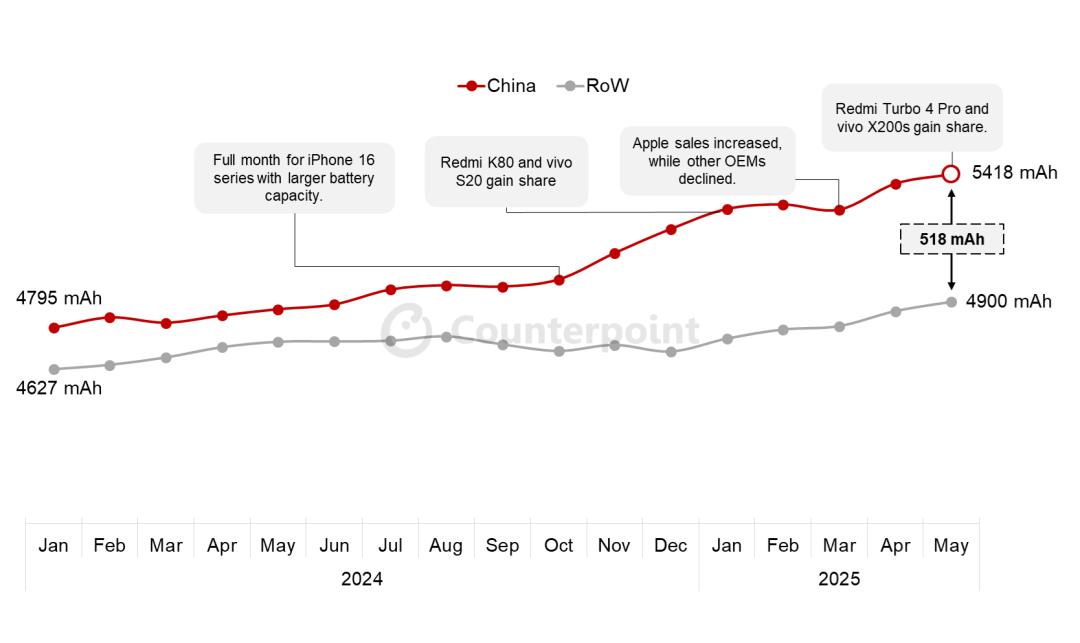
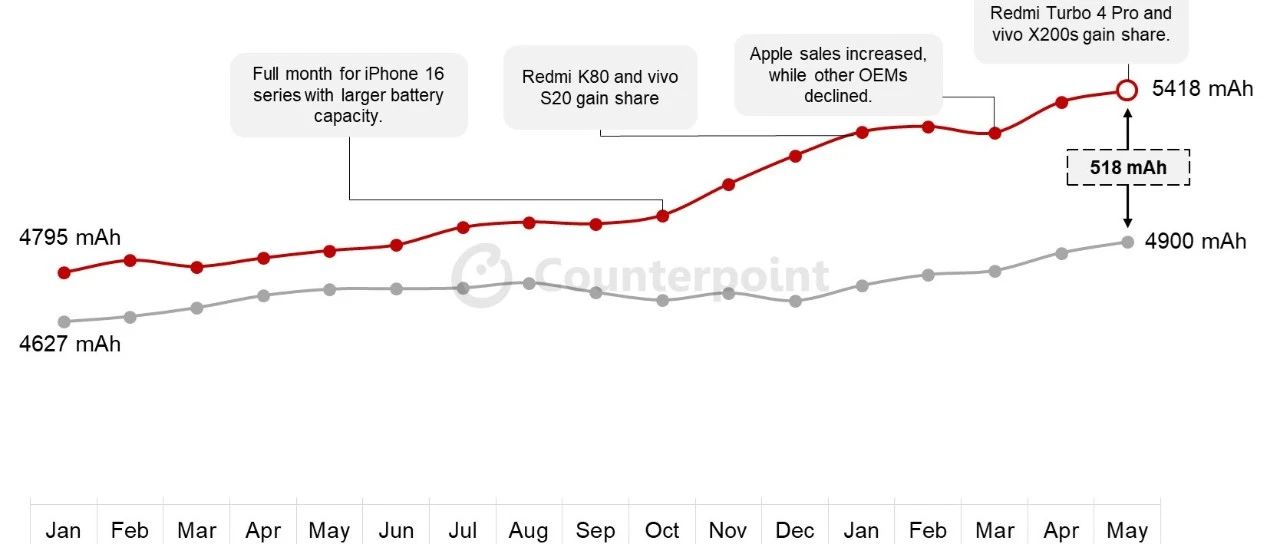
Core Insights - The average battery capacity of smartphones in the Chinese market reached 5418mAh in May 2025, marking an 11% year-on-year increase, while the global average only grew by 3% [1][3] - The adoption of silicon-carbon (SiC) batteries has significantly contributed to this growth, with a capacity difference of over 500mAh compared to other global markets [1][3] Battery Technology and Market Trends - SiC batteries offer higher energy density, allowing for larger capacities within the same physical size, and support thinner device designs [3] - The first smartphone featuring SiC batteries was launched in February 2023, with widespread adoption beginning in the second half of 2024, represented by popular models such as Honor X60 Pro, Redmi K80, and vivo S19 [3] - By May 2025, the market share of smartphones with battery capacities of 6000mAh and above surged from 9% to 35% year-on-year among major OEMs in China [3] Competitive Landscape - OnePlus leads in average battery capacity in the Chinese market with its Ace series, while brands like Honor, Huawei, and vivo also offer models with larger batteries tailored for the Chinese market [3] - Counterpoint Research anticipates that China will maintain its lead in battery capacity and may further widen the gap in the coming quarters, as more models are launched in China before being introduced globally [4] - As more OEMs promote large-capacity batteries as a differentiating feature, the gap between China and other global markets is expected to narrow over time [4]

打造个人数智化整体解决方案 中国移动广东公司发布全球通AI手机
Guang Zhou Ri Bao· 2025-08-07 02:17
Core Viewpoint - China Mobile Guangdong Company launched the "Global通AI" smartphone, which is not just a device but a comprehensive personal digital service solution aimed at enhancing AI capabilities for households and fulfilling customer needs for a better digital life [1] Group 1: Product Launch and Features - The "Global通AI" smartphone is based on Huawei's flagship Mate 70 Pro and integrates advanced technologies and exclusive benefits, including 5G-A network acceleration, emergency communication via Beidou, and AI-powered services like AI note-taking and AI chat [1] - The product embodies the "Five Major Enjoyment" service philosophy of the Global通 brand, providing efficient, precise, and intelligent AI digital services [1] Group 2: Market Strategy and Future Plans - China Mobile Guangdong Company is innovating AI smartphone service models and pricing to allow customers to experience cutting-edge AI applications at more affordable prices [2] - The company has previously launched the "中移磐石AI" smartphone for senior customers, offering services like AI calling and health monitoring, and plans to introduce the "动感地带AI" smartphone targeting younger customers to expand AI service coverage [2] Group 3: Industry Collaboration and Market Potential - The third quarter general terminal ordering meeting was initiated after the launch event, featuring major manufacturers like Huawei, Realme, and Xiaomi showcasing their latest devices and sales policies, indicating strong market potential [2]

华为再诉传音侵权,后者接连面临多起专利诉讼
Nan Fang Du Shi Bao· 2025-08-07 01:56
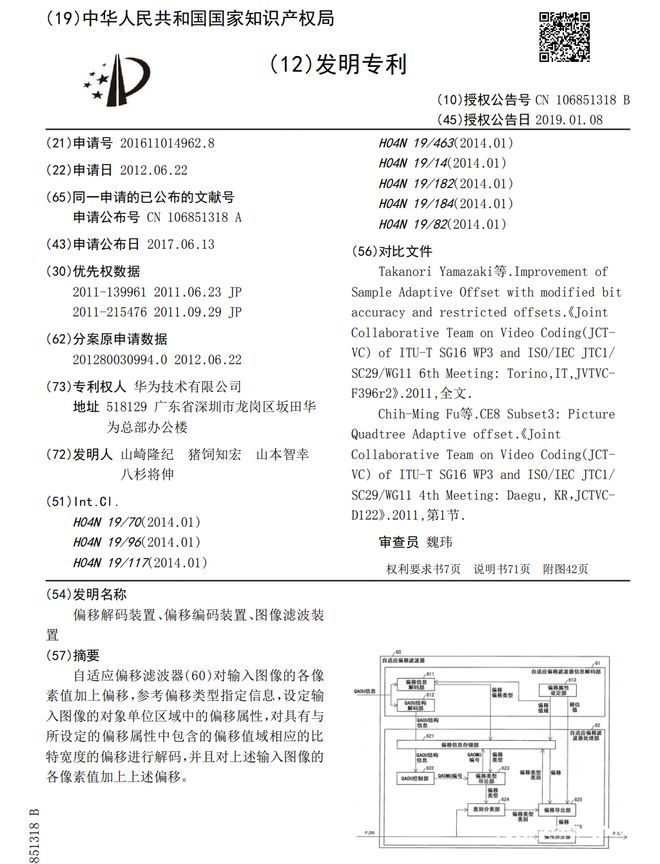
Core Viewpoint - Huawei has filed a lawsuit against Transsion Holdings for patent infringement related to high-efficiency video coding (HEVC), marking the second legal confrontation between the two companies since 2019 [1][10]. Group 1: Legal Disputes - Huawei filed the lawsuit on June 20, 2023, in the European Patent Court in Munich, accusing Transsion and its affiliates of infringing on its European patent EP2725797, which pertains to image processing technology [1]. - This lawsuit is the fourth instance of patent claims against Transsion regarding HEVC-related patents, following similar actions by NEC, JVC, and Sun Patent Trust in Europe and Brazil [1]. - The previous legal battle in 2019 involved Huawei suing Transsion for 20 million yuan over the unauthorized use of a wallpaper design, which was settled in June 2020 [1][10]. Group 2: Patent Details - The patent in question, EP2725797, was first applied for in 2011 and aims to enhance video encoding efficiency and memory usage through optimized algorithms, specifically for smartphone image display modules [1]. - The patent was originally filed by four Japanese researchers and has been held by Huawei since its inception [1][9]. Group 3: Market Context - Transsion is facing significant challenges in its business operations, with a reported 69.87% year-on-year decline in net profit for Q1 2025 [10]. - The company's market share in Africa has decreased by 5 percentage points, impacted by competition from brands like Xiaomi and Honor [10]. - Transsion is also encountering multiple patent challenges as it seeks to expand into emerging markets, with Qualcomm having previously filed a lawsuit in India for infringement of four non-standard essential patents [10]. Group 4: Industry Implications - The ongoing patent disputes reflect a broader trend of patent wars within the mobile industry, where companies leverage patents as critical tools for market competition and negotiations [11]. - The disparity in patent holdings is notable, with Huawei holding over 150,000 effective patents globally by the end of 2024, compared to Transsion's 1,201 invention patents [11]. - Experts suggest that companies like Transsion should focus on strengthening innovation, patent analysis, management, and collaboration to navigate the challenges posed by patent litigation [11].

中国智能手机平均电池容量居全球首位
Ju Chao Zi Xun· 2025-08-07 01:49
Core Insights - The average battery capacity of smartphones in the Chinese market reached 5418mAh by May 2025, marking an 11% year-on-year increase, while the global average only grew by 3% [2][4] - The adoption of silicon-carbon (SiC) batteries has significantly contributed to this growth, with a capacity difference of over 500mAh compared to other global markets [2][4] Battery Technology and Market Trends - SiC batteries offer higher energy density, allowing for larger capacities within the same physical size, and support thinner device designs [4] - The first smartphone featuring SiC batteries was launched in February 2023, with widespread adoption beginning in the second half of 2024, represented by popular models such as Honor X60 Pro, Redmi K80, and vivo S19 [4] - By May 2025, the market share of smartphones with battery capacities of 6000mAh and above surged from 9% to 35% year-on-year, driven by major OEMs in China [4] Competitive Landscape - OnePlus leads in average battery capacity in the Chinese market with its Ace series, while brands like Honor, Huawei, and vivo also offer models with larger batteries tailored for the Chinese market [4] - Counterpoint Research anticipates that China will maintain its lead in battery capacity and may further widen the gap, as more models are launched in China before being introduced globally [5] - As OEMs increasingly promote large battery capacities as a product differentiation strategy, the gap between China and other global markets is expected to narrow over time [5]
中国智能手机平均电池容量居全球首位,2025年5月同比增幅达11%
Counterpoint Research· 2025-08-07 01:03
Core Insights - The average battery capacity of smartphones in China is projected to reach 5418mAh by May 2025, marking an 11% year-on-year increase, while global markets see only a 3% growth [4][8] - The adoption of silicon-carbon (SiC) battery technology is significantly contributing to the higher battery capacities in China, with a notable increase of over 500mAh compared to global averages [4][8] - Major OEMs in China are experiencing double-digit year-on-year growth in average battery capacity, with the market share of smartphones with 6000mAh and above rising from 9% to 35% within a year [6][8] Battery Technology Trends - SiC batteries offer higher energy density, allowing for larger capacities within the same physical size, and support thinner device designs [6] - The first smartphone featuring SiC batteries was launched in February 2023, with widespread adoption expected to begin in the second half of 2024, represented by popular models such as Honor X60 Pro, Redmi K80, and vivo S19 [6][8] - The trend of increasing battery capacity is likely to continue as more OEMs adopt new battery technologies to address consumer demands for longer screen usage times and high-energy applications [6][8] Market Positioning - Counterpoint Research anticipates that China will maintain its leading position in smartphone battery capacity in the coming quarters, potentially widening the gap as more models are launched in China before being introduced globally [7] - As global OEMs await further maturation of battery technology, growth in other regions is expected to be gradual, although the gap in battery capacity may eventually narrow as more manufacturers promote large-capacity batteries as a differentiating feature [7]
年入560亿!给小米、荣耀供应手机电池,广东茂名富豪的公司赴港IPO
格隆汇APP· 2025-08-06 10:22
Core Viewpoint - The company, a major supplier of mobile phone batteries to Xiaomi and Honor, is planning to go public in Hong Kong with an annual revenue of 56 billion [1] Group 1 - The company is based in Maoming, Guangdong, and has established itself as a significant player in the mobile battery supply industry [1] - The upcoming IPO is expected to attract considerable investor interest due to the company's strong financial performance and market position [1] - The company has been experiencing growth in revenue, indicating a robust demand for its products in the mobile phone market [1]

欣旺达赴港IPO,为小米、荣耀供应消费类电池,业绩存在波动
Ge Long Hui· 2025-08-06 07:49
Core Viewpoint - XINWANDA, the largest mobile battery manufacturer globally, is seeking to go public on the Hong Kong Stock Exchange, aiming to raise funds for international expansion and technological upgrades [1][8]. Company Overview - XINWANDA was founded in 1997 and has grown to become a significant player in the lithium battery industry, focusing on research, design, manufacturing, and sales of various battery types [4][10]. - The company has a market capitalization of approximately 40.1 billion RMB as of August 6, 2023 [4]. Financial Performance - XINWANDA's revenue for 2022, 2023, 2024, and the first quarter of 2025 was approximately 52.16 billion RMB, 47.86 billion RMB, 56.02 billion RMB, and 12.29 billion RMB, respectively [23]. - The net profit for the same periods was about 7.63 billion RMB, 3.31 billion RMB, 5.34 billion RMB, and 0.3 billion RMB, indicating significant fluctuations in profitability [23]. - The company has distributed dividends totaling nearly 500 million RMB over the past three years [8]. Product Segmentation - XINWANDA's revenue is primarily derived from consumer batteries, contributing over 53% of total income, followed by power batteries at over 20% [11][12]. - The average selling price of consumer batteries decreased from 66.2 RMB per unit in 2022 to 46 RMB per unit in 2025, while power batteries dropped from 1.1 RMB per Wh to 0.5 RMB per Wh during the same period [24][23]. Market Position - XINWANDA holds a 34.3% market share in the global mobile battery market, making it the largest supplier, and a 21.6% share in the laptop and tablet battery market, ranking second [25]. - The company has established partnerships with major clients such as Xiaomi, Lenovo, and OPPO, with significant revenue concentration from its top five customers [13][16]. Industry Trends - The global lithium battery market is experiencing growth, with consumer battery shipments projected to increase from 3.936 billion units in 2020 to 4.159 billion units in 2024, and power battery shipments expected to rise from 183 GWh to 1002 GWh in the same timeframe [20][22]. - The lithium-ion battery technology is favored for its safety, reliability, and environmental benefits, making it a mainstream choice across various applications [19].


腾易科技发布汽车领域MCP服务矩阵 与百度 华为 荣耀AI生态平台全面对接
Yang Guang Wang· 2025-08-06 07:17
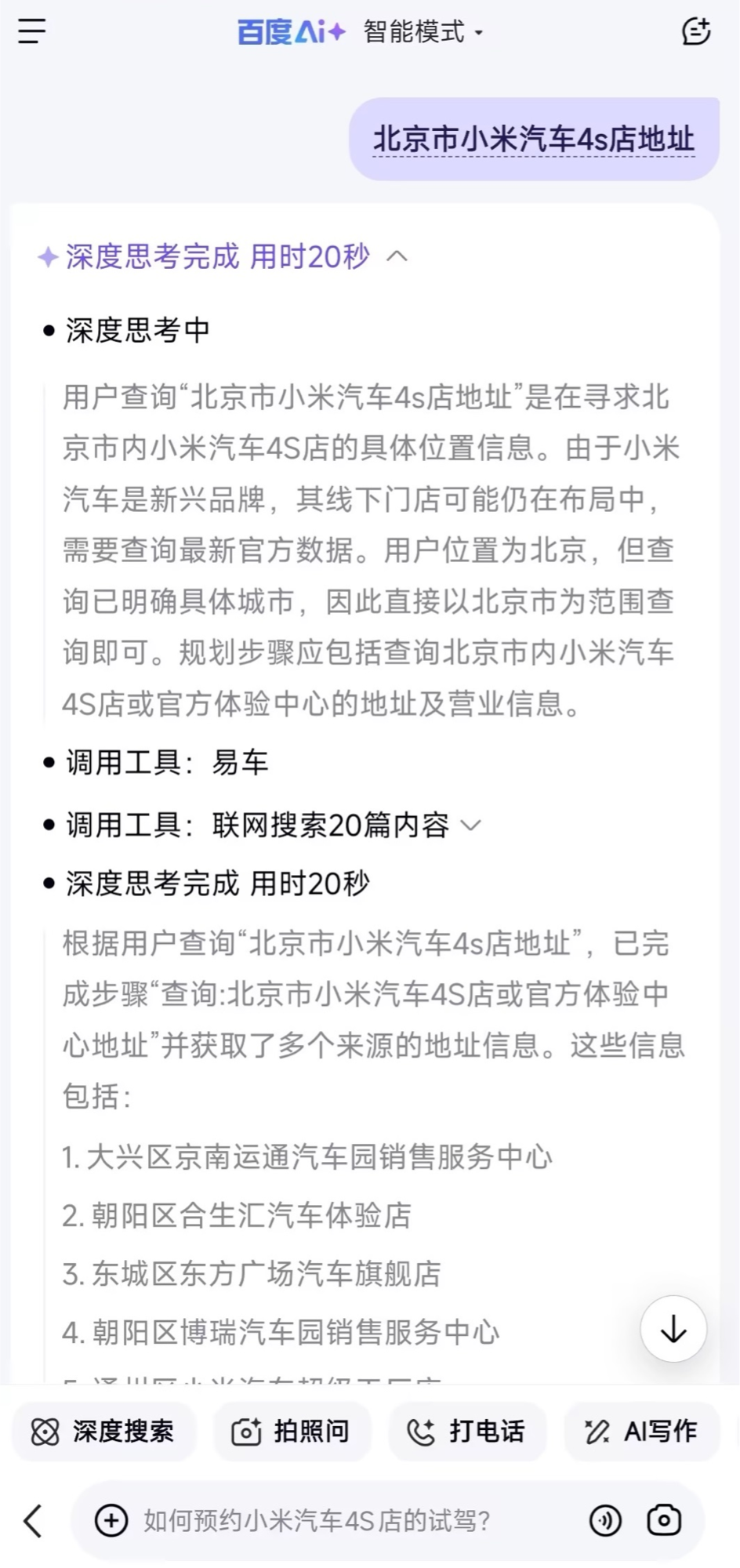
Core Insights - Tengyi Technology has launched the Model Context Protocol (MCP) service matrix for the automotive sector, integrating it with major AI ecosystems like Baidu, Huawei, and Honor, marking a significant step towards the convergence of automotive services and AI technology [1][9] - The MCP protocol aims to enhance interaction and collaboration between different AI models and applications, providing standardized automotive consumer data services based on 25 years of industry data accumulation [1][9] - The integration of MCP services into Baidu AI search has led to over 5.4 million monthly visits, significantly improving user efficiency in accessing automotive information [5] Group 1 - The launch of the MCP service matrix signifies a new ecological model that offers smarter and more convenient services for automotive consumers and industry professionals [1][9] - The MCP service allows users to obtain real-time automotive content and facilitates a seamless connection across the entire consumer chain, including cloud services [1][9] - The integration with Huawei's AI platform enhances the user experience by providing more intelligent automotive services, such as voice interaction and location-based recommendations [7] Group 2 - The collaboration between Tengyi Technology and AI ecosystems is expected to drive digital and intelligent transformation in the automotive industry, improving operational efficiency for dealers and enabling manufacturers to better understand consumer needs [9] - Future plans include expanding the MCP service matrix with more automotive-related data and service interfaces, such as vehicle maintenance and used car trading information [9] - Continuous technological innovation will be pursued to enhance the intelligence level of MCP services, aiming to provide users with more personalized and thoughtful services [9]
腾易科技发布汽车领域MCP服务矩阵 与百度,华为,荣耀AI生态平台全面对接
Zhong Guo Xin Wen Wang· 2025-08-06 06:39
Core Insights - Tengyi Technology has launched the Model Context Protocol (MCP) service matrix for the automotive sector, integrating it with major AI ecosystems like Baidu, Huawei, and Honor, marking a significant step towards the fusion of automotive services and AI ecosystems [1][4][6] Group 1: MCP Service and Integration - The MCP protocol aims to eliminate barriers between different AI models and applications, facilitating more efficient interaction and collaboration [1] - The integration of the MCP service with Baidu AI search has led to a monthly visit volume exceeding 5.4 million, significantly enhancing user access to automotive information [4] - The MCP service is also available on Huawei's Xiaoyi platform, allowing partners to offer richer automotive services, thus improving user interaction experiences [4][6] Group 2: Industry Impact and Future Developments - The collaboration between Tengyi Technology and AI platforms sets a new standard for the integration of automotive services and AI, addressing previous issues of information silos and service disconnection [6] - This partnership is expected to drive digital and intelligent transformation in the automotive industry, enabling dealers to enhance operational efficiency and manufacturers to better understand consumer needs [6] - Tengyi Technology plans to further develop the MCP service by adding more automotive-related data and service interfaces, while also focusing on technological innovation to enhance service intelligence [6]
电子行业周报(2025/7/28-8/1):WAIC2025,华为发布昇腾384超节点-20250806
Shanghai Aijian Securities· 2025-08-06 05:02
Investment Rating - The report rates the electronic industry as "Outperform" compared to the market [1]. Core Insights - The electronic industry index increased by 0.28% over the week, outperforming the Shanghai Composite Index, which decreased by 1.75% [2]. - The report highlights the significant advancements in Huawei's Ascend series, particularly the launch of the Ascend 910C CloudMatrix 384 at WAIC 2025, showcasing its high bandwidth and low latency capabilities [5][6]. - The report suggests focusing on domestic semiconductor foundry companies like SMIC and optical module companies like Zhongji Xuchuang, which are expected to benefit from the growing demand for AI computing infrastructure [8][20]. Summary by Sections 1. Industry Performance - The SW electronic industry index ranked 4th out of 31 sectors, with the top five performing sectors being pharmaceuticals (+2.95%), communications (+2.54%), media (+1.13%), electronics (+0.28%), and social services (+0.10%) [2][34]. - The top three sub-sectors within the electronic industry were printed circuit boards (+9.65%), analog chip design (+1.83%), and discrete devices (+1.73%) [2][37]. 2. Huawei's Ascend Series Development - Huawei's Ascend series has seen continuous breakthroughs since the launch of the Ascend 910 chip in 2018, with significant performance improvements in subsequent models [6][11]. - The Ascend 910C, launched in 2025, supports trillion-parameter model training and features a memory bandwidth exceeding 3TB/s [6][12]. 3. Technological Advancements - The Ascend 384 SuperNode architecture utilizes a peer-to-peer bus to interconnect 384 NPUs and 192 Kunpeng CPUs, achieving a one-way bandwidth of 392GB/s and a latency of less than 1 microsecond [7][12]. - Compared to NVIDIA's GB200 NVL72, the Ascend 910C demonstrates superior system-level performance, with a BF16 computing power of 300 PFLOPs and a memory capacity of 49.2TB [19]. 4. Investment Recommendations - The report recommends monitoring SMIC and Zhongji Xuchuang as they are positioned to benefit from the domestic semiconductor and optical module markets, respectively [8][21]. - SMIC is advancing its 7nm process technology, while Zhongji Xuchuang leads the global market in optical modules, expected to see increased sales of high-end products [20][21].

