创尔生物

Search documents
护肤日化半年报|嘉亨家化净利润亏损同比扩大490% 湖州基地成负担、产能利用率极低拖累利润及资产配置效率
Xin Lang Zheng Quan· 2025-09-12 09:09
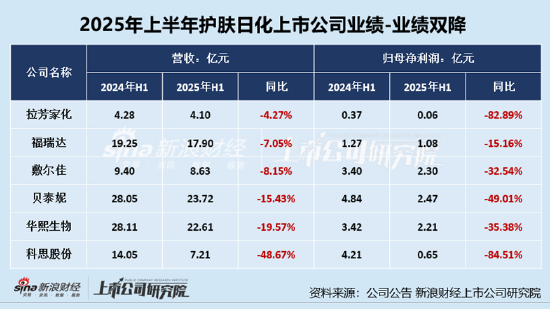
Core Insights - The skincare and daily chemical industry in A-share has shown significant performance divergence among 14 representative listed companies in the first half of 2025, with 6 companies experiencing both revenue and profit declines, 6 companies achieving double growth, 1 company increasing revenue but not profit, and 1 company reporting a loss [1][2]. Performance Summary - **Companies with Double Growth**: 6 companies achieved both revenue and profit growth, although specific names and figures are not provided in the documents. - **Companies with Double Decline**: - Lafang Cosmetics: Revenue of 410 million yuan, down 4.27%, net profit of 6 million yuan, down 82.89% [2]. - Furuida: Revenue of 1.79 billion yuan, down 7.05%, net profit of 108 million yuan, down 15.16% [2]. - Fulejia: Revenue of 863 million yuan, down 8.15%, net profit of 230 million yuan, down 32.54% [2]. - Beitaini: Revenue of 2.372 billion yuan, down 15.43%, net profit of 247 million yuan, down 49.01% [2]. - Huaxi Biological: Revenue of 2.261 billion yuan, down 19.57%, net profit of 221 million yuan, down 35.38% [2]. - Kesi Co.: Revenue of 721 million yuan, down 48.67%, net profit of 65 million yuan, down 84.51% [2]. - **Company with Increased Revenue but Decreased Profit**: Chuang'er Biological achieved revenue of 214 million yuan, up 16.98%, but net profit decreased to 13 million yuan, down 55.99% [3][4]. - **Company Reporting a Loss**: Jiaheng Cosmetics reported revenue of 514 million yuan, up 21.72%, but a net loss of 32 million yuan, with losses expanding significantly [5][6]. The loss is attributed to increased operational costs and fixed expenses related to its Huzhou base [5]. Industry Challenges - Lafang Cosmetics cited increased market pressures and intensified competition as reasons for its significant profit decline, despite higher sales and financial expenses [6].

【干货】功能性护肤品产业链全景梳理及区域热力地图
Qian Zhan Wang· 2025-09-11 06:25
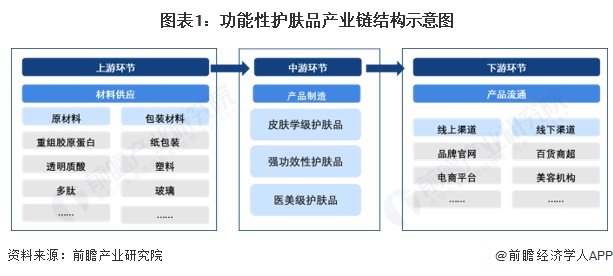
Core Insights - The article discusses the functional skincare product industry in China, highlighting key players, market dynamics, and recent developments in the sector [1][10]. Industry Overview - The functional skincare industry is segmented into upstream (raw materials and packaging), midstream (manufacturing), and downstream (distribution) [1][3]. - Key raw materials include recombinant collagen, hyaluronic acid, and peptides, while packaging materials consist of paper, plastic, and glass [1][3]. Key Players - Major companies in the functional skincare sector include Betaini, Huaxi Biological, Shanghai Jahwa, and international brands like L'Oréal and Estée Lauder [3][10]. - Upstream suppliers include Kesheng Co., Qingsong Co., and Linsen Biological, while contract manufacturers include Norsbel, Cosme, and Yingteli [3]. Regional Distribution - The majority of functional skincare companies are located in China's eastern coastal regions, with Shanghai and Guangdong having the most comprehensive distribution of industry players [5][7]. Recent Developments - Betaini is focusing on its Winona brand for sensitive skin, investing nearly 500 million yuan in a new central factory with an expected annual output value of 5 billion yuan [10][11]. - Huaxi Biological plans to invest over 100 million yuan in strategic innovation and expand production capacity in multiple cities [10][11]. - Shanghai Jahwa is establishing an innovation center for synthetic biology to develop new functional ingredients [10][11]. - Other companies like Chuang'er Biological and Fulejia are also expanding their production capabilities and investing in new technologies [10][11].
2025年中国功能性护肤品行业技术发展现状分析 三大赛道品牌商核心技术各异【组图】
Qian Zhan Wang· 2025-09-05 04:08
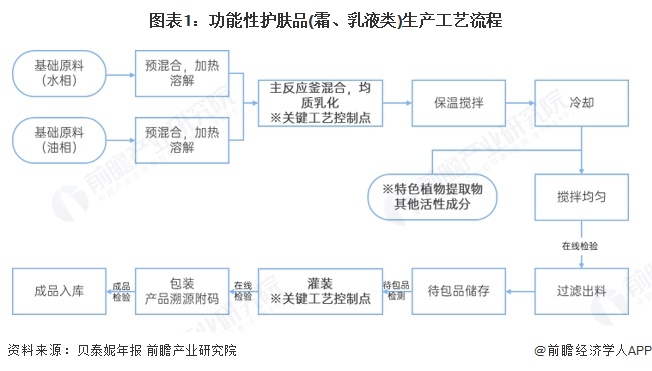
Core Insights - The article focuses on the research and development (R&D) investments of listed companies in China's functional skincare industry, highlighting the importance of R&D intensity relative to revenue [1][10]. R&D Investment Overview - The leading company in R&D investment is Huaxi Biological, with a projected investment of 466 million yuan in 2024, representing 8.68% of its revenue [10]. - Other companies like Chuang'er Biological also show significant R&D investment intensity, indicating a competitive landscape in innovation [10]. Key Companies and Their R&D Focus - **Betaini**: Focuses on the R&D of Yunnan specialty plants to address various skin issues and enhance product lines [11]. - **Huaxi Biological**: Concentrates on active ingredient delivery control and efficacy extension projects [10][11]. - **Chuang'er Biological**: Specializes in collagen protein project development [10][11]. - **Fuerjia**: Aims to expand its product line, including Class III medical devices and sunscreen products [10][11]. Production Processes - Functional skincare products include creams, lotions, masks, serums, and emulsions, each with distinct production processes. For instance, Betaini's cream and lotion production involves several key steps, with homogenization and filling being critical control points [1]. Competitive Landscape - The article outlines various brands and their core technologies, such as Vichy and La Roche-Posay from France, which emphasize thermal spring water, and Curel from Japan, which focuses on ceramide care [6][7].
【最全】2025年中国功能性护肤品行业上市公司全方位对比(附业务布局、业绩对比、业务规划等)
Qian Zhan Wang· 2025-08-31 02:10
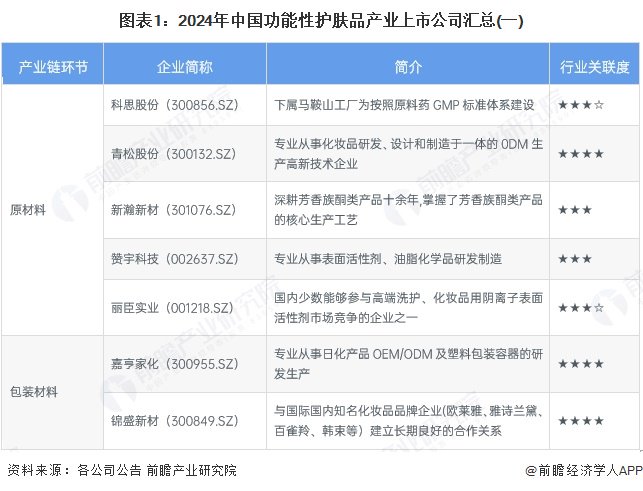
Core Viewpoint - The functional skincare industry in China is experiencing a rise of domestic brands, with various listed companies involved across the supply chain, including raw materials, packaging, and sales channels [1][2]. Group 1: Industry Overview - Functional skincare products are designed to address specific skin issues and possess certain pharmacological effects, indicating a growing market for targeted skincare solutions [1]. - The industry is characterized by a diverse range of companies, from raw material suppliers to online and offline sales channels [2]. Group 2: Company Distribution - Key companies in the raw materials segment include Kesheng Co., Qingsong Co., and Xinhang New Materials, while packaging material companies include Jiaheng Household and Jinsong New Materials [2][3]. - Major players in the functional skincare segment include Betaini, Huaxi Biological, Shanghai Jahwa, and Chuang'er Biological, with significant online sales channels represented by Alibaba, JD.com, and Pinduoduo [2][4]. Group 3: Financial Performance - Betaini leads the industry with a revenue of 57.36 billion yuan in 2024, followed by Huaxi Biological with 53.71 billion yuan and Shanghai Jahwa with 56.79 billion yuan [6][18]. - The gross profit margins for most companies in the functional skincare sector range from 70% to 85%, with Juzhi Biological achieving the highest margin at 82.09% [17][18]. Group 4: Business Strategies - Companies are focusing on R&D innovation, brand enhancement, and channel optimization to capture more market share and adapt to competitive pressures [19]. - Betaini plans to enhance its product offerings in the baby skincare segment and expand its online and offline presence, while Huaxi Biological is shifting towards anti-aging strategies and enhancing its technological capabilities [20][19]. Group 5: Market Positioning - Betaini has a dominant market position with 99.49% of its business in functional skincare, primarily targeting the Chinese market [16]. - Huaxi Biological and Shanghai Jahwa have also established strong brand identities with competitive product lines, while Chuang'er Biological focuses on collagen products [14][16].


2025年中国功能性护肤品行业销售渠道分析 线上渠道仍为主流渠道【组图】
Qian Zhan Wang· 2025-08-27 09:29
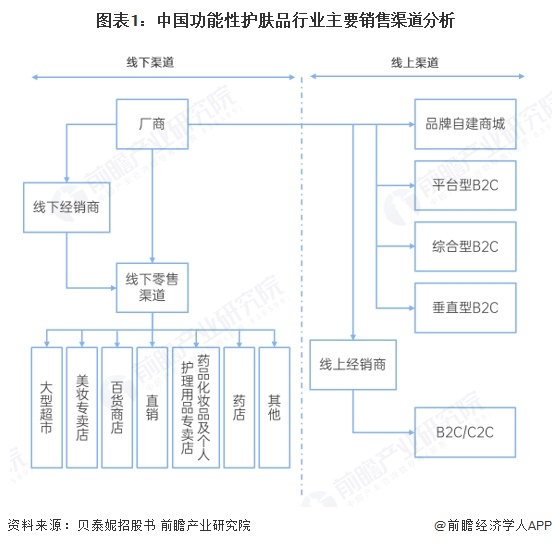
Core Insights - The functional skincare industry in China is primarily driven by online sales channels, with companies like Betaini and Huaxi Biological having established mature online sales strategies [1][5][10] - The contribution of professional channels to the sales of functional skincare products is limited, with most companies focusing on online marketing for rapid growth [2][4] Channel Analysis - **Online Channels**: - Advantages include wide reach and lower costs compared to offline channels, leading to higher profit margins [4] - Major platforms include Tmall, Douyin, Kuaishou, and JD, with private traffic channels also playing a significant role [4] - Disadvantages include rising customer acquisition costs and challenges in consumer repurchase rates [4] - **Offline Channels**: - Advantages include better control over terminal pricing and profit margins, particularly in tier-three and tier-four cities [4] - Disadvantages include higher channel costs and the complexity of entering professional channels [4] Company Strategies - Companies like Betaini and Huaxi Biological have a balanced approach with both online and offline channels, while older brands leverage established offline distribution networks [5][8] - The sales model for most companies in the functional skincare sector involves direct sales online and distribution through dealers offline [7][8] Revenue Insights - In 2024, the online revenue for the functional skincare industry is projected to be led by Proya, with online revenue reaching 9.59 billion yuan, accounting for 88.98% of its total revenue [10]
【行业深度】洞察2025:中国功能性护肤品行业竞争格局及市场份额(附市场集中度、企业竞争力分析等)
Qian Zhan Wang· 2025-08-18 08:09
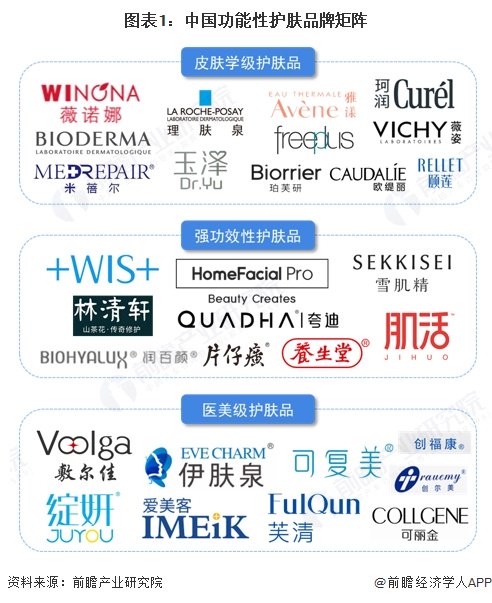
Core Insights - The article discusses the competitive landscape and market dynamics of the functional skincare industry in China, highlighting key players, market share, and industry concentration levels [1][9][11]. Group 1: Brand Ranking - The functional skincare market in China is segmented into three main categories: dermatological skincare, strong efficacy skincare, and medical aesthetic skincare, with leading brands in each category [1]. - Notable brands in dermatological skincare include Winona, La Roche-Posay, and Avene; strong efficacy brands include WIS and HFP; medical aesthetic brands include Fulejia and Aimeike [1]. Group 2: Revenue and Market Position - The functional skincare industry is divided into three tiers based on revenue: - Tier 1: Betaini with revenue exceeding 5 billion CNY, leading the market [3][12]. - Tier 2: Companies like Giant Biological, Shanghai Jahwa, and Fulejia, which have significant revenue and brand recognition [3]. - Tier 3: Companies such as Proya and Furuida, which are publicly listed but have lower revenue from functional skincare [4]. Group 3: Market Share - The projected market size for functional skincare in China for 2024 is approximately 48.743 billion CNY, with Betaini holding a market share of 11.71% [9]. - Other significant players include Huaxi Biological at 5.27%, Fulejia at 4.14%, Shanghai Jahwa at 2.15%, and Giant Biological at 2.44% [9]. Group 4: Market Concentration - The market concentration for domestic functional skincare brands is relatively low, with the top three companies accounting for 21.12% of revenue and the top six for 26.47% [11]. - There is a trend of increasing market concentration, with leading players establishing brand and research barriers [11]. Group 5: Competitive Landscape - The industry shows a strong reliance on imported raw materials, with suppliers having significant bargaining power [16]. - Domestic brands are gaining market share, and competition is intensifying, with high profit margins and potential threats from new entrants and alternative products [16].
2025年全球功能性护肤品行业发展现状及趋势概况
Qian Zhan Wang· 2025-08-13 09:09
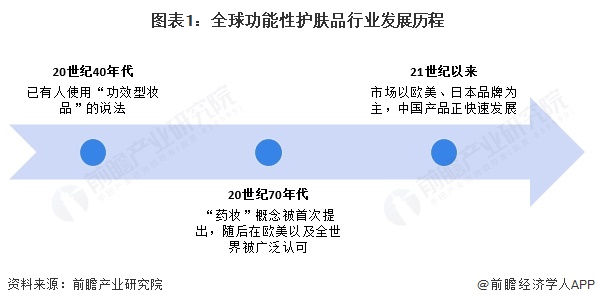
Core Insights - The global functional skincare market is projected to reach approximately $180.5 billion in 2024, with China accounting for about 27% of the global skincare market [6][8]. - The market for functional skincare products is expected to grow at a compound annual growth rate (CAGR) of 5%, potentially exceeding $240 billion by 2030 [10]. Industry Overview - The concept of "functional cosmetics" emerged in the 1940s, with the term "pharmaceutical cosmetics" introduced in the 1970s by dermatologist Albert Kligman, leading to widespread acceptance in Western countries [6]. - The functional skincare market is currently dominated by brands from Europe, Japan, and the United States, with significant players including L'Oréal, Estée Lauder, and Shiseido [3]. Market Competition - The global functional skincare market exhibits a moderate level of concentration, with numerous brands competing, although leading companies like L'Oréal and Estée Lauder hold significant market shares [4]. - China's Betaini has a notable competitive advantage in the dermatological skincare segment [3]. Future Projections - The global functional skincare market is expected to grow at a faster rate than the overall skincare market due to the increasing prevalence of sensitive skin issues in major countries [10].
预见2025:《2025年中国功能性护肤品行业全景图谱》(附市场现状、竞争格局和发展趋势等)
Qian Zhan Wang· 2025-08-08 02:08
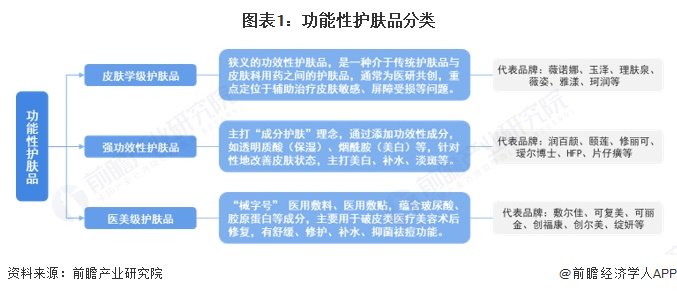
Core Insights - The functional skincare industry in China is experiencing a rise of domestic brands, with a focus on products that address specific skin issues and provide therapeutic benefits [1][8] - The market size for functional skincare products is projected to exceed 480 billion yuan by 2024, driven by increasing consumer demand for safety and efficacy [25][31] Industry Overview - Functional skincare products are defined as cosmetics or medical devices that target specific skin problems and possess pharmacological effects [1] - The industry is currently in a phase of domestic brand emergence, with significant growth in market share for local brands like Winona and Huaxi Biological [8] Industry Chain Analysis - The functional skincare industry chain consists of upstream raw material suppliers, midstream manufacturers, and downstream sales channels [4][6] - Key raw materials include collagen, hyaluronic acid, and peptides, while packaging materials range from paper to glass [4] Market Development History - The industry has gone through three stages: initiation (1998-2008), transformation (2009-2014), and the current rise of domestic brands (2015-present) [8] - The entry of brands like Vichy and Avene marked the beginning of the functional skincare market in China [8] Policy Background - The industry is governed by regulations applicable to both cosmetics and medical devices, focusing on efficacy claims and labeling management [11][13] Current Market Status - The market is characterized by three main segments: dermatological skincare, high-efficacy skincare, and medical-grade skincare [14] - Consumers are increasingly focused on product efficacy, safety, and ingredient transparency, particularly for sensitive skin [15][16] Sales Channels - Online sales channels dominate the market, with companies like Proya achieving significant revenue from e-commerce [20] - The sales strategy often includes a combination of online and offline channels to maximize reach [19] Profitability - The gross profit margins for most listed companies in the functional skincare sector exceed 70%, with some companies like Jinbo Biological reaching 92.02% due to their focus on medical devices [24] Market Size and Growth - The functional skincare market in China has grown from 10.25 billion yuan in 2017 to an estimated 48.743 billion yuan in 2024 [25][28] - The market is expected to reach 86 billion yuan by 2030, with a compound annual growth rate of approximately 9.0% [33] Competitive Landscape - The competitive landscape is led by companies like Betaini, which holds an 11.71% market share, followed by Huaxi Biological and others [31] - The industry is concentrated in coastal regions, particularly Shanghai and Guangdong [28] Future Trends - The penetration rate of functional skincare products is expected to increase, with a focus on product innovation and medical endorsements [35] - The industry is likely to see intensified competition as consumer preferences evolve towards more personalized and effective solutions [33]
深度 | 美妆如何攻克医美渠道“高墙”?
FBeauty未来迹· 2025-07-07 13:32
Core Viewpoint - The beauty industry is increasingly entering the medical aesthetics channel, with over 20 beauty brands adopting a dual beauty strategy of "medical aesthetics + beauty" to enhance their market presence and professional credibility [2][6][30]. Group 1: Market Overview - The medical aesthetics market in China is experiencing strong growth, with 18,584 compliant specialized medical aesthetics institutions reported as of January 2024 [6][7]. - The main active regions for medical aesthetics consumption are concentrated in the Pearl River Delta, Yangtze River Delta, and Chengdu-Chongqing areas [7][8]. Group 2: Industry Structure - Medical aesthetics institutions can be categorized into three types: public hospitals, large chain private hospitals, and small private hospitals and clinics [4][5]. - The development of the domestic medical aesthetics industry has gone through three main stages: initiation (1994-2000), gradual standardization (2000-2010), and rapid development (2010-present) [5]. Group 3: Brand Strategies - Many beauty companies have established significant medical aesthetics channel layouts, such as Huaxi Biological covering 7,000 medical institutions and Juzhi Biological entering approximately 1,700 public hospitals and 3,000 private hospitals and clinics [8][10]. - International beauty brands are also accelerating their medical aesthetics channel expansion, with brands like SkinCeuticals and Estée Lauder entering high-end medical aesthetics lines [10][12]. Group 4: Consumer Trends - There is a growing consumer demand for effective skincare solutions that combine beauty products with medical treatments, reflecting a trend towards the integration of lifestyle beauty and medical aesthetics [17][20]. - Consumers are increasingly seeking products with professional medical backing and comprehensive management solutions from pre-operative care to post-operative recovery [18][20]. Group 5: Challenges and Opportunities - Despite the initial success of some brands in the medical aesthetics channel, challenges remain, including product quality inconsistency and the need for effective consumer education [16][18][20]. - The dual beauty model is becoming a significant trend, with medical aesthetics companies also venturing into lifestyle beauty, leveraging their technical expertise and clinical data [22][23]. Group 6: Future Outlook - The competition in the medical aesthetics channel is expected to intensify, with beauty brands needing to establish unique advantages through solid technical research and deep medical collaboration [29][30]. - The future winners in this space will be those who can embed "professional trust" in the medical aesthetics channel and leverage "real clinical value" to gain endorsements from both doctors and consumers [30].
主品牌营收增速放缓,珀莱雅“盯上”医美赛道
Bei Jing Shang Bao· 2025-06-04 13:09
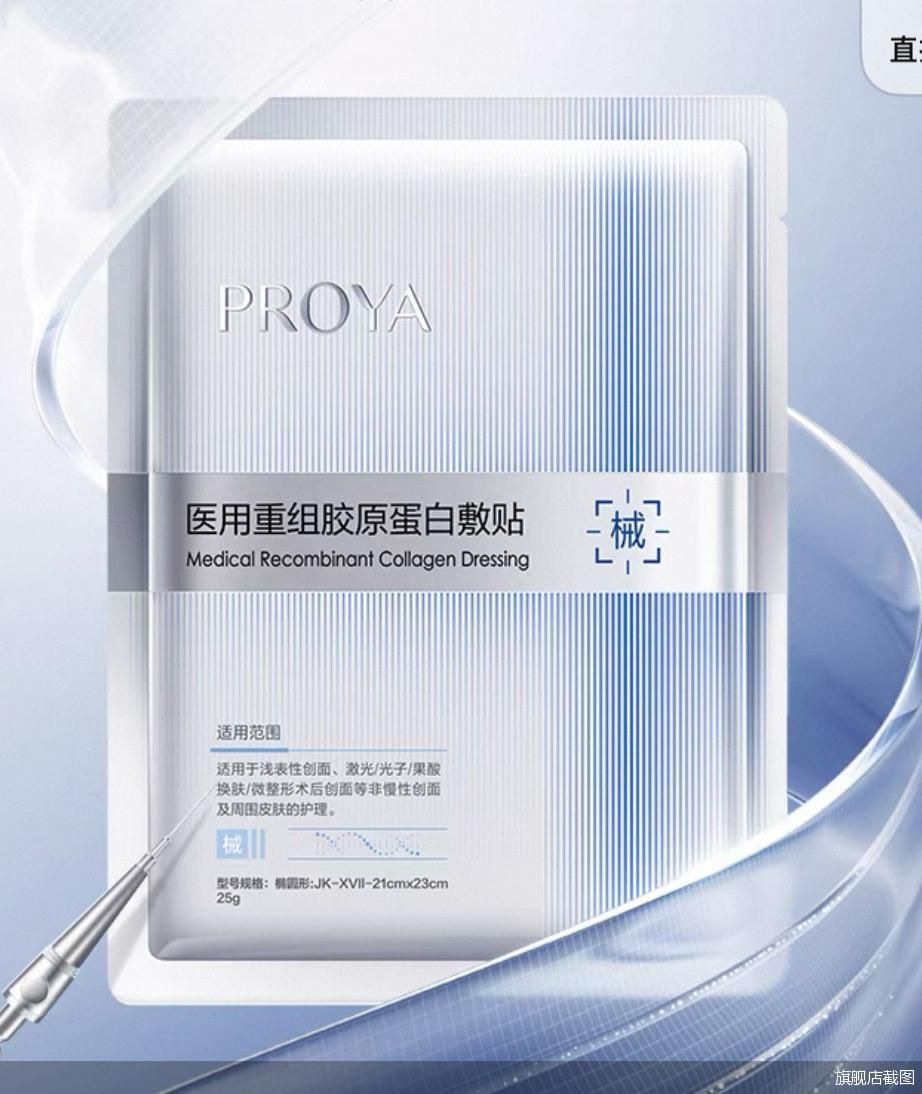
Core Viewpoint - The beauty brand Proya is entering the medical aesthetics market with its first medical device product, a collagen patch aimed at post-surgery recovery, as it seeks new growth avenues amid slowing growth of its main brand [1][3][5]. Company Summary - Proya has launched its first medical device product, the medical collagen patch, which is designed for post-surgery skin care [1][3]. - The product is priced at 163 yuan after discount, down from 198 yuan, and is targeted at various skin recovery scenarios [3]. - Proya's main brand revenue growth is slowing, with a reported revenue of 85.81 billion yuan in 2024, showing less than 20% growth compared to previous years [5][6]. - The company aims to achieve a revenue scale exceeding 100 billion yuan in 2024 and has set a goal to enter the top ten global cosmetics companies within the next decade [6][9]. Industry Summary - The medical aesthetics market in China is rapidly expanding, with a market size of approximately 266.9 billion yuan in 2023, projected to exceed 700 billion yuan by 2031 [3][4]. - Other domestic beauty brands, such as Shanghai Jahwa and Beitaini, are also entering the medical aesthetics space, indicating a competitive landscape [4]. - The medical aesthetics sector is still in a phase of complete competition, with no dominant brands yet established, presenting opportunities for new entrants like Proya [4][9]. - Proya's entry into the medical aesthetics market is seen as a necessary strategy to maintain growth and compete with international brands, which have stronger brand positioning and marketing capabilities [9].