
坤维科技

Search documents
超高采样率,超低串扰,国产六维力传感器走向高端化
机器人大讲堂· 2025-07-24 09:58
Core Viewpoint - The article highlights the significant advancements in humanoid robots and embodied intelligence, emphasizing the growing market opportunities and the importance of core components in the industry, particularly in the context of China's six-dimensional force sensor industry [1][22]. Group 1: Industry Trends - The 2025 government work report includes embodied intelligence as a key focus for future industrial development, with a goal of mass production of humanoid robots by 2025 [1]. - The humanoid robot industry is entering a transformative phase, driven by technological advancements and the potential for exponential growth in the market for core components [1][22]. - The global market for six-dimensional force sensors is projected to reach 12 billion yuan by 2029, with domestic replacement rates expected to rise from 10% in 2024 to 40% [12]. Group 2: Company Developments - Kunwei Technology recently held a product launch focusing on innovations in six-dimensional force sensors, marking a significant breakthrough in the field [2][3]. - The company introduced three major upgraded product lines of six-dimensional force sensors, showcasing advancements in precision, stability, and reliability [3][4]. - The MEMS strain gauge six-axis force sensor series utilizes revolutionary glass micro-melting technology, achieving full automation in production and significantly enhancing sensitivity [3][6]. Group 3: Product Features - The ultra-high-performance six-axis force sensor series features a self-developed titanium alloy material, resulting in a weight reduction of nearly 50% and improved durability [4][6]. - The economic CSR six-axis force sensor series aims to address industry price competition while maintaining high performance, offering a range of models to meet diverse industrial needs [4][9]. - The CSR series is designed to provide high-quality, sustainable force sensing solutions, avoiding a purely low-price competition strategy [9]. Group 4: Strategic Vision - Kunwei Technology's CEO emphasizes a clear strategy for mass production, focusing on simplifying product design and leveraging established manufacturing processes [12][13]. - The company has established a flexible automated production line, significantly increasing annual production capacity by 150,000 units [12][13]. - The support from industry leaders and capital during the product launch indicates strong market recognition and potential for future collaboration [14][16]. Group 5: Future Outlook - The launch of new products represents a commitment to breaking foreign monopolies and meeting high-end manufacturing demands, showcasing Kunwei's capabilities in the six-dimensional force sensor field [21][22]. - The article concludes that the "golden window" for humanoid robots has opened, driven by policy support, capital investment, and technological breakthroughs [21][22].

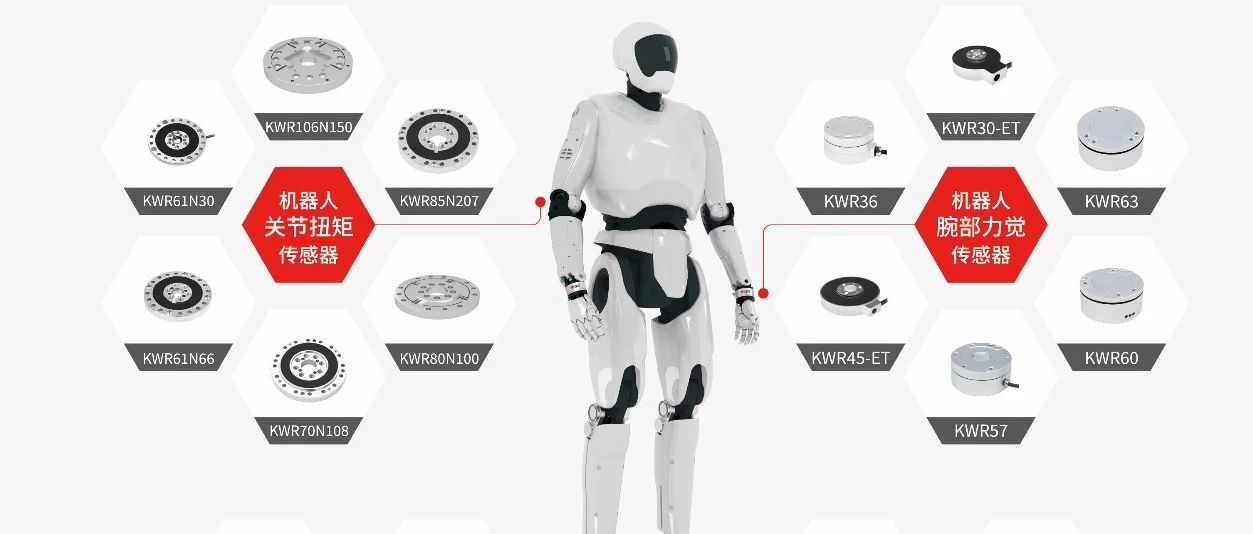
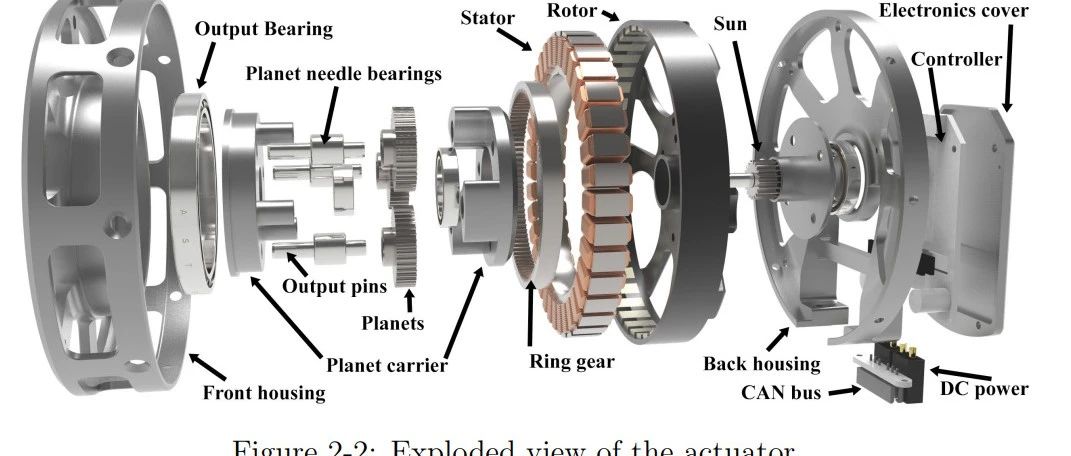
人形机器人旋转关节:核心部件技术解析与产业竞争观察
机器人大讲堂· 2025-07-13 07:22
Core Insights - The article emphasizes the rapid growth of humanoid robots, particularly focusing on the significance of rotary joints as a core component that affects both performance and manufacturing costs [1] - The rotary joints are expected to maintain double-digit growth in the coming years due to the booming humanoid robot industry [1] Group 1: Technology Routes of Rotary Joints - The three main technological routes for rotary joints are rigid actuators, elastic actuators, and quasi-direct drive (QDD) actuators [2] - Rigid actuators have played a crucial role in early humanoid robot development due to their high torque output and precision, maintaining a dominant position in the market [4] - Elastic actuators enhance compliance control but face challenges in industrial application due to complex control algorithms and high hardware costs [4][6] Group 2: QDD Actuators - QDD actuators combine the advantages of both rigid and elastic actuators, becoming a mainstream solution for humanoid robot rotary joints [6] - They optimize structural design and control algorithms to reduce manufacturing costs and system complexity while ensuring joint performance [6][7] Group 3: Motors in Rotary Joints - Motors are critical for rotary joints, requiring high torque output, dynamic response, low inertia, and lightweight characteristics [8] - The frameless torque motor has emerged as a popular choice due to its compact design and flexibility, aligning well with high integration needs [8] - Axial flux motors show promise for future applications in humanoid robots due to their high torque density and efficiency [9] Group 4: Gearboxes in Rotary Joints - Gearboxes play a key role in torque output, precision, and lifespan of rotary joints, with harmonic and planetary gearboxes being the primary types used [10] - Harmonic gearboxes are widely used for their compact size and high precision, while planetary gearboxes are favored for their cost-effectiveness and durability [13][15] - Both types of gearboxes complement each other to meet diverse joint requirements [16] Group 5: Sensors in Rotary Joints - Sensors are essential for measuring force/torque information to achieve precise motion control in humanoid robots [17] - Force/torque sensors provide high precision but are costly and require careful installation [19] - Current loop sensors offer a cost-effective alternative with lower precision, suitable for cost-sensitive applications [21] Group 6: Market Competition in Core Components - The market for humanoid robot rotary joints is characterized by intense competition among core components like motors, gearboxes, and sensors [22] - Domestic companies such as Boke, Haozhi, and Weichuang have made significant advancements in frameless torque motors, enhancing domestic competitiveness [24] - The harmonic gearbox market is led by companies like Harmonic Drive and Lide, while the planetary gearbox sector is competitive with domestic players like Zhongdali and Niusidate [27][31] Group 7: Six-Dimensional Force Sensors - Six-dimensional force sensors are increasingly used in various fields, including humanoid robots, where they have become a standard trend [34] - The market for these sensors is expected to grow significantly, with a current average price of around 40,000 RMB for foreign brands and 20,000 RMB for domestic products [34] - The market is concentrated, with leading companies like ATI and Yuli Instruments holding significant market shares [35] Group 8: Future Outlook - The humanoid robot industry is seen as a new direction in industrial automation with substantial growth potential [36] - The demand for key products like motors, controllers, gearboxes, and six-dimensional force sensors is expected to rise as the industry develops [36] - Companies with technological advantages in gearboxes and sensors are likely to benefit from the growth in humanoid robot demand [36]
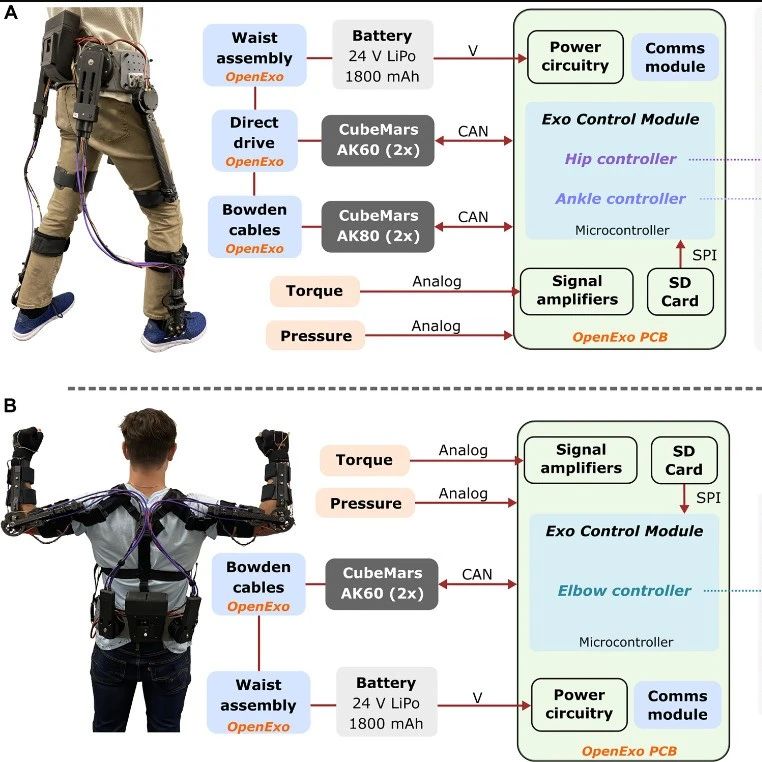
Science Robotics最新模块化开源外骨骼系统
机器人大讲堂· 2025-06-28 02:19
Core Viewpoint - The research team from Northern Arizona University has developed a modular exoskeleton system that is fully open-source, allowing more researchers to participate in this promising field [1][17]. Group 1: Challenges in Exoskeleton Development - Exoskeleton technology has faced high barriers to entry, requiring expertise in multiple disciplines such as mechanical engineering, electrical engineering, robotics, and biomechanics [4][5]. - Current exoskeleton systems are often specialized for specific applications, limiting their adaptability to new research questions and environments [5]. - The existing systems create technology silos, making it difficult to reproduce research results due to independent software and hardware systems [5]. Group 2: OpenExo's Modular Design - OpenExo addresses these challenges with a modular design, allowing users to easily swap hardware modules and modify configurations without extensive coding or redesign [6][8]. - The system consists of four main components: software system, electronic architecture, hardware interface, and control scheme [8]. - The software is developed using C++ and Arduino, emphasizing modularity and reducing code redundancy [9]. - The electronic architecture is designed to be simple and intuitive, using a single board to control up to four joints, which differs from other open-source projects [9]. - Hardware designs include direct-drive hip joints and Bowden cable-driven ankle joints, all compatible with the same belt interface for quick assembly [10]. Group 3: Performance Validation - The system demonstrates high torque tracking accuracy, with root mean square errors for hip, ankle, and elbow joints being 0.30 Nm, 2.00 Nm, and 0.84 Nm respectively [12]. - Battery tests show that the hip joint configuration can run for 35 minutes, while the ankle configuration lasts 25 minutes, indicating potential for extended use with improved battery capacity [12]. - Real-world tests show that the exoskeleton reduces transportation costs by 8% to 18% in various walking scenarios, highlighting its practical value [13][15]. Group 4: Open Source and Community Engagement - OpenExo's significant contribution lies in its open-source philosophy, providing complete software packages, electrical designs, and hardware instructions [17][18]. - The research team aims to create an open research community, inviting contributions from various disciplines to accelerate exoskeleton technology development [19]. - The unified open-source platform allows for large-scale collaborative research, improving the reproducibility of results across different institutions [20]. Group 5: Future Improvements - The research team acknowledges that battery life remains a key limitation, particularly in high-torque applications, and is exploring ways to enhance battery efficiency [21]. - Continuous optimization of the Python application is planned, with features like deep learning and human-machine collaboration being considered for future updates [21].
人形机器人系列专题之六维力传感器:高价值和高壁垒的力控核心部件,国产供应商持续发力
Guoxin Securities· 2025-05-13 12:25
证券研究报告 | 2025年05月13日 人形机器人系列专题之六维力传感器 优于大市 高价值和高壁垒的力控核心部件,国产供应商持续发力 风险提示:行业进展和技术迭代不及预期、供应商订单不确定性的风险。 投资建议:关注人形机器人进展带来的投资机遇。看好在技术升级迭代下人 形机器人发展,看好机器人量产后带来的潜在供应链零部件的需求和投资机 会,推荐在六维力传感器等领域有持续布局的公司凌云股份、中鼎股份等。 重点公司盈利预测及投资评级 | 公司 | 公司 | 投资 | 昨收盘 | 总市值 | | --- | --- | --- | --- | --- | | 代码 | 名称 | 评级 | (元) | (亿元) | | 凌云股份 | | 优于大市 | | | | 优于大市 | 中鼎股份 | | | | | 无评级 | 华培动力 | | | | | 资料来源:、国信证券经济研究所预测 | | | | | 请务必阅读正文之后的免责声明及其项下所有内容 核心观点 行业研究·行业专题 汽车 优于大市·维持 证券分析师:唐旭霞 证券分析师:孙树林 六维力传感器系人形机器人感知核心部件,重要性高、价值量大。传感器是 人形机器人与 ...
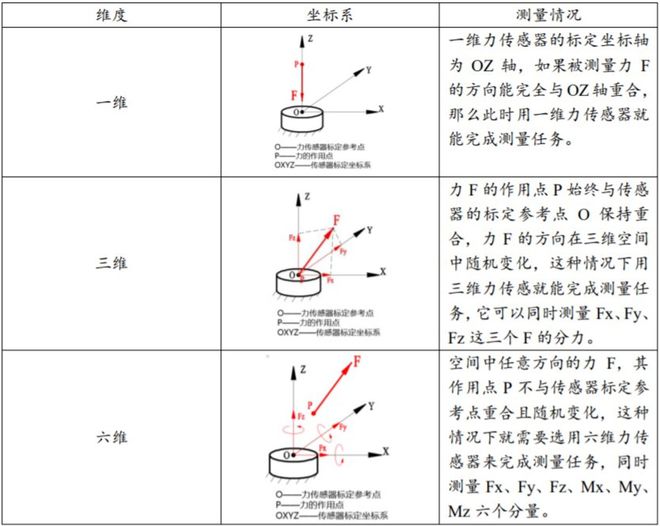
从航天到人形机器人:六维力传感器的百亿价值
Tai Mei Ti A P P· 2025-04-14 00:29
彼时,六维力传感器还是一种体积庞大、造价昂贵、仅限于尖端军工和航天领域的专业设备。随着制造 工艺的精进和微电子技术的飞跃,这种曾经"高不可攀"的技术正迅速小型化、低成本化,从航天领域走 向工业自动化,并在最近几年,悄然进入了人形机器人的核心感知系统。 为什么一种源自航天领域的高精度传感器会成为人形机器人的关键组件?答案在于人机交互的本质。 人类在与物理世界互动时,依靠的不仅是视觉和听觉,更关键的是触觉反馈。当我们拿起一个鸡蛋,既 不会捏碎它,也不会让它滑落,这种精细的力控能力源于我们手指末端无数的触觉感受器。 人形机器人要实现类似人类的灵巧操作,就必须具备同样精确的力觉感知能力。六维力传感器恰恰能够 提供这种全方位的力和力矩信息,让机器人"知道"它对物体施加了多大的力,以及这些力在空间中的分 布状态。这种能力对于机器人执行精细操作、维持平衡行走、以及安全地与人类互动至关重要。 近两年来,随着众多人形机器人项目相继亮相,这个原本小众的传感器品类突然成为投资界的关注焦 点。一方面是因为六维力传感器在人形机器人成本结构中占比高达19%(根据特斯拉机器人预估),是 单一价值最高的核心零部件之一;另一方面,这一领域尚未 ...

招商证券:看好人形机器人产业大趋势 建议后续重点关注t链公司
智通财经网· 2025-04-10 02:28
Core Viewpoint - The humanoid robot industry is expected to enter a mass production phase in 2025, with Tesla being a leading company due to its advanced computing power, chips, models, data, hardware, and application scenarios in automotive manufacturing [1][2]. Industry Trends - The humanoid robot index has significantly outperformed the CSI 300 index since October 2024, indicating strong market interest despite recent adjustments [1]. - The demand for humanoid robots in consumer applications is projected to be substantial, currently in the 0-1 investment phase, necessitating attention to event-driven catalysts [1]. - Major domestic manufacturers have accelerated their entry into the market since 2024, which is expected to further drive industry development [2]. Key Components - **Harmonic Reducers**: High technical barriers and concentrated competition; domestic manufacturers have largely replaced imports, with Green Harmonic being a leading player [3]. - **Planetary Roller Screws**: Currently low domestic production rates; achieving mass production is crucial as domestic firms are positioned to become mainstream suppliers due to conservative approaches from European competitors [4]. - **Dexterous Hands**: Composed of various components with multiple technological routes; domestic companies are gradually gaining market share through localized sales strategies [5]. - **Sensors**: Essential components with the highest difficulty in six-dimensional force sensing; leading global companies are primarily based in Europe and the US, while domestic Kunwei Technology has a significant market presence [6]. - **Lightweight Materials**: Important for enhancing performance and accuracy; various materials such as aluminum alloy, magnesium alloy, PEEK, and TPV are being explored [7].
