复旦大学

Search documents
中国团队新成果,或将人造卫星寿命延长到30年
Xin Lang Cai Jing· 2026-01-29 13:36
转自:证券时报 (原标题:国际首次实现!中国团队新成果,或将人造卫星寿命延长到30年) 人民财讯1月29日电,通信系统对人造卫星来说至关重要,但其平均寿命仅有数年。这是因为太空充满 着宇宙射线的"枪林弹雨",会造成通信系统使用的半导体电子器件性能损伤。 为应对这一问题,复旦大学周鹏、马顺利团队成功研发"青鸟"原子层半导体抗辐射射频通信系统(简 称"青鸟"系统),不仅将卫星通信系统的理论在轨寿命延长到271年,也把能耗降低到传统方案的五分 之一,重量更是"瘦身"到原来的十分之一左右,并有望将人造卫星的使用年限由3年左右提升至20—30 年。 ...
耐受极端环境水凝胶传感器“编织”成功
Ke Ji Ri Bao· 2026-01-27 01:20
在极端环境中,柔性传感器能大大拓展人类感知信息的边界,成为守护安全的"科技护盾"。水凝胶 传感器是一类颇具代表性的柔性传感器,凭借其出色的柔韧性、可调制的物化性能和稳定的生物兼容 性,能够可靠地将外界的拉伸、压力、温度等变化转换为可被探测的信号。但在极端环境下,水凝胶性 能易出现下降。如何在保证综合性能不受损害的前提下,高效调制增强水凝胶性能,是当前研究亟须解 决的问题。 记者26日从复旦大学获悉,该校未来信息创新学院教授张荣君团队和复旦大学附属口腔医院主任医 师韦晓玲团队,从竹篮编织的过程中获得启发提出逐步氢键调制策略,高效实现了水凝胶传感性能、环 境耐受性和生物相容性的综合增强,为相关水凝胶性能调控提供了新思路,有望推动水凝胶传感器在体 内/体外监测、人机交互等领域的广泛应用。相关研究成果发表在最新一期《先进功能材料》上。 得益于竹条的多组分集成及独特编织过程,竹篮具备出色的功能性。受此启发,研究团队提出了一 种水凝胶调制策略,并阐释了逐步氢键调制的详细机制。该调制策略就是将聚乙烯醇、氧化羧甲基纤维 素钠和明胶多组分构成的水凝胶中每个细小微区视为"竹条"。在制备过程中,研究人员先通过氯化镁的 盐溶效应削弱 ...
全球领先!中国造出了纤维芯片,比美国还厉害
Xin Lang Cai Jing· 2026-01-26 11:33
Core Viewpoint - The article discusses the competitive landscape in the semiconductor industry, highlighting the advancements made by China in fiber chip technology, which poses a potential challenge to the dominance of the U.S. in the chip sector [1][3]. Group 1: U.S. Dominance and China's Response - The U.S. has maintained a stronghold in the semiconductor industry, particularly in chip design and advanced technologies, using its position to exert influence globally [1]. - China, with its vast market and robust manufacturing capabilities, is seen as the only significant threat to U.S. dominance in the chip industry [3]. Group 2: Fiber Chip Technology - Recent reports indicate that China has developed the world's first fiber chip, which is considered superior to existing technologies in the U.S. [5]. - Fiber chips are made from flexible materials, allowing for deformation, unlike traditional silicon-based chips, which are rigid [5]. Group 3: Applications of Fiber Chips - The primary applications for fiber chips include brain-machine interfaces, electronic textiles, and virtual reality, where their flexibility and small size provide distinct advantages [7]. - Fiber chips are particularly suited for medical robotics, such as chips that can navigate within human blood vessels, showcasing their potential in advanced medical applications [7]. Group 4: Development and Future Prospects - The development of fiber chips was achieved by a research team at Fudan University after five years of experimentation, utilizing a multi-layer stacking architecture to integrate electronic components within the fibers [8]. - This innovation has been published in the prestigious journal "Nature," indicating that the technology is not just theoretical but has been successfully created in a laboratory setting [11]. - While fiber chips are not expected to replace silicon chips in the short term, their unique capabilities suggest they will find specific applications, and their future development remains promising [11].

从“工具使用者”转向“AI教育构架师”,全国378所高校在宁共商AI育人变革
Yang Zi Wan Bao Wang· 2026-01-23 14:22
Core Insights - The traditional higher education system in China is facing unprecedented challenges due to the rise of AI technologies, prompting discussions on educational reform and innovation [1][2] Group 1: Challenges in Traditional Education - Students show a lack of respect for traditional classroom settings, with attendance dropping significantly; for instance, in a class of 120, only about 50 students attended [2] - AI tools like DeepSeek are being used by students to enhance their learning, often outperforming traditional teaching methods in knowledge organization and synthesis [2] - The current evaluation system in education is misaligned with the skills needed in the AI era, as traditional methods emphasize memorization and repetition, which AI can quickly replace [2] Group 2: Integration of AI in Education - Nanjing University is launching an "AI Empowered Education" initiative in 2024, introducing a comprehensive curriculum that integrates AI across all disciplines [3] - The university has developed a "1+X+Y" core curriculum system, ensuring all students acquire basic AI literacy and offering over 200 AI-related courses [3] - Practical platforms like the "AI Trial Ground" are being established to allow students to apply AI tools in real-world scenarios, with some teams achieving international recognition [3] Group 3: Reforming Teaching and Assessment Methods - Educational institutions are reforming teaching and assessment methods to incorporate AI tools, with guidelines established to prevent misuse while encouraging innovative applications [4] - The focus is on helping students understand the capabilities and limitations of AI, with a dual approach of traditional plagiarism checks and AI-generated content detection [4] Group 4: The Future of Teaching - There is a pressing need for a transformation in teaching methods, as many institutions still rely on outdated standardized approaches to teach AI [5] - New hiring practices are being implemented, such as AI competency tests for new faculty, emphasizing the importance of AI skills in teaching [5] - The role of educators is evolving from knowledge transmitters to architects of AI education, blending academic, artistic, and technical skills [5] Group 5: Educational Philosophy and Future Directions - The educational landscape is undergoing significant changes, with a focus on fostering critical thinking rather than rote learning [7] - Educators are encouraged to become guides in students' personal and academic growth, emphasizing the importance of humanistic values and mental well-being [7] - The future of education may involve personalized learning paths enabled by AI, questioning traditional timeframes for degree completion [7]
把芯片装进纤维里!上海首创成果再登顶刊
Xin Lang Cai Jing· 2026-01-22 11:57
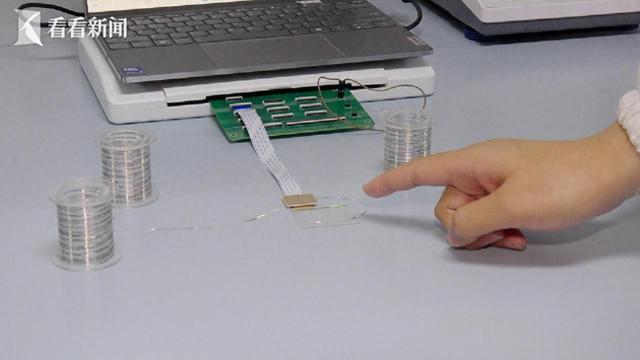
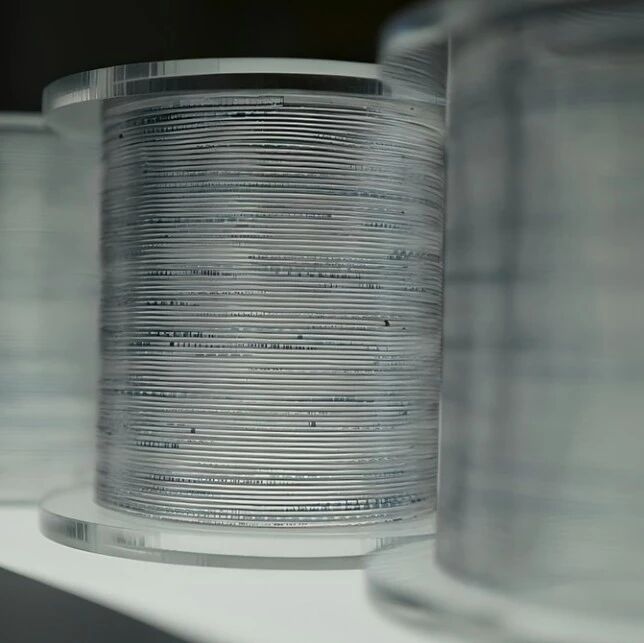
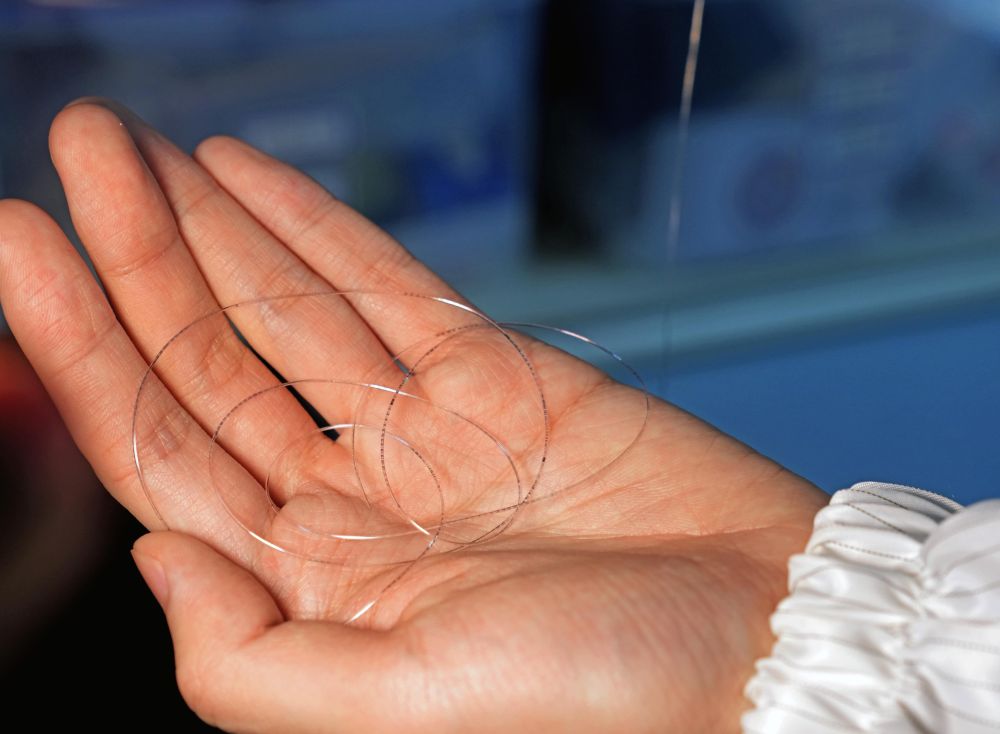
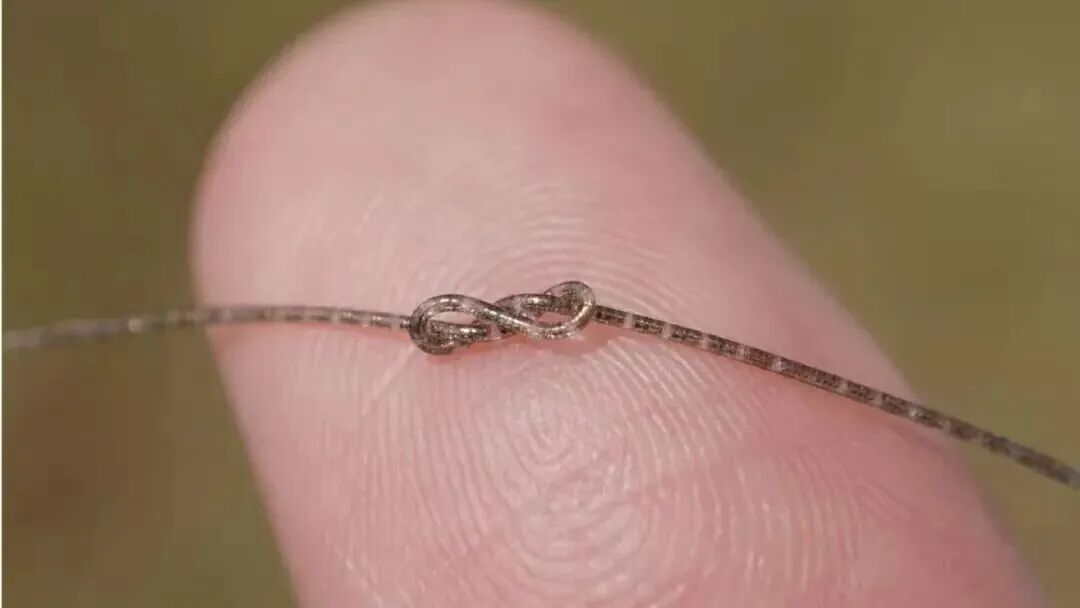
在一根比头发丝还细的纤维中构建高密度集成电路,这一曾被视为大胆设想的技术,如今已成为现实。 复旦大学研究团队突破传统硅基芯片的集成电路研究路径,成功研制出全球首创的"纤维芯片",相关研 究成果今天正式发表在国际权威学术期刊《自然》主刊上。 记者看到,这段细如发丝的纤维,正是复旦大学彭慧胜、陈培宁团队的最新研究成果。研究团队在一厘 米长度的纤维内,集成了20至30个可独立控制的发光像素点,每一个像素的亮度和点位都可以进行程序 化调控。更重要的是,这种纤维芯片无需依赖外部驱动系统,所有发光控制都能在仅约4厘米的纤维内 部完成。 复旦大学纤维电子材料与器件研究院先进材料实验室博士生王臻介绍说,纤维芯片未来还可以进一步集 成传感和储能功能,实现"自供能"的完整电子系统。"后续可以在纤维内部加入触觉传感等模块,让它 在提供能量的同时,具备感知和信息处理能力。" 传统芯片的信息处理能力,依赖于大量微型电子元件通过高度互连形成的集成电路。但长期以来,纤维 电子系统主要依靠外部连接的硬质块状芯片,这与纤维本身柔软、可弯折、适应复杂形变的应用需求存 在根本矛盾。 这一突破性成果,不仅为可穿戴设备、智能织物等应用提供了全新技术路 ...
弯折、拉伸都不怕!我国科学家实现芯片领域新突破
中国能源报· 2026-01-22 11:48
欢迎分享给你的朋友! 该成果有望为纤维电子系统的集成提供新的路径,有望实现从"嵌入"到"织入"的转变, 助力脑机接口、电子织物、虚拟现实等新兴领域的变革发展。 来源:科技日报 End 让智能"穿"在身上!复旦大学研制"纤维芯片"。 智能设备的柔性化始终卡在一个关键瓶颈:作为"大脑"的 芯片 ,长久以来都是硬质的。 复旦大学彭慧胜/陈培宁团队 成功在弹性高分子纤维内部,构建出大规模 集成电路 , 研 发出全新的"纤维 芯片 ", 为解决柔性化难题提供了新的有效路径。这项成果于1月22 日发表在国际期刊《自然》上。 该设计使纤维内部的空间得到极致利用,实现了一维受限尺寸内的高密度集成。 团队开发了与目前光刻工艺有效兼容的制备路线。 他们 首先采用等离子体刻蚀技术,将 弹性高分子表面"打磨"至低于1纳米的粗糙度,有效满足商业光刻要求。随后,在弹性高 分子表面沉积一层致密的聚对二甲苯膜层,为电路披上一层"柔性铠甲"。这层保护膜不 仅可以有效抵御光刻中所用极性溶剂对弹性基底的侵蚀,还能缓冲电路层受到的应变, 确保纤维 芯片 在反复弯折、拉伸变形后,电路层结构和性能依然稳定。 出品 | 中国能源报(c n e n e r ...
这款芯片,复旦全球首创
半导体芯闻· 2026-01-22 10:39
Core Viewpoint - Fiber electronic devices are transforming traditional fibers and garments into a new generation of wearable devices that actively interact with the human body and environment, shaping future lifestyles. However, a viable information processing fiber remains a missing piece in building intelligent interactive fiber systems, which is crucial for any electronic product [1]. Group 1: Fiber Integrated Circuits - A recent study published in Nature by researchers from Fudan University introduced "fiber chips," which integrate large-scale circuits within elastic polymer fibers, successfully combining power supply, sensing, display, and signal processing into a single fiber, paving a new path for fiber electronic systems [1]. - The fiber integrated circuits (FICs) achieve a transistor density of 100,000 per centimeter, meeting the requirements for interactive fiber systems. They can process both digital and analog signals and perform high-precision neural computations similar to advanced memory image processors [7]. Group 2: Challenges and Innovations - The development of viable fiber information processors is essential for creating flexible, stretchable, and lightweight fiber devices, contrasting with traditional rigid silicon-based processors. The main challenge lies in integrating numerous micro-devices into elastic and thin fibers, overcoming inherent limitations such as soft cylindrical geometry and limited surface area [5]. - FICs maintain stability under harsh conditions, such as repeated bending and wear (10,000 times), stretching (30%), twisting (180 cm^-1), and even being crushed by a 15.6-ton container truck. This flexibility enables the possibility of closed-loop systems within a single fiber without the need for external rigid processing devices [7]. Group 3: Future Applications - The realization of fully flexible fiber systems opens pathways for advanced applications, including brain-machine interfaces, smart textiles, and virtual reality wearable devices, indicating a significant step towards the evolution of fiber devices into intelligent systems [7].
我国科学家成功研制“纤维芯片”
Xin Hua She· 2026-01-22 09:40
Core Viewpoint - Fudan University researchers have successfully developed a new architecture for large-scale integrated circuit fabrication within soft, elastic polymer fibers, transforming the concept of "fiber chips" into reality [1][2]. Group 1: Research and Development - The research team, led by Peng Huisheng and Chen Peining, innovatively designed a multi-layer stacked architecture that constructs integrated circuits within the fiber, maximizing internal space utilization [2]. - The team has established a fabrication route that allows for direct photolithography of high-density integrated circuits on elastic polymers [2]. Group 2: Technical Achievements - Initial laboratory results show that the fabricated "fiber chips" can achieve an integration density of 100,000 electronic components (such as transistors) per centimeter [4]. - The efficient interconnection of transistors and other electronic components enables the realization of both digital and analog circuit functions [4]. Group 3: Industry Implications - The new fabrication route not only imparts information processing capabilities to fibers while maintaining their softness but also opens new pathways for fiber electronic system integration [7]. - This advancement is expected to provide new insights for the development of the integrated circuit field [7].
我国芯片突破关键难题!弯折变形后仍可使用
Ke Ji Ri Bao· 2026-01-22 09:02
团队开发了与目前光刻工艺有效兼容的制备路线。他们首先采用等离子体刻蚀技术,将弹性高分子表面"打磨"至低于1纳米的粗糙度,有效满足商业光 刻要求。随后,在弹性高分子表面沉积一层致密的聚对二甲苯膜层,为电路披上一层"柔性铠甲"。这层保护膜不仅可以有效抵御光刻中所用极性溶剂对弹性 基底的侵蚀,还能缓冲电路层受到的应变,确保纤维芯片在反复弯折、拉伸变形后,电路层结构和性能依然稳定。 该成果有望为纤维电子系统的集成提供新的路径,有望实现从"嵌入"到"织入"的转变,助力脑机接口、电子织物、虚拟现实等新兴领域的变革发展。 该设计使纤维内部的空间得到极致利用,实现了一维受限尺寸内的高密度集成。 智能设备的柔性化始终卡在一个关键瓶颈:作为"大脑"的芯片,长久以来都是硬质的。复旦大学彭慧胜/陈培宁团队成功在弹性高分子纤维内部,构建 出大规模集成电路,研发出全新的"纤维芯片",为解决柔性化难题提供了新的有效路径。这项成果于1月22日发表在国际期刊《自然》上。 ...
复旦大学研究人员研发出“纤维芯片”,可集成数万个晶体管
Xin Lang Cai Jing· 2026-01-22 06:52
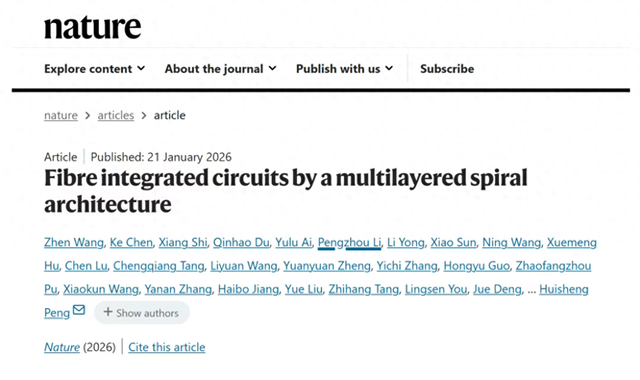
来源:环球网 【环球网科技综合报道】1月22日消息,据复旦大学官方宣布,复旦大学纤维电子材料与器件研究院、 高分子科学系、先进材料实验室、聚合物分子工程全国重点实验室彭慧胜、陈培宁团队突破传统芯片硅 基研究范式,率先提出并制备"纤维芯片"在弹性的高分子纤维内实现大规模集成电路成功将供电、传 感、显示、信号处理等多功能集成于一根纤维之内,为纤维电子系统开辟全新的集成路径。 该成果于北京时间1月22日凌晨以《基于多层旋叠架构的纤维集成电路》("Fibre integrated circuits by multilayered spiral architecture")为题,发表于《自然》(Nature)期刊,有望为脑机接口、电子织物、 虚拟现实等新兴产业提供强有力的技术支撑。 据介绍,这款"纤维芯片"不仅保持了纤维柔软、可编织的本征特性,更实现了电阻、电容、二极管、晶 体管等电子元件的高精度互连,光刻精度达到了实验室级光刻机最高水平。这意味着,基于"纤维芯 片",未来可将发光、传感等模块直接集成在一根纤维上,形成无需外接设备的全闭环系统,甚至实现 自供能。 通过晶体管与电容、电阻等电子元件高效互连,"纤维芯片"可 ...