
奥林巴斯

Search documents
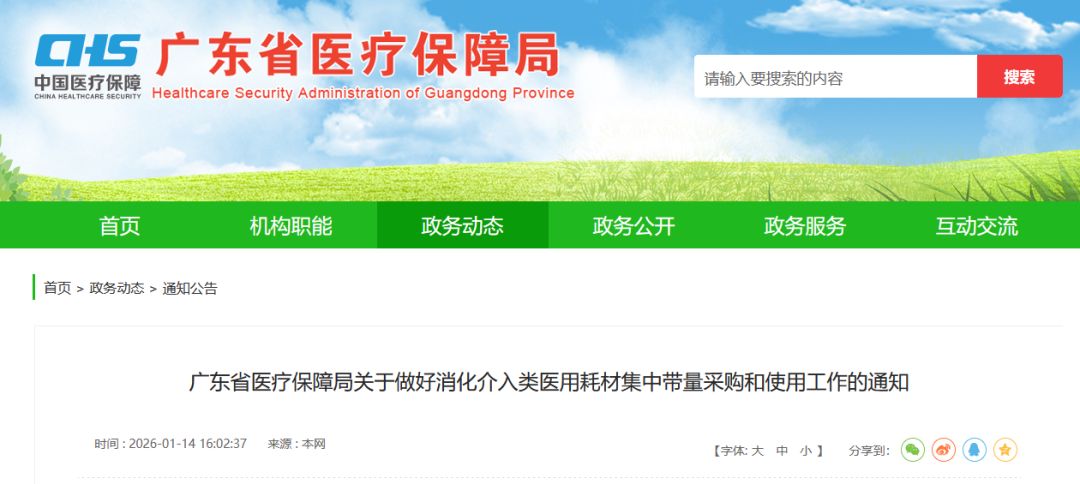
2月10日起!6类耗材开始降价
Xin Lang Cai Jing· 2026-01-20 06:39
Core Insights - The article discusses the procurement of six types of digestive intervention medical consumables in Guangdong Province, China, aimed at public medical institutions and designated social medical institutions [2][10] - A total of 263 procurement results were announced, with 123 companies having their products selected, indicating a significant market activity in the digestive intervention consumables sector [4][12] Group 1: Procurement Details - The procurement includes six categories: hemostatic clips, digestive intervention injection needles, snares, varicose vein ligators, hemorrhoid ligators, and nipple cutting knives [2][10] - The maximum effective bid prices for selected items are as follows: hemostatic clips at 39.49 yuan each, digestive intervention injection needles at 46 yuan each, snares at 370 yuan each, varicose vein ligators at 1,974 yuan each, hemorrhoid ligators at 1,509 yuan each, nipple cutting knives at 1,806 yuan each, and nipple cutting sets at 4,528 yuan each [3][11] Group 2: Market Dynamics - The digestive intervention consumables market in China is experiencing rapid growth due to the increasing prevalence of digestive system diseases, with the country being one of the highest in global incidence [6][15] - The market is currently dominated by a few international giants such as Olympus and Boston Scientific, which have established a stronghold in the high-end market through technological advancements and comprehensive solutions [7][15] - Domestic companies like Nanwei Medical and Anjieshi are accelerating their innovation processes to challenge the dominance of imported brands in the digestive intervention consumables sector [7][15] Group 3: Future Trends - The future of the digestive intervention consumables market is expected to be characterized by multiple trends, with technological innovation becoming a key competitive factor [6][15] - New technologies such as biodegradable stents, drug-eluting stents, and AI-assisted design are gradually maturing, which may enhance the competitive landscape [6][15] - The acceleration of centralized procurement is likely to boost domestic companies' research and innovation efforts, significantly speeding up the process of domestic substitution in the high-end segment of the market [6][15]

日经指数下跌0.7% 受汽车和电子股拖累
Jin Rong Jie· 2026-01-19 00:34
日本股市在近期大幅上涨后下跌,此前的涨势部分是受到对即将举行的大选的憧憬所推动。日经指数下 跌0.7%,至53,535.91点。汽车和电子股领跌。丰田汽车下跌2.1%,奥林巴斯下跌2.5%。投资者正在密 切关注有关大选的任何细节,以及首相高市早苗提振经济和寻求公众信任的策略。 ...
2025年共聚焦显微镜热度TOP10
仪器信息网· 2026-01-09 10:08
Core Viewpoint - The article presents the "Top 10 User-Focused Confocal Microscopes of 2025," highlighting the most popular models based on user engagement statistics from the Instrument Information Network [3]. Group 1: Top 10 Confocal Microscopes - The top-ranked confocal microscope is the Leica STELLARIS series, known for its advanced imaging capabilities [4]. - The second position is held by the Sunny SOPTOP CLSM610, which features a new confocal pinhole unit that minimizes interference and enhances image quality [7]. - The Carl Zeiss LSM980 ranks third, offering high-quality optical section images suitable for both fixed and live cells [9]. - Olympus's FV4000 is in fourth place, utilizing advanced imaging technology for reliable data acquisition [12]. - The fifth spot is occupied by the Leica STELLARIS SpectraPlex, designed for 3D multi-label imaging in spatial biology [15]. - The sixth position is the Zeiss LSM900, which excels in material analysis and 3D surface morphology characterization [18]. - The seventh is the Leica STELLARIS STED, which enhances imaging capabilities with a new laser technology [21][22]. - The eighth place is taken by the Nexcope NCF950, known for its strong imaging capabilities and user-friendly automation features [23]. - The ninth is the Zeiss LSM 910, which integrates advanced optical imaging and electronic control technologies [24]. - Finally, the tenth position is held by the Airy NovaSD, a domestically developed confocal system with high localization rates and advanced imaging capabilities [26].



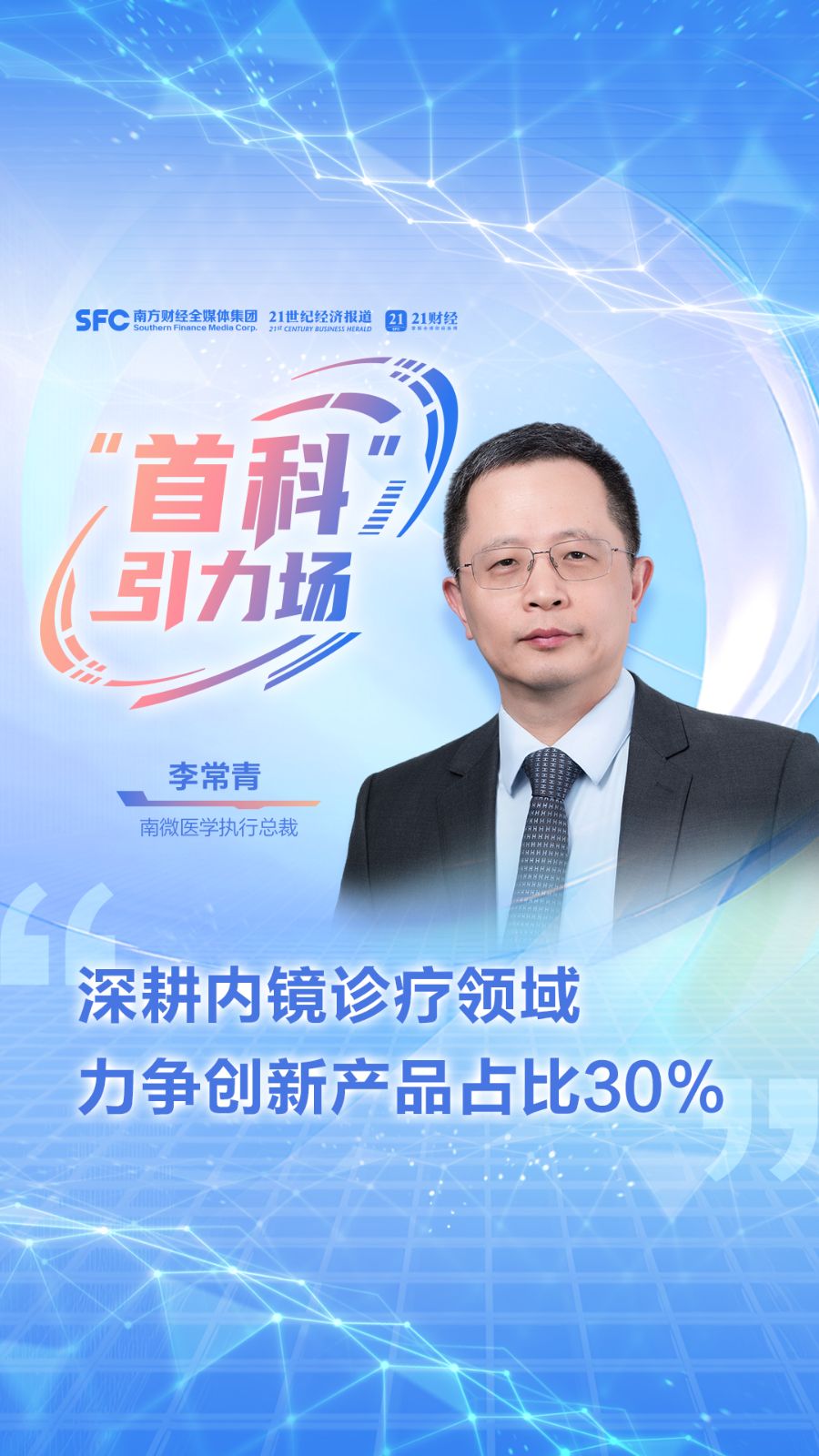
南微医学李常青:国产内镜诊疗龙头的“出海”破局之道
2 1 Shi Ji Jing Ji Bao Dao· 2026-01-08 10:18
Core Viewpoint - The article highlights the growth and international expansion of Nanwei Medical, a leading Chinese medical device company specializing in endoscopic diagnosis and treatment, with a focus on innovation and market penetration in both domestic and international markets [1][8]. Group 1: Company Overview - Nanwei Medical, established over 20 years ago, focuses on endoscopic diagnosis and treatment, developing a wide range of innovative products including endoscopic instruments and microwave/radiofrequency ablation devices [1][5]. - The company has achieved significant market access, with its products approved in over 90 countries and regions, and aims for overseas revenue to account for 58% by the first half of 2025 [1][10]. Group 2: Leadership and Strategy - Li Changqing, the Executive President, transitioned from a technical role to management, emphasizing the importance of both scientific and entrepreneurial skills in driving the company's growth [4]. - The company has established a dual-market strategy, focusing on both domestic and international markets, with a particular emphasis on penetrating the U.S. and European markets [9][11]. Group 3: Product Innovation - Nanwei Medical aims to increase the proportion of innovative products to over 30% within the next 3-5 years, currently standing at 10-15% [8]. - The company has developed over 60 types of products in the endoscopic field, showcasing a comprehensive product line that meets various clinical needs [5][6]. Group 4: Financial Performance - For the first three quarters of 2025, Nanwei Medical reported revenues of 2.381 billion yuan, an 18.29% increase year-on-year, with a net profit of 509 million yuan, up 12.90% [8][10]. - The company has shown consistent revenue growth from 1.980 billion yuan in 2022 to an expected 2.755 billion yuan in 2024 [8]. Group 5: International Expansion - The company has made strategic acquisitions to enhance its direct sales channels in Europe, including the purchase of companies in Portugal and Switzerland, and plans to acquire a 51% stake in a Spanish company [11]. - The establishment of a production base in Thailand is aimed at cost reduction and supply chain diversification [12].

ERCP手术机器人专家临床反馈
2025-12-16 03:26
Summary of ERCP Surgical Robot Conference Call Industry Overview - The ERCP (Endoscopic Retrograde Cholangiopancreatography) surgical procedure volume in China is rapidly increasing, projected to reach nearly 400,000 cases in 2024, which is only 10% of the actual demand of approximately 4 million cases. By 2030, the volume is expected to rise to 800,000 to 1 million cases, indicating significant market potential [3][1]. - There is a notable shortage of qualified ERCP doctors, with only about 3,700 to 6,000 capable of performing the procedure, which is insufficient to meet the demand [9][8]. Key Points and Arguments - **ERCP Robot's Purpose**: The ERCP robot aims to address traditional surgical pain points, such as reducing radiation exposure for medical staff, standardizing operations, and shortening the learning curve for doctors from over 200 cases to potentially 100 or even fewer [1][9]. - **Remote Operation Capability**: The robot's remote control feature is expected to significantly enhance its adoption in grassroots hospitals. Future integration with 5G/6G technology could enable remote surgeries, providing technical support to remote areas [1][13]. - **Open-source Consumables**: The robot's consumables are designed to be open-source, allowing the use of any company's standard consumables, which helps reduce the financial burden on patients [15][1]. - **Hospital Acceptance**: Acceptance of the ERCP robot by hospitals depends on actual product demand. As a necessary technology, it has a high priority for procurement, especially if it can significantly improve efficiency and outcomes [17][1]. Clinical Challenges and Technical Difficulties - **Technical Challenges**: ERCP remains one of the most challenging therapeutic endoscopic techniques, with a long learning curve. The main difficulties include insufficient preoperative assessments, complex intubation processes, and radiation exposure risks [2][5]. - **Feedback Technology**: The first-generation ERCP robot's force feedback technology is not yet ideal, but doctors can adapt through learning. Safety mechanisms are in place to prevent excessive force [22][2]. - **Comparative Performance**: Initial robot-assisted surgeries do not significantly reduce operation time compared to traditional methods, but they lower the required skill level and number of assistants, thus reducing overall human resource investment [7][1]. Market Competition and Future Prospects - **Limited Competition**: Currently, only a few companies have launched finished ERCP surgical robots, with others still in the development phase. Companies like Aohua have patented technologies that are difficult for competitors to replicate in the short term [20][14]. - **Domestic vs. Imported Equipment**: The gap between domestic and imported ERCP equipment is narrowing, with domestic models like Aohua A7,400 showing improvements in imaging quality and operability [30][1]. - **Commercial Potential**: The commercial prospects for ERCP surgical robots are substantial. If policy restrictions on pricing are lifted, large hospitals may require 20 to 30 units or more, indicating a strong demand for this technology [32][1]. Additional Insights - **Patient Recovery and Complications**: There is no significant difference in complication rates between robot-assisted and traditional ERCP procedures, suggesting similar safety profiles [12][1]. - **Global Market Outlook**: The demand for surgical robots is high globally, with interest from doctors in regions like Europe, Africa, Korea, Japan, and Hong Kong, indicating a positive outlook for international market penetration [25][26]. - **Future Developments**: The integration of AI technology in surgical robots is anticipated, enhancing functionalities such as automated processes and improved interaction between humans and machines [23][1].

全球及中国制造业无损测试设备行业发展潜力及投资策略研究报2026年版
Sou Hu Cai Jing· 2025-12-13 19:13
全球及中国制造业无损测试设备行业发展潜力及投资策略研究报2026年版 【全新修订】:2025年12月 【出版机构】:鸿晟信合研究院 【内容部分有删减·详细可参鸿晟信合研究院出版完整信息!】 【免费售后 服务一年,具体内容及订购流程欢迎咨询客服人员 】 报告目录 1 制造业无损测试设备市场概述 1.1 制造业无损测试设备行业概述及统计范围 1.2 按照不同产品类型,制造业无损测试设备主要可以分为如下几个类别 1.2.1 全球不同产品类型制造业无损测试设备规模增长趋势2020 VS 2024 VS 2031 1.2.2 粉磁检测设备 1.2.3 电磁检测设备 1.2.4 其他 1.3 从不同应用,制造业无损测试设备主要包括如下几个方面 1.3.1 全球不同应用制造业无损测试设备规模增长趋势2020 VS 2024 VS 2031 1.4 行业发展现状分析 1.3.2 汽车 1.3.3 航空 1.3.4 石油和能源设备 1.3.5 其他 1.4.1 制造业无损测试设备行业发展总体概况 1.4.2 制造业无损测试设备行业发展主要特点 1.4.3 制造业无损测试设备行业发展影响因素 1.4.3.1 制造业无损测试设备有 ...

日企在华布局的“进与退”
Jing Ji Guan Cha Wang· 2025-12-12 07:28
Core Insights - Japanese brands are strategically adjusting their presence in the Chinese market, with notable exits from various sectors while simultaneously increasing investments in high-tech industries [1][12]. Group 1: Market Exit and Shrinking Presence - Sony's Xperia mobile business announced its exit from the Chinese market in November 2025, while Sharp has removed several mobile products this year [1][2]. - Mitsubishi Motors officially ceased production and sales in China at the beginning of 2025, closing its joint venture factory in Changsha, Hunan [1][3]. - Japanese automotive brands have seen their market share in China drop to 10.8%, a decline of over 50% from peak levels, while Chinese brands surged to 58.3% [2]. - In the home appliance sector, Japanese brands collectively hold less than 8% of the market, with Haier and Midea dominating at 72% [2]. Group 2: Strategic Investment in High-Tech Industries - Despite the market exits, Japanese investment in China increased by 55.5% in the first nine months of 2025, with a focus on high-tech manufacturing and energy-saving sectors [1][12]. - Japanese companies are investing in digital AI, industrial IoT, and biomedicine, collaborating with Chinese firms to develop innovative solutions [12]. - Panasonic is shifting its focus from low-end consumer appliances to high-end care appliances and commercial equipment, closing several production lines for low-end products [4]. Group 3: Challenges and Market Dynamics - Japanese brands have struggled to adapt to changing consumer preferences in China, leading to a misalignment with local market demands [9][10]. - The perception of Japanese products has shifted, with consumers becoming more price-sensitive and less reliant on the "import halo" [9]. - Japanese companies face high labor costs and lengthy decision-making processes, putting them at a disadvantage in competitive price wars [11]. Group 4: Future Outlook and Strategic Realignment - Japanese firms are not entirely retreating but are instead selectively withdrawing from low-end manufacturing while investing in emerging industries [12][13]. - The focus on high-quality products and advanced manufacturing indicates a strategic realignment to maintain competitiveness in the evolving market landscape [12][13].
日本制造,在华大溃退
Xin Lang Cai Jing· 2025-12-04 05:48
Core Viewpoint - The article discusses the withdrawal of Japanese manufacturing companies from the Chinese market, highlighting the decline of brands like Canon, Yakult, and Mitsubishi, which were once dominant players in their respective industries. This trend reflects a broader shift in the competitive landscape as Chinese companies advance in technology and market presence, leading to a significant reduction in the market share of Japanese brands [1][9][11]. Group 1: Canon's Closure - Canon's production line at its Zhuhai facility ceased operations on November 21, 2025, marking the end of its 20-year presence in China [21][22]. - The factory, once a significant employer in the region, had seen its workforce shrink to just over 1,400 employees by the time of closure [29]. - Canon's market share in the Chinese laser printer market plummeted to 3.9% by the third quarter of 2025, down from 16% in 2010 [11][37]. Group 2: Other Japanese Brands - Yakult announced the closure of its Guangzhou factory, which had been operational for 23 years, and previously shut down its Shanghai factory [23][31]. - Mitsubishi Motors ceased all local production in China, with its vehicle sales dropping from 133,000 units in 2019 to just 33,600 units in 2022 [31][34]. - The article notes that the decline of these brands is not an isolated incident but part of a larger trend of Japanese companies exiting the Chinese market, including Sony and Toshiba [24][33]. Group 3: Market Dynamics - The decline of Japanese brands is attributed to several factors, including the rise of local competitors and a shift in consumer preferences towards more affordable and innovative products [12][38]. - The Chinese market for printers has evolved, with local brands capturing 41.5% of the market share by 2025, while Japanese brands struggle to adapt [11][37]. - Japanese companies are perceived to have failed to respond to changing market conditions, maintaining outdated business models and product offerings [12][41]. Group 4: Global Perspective - Despite their struggles in China, Japanese manufacturers still hold significant global market shares, with Canon commanding 22% of the global printer market as of 2023 [15][42]. - The profitability of Japanese automotive brands remains strong on a global scale, with Toyota's profits significantly outpacing those of Chinese competitors [44]. - The article concludes that while Japanese brands face challenges in China, their global competitiveness remains intact, indicating a need for adaptation rather than a complete retreat from the market [17][47].

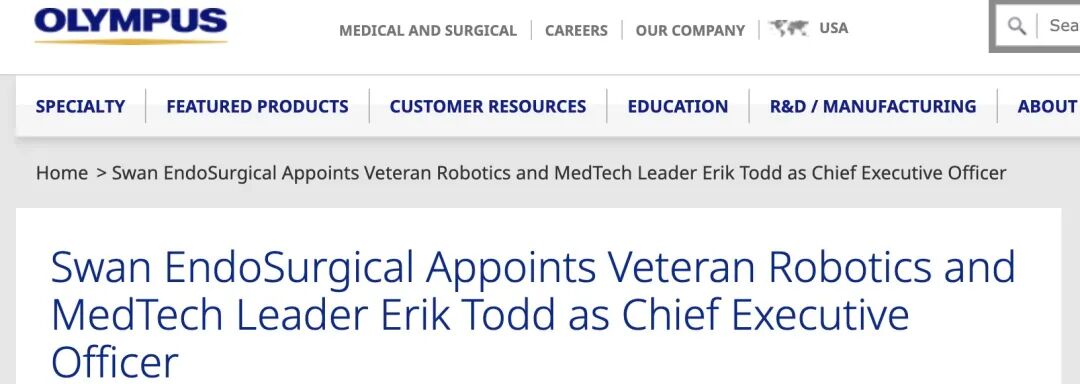
史赛克前高管履新CEO
Xin Lang Cai Jing· 2025-12-03 12:47
Core Insights - Major companies are increasingly investing in surgical robots, leading to an intensified competition between foreign and domestic players in the market [1][2] Group 1: Company Developments - Erik Todd, a former executive from Stryker, has been appointed as the CEO of Swan EndoSurgical, a company under Olympus, which focuses on developing a fully integrated and flexible endoscopic robotic platform [2][3] - Olympus has announced a global strategic transformation plan that emphasizes the integration of artificial intelligence, robotics, and digital healthcare ecosystems [3][9] - The partnership model between Olympus and Revival Healthcare Capital is a "Build-to-Buy" approach, with an initial investment of $65 million and a total potential investment of up to $458 million [2][8] Group 2: Market Trends - The surgical robot market is expanding rapidly, with endoscopic robots seen as a significant direction for future development, although many are still in preclinical or early clinical trial stages [3][10] - The global endoscopic surgical robot market is projected to reach $28.6 billion by 2030, indicating substantial growth potential [3][10] - The domestic endoscopic surgical robot market is experiencing a surge, with sales expected to exceed 100 units in 2024, reflecting a year-on-year growth rate of 108.51% [10][11] Group 3: Competitive Landscape - The Da Vinci system remains the dominant player in the endoscopic robot field, with over 10,000 units installed globally and more than 2.68 million surgeries performed in 2024 [10] - Domestic companies such as Jingfeng, Tumai, Shurui, and Kando are gaining traction, leveraging local supply chain advantages and expanding into overseas markets [11][12] - New entrants are continuously entering the market, with five new endoscopic surgical robots expected to launch by the second quarter of 2025 [12][13]
疫苗ETF(159643)收红,结构性机会获市场关注
Sou Hu Cai Jing· 2025-11-14 09:13
Group 1 - The pharmaceutical and biotechnology industry is currently presenting structural opportunities, particularly in the endoscope sector with new products set to launch, including Olympus X1 and other high-end products, which are expected to drive a new wave of equipment replacement demand [1] - The medical device sector remains highly prosperous, with average bidding growth rates exceeding 30% for ultrasound and CT subcategories from December 2024 to September 2025, and a performance inflection point is anticipated in 2026 as industry inventory returns to normal levels [1] - In the innovative drug sector, 127 new drugs outside the national medical insurance negotiation list are expected to be added by 2025, alongside the expansion of commercial insurance for innovative drugs, indicating continuous improvement in payment mechanisms [1] Group 2 - The vaccine ETF (159643) tracks the vaccine biotechnology index (980015), which selects listed companies involved in bioproducts, life science tools, and services, focusing on vaccine research, production, and related services [1] - The constituent stocks of the index exhibit significant innovation and growth characteristics, reflecting the overall performance and technological development dynamics of the vaccine and biotechnology industry [1]