
开立医疗

Search documents
检验互认驱动:黑灯实验室智能化路径与市场机遇
思宇MedTech· 2026-02-13 04:08
Core Viewpoint - The article emphasizes the importance of standardization in medical testing and the integration of the IVD market to enhance the efficiency and quality of healthcare services in China, particularly through the implementation of result recognition policies [2][3]. Group 1: Result Recognition Policy - Result recognition is a key strategy in China's healthcare reform aimed at reducing redundant tests and lowering overall medical costs by unifying technical standards and breaking down data barriers [3]. - The core value of the recognition policy is a systematic approach to "cost control, quality improvement, and efficiency enhancement," with clear targets set for 2025, including over 200 mutual recognition projects within city domains [4]. - The market demand is shifting from merely increasing testing volume to a pressing need for "quality homogenization" and "service integration," creating growth opportunities for products and services that help medical institutions meet recognition standards efficiently and cost-effectively [4]. Group 2: Current Status and Challenges - A four-tier recognition framework has been established across the country, with increasing depth and breadth of implementation [5]. - The core challenges to effective implementation include three major gaps: insufficient comparability of results, fragmented quality control systems, and lack of coordination among supporting mechanisms [7]. - The recognition of results and the DRG/DIP payment reform are aligned in their goals of improving efficiency and controlling costs, but they face execution challenges due to quality shortcomings in mutual recognition [8]. Group 3: Standards and Technological Integration - The foundation of result recognition relies on the "homogenization" of management and technology between laboratories, primarily through two core international standards: ISO 15189 and ISO 17511 [9]. - ISO 15189 focuses on establishing a comprehensive quality management system, while ISO 17511 ensures the traceability of measurement results to international standards [10]. - The integration of these standards into intelligent laboratory systems is crucial for ensuring the reliability of test results and facilitating automated processes [18]. Group 4: Market Dynamics and Growth - The automated laboratory market in China is projected to grow at a compound annual growth rate (CAGR) exceeding 30%, with the black-box laboratory model expected to surpass 15 billion yuan by 2026 [23]. - The market is driven by policy compliance and operational efficiency, with high demand for solutions that reduce human labor reliance by over 60% while enhancing throughput and stability [23]. - The competitive landscape features three main types of players: medical device manufacturers, specialized automation integrators, and healthcare IT companies, each focusing on different aspects of the market [25]. Group 5: Investment Opportunities - The shift towards intelligent laboratory solutions necessitates a comprehensive approach that includes not just automation hardware but also a complete "turnkey" intelligent system that ensures stable and recognizable results [26]. - The business model is evolving from one-time hardware sales to ongoing service subscriptions, reagent consumption, and data analysis services, particularly in resource-constrained environments [27]. - There is a growing need for innovative IVD products that can seamlessly integrate with automated systems, emphasizing the importance of standardized interfaces and built-in traceability data [29]. Group 6: Risk and Success Factors - Identifying structural risks is crucial as the market experiences rapid growth driven by policy and capital, with a focus on sustainable revenue and profit generation [34]. - The dual engines of policy and capital define market dynamics, but companies must ensure their business essence can sustain growth beyond initial policy-driven demand [35]. - Successful companies typically build multiple layers of competitive advantages, including technology-market fit, resilient business models, and advanced data governance capabilities [42][44].


股票行情快报:开立医疗(300633)2月12日主力资金净买入183.14万元
Sou Hu Cai Jing· 2026-02-12 13:19
近5日资金流向一览见下表: 证券之星消息,截至2026年2月12日收盘,开立医疗(300633)报收于26.88元,上涨0.3%,换手率0.6%, 成交量2.6万手,成交额6960.7万元。 开立医疗2025年三季报显示,前三季度公司主营收入14.59亿元,同比上升4.37%;归母净利润3351.11 万元,同比下降69.25%;扣非净利润2399.1万元,同比下降72.14%;其中2025年第三季度,公司单季度 主营收入4.95亿元,同比上升28.42%;单季度归母净利润-1351.92万元,同比上升78.05%;单季度扣非 净利润-1588.57万元,同比上升76.92%;负债率24.22%,投资收益207.82万元,财务费用-3830.36万 元,毛利率60.36%。开立医疗(300633)主营业务:医疗诊断及治疗设备的自主研发、生产与销售。 2月12日的资金流向数据方面,主力资金净流入183.14万元,占总成交额2.63%,游资资金净流出571.2 万元,占总成交额8.21%,散户资金净流入388.07万元,占总成交额5.58%。 该股主要指标及行业内排名如下: 资金流向名词解释:指通过价格变化反推资 ...


股票行情快报:开立医疗(300633)2月11日主力资金净买入109.89万元
Sou Hu Cai Jing· 2026-02-11 13:52
证券之星消息,截至2026年2月11日收盘,开立医疗(300633)报收于26.8元,下跌1.29%,换手率 0.75%,成交量3.23万手,成交额8727.49万元。 2月11日的资金流向数据方面,主力资金净流入109.89万元,占总成交额1.26%,游资资金净流入826.22 万元,占总成交额9.47%,散户资金净流出936.11万元,占总成交额10.73%。 注:主力资金为特大单成交,游资为大单成交,散户为中小单成交 近5日资金流向一览见下表: 以上内容为证券之星据公开信息整理,由AI算法生成(网信算备310104345710301240019号),不构成 投资建议。 该股主要指标及行业内排名如下: 该股最近90天内共有4家机构给出评级,买入评级3家,增持评级1家。 资金流向名词解释:指通过价格变化反推资金流向。股价处于上升状态时主动性买单形成的成交额是推 动股价上涨的力量,这部分成交额被定义为资金流入,股价处于下跌状态时主动性卖单产生的的成交额 是推动股价下跌的力量,这部分成交额被定义为资金流出。当天两者的差额即是当天两种力量相抵之后 剩下的推动股价上升的净力。通过逐笔交易单成交金额计算主力资金流向、 ...
明智科技:垂直整合背后的利润奇迹与现金流隐忧
Zhi Tong Cai Jing· 2026-02-11 05:55
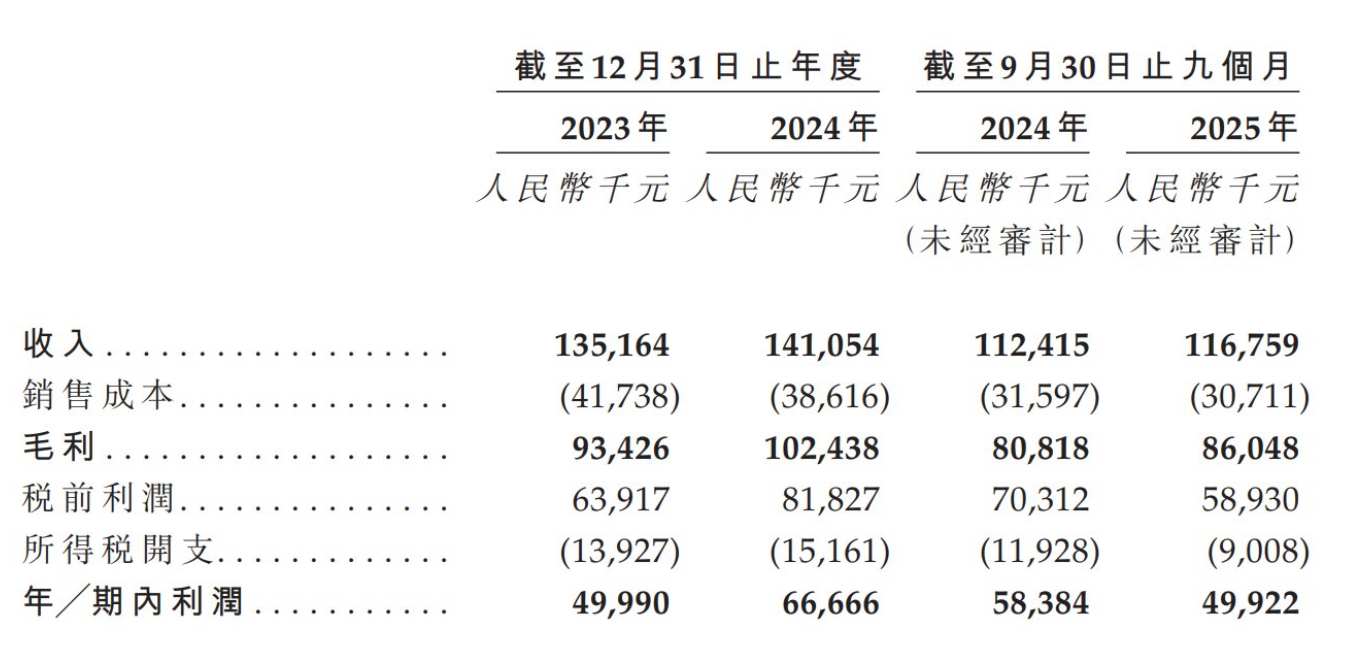
Core Viewpoint - Mingzhi Technology Co., Ltd. has submitted its listing application to the Hong Kong Stock Exchange, attracting attention due to its impressive financial metrics and leading position in the disposable endoscope market, while also facing challenges such as high customer concentration, declining cash flow, and increasing market competition [1][3]. Financial Performance - The company reported a gross margin of 72.62% and a net margin of 47.26% for 2024, with a significant increase in gross margin from 69.1% in 2023 to 73.7% in the first nine months of 2025, indicating strong profitability driven by vertical integration [2][4]. - Revenue for 2024 is projected at 1.41 billion RMB, a 4.4% increase from 1.35 billion RMB in 2023, while revenue growth slowed to 3.86% in the first nine months of 2025 compared to the same period in 2024 [3][4]. - Taxable profit reached 81.83 million RMB in 2024, a 28.0% increase from 63.92 million RMB in 2023, but fell by 16.2% to 58.93 million RMB in the first nine months of 2025 [4][6]. Market Position - Mingzhi Technology ranks among the top three brands in the disposable ureteroscope market in the U.S., Europe, and Japan, showcasing its international competitiveness in a highly regulated environment [3][9]. - The disposable endoscope market is expected to grow from approximately 2 billion USD in 2023 to over 6 billion USD by 2030, with a compound annual growth rate exceeding 17% [8][9]. Competitive Landscape - The market is dominated by major players such as Ambu, Boston Scientific, and Olympus, which collectively hold over 40% of the global market share, presenting significant competitive challenges for Mingzhi Technology [9][10]. - The company faces increasing pressure from local competitors in China, such as Kaili Medical, which has entered the disposable ureteroscope segment, intensifying competition [9][10]. Operational Challenges - Customer concentration remains high, with the top five customers accounting for 62.6% to 69.9% of sales from 2023 to the first nine months of 2025, indicating a dependency risk [10][11]. - The company relies heavily on distributors for revenue, with 92.8% of income coming from this channel in 2024, which may limit direct customer engagement and profit margins [10][11]. - Cash flow has deteriorated, with operating cash flow declining by 19.45% in the first nine months of 2025, attributed to increased inventory and extended accounts receivable collection periods [11][12]. Strategic Outlook - Mingzhi Technology's financial and operational indicators suggest it is at a critical juncture, needing to balance high profitability with sustainable growth strategies amid intensifying competition [7][11]. - The ability to manage operational and financial risks while leveraging technological innovation and maintaining supply chain efficiency will be crucial for the company's long-term value creation [12].
新股前瞻|明智科技:垂直整合背后的利润奇迹与现金流隐忧
智通财经网· 2026-02-11 05:49
Group 1: Company Overview - Mingzhi Technology Co., Ltd. has submitted its listing application to the Hong Kong Stock Exchange, with CCB International as the sole sponsor [1] - The company specializes in disposable endoscopes and has gained significant attention in the capital market due to its impressive financial metrics, including a gross margin of 72.62% and a net margin of 47.26% for 2024 [1] - Despite its high profitability, the company faces challenges such as high customer concentration, declining cash flow, and increasing market competition [1] Group 2: Business Model and Competitive Advantage - Mingzhi Technology positions itself as a "platform medical device company" with a unique vertical integration model, controlling the entire supply chain from core optical components to system assembly [2] - This vertical integration has resulted in significant cost advantages and technical control, with gross margins increasing from 69.1% in 2023 to 73.7% in the first nine months of 2025 [2][4] - The company has developed competitive products, including some of the thinnest disposable ureteroscopes and cystoscopes, which are crucial for minimally invasive surgeries [2] Group 3: Market Position and Financial Performance - By 2024, Mingzhi Technology ranks among the top three brands in the disposable ureteroscope market in the U.S., Europe, and Japan, reflecting its international competitiveness [3] - The company's revenue for 2024 is projected to be 141.05 million RMB, a 4.4% increase from 2023, but growth has shown signs of slowing down, with only a 3.86% increase in the first nine months of 2025 [3][4] - The gross profit margin has shown a consistent upward trend, but net profit has declined by 14.5% in the first nine months of 2025 compared to the same period in 2024, indicating emerging challenges in profitability [4][11] Group 4: Industry Dynamics and Challenges - The disposable endoscope market is experiencing rapid growth, with projections indicating an expansion from approximately $2 billion in 2023 to over $6 billion by 2030, reflecting a compound annual growth rate of over 17% [8][9] - However, the market is dominated by major players like Ambu, Boston Scientific, and Olympus, which collectively hold over 40% of the global market share, creating significant competitive barriers [9] - Mingzhi Technology's revenue is heavily reliant on overseas markets, exposing it to risks from geopolitical issues, currency fluctuations, and changes in international trade policies [10] Group 5: Operational Risks and Financial Health - The company has a high customer concentration, with the top five customers accounting for 62.6% to 69.9% of sales from 2023 to the first nine months of 2025, indicating a dependency risk [10] - The sales channel structure is heavily reliant on distributors, with 92.8% of revenue coming from this channel in 2024, which may limit direct customer engagement and profit margins [10] - Operational efficiency is under pressure, as evidenced by a 19.45% decline in operating cash flow in the first nine months of 2025, attributed to increased inventory and extended accounts receivable collection periods [11]
开立医疗获机构关注,股价表现弱于板块
Jing Ji Guan Cha Wang· 2026-02-11 04:56
Group 1 - Dongguan Securities has identified Kaili Medical (300633) as a key focus in the medical device sector, highlighting brain-computer interfaces as a future industry outlined in the "14th Five-Year Plan," with ongoing policy support suggesting investment opportunities [1] - Zhongyou Securities reported on February 9 that policy-driven structural optimization in the pharmaceutical and biological industry may indirectly benefit the medical device sub-sector [1] Group 2 - As of February 10, 2026, Kaili Medical's stock price closed at 27.15 yuan, with a cumulative decline of 1.09% over the past five days, underperforming the pharmaceutical and biological sector, which rose by 0.60%, and the medical device sub-sector, which increased by 0.22% [2] - Technical analysis indicates that the stock is in a bearish trend, with the 20-day moving average at 28.02 yuan, and the current price below this average; there was a net outflow of 3.7381 million yuan from main funds, with retail investors dominating [2] Group 3 - On February 5, the Ministry of Industry and Information Technology and seven other departments jointly issued the "Implementation Plan for High-Quality Development of Traditional Chinese Medicine Industry (2026-2030)," which, while focused on the traditional medicine industry chain, is expected to positively impact the overall pharmaceutical and biological industry, potentially benefiting medical device companies through industry upgrades [3] - The results of the 11th batch of national drug procurement accelerated in February, with multiple regions starting implementation, which may have a potential impact on the demand for medical device procurement [3]
国泰海通晨报-20260211
国泰海通· 2026-02-11 00:47
Fixed Income Research - The "multiple price bidding" in both reverse repos and MLF only affects the transparency and signal effect of tool interest rates, not the central bank's ability to dynamically adjust the pricing of liquidity tools [2][4][40] Biopharmaceutical Research - The medical device procurement level is expected to be driven by the long-term implementation of equipment update policies, with recommendations for companies likely to benefit from this policy, such as Mindray Medical, United Imaging, and others [8][9] - In January 2026, the procurement scale for new medical devices showed a decline, with MRI down 22.6%, CT down 25.6%, and surgical robots down 20.1% [8][9] Industry Insights - The equipment update policy aims for a 25% increase in medical equipment investment by 2027 compared to 2023, enhancing high-end equipment configuration to match middle-income countries [9] - The release of the "Guidelines for the Establishment of Medical Service Price Projects" for surgical robots is expected to accelerate their penetration and promote the commercialization of innovative medical equipment [10]
国泰海通 · 晨报260211|固收、医疗器械
国泰海通证券研究· 2026-02-10 14:02
Group 1: Monetary Policy and Interest Rates - The recent decline in the minimum bid rate for 3-month reverse repos to 1.4% is led by major banks, which may influence the OMO interest rate in the future [2] - The adjustment in bidding methods for liquidity tools since mid-2024 has diminished the policy rate's influence, with the central bank retaining control over pricing [3] - The likelihood of an OMO rate cut in the first quarter remains low, as the current conditions do not provide sufficient motivation for the central bank to lower rates ahead of schedule [4] Group 2: Bond Market Dynamics - The narrowing spread between 1-year government bonds and certificates of deposit (CDs) since early 2026 indicates a unique pricing situation in the short end of the bond market [5] - The decline in 1-year government bonds has been more pronounced than that of government development bonds, influenced by the central bank's actions [6] Group 3: Medical Equipment Market - The medical equipment procurement scale has seen a significant decline, with MRI and CT equipment down by 22.6% and 25.6% respectively in January 2026 [9] - The implementation of a national pricing guideline for surgical robots is expected to enhance their adoption and application in clinical settings, marking a critical step in the commercialization of innovative medical equipment [10]

国泰海通|医药:医疗设备招采规模高基数影响部分回落,关注手术机器人市场机遇
国泰海通证券研究· 2026-02-10 14:02
Core Insights - The article emphasizes the potential long-term boost in medical equipment procurement driven by the implementation of equipment renewal policies, recommending companies that are likely to benefit from this trend [1][3]. Group 1: Investment Recommendations - The investment rating is maintained at "Overweight," focusing on medical equipment companies that are expected to benefit from the rollout of equipment renewal policies [2]. - Monthly procurement data for January 2026 shows a decline in new equipment bidding, with MRI down 22.6%, CT down 25.6%, DR down 18.2%, and ultrasound down 10.1%, while endoscopes grew by 1.1% and surgical robots decreased by 20.1% [2]. Group 2: Policy Impact - The joint issuance of the "Implementation Plan for Promoting Equipment Renewal in the Medical and Health Sector" by four ministries aims for a 25% increase in medical equipment investment by 2027 compared to 2023, enhancing high-end equipment availability to levels seen in middle-income countries [3]. - Significant procurement plans for medical equipment have been announced across various provinces and cities in 2024, indicating a strong push for equipment renewal [3]. Group 3: Surgical Robot Market - The National Medical Insurance Administration released guidelines for pricing surgical robot services, which will standardize pricing and promote the widespread adoption of robotic surgery technologies [4]. - The guidelines focus on the clinical value and participation of robots in surgeries, encouraging companies to develop high-value technologies that enhance clinical outcomes [4]. - A new pricing project for "remote surgical assistance" has been established, providing a regulatory foundation for improving remote surgical capabilities and resource allocation [4].

东海证券晨会纪要-20260210
Donghai Securities· 2026-02-10 12:39
Group 1: Pharmaceutical and Biotechnology Industry - The pharmaceutical and biotechnology sector saw an overall increase of 0.14% last week, outperforming the CSI 300 index by 1.47 percentage points, with a current PE valuation of 29.43 times, which is at a historical mid-low level, representing a 120% premium over the CSI 300 [6][7] - Notable individual stock performances included Guangshengtang, which surged by 29.83%, followed by Haixiang Pharmaceutical at 18.64%, and Meidisi at 18.04% [6] - A significant collaboration was announced between Saint Gene and Gene Tech, involving a global R&D cooperation and licensing agreement for an RNAi therapy, with an upfront payment of $200 million and potential milestone payments totaling $1.5 billion [7][8] - The investment recommendation focuses on three main lines: biotech firms with core delivery technology and international collaboration potential, industry leaders in chronic disease areas with advanced pipelines, and key companies in the small nucleic acid supply chain benefiting from global commercialization [8] Group 2: Machinery and Equipment Industry - In January 2026, excavator sales reached 18,708 units, a year-on-year increase of 49.5%, with domestic sales up 61.4% and exports up 40.5% [11][12] - Loader sales also saw significant growth, with a total of 11,759 units sold in January, reflecting a 48.5% increase year-on-year, driven by major domestic projects [13] - The demand for excavators is expected to continue recovering due to upcoming large-scale projects in various sectors, including mining and water conservancy [12][14] - Companies like LiuGong are projected to see steady profit growth, with a forecasted net profit of 1.526 to 1.659 billion yuan for 2025, marking a 15-25% increase year-on-year [13] Group 3: Electronics Industry - The electronics sector is experiencing a recovery, with significant capital expenditure increases from major CSP manufacturers, expected to reach $670 billion in 2026, a 60% year-on-year increase [16][17] - The global semiconductor industry is projected to achieve record sales of $791.7 billion in 2025, with a 25.6% year-on-year growth, driven by demand from AI and IoT technologies [18] - Price increases are spreading from memory chips to power, analog, and MCU chips, indicating a comprehensive price surge in the semiconductor market [18] - Investment recommendations include focusing on companies benefiting from strong domestic and international demand in the AIOT sector, as well as those involved in semiconductor equipment and materials [21]