精达股份

Search documents
电网设备ETF广发(159320)涨3.96%,半日成交额5871.52万元
Xin Lang Cai Jing· 2026-02-24 03:42
来源:新浪基金∞工作室 电网设备ETF广发(159320)业绩比较基准为同期恒生A股电网设备指数收益率,管理人为广发基金管 理有限公司,基金经理为夏浩洋,成立(2024-12-12)以来回报为98.82%,近一个月回报为9.84%。 声明:市场有风险,投资需谨慎。本文基于第三方数据库自动发布,不代表新浪财经观点,任何在本文 出现的信息均只作为参考,不构成个人投资建议。如有出入请以实际公告为准。如有疑问,请联系 biz@staff.sina.com.cn。 2月24日,截止午间收盘,电网设备ETF广发(159320)涨3.96%,报2.074元,成交额5871.52万元。电 网设备ETF广发(159320)重仓股方面,特变电工截止午盘涨3.83%,国电南瑞涨2.72%,思源电气涨 5.82%,中天科技涨7.08%,亨通光电涨10.00%,宏发股份涨2.38%,浙江荣泰跌4.52%,东方电缆涨 2.96%,金盘科技涨5.94%,精达股份涨2.86%。 ...
未知机构:广发机械专用设备跟踪半导体设备-20260224
未知机构· 2026-02-24 02:50
我们继续推荐半导体设备,关注华峰测控、强一股份、长川科技、精智达、金海通、矽电股份、精测电子、微导 纳米、迈为股份、帝尔激光等。 #光伏。 【广发机械】专用设备跟踪 #半导体设备。 海力士表示,所有客户需求都无法满足,目前DRAM及NAND库存仅剩约4周,且2026年HBM产能已全面售罄,存 储景气度依旧,价格有望继续上涨;字节的Seedance2.0以及智谱的GLM5,显示国产大模型的进步,同时春节期间 的使用体验凸显了算力的紧缺。 我们继续推荐半导体设备,关注华峰测控、强一股份、长川科技、精智达、金海通、矽电 【广发机械】专用设备跟踪 #半导体设备。 海力士表示,所有客户需求都无法满足,目前DRAM及NAND库存仅剩约4周,且2026年HBM产能已全面售罄,存 储景气度依旧,价格有望继续上涨;字节的Seedance2.0以及智谱的GLM5,显示国产大模型的进步,同时春节期间 的使用体验凸显了算力的紧缺。 聚变方面,关注永鼎股份、王子新材、联创光电、精达股份、合锻智能、国力电子、旭光电子、国光电气等;传 统裂变堆方面,关注中国铀业、江苏神通、应流股份等。 具体细节欢迎交流。 太空光伏,T启动美国太阳能工厂的 ...



2025年1-12月金属制品、机械和设备修理业企业有928个,同比增长8.03%
Chan Ye Xin Xi Wang· 2026-02-22 03:41
Group 1 - The core viewpoint of the article highlights the growth in the number of enterprises in the metal products, machinery, and equipment repair industry, which increased by 69 to a total of 928 enterprises in 2025, representing a year-on-year growth of 8.03% [1] - The proportion of these enterprises in the total industrial enterprises is 0.18% [1] - The data indicates a shift in the threshold for large-scale industrial enterprises, which was raised from an annual main business income of 5 million to 20 million yuan starting from 2011 [1] Group 2 - The article references a report by Zhiyan Consulting titled "Market Operation Pattern and Prospect Strategic Analysis Report of China's Metal Products Industry from 2026 to 2032" [1] - Zhiyan Consulting is recognized as a leading industry consulting firm in China, providing in-depth industry research reports, business plans, feasibility studies, and customized services [1] - The firm emphasizes its commitment to delivering comprehensive industry solutions to empower investment decisions through professional insights and quality services [1]


沃尔核材港股上市在即:最高发行价较A股折价超35% 英伟达铜缆核心供应商直面技术迭代与行业地位大考
Xin Lang Zheng Quan· 2026-02-11 07:16
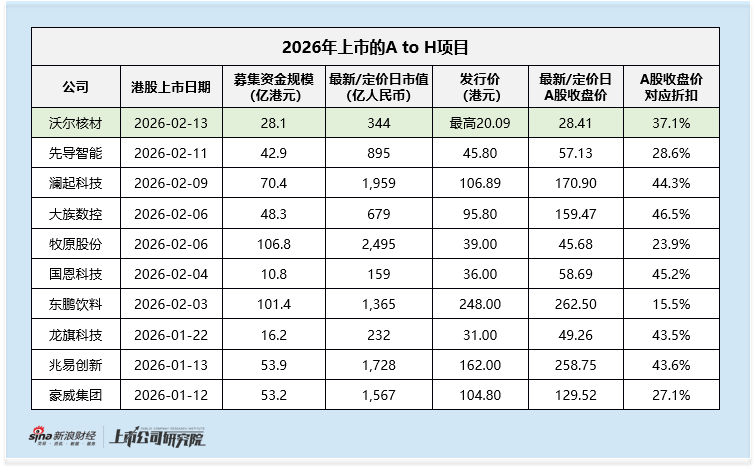
Core Viewpoint - Wolong Materials is set to launch its global offering on February 5, with a maximum issue price of HKD 20.09 per share, raising approximately HKD 2.81 billion. The company is a leading AI high-speed copper cable supplier, leveraging its technological advantages to position itself within Nvidia's top supply chain. However, it faces challenges such as limited discount levels, lack of a greenshoe option, low cornerstone subscription ratios, and pressures from the AI industry's technological iterations and high raw material costs [1][2][10]. Group 1: IPO Details - The maximum issue price of HKD 20.09 per share represents a discount of approximately 37.1% compared to the A-share closing price of CNY 28.41 on February 10 [1]. - The offering includes 140 million shares, with a total issuance scale of about HKD 2.81 billion [1]. - The cornerstone investment attracted 16 investors, totaling USD 124 million, which is 34.5% of the issuance scale, indicating a relatively low cornerstone subscription ratio compared to other recent A to H projects [2][4]. Group 2: Market Position and Financial Performance - Wolong Materials ranks third among the top five manufacturers of high-speed copper cables, with a revenue of CNY 1.7 billion and a market share of 12.7% in 2024 [5][6]. - The company has shown steady revenue and profit growth, with projected net profit for 2025 expected to be between CNY 1.1 billion and CNY 1.18 billion, reflecting a year-on-year growth of 29.79% to 39.22% [4][10]. Group 3: Strategic Partnerships and Challenges - The collaboration with Amphenol has deepened, becoming a crucial link in entering Nvidia's AI supply chain, with revenue from Amphenol increasing significantly from CNY 1.38 million in 2022 to CNY 5.9 million in 2025 [7]. - The company faces raw material cost pressures, with copper prices rising significantly from CNY 59,200 per ton in 2022 to CNY 89,200 per ton in 2025, impacting profitability [9]. - The AI industry's technological iterations pose risks, as Nvidia's new server platform may reduce demand for traditional copper cables, leading to market concerns about Wolong's future demand [10].

核聚变系列:磁体材料迭代推动产业升级
2026-02-10 03:24
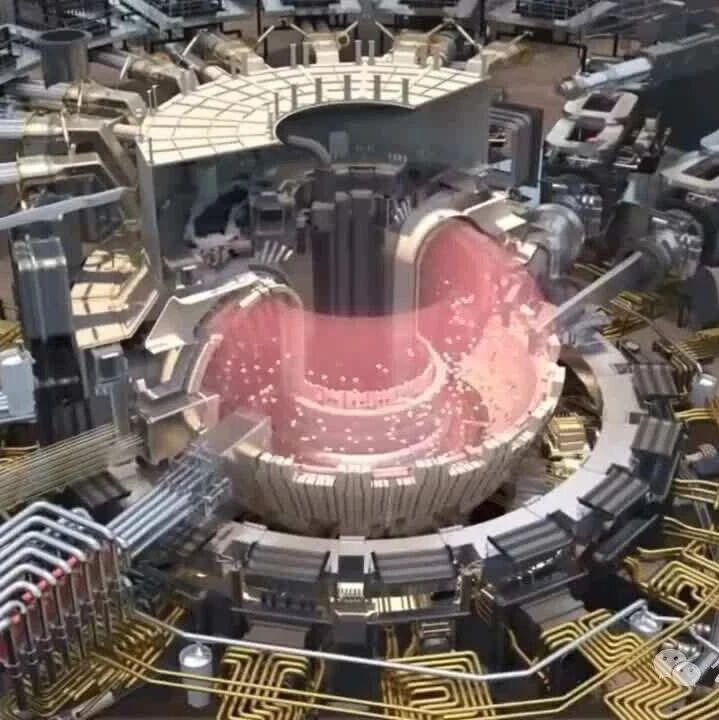
Summary of the Conference Call on Nuclear Fusion and Magnetic Materials Industry Overview - The focus of the conference call was on the nuclear fusion industry, specifically the magnetic materials segment, which is expected to undergo significant upgrades and present investment opportunities as the industry matures and technology evolves [1][2]. Core Insights and Arguments - The nuclear fusion industry is experiencing accelerated growth driven by strong policy support and capital expenditure, with projects in cities like Hefei, Shanghai, and Chengdu progressing rapidly [2]. - The cost structure of magnetic materials is critical, with superconducting magnets representing a significant portion of the costs in fusion projects. For instance, in the ITER project, component costs account for 86%, with magnets alone making up 28% of that [3][25]. - The market for second-generation high-temperature superconducting materials is projected to grow from approximately 300 million yuan in 2024 to 4.9 billion yuan by 2030, reflecting a compound annual growth rate (CAGR) of 59% [4][27]. - The transition from low-temperature superconductors (primarily niobium-titanium and niobium-tin) to high-temperature superconductors (such as rare-earth barium copper oxide) is anticipated, which will enhance performance and reduce costs [3][15]. Key Developments and Trends - The global nuclear fusion sector is shifting from research to practical energy applications, with countries like the US, Japan, and Germany implementing strategic plans to support fusion development [6]. - The magnetic confinement approach remains the dominant commercial method, with significant projects like BEST and ITER expected to achieve breakthroughs in the next three years [7][25]. - The demand for superconducting materials is expected to rise significantly, with the market for niobium-titanium projected to reach 600 million USD, niobium-tin at 450 million USD, and rare-earth barium copper oxide at 790 million USD by 2024 [17]. Potential Risks and Considerations - The industry faces challenges related to the high costs of liquid helium for cooling low-temperature superconductors, which may hinder their commercial viability [14][18]. - The supply chain for critical metals used in superconductors, such as tantalum and niobium, is under scrutiny due to geopolitical factors and market dynamics, which could impact availability and pricing [20][22]. Additional Important Insights - The integration of superconducting materials in various applications beyond fusion, including high-end manufacturing and medical equipment, is expected to enhance the overall market value of these materials [28]. - The development of high-temperature superconductors is crucial for future advancements in fusion technology, as they can operate at higher temperatures and reduce cooling costs [30]. - The conference highlighted the importance of monitoring the supply chain for rare metals and the potential for price increases due to rising demand from sectors like commercial aerospace and semiconductor manufacturing [21][24]. Conclusion - The nuclear fusion industry, particularly the magnetic materials segment, is poised for significant growth driven by technological advancements and increasing investment. Key players in the superconducting materials market are expected to benefit from this trend, making them worthy of investor attention [34].
未知机构:华金电新核聚变系列深度三磁体材料迭代推动产业升级政策支持资本开支-20260210
未知机构· 2026-02-10 02:10
Summary of Key Points from the Conference Call Industry Overview - The fusion industry is entering an accelerated phase driven by policy support and capital expenditure, with major countries expected to introduce fusion policies by 2025, marking a shift from laboratory research to industrial layout and regulatory framework development [1] Technological Developments - Low-temperature superconductors (NbTi, Nb₃Sn) are relatively mature, while high-temperature superconductors (REBCO) are anticipated to become the mainstream in the future. The current landscape features a parallel development of low-temperature and high-temperature superconducting materials, with low-temperature superconductors supporting existing fusion device operations due to their industrial application advantages. High-temperature superconductors are seen as key to breakthroughs in next-generation high-field fusion technology due to their superior adaptability to extreme environments [1] Market Dynamics - The magnetic system is identified as a core cost component of fusion projects. Future Tokamak devices are expected to trend towards compact designs and high-temperature superconductors, leading to a significant increase in industry demand. The market size for second-generation high-temperature superconducting tapes for controllable fusion devices is projected to be 300 million yuan in 2024, with an expected growth to 4.9 billion yuan by 2030, representing a compound annual growth rate (CAGR) of 59.3% from 2024 to 2030 [2] Investment Recommendations - It is advised to focus on core supply chain manufacturers in the magnetic component segment: 1. Low-temperature superconductors: Western Superconductors 2. High-temperature superconductors: Shanghai Superconductor (not publicly listed, with Jingda Holdings as the largest shareholder), Lianchuang Optoelectronics, Eastern Superconductor (not publicly listed, a subsidiary of Yongding Co., Ltd.) 3. Core suppliers of tantalum and niobium: Dongfang Tantalum [2]


未知机构:华金电新核聚变系列深度三磁体材料迭代推动产业升级政策支持资本开支驱-20260210
未知机构· 2026-02-10 02:10
Summary of Key Points from the Conference Call Industry Overview - The fusion industry is entering an accelerated phase driven by policy support and capital expenditure, with major countries expected to introduce fusion policies by 2025, marking a shift from laboratory research to industrial layout and regulatory framework construction [1] Core Insights - Low-temperature superconductors (NbTi, Nb₃Sn) are relatively mature, while high-temperature superconductors (REBCO) are anticipated to become the mainstream in the future. The current landscape features a parallel development of low-temperature and high-temperature superconducting materials, with low-temperature superconductors supporting existing fusion device operations due to their industrial application advantages. High-temperature superconductors are expected to be key for breakthroughs in next-generation high-field fusion technology due to their superior adaptability to extreme environments [1][2] Market Projections - The magnet system is identified as a core cost component of fusion projects. Future tokamak devices are expected to trend towards compact designs and high-temperature superconductors, leading to a significant increase in industry demand. The market size for second-generation high-temperature superconducting tapes for controllable fusion devices is projected to be 300 million yuan in 2024, with an expected growth to 4.9 billion yuan by 2030, representing a compound annual growth rate (CAGR) of 59.3% from 2024 to 2030 [2] Investment Recommendations - It is suggested to focus on core supply chain manufacturers in the magnet segment: 1. Low-temperature superconductors: Western Superconductor 2. High-temperature superconductors: Shanghai Superconductor (not publicly listed, with Jingda Co. as the largest shareholder), Lianchuang Optoelectronics, Eastern Superconductor (not publicly listed, a subsidiary of Yongding Co.) 3. Core suppliers of tantalum and niobium: Dongfang Tantalum [2]
绿茵生态:精达股份是否强赎,建议咨询精达股份董办处
Zheng Quan Ri Bao· 2026-02-09 11:06
Group 1 - The company Green Eco stated on an interactive platform that it will study and reference relevant convertible bond cases [1] - The company Jingda's potential strong redemption is suggested to be inquired about with Jingda's board office [1]

磁体材料迭代推动产业升级
Zhong Guo Neng Yuan Wang· 2026-02-09 00:51
Core Insights - The fusion industry is entering an accelerated phase driven by policy support and capital expenditure, with major countries expected to introduce fusion policies by 2025, marking a shift from laboratory research to industrial layout and regulatory framework construction [2] - Low-temperature superconductors are relatively mature, while high-temperature superconductors are expected to become the mainstream in the future, with magnetic materials being the core foundation for stable magnetic field confinement in fusion devices [2] Industry Overview - The magnet system is a core cost component of fusion projects, with the ITER project using low-temperature superconductors having 86% of its component costs attributed to parts, of which magnets account for 28% [3] - In high-temperature superconductor projects, the cost of the magnet system increases further, with the ARC project showing that magnets account for 46% of the total cost [3] Market Potential - The market size for second-generation high-temperature superconducting tapes for global controllable fusion devices is projected to reach 300 million yuan in 2024, with an expected growth to 4.9 billion yuan by 2030, representing a compound annual growth rate of 59.3% from 2024 to 2030 [3] Investment Recommendations - The magnet segment, being the highest value component in the fusion system, is currently transitioning from low-temperature to high-temperature technology validation and evolution, indicating a positive outlook for demand driven by the capital expenditure cycle in fusion [3] - Key suppliers in the magnet segment include: 1) Low-temperature superconductors: Western Superconductor 2) High-temperature superconductors: Shanghai Superconductor (not listed, controlled by Jingda Co., Ltd. (600577)), Lianchuang Optoelectronics (600363), Eastern Superconductor (not listed, a subsidiary of Yongding Co., Ltd. (600105)) 3) Core suppliers of tantalum and niobium: Dongfang Tantalum Industry (000962) [3]
核聚变深度:磁体材料迭代推动产业升级(附34页PPT)
材料汇· 2026-02-08 15:24
Group 1 - The fusion industry is entering an accelerated phase driven by policy support and capital expenditure, with major countries expected to introduce fusion policies by 2025, marking a shift from laboratory research to industrial layout and regulatory framework construction [2][9] - Domestic policy support for controllable nuclear fusion is forming a clear advancement logic, with a national framework being established to optimize regulatory processes and provide clear guidance for technological research and development [6][8] - The superconducting materials landscape is characterized by a parallel development of low-temperature superconductors (NbTi, Nb₃Sn) and high-temperature superconductors (REBCO), with low-temperature superconductors currently supporting existing fusion operations and high-temperature superconductors poised to become key for next-generation high-field fusion technology breakthroughs [2][3][27] Group 2 - The magnet system is a core cost component of fusion projects, with the ITER project showing that component costs account for 86%, of which magnets represent 28%, primarily due to the reliance on high-cost low-temperature liquid helium for cooling [3][55] - In high-temperature superconducting projects, the cost of the magnet system is expected to increase further, as seen in the ARC project where the magnet system accounts for 46% of the total cost [57] - The global market for second-generation high-temperature superconducting tapes used in controllable nuclear fusion devices is projected to grow from 300 million yuan in 2024 to 4.9 billion yuan by 2030, with a compound annual growth rate (CAGR) of 59.3% from 2024 to 2030 [3][65] Group 3 - Investment recommendations focus on the magnet segment of the fusion system, which is currently transitioning from low-temperature to high-temperature technology, indicating a significant demand increase driven by the capital expenditure cycle in nuclear fusion [3][8] - The BEST project, aimed at bridging the gap between experimental and demonstration reactors, is expected to accelerate capital expenditure, with significant procurement activities already underway [59][63] - The global market for superconducting materials is expected to see substantial growth, driven by the increasing demand for high-temperature superconductors in fusion applications, with REBCO materials showing significant potential for enhancing magnetic field strength and reducing magnet size [27][31]