Boston Dynamics

Search documents
TSLA EV Slowdown, Full Speed on AI: Earnings Highlight "Critical" 2026 Ahead
Youtube· 2026-01-29 19:00
Core Viewpoint - Tesla is experiencing a challenging quarter with declining revenues and auto unit sales, while competition in the EV market is intensifying [2][3] Financial Performance - Tesla reported its first year of declining revenues, down 3%, and auto unit sales decreased by 9%, with profits declining by 4% to 6% [2] - The energy division showed significant growth of 27%, generating $12.8 billion, which is a positive aspect for the company [3] Strategic Changes - Tesla is ending production of the Model S and Model X to focus on the development of Optimus robots, indicating a shift towards being recognized as a technology company [3][10] - The company plans to produce a new generation of vehicles (Gen 3) by the end of 2026, aiming for large-scale sales by 2027 [10] Valuation Concerns - Tesla's stock is trading at a high premium, with a price-to-earnings (PE) ratio of nearly 290, significantly higher than competitors like Nvidia, which has a PE of 45 [9][12] - Concerns have been raised about the disconnect between Tesla's high valuation and its lack of earnings growth, leading to a downgrade of the stock to a sell rating [4][5] Capital Expenditure Guidance - Tesla's capital expenditure (capex) guidance for the year is projected to be well over $20 billion, significantly higher than the previous year's $8.5 billion and above market expectations of around $11 billion [7][8] Competitive Landscape - Increased competition from companies like Volkswagen, Hyundai, and BYD is impacting Tesla's market position, with BYD now holding the number one position in EV sales [2][3] - The competitive threats are mounting from both traditional automakers and new entrants in the robotics and autonomous driving sectors [14][15]


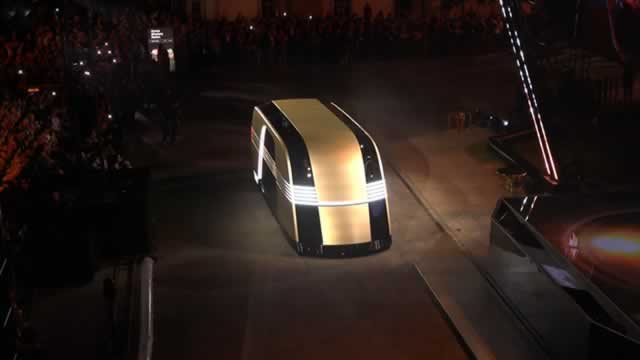
盘点第一波人形机器人倒闭潮,谁能活过2026年
阿尔法工场研究院· 2026-01-28 09:07
Core Viewpoint - The humanoid robot industry in 2025 is experiencing a severe dichotomy, with significant funding and successful companies on one side, while many startups face collapse due to financial and operational challenges [4][5][9]. Industry Overview - In 2025, the humanoid robot sector saw 610 financing events, nearly tripling from the previous year, with total funding exceeding 57 billion yuan [15]. - Over 100 humanoid robot companies in China have differentiated significantly, with leading firms securing billion-level orders and preparing for IPOs, while others struggle to survive [4][5]. Company Failures - Notable failures include K-Scale Labs, which collapsed just before mass production due to cash flow issues, revealing the challenges faced by many startups lacking a complete local supply chain [5][6]. - Rethink Robotics, a pioneer in collaborative robots, faced its second closure in 2025 after failing to meet market expectations, highlighting the risks of rushed product launches [7][9]. - iRobot, the maker of Roomba, filed for bankruptcy in December 2025, attributed to prolonged financial struggles and competition from lower-priced Chinese products [8][9]. Market Dynamics - The industry is shifting from a focus on academic institutions to industrial enterprises, with increased orders from automotive manufacturers, indicating a demand for reliability and economic viability [15][16]. - The competition has intensified, with many companies producing similar products, leading to a "race to the bottom" in pricing and innovation [10][11]. Technological Challenges - The primary bottleneck in humanoid robots is the AI module, which is crucial for their functionality, yet many companies invest little in this area, relying on larger tech firms for support [11][12]. - The rapid pace of technological evolution means that today's leaders can quickly become laggards if they fail to innovate [12][13]. Survival Strategies - Companies must establish differentiation, create genuine commercial loops, maintain financing capabilities, and leverage data to enhance AI models [16]. - The industry is expected to see further consolidation and a clearer divide between successful firms and those unable to adapt to market demands [15][16].

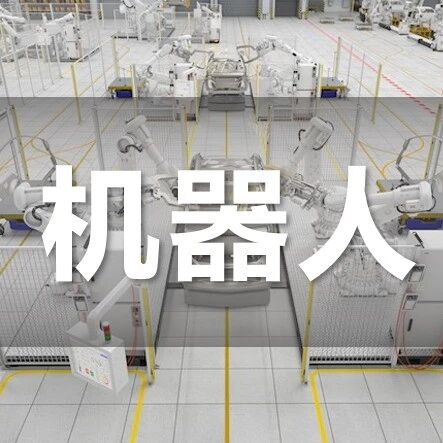
Forget Tesla: This EV Stock Is Beating It in Robotics and It's Dirt Cheap.
The Motley Fool· 2026-01-28 04:45
Core Insights - Tesla has shifted its strategic focus from electric vehicles to autonomy, particularly its robotaxi network and the Optimus humanoid robot, as its EV business faces declining unit sales [1][2] - Boston Dynamics, now majority-owned by Hyundai, is considered to have an edge over Tesla in the autonomous robotics space, particularly with its Atlas robot [3][7] Company Overview - Boston Dynamics was valued at $1.1 billion after Hyundai acquired an 80% stake from Softbank in June 2021 [3] - The company has developed several notable robots, including Spot, Stretch, and Atlas, with Atlas recently awarded "Best Robot" at CES 2026 [4][5] Competitive Landscape - Atlas is set to begin commercial production, with plans for tens of thousands of units to be deployed in Hyundai factories, potentially making it the first humanoid robot to market [6] - Current consensus suggests that Atlas outperforms Optimus in mobility and agility, raising concerns about Tesla's competitive position in humanoid robotics [7] Market Implications - Hyundai Motor Group is now the world's third-largest automaker and the third-largest EV-maker, bolstered by the success of its Ioniq line [9] - Hyundai's market cap is approximately $90 billion, with a price-to-earnings ratio of 12, presenting a potentially attractive investment compared to Tesla's higher valuation [11]
第一波人形机器人倒闭潮,来了
虎嗅APP· 2026-01-27 14:17
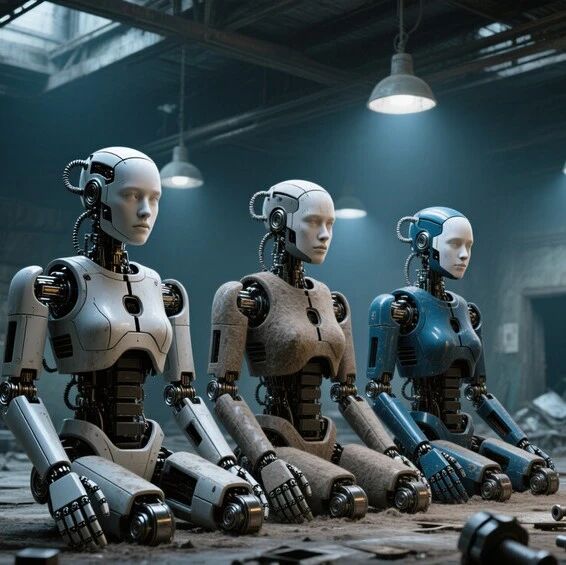
Core Insights - The humanoid robot industry faced a harsh elimination race in 2025, with notable companies collapsing and the gap between leading and lagging firms widening significantly [4][5][11] - The industry is transitioning from a phase of hype and funding to one focused on actual production and commercial viability, highlighting the need for sustainable business models [9][12] Industry Overview - In 2025, the humanoid robot sector saw 610 financing events, nearly tripling from the previous year, with total funding exceeding 57 billion yuan, indicating a stark divide between top-tier and struggling companies [16] - The customer base shifted from academic institutions to industrial enterprises, reflecting a growing recognition of humanoid robots in production settings [16] Company Failures - K-Scale Labs, a once-prominent startup, collapsed just before mass production due to cash flow issues, revealing the challenges faced by many startups in the U.S. lacking a robust local supply chain [6][11] - Rethink Robotics, a pioneer in collaborative robots, faced its second closure in 2025 after failing to meet market demands, illustrating the rapid pace of technological evolution and competition [7][13] - iRobot, known for its Roomba, filed for bankruptcy in December 2025, struggling against low-cost competitors and regulatory hurdles, marking a significant decline for a once-leading company [8][11] Key Challenges - Many humanoid robot companies are experiencing funding shortages, with a lack of follow-up financing leading to operational difficulties [11] - Over 50% of humanoid robot orders are primarily for public relations and data collection rather than genuine productivity enhancement, indicating a failure in commercial viability [12] - Product homogeneity has intensified competition, with many companies producing similar low-barrier products, making it difficult to establish a competitive edge [12][13] Future Outlook - The survival of companies in the humanoid robot sector will depend on securing continuous funding and achieving repeat orders in industrial applications [16][17] - Companies must differentiate themselves, establish real commercial cycles, and leverage data to enhance AI capabilities to thrive in the evolving market [17] - The industry is expected to see a significant increase in humanoid robot shipments in 2026, contingent on technological advancements [16]
第一波人形机器人倒闭潮,来了
3 6 Ke· 2026-01-27 05:55
Core Insights - The humanoid robot industry in 2025 faced a dual challenge of significant investment and numerous company failures, highlighting a stark divide between leading and struggling firms [1] - The industry is undergoing a brutal elimination process, with many once-prominent companies collapsing as the gap between technological enthusiasm and commercial viability becomes evident [1] Industry Overview - In 2025, the humanoid robot sector saw 610 financing events, nearly tripling from the previous year, with total funding exceeding 57 billion yuan [9] - The industry is experiencing deep differentiation, with leading companies receiving continuous capital support while struggling firms face accelerated elimination [10] Company Failures - K-Scale Labs, a notable startup, collapsed just before mass production due to cash flow issues, revealing the lack of a complete local supply chain for many U.S. startups [2] - Rethink Robotics, once a pioneer in collaborative robots, faced its second bankruptcy in 2025 after failing to meet market demands and losing investor support [3] - The closure of Embodied, which produced a social robot for children, exemplified the vulnerabilities of cloud-dependent products [4] - iRobot, the maker of Roomba, filed for bankruptcy in December 2025, suffering from prolonged financial struggles and competition from lower-priced Chinese products [4] Challenges Faced by Companies - Many humanoid robot companies are hindered by financing shortages, with K-Scale Labs having only $400,000 left at the time of its closure [6] - Over 50% of humanoid robot "commercial" orders are primarily for public relations and data collection rather than genuine productivity replacement [7] - Product homogeneity has led to a competitive landscape where many companies are engaged in a war of attrition, focusing on low-barrier applications [7] - Insufficient technological reserves have left companies like Rethink Robotics and iRobot unable to compete effectively against more advanced competitors [8] Future Outlook - The survival of companies in the humanoid robot sector will depend on securing ongoing financing and achieving repeat orders in industrial applications [10] - The customer base is shifting from academic institutions to industrial enterprises, which demand higher reliability and economic viability [10] - Companies must differentiate themselves, establish genuine commercial cycles, and leverage data to enhance AI models for future success [11] - The industry is expected to see a significant increase in humanoid robot shipments in 2026, with estimates ranging from 30,000 to over 50,000 units, contingent on technological advancements [10]

“机器人永不疲倦”:现代解释了为何其波士顿动力Atlas机器人准备接管工厂,却不愿接管你的家
Xin Lang Cai Jing· 2026-01-26 21:27
Core Insights - The CES 2026 showcased humanoid robots, with Hyundai's Atlas robot capturing significant attention, shifting perceptions from novelty to serious industrial application [1][4]. Group 1: Product Features and Capabilities - Atlas, developed by Boston Dynamics, weighs 90 kg and stands 1.5 meters tall, with a maximum reach of 2.29 meters [1]. - The robot features 56 degrees of freedom, allowing it to perform tasks such as moving automotive parts without walking, and it can handle delicate items with precision [4]. - Atlas is designed for outdoor use and can autonomously return to a charging dock when its battery is low [4]. Group 2: Production and Deployment Plans - Mass production of Atlas will begin at Hyundai's new Robotics Meta Factory Application Center (RMAC), with an expected cumulative output of 30,000 units by 2030 [2]. - The deployment of Atlas robots in Hyundai's smart factories is set to start in 2028 [2]. Group 3: Market Position and Competitive Advantage - Boston Dynamics, backed by Hyundai Motor Group, believes it has a competitive edge due to its established commercialization path and comprehensive service system [12]. - The company emphasizes the versatility of Atlas, which can perform various tasks, unlike other specialized robots [9]. Group 4: Industry Trends and Future Outlook - The industry is experiencing a competitive race in practical robot development, with players like Tesla and Chinese manufacturer Zoomlion also entering the market [12]. - The CEO of Boston Dynamics predicts that widespread deployment of robots in factories will occur between 2028 and 2030, while consumer market penetration may take until 2035 [16].
Robotics Nearing Physical AI Breakthrough, Google DeepMind CEO Says
Bloomberg Technology· 2026-01-21 14:02
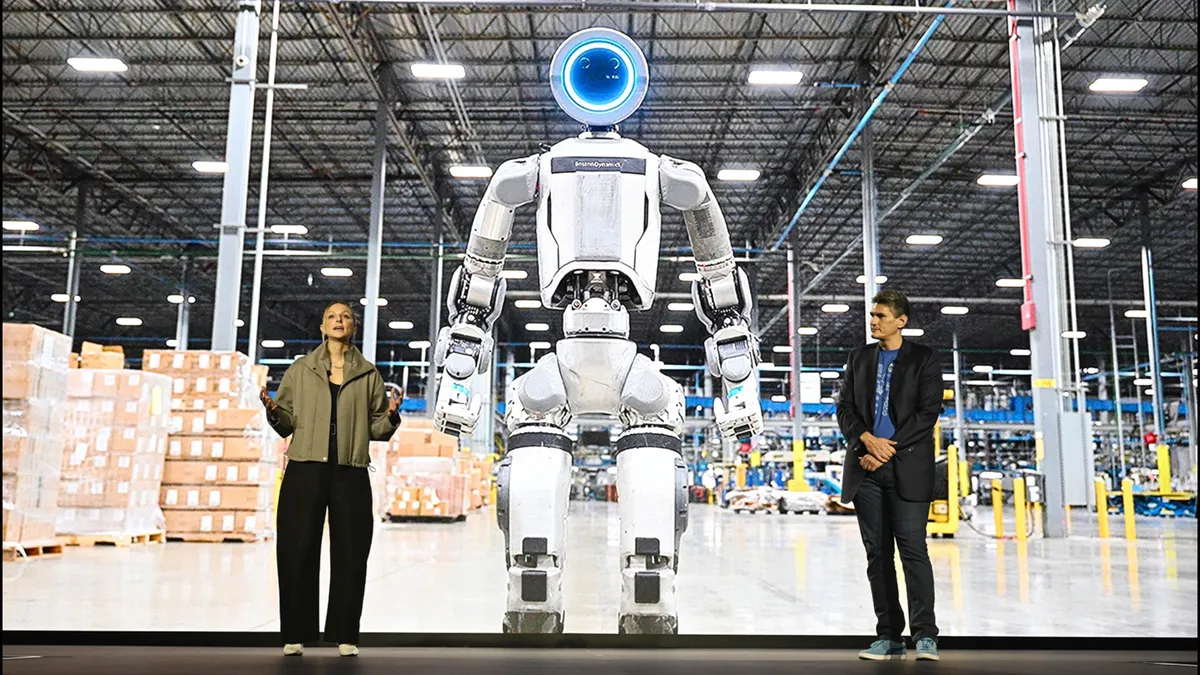
I know you're very focused on driving scientific progress, just discovering new materials. Even we've seen now Gemini being integrated into humanoid robots is the alpha fold moment for the physical world. And I here.What is that and what does that look like. Yeah, I spent a lot of the last year actually looking very carefully into robotics. I do think we're on the cusp of a kind of breakthrough moment in physical intelligence.I still think we're about 18 months, two years away from doing. We need to do more ...

机构:现代汽车或从Boston Dynamics获得巨大估值提振
Xin Lang Cai Jing· 2026-01-21 00:49
Core Viewpoint - Hyundai Motor is expected to see a significant valuation boost from its investment in Boston Dynamics, which is projected to reach a valuation of 53.3 trillion KRW by 2027, potentially adding 14.4 trillion KRW to Hyundai's valuation [1] Group 1 - Hyundai holds a 27.1% stake in Boston Dynamics through its investment in HMG Global, which controls the humanoid robot manufacturer [1] - Analyst Ha Neul from NH Investment & Securities anticipates that Boston Dynamics' valuation will enhance Hyundai's overall valuation [1] - KB Securities analyst Kang Seong-jin projects that by 2035, Boston Dynamics' valuation could reach approximately 128 trillion KRW, contributing about 35 trillion KRW to Hyundai's valuation [1]
Remember Boston Dynamics?
Matthew Berman· 2026-01-19 17:50
Big Dog from Boston Dynamics shocked the world back in 2008. In fact, it was really one of the first viral videos. Remember that video of the robot dog being kicked on the ice and it was able to recover really easily.That was amazing. But let me tell you the history of Boston Dynamics. It was actually founded all the way back in 1992.Then from 2005 to 2013, they worked on their large quadriped robot called Big Dong. Then in 2009 to 2013, they started their work on Atlas, their first humanoid robot. Then 201 ...

Boston Dynamics CEO told us how the humanoid robot revolution begins
Business Insider· 2026-01-18 13:02
Core Insights - Hyundai's Georgia plant may soon see the introduction of Atlas, an all-electric humanoid robot developed by Boston Dynamics, which is designed to assist factory employees with tasks such as parts sequencing and logistics [1][2][3] Company Overview - Boston Dynamics, owned by Hyundai, showcased Atlas at the Consumer Electronics Show, highlighting its capabilities in moving car parts and performing tasks in a factory setting [2][4] - The company has transitioned Atlas from a hydraulic to an all-electric platform, aiming for mass production and cost reduction [8][10] Technological Advancements - Atlas features 56 degrees of freedom and is designed for modularity, utilizing only three types of motors to facilitate mass production [8][10] - AI advancements are crucial for Atlas to perform a wide variety of tasks, with a goal of achieving 99.9% reliability [11][12] Market Application - The initial focus for Atlas will be on logistics tasks in automotive factories, with plans to expand into more complex assembly tasks over time [13][15] - Workers will interact with Atlas, providing a seamless experience where they can instruct the robot to perform specific tasks [14][17] Future Outlook - The deployment of Atlas in homes is projected to occur in five to ten years, with industrial applications being the primary focus in the near term [23][24] - The introduction of humanoid robots like Atlas is expected to create new job opportunities in building, maintaining, and training robots, rather than replacing human workers [18][19] Competitive Landscape - The competition for AI talent is intense, with Boston Dynamics competing against major tech companies for skilled professionals [21] - The company emphasizes the need for significant investment to develop humanoid robots, indicating a long-term commitment to the market [25]