
Hermès

Search documents
整个社会都在喊没钱了,为什么这些公司反而年赚百亿?
创业家· 2026-01-24 10:18
Core Insights - The article discusses how certain industries are thriving despite a general perception of economic downturn, highlighting eight key sectors that present significant business opportunities [3][4]. Group 1: Key Industries - **Second-Hand Economy**: The second-hand luxury market in Japan, represented by companies like Daikokuya, has seen a surge in revenue. In China, platforms like Hongbulin and Panghu are experiencing similar growth [6][7][8]. - **Pet Economy**: With a decline in birth rates, spending on pets has increased, with brands like Inaba in Japan and Guobao (Zhongchong) in China seeing strong stock performance [12][13][14]. - **Adult Care**: The adult diaper market in Japan has surpassed $10 billion, indicating that aging populations can drive significant economic opportunities [17][18][19]. - **Health Food and Beverages**: Changes in population structure and rising health awareness have led to the growth of sugar-free products and functional beverages in both Japan and China [21][22]. - **Beauty Economy**: The demand for beauty products, such as collagen supplements and home beauty devices, remains strong, with brands like Weimei and U like achieving significant sales [23][24][25][26]. - **Outdoor Recreation**: Companies in the outdoor equipment sector, like Snow Peak in Japan, are capitalizing on the trend of outdoor activities, with Chinese brands also seeing rapid sales growth [29][31][32]. - **Convenience Economy**: The rise of frozen foods and smart home appliances reflects a shift towards convenience, with brands like Anjijia and Stone achieving steady growth [39][40]. - **Lazy Economy**: The trend of reduced cooking time among younger generations has led to increased demand for time-saving products, emphasizing the value of time over money in a low-desire economy [42][43]. Group 2: Market Trends - The article emphasizes that even in a low-desire society, there are substantial opportunities for those willing to invest in counter-cyclical sectors [44]. - The narrative suggests that the current economic climate should not deter investment but rather encourage a focus on emerging trends and consumer needs [44].


经济越来越差,这八大行业越赚爆!
创业家· 2026-01-23 10:27
Core Insights - The article discusses how certain industries are thriving despite a general perception of economic downturn, highlighting eight key sectors that present significant business opportunities in a low-desire society [3][4]. Group 1: Key Industries - **Second-Hand Economy**: The second-hand luxury market in Japan, represented by companies like Daikokuya, has seen a surge in revenue. In China, platforms like Hongbulin and Panghu are experiencing similar growth, indicating a shift in consumer spending towards second-hand goods [6][7][8][9]. - **Pet Economy**: With declining birth rates, young people are investing more in pets, leading to a boom in pet food and healthcare products. Companies like Inaba in Japan and Guobao in China are capitalizing on this trend [11][12][14][15]. - **Adult Care Products**: The adult diaper market in Japan has surpassed $10 billion, indicating a growing demand for adult care products in China, with companies like Kexin showing potential for growth [16][17][18]. - **Health Food and Beverages**: The rise in health consciousness has led to increased sales of sugar-free beverages and functional drinks in both Japan and China, with brands like Suntory and Dongpeng gaining traction [21][22]. - **Beauty Economy**: The demand for beauty products, including collagen supplements and at-home beauty devices, remains strong, with companies like Jinbo Biological achieving significant market valuations [23][25]. - **Outdoor Recreation**: The outdoor equipment market is thriving, with brands like Snow Peak in Japan and various Chinese brands experiencing rapid sales growth, as consumers seek leisure activities despite economic constraints [25][26][27]. - **Emotional Economy**: Brands that provide emotional comfort, such as Labubu and Rio, are gaining popularity, reflecting a consumer willingness to spend on small pleasures even in tough times [28][29][30]. - **Convenience Economy**: The demand for convenience products, such as frozen foods and smart home appliances, is increasing as younger generations prioritize time-saving solutions [33][35][36]. Group 2: Market Trends - The article emphasizes that the current low-desire economic environment does not equate to a lack of opportunities. Instead, it suggests that businesses that can identify and invest in counter-cyclical sectors will emerge as winners [39].

1stDibs 2025 Trend Report: Heritage Revival, Cowboy Core, and Y2K Resurgence Drive Luxury E-Commerce Trends
Businesswire· 2026-01-20 16:00
Core Insights - 1stDibs has released its 2025 Luxury E-Commerce Report, highlighting key trends in luxury categories such as Furniture & Lighting, Art, Watches & Jewelry, Handbags, and Fashion [1][2] Cross-Category Trends - There is a notable resurgence in Y2K and 2000s-era fashion, with "Sex and the City clothing" leading fashion-related searches, particularly after the debut of "And Just Like That" [4][8] - Significant growth in searches for 2000s fashion staples, including a 145% increase for "Prada heels 2009" in Q3 and a 112% increase for "Dior Saddle Bag" in Q1 [5][8] - Interest in classical glamour from early to mid-20th century aesthetics is rising, with Art Deco and Art Nouveau pieces gaining traction, particularly with a 99% increase in searches for "Art deco chandelier" in Q1 [7][8] Fashion Trends - Searches for Patek Philippe watches grew by 28% following new model announcements, while "old mine cut" rings saw a 27% spike after Taylor Swift's engagement ring reveal [8] - Western and Americana styles are gaining popularity, with searches for "navajo rugs" climbing 39% in Q1 and 32% in Q3, and turquoise jewelry seeing a 45% increase in Q3 [11][12] Bridal Trends - Timeless bridal fashion remains in demand, with "wedding gown dresses" being the most-searched clothing term of the year, and a 1950's Tiffany & Co. Emerald Cut Diamond Ring selling for $526,000 [13][14] Category-Specific Trends - Furniture and lighting trends are dominated by early to mid-20th century aesthetics, with a strong preference for Art Nouveau and Art Deco styles [15] - Legacy jewelry houses like Tiffany, Cartier, and Van Cleef & Arpels continue to lead in sales, with Tiffany seeing a 4% increase in orders [17] - Hermès remains a dominant player in the handbag market, with the most expensive sale being a Hermes Kelly 25 listed at $88,990 [8][17]


Investors Say Europe Is Cooked, But JP Morgan’s Euro ETF Is Destroying The S&P and Hot AI Stocks
Yahoo Finance· 2025-12-29 15:07
Core Insights - European equities, particularly quality blue chips, have outperformed U.S. benchmarks and AI-focused stocks in 2025, despite currency fluctuations and geopolitical tensions [1]. Group 1: ETF Overview - The JPMorgan BetaBuilders Europe ETF (BBEU) offers low-cost exposure to developed European large caps with a 0.09% expense ratio and $8.4 billion in assets [2]. - BBEU achieved a return of 36.9% year-to-date through late December 2025, significantly surpassing the S&P 500's 17.8% gain during the same period [3]. Group 2: Performance Drivers - The fund experienced $678.7 million in inflows during one week in October, leading to a 16.4% increase in outstanding units, indicating strong institutional interest despite lower retail investor sentiment [3][7]. - Key contributors to BBEU's performance include European defense contractors like Rheinmetall and BAE Systems, as well as luxury brands such as LVMH and Hermès, which have shown resilience amid economic challenges [6]. Group 3: Portfolio Composition - The ETF's holdings include major companies such as ASML Holding (3.3%), AstraZeneca (2.2%), Roche Holding (2.2%), HSBC Holdings (2.0%), and Nestlé (2.0%), representing leaders in semiconductors, pharmaceuticals, banking, and consumer staples [5]. - The portfolio also features companies like SAP, Siemens, and Airbus, further diversifying its exposure [6]. Group 4: Currency Impact - Currency fluctuations have a dual impact; European investors in U.S. stocks faced a 14% loss due to euro strength in 2025, while American investors in BBEU benefited from dollar weakness [8].

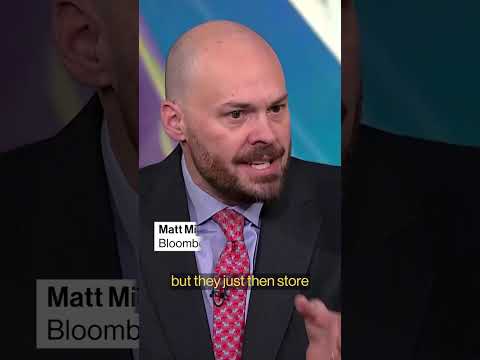
The hedge fund built on Hermès bags #shorts #hermes #birkin #kelly #luxury #hedgefund
Bloomberg Television· 2025-12-18 19:08
Business Model & Investment Strategy - The company operates like a real estate fund, acquiring brand new luxury handbags such as Birkins and Kellys to build a portfolio [1] - The company employs a portfolio construction methodology, focusing on fast-flipping "breadandbut" bags [1] - The company trades handbags, sourcing them from the resale market rather than directly from Hermes [3][4] Sales Channels - The company sells handbags on digital marketplaces like Sbee's first dibs, my Gemma, and through Christies auctions [1] - The company also sells handbags through real-life experiences, capitalizing on the demand for Hermes and handbag education [2] Market Trends & Consumer Behavior - There is significant pent-up supply in the resale market for a wide range of handbags, from brand new to "beater bags" [4] - Generational preferences vary, with Gen Z showing interest in "beater bags" [4] - A bag sells every 48 hours [4]
X @Bloomberg
Bloomberg· 2025-12-16 16:48
An Hermès heir, who claimed that his shares in the luxury group went missing, has set up an investment firm https://t.co/G4AsFHQv9m ...
X @The Economist
The Economist· 2025-12-15 15:40
“I no longer have financial means and I know that many have got rich at my expense.”Nicolas Puech, who as the largest individual shareholder in Hermès was once among the world’s richest men, now appears to be worse off than his caretaker https://t.co/xifcBIQBKP ...
X @The Economist
The Economist· 2025-12-14 16:40
According to court documents, Nicolas Puech deposited his inherited Hermès shares in three Swiss banks, on the advice of Eric Freymond, his Swiss banker of 24 years. Then the shares went missing https://t.co/uDrskx8fBu ...
X @The Economist
The Economist· 2025-12-14 09:40
Parisian investigators found that millions of shares belonging to Nicolas Puech were sold in 2008, in some cases for less than €100 per share. The stock is now worth more than 20 times that.But the Hermès heir maintained he never agreed to sell them https://t.co/hxKhCf7JeB ...
X @The Economist
The Economist· 2025-12-13 20:20
Nicolas Puech was once the largest individual shareholder in Hermès. That was until he realised that his shares in the French luxury-goods firm were nowhere to be found. Worse still, they had been missing for more than a decade https://t.co/Zkrx5olr5E ...