
华熙生物

Search documents
细胞工厂的 “调试中枢” 华熙生物中试转化平台激活产业新动能
Jin Rong Jie· 2026-01-19 01:55
Core Insights - The announcement of the first batch of "Biomanufacturing Pilot Capability Construction Platform List" by the Ministry of Industry and Information Technology highlights Huaxi Biological Technology (Tianjin) Co., Ltd. as a leading player, achieving the highest "five-star" rating and being one of only five such units in the country [1] - The recognition emphasizes the importance of pilot platforms in bridging the gap between research and industrialization in biomanufacturing, addressing the low technology transfer rate in China compared to developed countries [1][2] Group 1: Company Achievements - Huaxi Biological has invested over 3 billion yuan to create the world's largest synthetic biology pilot transformation platform, featuring 64 pilot production lines across a 40,000 square meter facility [2] - The platform supports the scale-up of six categories of bioactive substances, serving multiple strategic emerging industries including pharmaceuticals, cosmetics, and functional foods [2][3] Group 2: Industry Context - The pilot platform is crucial for overcoming the challenges of scaling up from laboratory to industrial production, addressing issues such as process optimization, quality control, and cost accounting [2] - The Chinese government aims to cultivate over 20 biomanufacturing pilot platforms by 2027, recognizing biomanufacturing as a key aspect of the Fourth Industrial Revolution, with a projected global market size exceeding $390 billion by 2030 [3][4] Group 3: Collaborative Efforts - The pilot transformation platform is designed to be an industry-level infrastructure, providing comprehensive services to universities and startups, thus promoting the integration of government, industry, academia, research, finance, and application [4] - Huaxi Biological aims to enhance the overall capabilities of China's biomanufacturing sector through collaboration and the development of a robust platform ecosystem [4]

行业周报:赤子城科技Dramabite成短剧黑马,关注AKK菌布局企业-20260118
KAIYUAN SECURITIES· 2026-01-18 14:44
Investment Rating - Investment rating: Positive (maintained) [1] Core Insights - The luxury goods retail revenue in China is showing signs of recovery, with high-end brands like LVMH, Hermès, and Prada experiencing positive growth since Q2 2025 [15][16] - The global network literature market is witnessing rapid growth, particularly in Latin America, with WebNovel reaching nearly 400 million cumulative users by October 2025 [34][35] - The micro-drama and comic-drama market in China is projected to exceed 100 billion yuan in 2025, significantly surpassing the film box office revenue [37][38] - The probiotic market is expanding, with a focus on next-generation probiotics (NGPs) like AKK bacteria, which show significant potential in health applications [55][63] Summary by Sections 1. Duty-Free Shopping - Post-New Year duty-free shopping in Hainan shows strong growth, with sales reaching 3.89 billion yuan and a 49.6% year-on-year increase in shopping amount [31][33] - The high net worth individuals are expected to drive luxury consumption, with a notable increase in spending on preservation-type luxury goods [15][16] 2. Network Literature - The Chinese network literature market reached 49.55 billion yuan in 2024, with a 29.37% year-on-year growth, while the overseas market grew by 10.68% [34] - WebNovel has cultivated nearly 530,000 authors and over 820,000 original works, with a significant increase in user engagement [34][35] 3. Micro-Drama - The micro-drama and comic-drama market in China is expected to reach 100 billion yuan in 2025, with a 98% year-on-year growth [37][38] - The user base for micro-dramas is approaching 700 million, with a strong preference among female viewers [40][42] 4. Probiotics - The global probiotic market is projected to grow at a CAGR of 8.7%, reaching 93.49 billion USD by 2028, with China's market expected to reach 134.89 billion yuan by 2024 [55][63] - Next-generation probiotics like AKK bacteria are gaining traction, with significant potential in health management and consumer interest [55][63]




毛戈平林清轩们资本市场交锋 但上市仅是开始
2 1 Shi Ji Jing Ji Bao Dao· 2026-01-16 23:38
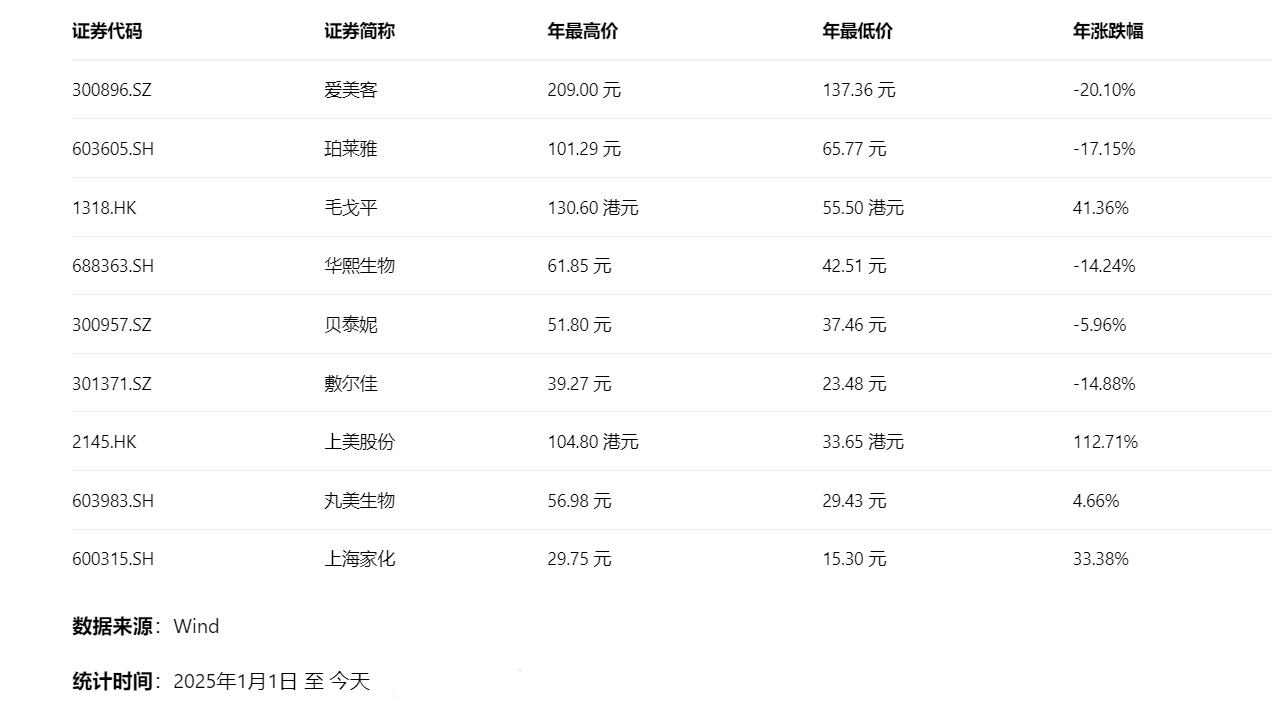
Core Insights - The surge of Chinese beauty brands aiming for IPOs on the Hong Kong Stock Exchange reflects a strong desire for growth and market expansion within the industry [1][7] - The listing of Lin Qingxuan marks a significant milestone as it aims to enhance its multi-brand and global strategy [1][7] - The performance of beauty stocks varies significantly, with some brands experiencing substantial declines post-IPO [2][8] Industry Trends - Over 41 beauty-related companies have pursued IPOs since 2025, covering various segments of the supply chain [1][7] - Lin Qingxuan's IPO on December 30, 2025, was well-received, with its stock price rising 9.3% on the first day, achieving a market capitalization of over 11.8 billion HKD [2][8] - Conversely, brands like Pechoin have faced stock price declines, with a notable drop in revenue growth, indicating market concerns about sustainability [2][8] Market Challenges - Several previously popular brands, such as Betaini and Huaxi Biological, have seen stock price declines, suggesting a reevaluation of their growth models and valuations [3][8] - The internationalization strategies of these brands are still in early stages, with limited overseas sales contributing to overall revenue [4][11] - Brands face challenges in establishing a strong presence in international markets, often relying heavily on domestic success factors like online marketing and social media [11][12] Strategic Moves - Companies are increasingly focusing on international expansion, with many viewing the Hong Kong listing as a critical step towards building global brand recognition [4][10] - Pechoin has made strategic investments to enhance its capabilities, including acquiring stakes in medical companies to bolster its credibility [12] - Lin Qingxuan and other brands are exploring overseas markets, but their current international sales remain minimal, highlighting the need for stronger brand positioning abroad [11][12]
华熙生物科技股份有限公司股东减持股份结果公告
Shang Hai Zheng Quan Bao· 2026-01-16 20:39
Group 1 - The major shareholder, Guoshou Chengda, held 28,936,504 shares of Huaxi Biological Technology Co., Ltd., accounting for 6.01% of the total share capital before the reduction plan [2] - The reduction plan involved a maximum of 9,633,564 shares, representing up to 2.00% of the total share capital, with a maximum of 4,816,782 shares to be reduced through both centralized bidding and block trading [3] - As of January 15, 2026, Guoshou Chengda completed the reduction of 9,633,564 shares, with 4,816,782 shares reduced through centralized bidding and 4,816,782 shares through block trading [3][5] Group 2 - The reduction plan was disclosed on November 5, 2025, and the reduction period was set from November 26, 2025, to February 23, 2026 [3] - The actual reduction adhered to relevant laws and regulations, and there were no violations of the reduction plan or other commitments [6]
毛戈平林清轩们资本市场交锋,但上市仅是开始
2 1 Shi Ji Jing Ji Bao Dao· 2026-01-16 13:10
Core Insights - The Chinese beauty industry is experiencing a surge in IPOs, with over 41 beauty-related companies aiming for listings on the Hong Kong Stock Exchange since 2025, indicating a strong desire for growth and market expansion [1] - Lin Qingxuan's listing marks the beginning of its multi-brand and global strategy, while the stock performance of other brands like Maogeping shows significant volatility post-IPO [1][2] Group 1: Market Trends - Lin Qingxuan officially listed on the Hong Kong Stock Exchange on December 30, 2025, with an initial share price of 77.77 HKD, opening at 85 HKD, a 9.3% increase, and achieving a market capitalization of over 11.8 billion HKD [2] - Other companies like Perlay and Marubi are facing challenges, with Perlay's stock experiencing a significant decline and a slowdown in revenue growth, raising concerns about its market position [3][4] Group 2: Internationalization Efforts - Many beauty brands are focusing on internationalization as a core strategy, with companies like Perlay and Natural Hall aiming to enhance their global brand recognition through their IPOs [6][7] - Despite the ambitions, most brands still rely heavily on the domestic market for revenue, with limited success in overseas sales [7][8] Group 3: Investment and Development - Brands are investing in acquisitions and partnerships to strengthen their market presence, such as Perlay's investment in the cosmetic brand Huazhi Xiao and collaborations with private equity firms for global expansion [7][8] - The imbalance between marketing and research and development is a concern, as many brands have low R&D investments compared to their marketing expenditures, which may hinder their competitiveness in international markets [8][9]


华熙生物(688363) - 华熙生物股东减持股份结果公告
2026-01-16 10:03
证券代码:688363 证券简称:华熙生物 公告编号:2026-002 华熙生物科技股份有限公司 股东减持股份结果公告 本公司董事会、全体董事及相关股东保证本公告内容不存在任何虚假记载、 误导性陈述或者重大遗漏,并对其内容的真实性、准确性和完整性依法承担法律 责任。 重要内容提示: 大股东持有的基本情况 本次减持计划实施前,国寿成达(上海)健康产业股权投资中心(有限合伙) (以下简称"国寿成达")直接持有华熙生物科技股份有限公司(以下简称"公司") 股份数量为 28,936,504 股,占公司总股本的 6.01%。上述股份全部为公司首次公 开发行前股份,并已于 2022 年 11 月 7 日起上市流通。 减持计划的实施结果情况 公司于 2025 年 11 月 5 日在上海证券交易所网站(www.sse.com.cn)披露《华 熙生物科技股份有限公司股东减持股份计划公告》(公告编号:2025-043),国寿 成达计划根据市场情况通过集中竞价、大宗交易的方式减持其所持有的公司股份 合计不超过 9,633,564 股,拟减持股份数量占公司总股本的比例合计不超过 2.00%, 其中以集中竞价方式减持比例不超过 1.0 ...
华熙生物(688363.SH):国寿成达合计完成减持963.36万股公司股份
Ge Long Hui A P P· 2026-01-16 09:52
格隆汇1月16日丨华熙生物(688363.SH)公布,截至2026年1月15日,国寿成达以集中竞价方式减持公司 股份481.68万股,以大宗交易方式减持公司股份481.68万股,合计减持公司股份963.36万股,减持计划 已实施完毕。 ...
医疗美容板块1月16日跌1.79%,华熙生物领跌,主力资金净流出1.12亿元
Zheng Xing Xing Ye Ri Bao· 2026-01-16 09:03
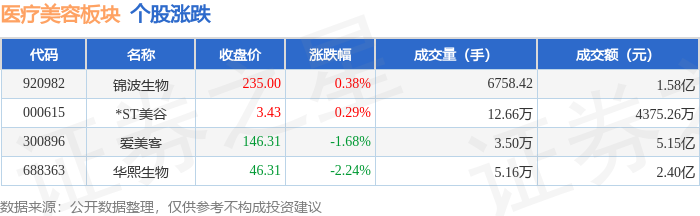
Market Overview - The medical beauty sector experienced a decline of 1.79% on January 16, with Huaxi Biological leading the drop [1] - The Shanghai Composite Index closed at 4101.91, down 0.26%, while the Shenzhen Component Index closed at 14281.08, down 0.18% [1] Individual Stock Performance - Jinbo Biological (920982) closed at 235.00, with a slight increase of 0.38% and a trading volume of 6758.42 lots [1] - ST Meigu (000615) closed at 3.43, up 0.29% with a trading volume of 12.66 million [1] - Aimeike (300896) closed at 146.31, down 1.68% with a trading volume of 35,000 [1] - Huaxi Biological (688363) closed at 46.31, down 2.24% with a trading volume of 51,600 [1] Capital Flow Analysis - The medical beauty sector saw a net outflow of 112 million yuan from main funds, while retail investors contributed a net inflow of 73.41 million yuan [1] - The detailed capital flow for individual stocks shows: - ST Meigu had a main fund net outflow of 446,500 yuan and a retail net inflow of 198,200 yuan [2] - Jinbo Biological experienced a main fund net outflow of 7.88 million yuan and a retail net outflow of 223,700 yuan [2] - Huaxi Biological had a significant main fund net outflow of 46.59 million yuan, with retail investors contributing a net inflow of 27.27 million yuan [2] - Aimeike faced a main fund net outflow of 64.99 million yuan, while retail investors had a net inflow of 45.95 million yuan [2]
留给绽妍生物的时间不多了
Xin Lang Cai Jing· 2026-01-16 08:38
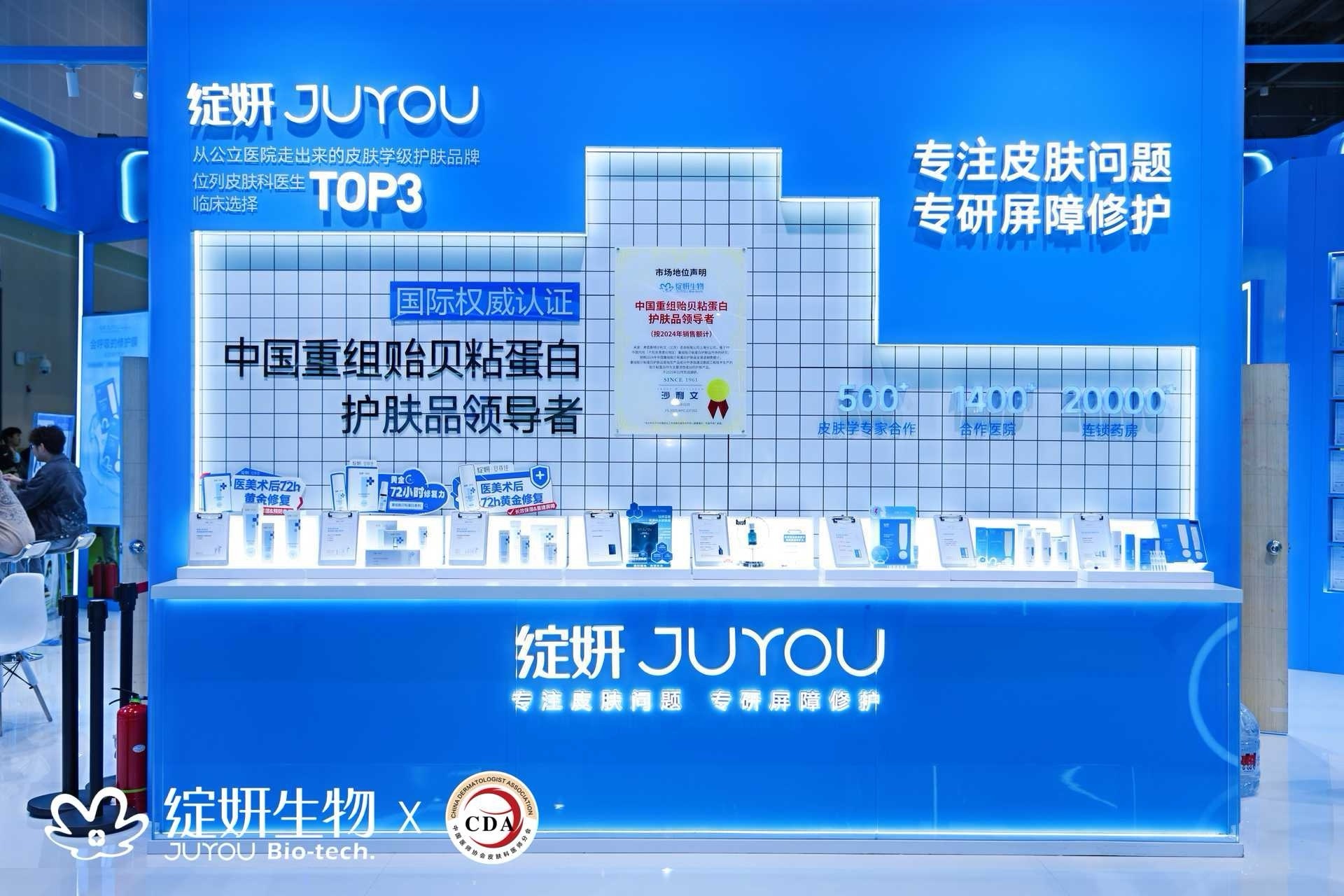
Core Viewpoint - The skincare brand Zhenyan Bio, which is preparing for an IPO on the Beijing Stock Exchange, has not kept pace with industry expansion despite its early entry into the market. The company has struggled to transition from a hospital-backed brand to a mainstream consumer brand, resulting in a significant gap in market presence and financial performance compared to leading competitors [1][9]. Financial Performance - Zhenyan Bio's revenue is projected to grow from 486 million yuan to 597 million yuan from 2023 to 2024, representing a year-on-year increase of approximately 22.8%. However, its net profit is expected to grow by only 7%, reaching 73 million yuan [2]. - In contrast, leading companies like Winona and Juzibio have already surpassed the 1 billion yuan revenue mark, indicating a structural gap in financial scale [2]. Market Share - Zhenyan Bio's market share in the skin barrier repair medical dressing market has remained below 4% from 2021 to 2023, failing to capitalize on the market's increasing fragmentation and heightened competition [2]. - While competitors like Juzibio and Fuyoujia have seen their market shares decline, Zhenyan Bio has not gained any significant market share during this period [2]. Channel Strategy - The company's sales system still reflects characteristics of an "in-hospital brand," with a high reliance on offline channels, including hospitals and OTC pharmacies, which accounted for 58.91% of total revenue in the past year [7]. - Zhenyan Bio has begun to adjust its channel structure, with the proportion of revenue from distribution decreasing to 44.88% as it shifts towards online direct sales and consignment [7]. Brand Positioning - Zhenyan Bio has launched sub-brands like "Zhenxiaoyan" for infant skincare and "Defilin" for bioactive compounds, but these attempts are still in the early stages and lack significant market presence [8]. - The company has not established a clear differentiation in product functionality, pricing, and brand positioning compared to competitors, limiting its ability to gain market traction [4][8]. Future Outlook - The company's challenges stem from its failure to upgrade its business model at critical stages, missing opportunities for channel transformation and brand amplification [9]. - The decision to pursue an IPO is seen as a strategy to secure time and resources for future transformation, although the window for catching up with competitors is narrowing [9].
破解“死亡之谷”:华熙生物全球最大中试平台如何点亮中国生物制造未来
Jin Rong Jie· 2026-01-16 08:06
Core Insights - The Ministry of Industry and Information Technology has announced the first batch of "Biomanufacturing Pilot Capability Construction Platform List," with Huaxi Biological Technology (Tianjin) Co., Ltd. being awarded the highest "five-star" rating for its leading synthetic biology pilot platform [1][5] - Huaxi Biological is one of only five companies in the country to receive this top certification, highlighting its technological strength in the fields of cosmetics, food additives, and biopharmaceuticals [1][5] - The "five-star" certification brings attention to the critical infrastructure of pilot platforms in biomanufacturing, which is essential for bridging the gap between scientific research and industrial application [1][5] Industry Challenges and Solutions - The "valley of death" in biomanufacturing represents the significant challenge of transitioning research outcomes from the laboratory to market application, with China's technology transfer rate at only about 10% compared to 75% in developed countries [2][5] - Pilot testing is identified as a crucial step in overcoming this challenge, as it scales laboratory results from milligram to kilogram and ton levels, ensuring quality control, cost accounting, and safety verification [2][3] Huaxi Biological's Pilot Platform - Huaxi Biological has invested over 3 billion yuan to create the world's largest synthetic biology pilot transformation platform, covering 40,000 square meters and equipped with 64 pilot production lines [3][4] - The platform operates as a "biological foundry" and "debugging center," enabling year-round, green, and controllable industrial manufacturing by optimizing metabolic pathways through gene editing [3][4] - The intelligent central control system allows for real-time monitoring of thousands of indicators, enhancing predictability and control over complex biological processes [3][4] Flexibility and Cost Efficiency - The platform's modular and standardized design allows for rapid reconfiguration of production lines to meet diverse bioproduct testing needs, significantly improving equipment utilization and response speed [4] - A case study of Tianjin Zhonghe Gene Technology Co., Ltd. illustrates the platform's effectiveness, as it completed process scaling tests in one month at a 90% cost reduction compared to building its own pilot line [4] National Strategy and Industry Impact - The recognition of Huaxi Biological reflects the national strategy to develop biomanufacturing as a strategic emerging industry, with plans to cultivate over 20 pilot platforms by 2027 [5][6] - The global biomanufacturing market is projected to exceed $390 billion by 2030, positioning biomanufacturing as a key area of technological and industrial competition [5][6] - Huaxi Biological's platform serves as a public infrastructure for the industry, facilitating collaboration with universities, research institutions, and biotech startups, thus breaking down barriers between technology and industry [5][6]